
LONDON — The world’s attention is fixed on oil. Brent crude at $102. Strategic reserves dwindling. Pipelines running at capacity. But seventeen days into the Hormuz blockade, a quieter and arguably more consequential crisis is accelerating beneath the headlines: the world is running out of copper, aluminum, and the industrial metals upon which modern manufacturing, renewable energy, and Saudi Arabia’s own megaproject ambitions depend. Approximately 40,000 tonnes of copper cathode — essential for everything from electrical wiring to solar panels — are now trapped inside the Persian Gulf each month with no way out, while aluminum has hit a four-year peak above $3,546 per tonne on the London Metal Exchange. Oil has pipelines, strategic reserves, and alternative suppliers. Metals do not. The Hormuz blockade’s most enduring economic damage may not be measured in barrels at all.
Table of Contents
- How Much Metal Actually Passes Through the Strait of Hormuz?
- The Copper Crunch Markets Did Not Price In
- Why Has Bahrain’s Largest Aluminum Smelter Cut a Fifth of Its Output?
- Two Hundred Thousand TEUs With Nowhere to Go
- What Does the Metals Shortage Mean for Saudi Arabia’s Megaprojects?
- The Renewable Energy Transition Runs on Gulf Metals
- Can Land Bridges Replace the Strait for Metal Exports?
- The Hormuz Commodity Exposure Matrix
- Data Centers, AI, and the Copper That Is Not Coming
- Will the Metals Crisis Outlast the War Itself?
- The Supply Chain Damage a Ceasefire Cannot Repair
- Frequently Asked Questions
How Much Metal Actually Passes Through the Strait of Hormuz?
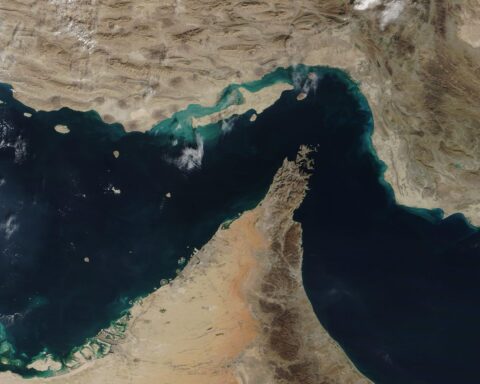
The Strait of Hormuz carries far more than crude oil. Roughly 20 percent of all globally traded petroleum transits the narrow waterway between Iran and Oman, a figure that dominates geopolitical analysis and energy market commentary. What that analysis consistently overlooks is the strait’s role as a corridor for industrial metals, petrochemical feedstocks, and finished manufactured goods that underpin global supply chains from Munich to Mumbai.
Gulf Cooperation Council nations produce approximately 8 percent of global primary aluminum output, according to the International Aluminium Institute. The region’s smelters — Emirates Global Aluminium in the UAE, Aluminium Bahrain (Alba), Ma’aden in Saudi Arabia, Qatalum in Qatar, and Sohar Aluminium in Oman — collectively ship more than five million tonnes of aluminum per year, the overwhelming majority through Hormuz-dependent ports. Copper cathode bound for Asian manufacturing hubs transits the strait at approximately 40,000 tonnes monthly, a figure that represents a critical bottleneck for electronics, automotive, and construction industries already contending with a structural supply deficit.
The disruption falls hardest on Japan and South Korea, which rely on Hormuz for petrochemical feedstocks including naphtha, the base material for plastics and synthetic materials. Multiple Japanese firms have announced production cuts, while South Korean manufacturing faces cost increases exceeding 11 percent if the blockade persists through the second quarter.
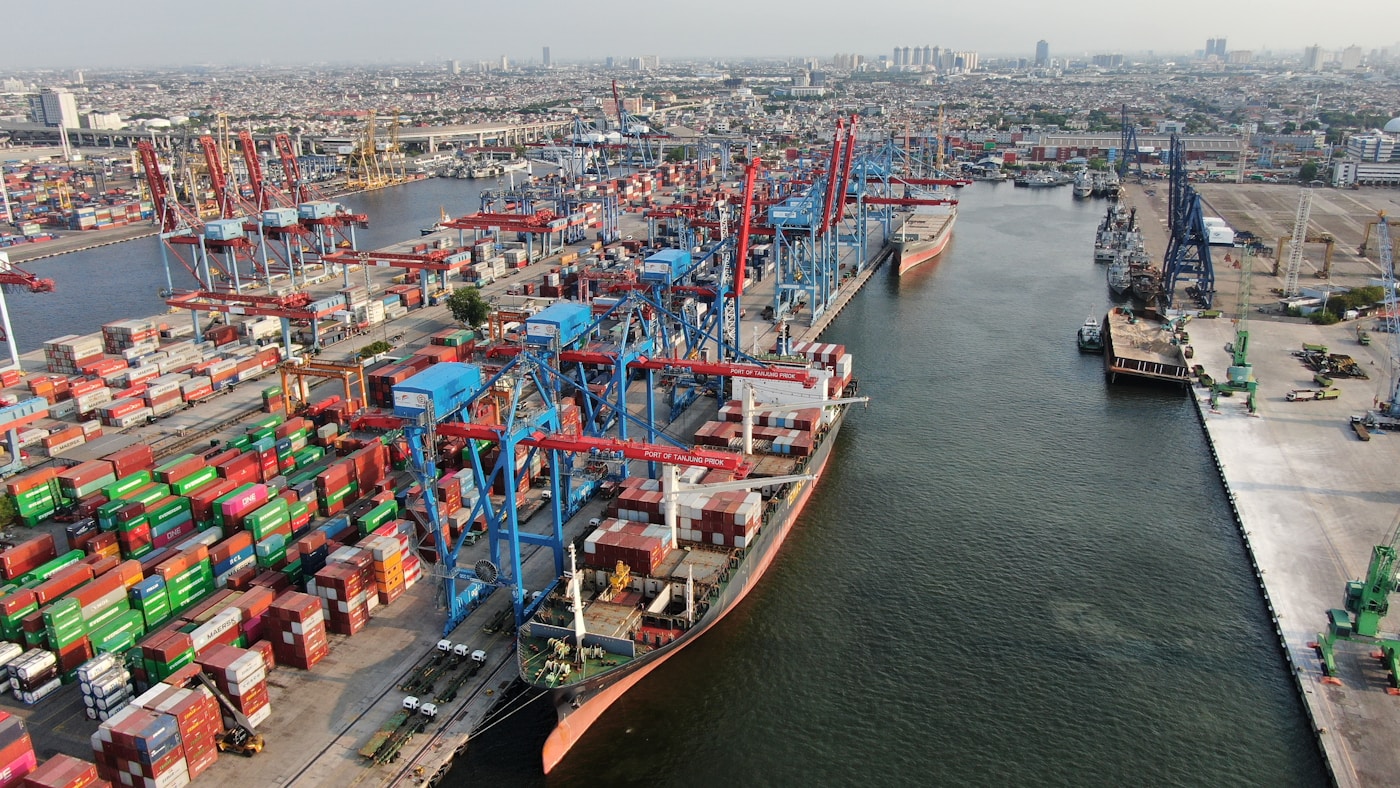
The numbers extend beyond base metals. Saudi Arabia’s SABIC Agri-Nutrients and its phosphate complexes rank among the largest petrochemical and fertilizer exporters in the Middle East. Qatar’s liquefied natural gas — the subject of a parallel crisis that may matter more than oil — shares the same chokepoint. When all non-petroleum commodities transiting Hormuz are aggregated, the strait carries cargo worth an estimated $1.5 billion per day beyond crude oil and refined products, according to shipping data compiled by Kpler.
The Middle East briefing 3,000+ readers start their day with.
One email. Every weekday morning. Free.
The fixation on oil is understandable. Crude is priced in real time, traded on futures markets with minute-by-minute visibility, and linked directly to consumer inflation through petrol prices. Metals move more slowly through physical supply chains, with disruptions taking weeks to surface as factory shutdowns, construction delays, and product shortages. That lag creates the illusion that the metals crisis is less severe. It is not. It is simply less visible — for now.
The Copper Crunch Markets Did Not Price In
Copper is the nervous system of the modern economy. It wires buildings, conducts electricity through power grids, connects telecommunications networks, and forms the essential conducting layer in every semiconductor chip and circuit board on earth. No industrial metal is simultaneously so critical and so difficult to replace. Aluminum can substitute for copper in some applications — overhead power lines, for example — but at 40 percent lower conductivity, meaning more material, larger infrastructure, and higher long-term costs. For most applications, copper has no substitute at any price.
Before a single Iranian drone was launched in late February, the global copper market was already under acute stress. LME copper had surged past $13,000 per tonne in January 2026, touching an intraday record of $14,527.50 on January 29 — driven by data-center construction, mine disruptions in Chile and Indonesia, and Chinese industrial stockpiling. LME warehouse stocks had fallen below 100,000 tonnes, the tightest physical market in a decade. Wood Mackenzie projected a refined copper deficit of 304,000 tonnes for 2025, widening into 2026.
The Hormuz blockade did not create the copper shortage. It weaponized it.
Approximately 40,000 tonnes of copper cathode per month are now stranded within the Persian Gulf, unable to reach smelters and fabrication plants across Asia, according to FinancialContent market data. Physical premiums — the surcharge buyers pay above the LME benchmark for actual delivered metal — have exploded. European copper premiums have doubled since the blockade began. Asian premiums are following. For manufacturers operating on just-in-time inventory systems with days of buffer stock, the price increase is the least of their problems. The metal simply is not arriving.
The structural context makes the crisis far worse than a temporary shipping disruption. Global copper demand is projected to reach 42 million metric tonnes by 2040, a 50 percent increase from 2025 levels, according to S&P Global’s landmark report on copper in the age of artificial intelligence. The electrification of transport, the buildout of renewable energy grids, and the explosion of data-center construction are collectively driving demand growth that the mining industry was already struggling to meet. Chile’s Codelco, the world’s largest copper producer, has seen output decline for four consecutive years amid falling ore grades and aging infrastructure. Indonesia’s Grasberg mine faced repeated operational disruptions through 2025.
Into this already-tight market, the Hormuz blockade has removed a critical transit artery. The result is not merely higher prices. It is the physical absence of metal at the point of consumption — a distinction that matters enormously for factories, construction sites, and infrastructure projects that cannot substitute copper with anything else.
Why Has Bahrain’s Largest Aluminum Smelter Cut a Fifth of Its Output?
Aluminium Bahrain, known as Alba, announced on March 15 that it would initiate a “controlled and safe shutdown” of approximately 19 percent of its production capacity, affecting production lines 1, 2, and 3. The company’s total annual capacity exceeds 1.62 million metric tonnes, making it one of the largest single-site aluminum smelters on earth. The cut removes roughly 308,000 tonnes of annual output from the global market.
Alba’s decision was driven by a convergence of forces that illustrates why the metals crisis extends far beyond Hormuz transit disruptions. Aluminum smelting requires continuous alumina feedstock — the refined oxide derived from bauxite ore. Unlike Saudi Arabia’s Ma’aden, which sources bauxite domestically and produces its own alumina at a capacity of approximately 1.8 million tonnes annually, Alba depends on imported alumina shipments arriving through the Persian Gulf. With Maersk, CMA CGM, MSC, and Hapag-Lloyd all suspending transits, those shipments have stopped.
The shutdown compounds an already deteriorating situation. Qatar’s Qatalum smelter ceased operations entirely in the war’s first week, according to energy news reports from March 4. The UAE’s Emirates Global Aluminium, the region’s largest producer with 1.34 million tonnes of hot metal in 2025, has explored trucking material overland to Red Sea ports — a workaround that adds enormous cost and is measured in thousands, not millions, of tonnes. The situation escalated further on 29 March when the IRGC struck EGA and Alba directly with missiles and drones, shifting the crisis from supply-chain disruption to physical destruction of Gulf industrial infrastructure.
| Producer | Country | Annual Capacity (kt) | Status | Alumina Source |
|---|---|---|---|---|
| Emirates Global Aluminium | UAE | 2,700 | Operating, export constrained | Imported (Al Taweelah refinery under construction) |
| Aluminium Bahrain (Alba) | Bahrain | 1,620 | 19% capacity cut (Lines 1-3) | Imported via Gulf |
| Ma’aden Aluminium | Saudi Arabia | 880 | Operating, domestic alumina | Domestic (1.8Mt alumina capacity) |
| Qatalum | Qatar | 640 | Shut down (March 4) | Imported via Gulf |
| Sohar Aluminium | Oman | 390 | Reduced operations | Imported via Gulf |
The LME aluminum price reached $3,546.50 per metric tonne on March 15 — a four-year high — with Argus Media forecasting a bull-case scenario of $4,000 per tonne if the disruption persists beyond April. Morgan Stanley set a near-term target of $3,700. For downstream manufacturers of everything from automotive body panels to beverage cans to aircraft components, these are not abstract commodity prices. They are existential cost inputs.
Ma’aden’s relative resilience tells an instructive story. Saudi Arabia’s decision decades ago to develop an integrated bauxite-to-aluminum value chain — mining domestic bauxite in the northern province, refining alumina at Ras Al Khair, and smelting primary aluminum — means the Kingdom’s aluminum production is among the least Hormuz-dependent in the Gulf. It still faces export constraints, but it can keep producing. Every other Gulf smelter is now discovering the cost of depending on imported raw materials that arrive through a single chokepoint.
Two Hundred Thousand TEUs With Nowhere to Go
The metals crisis cannot be understood in isolation from the broader container shipping collapse that the Hormuz blockade has triggered. As of mid-March, more than 130 container vessels are trapped inside the Persian Gulf, with another 62 waiting outside the strait, according to tracking data compiled by Kpler. The stranded fleet represents more than 200,000 twenty-foot equivalent units (TEUs) of deep-sea cargo capacity — and much of that cargo is base metals, petrochemical feedstocks, and industrial components.
Maersk suspended new bookings from Gulf ports on March 4, exempting only critical food and medicine — a carve-out that obscured the deepening pharmaceutical supply crisis already threatening Saudi hospitals as drug imports through the strait collapsed. CMA CGM, MSC, and Hapag-Lloyd followed within hours. The suspensions created a dual chokepoint crisis: the Strait of Hormuz to the east and ongoing Houthi disruptions in the Red Sea to the west, effectively boxing in the entire Gulf shipping ecosystem. Container Magazine reported that the dual blockade represents the most severe container shipping disruption since the industry’s inception.
The immediate effect is visible in physical metal premiums. Aluminum premiums in Europe jumped by approximately 40 percent in the first two weeks of March. Copper premiums followed. But the cascading effects are still propagating through global supply chains with a three-to-six-week lag. Factories in Germany, South Korea, and Japan that depend on Gulf-origin aluminum and petrochemical inputs are now drawing down inventories that were sized for routine shipping disruptions — not a wholesale blockade lasting weeks or months.
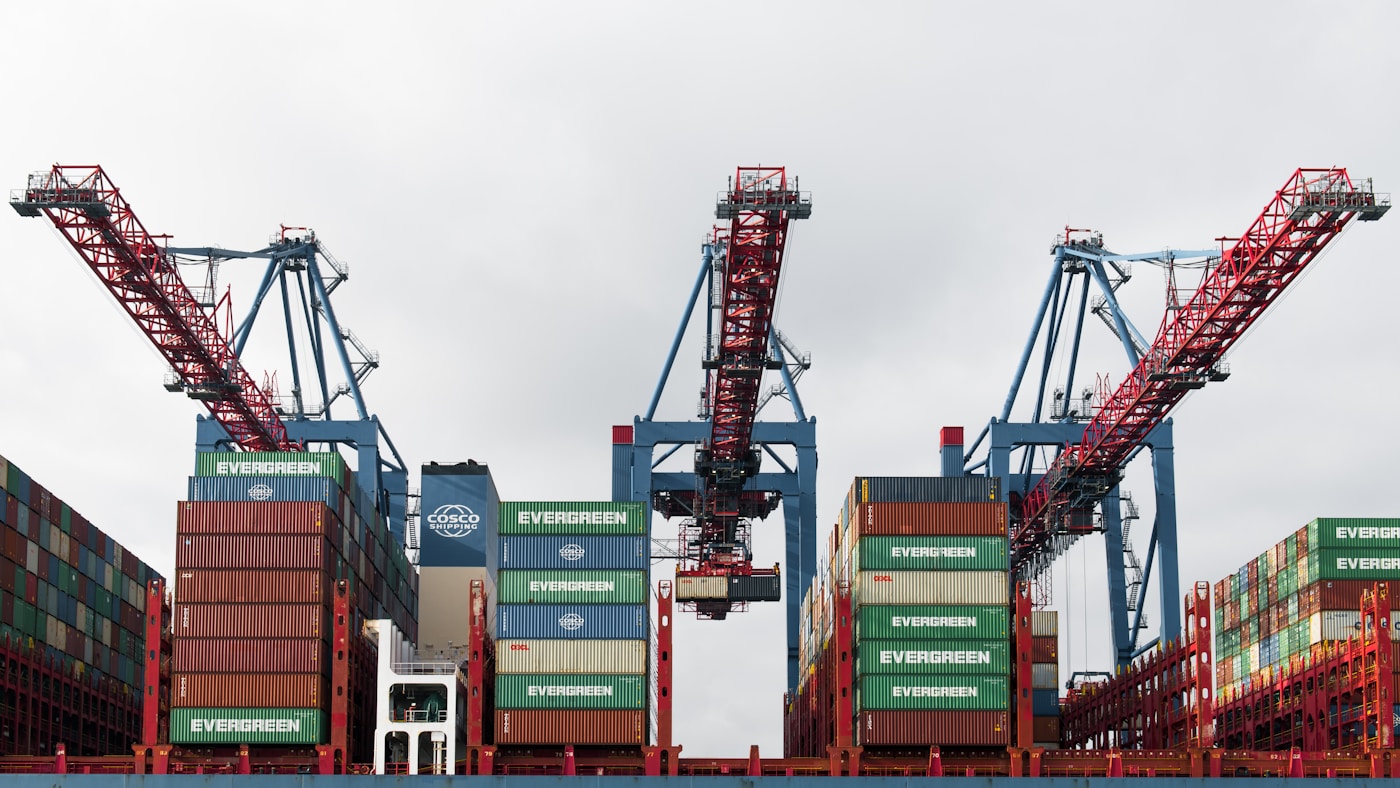
The downstream disruption follows a predictable pattern: when container vessels cannot leave the Gulf, they cannot arrive at their next port of call. Service loops break. Transshipment hubs in Colombo, Singapore, and Port Klang see vessel gaps. Those gaps propagate to feeder routes, creating secondary and tertiary delays that multiply the initial disruption many times over. The Red Sea routing alternative, already strained by Saudi Arabia’s emergency cargo corridor expansion, cannot absorb the volume — Red Sea ports lack the crane capacity, berth depth, and intermodal connections that Gulf terminals provide.
For metals specifically, the trapped cargo represents not just delayed delivery but potential quality degradation. Aluminum ingots and copper cathode stored in ship holds for weeks in Gulf temperatures above 40 degrees Celsius face oxidation and handling damage that may render portions of the cargo below specification. Insurance claims are mounting. Lloyd’s of London, which has already flagged the war’s total economic cost as exceeding COVID, is processing war-risk claims at an unprecedented rate.
What Does the Metals Shortage Mean for Saudi Arabia’s Megaprojects?
Saudi Arabia’s Vision 2030 program is the most materials-intensive construction effort in modern history. NEOM alone is consuming an estimated 20 percent of the world’s available steel supply, according to the gigaproject’s chief investment officer. The Line, Trojena, Oxagon, and the surrounding NEOM infrastructure collectively require millions of tonnes of structural steel, rebar, copper wiring, aluminum cladding, and specialty alloys — virtually all of which arrive via maritime routes that now traverse a war zone.
The strain predates the war. Saudi Arabia’s rebar supply chain was already under severe pressure in 2025, with scrap metal and semi-finished steel becoming increasingly scarce. The surge in demand from simultaneous megaproject construction — NEOM, the Red Sea Global resort complex, King Salman Park, Jeddah Tower, Qiddiya, and dozens of smaller developments — had pushed domestic steel prices upward and created rationing on at least three major Riyadh construction sites, according to industry reports from early March.
The Hormuz blockade has transformed that strain into a crisis. Project managers on multiple Riyadh developments report that rebar stocks will be exhausted within four to six weeks at current consumption rates. Structural steel for high-rise construction is being rationed. Copper wiring — essential for electrical systems in every building — faces acute shortages as Gulf transit routes remain closed.
The Kingdom possesses one significant advantage: its Red Sea coast provides an alternative import route for construction materials shipped from Turkey, Egypt, and Europe. The port of Jeddah has absorbed some overflow, and Crown Prince Mohammed bin Salman’s government has reportedly redirected material procurement orders to Mediterranean and Black Sea suppliers. But rerouting a multi-billion-dollar construction supply chain is measured in months, not days. Contracts must be renegotiated. Logistics providers must establish new routes. Port handling capacity must be expanded. The construction delays are coming regardless.
The 2034 FIFA World Cup, which Saudi Arabia is set to host, adds urgency. Stadium construction, transport infrastructure, and hospitality facilities all depend on the same metals and materials now stuck behind the Hormuz blockade. A months-long disruption could push construction timelines past the point of recovery, forcing the Kingdom to choose between accelerated wartime spending or delayed delivery.
The Renewable Energy Transition Runs on Gulf Metals
The irony of the Hormuz metals crisis is that it threatens the very industries meant to reduce the world’s dependence on Gulf fossil fuels. Solar photovoltaic installations require 2.5 to 7 times more copper per megawatt than fossil fuel power plants, depending on the technology deployed, according to the International Energy Agency. Offshore wind turbines are among the most copper-intensive energy installations ever built. Electric vehicles consume three to four times more copper than internal combustion engine cars — roughly 83 kilograms per vehicle, compared to 23 kilograms for a conventional sedan.
The blockade hits the energy transition at a vulnerable moment. Global renewable energy capacity additions were projected to grow 62 percent in 2026, according to the U.S. Energy Information Administration. Solar and wind projects under construction across Europe, Asia, and North America depend on copper conductors, aluminum structural components, and specialty metals that the Gulf supplies. The war’s impact on oil may accelerate the long-term transition away from fossil fuels, but the metals shortage simultaneously delays the short-term buildout of the alternatives.
This creates what energy economists call a “transition trap” — a scenario in which the disruption that makes fossil fuels expensive also makes their replacements physically unavailable. Europe, which has staked its energy security strategy on rapid renewable deployment, faces the most acute version of this contradiction. The EU emergency energy meeting convened on March 14 focused overwhelmingly on oil prices above $106, but the copper and aluminum shortages may ultimately prove more consequential for the continent’s industrial base.
| Technology | Copper Required | Hormuz Vulnerability | Substitution Potential |
|---|---|---|---|
| Solar PV (per MW) | 2,500-5,000 kg | High — Gulf transit for Asian-refined copper | Limited — aluminum reduces efficiency |
| Offshore wind (per MW) | 8,000-15,000 kg | High — submarine cable copper transits Gulf | Very limited — no viable substitute |
| Electric vehicle (per unit) | 83 kg | Moderate — diversified supply chains | Low — motors and batteries require copper |
| Data center (per MW capacity) | 27,000-33,000 kg | High — power infrastructure copper | Very limited — fiber optics for data only |
| Gas power plant (per MW) | 1,100 kg | Moderate | N/A |
Saudi Arabia’s own renewable energy ambitions face the same constraint. The Kingdom’s target of 130 gigawatts of renewable capacity by 2030, anchored by massive solar projects in the Empty Quarter and wind installations along the Red Sea coast, requires copper in quantities that the domestic market cannot supply. Ma’aden does not produce copper. Every kilogram must be imported — and for seventeen days, the primary import route has been closed.
Can Land Bridges Replace the Strait for Metal Exports?
The short answer is no — not at scale, not at reasonable cost, and not within a timeframe that prevents factory shutdowns in importing nations. But the attempts reveal the desperation of the situation.
Gulf producers and logistics companies have begun exploring overland “land bridge” routes to bypass Hormuz. The most viable option trucks material from Gulf ports to Red Sea facilities — primarily Jeddah and Yanbu in Saudi Arabia — for reloading onto westbound vessels. Saudi Aramco has already demonstrated this approach by ramping up the East-West crude oil pipeline to full capacity, pushing seven million barrels per day from Abqaiq to Yanbu. But pipelines move liquids. Metals must travel on trucks.
The logistics costs are staggering. Overland transport of base metals from Gulf ports to Red Sea facilities adds approximately 300 percent to freight costs, according to industry estimates compiled by Fastmarkets. A container of aluminum ingots that cost $2,000 to ship from Dubai to Rotterdam via Hormuz now costs $8,000 or more via the Saudi land bridge — assuming truck capacity, border clearance, and Red Sea berth availability can all be arranged. Most cannot. Jeddah’s container throughput is roughly one-third that of Dubai’s Jebel Ali, and it lacks the specialized heavy-lift equipment needed for metal cargoes.
The UAE’s Fujairah port, located on the Gulf of Oman outside the Strait of Hormuz, was theoretically positioned as a bypass option. But Iranian drone strikes on Fujairah’s oil terminal on March 14 eliminated that alternative, demonstrating that Iran’s targeting extends beyond the strait itself.
India’s Chabahar port on Iran’s southeastern coast offered another theoretical bypass — a route linking the Arabian Sea to Central Asia without transiting Hormuz — but US strikes on IRGC facilities near the port on 16 March rendered that corridor inoperable as well.
For aluminum specifically, Ma’aden’s domestic integration provides a partial solution. Because Saudi Arabia mines its own bauxite, refines its own alumina, and smelts its own primary aluminum, it can continue production even while export routes are constrained. Ma’aden’s output can be trucked to Jeddah for Red Sea export at elevated but manageable cost, because the entire supply chain is domestic. No other Gulf aluminum producer enjoys this advantage — which is why Alba, Qatalum, and EGA face shutdowns while Ma’aden continues to operate.
The Hormuz Commodity Exposure Matrix
Not all commodities passing through Hormuz face equal risk. The degree of vulnerability depends on five interacting factors: the share of global supply that transits the strait, the availability of alternative routes, the existence of strategic reserves or buffer stocks, the potential for substitution with other materials, and the likely recovery timeline once the strait reopens. Plotting these dimensions reveals why metals may face a longer and more damaging disruption than oil — despite attracting far less attention.
| Commodity | Hormuz Share of Global Trade (%) | Alternative Route Capacity (%) | Strategic Reserve (Days) | Substitution Score (1-5) | Recovery Timeline (Months) | Composite Risk (1-100) |
|---|---|---|---|---|---|---|
| Crude Oil | 20 | 35 (pipelines) | 50+ (SPR) | 3 | 1-2 | 42 |
| LNG | 25 | 5 (minimal) | 15-20 | 2 | 3-6 | 78 |
| Aluminum | 8 | 10 (trucking) | 30-45 | 2 | 6-12 | 71 |
| Copper (transit) | 5 | 8 (rerouting) | 10-15 | 1 | 6-18 | 82 |
| Petrochemicals | 15 | 15 (Yanbu) | 20-30 | 2 | 3-6 | 63 |
| Fertilizer (urea/ammonia) | 12 | 15 (Yanbu) | 30-60 | 1 | 3-6 | 58 |
The matrix reveals a counterintuitive finding. Oil scores the lowest composite risk (42 out of 100) because it benefits from three factors no other commodity shares: extensive pipeline bypass capacity through Saudi Arabia’s East-West Petroline and the UAE’s ADCOP pipeline, massive strategic petroleum reserves totaling more than 1.2 billion barrels across IEA member states, and partial substitutability with natural gas for industrial and power applications.
Copper scores the highest risk (82) despite transiting the strait in smaller volumes than oil. The reasons are structural: copper has virtually no strategic reserves at the national level, no pipeline alternative, extremely limited substitution potential (aluminum can replace copper in some wiring applications but at 40 percent lower conductivity), and the longest projected recovery timeline because disrupted mining contracts, smelter shutdowns, and broken fabrication supply chains take 12 to 18 months to fully reconstitute.
This analysis suggests that the conventional hierarchy of Hormuz risks — oil first, everything else second — is precisely backward. Oil is the commodity best equipped to absorb a Hormuz disruption. Metals are the least equipped. The media focus on oil prices may be creating a dangerous blind spot in both policy planning and corporate risk management.
Data Centers, AI, and the Copper That Is Not Coming
Saudi Arabia declared 2026 the Year of Artificial Intelligence. The Kingdom’s ambitions in this space are enormous: a $100 billion technology investment program, partnerships with Google, Amazon, and Oracle for hyperscale data-center campuses, and the NEOM Tech and Digital Company’s target of becoming a global AI hub. Every one of these ambitions runs on copper.
A large-scale data center requires 27 to 33 tonnes of copper per megawatt of installed capacity, according to S&P Global’s January 2026 report on copper demand in the AI era. This copper is embedded in power distribution systems, cooling infrastructure, server racks, network cabling, and the grid connections that feed electricity to the facility. For a typical 100-megawatt AI campus — the standard module now being deployed by Microsoft, Google, and Amazon — that translates to roughly 3,000 tonnes of copper before a single server is installed.
The global data-center buildout is projected to consume between 330,000 and 420,000 tonnes of copper annually by 2030, with a midpoint of 375,000 tonnes. That figure represents a demand increment larger than the total copper consumption of many mid-sized industrial nations. It was already straining supply chains before the Hormuz blockade added 40,000 tonnes of monthly transit disruption.
For Saudi Arabia specifically, the collision between AI ambitions and metals shortages creates a policy contradiction. The Kingdom is simultaneously trying to build the world’s most ambitious data-center ecosystem, construct the world’s most materials-intensive megaprojects, maintain domestic manufacturing growth, and expand renewable energy capacity — all while its primary metals import route is shut by a war it did not start and a blockade it cannot unilaterally break. The copper shortage is only half the problem: the submarine cables that connect Gulf data centres to the global internet run through the same contested waters, meaning the data-centre ecosystem faces a connectivity chokepoint even if the facilities themselves are built on time.
The conventional wisdom holds that Saudi Arabia’s oil wealth insulates it from commodity price shocks. This is true for fiscal resilience — the Kingdom can afford to pay premium prices for imported metals. But it cannot buy metal that does not exist on the global market, and it cannot accelerate shipping through a strait that is physically closed. Wealth solves the price problem. It does not solve the physical availability problem. That distinction matters enormously when construction crews are waiting for rebar that is sitting in a ship hold 500 nautical miles away with no route to port.
Will the Metals Crisis Outlast the War Itself?
Almost certainly. The asymmetry between oil market recovery and metals market recovery is structural, not temporary, and it stems from fundamental differences in how the two commodity ecosystems function.
Oil can recover quickly after a disruption because the infrastructure for rapid response exists. Strategic petroleum reserves can be drawn down within days. Saudi Arabia’s Petroline can swing to full capacity within 72 hours. OPEC members have already agreed to boost output by 206,000 barrels per day to compensate for lost Iranian production. When Hormuz reopens, tanker traffic can resume within hours, and the spot market will reprice within minutes. In a sign that the total blockade may be easing, Treasury Secretary Bessent confirmed on 16 March that Washington is allowing Iranian oil tankers through the strait while several non-Western-allied vessels have secured safe passage.
Metals markets operate on entirely different timescales. An aluminum smelter that has undergone a controlled shutdown — as Alba is now executing — requires weeks to restart. The electrolytic cells that produce primary aluminum must be brought back to operating temperature gradually. Rapid restart risks catastrophic equipment damage. Qatalum’s complete shutdown in Qatar is even more severe; industry experts estimate a 90-to-120-day restart timeline assuming uninterrupted alumina supply resumes.
The downstream effects compound the delay. When a European automotive manufacturer cannot obtain Gulf-sourced aluminum sheet for three months, it does not simply wait. It cancels orders, renegotiates contracts with alternative suppliers (if available), adjusts production schedules, and passes costs to consumers. When the Gulf supply eventually returns, the manufacturer has already locked in alternative arrangements. Rebuilding the original supply relationship takes additional months of contract negotiations, quality testing, and logistics reestablishment.
The metals market does not recover on the day the strait reopens. It recovers on the day the last factory that lost its Gulf supplier finds a reason to switch back. That could be a year after the war ends.
Commodity strategist assessment, LME market analysis, March 2026
For copper, the recovery timeline is even longer. The Hormuz blockade did not merely interrupt transit — it exacerbated a pre-existing structural deficit. McKinsey estimated that global copper demand would exceed supply by 6.5 million tonnes by 2031. That gap has now widened because the blockade has accelerated stockpiling by nations and corporations seeking to buffer against future disruptions. China, Japan, and South Korea are all building copper reserves — precisely the kind of hoarding behavior that extends shortages well beyond the initial trigger.
The historical parallel is instructive. After the 2019 attacks on Aramco’s Abqaiq processing facility temporarily halved Saudi oil output, crude prices spiked 15 percent in a single day and recovered within two weeks as the facility was repaired. The oil market’s recovery mechanisms — spare capacity, reserves, futures contracts — absorbed the shock efficiently. No equivalent mechanism exists for industrial metals. There is no “strategic copper reserve” that governments can draw down. There is no spare smelting capacity sitting idle. There is no futures market deep enough to redirect physical metal to where it is needed overnight. When metals supply breaks, it stays broken until the physical infrastructure that produces, ships, and processes the metal is fully reconstituted.
The consequence for global industry is a planning horizon problem. Manufacturers cannot design production schedules around a commodity that might be available next month or might not be available for six months. The rational corporate response is to over-order from non-Gulf sources, lock in long-term contracts with higher-cost but lower-risk suppliers, and build inventory buffers that permanently remove metal from the spot market. Each of these responses individually worsens the shortage. Collectively, they create a self-reinforcing scarcity cycle that the reopening of Hormuz alone cannot break.
The Supply Chain Damage a Ceasefire Cannot Repair
The most consequential effects of the Hormuz metals crisis are not measured in commodity prices or shipping delays. They are measured in the structural decisions that companies, governments, and entire industries make when forced to confront the vulnerability of depending on a single chokepoint for critical materials.
European automakers are already diversifying aluminum sourcing away from the Gulf toward Canadian, Icelandic, and Norwegian smelters — suppliers with higher energy costs but no chokepoint risk. If these relationships solidify, Gulf aluminum producers may find their market share permanently diminished even after Hormuz reopens. The same dynamic played out after COVID disrupted semiconductor supply chains from Asia: the reshoring and “friendshoring” decisions made during the crisis outlasted the crisis itself by years.
For Saudi Arabia, the metals crisis reinforces a lesson that the royal family has been absorbing since the Vision 2030 program began: self-sufficiency in critical inputs is a national security imperative, not merely an economic preference. Ma’aden’s domestic aluminum integration — from bauxite mine to finished ingot, entirely within Saudi borders — has proven its strategic value under wartime conditions. Extending that model to other metals, particularly copper and steel, should be a priority regardless of the war’s outcome.
The metals crisis also exposes the limits of the “land bridge” concept that has attracted considerable attention as a Hormuz alternative. Trucking metal overland at 300 percent cost premiums is an emergency measure, not a viable permanent logistics strategy. Saudi Arabia’s geography — with Gulf-facing production facilities and Red Sea-facing export terminals separated by hundreds of kilometers of desert — means that any permanent Hormuz bypass for metals would require purpose-built rail connections, dedicated port facilities, and material-handling infrastructure that does not currently exist and would take years to construct.
The food security parallel is instructive. The Kingdom’s vulnerability to Hormuz disruption in food supply chains prompted accelerated investment in domestic agriculture, strategic grain reserves, and alternative supply routes. The metals crisis should prompt equivalent investment in domestic mineral extraction, metals processing capacity, and logistics infrastructure that routes critical imports around chokepoints rather than through them.
A ceasefire will reopen the strait. It will not undo the strategic recalculation that seventeen days of blockade have forced on every company and government that depended on Hormuz for metals and materials. Those recalculations — sourcing diversification, inventory buffer expansion, friendshoring of supply chains — represent permanent structural shifts in global commodity markets. The war’s impact on oil prices will fade within quarters. Its impact on metals supply chains will reshape industrial geography for a generation.
Frequently Asked Questions
What metals transit the Strait of Hormuz besides oil?
The Strait of Hormuz carries significant volumes of aluminum, copper cathode, steel products, petrochemical feedstocks, and fertilizer raw materials. Gulf Cooperation Council nations produce approximately 8 percent of global primary aluminum, nearly all exported through Hormuz-dependent ports. Approximately 40,000 tonnes of copper cathode transit the strait monthly, alongside millions of tonnes of urea, ammonia, and methanol from Qatar, Saudi Arabia, and the UAE.
How has the Hormuz blockade affected copper prices?
Copper prices on the London Metal Exchange were already at record levels before the blockade, touching $14,527 per tonne in January 2026. The Hormuz closure has worsened the physical shortage by trapping approximately 40,000 tonnes of copper cathode monthly inside the Gulf, causing physical premiums in Europe and Asia to double. The blockade compounds a structural supply deficit that Wood Mackenzie projected at 304,000 tonnes for 2025, widening further in 2026.
Why did Bahrain’s Alba cut aluminum production?
Aluminium Bahrain (Alba) initiated a 19 percent capacity cut on March 15, shutting production lines 1, 2, and 3. The shutdown was driven by the loss of imported alumina feedstock, which normally arrives via Persian Gulf shipping routes now closed by the Hormuz blockade. Unlike Saudi Arabia’s Ma’aden, which sources bauxite domestically, Alba depends entirely on seaborne alumina deliveries that have ceased since major carriers suspended Gulf transits.
Will the metals shortage affect Saudi Arabia’s megaprojects?
Saudi Arabia’s megaprojects face severe materials pressure. NEOM alone consumes an estimated 20 percent of the world’s available steel. Project managers on multiple Riyadh developments report rebar stocks will be exhausted within four to six weeks. Copper wiring and structural steel are being rationed. While the Kingdom can redirect some imports through Red Sea ports, rerouting a multi-billion-dollar supply chain takes months, and construction delays appear inevitable.
How long will the metals crisis last after a ceasefire?
The metals supply chain disruption compounds an already dire economic outlook. Goldman Sachs has warned that Gulf states face GDP contractions of up to 14 percent, with the combined impact of oil revenue losses, tourism collapse, and supply chain disruptions pushing the region toward its deepest recession since the 1991 Gulf War.
The metals crisis is expected to outlast any ceasefire by six to eighteen months. Aluminum smelters that have shut down require weeks to safely restart. Downstream manufacturers that have diversified away from Gulf suppliers will not immediately switch back. The pre-existing structural copper deficit of 304,000 tonnes has been worsened by wartime hoarding from nations building buffer stocks. Oil markets can recover within days of Hormuz reopening; metals markets face structural delays measured in quarters.