
RIYADH — Saudi Arabia’s foreign minister stood at a podium in the early hours of Thursday and said something no Saudi official had ever said during twenty days of Iranian missile and drone attacks: the Kingdom reserves the right to strike Iran. Prince Faisal bin Farhan Al Saud’s declaration that Saudi patience is “not unlimited” — delivered while intercepted ballistic missile debris still littered the outskirts of Riyadh — marks the sharpest pivot in Saudi strategic posture since the war began on February 28. For three weeks, Riyadh absorbed more than 400 drones and dozens of ballistic missiles while maintaining the disciplined restraint that analysts had called the Kingdom’s greatest strategic weapon. That restraint did not end on Thursday morning. But its expiration date, for the first time, became visible.
Hours earlier, Saudi Civil Defense had pushed the Kingdom’s first-ever air raid alert to mobile phones across Riyadh, warning 8.4 million residents to shelter in place as interceptors engaged the incoming warheads.
The statement arrived at the worst possible moment for Iran’s diplomatic position. Foreign ministers from twelve nations had gathered in Riyadh to discuss the expanding regional crisis when Iranian ballistic missiles targeted the capital — a provocation that Prince Faisal interpreted as deliberate contempt for diplomacy itself. What followed was a press conference that every Middle East analyst, defence ministry, and oil trader will study for weeks: the first explicit Saudi threat of offensive military action against the Islamic Republic, layered with calculated ambiguity about timelines and conditions that makes the threat more, not less, dangerous.
Table of Contents
- What Did Saudi Arabia’s Foreign Minister Actually Say?
- Why Did Saudi Arabia Stay Silent for Twenty Days?
- The Riyadh Summit That Changed the War’s Trajectory
- What Military Options Does Saudi Arabia Actually Have?
- The Air Defense Paradox — Winning a War Without Attacking
- How Does Saudi Arabia’s Military Compare to Iran’s?
- The Escalation Calculus — A Framework for Saudi Decision-Making
- Why the Threat Itself May Be Saudi Arabia’s Real Weapon
- What Role Does America Play in Saudi Arabia’s Military Calculus?
- The Economic Equation — War Costs Versus Restraint Costs
- What Does the Yemen War Reveal About Saudi Military Performance?
- What Comes After the Warning?
- Frequently Asked Questions
What Did Saudi Arabia’s Foreign Minister Actually Say?
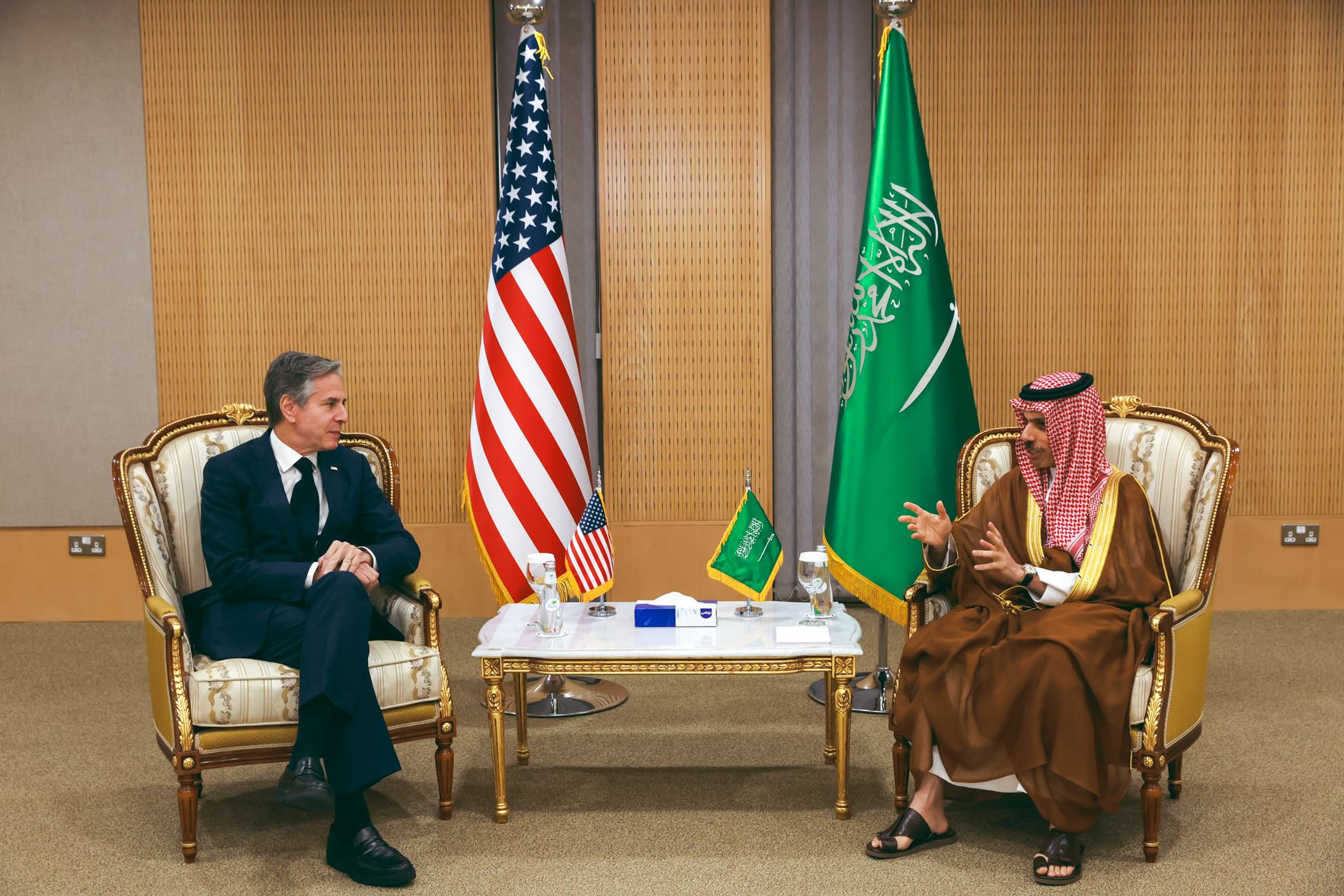
Prince Faisal bin Farhan Al Saud’s March 19 press conference contained five distinct signals that, taken together, represent the most aggressive Saudi diplomatic language directed at Iran since the war began. Each sentence was chosen with the precision of a man who understands that in wartime, foreign ministers do not speak carelessly.
The first signal was the destruction of the diplomatic relationship itself. “What little trust there was before has completely been shattered,” Prince Faisal said. This was not hyperbole. The Saudi-Iranian rapprochement brokered by China in 2023 — which reopened embassies and normalized relations after seven years of hostility — is now formally dead in Riyadh’s assessment. The phrase “completely shattered” leaves no room for the partial trust that enables back-channel communications. It declares, in diplomatic language, that the phone lines are down.
The second signal was the explicit reservation of military force. “We reserve the right to take military actions if deemed necessary,” Prince Faisal stated. In the grammar of international diplomacy, “reserving the right” to use force is the step immediately before issuing an ultimatum. It places the threat on the record without committing to a timeline — the diplomatic equivalent of loading a weapon without pointing it.
The Middle East briefing 3,000+ readers start their day with.
One email. Every weekday morning. Free.
The third signal was the deliberate ambiguity about timelines. Asked whether Iran had days or weeks to halt its attacks, Prince Faisal responded: “It could be a day, two days, or a week — I will not say.” This formulation is not evasive. It is tactically precise. By refusing to name a deadline, the foreign minister ensured that every subsequent Iranian drone launch carries the risk of triggering a Saudi response. Tehran cannot calculate a safe window for continued aggression.
The fourth signal was the framing of Iran’s Riyadh strike as a deliberate insult to diplomacy. “Iran’s message today was quite clear,” Prince Faisal said. “The targeting of Riyadh, while a number of diplomats are meeting, I cannot see as coincidental.” This framing strips Tehran of any deniability about its strategic intentions. If Iranian missiles can reach a room full of foreign ministers, the implication runs, then diplomacy itself has become a target.
The fifth signal was a veiled reference to collective military capability. “The Kingdom and its partners possess significant capabilities, and the patience we have shown is not unlimited.” The word “partners” transforms a Saudi threat into a coalition threat. It signals that any military action would not be unilateral — a critical distinction that multiplies both its deterrent value and its operational feasibility. The scope of those capabilities — from 304 advanced combat fighters to Chinese-supplied ballistic missiles — is detailed in an analysis of the military Saudi Arabia built for a war it didn’t want.
Why Did Saudi Arabia Stay Silent for Twenty Days?
Saudi Arabia’s decision to absorb Iranian attacks without retaliating for the first twenty days of the war was neither weakness nor indecision. It was a calculated strategy that yielded concrete results — results that Prince Faisal’s statement now threatens to spend. Understanding why Riyadh chose restraint explains why abandoning it carries such high stakes.
The restraint strategy rested on three pillars. The first was moral authority. By positioning itself as a victim of unprovoked aggression — a non-combatant in a war between the United States, Israel, and Iran — Saudi Arabia accumulated international sympathy at a rate that no military campaign could have achieved. The United Nations Security Council condemned Iran’s attacks on Gulf states in a near-unanimous vote. Pakistan deployed air defenses and troops to the Kingdom. Britain sent additional fighter jets, helicopters, and a destroyer. Each gesture of solidarity strengthened Riyadh’s strategic position without costing a single Saudi ordnance.
The second pillar was economic calculation. Prince Khalid bin Salman, the defence minister, understood that Saudi Arabia’s most valuable assets — Aramco facilities, desalination plants, the East-West Pipeline — are targets that grow more vulnerable the moment the Kingdom becomes a declared combatant. As a non-belligerent, Saudi Arabia could argue that Iranian strikes on its infrastructure constituted war crimes against a civilian state. As a combatant, those same facilities become legitimate military targets under international humanitarian law.
The third pillar was diplomatic leverage. Prince Faisal’s wartime diplomacy depended on Riyadh’s ability to position itself as a potential mediator rather than a belligerent. The Kingdom maintained indirect communication channels with Tehran, hosted peace-seeking envoys from Beijing, and convened regional summits — all roles that are incompatible with active combat operations against Iran.
The strategy worked until it didn’t. Iran’s escalation from targeted military strikes to systematic attacks on civilian energy infrastructure across the entire Gulf — hitting Qatar’s Ras Laffan, the UAE’s Habshan facility, and threatening Saudi Arabia’s Jubail petrochemical complex — eroded every pillar simultaneously. Moral authority means little when your allies’ gas fields are burning. Economic calculation shifts when the damage from restraint exceeds the projected damage from action. Diplomatic leverage evaporates when missiles target the building where diplomats are meeting. The IRGC’s formal designation of twelve Gulf energy facilities as legitimate military targets transformed the war’s character from a military conflict into a campaign of mutual energy destruction. When Greek Patriot batteries intercepted Iranian ballistic missiles over Yanbu on March 19, the conflict drew its first NATO ally into direct combat — an escalation that further eroded any remaining pretence of Saudi non-involvement.
The Riyadh Summit That Changed the War’s Trajectory
The consultative meeting of foreign ministers that convened in Riyadh on March 18-19 was not simply another emergency summit in a war that has produced many. It was the moment when the political architecture for potential Gulf military action against Iran began to take visible form.
Twelve nations sent their top diplomats: Saudi Arabia, Kuwait, Qatar, the UAE, Bahrain, Egypt, Lebanon, Syria, Jordan, Pakistan, Turkey, and Azerbaijan. The breadth of attendance itself carried a message. Turkey’s Foreign Minister Hakan Fidan — representing the only NATO member in the room — conducted separate bilateral meetings with his Iranian, Azerbaijani, and Pakistani counterparts before joining the collective session. His presence connected the Gulf’s emerging security consensus to the broader Western alliance framework, however indirectly. Fidan later toured Riyadh, Doha, and Abu Dhabi over three days urging Gulf leaders not to enter the conflict.
The summit’s joint statement condemned Iran’s “deliberate” attacks on GCC countries and other Arab and Islamic nations, declaring that “this aggression cannot be justified.” It called on Iran “to immediately halt its attacks” and affirmed “the necessity of respecting international law, international humanitarian law, and the principles of good neighborliness, as a first step toward ending the escalation.” The language was stronger than any previous collective statement — the word “deliberate” removed the ambiguity that earlier diplomatic formulations had preserved.
The summit occurred against the backdrop of Iran’s most provocative escalation to date. On March 18, Iranian ballistic missiles targeted Riyadh itself — the capital where diplomats had gathered specifically to discuss the crisis. Prince Faisal interpreted this as intentional: “The targeting of Riyadh, while a number of diplomats are meeting, I cannot see as coincidental.” If the interpretation is correct, Tehran effectively declared that it considers regional diplomacy as much a target as regional infrastructure.
The twelve-nation gathering also matters for what it reveals about emerging coalition structures. Pakistan, which deployed air defenses and troops to Saudi Arabia earlier in the conflict, was present as a military partner. Turkey, despite absorbing three Iranian missiles without retaliating, attended as a diplomatic heavyweight with its own interests in containing Iranian regional expansion. Egypt — whose military is the largest in the Arab world — participated despite maintaining its studied neutrality. The coalition is not yet a military alliance. But it is no longer purely diplomatic either.
What Military Options Does Saudi Arabia Actually Have?
Saudi Arabia’s military options against Iran range from symbolic gestures to operations that would fundamentally alter the character of the conflict. Each option carries a distinct risk profile, and understanding the full spectrum is essential to evaluating whether Riyadh’s threat is credible.
The most conservative option is enhanced intelligence sharing with the US-Israeli coalition conducting operations against Iran. This falls short of direct military action but would represent a meaningful escalation from Saudi Arabia’s current posture. Saudi intelligence services possess granular knowledge of Iranian proxy networks across the Gulf, shipping patterns in the Strait of Hormuz, and Iranian diplomatic communications that passed through Riyadh before the rapprochement collapsed. Sharing this intelligence would accelerate coalition targeting without requiring Saudi forces to fire a shot.
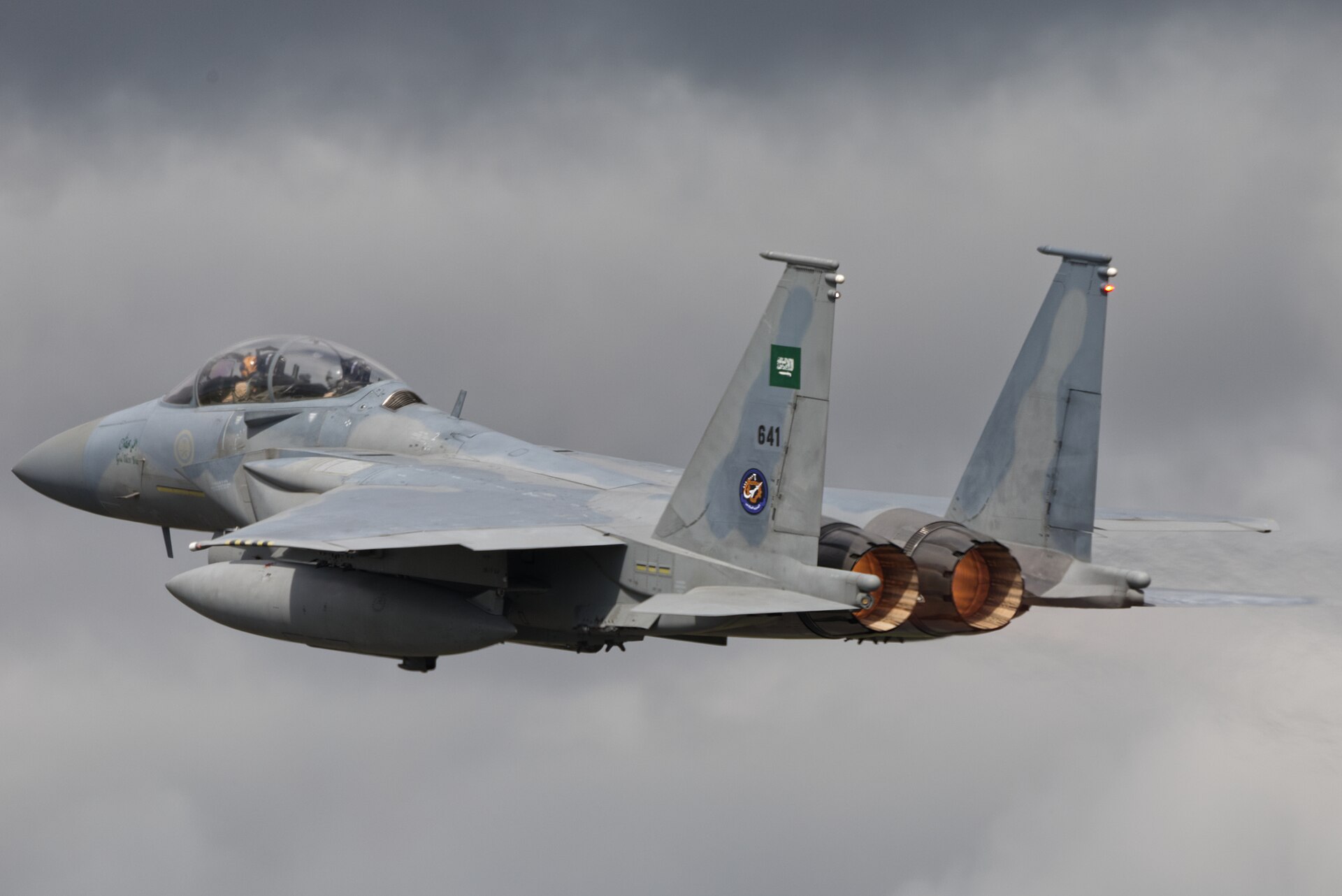
The second tier involves offensive counter-air operations against Iranian drone and missile launch sites. The Royal Saudi Air Force maintains 232 F-15 variants — including 84 of the advanced F-15SA model — and 72 Eurofighter Typhoons. These 304 modern combat aircraft constitute the most powerful air force in the Arab world. A sustained air campaign against Iranian launch facilities in western Iran, particularly the sites from which Shahed-136 drones are launched toward Gulf targets, would be operationally feasible and would directly degrade the threat to Saudi territory.
The third tier involves naval operations to support the reopening of the Strait of Hormuz. The Royal Saudi Naval Forces, with 29 active vessels including 11 frigates and 9 corvettes, could contribute to the multinational maritime escort operations that Washington has been assembling. Saudi participation would be more symbolic than decisive — Iran’s 97-vessel navy and 6 submarines represent a substantial threat in the confined waters of the Strait — but it would transform the character of the coalition from “America defending the Gulf” to “the Gulf defending itself.”
The most aggressive option is direct strikes against Iranian military infrastructure. Targets could include IRGC naval bases along the Iranian coast, ballistic missile production facilities, or command-and-control nodes. This option would cross every red line simultaneously and is the least likely to be executed unless Iran conducts an attack that kills large numbers of Saudi civilians.
The Air Defense Paradox — Winning a War Without Attacking
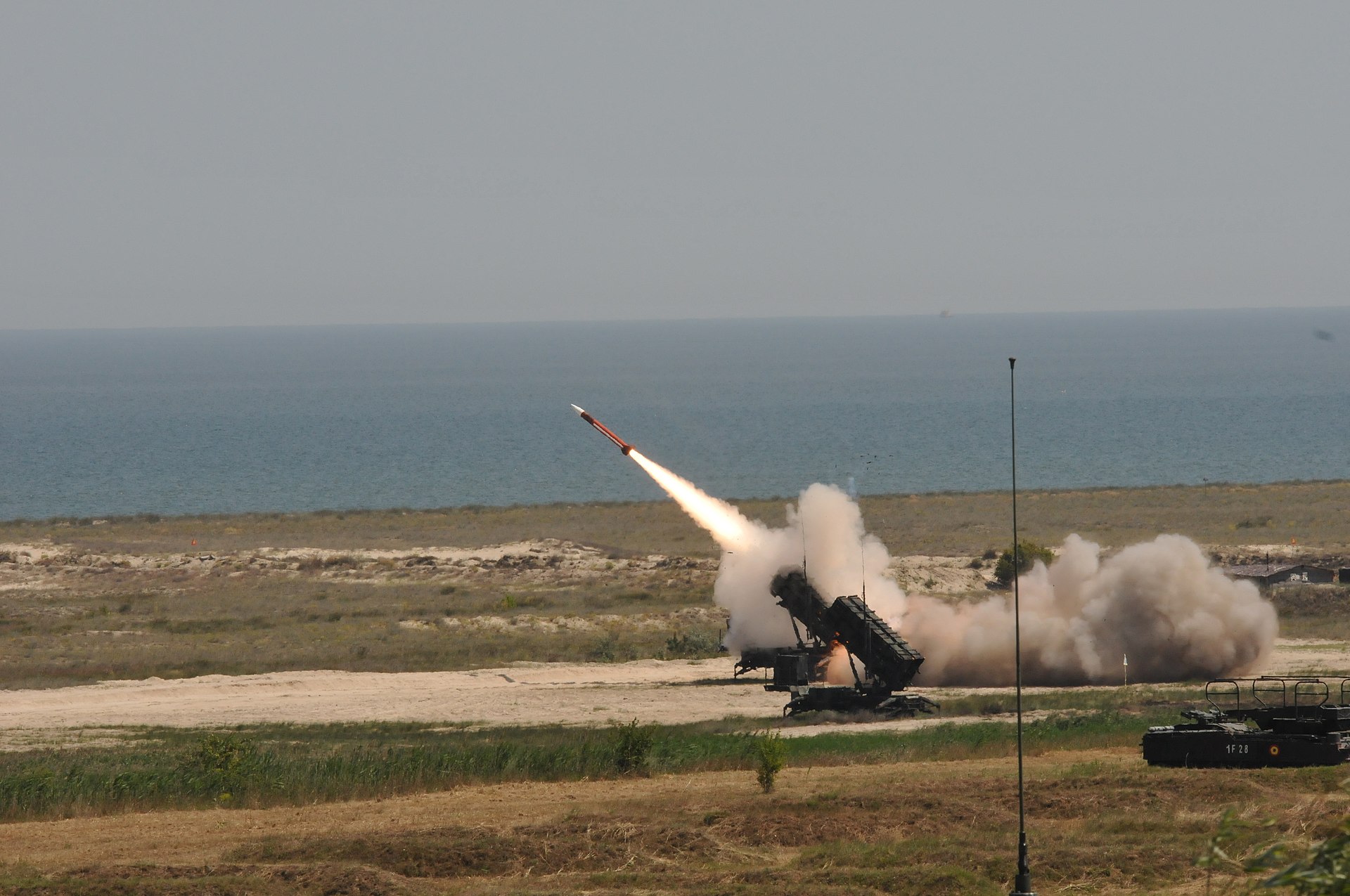
Saudi Arabia’s air defense performance during the Iran war represents one of the most sustained defensive campaigns in modern military history — and it has created a paradox that shapes every decision about offensive action. The Kingdom’s multi-layered air defense architecture has intercepted the overwhelming majority of Iranian projectiles, including the four ballistic missiles that targeted Riyadh on March 18. Each successful interception strengthens the argument for continued restraint: why risk offensive action when defensive systems are performing effectively?
The air defense network operates across five layers. At the top sits THAAD — the Terminal High Altitude Area Defense system — with its first battery operational since July 2025 and a full package covering seven batteries, 44 launchers, and 360 interceptors. Below THAAD sits the Patriot system, with 108 M902 launchers in six battalions firing a mix of PAC-2 GEM-T and PAC-3 hit-to-kill interceptors. A $9 billion Patriot missile sale approved in February 2026 will replenish stocks depleted by three weeks of continuous operations. Medium-range coverage comes from the South Korean Cheongung II system, with deliveries pending. Short-range defense relies on Shahine, Crotale, and Oerlikon Skyguard systems, supplemented by Stinger shoulder-fired missiles and — reportedly — Chinese Silent Hunter laser systems for drone interdiction.
The paradox is mathematical. Saudi Arabia’s total air defense investment exceeds $80 billion. Iran’s drone and missile arsenal, which entered the war with an estimated 2,500 ballistic missiles and a virtually unlimited supply of Shahed-136 drones, costs a fraction of that figure. Every Patriot interceptor that destroys a $20,000 Shahed drone represents an exchange ratio that favours the attacker. The International Institute for Strategic Studies has noted that Gulf states’ “formidable arsenals” give them options, but defensive success alone cannot end a conflict in which the attacker’s cost of persistence is far lower than the defender’s cost of interception.
This mathematical reality — not frustration, not politics, not emotion — is what drives the calculation toward offensive options. Air defense can protect Saudi territory indefinitely. It cannot stop Iran from launching. Only strikes against launch sites, production facilities, or command infrastructure can reduce the volume of incoming threats. Prince Faisal’s statement acknowledges this reality without stating it explicitly: “We are going to use every lever we have — political, economic, diplomatic and otherwise — to get these attacks to stop.” The word “otherwise” carries the weight of the entire air defense paradox.
How Does Saudi Arabia’s Military Compare to Iran’s?
A direct military comparison between Saudi Arabia and Iran reveals a contest of asymmetries — each side holds decisive advantages in different domains, and neither can claim outright superiority across the full spectrum of conflict.
The asymmetry extends beyond the kinetic domain. Iran has launched more than 600 cyber attacks against Gulf infrastructure at costs that barely register in its wartime budget, targeting Saudi banks, airports, and the GPS systems that commercial shipping depends on.
| Category | Saudi Arabia | Iran | Advantage |
|---|---|---|---|
| Defence budget | $75 billion | $23 billion | Saudi Arabia (3.3:1) |
| Active personnel | 257,000 (+125,000 SANG) | 610,000 (+190,000 IRGC) | Iran (2:1) |
| Combat aircraft | 384 | 286 | Saudi Arabia (quality edge) |
| Naval vessels | 29 | 97 | Iran (3.3:1) |
| Submarines | 0 | 6 | Iran (absolute) |
| Ballistic missiles | Limited | ~2,500 | Iran (decisive) |
| Equipment generation | Modern Western | Mixed domestic/older | Saudi Arabia |
| Combat experience | Yemen (mixed results) | Syria, Iraq, proxies | Iran |
Saudi Arabia’s advantages are concentrated in technology and resources. The Royal Saudi Air Force operates the most modern fleet in the region, with F-15SA Eagles and Eurofighter Typhoons representing fourth-generation-plus capability that Iran’s aging fleet of F-14 Tomcats and domestically produced copies cannot match. Saudi Arabia’s defence budget of approximately $75 billion — three times Iran’s — funds maintenance, training, and munitions procurement at levels that ensure sustained operational readiness.
Iran’s advantages are concentrated in mass, missiles, and asymmetric warfare. The Islamic Republic maintains roughly 800,000 personnel under arms when IRGC forces are included, compared to Saudi Arabia’s combined total of approximately 382,000. Iran’s ballistic missile inventory of some 2,500 weapons — including Shahab-3, Emad, Khorramshahr, and Kheibar Shekan variants with ranges of 2,000 to 2,500 kilometres — represents the largest such arsenal in the Middle East and has no Saudi equivalent. Iran’s navy, while technologically inferior, outnumbers the Saudi fleet three to one and operates six submarines against zero Saudi submarines — a gap that RAND Corporation analysts have identified as Saudi Arabia’s “most significant capability deficit.”
The comparison matters less than the context. Saudi Arabia would not fight Iran alone, and Iran is already fighting the United States and Israel simultaneously. A Saudi entry into the conflict would add airpower and basing infrastructure to a coalition that already possesses overwhelming conventional superiority. The question is not whether Saudi Arabia could defeat Iran in a bilateral war — it is whether Saudi military action would accelerate the war’s conclusion or merely expand its geography.
The Escalation Calculus — A Framework for Saudi Decision-Making
Saudi Arabia’s decision on whether to transition from defensive restraint to offensive action can be understood through a structured escalation calculus that weighs four variables: threat severity, alliance solidarity, economic damage, and exit options. Each variable has a threshold beyond which restraint becomes strategically irrational. The question facing Crown Prince Mohammed bin Salman and his war cabinet is whether those thresholds have been crossed.
| Variable | Threshold for Action | Current Status (March 19) | Assessment |
|---|---|---|---|
| Threat severity | Attacks on civilians/critical infrastructure with casualties | 11 killed, Riyadh targeted with ballistic missiles, energy infrastructure under sustained attack | THRESHOLD CROSSED |
| Alliance solidarity | Coalition partners formally request Saudi participation | 12-nation summit condemns Iran; Pakistan deployed forces; US provides intelligence sharing. No formal request for Saudi offensive action | APPROACHING THRESHOLD |
| Economic damage | Revenue losses exceed projected cost of military action | $4.5 billion in revenue losses; oil exports at 50% via Yanbu bypass; Hormuz remains closed | APPROACHING THRESHOLD |
| Exit options | No diplomatic path to end attacks remains viable | Trust “completely shattered”; Iran rejected ceasefire; attacked diplomats in session | THRESHOLD CROSSED |
The framework reveals that two of four thresholds have been crossed (threat severity and exit options), while two remain in the approach zone (alliance solidarity and economic damage). This configuration — partially triggered but not fully activated — explains Prince Faisal’s carefully calibrated language. The threat is real because the conditions for action are substantially met. The ambiguity about timing exists because two conditions remain unfulfilled.
The threat severity threshold crossed definitively when Iranian missiles targeted Riyadh on March 18 while diplomats were in session. Previous attacks on military infrastructure and oil facilities — however damaging — could be absorbed within the restraint framework. Attacks on the capital itself, with eleven civilians killed across the Gulf from strikes on hotels, airports, and residential areas, moved the threat assessment from “manageable” to “existential in political terms.” No Saudi leader can indefinitely accept missile strikes on Riyadh without a military response and retain domestic legitimacy.
The exit options threshold crossed when Prince Faisal declared trust “completely shattered.” This is not merely diplomatic language — it is a formal assessment that the preconditions for negotiation no longer exist. Iran’s rejection of ceasefire proposals, combined with the attack on Riyadh during a diplomatic summit, eliminated the remaining scenarios under which restraint could produce a negotiated end to Iranian attacks. Without a diplomatic path, the only remaining paths are military action or indefinite absorption of strikes.
The alliance solidarity and economic damage variables remain in transition. Washington has not formally requested Saudi offensive participation — indeed, RAND Corporation analysts note that “military experts in Washington don’t see much of an upside and are not encouraging those countries to actively take the fight to Iran.” And while economic losses are substantial, Saudi Arabia’s fiscal reserves and Yanbu bypass pipeline provide a buffer that has not yet been exhausted. The calculus could shift rapidly if Iran conducts a major successful strike on Saudi energy infrastructure or if the United States explicitly invites Saudi military participation.
Why the Threat Itself May Be Saudi Arabia’s Real Weapon
The conventional reading of Prince Faisal’s statement is straightforward: Saudi Arabia is preparing for war with Iran. The contrarian reading — supported by the structure of the statement itself and by Saudi Arabia’s strategic track record — is that the threat of war is the weapon, and its execution would actually weaken Riyadh’s position.
Consider the strategic arithmetic. Saudi Arabia’s restraint over twenty days accumulated three forms of capital that would be immediately spent by entering the conflict. First, international sympathy: the Kingdom received military deployments from Pakistan, intelligence cooperation upgrades from Britain and France, and a near-unanimous UN Security Council condemnation of Iran — all predicated on Saudi Arabia’s status as a non-combatant victim. Second, economic protection: as a non-belligerent, Saudi Arabia can demand international insurance coverage for its energy exports and invoke sovereign immunity protections for its infrastructure. As a combatant, those protections evaporate. Third, diplomatic centrality: Riyadh hosted the twelve-nation summit precisely because it occupied the unique position of being affected by the war without being a party to it. Combatant status would relocate the diplomatic centre of gravity elsewhere.
The Middle East Council on Global Affairs articulated this logic in stark terms: “The only winning move is not to play.” A region where Gulf states resist escalation “would retain the capacity to shape the post-war order.” Saudi Arabia’s influence over the eventual peace settlement — the terms under which Hormuz reopens, the security guarantees that replace the shattered rapprochement, the reconstruction contracts that will rebuild damaged infrastructure — depends on maintaining a position above the conflict rather than within it.
Prince Faisal’s statement, read through this lens, is not a prelude to military action but a deterrence escalation — the most powerful form of coercive diplomacy available to a state that has not yet used force. The threat gains its potency precisely from its novelty. For twenty days, Iran calculated that Saudi Arabia would not respond militarily regardless of provocation. That calculation is now uncertain. Uncertainty, in strategic theory, is more destabilising to an aggressor than certainty — because an aggressor can plan around a predictable response but cannot plan around an unpredictable one.
The deliberate ambiguity about timelines reinforces this interpretation. “It could be a day, two days, or a week — I will not say.” A leader preparing for imminent military action would not advertise the possibility of a week’s delay. A leader deploying ambiguity as a weapon would say exactly this — ensuring that every subsequent Iranian launch must be weighed against the possibility that it triggers a Saudi response.
“We are going to use every lever we have — political, economic, diplomatic and otherwise — to get these attacks to stop.”
Prince Faisal bin Farhan Al Saud, Saudi Foreign Minister, March 19, 2026
The word “otherwise” in this sentence is doing more strategic work than any weapon system in the Saudi arsenal. It is the credible but unspecified alternative — the threat that need not be executed to change behaviour, provided Iran believes it might be.
Subsequent events suggest the threat worked. Within days of Prince Faisal’s warning, Iran quietly ceased direct attacks against Saudi Arabia while continuing to strike other targets in the region. The Kingdom’s broader deterrence strategy — combining diplomatic warnings, military capability, and strategic ambiguity — appears to have forced Tehran into a recalculation that validates the theory that the threat itself was always the weapon.
What Role Does America Play in Saudi Arabia’s Military Calculus?
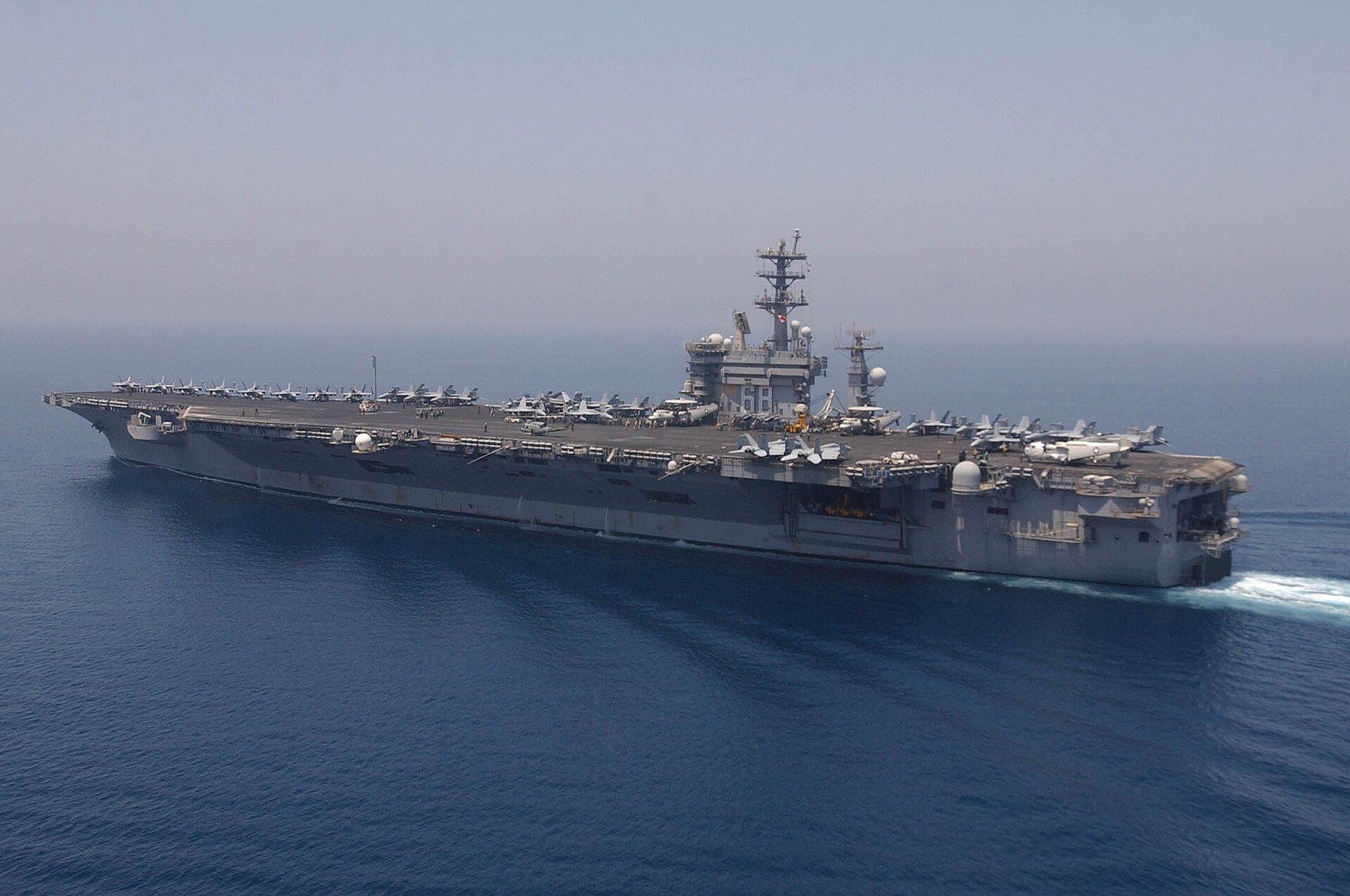
Saudi Arabia cannot conduct sustained offensive operations against Iran without American cooperation, and Washington’s position on Gulf state military action remains deliberately ambiguous — a mirror of Riyadh’s own strategic ambiguity about its intentions.
The dependency is structural. Saudi Arabia’s F-15SA fleet relies on American spare parts, maintenance contracts, and — critically — munitions supply chains. The Kingdom’s Patriot and THAAD systems are American-manufactured and require American technical support for sustained operations. Saudi Arabia’s $8.8 billion in defence contracts signed at the World Defence Show reflect a long-term effort to diversify suppliers, but diversification requires years that the current crisis does not provide. In the near term, Saudi offensive operations would require American approval, if not active participation.
Washington has signalled its commitment to sustaining Gulf defensive capability through Rubio’s emergency bypass of congressional review to rush $16.5 billion in THAAD batteries, Patriot interceptors, and counter-drone systems to the UAE, Kuwait, and Jordan — an unprecedented use of emergency authority that reflects the urgency of replenishing depleted Gulf air defense inventories while Iran’s bombardment continues.
RAND Corporation analysts have framed Washington’s position cautiously. “Military experts in Washington don’t see much of an upside and are not encouraging those countries to actively take the fight to Iran, as they see more of a risk of providing Iran the pretext to strike harder on energy targets.” This assessment reflects the Pentagon’s concern that Gulf state military action could widen the conflict without accelerating its conclusion — transforming what is currently a US-Israel operation against Iran into a regional war with unpredictable escalation dynamics. The financial dimensions of that concern became explicit when the Pentagon submitted a $200 billion supplemental funding request to Congress, underscoring the extraordinary cost of sustaining a war fought primarily from Saudi bases.
President Trump’s own rhetoric, however, suggests a more permissive stance. His threat to “massively blow up” Iran’s South Pars gas field if Tehran attacks Qatar again demonstrates a willingness to escalate that may extend to supporting Gulf allies’ offensive operations. MBS has been advising Trump to “keep hitting the Iranians hard,” according to White House officials who spoke to the New York Times — a private posture that is more aggressive than Saudi Arabia’s public restraint suggests.
The British deployment of additional fighter jets, helicopters, and a destroyer to the region — announced after Prime Minister Keir Starmer’s call with MBS — provides an alternative framework. London’s military cooperation with Riyadh is less constrained by the Congressional oversight that governs American arms transfers. If Saudi Arabia sought to conduct limited strikes while maintaining plausible deniability about the depth of American involvement, British platforms and intelligence cooperation could provide a degree of operational independence.
Pakistan’s deployment of air defenses and troops to Saudi Arabia adds another dimension. Islamabad invoked its bilateral defence pact with Riyadh — a move that signals willingness to defend Saudi territory but does not necessarily extend to supporting Saudi offensive operations against Iran. Pakistan’s own relationship with Tehran is complicated by shared borders and historical diplomatic ties, making Pakistani participation in strikes against Iran unlikely. Pakistan’s presence in Saudi Arabia nonetheless frees Saudi forces from purely defensive tasks, creating the operational bandwidth for offensive action if the decision is taken.
The Economic Equation — War Costs Versus Restraint Costs
The economic calculus underlying Saudi Arabia’s decision has shifted dramatically since the first week of the conflict. Restraint was initially the cheaper option. It may no longer be. A deeper analysis of the GCC’s retaliation calculus reveals why the window for continued restraint is narrowing faster than many observers expect.
Saudi Arabia has lost an estimated $4.5 billion in revenue since the war began, according to Wood Mackenzie analysis cited by the Financial Times. Oil exports are running at approximately 50 percent of normal levels, routed through the East-West Pipeline to the Red Sea port of Yanbu — a bypass that Bloomberg reported has “revived half” of Saudi exports but cannot handle the full volume or grade distribution of the Kingdom’s pre-war output. Saudi Arabia specifically cut oil output by 20 percent due to Iranian control of Strait of Hormuz traffic.
The global oil market context amplifies the losses. Brent crude has surged past $110 per barrel — a price that theoretically benefits producers but which Saudi Arabia cannot fully exploit while export volumes are constrained. The International Monetary Fund’s standard formula estimates that every 10 percent rise in oil prices produces a 0.4 percent increase in global inflation and a 0.15 percent reduction in economic growth. Saudi Arabia, which has spent a decade building economic relationships premised on stable energy supply, risks long-term customer relationships with Asian buyers who are already accelerating alternatives.
| Metric | Pre-War (Feb 27) | Current (March 19) | Change |
|---|---|---|---|
| Oil exports (barrels/day) | ~7 million | ~3.5 million | -50% |
| Brent crude price | $70/barrel | $110/barrel | +57% |
| Revenue loss (cumulative) | — | $4.5 billion | — |
| Air defence expenditure | Normal | Elevated (interceptor depletion) | ~$500M+ estimated |
| Hormuz status | Open | Effectively closed | Critical |
The cost of restraint is not merely financial. Vision 2030 — the economic diversification programme that represents Crown Prince Mohammed bin Salman’s defining domestic achievement — depends on investor confidence, tourism growth, and megaproject construction that are all disrupted by continued Iranian attacks. One hundred drones per day targeting the Eastern Province is incompatible with the economic transformation that justifies the Kingdom’s entire post-oil strategy. Every week of continued restraint is a week in which the economic foundations of the Saudi future erode.
The cost of military action, however, is potentially catastrophic. The Yemen war provides the relevant precedent: estimated at $5 to $6 billion per month at peak intensity, with total spending across a decade potentially reaching hundreds of billions. A direct conflict with Iran — a state with far greater conventional military capability than Yemen’s Houthis — would be more expensive by every measure. The Chatham House assessment warns that “the Iran war is exacting a heavy toll on Gulf oil and gas exporters” regardless of Gulf states’ combatant status, suggesting that military action would add offensive costs to the defensive costs already being incurred rather than replacing them.
What Does the Yemen War Reveal About Saudi Military Performance?
Saudi Arabia’s military track record — dominated by the inconclusive Yemen intervention that began in 2015 — is the elephant in every discussion of potential Saudi offensive action against Iran. The Kingdom’s performance in Yemen raises questions about operational capability that Prince Faisal’s rhetoric cannot answer.
The intervention began with a prediction of swift victory. Saudi diplomats told their American counterparts they could defeat the Houthis in six weeks. That prediction proved, as the Arab Center for Washington DC assessed, “catastrophically wrong.” The main objective — reversing the Houthi takeover of Sana’a — “unequivocally failed.” The Washington Institute for Near East Policy described the Saudi air campaign as “a disturbing throwback to the types of operations many countries undertook before the more precision-oriented 1991 Gulf War.” Eleven years later, the Houthis still control Sana’a and have expanded their operational reach to threaten Red Sea shipping.
The structural lesson of Yemen is that Saudi Arabia’s sophisticated Western-built arsenal is optimised for conventional interstate warfare — high-altitude bombing, missile interception, naval blockade — but struggles against asymmetric threats. Iran’s wartime strategy of mass drone attacks, dispersed missile launches, and maritime harassment exploits precisely this mismatch. Striking Iranian launch sites with F-15SAs is operationally straightforward. Preventing the next wave of Shahed-136 drones from reaching the Eastern Province is a different problem entirely — one that air strikes can reduce but not eliminate.
The 2019 Abqaiq-Khurais attack provides a more directly relevant precedent. When drones and cruise missiles struck Saudi Aramco’s most critical processing facilities — temporarily disrupting 5.7 million barrels per day, roughly 50 percent of Saudi output and 5 percent of global supply — the Kingdom chose not to retaliate militarily despite attributing responsibility to Iran. The United States, France, Germany, and Britain all concurred with the attribution. Yet Saudi Arabia’s response was defensive: additional American troop deployments, enhanced air defense procurement, and diplomatic pressure through international institutions.
The contrast between 2019 restraint and 2026 threat-making illustrates the degree to which three weeks of sustained attack have altered Riyadh’s strategic calculus. A single dramatic strike could be absorbed. Daily bombardment cannot. The 2019 attack was an event; the 2026 campaign is a condition. Prince Faisal’s statement reflects not a departure from Saudi strategic culture but an acknowledgment that the conditions under which restraint was rational have fundamentally changed.
What Comes After the Warning?
The next seventy-two hours will determine whether Prince Faisal’s statement accelerates the war’s end or its expansion. Three scenarios dominate the assessment of analysts and officials across the region.
In the first scenario, Iran recalculates. Tehran recognises that Saudi military action — even limited strikes against launch sites — would transform the conflict from a war against the US-Israeli coalition into a war against the entire Gulf Arab world. This expansion would overstrain Iran’s already-depleted military resources, which have been degraded by three weeks of American and Israeli strikes. Iran reduces the frequency and intensity of attacks on Gulf states, opening a window for the back-channel diplomacy that Oman has been attempting to facilitate. In this scenario, Prince Faisal’s threat succeeds as deterrence.
In the second scenario, Iran escalates. Tehran interprets the Saudi threat as evidence that Gulf states are preparing to join the military coalition — a development that Iran’s leadership has warned would trigger attacks on “every oil and gas facility in the Gulf.” Iran increases attacks on Saudi energy infrastructure, aiming to demonstrate that Saudi military action would carry unacceptable costs. This scenario risks a spiral dynamic in which Saudi Arabia is forced to follow through on its threat, leading to a regional war that both sides have sought to avoid.
In the third scenario — the one that Foreign Policy and the Atlantic Council have described as most likely — nothing changes immediately. Iran continues its current tempo of attacks. Saudi Arabia continues intercepting them. Prince Faisal’s threat enters the diplomatic record as an escalation of rhetoric that may or may not precede an escalation of action. The ambiguity remains unresolved, creating a new equilibrium in which both sides operate under heightened uncertainty. This scenario is the most dangerous precisely because it is the most unstable — any single event (a successful strike on a major Saudi facility, a mass-casualty incident, an interceptor failure) could trigger a rapid transition to scenario one or two.
The Atlantic Council assessment frames the longer-term trajectory: “The Gulf that emerges from the Iran war will be very different.” Post-war Gulf security will feature “massive investment in air/missile defense, AI-driven security, and possibly joint GCC military command” — a transformation that will proceed regardless of whether Saudi Arabia crosses the line from threat to action. Prince Faisal’s press conference marked the moment when that post-war architecture began to take shape not in planning documents but in strategic reality. The Iran war entered a new phase not because a weapon was fired, but because one sentence was spoken.
The war footing Prince Faisal described was put to an immediate test. Within days, Iran launched drone strikes across the Gulf during Eid al-Fitr prayers, hitting Kuwait’s largest refinery while Saudi air defenses destroyed 11 incoming drones.
Prince Faisal’s warning took on additional urgency the following day when President Trump announced that the United States was considering winding down its military campaign and declared that other nations — not America — must guard the Strait of Hormuz. The signal raised the prospect that Saudi Arabia would need to act on its warning without the full backing of US military power.
Frequently Asked Questions
Has Saudi Arabia ever directly attacked Iran?
Saudi Arabia has never conducted a direct military strike against Iranian territory. The Kingdom’s security competition with Iran has historically been conducted through proxies, economic pressure, and diplomatic isolation. The 2019 Abqaiq-Khurais attack — attributed to Iran and acknowledged as such by multiple Western governments — did not produce Saudi military retaliation. Prince Faisal’s March 19, 2026 statement reserving the right to military action represents the most explicit Saudi threat of direct force against Iran in the history of the bilateral relationship.
What is Saudi Arabia’s defence budget compared to Iran’s?
Saudi Arabia’s 2026 defence budget is approximately $75 billion, compared to Iran’s estimated $23 billion — a ratio of roughly 3.3 to 1 in Saudi Arabia’s favour. This spending gap translates into superior equipment quality, with Saudi Arabia operating modern American and European weapons systems including F-15SA Eagles, Eurofighter Typhoons, THAAD, and Patriot missile defence. Iran compensates with larger personnel numbers, a massive ballistic missile inventory of approximately 2,500 weapons, and six submarines against zero Saudi submarines.
Could Saudi Arabia conduct air strikes against Iran?
The Royal Saudi Air Force possesses the technical capability to conduct air strikes against Iranian territory. Its fleet of 232 F-15 variants and 72 Eurofighter Typhoons, supported by aerial refuelling tankers, has the range and precision to reach western Iranian military installations. The primary constraints are political rather than operational: Saudi strikes would require American cooperation for munitions supply and potentially for intelligence support, and would transform the Kingdom from a non-combatant victim into an active belligerent with consequences for international sympathy, insurance coverage, and diplomatic positioning.
What did the Riyadh summit of foreign ministers decide?
The March 18-19 consultative meeting of foreign ministers from twelve nations — Saudi Arabia, Kuwait, Qatar, UAE, Bahrain, Egypt, Lebanon, Syria, Jordan, Pakistan, Turkey, and Azerbaijan — condemned Iran’s “deliberate” attacks on GCC countries and other Arab and Islamic nations. The joint statement called on Iran to “immediately halt its attacks” and affirmed the necessity of respecting international law and good neighbourliness. Turkey’s participation, represented by Foreign Minister Hakan Fidan, connected Gulf security concerns to the broader NATO alliance framework.
Why has Saudi Arabia not retaliated against Iranian attacks?
Saudi Arabia’s twenty-day policy of defensive restraint served three strategic objectives: accumulating international sympathy and military support as a non-combatant victim, protecting energy infrastructure from legal reclassification as military targets, and preserving diplomatic leverage for post-war negotiations. The policy yielded concrete results including UN Security Council condemnation of Iran, Pakistani military deployments, and British force reinforcements. Prince Faisal’s March 19 statement signals that these benefits are approaching a point where they no longer justify the costs of continued restraint — particularly after Iranian missiles targeted Riyadh during a diplomatic summit.
What would happen to oil prices if Saudi Arabia attacked Iran?
Saudi military action against Iran would likely push Brent crude prices above $120 per barrel in the short term, with forecasts of $130 or higher if Iran retaliates by intensifying attacks on Gulf energy infrastructure. The paradox is that Saudi Arabia would be escalating a conflict that has already reduced its own oil exports by 50 percent while elevating global prices to levels that accelerate the energy transition away from petroleum — a development fundamentally opposed to Saudi Arabia’s long-term economic interests under Vision 2030.