
CHANGED
{“content”: “
WASHINGTON u2014 The 14-point memorandum of understanding between the United States and Iran, reported by Axios on May 6, does not contain a single clause dissolving, superseding, or naming the institution Iran created to administer its Hormuz restrictions: the Persian Gulf Strait Authority, which opened for business the day before the MOU framework leaked. The PGSA survives any version of this deal by structural default u2014 and OFAC’s own sanctions guidance suggests that even filing the authority’s 40-question transit form, not paying its $2 million toll, may expose US-nexus shipping companies to enforcement action.
n
The gap is architectural. A naval blockade ends by order. A bureaucracy u2014 one with four central bank accounts in rial, yuan, dollar, and euro, an email portal at [email protected] processing vessel declarations, and a parliamentary sponsor preparing to entrench it in statute u2014 ends only when a specific legal instrument kills it. The Axios MOU provides no such instrument. Every modern precedent, from Egypt’s Suez Canal Authority to Turkey’s Montreux regime, confirms the pattern: administrative control over international waterways persists until explicitly dismantled. No one in Washington appears to be asking what happens when the deal is signed and the PGSA is still there.
n
The Middle East briefing 3,000+ readers start their day with.
One email. Every weekday morning. Free.
Table of Contents
n
- n
- The MOU’s Architectural Gap
- Does Filing Iran’s Transit Form Create US Sanctions Exposure?
- What Happens When Strait Bureaucracies Survive Ceasefire Deals?
- Can Iran’s Parliament Entrench the PGSA Before Any Deal Is Signed?
- The Intelligence Architecture Behind the Form
- The Gharibabadi Doctrine and Its Global Precedent
- How Is the Shipping Industry Responding?
- Frequently Asked Questions
- n
n
n
n
n
n
n
n
n
n
n
n
The MOU’s Architectural Gap
n
The Axios framework addresses Hormuz in the language of military de-escalation. Both parties agreed in principle that Iran lifts its shipping restrictions, the United States withdraws its naval blockade, and a 30-day clock begins ticking toward a detailed agreement covering strait reopening and a 12-year enrichment moratorium u2014 the compromise between Washington’s demand for 20 years and Tehran’s counter of five. The MOU also commits Iran to enhanced UN inspections including snap inspections, a pledge against weaponization, and the gradual lifting of US sanctions and release of frozen Iranian funds.
n
On Hormuz specifically, the operative language is narrow: “Iran’s restrictions on shipping through the strait and the U.S. naval blockade would be gradually lifted during that 30-day period.” Washington retains the ability to “quickly restore the blockade or resume military action if talks collapse.” The framework envisions symmetric withdrawal u2014 each side pulling back the lever it pushed forward.
n
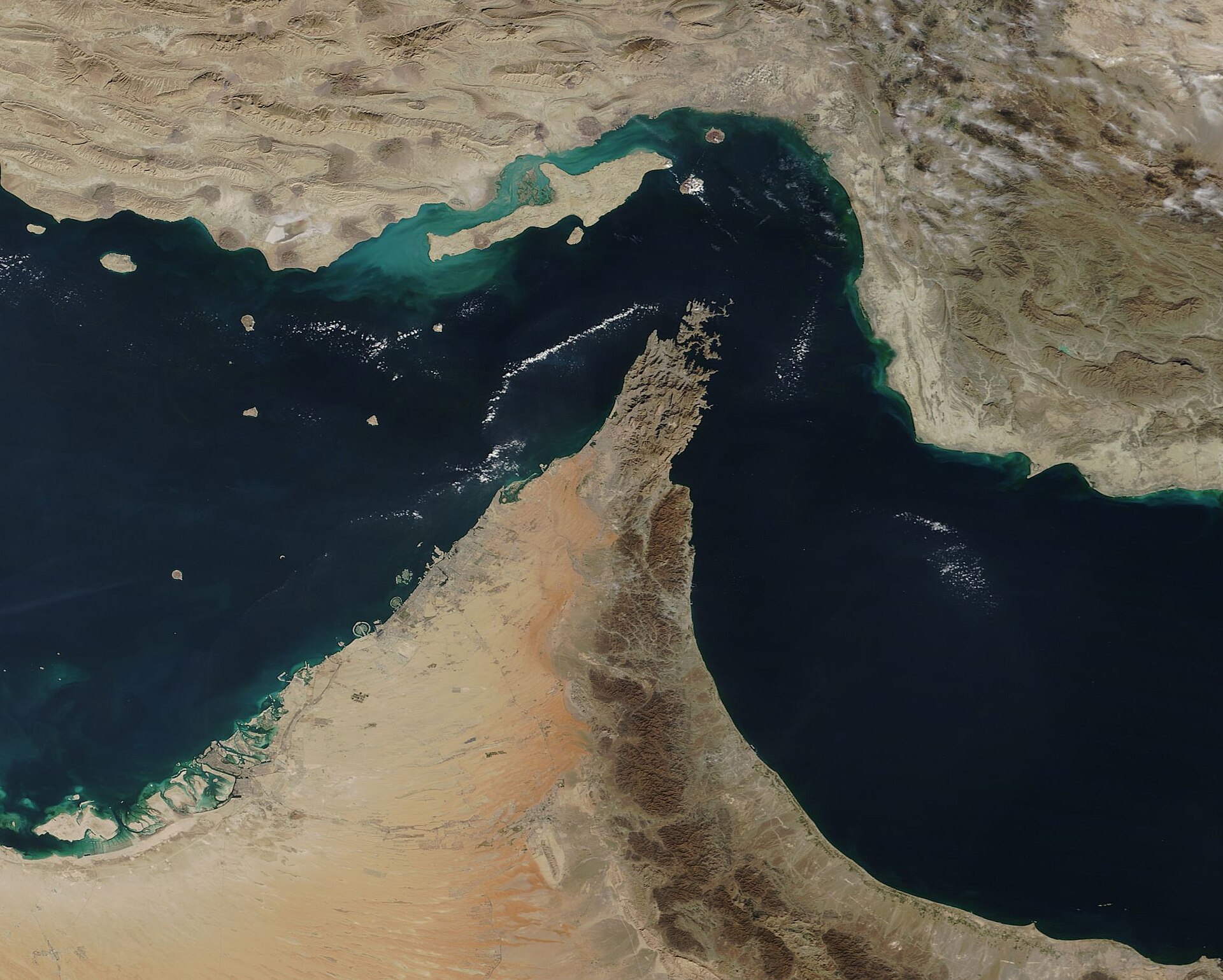
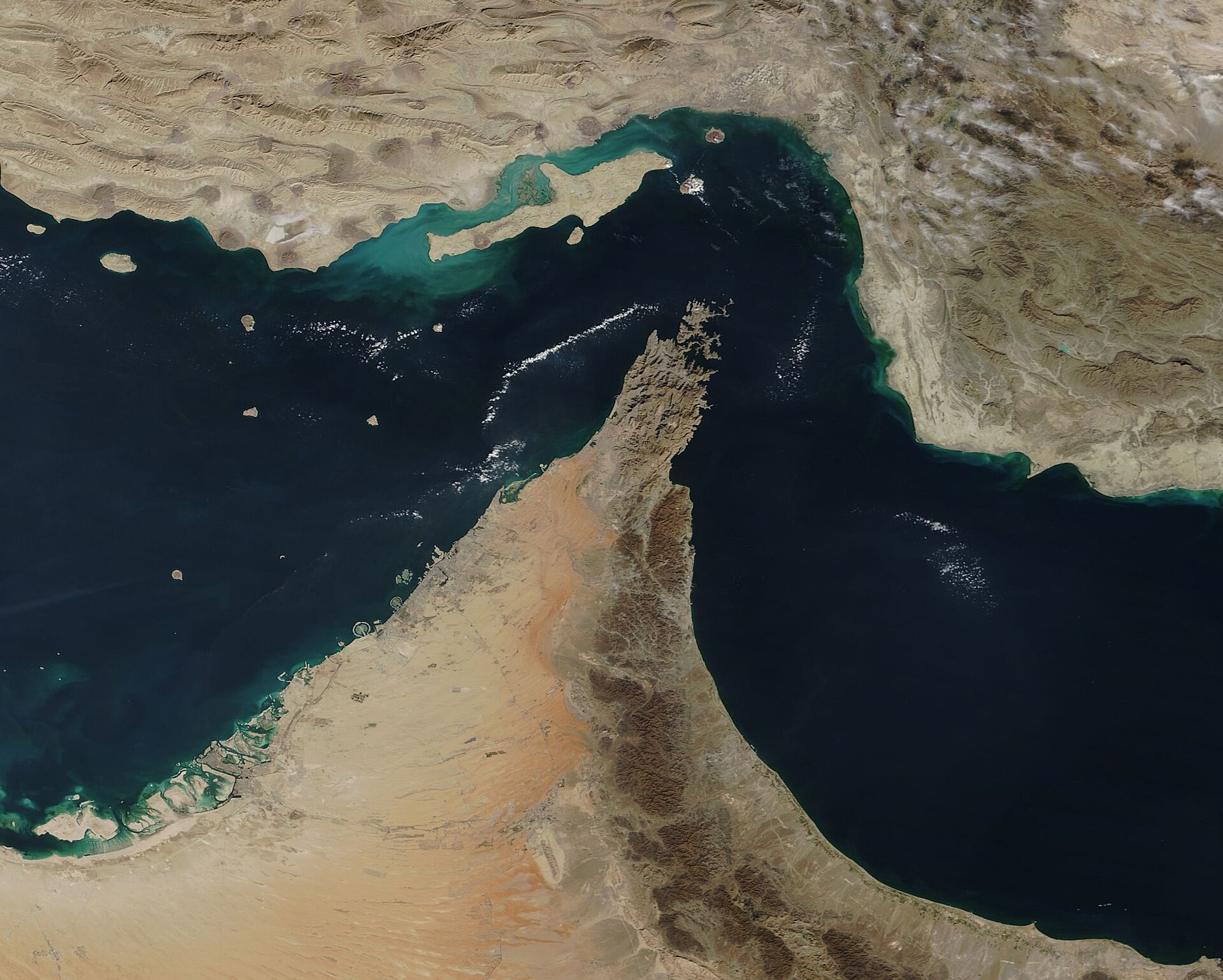
The problem is one of legal category. What Iran maintained over Hormuz between March 4 and May 5 was, in operational terms, a naval closure: IRGC vessels turning ships back through a Larak Island corridor, mines laid across standard shipping lanes, radio warnings issued to US destroyers. The US counter-blockade, launched April 13, was the mirror image u2014 military assets restricting access to Iranian ports. Both are kinetic actions. Both end when the commanding authority orders them ended.
n
On May 5, Iran did something categorically different. It launched a civilian administrative authority with its own institutional infrastructure: an email address processing applications, a data-collection form requiring more than 40 fields of vessel information, a fee schedule reaching $2 million per ship, and four dedicated Central Bank accounts for payment processing. The PGSA’s Vessel Information Declaration demands the vessel’s IMO number, flag history, ownership nationality, crew nationalities, cargo details, and planned routing before issuing “further instructions” by return email.
n
The MOU’s reopening clause does not distinguish between military restrictions and administrative ones. “Iran’s restrictions” is a blanket phrase that collapses a naval closure and a licensing authority into a single category, as though lifting both requires the same mechanism. It does not. Washington’s Hormuz-first concession gave the IRGC a structural veto over deal architecture. The PGSA gives Tehran a bureaucratic veto over implementation. Neither the published MOU text nor any reported annexes contains a dissolution clause.
n
n
Does Filing Iran’s Transit Form Create US Sanctions Exposure?
n
Yes. OFAC’s May 2026 alert prohibits US persons and US-controlled entities from “engaging in transactions with the Government of Iran, including the provision or receipt of services.” The PGSA is a Government of Iran entity. Lexology’s legal analysis u2014 titled “The International Law Position and the Sanctions Compliance Trap” u2014 concludes that submitting vessel data to IRGC-connected intermediaries may itself trigger sanctions enforcement, independent of whether any toll is paid.
n
The toll prohibition is straightforward. OFAC’s alert, published at ofac.treasury.gov/media/935556, warns against paying Hormuz passage fees “regardless of payment method” u2014 covering fiat currency, digital assets, offsets, informal swaps, and what it calls “nominally charitable donations made to the Iranian Red Crescent Society, Bonyad Mostazafan, or Iranian embassy accounts.” Treasury Secretary Scott Bessent stated the administration would “relentlessly target the regime’s ability to generate, move, and repatriate funds, and pursue anyone enabling Tehran’s attempts to evade sanctions.” The alert leaves no ambiguity on payment.
n
The form is harder. OFAC’s operative phrase u2014 “provision or receipt of services” u2014 extends beyond financial transactions. A shipping company transmitting its vessel’s ownership structure, crew nationalities, cargo manifest, flag history, and planned routing to [email protected], in response to an administrative requirement imposed as a condition of strait access, is providing commercially sensitive information to a Government of Iran entity. Under the Iran sanctions framework, that interaction has a legal name. Lexology states the point explicitly: entities “should not submit documentation to IRGC intermediaries without first obtaining legal advice” because the submission itself may trigger sanctions liability.
n
n
“Entities should not submit documentation to IRGC intermediaries without first obtaining legal advice, as the submission may itself engage the sanctions regimes depending on the nature and extent of the interaction, regardless of whether any toll payment is subsequently made.”
n
u2014 Lexology, “Tolling the Strait of Hormuz, Part 1: The International Law Position and the Sanctions Compliance Trap,” May 2026
n
OFAC also issued due diligence guidance directing service providers to “ask counterparties for details on who they coordinated with to transit the Strait of Hormuz and if any safe passage fees were or will be paid to Iran.” The guidance creates a compliance chain extending well past the direct submitter. Freight forwarders, charterers, P&I clubs, and marine insurers with any US-nexus exposure must now track whether their counterparties filed PGSA paperwork. OFAC enforces on a strict liability basis through civil and criminal monetary penalties u2014 intent is not required.
n
The trap has a specific geometry. A shipping company with a US-incorporated subsidiary cannot file the PGSA form without risking OFAC enforcement. It cannot transit the strait without filing the form. It cannot fulfill cargo obligations u2014 for the 22,500 mariners currently trapped in the Gulf, among others u2014 without transiting the strait. General License U, issued March 20, 2026 to permit limited Iran-related transactions, expired on April 19 without renewal. No replacement has been issued. No carve-out for PGSA form submission has been drafted. No OFAC FAQ addresses the question of whether the MOU, if signed, would automatically resolve the compliance gap. The deal lifts the blockade. It does not lift the form.
n
What Happens When Strait Bureaucracies Survive Ceasefire Deals?
n
They stay. Every modern precedent points in the same direction: administrative control over an international waterway, once established by a sovereign state, persists until a specific legal instrument explicitly dismantles it.
n
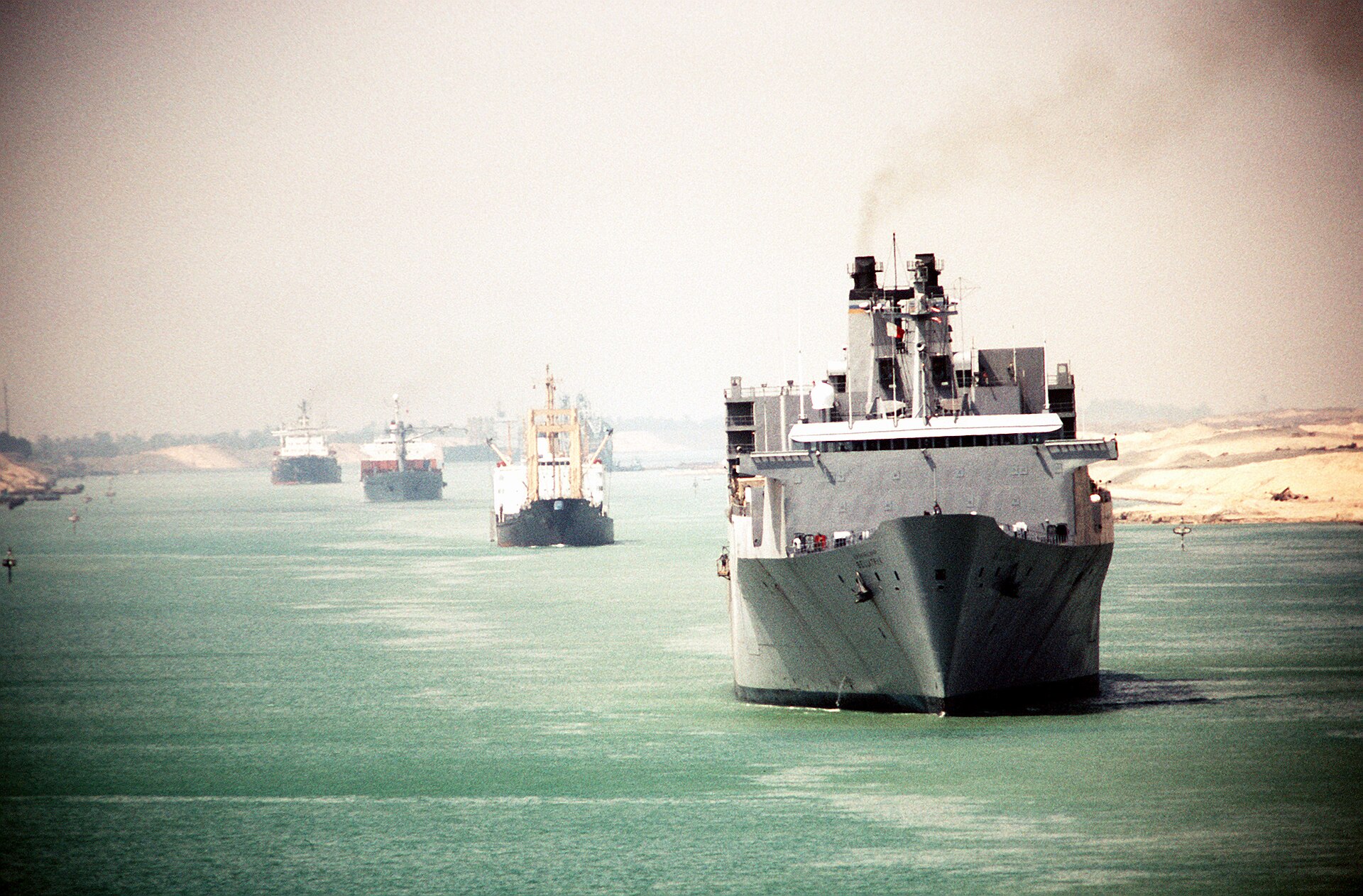
Egypt nationalized the Suez Canal on July 26, 1956, transferring ownership from the Franco-British Suez Canal Company to a new state entity: the Suez Canal Authority. Britain, France, and Israel invaded. Egypt sank ships to block the waterway. Under UN pressure, the invading forces withdrew. Egypt reopened the canal to small vessels on March 8, 1957, and to full shipping by April 24.
n
The ceasefire ended the fighting. It did not end Egyptian administrative control. Cairo reaffirmed adherence to the 1888 Constantinople Convention u2014 guaranteeing freedom of transit u2014 while retaining full sovereignty over the canal’s operation, staffing, and revenue. On July 17, 1957, Egypt sent a letter to the International Court of Justice recognizing the Court’s compulsory jurisdiction over transit disputes. The Suez Canal Authority has collected fees from every transiting vessel for 69 years. No deal dissolved it because no deal tried to. The nationalization changed who collected the tolls. It did not change whether ships could transit.
n
Turkey’s Montreux Convention of 1936 runs a parallel logic. Turkey regained “full sovereignty” over the Bosphorus and Dardanelles u2014 including the right to refortify both straits, a concession the post-World War I regime at Lausanne had stripped away. Montreux simultaneously codified guaranteed civilian transit: Article 2 grants merchant vessels “complete freedom of passage and navigation in the Straits, by day and by night, under any flag with any kind of cargo.” Turkey charges lighthouse, rescue, and health fees u2014 currently $4.08 per net registered ton, raised fivefold from $0.81 in 2022, generating roughly $200 million annually u2014 but these are charges for specific services rendered, not sovereignty tolls. The distinction between a service fee and a sovereignty toll is exactly the one Iran’s PGSA collapses. Warships require 8 to 15 days advance notification to Turkey’s Foreign Ministry. Civilian vessels need none.
n
The Panama Canal provides the counter-example u2014 and illuminates what the MOU would need to contain. The Torrijos-Carter Treaties of 1977 transferred sovereignty from the United States to Panama through a 22-year schedule of explicitly specified steps: dates, milestones, institutional handovers, revenue-sharing formulas. Nothing was left to inference. The canal changed hands on December 31, 1999, precisely because the treaty text spelled out the mechanism by which it would. Iran’s PGSA is the structural inverse: absent explicit treaty language dissolving it, the Egyptian and Turkish models u2014 not the Panamanian one u2014 are the operative precedents.
n
n
| Waterway | Administrative Authority | Fee Structure | Survived Conflict? | Dissolved By |
|---|---|---|---|---|
| Suez Canal | Suez Canal Authority (Egypt, 1956) | Per-transit tolls (SCA rate-setting) | Yes u2014 operating since 1956 | Never dissolved |
| Turkish Straits | Turkey (Montreux Convention, 1936) | $4.08/net registered ton (service fees) | Yes u2014 90 years | Never dissolved |
| Panama Canal | Panama Canal Authority (1999) | Per-transit tolls | N/A u2014 treaty transfer | Torrijos-Carter Treaties: 22-year handover schedule |
| Strait of Hormuz | PGSA (Iran, May 5, 2026) | Up to $2M/vessel (sovereignty toll) | Pending u2014 MOU silent | No dissolution mechanism in any reported text |
n
n
Can Iran’s Parliament Entrench the PGSA Before Any Deal Is Signed?
n
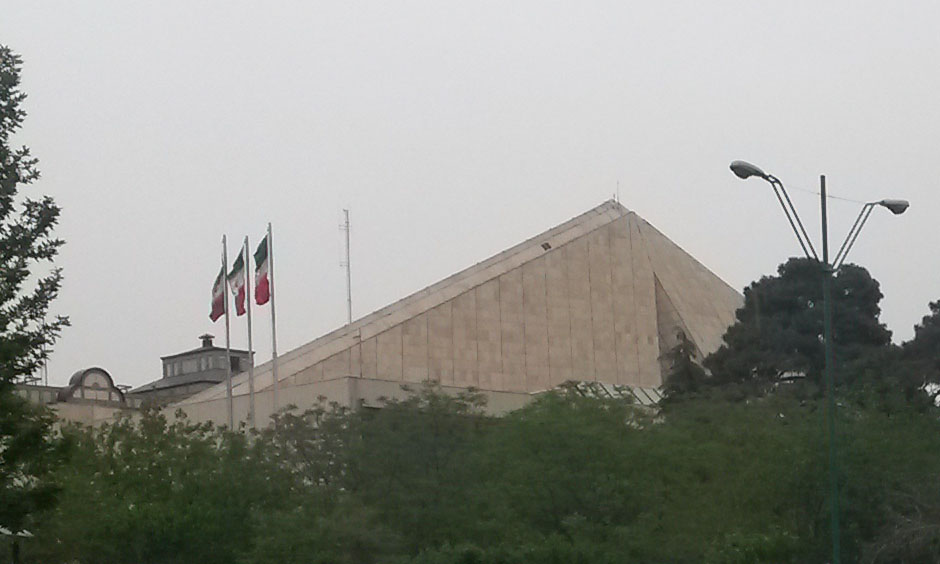
Iran’s parliament is advancing a 12-article bill u2014 “The Law on Establishing Iran’s Sovereignty over the Strait of Hormuz” u2014 that would convert the PGSA from an executive creation into a legislative institution requiring formal repeal to dissolve. The National Security and Foreign Policy Committee ratified the motion for floor debate. The bill’s passage would mean that dismantling the PGSA requires not an executive order or MOU clause but an act of the Iranian legislature u2014 or a treaty provision explicitly overriding domestic statute.
n
The bill’s provisions extend well beyond the PGSA’s current operational scope. Ships transiting Hormuz would be required to use Iranian-designated “secure and safe corridors.” Israeli-linked vessels would be permanently banned. Ships from “countries and entities hostile to Iran and its allies” u2014 a category broad enough to encompass US-flagged vessels u2014 would be prohibited. Vessels failing to comply would face seizure, with Iran confiscating 20 percent of cargo value. All fees would be payable in Iranian rial u2014 a requirement that would force shipping companies to acquire Iranian currency through channels subject to their own sanctions complications. Deputy Speaker Ali Nikzad stated the law reflects “directives of Leader of the Islamic Revolution Ayatollah Seyyed Mojtaba Khamenei.” Lawmaker Ahmadi told TASS the legislation would be “adopted immediately after parliament reconvenes and sent to the government for implementation.”
n
Parliament Speaker Mohammad Ghalibaf u2014 who served as IRGC Aerospace Force commander from 1997 to 2000, and who formally linked Hormuz reopening to US blockade removal on X on April 22 u2014 framed the broader strategic rationale: “We know well that the continuation of the status quo is intolerable for America, while we are just getting started.” Senior parliamentarian Alaeddin Boroujerdi put the revenue case more plainly: “Now, because war has costs, naturally, we must do this and take transit fees from ships passing.”
n
The timing creates a structural problem for the MOU’s 30-day window. If the law passes during negotiations u2014 or before they begin u2014 it converts a question of executive discretion into one of legislative architecture. The MOU’s reopening clause was drafted to address military restrictions that can be withdrawn by command. It would then face an institution backed by statute, administered by a dedicated authority, funded through central bank accounts, and defended by a parliamentary speaker whose biography includes a decade in IRGC operational command. Lexology’s analysis notes that the Hormuz sovereignty law represents “one of the most direct modern attempts by a state to monetise passage through a natural international strait since the abolition of Denmark’s Sound Dues by multilateral treaty in 1857.” The Sound Dues required collective payment by maritime powers plus a multilateral treaty to abolish. A one-page MOU between two parties, one of which has not ratified UNCLOS, would be operating on a different scale entirely.
n
n
The Intelligence Architecture Behind the Form
n
The PGSA form’s sanctions implications are its most immediate legal problem. Its intelligence value is the longer-term one. The Vessel Information Declaration requires data no UNCLOS transit-passage regime has ever demanded from commercial shipping: the vessel’s “previous name” and flag history (a field designed to surface sanctions-evasion flag-hopping), the nationalities of registered owners and operators (not the flag state u2014 the beneficial owners), crew nationalities broken down by individual (not aggregate headcount), cargo details by type and quantity, and country of destination.
n
Arsenio Longo, a maritime intelligence analyst, described the mechanism to CNN: “Iran is not only saying ‘pay us.’ It is trying to create a traffic regime. That turns Hormuz from a passage into a checkpoint.” Richard Meade, editor-in-chief of Lloyd’s List, was more specific about the operational exposure: “We would be required to submit detailed records of our ownership, insurance, crew details and intended transit route.” Cichen Shen, Lloyd’s List’s Asia-Pacific editor, captured the shift in a sentence: “The Iranian authorities have said on various occasions that the strait is open, but under ‘my watch and under my control’ u2014 and it’s a paid transit now.”
n
The ownership, crewing, and routing information the form collects is precisely the intelligence IRGC Navy commanders would need for operational targeting decisions u2014 which vessels to board, which to delay, which to seize. The form’s warning language carries its own enforcement logic: “any incorrect or incomplete information provided will be the sole responsibility of the applicant, and any resulting consequences will be borne accordingly.” CNN reported that vessels not complying “will be attacked.”
n
The double blockade that governed Hormuz from April 13 onward operated on a simpler mechanism: the IRGC controlled the Gulf of Oman exit, the US controlled the Arabian Sea entry, and vessels needed both clearances. The PGSA replaces the military checkpoint with an administrative one. But where a military checkpoint dissolves when forces withdraw, a data-collection protocol that accumulates vessel histories, ownership networks, crew manifests, and routing patterns builds a permanent registry. Even if the toll is eventually dropped u2014 through MOU implementation, diplomatic pressure, or revenue arithmetic u2014 the database remains.
n
The Gharibabadi Doctrine and Its Global Precedent
n
Iran’s Deputy Foreign Minister for Legal and International Affairs, Kazem Gharibabadi, stated in early April u2014 while announcing an Iran-Oman bilateral protocol for Hormuz transit supervision u2014 that “we are now in a state of war, and wartime conditions cannot be governed by peacetime rules.” Gharibabadi added that “these requirements do not mean restrictions, but rather aim to facilitate and ensure safe passage and provide better services to ships.” The remark was not a policy argument. It was a legal one, and its implications extend past Hormuz.
n
Safia K. Southey’s analysis in the European Journal of International Law (“Codifying Coercion: Iran’s New Legal Regime and the Law of International Straits,” April 20, 2026) identifies the Gharibabadi argument as the more dangerous long-run development u2014 more dangerous than the toll itself. If a belligerent littoral state can suspend transit passage through an international strait by declaring wartime conditions, the principle applies to every strait on earth. “Any bordering state engaged in armed conflict could suspend or reconfigure the legal regime of an international strait by unilateral fiat,” Southey wrote. Acceptance of the doctrine “would be the most damaging precedent the law of the sea has faced since the extension of the territorial sea to twelve nautical miles.”
n
n
“A fee regime premised on bordering-state discretion to screen, price, and selectively deny passage would transform a legal right of passage into a purchased license.”
n
u2014 EJILtalk, “Codifying Coercion: Iran’s New Legal Regime and the Law of International Straits,” April 20, 2026
n
Mark P. Nevitt, a former JAGC commander and associate professor of law at Emory University, made the same structural point in Just Security: transit passage through an international strait “is not a privilege that Tehran may selectively grant or monetize.” Daphne Richemond-Barak and Jacob Stoil, writing in the same publication on May 6, specified the boundary: bordering states “may regulate passage, but they may not condition passage on prior permission, impose general fees, or selectively grant access.”
n
Iran has not ratified UNCLOS. Its legal position u2014 that Articles 37-44 governing transit passage bind only states parties u2014 is consistent and longstanding. Tehran has maintained a domestic statute since 1992 requiring prior notification for foreign warship passage through Hormuz. The PGSA is the civilian-commercial extension of that position: what Iran’s 1992 law did for warships, the PGSA does for tankers and LNG carriers. Mojtaba Khamenei, the Supreme Leader’s son u2014 communicating through the leader’s Telegram account u2014 called for “a new regional and global order under the strategy of a strong Iran” in which there would be no place for “foreigners and their mischief,” specifically citing “using the leverage of closing the strait.” The Trump administration’s own “joint venture” proposal for Hormuz in April, which envisioned a $1-per-barrel transit toll co-sponsored by the United States, inadvertently validated the principle that strait passage can be conditioned on payment. OFAC’s subsequent sanctions alert operates in direct tension with an idea the president himself floated three weeks earlier.
n
How Is the Shipping Industry Responding?
n
With immobility. Bloomberg reported on May 6 that ship owners are not transiting Hormuz despite the PGSA form’s availability and the MOU framework’s emergence. Halvor Ellefsen, a director at London-based Fearnleys Shipbrokers, told Bloomberg: “The shipowners I’ve spoken to have said they’ll believe it when they see it. It’s not the first time there have been public statements that were encouraging, only for them not to materialize.”
n
Five industry executives u2014 shipowners, vessel managers, and security consultants u2014 told Bloomberg it was “too soon, and too unclear, for crossings to resume.” Two cited a container ship attack on May 5 as specific grounds for caution. An unnamed tanker company official said his firm would not contact Iran for permission to transit because they were “wary about giving the authorities precise details of vessel movements.” Bimco, the international shipping association representing owners controlling roughly 65 percent of global tonnage, said it “would need official confirmation of any new rules of transit before issuing any update of its safety guidance.” No increase in traffic appeared on ship-tracking data on the day of the IRGC’s compliance announcement. US gasoline prices topped $4.50 per gallon that week u2014 the first time since 2022.
n
The IRGC Navy’s own assessment, posted on X on May 6, offered a different reality: “We thank captains and shipowners in the Persian Gulf and Gulf of Oman for complying with Iran’s Strait of Hormuz regulations and contributing to regional maritime security. With the aggressor’s threats neutralized and new protocols in place, safe, stable passage through SOH will be ensured.” PressTV reported “a good level of compliance” from shipping companies seeking transit. The distance between IRGC triumphalism and five London-based executives declining to transit is the distance between the PGSA’s declared authority and its operational reality.
n
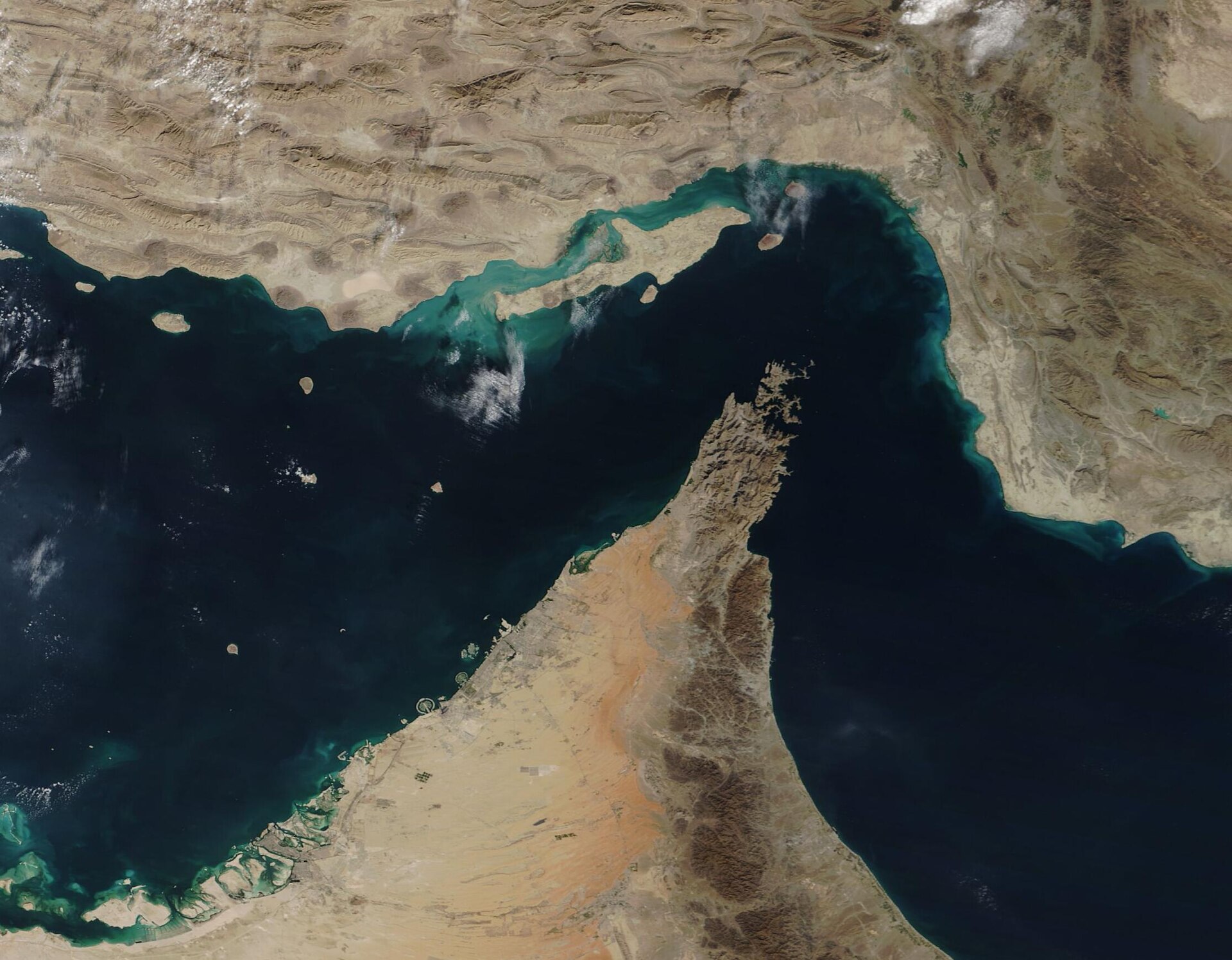
Forty-five vessels have transited Hormuz since the April 8 ceasefire u2014 3.6 percent of the pre-war baseline of roughly 3,000 monthly crossings, according to the House of Commons Library briefing (CBP-10636, published April 24 by researcher Philip Loft). Twenty percent of global petroleum and 20 percent of global LNG passes through this strait in peacetime. Professor Marc Weller, director of the Global Governance and Security Centre at Chatham House, identified the structural concern: Iran “may continue to exclude ‘unfriendly’ flag states from passage through the Strait and subject others to inspections, delays and exorbitant fees.” The commercial question is not whether the PGSA survives the MOU. It is whether enough shipping companies file the form to make the authority a functioning revenue stream u2014 and whether enough refuse to keep 20 percent of global energy supply effectively stranded despite a signed deal. For the full account of how Saudi Arabia’s position fits into the May 13–15 diplomatic sequence — and why Riyadh is simultaneously indispensable to every party and excluded from every room — see Seventy-Two Hours in Riyadh: Indispensable, Powerless, and Not in the Room.
The governance trap is compounded by Russia’s positioning: Lavrov called Faisal on May 8 to propose restoring the pre-February navigation baseline — a pitch Moscow made to Qatar and Oman in the same week while Russian-supplied drone components continued to flow to Iran via the Caspian. Any post-war Hormuz architecture that does not account for Russia’s dual role as peacemaker and arms supplier will face the same sanctions-trap problem the current MoU does: the parties shaping the deal are not the parties bound by it.
n
n
Frequently Asked Questions
n
Does the PGSA transit fee apply to warships as well as commercial vessels?
n
Iran’s 1992 domestic law already requires prior notification for foreign warship passage through Hormuz u2014 a provision invoked during the April 11 transit of USS Frank E. Petersen Jr. (DDG-121) and USS Michael Murphy (DDG-112), when the IRGC issued a “last warning” radio call and the US responded that it was conducting “passage in accordance with international law.” The PGSA form, however, is designed for commercial shipping: its questions address cargo manifests, insurance, ownership structures, and flag history rather than military specifications. Iran’s position is that warships from “aggressor” states are barred entirely u2014 not subject to toll u2014 which removes them from the PGSA’s administrative scope while keeping them under the IRGC Navy’s operational authority.
n
Could a future OFAC general license authorize PGSA form submission?
n
Theoretically. OFAC issued General License U on March 20, 2026, permitting certain limited Iran-related transactions; it expired on April 19 without extension. A new general license specifically carving out PGSA form submission u2014 as distinct from toll payment u2014 would resolve the compliance trap for US-nexus entities. No such license has been issued, proposed, or discussed in any reporting on the MOU negotiations. The structural difficulty is that a general license authorizing form submission would constitute US legal acknowledgment that the PGSA is a legitimate regulatory body, which the State Department has not signaled willingness to concede. The alternative u2014 a blanket sanctions waiver tied to the MOU u2014 would require specific legislative or executive action beyond the MOU’s own text.
n
Has Oman responded to the PGSA’s claim over waters it shares sovereignty of?
n
Oman co-administers the narrowest navigable point of the Strait of Hormuz. Gharibabadi stated in April that Iran was “drafting a protocol for Iran and Oman to supervise transit,” and added that “once the internal drafting is completed, we will certainly begin our negotiations with the Omani side.” No bilateral agreement has been published. The EJILtalk analysis flags the Iran-Oman protocol as a mechanism that “would transform third-state transit rights into discretionary approval” by two bordering states. Oman’s Transport Minister, Saeed bin Hamoud Al Maawali, stated during the April toll debate that “no tolls can be imposed for crossing Hormuz” u2014 a position directly contradicted by the PGSA’s current operations.
n
What is the legal basis for Iran’s claim that UNCLOS transit passage rules do not bind it?
n
Iran signed UNCLOS in 1982 but never ratified it. That non-ratification argument acquired a new dimension on May 12 when the IRGC declared the Jask-to-Siri Island operational crescent, explicitly extending claimed authority into Gulf of Oman waters where even UNCLOS transit passage provisions are inapplicable — making the legal asymmetry not merely a strait question but a regional one. Tehran’s position, documented by Alexander Lott of the Norwegian Centre for the Law of the Sea in a March 10, 2026 EJILtalk analysis, is that “the regime of transit passage is not part of customary international law and only States Parties to UNCLOS are entitled to benefit from the right of transit passage.” The United States u2014 which also has not ratified UNCLOS u2014 argues that transit passage has attained the status of binding customary international law on all states regardless of ratification. Both states claiming non-ratification as either sword or shield, depending on the argument, is a legal asymmetry that neither the MOU nor the broader diplomatic framework has resolved. That unresolved architecture was visible in the market’s May 8 reaction: Brent crude swung $12 in a single session as CENTCOM struck Qeshm and Bandar Abbas, then Trump called the operation a “love tap” — with Hormuz still legally closed under the PGSA regime both governments have refused to name in their negotiations. How the IRGC designed those maritime rules to outlast any MOU is examined here. That unresolved legal asymmetry acquired a new dimension when a senior Iranian adviser declared Hormuz “a capability equivalent to an atomic bomb” — elevating the strait from a sanctions-trap variable into an explicit deterrence doctrine and making any Phase 1 Hormuz concession structurally equivalent to nuclear disarmament.
n”}