KUWAIT CITY — Iranian drones struck Kuwait’s Mina al-Ahmadi oil refinery and a separate power generation and water desalination plant in coordinated early-morning attacks on April 3, 2026 — the third hit on the refinery in two weeks and the second on Kuwaiti desalination infrastructure in five days — and within hours the IRGC’s Khatam al-Anbiya Central Headquarters denied responsibility for the desalination strike and blamed Israel, offering no evidence. The denial, delivered by spokesman Ebrahim Zolfaghari through Tasnim News Agency, embedded a political demand that Gulf states expel American forces from the region — turning an act of war against civilian water infrastructure into an information operation whose target audience was not Kuwait but Riyadh, Abu Dhabi, and Doha.
What makes April 3 different from the weeks of Iranian strikes preceding it is the dual-category targeting in a single operation against a single GCC state: energy refining capacity and drinking water supply hit simultaneously, in a country where 90 percent of potable water comes from desalination and whose renewable freshwater availability — four cubic metres per capita per year — is the lowest in the Gulf. The IRGC denial, far from a throwaway press release, functions as a legal and strategic signal that Iran’s target list now extends to infrastructure whose destruction international humanitarian law classifies as a potential war crime, and that Tehran intends to keep striking while maintaining a paper trail of deniability for what comes next.
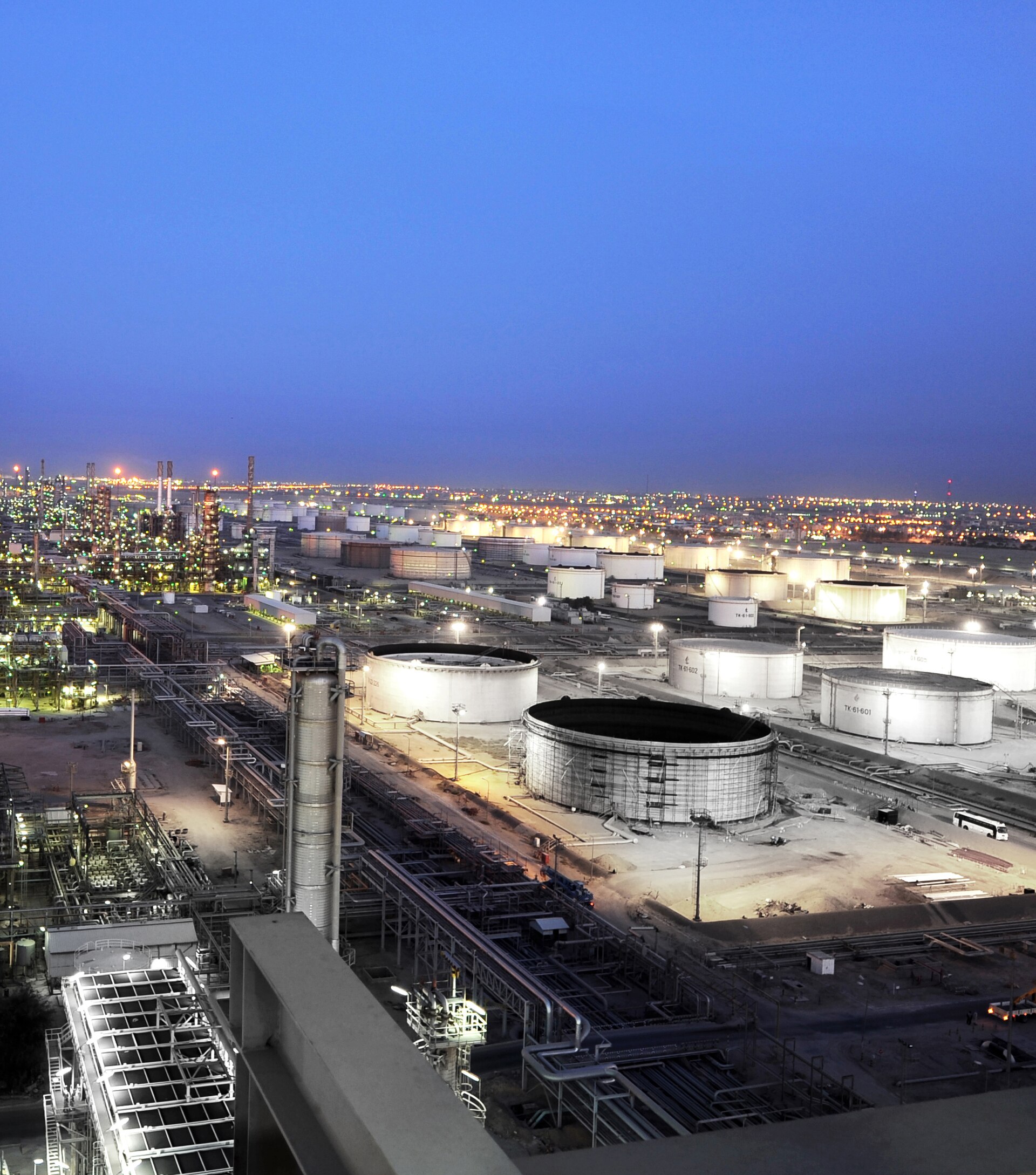
Table of Contents
What Happened on April 3
Kuwait Petroleum Corporation confirmed that drone strikes hit “a number of operational units” at the Mina al-Ahmadi refinery, sparking fires that required immediate deployment of firefighting crews, according to Al Jazeera and Argus Media reporting from the scene. Mina al-Ahmadi, operated by Kuwait National Petroleum Company and located 40 kilometres south of Kuwait City, processes 346,000 barrels per day after its Clean Fuels Project upgrade, with crude distillation capacity of 466,000 bpd — making it one of the largest refining complexes in the Middle East and a facility whose repeated targeting Argus Media described as evidence of “escalating vulnerability of Kuwait’s refining infrastructure.”
Separately, a missile or drone strike hit a Kuwaiti power generation and water desalination plant the same morning, causing what Kuwait’s Ministry of Electricity, Water and Renewable Energy called “material damage to parts of the facility,” according to Xinhua and AP reporting. Spokesperson Fatima Abbas stated that “technical and emergency teams were immediately deployed to contain the impact and maintain operational stability,” while the ministry assured that nationwide water and electricity operations remained “stable and secure.” The specific plant was not publicly identified — a detail that itself reveals the sensitivity Kuwait now attaches to its desalination network as a target set.
KPC confirmed no casualties at Mina al-Ahmadi and said it was “working to maintain operational continuity,” but the context strips that reassurance of its comfort: KPC CEO Sheikh Nawaf al-Sabah had already declared on March 24 that Kuwait had “ramped down oil production to domestic consumption only” and announced force majeure on delivery contracts, telling The National that “this is an attack not only against the Gulf, but it is an attack that is holding the world’s economy hostage.” The April 3 strikes hit a refinery already operating in survival mode.
The refinery attack was the third on Mina al-Ahmadi in roughly two weeks — the facility was first struck around March 19 and hit again before April 3, per Argus Media — while the desalination strike was the second confirmed Iranian hit on Kuwaiti water infrastructure in five days, following a March 30 attack that killed one Indian national worker, as reported by Al Jazeera. Two days before April 3, on April 1, Iranian drones struck fuel storage at Kuwait Aviation Fueling Company at Kuwait International Airport, sparking what Anadolu Agency called a “massive” blaze at the sole jet fuel supplier for the airport, a facility processing over one billion litres annually according to AGBI.
The Middle East briefing 3,000+ readers start their day with.
One email. Every weekday morning. Free.
The Denial Is a Template, Not an Improvisation
Hours after the desalination strike, IRGC Khatam al-Anbiya Central Headquarters spokesman Ebrahim Zolfaghari delivered a formal denial through Tasnim News Agency that attributed the attack to Israel: “The brutal aggression of the Zionist regime against Kuwait’s desalination plant under the pretext of accusing Iran, which occurred in recent hours, is a sign of the depravity,” Zolfaghari stated, before pivoting to a demand that “countries in West Asia must be vigilant against the provocations of the American-Zionists aimed at destabilising and destroying the region.” The statement provided zero pieces of evidence for the Israel attribution, as the Times of Israel noted in its coverage.
The denial follows a pattern that TRT World has documented across Iranian strikes on Saudi Arabia, Oman, maritime targets, and now Kuwait — a repeating template of immediate denial coupled with Israel attribution that Tehran deploys regardless of the evidence environment. But the April 3 iteration carried a refinement: it embedded a specific political demand — the expulsion of US forces from Gulf states — inside a denial of attacking water infrastructure, fusing information warfare with physical escalation in a single communiqué. The IRGC was not merely denying; it was offering Gulf states an implied bargain — remove the Americans, and these attacks might stop.
Iran pre-seeded the false-flag narrative 18 days before the April 3 strikes. On March 15, Ali Larijani, Secretary of Iran’s Supreme National Security Council, publicly stated he had “heard of an alleged plot to stage an attack similar to September 11 and falsely blame it on Iran,” according to Iran International. The IRGC separately warned that Israel was planning a false-flag operation against Saudi Aramco — a claim Saudi and Qatari officials rejected, per Middle East Eye. Iranian state media has simultaneously insisted, as Middle East Monitor reported on March 12, that “their operations are confined to military objectives linked to Israel or the United States, with no strategic intent to target Arab states” — a position Tehran maintains while physically striking GCC civilian infrastructure on a near-daily basis.
“The brutal aggression of the Zionist regime against Kuwait’s desalination plant under the pretext of accusing Iran, which occurred in recent hours, is a sign of the depravity.”Ebrahim Zolfaghari, spokesman, IRGC Khatam al-Anbiya Central Headquarters, via Tasnim News Agency
Why Would Iran Hit Water?
Michael Christopher Low, Associate Professor of History at the University of Utah, identified the logic in a Project Syndicate analysis: Iran, “unable to defeat the US or Israel militarily,” targets Gulf infrastructure to “inflict economic damage and strain regional relationships,” and striking desalination facilities “directly threatens daily survival in some of the world’s most water-scarce states.” This is not collateral damage or poor targeting; Iranian military spokesman Ebrahim Zolfaghari explicitly named “water desalination facilities” as retaliatory targets in response to President Trump’s threats against Iranian power infrastructure, and Iranian state media circulated a specific target list naming Saudi Arabia’s Ras al-Khair and Shuaiba plants and the UAE’s Taweelah plant, according to Low’s reporting.
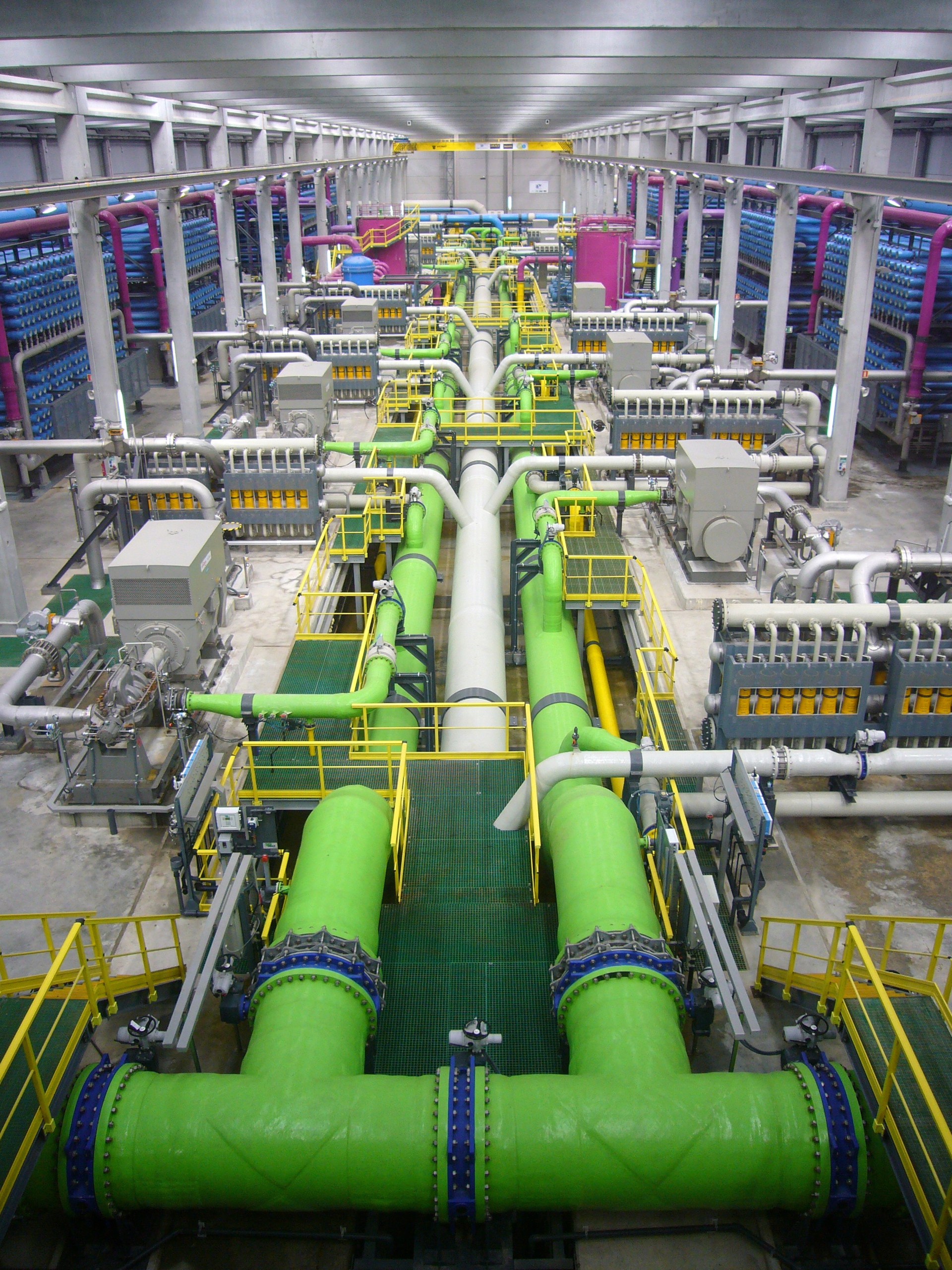
The numbers frame the threat as existential rather than inconvenient. Kuwait depends on desalination for 90 percent of its drinking water, but it sits within a regional exposure spectrum that CSIS and Project Syndicate have mapped: Qatar at 99 percent dependence, Kuwait at 90, Saudi Arabia at 70, and the UAE at 42. GCC states collectively operate more than 400 desalination plants producing 60 percent of global desalinated water, per Al Jazeera and CSIS data. Environmental researcher Naser Alsayed told Al Jazeera in March that “targeting or disrupting desalination facilities would place much of the region’s economic stability and growth at significant risk,” while Georgetown University Qatar hydrologist Raha Hakimdavar warned the effects cascade into “domestic food production, which mostly uses groundwater” — meaning a sustained desalination disruption triggers a food crisis that groundwater reserves cannot absorb.
A 2010 CIA assessment, cited in Al Jazeera’s reporting, concluded that disruption of GCC desalination infrastructure “could have more consequences than the loss of any industry” — a judgment rendered before Iran possessed its current drone and missile arsenal, and before it demonstrated the willingness to open multiple fronts against Gulf civilian targets simultaneously. That assessment was written about hypothetical risk; Kuwait, on April 3, supplied the empirical evidence.
What Does IHL Say About Striking Desalination Plants?
Additional Protocol I of the Geneva Conventions, Article 54, explicitly prohibits attacking “objects indispensable to the survival of the civilian population,” a category that encompasses drinking water installations and supplies — and while Iran is not a signatory to Protocol I, it is bound by the customary international humanitarian law equivalent, as Human Rights Watch noted in its March 17 documentation of Iranian strikes across GCC states. HRW catalogued a pattern from March 1 onward that included strikes on residential buildings, hotels, civilian airports, embassies, and two commercial ships — the Safesea Vishnu and Mayuree Naree on March 11 — describing them as potential war crimes under international humanitarian law. The United Nations Security Council passed Resolution 2817 condemning Iran’s attacks.
Gabor Rona, Director of the Law and Armed Conflict Project at Cardozo Law School and a former legal adviser to the International Committee of the Red Cross, was unambiguous when NPR asked him about attacking desalination plants on April 1: “Absolutely, both under international law and U.S. law… It would also be a violation of laws against terrorism.” Meanwhile, over 100 US-based international law experts signed a statement published at Just Security describing US strikes on Iran as “a clear violation of the United Nations Charter” and raising “serious concerns about potential war crimes” — a legal environment in which both sides face exposure, but in which Iran’s targeting of water infrastructure occupies a category that IHL treats with particular severity because the consequences fall on civilians who have no military utility as targets.
The IRGC denial matters in this legal context because it represents Tehran constructing a paper trail — however implausible — designed to create jurisdictional ambiguity if accountability mechanisms ever reach Iranian commanders. Iraq destroyed most of Kuwait’s desalination capacity during the 1990-91 Gulf War, the only direct regional precedent, but Iraq acknowledged what it did; Iran strikes the same category of target and blames Israel, building a deniability architecture whose audience is not today’s headlines but a future tribunal’s evidence file.
The Saudi Exposure
Saudi Arabia’s integrated air defenses have so far intercepted 21 drones targeting Aramco’s Shaybah field and five ballistic missiles aimed at Prince Sultan Air Base at Al-Kharj, according to Arab News — a defensive record that validates Riyadh’s investment in layered air defense but does nothing to reduce the underlying vulnerability that April 3 exposed in Kuwait. Saudi Arabia depends on desalination for 70 percent of its water supply, drawn from 56 coastal plants that Project Syndicate’s Low and CSIS assessments confirm all sit within Iranian missile range. The kingdom’s four largest complexes — Ras Al-Khair, Jubail, Shoaiba, and Yanbu — supply approximately 20 million people, and Ras Al-Khair alone produces three million cubic metres of freshwater daily for roughly seven million people, at a construction cost of $7.2 billion, sitting just 250 kilometres from the Iranian shoreline and 75 kilometres north of Jubail.
A leaked 2008 US diplomatic cable, previously reported by House of Saud, assessed that Riyadh “would have to evacuate within a week” if the Jubail desalination plant or its supply pipeline were destroyed — an assessment from an era when Iran’s precision strike capabilities were a fraction of what they are today. Iran’s state media has already named Ras al-Khair and Shuaiba on its published target list, according to Low, and the IRGC’s willingness to strike Kuwaiti desalination twice in five days while denying both attacks establishes the operational tempo and deniability framework that would precede any escalation toward Saudi water infrastructure.
No Saudi government or Aramco statement specifically addressing the April 3 Kuwait strikes was publicly available at publication time — a silence that may reflect diplomatic caution or may reflect the difficulty of responding to attacks on a neighbour’s water supply when your own water supply sits within the same threat envelope. The question for Riyadh is not whether its air defenses can intercept what Iran sends — the interceptor stockpile math eventually constrains that answer — but whether a denial-and-blame architecture that Tehran is stress-testing on Kuwait will be applied to Saudi targets once the April 6 deadline passes.
London Moves, Washington Watches
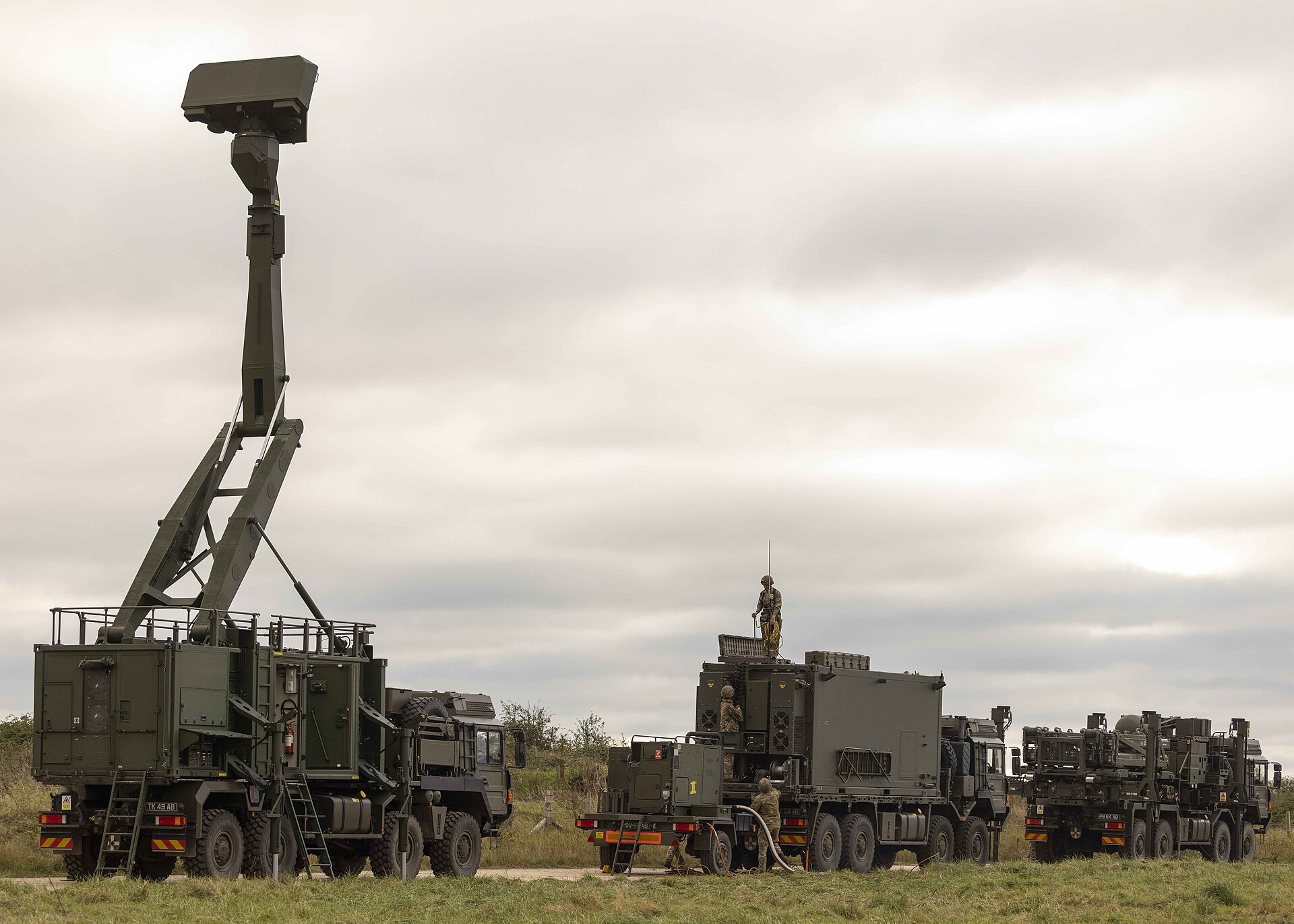
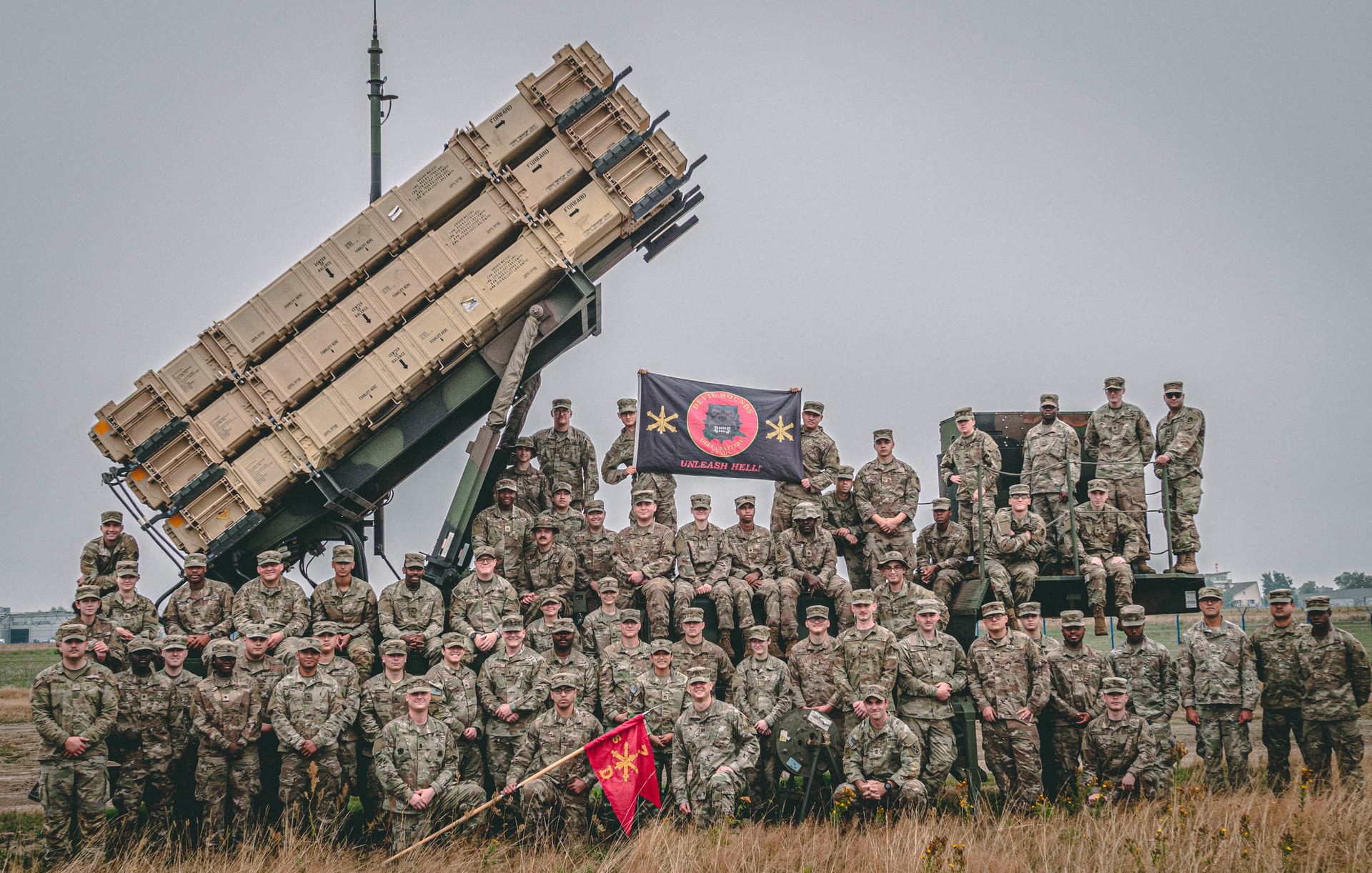
UK Prime Minister Keir Starmer called Kuwait’s Crown Prince Sheikh Sabah Khaled al-Sabah on April 3 and announced deployment of the Rapid Sentry air defense system to Kuwait, condemning what he called “the overnight drone attack on a Kuwaiti oil refinery” and stating “the UK stands with Kuwait,” according to Al Arabiya and the Times of Israel. Rapid Sentry is a short-range system with an eight-kilometre missile range, per Al Arabiya — adequate for point defense of a specific facility but insufficient to protect Kuwait’s dispersed infrastructure network, a limitation that frames London’s move as political solidarity rather than strategic solution.
Mona Yacoubian, Director of the Middle East Program at CSIS, has characterized Iran’s campaign as “unrestrained escalation,” identifying “vertical escalation” as Tehran’s operating mechanism — a systematic expansion from military targets to civilian infrastructure that CSIS documented beginning from the war’s first days, when Iran hit Dubai and Doha airports before moving to energy infrastructure. Kuwait now represents the most intensive single-country application of that escalation ladder, with strikes on its primary refinery, its airport jet fuel supply, and its desalination capacity all occurring within a two-week window. The UK deployment acknowledges the problem; the system’s specifications reveal how far the solution remains from the threat.
What Iran’s Denial Tells Gulf Capitals About What Comes Next
The IRGC denial of the April 3 desalination strike, read alongside the Larijani false-flag warning from March 15 and the published Iranian target list naming Saudi and Emirati desalination plants, constitutes a three-part signal: Tehran has pre-seeded the narrative that any strike on Gulf water infrastructure is an Israeli false flag, it has physically demonstrated the capability and willingness to execute such strikes in Kuwait, and it has publicly identified the next targets by name. The 19-day gap between Larijani’s warning and the April 3 attacks suggests not improvisation but sequencing — the narrative infrastructure was built before the physical strikes were launched.
For Saudi Arabia, the operational implication is that Iran can now strike desalination infrastructure, deny it, blame Israel, and embed a political demand in the denial — all within hours, as a repeatable process rather than a one-time escalation. The question is not whether Iran will extend this template to Saudi targets but under what conditions Tehran judges the cost acceptable, and whether Riyadh’s defensive depth — both military and diplomatic — can absorb a strike on water infrastructure supplying millions of people while the attacker denies it happened and points at someone else.
“Targeting or disrupting desalination facilities would place much of the region’s economic stability and growth at significant risk.”Naser Alsayed, environmental researcher and Gulf states specialist, Al Jazeera, March 8, 2026
A 2008 cable said Riyadh would have a week to evacuate if Jubail were destroyed. Kuwait, on April 3, got a demonstration of what the first days of that scenario look like — a desalination plant hit, a refinery burning for the third time in two weeks, an airport fuel depot still recovering from a strike 48 hours earlier, and an attacker on state media blaming Israel while demanding American troops leave. The denial is not a postscript to the strike; it is the weapon that makes the next strike possible, because it preserves the political space for Tehran to escalate while Gulf capitals debate whether to call it what it is. Two days later, the campaign reached the command layer: Iran struck the Kuwait Petroleum Corporation headquarters itself, along with the Ministry of Finance and two additional desalination plants, in a single April 5 operational package.
Frequently Asked Questions
Has any international body opened a formal war crimes investigation into Iran’s strikes on desalination infrastructure?
UNSC Resolution 2817 condemned Iran’s attacks, and Human Rights Watch documented a pattern of unlawful strikes from March 1 onward, describing them as potential war crimes under international humanitarian law. However, as of April 3, no formal referral to the International Criminal Court has been announced, and Iran does not recognize ICC jurisdiction. The practical pathway to accountability runs through either a UN Security Council referral — which Russia and China could veto — or universal jurisdiction claims by individual states whose nationals were harmed, such as India, whose citizen was killed in the March 30 desalination strike.
Can Kuwait’s desalination capacity be replaced by emergency freshwater imports?
Kuwait’s four cubic metres per capita per year of renewable freshwater is negligible compared to demand, and the country lacks meaningful groundwater reserves suitable for drinking. Emergency water can be shipped by tanker, but the logistics of supplying a population of over four million at scale — roughly 500,000 cubic metres per day of municipal demand — would require a flotilla operating through waters where Iran has already struck commercial shipping, including the Safesea Vishnu and Mayuree Naree on March 11 per HRW documentation. Saudi Arabia faces an even steeper challenge: Ras Al-Khair alone supplies three million cubic metres daily, a volume no emergency import operation could replicate.
Why did the IRGC deny the desalination strike but not the refinery strike?
The IRGC’s Khatam al-Anbiya denial specifically addressed the desalination plant attack and attributed it to Israel, while no equivalent denial was issued for the simultaneous Mina al-Ahmadi refinery strike. The distinction likely reflects Iran’s awareness that targeting water infrastructure carries uniquely severe legal consequences under IHL — Article 54 of Additional Protocol I specifically protects objects indispensable to civilian survival — while energy infrastructure, though civilian, occupies a greyer zone in Tehran’s legal calculus. The selective denial signals which category of targeting Iran considers legally dangerous enough to require a cover story.
What is the UK Rapid Sentry system and can it protect Kuwait’s infrastructure?
Rapid Sentry is a British short-range air defense system with a missile range of eight kilometres, according to Al Arabiya’s reporting on the deployment announcement. For context, Kuwait’s vulnerable infrastructure is distributed across dozens of kilometres — Mina al-Ahmadi sits 40 kilometres south of Kuwait City, and desalination plants, power stations, and the airport are spread across separate locations. A single Rapid Sentry battery provides point defense for one facility, not area defense for a national infrastructure network. The deployment signals British political commitment but would need to be multiplied many times over and integrated with longer-range systems to alter Kuwait’s defensive posture against the volume and tempo of Iranian strikes documented since mid-March.
Has Iran ever acknowledged striking civilian infrastructure in a GCC state during this conflict?
No. Iranian state media has consistently maintained that “their operations are confined to military objectives linked to Israel or the United States, with no strategic intent to target Arab states,” as Middle East Monitor reported on March 12. This position has been maintained simultaneously with documented strikes on civilian airports in Dubai and Doha, residential buildings, hotels, embassies, commercial shipping, oil refineries, airport fuel depots, and now desalination plants. The gap between stated policy and physical operations is not accidental — it is the deniability architecture that permits continued escalation while preserving the narrative framework for the Israel-attribution template the IRGC deployed on April 3.