RIYADH — Iran did not reject the American deal this week. It let the Islamic calendar do the rejecting. From Tarwiyah Day on May 24 through the end of Saudi Arabia’s Eid al-Adha government holiday on May 31, Riyadh faces eight consecutive days in which its foreign ministry, cabinet, and diplomatic apparatus are either consumed by the world’s largest religious gathering or formally shut for a public holiday — while Tehran’s negotiating machine keeps running on both tracks.
The country most exposed to every hour of delay, the country excluded from all five rounds of US-Iran talks, the country losing an estimated $700 million per day from the Hormuz closure, cannot issue a formal diplomatic response until June 1. Saudi Arabia itself asked the Trump administration to postpone military action against Iran until Hajj was safely concluded, according to The New Arab — and the calendar protection Riyadh secured for its pilgrims now freezes its diplomats.

Table of Contents
- Eight Days, Zero Saudi Statement
- How Did Iran Turn Hajj into a Diplomatic Instrument?
- Two Voices on Eid Morning
- What Does Zolghadr’s SNSC Mean for Ratification?
- The Nuclear File Goes Last
- Who Pays for Each Day of Delay?
- What Can Saudi Arabia Do on June 1?
- After the Holiday
- Frequently Asked Questions
Eight Days, Zero Saudi Statement
The timeline is precise. Saudi Arabia’s Supreme Court confirmed the Dhul Hijjah crescent on May 17, fixing Eid al-Adha on May 27 and triggering a public-sector holiday through May 31 under the Human Resources and Social Development Ministry’s standard calendar. But the diplomatic blackout started earlier — on May 24, Tarwiyah Day, when more than 1.8 million pilgrims moved from Mecca to Mina, activating a security posture across the kingdom’s western corridor that left no institutional capacity for foreign policy signaling.
Arafah Day on May 26 — the holiest day of the Islamic year, falling in Dhul Hijjah, one of Islam’s four sacred months — extended the no-escalation expectation across the Muslim world. Then Eid itself on May 27 converted the de facto diplomatic pause into a formal government shutdown. Prince Faisal bin Farhan’s last confirmed public statement on the Iran file came on May 20, when he endorsed Trump’s diplomatic approach. The Saudi MOFA archive shows no subsequent communication on the nuclear talks or the Hormuz crisis in the six days since.
| Date | Event | Saudi Status | Iran Status |
|---|---|---|---|
| May 24 | Tarwiyah Day | Security lockdown (1.8M pilgrims to Mina) | Normal diplomatic operations |
| May 25 | Hajj Day 2 | Hajj operations dominant | Normal operations |
| May 26 | Arafah Day | Sacred day — no-escalation norm | Baqaei pre-Eid briefing |
| May 27 | Eid al-Adha Day 1 | Government holiday begins | Two-voice deployment (Baqaei + SNSC) |
| May 28 | Eid Day 2 | Government holiday | Normal operations |
| May 29 | Eid Day 3 | Government holiday | Normal operations |
| May 30 | Eid Day 4 | Government holiday | Normal operations |
| May 31 | Eid Day 5 (last) | Government holiday | Normal operations |
| Jun 1 | — | Government returns to work | — |
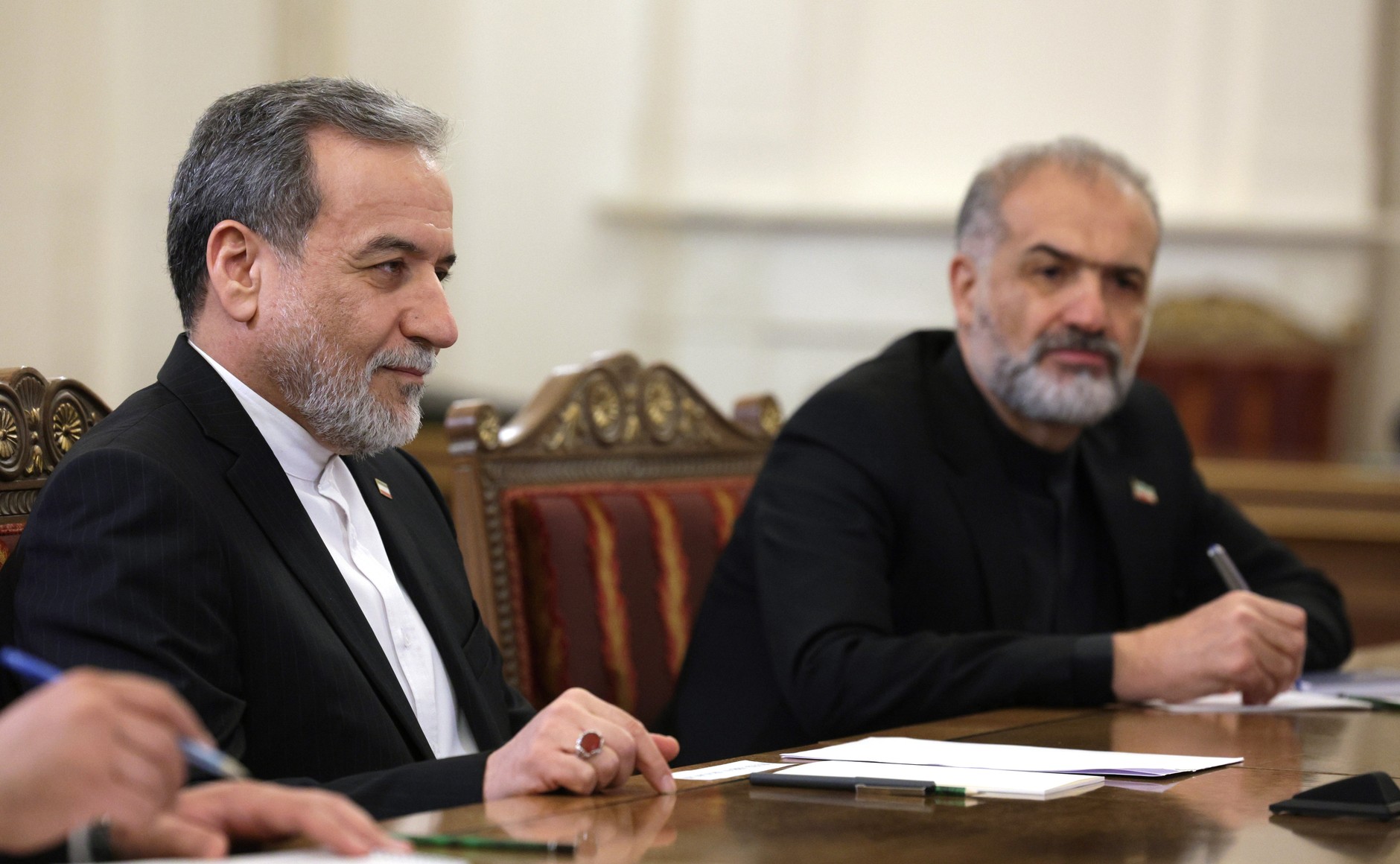
Iran operated through Eid without interruption. Its foreign ministry spokesman gave a substantive briefing on Eid morning, and the Supreme National Security Council channel circulated a hardline position statement the same day. The institutional asymmetry is not about piety — it is about constitutional design.
Iran’s SNSC, the body with authority over the nuclear file under Article 176, does not observe holiday shutdowns on matters framed as national security. Riyadh is not choosing silence; it is structurally mute during the most consequential week of the talks.
The Middle East briefing 3,000+ readers start their day with.
One email. Every weekday morning. Free.
How Did Iran Turn Hajj into a Diplomatic Instrument?
Iran exploited two sequential calendar events — the Hajj 96-hour no-escalation window (May 24-27) and Saudi Arabia’s five-day Eid government holiday (May 27-31) — as consecutive diplomatic buffers. Each event resets the negotiating clock without Iran formally refusing anything. The total structural suspension is eight days, during which no Saudi institutional response is possible.
The mechanism works through layering. The Hajj window imposed a no-escalation expectation on all parties — including the United States, which had signaled military readiness — because any strike during the pilgrimage would have drawn global condemnation. Saudi Arabia reinforced this constraint by asking Washington to delay action until after Hajj, according to The New Arab.
That request was rational on its own terms: pilgrims en route to Mina are not a diplomatic abstraction. But the request also created a four-day buffer in which Iran faced no military or diplomatic pressure from any direction, at no cost to Tehran.
The moment the Hajj buffer expired on May 27, the Eid buffer began. The day the no-escalation window lifted was the same day Saudi Arabia’s public-sector holiday started. Whether Tehran designed the overlap or simply recognised its utility, the effect is identical: Saudi Arabia’s first possible institutional response to anything said or done during this window is June 1. For a country excluded from all five rounds of US-Iran negotiations, with no bilateral Hormuz channel outside the Oman-mediated track, five additional days of enforced silence does not merely inconvenience Saudi diplomacy — it removes Riyadh from the sequence at the moment it matters most.
“Iranians are aware of both [European and U.S. deadlines] and will seek to undermine efforts to enforce a timeline.”
— Washington Institute for Near East Policy, Countering Iran’s Deceptive Behavior in Nuclear Negotiations
The Washington Institute documented this pattern in its analysis of the 2021-2023 Biden-era nuclear talks, during which Iran cycled through refusal to negotiate, procedural stalling, and delayed rejection of a deal already accepted in principle — without producing a signed agreement. What that analysis described as tactical awareness, the 2026 Hajj-to-Eid sequence reveals as operational doctrine. The critical evolution is the choice of instrument: religious calendars cannot be challenged the way procedural objections can. No government can credibly object to Hajj security or Eid observance, which means the delay mechanism carries its own diplomatic immunity.
No other party in the current negotiations faces a comparable constraint. The United States can respond at any hour of any day. Iran can respond at any hour. Oman, the mediator, can respond at any hour. Only Saudi Arabia — the country whose oil exports, fiscal position, and strategic sovereignty are most directly at stake — goes dark for eight days while its future is being negotiated by others.
Two Voices on Eid Morning
Iran did not waste the window. On the morning of Eid al-Adha — day one of Saudi Arabia’s government shutdown — Tehran deployed a two-track messaging operation designed to exploit Riyadh’s inability to reply. The soft track came from Foreign Ministry spokesman Esmaeil Baqaei, who told CBS News that “it is correct to say that we have reached a conclusion on a large portion of the issues under discussion.” That sentence was calibrated to move markets and shape Western headlines, and it succeeded on both counts — Brent crude had already slid from $103 to roughly $97 per barrel over the preceding days on deal optimism.
“It is correct to say that we have reached a conclusion on a large portion of the issues under discussion… To say that this means the signing of an agreement is imminent — no one can make such a claim.”
— Esmaeil Baqaei, Iranian Foreign Ministry spokesman, CBS News, May 2026
The blockquote contains both moves in sequence: the concession and the qualification that erased it. Foreign Minister Abbas Araghchi reinforced the ambiguity the same day, telling reporters he was unsure whether a deal was imminent — a formulation that credits the process without committing to an outcome.

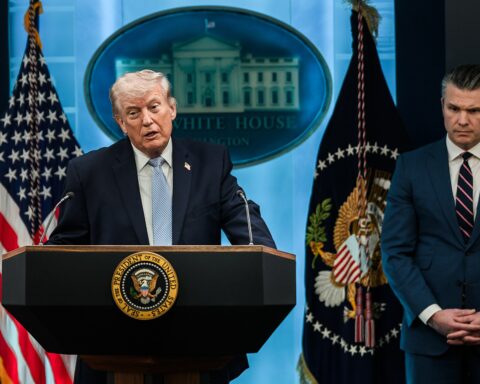
The hard track arrived through Iran’s senior security establishment. A statement circulated under the name of Khamenei adviser Ali Shamkhani on state media dismissed Trump’s demand for inspections access as “a fantasy past U.S. presidents shared,” declaring that Iran was “independent, with strong defenses, resilient people, and clear red lines” and that “talks serve progress, interests, and dignity, not coercion or surrender.” The statement responded directly to Trump’s assertion the previous day that the US could “take whatever we want, we can blow up whatever we want” — a position the SNSC channel treated not as a negotiating stance but as a provocation to be publicly rejected.
The two signals were complementary, not contradictory. Baqaei’s optimism keeps the diplomatic process alive, which keeps the Hajj and Eid calendar protection in place — no party escalates while talks appear to be progressing. The SNSC-channel hardline signals that ratification is nowhere close, buying time on the ground.
With Saudi Arabia’s government on holiday, no institutional voice was available to expose the contradiction or impose a cost on it. Trump reinforced the soft track by telling reporters on May 27 that the two sides were “close to finalizing” with “strong inspections,” aligning Washington with Baqaei’s optimistic framing while the SNSC rejection went uncontested in the same news cycle.
What Does Zolghadr’s SNSC Mean for Ratification?
Mohammad Bagher Zolghadr, an IRGC veteran appointed SNSC secretary on March 24, 2026, has already killed one round of US-Iran talks by issuing a “deviation from mandate” report that recalled Iran’s Islamabad delegation. His posture — “there will be no retreat” — and the SNSC’s constitutional requirement for Supreme Leader ratification under Article 176 make a rapid post-Eid signing implausible without a direct override from Khamenei himself.
The SNSC is not a rubber stamp, and its current leadership has no interest in being rushed. Zolghadr’s appointment under IRGC pressure replaced the more pragmatic Ali Akbar Ahmadian, and his first public address declared “there will be no retreat” against the United States and Israel. Within weeks his council issued the “deviation from mandate” report that collapsed the Islamabad round — the most advanced pre-May negotiating session between Washington and Tehran. That precedent is recent and unambiguous: the last time a US-Iran agreement appeared to be gaining traction, Zolghadr’s SNSC intervened to destroy it.
The ratification chain adds another layer of delay. Under Article 176, SNSC decisions on national security require the Supreme Leader’s endorsement, and Ayatollah Khamenei’s son Mojtaba — who reportedly exercises growing authority over the approval process — is communicating only through couriers from an undisclosed location. That physical bottleneck would slow ratification even if the SNSC were willing to move quickly. The JCPOA in 2015 provides a historical comparison: the SNSC endorsed that deal in approximately eight days, but under a different secretary, a different Supreme Leader health situation, and without the institutional IRGC resistance that Zolghadr now embodies.
The calendar compounds the institutional obstacle. Even if Iran’s negotiators finalised text on the evening of May 27, the ratification sequence — SNSC review, courier transmission to an undisclosed location, Khamenei or Mojtaba endorsement — would unfold during a week in which the kingdom most affected by the outcome cannot respond, cannot object, and cannot impose diplomatic costs on delay. Every day the SNSC takes to “review” is a day Saudi Arabia is absent from the field, and Zolghadr has shown no inclination to shorten that review for anyone’s convenience.
The Nuclear File Goes Last
Baqaei made something explicit on Eid morning that had previously been implicit in Iran’s negotiating posture: the nuclear file is being deliberately sequenced behind the ceasefire and Lebanon tracks. “At this stage, we will not discuss the details of the nuclear issue,” he told CBS News. “We have decided to prioritise an urgent issue for all of us: ending the war on all fronts including Lebanon.” The nuclear file, he said, would be “subject to separate discussions at a later stage.” That is not a procedural footnote — it is the engine of the calendar-capture mechanism.
By pushing the nuclear question to a “later stage,” Iran ensures that the current diplomatic process focuses on tracks where Tehran holds the stronger hand. Hormuz transit is already under the PGSA’s de facto control, with throughput climbing from 26 vessels per day when the system launched on May 5 to 35 per day by May 22. The Lebanon track, where Hezbollah’s reconstruction needs give Tehran bargaining power, is a negotiation Iran expects to win. The nuclear file — where Iran faces the most international pressure, the most intrusive verification demands, and the strongest US red lines — gets deferred to a timeline that Tehran alone controls.
Every day of deferral has three compounding effects. The PGSA toll regime becomes more entrenched as shipping companies adjust contracts and routing to accommodate Iranian clearance procedures. Energy markets recalibrate to the reality of Iranian control of the Strait, creating a new price baseline. And Saudi Arabia’s fiscal position deteriorates further, narrowing Riyadh’s room to manoeuvre and deepening its dependence on a deal over which it has no influence.
The MOU framework reported by Axios on May 6 contained 14 points including a 60-day ceasefire and nuclear talks framework — but more than 44 days later, none of it is signed, the 60-day clock has not started, and Iran’s explicit separation of the nuclear file means it cannot start until the Lebanon and ceasefire tracks are resolved on Iran’s timetable.

Who Pays for Each Day of Delay?
Saudi Arabia bears the highest per-day cost of any party in the Iran negotiations, and the Eid blackout arrives at the worst possible point in its fiscal calendar. The kingdom’s Q1 2026 deficit hit $33.5 billion — 194% of its full-year budget target in just three months — while Brent’s slide toward $97 per barrel on deal optimism pushes prices below every serious estimate of what Riyadh needs to balance its books.
| Metric | Figure | Source |
|---|---|---|
| IMF budget breakeven | $86.60/bbl | IMF 2026 Article IV |
| Bloomberg breakeven (PIF-inclusive) | $108–111/bbl | Bloomberg Economics |
| Brent crude (May 25-26) | ~$97/bbl | CNBC / Trading Economics |
| Saudi Q1 2026 deficit | $33.5B (194% of target) | Saudi Ministry of Finance |
| Goldman Sachs projected 2026 deficit | $80–90B (~6.6% GDP) | Goldman Sachs |
| Aramco Q1 dividend (payable Jun 9) | $21.89B | Aramco (May 10, 2026) |
The IMF’s $86.60 breakeven is the figure most often cited, but Bloomberg Economics, incorporating PIF’s capital requirements, puts the real threshold between $108 and $111 per barrel — a price Brent has not touched since early May. Goldman Sachs projects a full-year deficit of $80-90 billion, roughly 6.6% of GDP, which would represent the largest Saudi fiscal shortfall since the 2015-2016 oil price collapse. At current prices, Saudi Arabia cannot balance its budget even in normal conditions, and with the PGSA constraining the kingdom’s eastern export route, the volume shortage makes the price shortfall academic.
The first hard fiscal test after Eid arrives on June 9, when Aramco’s Q1 dividend of $21.89 billion comes due. That payout was calculated on revenues earned in a quarter when Brent averaged above $100 and the Hormuz disruption was still escalating toward its peak. If Q2 prices settle in the mid-$90s and Hormuz volumes remain constrained, the gap between Aramco’s dividend obligations and its underlying cash generation begins to widen — and that gap opens during a week when the Saudi government cannot act.
The asymmetry of exposure is the mechanism: Iran has operated under sanctions for years and has a structurally lower fiscal pain threshold. The United States is not energy-dependent on the Strait. Oman has no comparable fiscal burden. Only Saudi Arabia faces a cost that compounds with every day the calendar protection extends.
What Can Saudi Arabia Do on June 1?
When Saudi government offices reopen on June 1, Riyadh faces two institutional pressure points within nine days: the OPEC+ JMMC on June 7 and Aramco’s quarterly dividend payment on June 9. Whatever Iran, the United States, and Oman said during the blackout will already be the established frame, and Saudi Arabia will be responding to positions it had no part in shaping.
The OPEC+ JMMC might look like a venue for Saudi displeasure, but its practical value is limited. Saudi Arabia’s OPEC+ quota stands at 10.291 million barrels per day against actual production of roughly 7.76 million — a 2.5-million-barrel gap driven entirely by Hormuz constraints, not by choice. Cutting a quota the kingdom already cannot fill is an empty instrument. The JMMC’s real function on June 7 will be to expose the chasm between OPEC+’s formal production framework and the physical reality that Iran, through the PGSA, now determines how much Saudi oil reaches the market.
The more consequential question is whether the Saudi MOFA will name what happened. Riyadh has never publicly accused Iran of using the Islamic calendar as a diplomatic instrument, and doing so would require acknowledging that the calendar protection secured for Hajj pilgrims was exploited by the kingdom’s principal adversary. That admission strikes at Saudi Arabia’s identity as custodian of Islam’s holiest sites — the idea that Hajj could be turned against the country hosting it is politically toxic in a way that fiscal deficits and oil price slides are not.
The more likely response is procedural: a renewed push for inclusion in the next round of talks, acceleration of the Oman-mediated bilateral channel, and private pressure on Washington to impose a deadline the calendar cannot override. But each of those moves takes days to organise, and the PGSA does not pause while Riyadh’s bureaucracy catches up. By the time Saudi Arabia’s diplomatic apparatus is fully operational, the PGSA will have been running for twenty-seven consecutive days and processing upward of 900 cumulative transits — approaching the kind of operational maturity that makes a temporary wartime measure indistinguishable from permanent infrastructure.

After the Holiday
The calendar-capture pattern is not an improvisation; it maps onto a documented Iranian approach to time as a negotiating tool. What 2026 adds to that repertoire is the discovery that religious calendars — not just bureaucratic manoeuvres — can serve the same function, with the decisive advantage of being diplomatically untouchable. No government can credibly challenge Hajj security or Eid observance without absorbing a political cost that exceeds any diplomatic benefit.
The PGSA does not observe holidays. On May 22, thirty-five vessels transited the Strait of Hormuz under Iranian clearance procedures — up from twenty-six when the system launched on May 5, a trajectory that continues while the government most affected by its existence was on leave. Each additional transit embeds the toll regime deeper into the commercial routines of international shipping. By June 1, the PGSA will have operated uninterrupted for twenty-seven consecutive days, collecting fees in multiple currencies from every non-exempt vessel passing through the Strait. UAE presidential adviser Anwar Gargash’s verdict — that the GCC produced “the weakest historically” response to the Iran challenge — named Saudi Arabia’s enforced silence not as a calendar accident but as an institutional failure with a permanent architecture. The full analysis of Gargash’s assessment and what it signals for the post-war Gulf order is here.
For Saudi Arabia, the eight-day buffer is not an isolated event but the first demonstration of a structural vulnerability with a known recurrence cycle. The Islamic calendar is lunar, shifting approximately eleven days earlier each Gregorian year — Hajj 2027 will fall in mid-May, Hajj 2028 in early May. As long as the nuclear file remains open and the Hormuz question unsettled, every future Hajj season opens the same diplomatic window at the same cost to the same country. The holiday Saudi Arabia asked for gave Iran eight days it did not need to earn, and Hajj 2027 will arrive in twelve months — eleven days earlier on the Gregorian calendar, and exactly on time for Tehran.
Frequently Asked Questions
What is the PGSA and why does it operate through Eid?
The Persian Gulf Shipping Authority is an Iranian body that began processing Hormuz Strait transits on May 5, 2026. It charges fees — reportedly around $2 million per VLCC — and accepts payment in multiple currencies including Chinese yuan and cryptocurrency. Russia, China, India, Iraq, and Pakistan are exempt from the charges. Because the PGSA falls under IRGC jurisdiction rather than Iran’s civilian government, it operates on a military-security schedule that does not observe public-sector holiday shutdowns. During the eight-day Hajj-to-Eid window, it continued collecting fees and clearing transits without pause.
Has Iran used calendar-based diplomatic delay before?
Not in this explicit calendar-blocking form, but the underlying approach is documented. During the 2021-2023 Vienna nuclear talks, Iran consumed approximately 18 months through procedural mechanisms: refusing direct talks with the US, insisting on EU intermediaries, and raising new preconditions after each round. The Washington Institute identified deliberate timeline erosion as a core Iranian negotiating tactic during that period. The 2026 Hajj-to-Eid sequence represents an evolution — instead of procedural objections that negotiators can challenge at the table, Iran exploited a religious calendar that diplomatic counterparts cannot contest without absorbing greater political costs than the delay itself imposes.
Why can’t Saudi Arabia issue statements through its embassies during Eid?
Saudi embassies can issue routine communications during holidays, but a substantive diplomatic position on the Iran nuclear talks requires ministerial-level authorisation and interagency coordination between the MOFA, the Royal Court, the National Security Adviser’s office, and potentially the Ministry of Defense. During a government holiday, the senior officials required for that coordination chain are unavailable. An unauthorised statement from an ambassador would lack institutional weight and risk creating a freelance position that Riyadh later disowns — an outcome worse than temporary silence.
Could the June 7 OPEC+ meeting restore Saudi influence?
The June 7 JMMC is a monitoring body, not a decision-making forum. Its main function is reviewing compliance with existing production quotas — and Saudi Arabia’s production gap against its official quota is driven entirely by Hormuz constraints, not voluntary restraint, making quota adjustments an irrelevant instrument of pressure. OPEC+ also includes Russia, which is exempt from the PGSA toll and has limited incentive to support Saudi complaints about Iranian delay. The meeting’s practical value is as the first multilateral energy venue after the Eid blackout — a place to signal frustration publicly, not a mechanism for changing the dynamics on the ground.
When will this calendar vulnerability recur?
The Islamic calendar advances approximately eleven days earlier each Gregorian year. Hajj 2027 is projected to fall around mid-May, Hajj 2028 around early May, and Hajj 2029 around late April. In each case, the multi-day Hajj security window followed by a four-to-five-day Eid government holiday creates a comparable blackout period for Saudi institutions. The exact duration depends on weekend overlap and any adjustments to the holiday calendar, but the structural vulnerability persists as long as the kingdom observes Eid shutdowns while its principal adversary does not. No administrative reform can eliminate this asymmetry without secularising the Saudi public-sector calendar — a step that is politically unthinkable for the custodian of Mecca and Medina.
That structural silence deepened further on Arafah Day itself, when CENTCOM struck Iranian targets around Bandar Abbas — an operation conducted without Saudi consultation, and which the Foreign Ministry has not commented on. See: CENTCOM Struck Iran on Arafah Day — Saudi Arabia Wasn’t Warned.
The same silence created a vacuum that Pakistan filled directly: while Saudi Arabia’s MOFA stayed quiet, Pakistan’s Defence Minister went on live television and said what the kingdom could not. See: Khawaja Asif Said What Saudi Arabia Cannot. Into that same silence, Iran’s IRGC spokesman Brigadier General Shekarchi issued a direct threat on Arafah Day: Iran would strike “beyond the region” if escalation continued — language that covers Saudi infrastructure explicitly and went unanswered by Riyadh. See: What Iran Means by ‘Beyond the Region’.
The Eid holiday that structured Saudi Arabia’s diplomatic silence ended with MBS making the one call available to him: a bilateral exchange with Pezeshkian, warm in register and empty of policy content. The silence did not become a MOFA statement. It became a royal phone call. See: Saudi Arabia’s bilateral channel with Iran and what it can and cannot carry.
The same absence extended to the UN Security Council. On May 26, while Wang Yi chaired an open debate on the Iran conflict and Pakistan’s Ishaq Dar called for de-escalation, Saudi Arabia held no seat and did not speak at the Security Council session — the institutional silence playing out in New York exactly as it had in Riyadh.