Tehran has shifted Hormuz control from the IRGC’s headless navy to Khatam al-Anbiya Central Headquarters — the one Iranian institution the West cannot designate as a terrorist organization. That is the move that changes everything.
Table of Contents
- The KACHQ Declaration: What Iran Actually Said on April 13
- Why Did Iran Move Hormuz Authority from the IRGC to KACHQ?
- The Piracy Accusation and the Mirror It Holds Up to Washington
- Iran’s Legal Architecture: From Ad Hoc Franchise to Permanent Sovereignty Claim
- What Does Iran’s “Permanent Mechanism” for Hormuz Actually Look Like?
- The Ceasefire Text That Handed Iran the Keys
- How Does Oman Fit into Iran’s Hormuz Architecture?
- Saudi Arabia: Paying the Largest Bill While Locked Outside the Room
- The US Blockade Paradox — Washington Just Validated Tehran’s Argument
- What Survives When the Ceasefire Expires on April 22?
TEHRAN — Hours after the United States naval blockade of the Strait of Hormuz took effect at 14:00 GMT on April 13, Iran’s Armed Forces issued a statement through ISNA that contained none of the familiar IRGC bluster about martyrdom operations or divine retribution — it was, instead, a bureaucratic announcement dressed in the language of permanent institutional control, declaring that Tehran would implement “a permanent mechanism to control the strait in response to U.S. threats.” The word that should alarm every foreign ministry from Riyadh to Washington is not “control” but “permanent,” because permanent mechanisms are not built for wars that end but for orders that replace them. Iran is no longer fighting over the Strait of Hormuz; it is filing the paperwork to own it. The entity doing the filing — Khatam al-Anbiya Central Headquarters, the joint operational command integrating both the regular Artesh and the Islamic Revolutionary Guard Corps under a single chain reporting directly to the Supreme Leader — was chosen with a precision that reveals the entire strategy.
The KACHQ Declaration: What Iran Actually Said on April 13
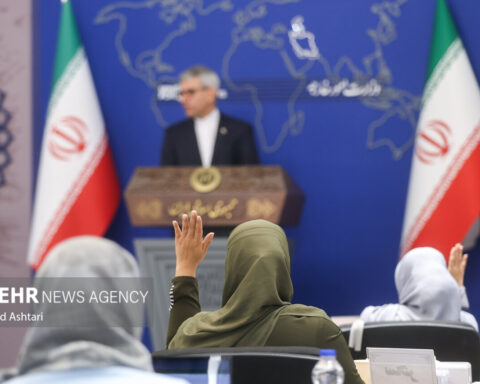
The Armed Forces spokesperson’s statement carried two operative sentences that deserve to be read as legal claims rather than military threats. The first: “The criminal actions of America in restricting maritime transit in international waters are illegal and constitute piracy.” The second: the announcement of the permanent mechanism itself, delivered not as a conditional response to the blockade but as a standing institutional posture — Iran intends to control Hormuz through an enduring administrative system, one that will process vessels, collect fees legislated by Iran’s Parliament on March 31, and operate under the sovereignty framework of Iran’s 1993 Law of Marine Areas. This was not a press conference; it was a notice of incorporation.
The declaration arrived three days after KACHQ announced on April 10 that “management of the Strait of Hormuz is entering a new phase to ensure continued initiative and control,” with what it described as “fingers on the trigger” — and one day after KACHQ told Tasnim News Agency on April 11 that “Iranian Armed Forces have the upper-hand over the passage of any vessel through the Strait of Hormuz,” directly contradicting CENTCOM’s claim that guided-missile destroyers DDG-121 and DDG-112 had transited the strait freely. The escalating cadence — April 10, April 11, April 13 — traces a deliberate institutional rollout, each statement building on the last, each broadening the scope of the claimed authority from operational management to permanent mechanism.
The recipient matters as much as the message. When KACHQ speaks, it speaks as the Iranian state — not as the IRGC, which the United States, European Union, and United Kingdom have designated as a Foreign Terrorist Organization, and not as the Artesh alone, which lacks the IRGC’s naval infrastructure in the Gulf. KACHQ integrates both forces under the Supreme Leader’s direct authority, separated from the Armed Forces General Staff since 2016, commanded by Ali Abdollahi Aliabadi, and carrying full state attribution under international law. The sanctions architecture that the West spent two decades constructing against the IRGC does not apply to KACHQ, and Iran knows this, which is why the permanent mechanism announcement came from that headquarters and not from the headless IRGC Navy — whose commander, Alireza Tangsiri, was killed on March 30 with no named successor appointed in the 14 days since.
Why Did Iran Move Hormuz Authority from the IRGC to KACHQ?
Iran transferred public authority over Hormuz from the IRGC to Khatam al-Anbiya Central Headquarters because KACHQ carries full state attribution under international law while remaining outside the Western FTO designation framework — making its declarations legally equivalent to sovereign state action rather than terrorist-organization posturing, and therefore far harder for Washington to dismiss or sanction.
The Middle East briefing 3,000+ readers start their day with.
One email. Every weekday morning. Free.
The institutional shift is rooted in Iran’s constitutional architecture. Article 143 of the Iranian constitution assigns the Artesh — the regular armed forces — the mission of “guarding independence and territorial integrity,” which is the classical language of sovereignty. Article 150 assigns the IRGC the separate mission of “guarding the Revolution and its achievements,” which is ideological, not territorial. Article 110 places both under the Supreme Leader. When KACHQ — the joint command integrating both — speaks on Hormuz, it speaks under the sovereignty mandate of Article 143 fused with the operational capability of the IRGC Navy, and it does so through a unified institutional voice that the international legal system must treat as equivalent to a defense ministry statement from any other state.
The practical consequences are immediate and severe for Western policy. The IRGC’s ad hoc franchise system for Hormuz — selectively permitting Chinese-brokered LNG transits, extracting $2 million tolls from passing vessels, issuing “last warning” radio calls to American destroyers — operated in a legal grey zone where every action could be attributed to a designated terrorist organization and treated accordingly. KACHQ’s permanent mechanism operates in an entirely different register: it is the sovereign state of Iran, exercising what Tehran claims is its right to manage waters under its jurisdiction, and the West has no existing legal framework to designate the headquarters itself as a terrorist entity without designating the entire Iranian state — a step that would collapse every diplomatic channel, including the ceasefire architecture, simultaneously. As Dr. Usman wrote in Modern Diplomacy with uncomfortable clarity: “Iran’s new protocol for the Strait of Hormuz is not a normal maritime regulation. It is a wartime instrument being repackaged as a postwar order.”
The Piracy Accusation and the Mirror It Holds Up to Washington
The piracy charge is not rhetorical excess — it is a calculated legal positioning that exploits the single largest vulnerability in the American blockade: the United States has never ratified UNCLOS, and the blockade it imposed on April 13 restricts maritime transit in international waters without Security Council authorization, because Russia and China vetoed the UNSC Hormuz resolution on April 7 by a vote of 11-2-2. Iran’s Armed Forces spokesperson used the word “piracy” knowing that under customary international law, piracy is defined in part as illegal acts of violence, detention, or depredation committed in international waters for private ends — and Tehran’s argument, however self-serving, is that a unilateral blockade imposed by a non-UNCLOS party without UNSC mandate meets most of those criteria in mirror image. Washington calls Iran’s toll collection illegal; Tehran calls Washington’s blockade piracy; and neither state has ratified the convention that both invoke when it suits them.
James Kraska of the Naval War College and Harvard — one of the foremost authorities on the law of the sea — has stated the legal baseline with characteristic precision: “The Strait of Hormuz is a strait used for international navigation… the right of transit passage applies for all states.” He has also stated, with equal precision, that “imposing transit fees is a violation of the rules of transit passage.” Both statements are correct, and both cut against both parties: Iran cannot charge tolls under transit passage, but the United States cannot impose a blockade that restricts transit passage without multilateral authorization. The mirror is exact, and Tehran engineered it to be.
Mark P. Nevitt of Emory University, a retired Navy Judge Advocate General’s Corps officer, has reinforced the legal framework by noting that Iran’s $2 million fee per vessel violates UNCLOS Article 26 — charges must be “linked to any service” and “neither condition is met.” Nevitt also explicitly rejected the Montreux Convention analogy that Iranian diplomats have begun floating: “No ‘Strait of Hormuz Convention’ exists.” But what Nevitt’s analysis does not address — because it did not need to, until April 13 — is what happens when the entity imposing those tolls is not the IRGC’s ad hoc franchise but a permanent state mechanism operating under KACHQ with the full weight of Iranian constitutional sovereignty behind it. The legal analysis does not change; the enforcement calculus does, because you cannot sanction a permanent mechanism without sanctioning a state.
Iran’s Legal Architecture: From Ad Hoc Franchise to Permanent Sovereignty Claim
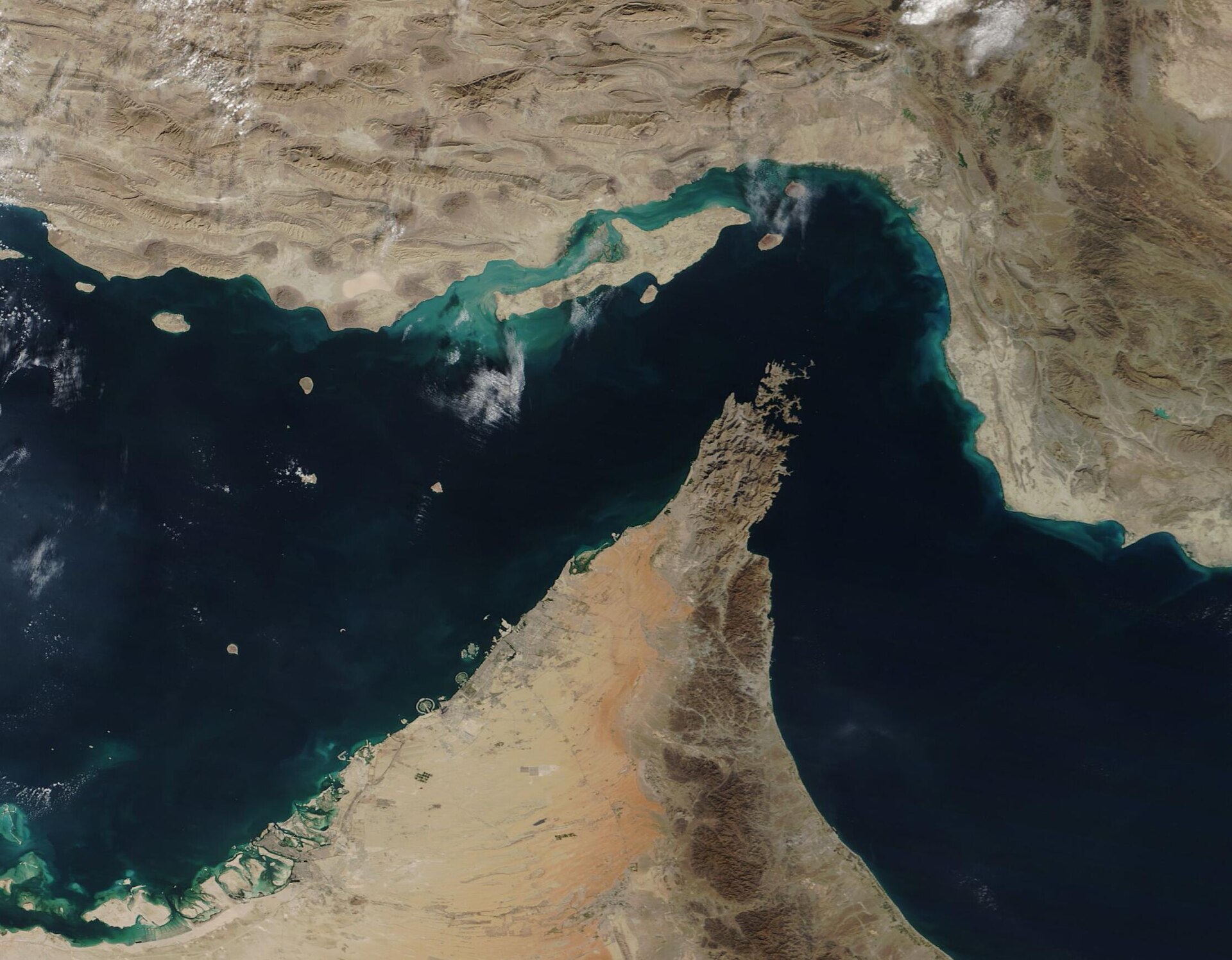
Iran has been constructing this legal architecture for decades, and the war gave it the crisis conditions necessary to activate every dormant instrument simultaneously. The 1993 Law of Marine Areas — Iran’s domestic legislation governing its maritime boundaries — uses the phrase “harmless passing” rather than “transit passage,” a distinction that sounds technical but is constitutive: “transit passage” under UNCLOS is a near-absolute right that cannot be suspended, while Iran’s “harmless passing” is security-oriented, conditional, and suspendable at Tehran’s discretion. Article 8 of the 1993 law permits suspension on security grounds; Article 9 requires prior authorization for warships. These are not new provisions — they have been on the books for 33 years — but they have never been operationalized through a permanent institutional mechanism until now.
Iran’s 1982 declaration to the United Nations added another layer: transit passage rules, Tehran stated, apply only to UNCLOS parties — and since neither the United States nor Iran has ratified UNCLOS, Tehran’s argument is that neither state can invoke transit passage rights against the other, leaving customary international law as the only applicable framework, and customary international law is far more ambiguous on straits used for international navigation than the treaty provisions that most analysts cite as though they were universal. The legal scholars are correct that Iran cannot charge tolls under transit passage; Iran’s counter-position is that transit passage does not apply to non-parties, and therefore the entire Western legal objection is built on a treaty that the objecting party has not ratified.
The 10-point peace plan that Iran submitted during the Islamabad negotiations crystallized this architecture into diplomatic text. Point 2 specifies that passage through Hormuz will occur “in coordination with Iranian armed forces” — not the IRGC, not the Artesh, but “Iranian armed forces,” the integrated language of KACHQ. Point 8 establishes transit fee compensation as a negotiating demand, meaning Tehran has moved toll collection from an IRGC extortion operation to a formal diplomatic position embedded in a peace framework. The distinction between an armed group extracting payment at gunpoint and a sovereign state collecting fees under a negotiated protocol is the distinction between piracy and port authority — and Iran is spending every available diplomatic dollar to move from the first column to the second.
| Instrument | Date | Key Provision | Current Status |
|---|---|---|---|
| 1982 UN Declaration | 1982 | Transit passage applies only to UNCLOS parties | Active; never withdrawn |
| Law of Marine Areas | 1993 | “Harmless passing” (not transit passage); Art. 8 suspension; Art. 9 warship authorization | Active; operationalized April 2026 |
| HOPE Proposal (Rouhani/UNGA) | 2019 | Hormuz Security Council Summit; non-aggression pact; exclusion of foreign forces | Dead; no GCC member joined |
| Parliamentary Transit Fee Act | March 31, 2026 | $1-2M/vessel mandatory fee | Legislated; collection via Kunlun Bank/USDT |
| 10-Point Peace Plan (Islamabad) | April 2026 | Point 2: passage “in coordination with Iranian armed forces”; Point 8: fee compensation | Active negotiating position |
| KACHQ “Permanent Mechanism” | April 13, 2026 | Formal institutional control under joint command | Declared; implementation underway |
What Does Iran’s “Permanent Mechanism” for Hormuz Actually Look Like?
Iran’s permanent mechanism for Hormuz will function as a standing administrative and naval control system under KACHQ, combining the IRGC Navy’s existing coastal infrastructure with the Artesh’s conventional naval assets and integrating both with the legislated fee-collection regime passed by Parliament on March 31 — creating a unified gateway authority that processes transits, collects payments, and reserves the right to deny passage on security grounds under Iran’s 1993 Law of Marine Areas.
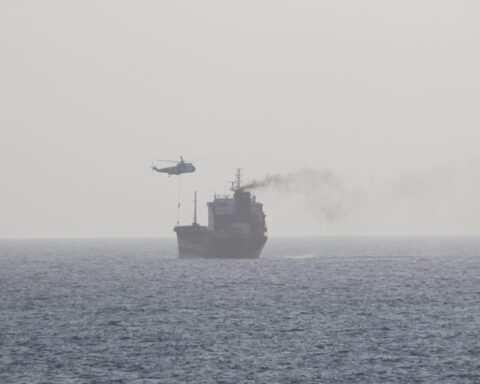
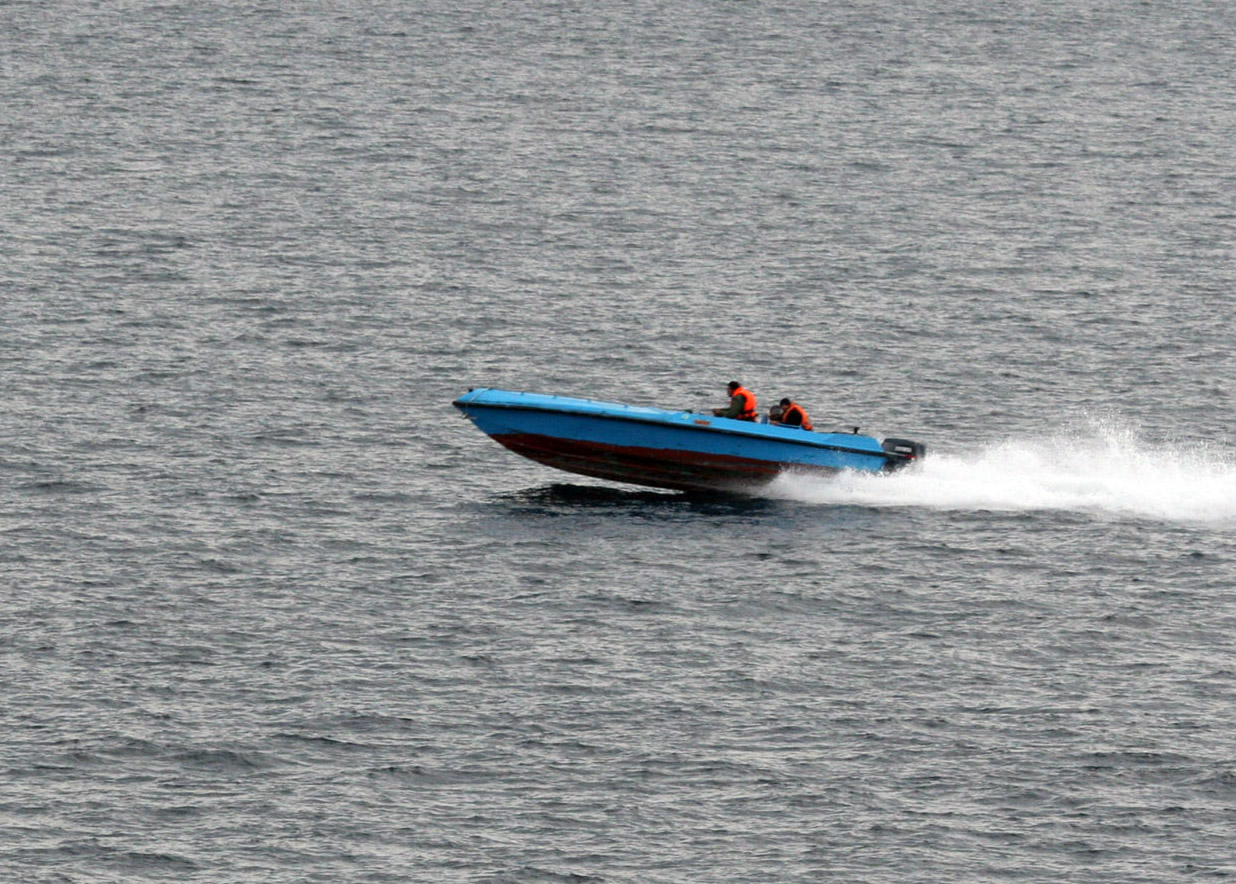
The operational architecture is already partially visible. In the 24 hours before the April 13 blockade took effect, 31 vessels transited the strait — a fraction of the pre-war baseline of 138 per day, but still a flow, and that flow was managed not by the leaderless IRGC Navy but by what Iranian state media described as “Armed Forces coordination.” The IRGC Navy still operates the fast-attack boats, the coastal missile batteries on Abu Musa and the Tunbs, and the drone surveillance network, but the public authority — the voice that speaks to CENTCOM, to the IMO, to insurance underwriters, to tanker captains deciding whether to enter the strait — now belongs to KACHQ. Military capability remains distributed; political authority has been centralized.
The fee structure, legislated by Parliament and therefore carrying democratic legitimacy within Iran’s constitutional system (however constrained that system may be), sets tolls at $1-2 million per vessel — a figure that Nevitt has called a clear violation of UNCLOS Article 26, but which Iran frames not as a toll for transit but as compensation for security services rendered in a conflict zone, a distinction that Chatham House has noted could find traction in future negotiations. The collection mechanism — Kunlun Bank for yuan-denominated payments, USDT on the Tron blockchain for dollar-equivalent payments outside SWIFT — is already operational from the IRGC’s ad hoc franchise period, and KACHQ inherits it intact. The permanent mechanism is, in this sense, less a new construction than a legal shell placed over an existing operation — transforming what was extortion into what Tehran will call sovereignty. The first transit on Day 1 of the CENTCOM blockade illustrated the gap KACHQ’s framework exposes: a sanctioned Chinese tanker, OFAC-blacklisted and flagless, sailed through unchallenged because its cargo was loaded in the UAE, not Iran — a cargo-origin distinction the permanent mechanism is not designed to close, and that 1,100 dark fleet vessels can now replicate.
The Ceasefire Text That Handed Iran the Keys
The most consequential sentence in the April 8 ceasefire agreement is the one that received the least attention at the time: “Resumption of activities along the strait will take place in coordination with Iranian armed forces.” That sentence, agreed to under the pressure of a war that had already cost Saudi Arabia an estimated 50% reduction in crude exports and destroyed PAC-3 missile stockpiles to the point where the UNSC veto was almost irrelevant — because interception capacity was running out regardless — embeds Iran’s permanent mechanism into the legal architecture of the ceasefire itself. The “permanent mechanism” announced on April 13 is, in Tehran’s reading, the fulfillment of a commitment the international community already accepted on April 8.
Araghchi’s public translation of this commitment was precise in its ambiguity: “Safe passage through the Strait of Hormuz will be possible via coordination with Iran’s Armed Forces and with due consideration of technical limitations.” The phrase “technical limitations” is doing extraordinary work — it provides Tehran with an indefinitely expandable justification for restricting transit (environmental surveys, mine-clearance operations, security assessments, navigation hazards) without ever formally closing the strait. Iran does not need to blockade Hormuz; it needs to process it, and the ceasefire text gives it the legal basis to do so. The 600-plus vessels stranded in and around the strait as of April 13 — including more than 325 tankers — are not trapped by Iranian naval power alone; they are trapped by an administrative system that requires “coordination” for passage and then defines the terms of coordination unilaterally.
The ceasefire also contains the provision that “Iran and Oman will be able to charge ships” for transit — a clause that transforms Oman from a neutral mediator into a co-administrator of the strait and provides Iran with a bilateral partnership that further legitimizes the fee regime. No other ceasefire in modern history has included a provision granting one belligerent party the right to collect fees from international shipping as a condition of peace, and the fact that this clause survived negotiation suggests either that the mediating parties (Pakistan, with Egypt and Turkey in supporting roles) did not fully grasp its implications, or that they grasped them perfectly and calculated that the alternative — no ceasefire at all — was worse. Either way, the text is signed, and Iran is now executing it as a mandate.
How Does Oman Fit into Iran’s Hormuz Architecture?
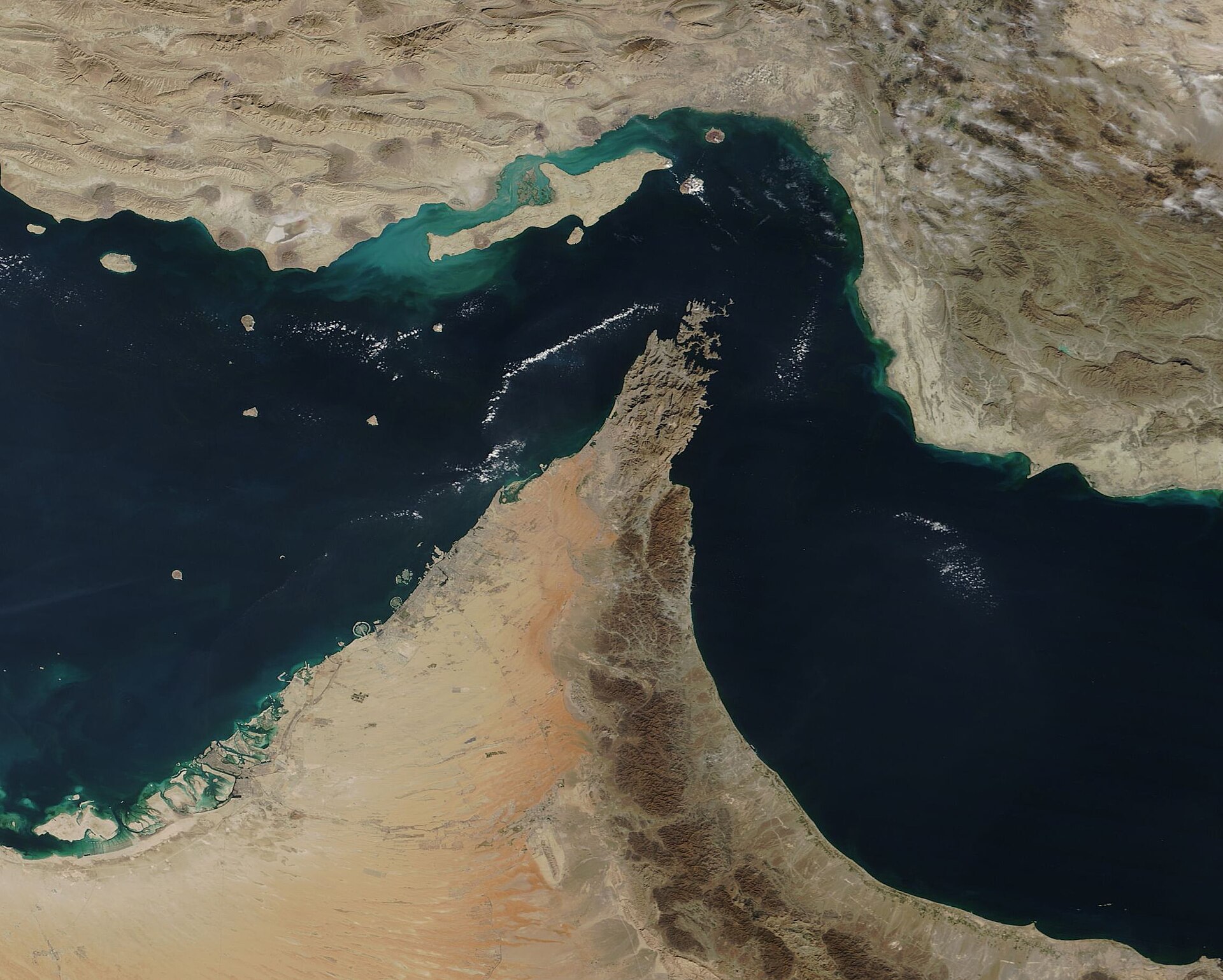
Oman serves as the essential legitimating partner in Iran’s permanent mechanism — the strait is geographically shared between Iran and Oman, and by including Oman as a co-administrator with the right to collect transit fees, Tehran transforms a unilateral sovereignty grab into a bilateral management arrangement between the two littoral states, giving it a structural defense against any future UNSC resolution or multilateral legal challenge.
The Omani role is the architectural keystone because it neutralizes the most potent counterargument: that Iran is unilaterally restricting an international waterway. When two littoral states jointly administer a strait — even under terms that neither UNCLOS nor customary international law explicitly authorizes — the legal challenge becomes exponentially more complex, because Oman is a US partner, a GCC member, and the host of bilateral protocols that predate the war. Oman’s Transport Minister, Al Maawali, publicly stated that “no tolls can be imposed for crossing Hormuz” — but that statement preceded the ceasefire text, and the ceasefire text supersedes it by granting both Iran and Oman the right to charge. Whether Oman actually collects fees is almost secondary; its presence in the framework is what gives Iran’s permanent mechanism the bilateral architecture it needs to survive legal scrutiny.
The Oman dimension also complicates the US blockade now in effect. Washington cannot blockade the Omani side of the strait without blockading a partner state; it cannot enforce the blockade against Iranian-coordinated transits without also interfering with the Omani co-administrator’s prerogatives; and it cannot argue that the strait should be open to free transit while simultaneously operating a blockade that restricts it. The permanent mechanism traps the United States in a logical contradiction — and Oman, whether by design or by the gravitational pull of geography, is the instrument of that trap.
Saudi Arabia: Paying the Largest Bill While Locked Outside the Room
Saudi Arabia has absorbed the largest economic damage of any party to this conflict — crude exports reduced by roughly 50% at war peak, the East-West Pipeline to Yanbu operating at its 5.9 million barrels-per-day ceiling (restored to 7 million bpd as of April 12 but still short of pre-war Hormuz throughput of 7-7.5 million bpd by a structural gap of 1.1-1.6 million bpd), Brent above $100 as the blockade took effect on April 13, and a fiscal break-even that Bloomberg has estimated at $108-111 per barrel when PIF commitments are included. The kingdom is paying for a war it did not start, through infrastructure damage it is still repairing, while being excluded from every negotiating room where the strait’s future is being decided.
The first Saudi-Iranian foreign minister call since the war began — Faisal to Araghchi on April 9, four days after the ceasefire — lasted long enough to confirm that the two states are speaking and short enough to confirm that they are not negotiating. Saudi Arabia was not in the Islamabad room where the ceasefire was brokered; it was not party to the 10-point peace plan that embeds Iranian control over Hormuz; and it has no seat in the permanent mechanism that KACHQ declared on April 13. The International Crisis Group’s assessment — that Saudi Arabia is “absorbing largest economic damage” while being structurally excluded — is a diplomatic euphemism for a situation in which the state most dependent on Hormuz has the least say in how Hormuz will operate after the war.
| Metric | Value | Source / Date |
|---|---|---|
| Pre-war daily Hormuz transits | 138 vessels/day | Windward baseline |
| April 13 transit count (24h pre-blockade) | 31 vessels | Tracking data |
| Vessels stranded in/near strait | 600+ (325+ tankers) | April 13 |
| Pre-war Saudi Hormuz throughput | 7–7.5M bpd | Aramco |
| East-West Pipeline (Yanbu) capacity | 7M bpd (restored April 12) | Aramco/Amin Nasser |
| Yanbu effective ceiling (operational) | 5.9M bpd | Industry estimates |
| Structural export gap | 1.1–1.6M bpd | Pipeline max vs. Hormuz baseline |
| Brent crude (April 13) | Above $100/bbl | Market data |
| Saudi fiscal break-even (PIF-inclusive) | $108–111/bbl | Bloomberg |
The permanent mechanism is, for Saudi Arabia, a worst-case institutional outcome — not because it threatens the kingdom militarily (the war has already demonstrated that Saudi air defenses, however depleted, can absorb Iranian strikes) but because it threatens the kingdom economically in perpetuity. A permanent Iranian administrative system for Hormuz transits means permanent Saudi dependence on Yanbu bypass capacity that structurally cannot match pre-war export volumes, permanent exposure to an Iranian fee regime that raises the cost of every barrel that must transit the strait, and permanent exclusion from the governance of a waterway through which the kingdom’s economic survival has flowed for decades. The Chatham House warning that keeping Hormuz open “will require more than short-term ceasefires or ad hoc security measures” and demands “a shift toward inclusive cooperation that recognizes regional realities” reads, in this context, like an epitaph for the order that preceded April 13.
The US Blockade Paradox — Washington Just Validated Tehran’s Argument
The supreme irony of the April 13 blockade is that the United States, by restricting transit through the Strait of Hormuz, has validated every legal argument Iran has been making for the past 44 years — that the strait is not an ungoverned international waterway but a contested space where sovereign power determines passage. Washington’s blockade destroys its own Freedom of Navigation doctrine at the precise moment Iran is building an alternative framework to replace it, and the KACHQ permanent mechanism announced on the same day is, in effect, Iran’s application to become the successor authority. The Chinese Ministry of Foreign Affairs spokesperson Guo Jiakun’s statement — that “the Strait of Hormuz is an important international trade route for goods and energy” — is a masterpiece of diplomatic understatement that translates, in practice, to Beijing’s demand that the strait remain open to Chinese shipping under whatever administrative regime controls it, whether American blockade or Iranian permanent mechanism.
The Russia-China-Iran “Maritime Security Belt 2026” naval drills conducted in Hormuz provide the military backing for the legal architecture. Russia and China’s veto of the UNSC Hormuz resolution on April 7 — an 11-2-2 vote that eliminated the last multilateral mechanism for overriding Iran’s sovereignty claims — was not an act of diplomatic obstruction but an investment in the alternative order that the permanent mechanism represents. Chatham House warned that granting Iran “control over Hormuz” risks “imperilling US national security in the longer term,” but the warning came after the veto, after the ceasefire text, and after the blockade — all of which, in sequence, have accomplished exactly what Chatham House warned against by different means. The United States blockaded the strait to prevent Iranian control; the blockade demonstrated that the strait can be controlled; and Iran announced the permanent mechanism to control it under its own authority. The logic is circular, and it runs in Tehran’s direction.
The IRGC Navy’s threats against US blockade ships and the Russian VLCC caught in the blockade zone are both symptoms of the same structural contradiction: Washington is enforcing a maritime restriction that mirrors the restriction it condemns Iran for imposing, and every day the blockade continues, the precedent deepens. Iran does not need the blockade to end — it needs it to continue long enough to establish that great powers restrict Hormuz transit when their interests require it, at which point Tehran’s permanent mechanism becomes not an aberration but a norm.
What Survives When the Ceasefire Expires on April 22?
The ceasefire expires approximately April 21-22, with no extension mechanism negotiated and the first Hajj pilgrims arriving on April 18 — creating a four-day overlap between the holiest logistical operation in Islam and the potential resumption of hostilities. The permanent mechanism is designed to survive this expiration regardless of outcome, because its legal basis is not the ceasefire but Iran’s 1993 Law of Marine Areas, its parliamentary fee legislation, and the KACHQ institutional framework — none of which are contingent on the ceasefire remaining in effect.
If the ceasefire holds and is extended, the permanent mechanism becomes the administrative system through which Hormuz transits resume — gradually, conditionally, and under Iranian coordination as the ceasefire text specifies. If the ceasefire collapses, the permanent mechanism becomes the wartime maritime control system that Iran was already operating, now elevated from IRGC improvisation to KACHQ institutional authority. In neither scenario does the mechanism disappear; in both scenarios, it accrues legitimacy through continued operation. The 31 vessels per day that were transiting before the blockade took effect — compared to 138 pre-war — were already moving through an Iranian-controlled administrative process, and every transit that completed successfully became a data point in the argument that Iran can manage the strait without collapsing global shipping.
The structural question that the permanent mechanism poses is not whether Iran has the right to control Hormuz — the legal scholars are clear that it does not, under either UNCLOS transit passage provisions or customary international law — but whether anyone has the power to prevent it from doing so after the ceasefire text accepted “coordination with Iranian armed forces” as the operating framework. The UNSC cannot act because Russia and China hold vetoes. The United States is operating a blockade that undermines its own legal position. Saudi Arabia is excluded from negotiations. Oman is co-opted as a co-administrator. And KACHQ — the one institution speaking for Iran — sits outside the FTO designation framework that gives Western governments their primary enforcement tool against Iranian entities. The permanent mechanism may be illegal; it may also be permanent, because illegality without enforcement is just a legal opinion, and there is no one left in the room with both the authority and the will to enforce it.
Iran’s Armed Forces spokesperson closed the April 13 statement with what reads as both a threat and a constitutional claim: “If the security of Iran’s ports in the waters of the Persian Gulf and the Arabian Sea is threatened, no port in the Persian Gulf and the Arabian Sea will be safe.” That sentence, delivered through KACHQ, carries the weight of Article 143 — territorial integrity — and it is directed not at the US Navy but at the post-war order itself, warning every state in the region that Iran’s permanent mechanism is backed by the promise of mutual vulnerability, and that dismantling it will cost more than tolerating it. This is how legal architectures are built in the absence of consensus: not through agreement but through the exhaustion of alternatives, and on April 13, 2026, Iran calculated — with some justification — that the alternatives are exhausted.
Frequently Asked Questions
What is Khatam al-Anbiya Central Headquarters (KACHQ)?
KACHQ is Iran’s joint operational military headquarters, separated from the Armed Forces General Staff in 2016, that integrates both the regular army (Artesh) and the IRGC under a single operational command reporting directly to the Supreme Leader. Its current commander is Ali Abdollahi Aliabadi. Unlike the IRGC alone, KACHQ also functions as Iran’s largest engineering and construction conglomerate — managing over 2,500 infrastructure projects worth an estimated $50 billion — which gives it the institutional capacity to administer a permanent maritime control system, not merely a military one. Western FTO designations target the IRGC specifically but do not cover KACHQ’s integrated command structure.
Can Iran legally charge transit fees through the Strait of Hormuz?
Under UNCLOS Article 26 and customary international law governing straits used for international navigation, Iran cannot charge transit fees — tolls must be linked to a specific service rendered, and the $1-2 million per vessel fee fails that test according to experts like Mark P. Nevitt. However, Iran’s position exploits the fact that neither Iran nor the United States has ratified UNCLOS, and Iran’s 1982 UN declaration states that transit passage provisions apply only to treaty parties. The practical enforcement gap is widened by the April 7 UNSC veto, which eliminated the only mechanism for authoritative legal resolution at the multilateral level.
How does the US blockade affect freedom of navigation in Hormuz?
The US blockade, imposed unilaterally without UNSC authorization after the April 7 veto, creates a precedent that directly contradicts Washington’s four-decade Freedom of Navigation program — which held that straits used for international navigation must remain open to all vessels without restriction. Every legal argument the US has deployed against Iran’s toll regime (that transit cannot be conditioned, restricted, or taxed) applies with equal force to the blockade itself, and Iran’s “piracy” accusation exploits this symmetry. The US Navy’s own Naval War College scholars have historically argued that any unilateral restriction on Hormuz transit violates customary international law — a position that the blockade now forces them to reconcile with their own government’s policy.
What happens to Hormuz shipping when the ceasefire expires on April 22?
The ceasefire expiration coincides with the arrival of the first Hajj pilgrims from Indonesia (221,000 total, with departures beginning April 22) and Pakistan (119,000 arriving from April 18), creating a window in which any resumption of hostilities would directly endanger the annual pilgrimage that underpins Saudi Arabia’s Custodian of the Two Holy Mosques title. The Soufan Center has confirmed that no extension mechanism was negotiated. Insurance underwriters have already priced Hormuz transit at war-risk premiums through Q3 2026, and Lloyd’s Joint War Committee continues to list the entire Persian Gulf above the 26th parallel as a listed area — meaning that even a nominal ceasefire extension would not reduce insurance costs without a formal de-listing.
Why is Saudi Arabia excluded from Hormuz negotiations?
Saudi Arabia was excluded from the Islamabad ceasefire talks because the mediating structure — Pakistan as primary broker, with Egypt and Turkey in supporting roles — was designed around states with direct diplomatic channels to both Iran and the United States. Saudi Arabia severed relations with Iran during the 2016 embassy crisis, restored them via the 2023 Beijing-brokered deal, and then saw communications freeze when the war began on February 28, 2026. The first FM-level call (Faisal to Araghchi) came only on April 9 — four days after the ceasefire — and established contact without establishing negotiating standing. The kingdom’s $5 billion loan to Pakistan maturing in June 2026 gives it financial pressure on the mediator but not a seat at the table where Hormuz governance is being defined.