Table of Contents
- The Leak and the Landing
- What Does the SMDA Actually Obligate Pakistan to Do?
- How Did the SMDA Bypass Pakistan’s Parliament?
- The 27th Amendment: Munir’s Constitutional Fortress
- Why Does the Leak Poison the Islamabad Mediation?
- Iran’s Silence Is Not Acquiescence
- Cash for Deterrence: The Transaction That Failed
- The Riyadh Delegation and What It Signals
- What Happens If Iran Walks Away from the Islamabad Process?
- FAQ
ISLAMABAD — On April 15, Pakistani Prime Minister Shehbaz Sharif boards a plane to Riyadh accompanied by the man who wrote his country into a binding military servitude agreement, the man who told Iran about it to her face, and the civilian diplomat tasked with pretending none of this compromises Pakistan’s role as the war’s neutral broker. Field Marshal Asim Munir, Deputy Prime Minister Ishaq Dar, and Special Assistant Tariq Fatemi are all on the manifest. So is the wreckage of a mediator’s credibility, packed in the cargo hold where nobody in Islamabad wants to look at it.
The Saudi-Pakistan Mutual Defence Agreement, signed at Al-Yamamah Palace on September 17, 2025, was always understood in broad terms: Islamabad would guarantee Riyadh’s security in exchange for financial lifelines and strategic partnership. But the full text of the 2021 amendment, leaked by Drop Site News in April 2026, reveals something far more specific and far more damaging. Pakistan did not sign a mutual defence pact. It signed a unilateral military obligation requiring Pakistani forces to deploy on Saudi demand, with no reciprocal Saudi commitment, no parliamentary authorization, no explicit exclusion of nuclear forces, and no geographic limitation that survived internal negotiation. The country that Iran has trusted as its protecting power in Washington for 34 unbroken years is, on paper, a Saudi military auxiliary bound by contract.
The Leak and the Landing
The timing is brutal enough to look choreographed. Drop Site News published verbatim excerpts of the 2021 SMDA amendment text just as the Islamabad Process entered its most critical phase, with the April 22 ceasefire expiration bearing down on every party at the table. The leaked documents include internal Pakistani military memos, the caretaker government’s signing timeline, and the unresolved debate over whether the pact covers nuclear capabilities. None of this was supposed to be public, and all of it retroactively reframes every session of the Islamabad talks that Pakistan hosted and brokered.
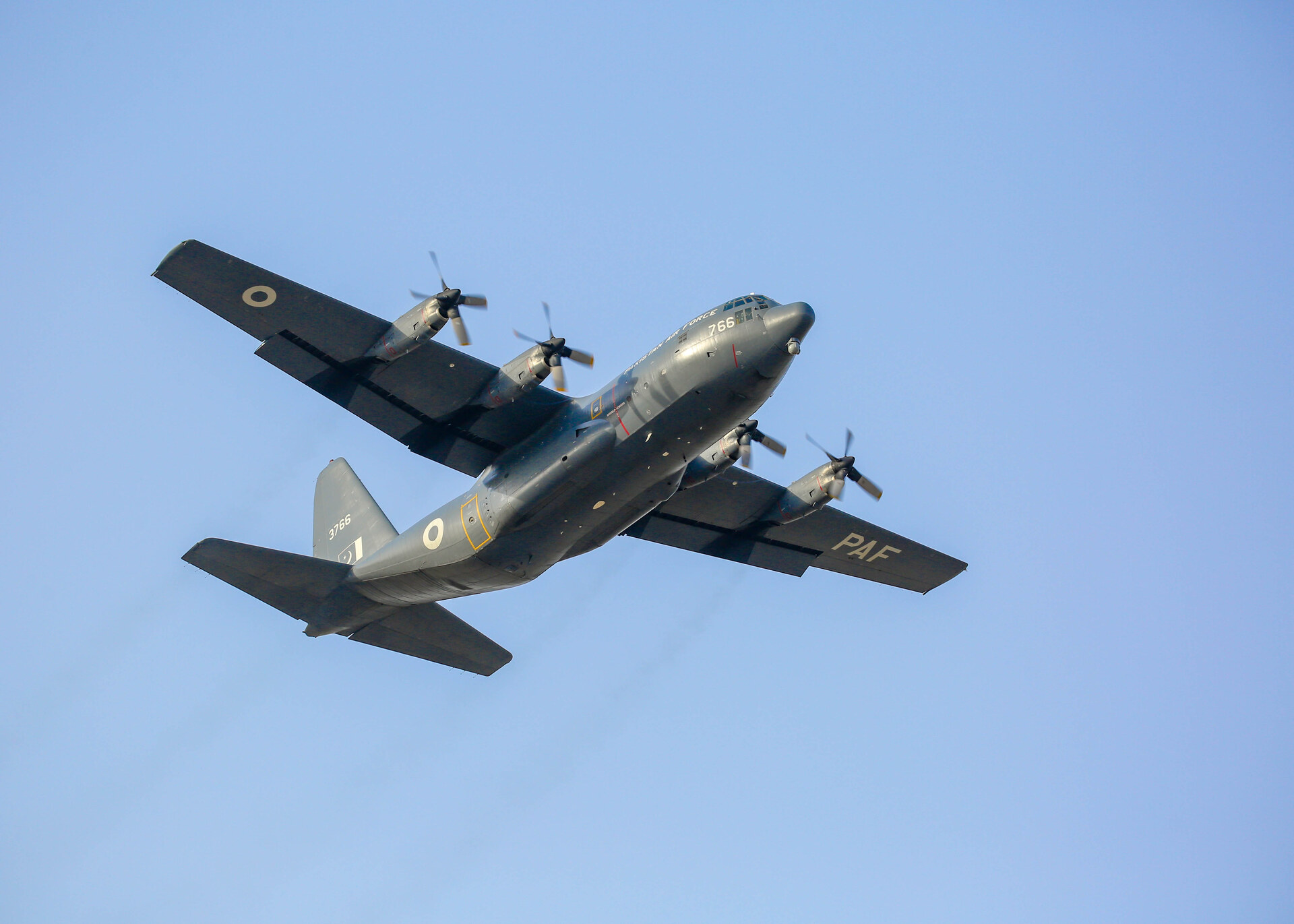
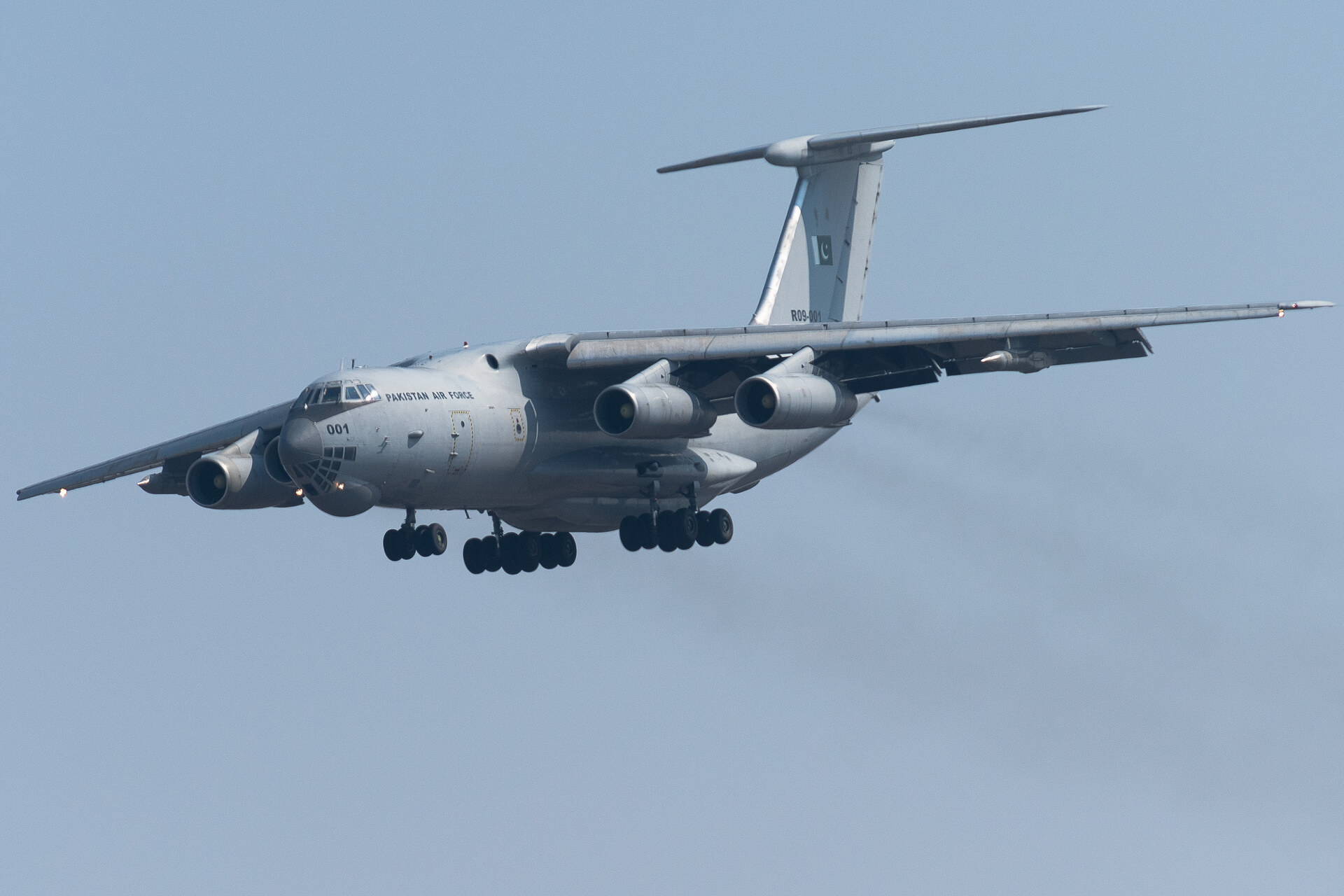
Consider the sequence. On April 10, Pakistani Air Force Il-78MP aerial tankers and three C-130H transports landed at King Abdulaziz Air Base in Saudi Arabia’s Eastern Province, the same day JD Vance departed Washington for Islamabad. On April 11, Pakistan announced the deployment of 13,000 ground troops and at least 10 fighter jets to the same base, the same day the US-Iran face-to-face talks in Islamabad collapsed after 21 hours without agreement. Also on April 11, Saudi Finance Minister al-Jadaan arrived in Islamabad to confirm a $5 billion Saudi-Qatar financial package covering $4.8 billion in Pakistani external obligations maturing before June 2026. The mediator was being paid, armed, and deployed by one side of the conflict it was mediating, and all three transactions landed on the same calendar date. That financial architecture was extended and formalised on April 17, when Saudi Arabia raised the total commitment to $11 billion at the IMF Spring Meetings — on the same day Pakistan’s foreign minister was running ceasefire diplomacy in Antalya.
Now the Sharif delegation flies to Riyadh on April 15, and the leaked SMDA text is the context every government in the region is reading it against. What was presented as a diplomatic consultation visit is now legible as something closer to a principal summoning a contractor for a performance review.
What Does the SMDA Actually Obligate Pakistan to Do?
The 2021 amendment language, as published by Drop Site News from the leaked documents, is unambiguous: “The second party [Pakistan] is obligated to send its forces to the Kingdom of Saudi Arabia upon a request of the first party, to support the armed forces of the first party in dealing with any threat that affects its security, safety, sovereignty, territorial integrity and interests.” That single sentence does five things simultaneously, and none of them are subject to diplomatic reinterpretation.
The Middle East briefing 3,000+ readers start their day with.
One email. Every weekday morning. Free.
It makes deployment mandatory rather than discretionary, grants Saudi Arabia sole authority to define what constitutes a threat, covers not just sovereignty but “interests” — a term with no legal ceiling — and specifies no force cap, no timeline, and no exit clause. The second party is bound without any mirror obligation on the first. Joshua T. White, a nonresident fellow at the Brookings Institution, described the SMDA as a “sweeping commitment to mutual defense,” but the leaked text shows the mutuality is cosmetic: Pakistan defends Saudi Arabia on demand; Saudi Arabia defends Pakistan at its discretion, if at all.
Two additional features of the leaked text deserve attention because they bear directly on the nuclear and geographic questions Pakistani officials have tried to keep off the record. The signed SMDA does not contain an explicit conventional-forces-only carve-out. Pakistan’s military internally sought to exclude nuclear capability from the obligation, but the amendment as signed is silent on the distinction. Separately, Pakistani military assessments recorded in the leaked documents noted that “threats to Saudi sovereignty and interests might not remain confined within Saudi territory, and could require military action outside Saudi Arabia.” Pakistan tried to narrow the obligation to Saudi soil only; the text as signed does not accomplish that narrowing.
The Belfer Center at Harvard Kennedy School assessed the SMDA as “primarily a political signal of solidarity and strategic cooperation, rather than an unconditional war guarantee.” That reading was defensible before the leak. It is not defensible after it, because the obligation clause uses the word “obligated,” not “committed” or “pledged” or any of the softer formulations that political signals typically employ.
How Did the SMDA Bypass Pakistan’s Parliament?
Pakistan has exactly one democratic precedent for deciding whether to send troops to fight Saudi Arabia’s wars, and the SMDA was structured specifically to ensure that precedent could never repeat. In 2015, when Saudi Arabia sought Pakistani forces for its Yemen intervention, Prime Minister Nawaz Sharif referred the question to parliament. Parliament voted to stay neutral, citing domestic Sunni-Shia fault lines and the risk of Iranian retaliation. It was the only time Pakistan’s elected representatives exercised direct authority over a Saudi military deployment request, and it was the last time they were given the chance.
The 2021 amendment’s journey to signature reads as a case study in circumventing civilian oversight. The amendment summary was first sent to Prime Minister Imran Khan in August 2021, adding for the first time an explicit obligation to deploy forces on Saudi request. Khan refused to sign for nearly a year. Drop Site News reports he was “apprehensive about signing an agreement that would obligate the Pakistani military to participate in a foreign war” and hedged continuously through early 2022. In April 2022, Khan was removed from government in what Drop Site News characterized as “a thinly veiled military coup.”
The amendment was not signed under Khan’s elected successors either. It was formally executed in February 2024 by the military-backed caretaker government appointed by Army Chief Asim Munir, without elected civilian authorization and without parliamentary review. When the full SMDA was signed at Al-Yamamah Palace in September 2025 by MBS and Shehbaz Sharif with Munir present, it was again never tabled before Pakistan’s parliament. The 2015 Yemen vote established that parliament could say no. The SMDA’s architects ensured parliament was never asked.
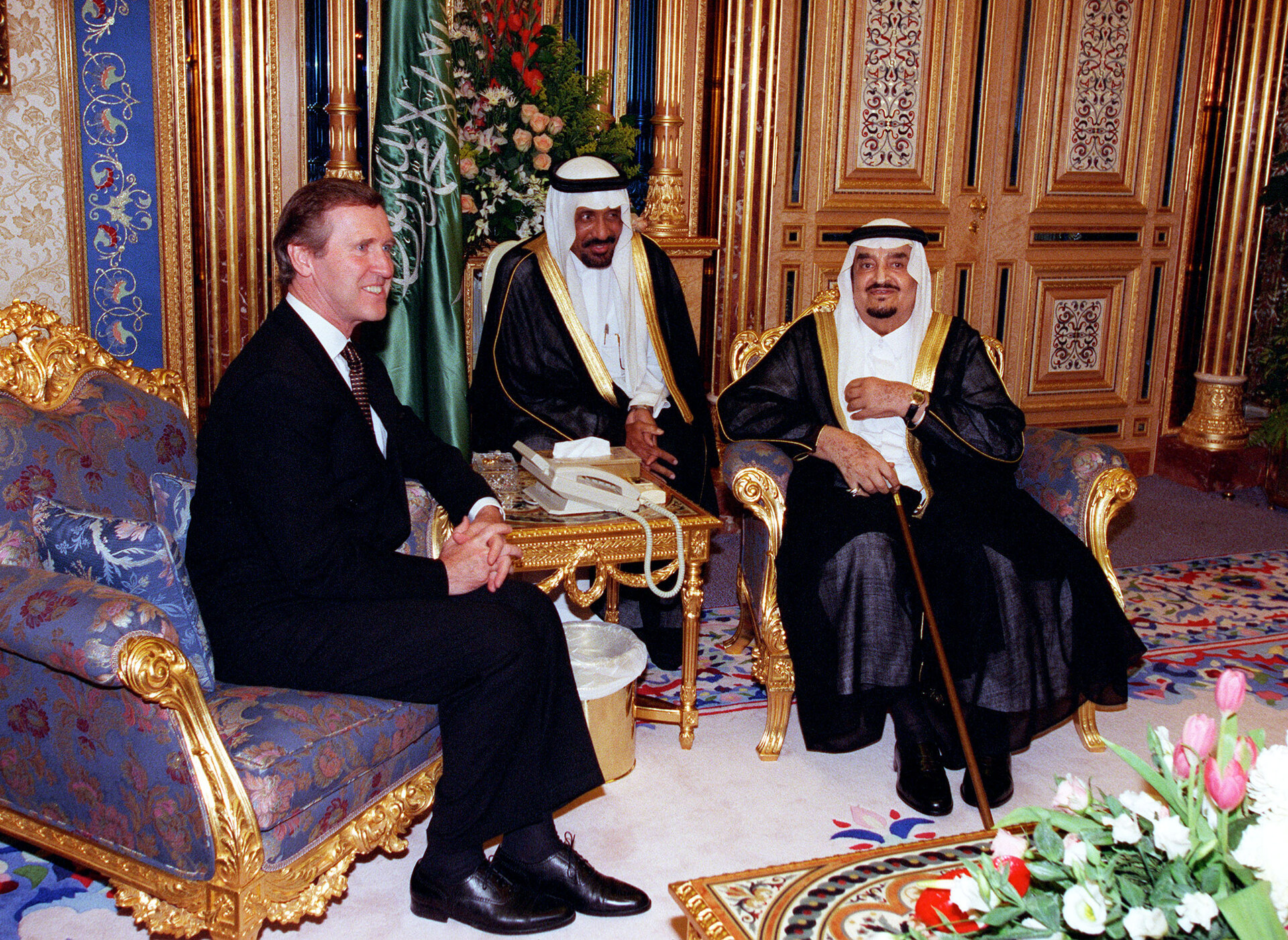
The 27th Amendment: Munir’s Constitutional Fortress
The SMDA does not exist in a constitutional vacuum. Two months after it was signed, on November 12-13, 2025, Pakistan’s National Assembly passed the 27th Constitutional Amendment, which created the post of Chief of Defence Forces and handed it to Asim Munir. The amendment granted Munir primacy over the army, air, and naval chiefs, full command authority over the Strategic Plans Division that controls Pakistan’s nuclear stockpile, and lifetime immunity from prosecution. Removing the CDF requires a two-thirds parliamentary supermajority. Removing an elected prime minister requires only a simple majority.
The structural result is that the man who authored the SMDA, who appointed the caretaker government that signed the 2021 amendment, and who was physically present at Al-Yamamah Palace for the September 2025 signing, now holds sole authority to invoke the pact without parliamentary approval. He commands the forces that would deploy under it, controls the nuclear arsenal that the pact does not explicitly exclude, and cannot be removed from his position by any mechanism short of a constitutional supermajority that does not currently exist in Pakistan’s legislature. Chatham House noted in its December 2025 assessment that the 27th Amendment fundamentally restructured Pakistan’s civil-military balance. What it restructured, more precisely, was the chain of command between Riyadh and Rawalpindi, removing every civilian checkpoint that stood between a Saudi request and a Pakistani deployment.
When Munir told Shia clerics in late March 2026, “If you love Iran, go to Iran,” he was not making an off-the-cuff remark. He was speaking as a man who had already contractually committed Pakistan’s military to Saudi Arabia’s defense, constitutionally insulated himself from accountability for that commitment, and deployed 13,000 troops to Eastern Province to prove the commitment was operational. The protests that erupted in Karachi, Lahore, Islamabad, and Peshawar after the February 28 strikes — killing at least 22 people and injuring over 120 in Karachi alone on March 1 — demonstrated the domestic cost of this posture. The 27th Amendment was designed to ensure that cost would never translate into a policy constraint.
Why Does the Leak Poison the Islamabad Mediation?
The mediator legitimacy problem is not theoretical. Iran accepted Pakistan as the venue and the interlocutor for what became the Islamabad Process based on a specific set of structural credentials: Pakistan shares a 900-kilometer border with Iran, hosts no American military bases, maintains no diplomatic relations with Israel, and has served as Iran’s protecting power in Washington since March 1992, when it replaced Algeria. The Iranian Interests Section has operated out of the Pakistani Embassy in Washington for 34 continuous years, the longest-running protecting-power arrangement Iran maintains anywhere in the world.
Every one of those credentials remains technically true. None of them survives contact with the leaked SMDA text, because the pact establishes Pakistan as something categorically different from a neutral interlocutor. A country that is contractually obligated to deploy military forces on Saudi demand, that has already sent 13,000 troops to Saudi Arabia’s Eastern Province, that signed the obligation without parliamentary authorization, and that is simultaneously receiving $5 billion in Saudi-Qatari financial assistance is not a mediator. It is a party to the conflict with a diplomatic side hustle.
“Pakistan is walking a tightrope with regards to both the mediation responsibilities it has taken upon itself and the commitments towards Saudi Arabia’s defence.”
Umer Karim, associate fellow, King Faisal Center for Islamic Research and Studies, Riyadh (Al Jazeera, April 14, 2026)
The tightrope metaphor, offered by Umer Karim of the King Faisal Center in Riyadh, is charitable. Tightropes imply balance, and the SMDA text reveals that Pakistan was never balanced. It was contractually tilted, and the mediation was conducted from a position that Iran’s negotiators did not fully understand until the documents became public. Every Iranian concession brokered through the Islamabad Process was extracted through a structurally compromised intermediary.
Kaitlyn Hashem of the Stimson Center wrote on April 9 that “Pakistan’s initiative is undermined by its own political limitations vis-a-vis both Iran and the United States.” The leaked SMDA text transforms that academic observation into a concrete legal finding: the limitations are not political, they are contractual. What Hashem characterized as a policy tension is, after the Drop Site News publication, an evidentiary problem that any future negotiating counterparty can cite.
Azeema Cheema, founding director of Verso Consulting in Islamabad, told Al Jazeera that “the invocation of the SMDA is the price of the significant restraint shown by the Saudis in the progression of this conflict.” That framing is revealing because it acknowledges the transactional nature of the arrangement while treating it as a reasonable cost of doing diplomatic business. Cheema also noted that Pakistan “hosts no US military bases and has no diplomatic relations with Israel, factors that help preserve its credibility with Tehran.” The word “preserve” is doing extraordinary work in that sentence, given that 13,000 Pakistani troops are sitting inside Saudi Arabia’s oil infrastructure defense perimeter as she speaks.
Iran’s Silence Is Not Acquiescence
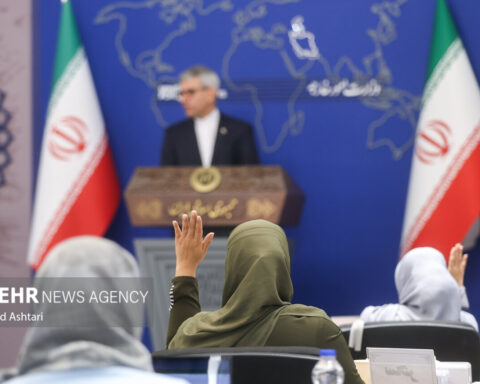
Iran has issued no formal public protest of either the SMDA deployment or the mediator legitimacy question. This silence has been widely misread as acceptance. It is better understood as structural necessity dressed up as diplomatic composure, because Iran has no alternative venue and no alternative broker, and publicly challenging Pakistan’s neutrality seven days before the ceasefire expires on April 22 would require either a co-mediator or a venue change at a moment when neither exists.
That structural necessity coexists with a parallel denial architecture that operates independently of diplomatic posture. The IRGC’s ceasefire denial framework — denying violations while cataloguing the same strikes as war operations — means Tehran can simultaneously engage the Islamabad Process and maintain IRGC operational tempo without formal contradiction.
The behavioral evidence supports this reading. When the 13,000-troop deployment was announced on April 11, Iranian FM Abbas Araghchi called Army Chief Munir by phone, and Iran’s official readout framed the conversation as being about Israeli ceasefire violations in Lebanon. It made no mention whatsoever of the Pakistani troop deployment to Saudi Arabia. This was a deliberate routing of the conversation away from the one fact that, if acknowledged, would force Iran to either accept a compromised mediator or abandon the only diplomatic channel that has produced direct US-Iran contact since 1979.
When the Islamabad talks collapsed after 21 grueling hours, Iran’s foreign ministry used a single word: “Betrayed.” But the betrayal was directed at the American side, not at Pakistan’s intermediary role. Speaker Ghalibaf, after the collapse, said: “Due to the experiences of the two previous wars, we have no trust in the opposing side.” He too pointed the accusation at Washington, not Islamabad. Iran is maintaining studied silence on Pakistan’s dual role because the alternative to a compromised mediator is no mediator at all, and no mediator means no channel to the United States at a moment when the US naval blockade is imposing an estimated $435 million per day in economic damage on Iranian ports.
Sina Azodi, an assistant professor of Middle East politics at George Washington University, offered a partial explanation for Iran’s restraint: “I think the Saudi move to partner with Pakistan was more geared toward Israel than Iran.” If Tehran has adopted this interpretation, it would provide a face-saving rationale for continuing to engage Pakistan as a broker. But the leaked amendment text does not support the Israel-focused reading.
The obligation clause covers “any threat that affects [Saudi Arabia’s] security, safety, sovereignty, territorial integrity and interests.” Iran’s missile strikes on Saudi oil infrastructure, its declared full authority over the Strait of Hormuz, and its targeting of the Eastern Province are self-evidently within the scope of that language. The Israel framing is a diplomatic convenience, not a legal argument.
Cash for Deterrence: The Transaction That Failed
An anonymous Pakistani military source told the Financial Times on March 28, 2026: “The Saudi pact is becoming a problem for us. It was supposed to be cash for deterrence. But we’ve not gotten any new Saudi investments, and deterrence failed.” That sentence contains the entire failure mode of the SMDA in twelve words. The agreement was designed as a credible threat that would never need to be exercised: Pakistan’s military commitment would deter attacks on Saudi Arabia, and Saudi Arabia’s financial commitment would keep Pakistan’s economy afloat. Both sides of the transaction have collapsed simultaneously.
| Date | Event | Parliamentary Role |
|---|---|---|
| December 14, 1982 | Original confidential Pakistan-Saudi security agreement signed | None |
| 1982-1987 | Approximately 20,000 Pakistani servicemen stationed in Saudi Arabia | None |
| July 30, 2005 | Military Cooperation Agreement signed | None |
| March 2015 | Saudi requests troops for Yemen; PM Sharif refers to parliament | Parliament votes to stay neutral |
| August 2021 | New amendment with mandatory deployment clause sent to PM Khan | Khan refuses to sign |
| April 2022 | Khan removed from government | N/A |
| February 2024 | Amendment signed by Munir-appointed caretaker government | None; no elected PM in office |
| September 17, 2025 | Full SMDA signed at Al-Yamamah Palace | Never tabled |
| November 12-13, 2025 | 27th Amendment passes; CDF post created for Munir | Parliament voted but under duress (opposition boycott) |
| April 10-11, 2026 | 13,000 troops + 10 jets deployed; $5B package confirmed | None |
Deterrence failed because the SMDA was calibrated for a threat environment that no longer exists. The original 1982 agreement, under which some 20,000 Pakistani servicemen were stationed in Saudi Arabia through 1987, was designed for the defense of Islamic holy sites against conventional regional threats. The 2025 iteration was supposed to deter Iran from escalating to the point where Saudi oil infrastructure came under sustained missile and drone attack. Iran escalated anyway. The troop deployment now underway is not deterrence; it is damage control after deterrence has already been publicly defeated.
The $5 billion Saudi-Qatar package announced on April 11 underscores the dependency dimension. Pakistan’s external obligations maturing before June 2026 total approximately $4.8 billion, and the package covers almost exactly that amount. This is not investment; it is a bridge loan timed to coincide with a military deployment. The financial structure ensures Pakistan cannot afford to reconsider its SMDA obligations during the most critical phase of the conflict. The mediator is not just contractually bound to one side, it is financially dependent on that side’s continued willingness to cover its sovereign debt.
The Riyadh Delegation and What It Signals
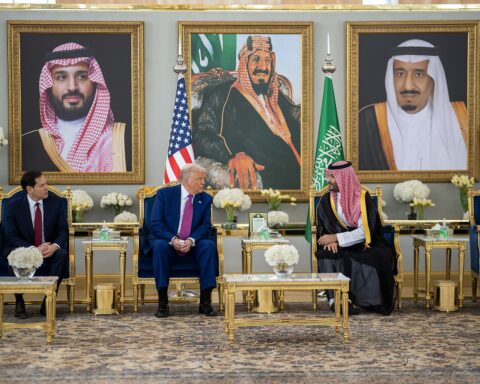
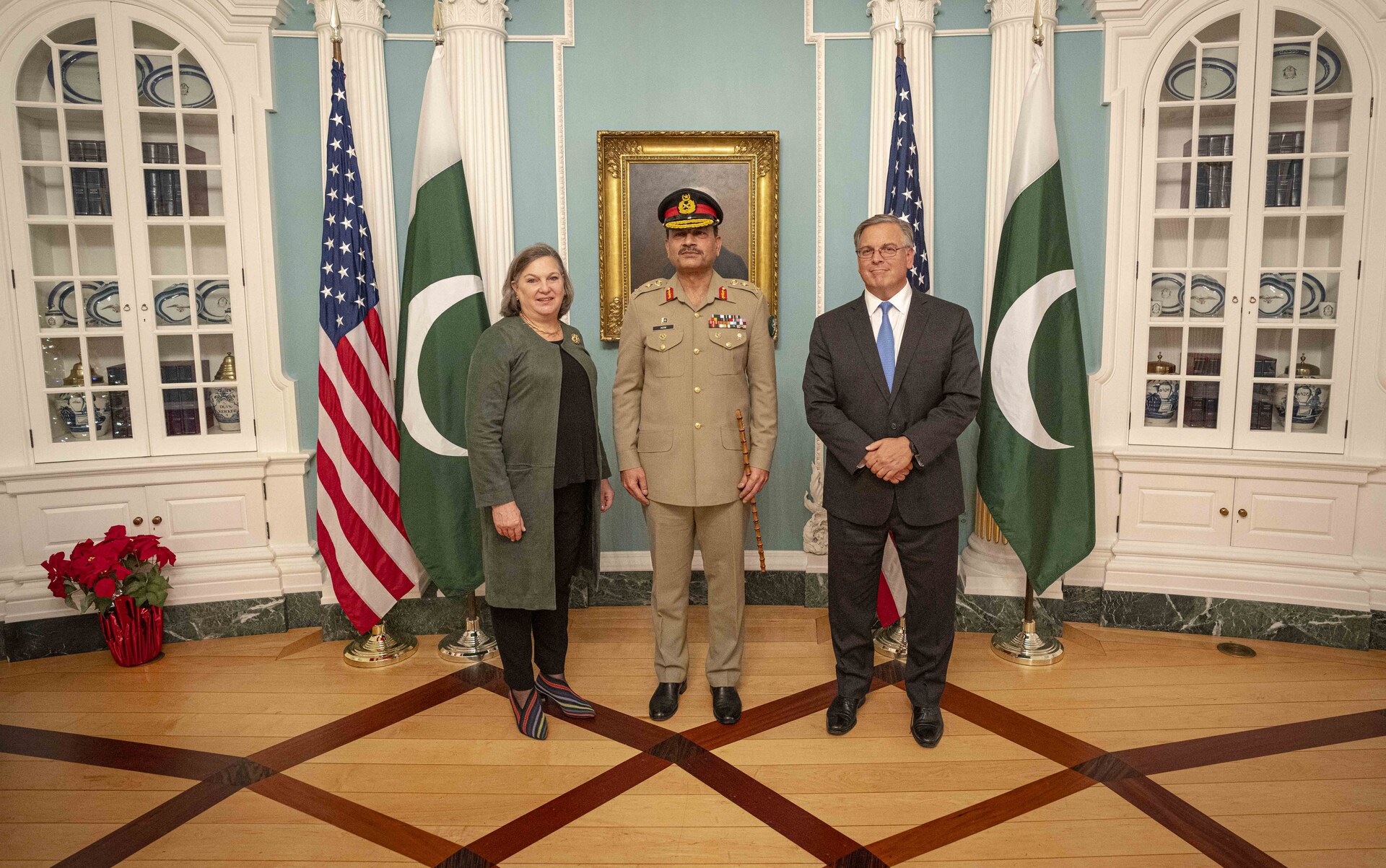
The composition of the April 15 Sharif delegation to Riyadh is itself a document worth reading closely. Al Jazeera reported on April 14 that the traveling party includes Prime Minister Sharif, Field Marshal Munir, Deputy Prime Minister Dar, and Special Assistant Fatemi. Each name on the manifest corresponds to a specific role in the SMDA architecture, and their simultaneous presence in Riyadh collapses the fiction that Pakistan’s military commitments and its diplomatic mediation operate on separate tracks.
Munir is the author of the obligation. He appointed the caretaker government that signed the 2021 amendment, was present at Al-Yamamah Palace for the September 2025 signing, and now holds sole authority to invoke the pact under the 27th Constitutional Amendment. He commands the troops currently deployed to King Abdulaziz Air Base and controls the Strategic Plans Division overseeing Pakistan’s nuclear arsenal — an arsenal the pact does not explicitly exclude from its scope. When he told Shia clerics in late March, “If you love Iran, go to Iran,” he was speaking as a man with the contractual authority, constitutional immunity, and deployed forces to back the sentiment up.
Dar is the disclosure. He told the Pakistani Senate on March 3, 2026: “We have a defence pact with Saudi Arabia, and the whole world knows about it. I told the Iranian leadership to take care of our pact with Saudi Arabia.” He personally conveyed Pakistan’s SMDA obligations to Iranian FM Araghchi, reportedly assuring him that Saudi soil would not be used to attack Iran. That assurance has a different texture now that 13,000 Pakistani troops and at least 10 fighter jets are stationed on Saudi soil, and the leaked text reveals no geographic or operational limitation on how those forces may be employed.
Sharif is the civilian veneer. His presence allows the visit to be framed as a diplomatic consultation between heads of government rather than what the SMDA text suggests it actually is: a principal reviewing operational commitments with a contractually obligated partner. The 2015 precedent, when Nawaz Sharif at least had the political instinct to refer Saudi Arabia’s troop request to parliament, has been structurally eliminated. This Sharif does not have the option of saying no, because the agreement that binds Pakistan was signed before he took office, ratified by a constitutional amendment he cannot reverse, and enforced by a military chief he cannot remove. The physical expression of that deployment — Pakistan’s 25th Mechanised Division, 10,000 troops with T-80 UD tanks and M109A2 howitzers at the Saudi-Yemen border — was completing its positioning on the same day as the Tehran visit; the armored deployment and what it signals about the SMDA’s operational reality is examined here.
What Happens If Iran Walks Away from the Islamabad Process?
The question that the leaked SMDA text forces is not whether Pakistan’s mediation is compromised. That question has been answered by the documents themselves. The operative question is whether Iran will continue to treat the Islamabad Process as legitimate when the ceasefire expires on April 22, now that the contractual basis of Pakistan’s alignment with Saudi Arabia is a matter of public record rather than diplomatic rumor.
Iran’s structural incentives for maintaining the fiction are powerful. Pakistan remains the only country with simultaneous access to Tehran and Washington through the protecting-power arrangement. No alternative neutral venue has emerged. Turkey’s candidacy is complicated by NATO membership; Qatar’s by its participation in the $5 billion Pakistan package; Egypt’s by its own security coordination with Saudi Arabia and Israel. As we analyzed in our assessment of Pakistan as the ceasefire’s sole enforcement mechanism, the geographic and diplomatic logic that made Pakistan the default broker has not changed, even if the contractual reality underlying that logic has been exposed.
But the SMDA leak introduces a new variable: domestic legitimacy within Iran. Ghalibaf’s post-collapse statement about having “no trust in the opposing side” was directed at Washington, but the leaked text provides ammunition for hardliners who want to redirect that distrust toward Pakistan itself. The IRGC, which has declared full authority over the Strait of Hormuz and whose command structure operates with decentralized autonomy since Tangsiri’s killing on March 30, has no institutional stake in preserving Pakistan’s mediator status. If the hardline faction decides that the SMDA leak provides sufficient pretext to abandon the Islamabad channel, the April 22 ceasefire expiration becomes a cliff edge with no diplomatic net beneath it.
The more likely scenario, based on Iran’s behavioral pattern since the deployment announcement, is that Tehran continues to engage Pakistan while treating the SMDA as a known constraint rather than a disqualifying factor. Araghchi’s April 11 phone call to Munir, which conspicuously avoided any mention of the troop deployment, established the template: Iran will pretend the SMDA does not exist in diplomatic settings while factoring its existence into every negotiating position. This means Iranian concessions through the Islamabad channel will become smaller, Iranian demands will become larger, and the ceasefire extension that every party except the IRGC reportedly wants will be harder to reach because the mediator’s weight on the scales has been revealed by its own contractual obligations.
Umer Karim of the King Faisal Center noted that “the continuation of US-Iran talks is most important for Pakistan.” He is right, but for reasons that go beyond diplomatic prestige. If the Islamabad Process collapses, Pakistan loses its only justification for occupying both sides of the table. It becomes a Saudi military auxiliary with 13,000 troops deployed to the Eastern Province and $5 billion in debt relief, an arrangement that looks considerably less like mediation and considerably more like the vassal architecture that the leaked documents describe.
Frequently Asked Questions
What is the Saudi-Pakistan Mutual Defence Agreement (SMDA)?
The SMDA is a bilateral security pact rooted in a December 14, 1982 confidential agreement, updated through a Military Cooperation Agreement on July 30, 2005, a 2021 amendment adding mandatory force deployment language, and a comprehensive signing at Al-Yamamah Palace on September 17, 2025. The original agreement governed the stationing of approximately 20,000 Pakistani servicemen in Saudi Arabia between 1982 and 1987 for holy site defense. The 2025 version, as revealed by leaked documents, includes a unilateral obligation requiring Pakistan to deploy forces on Saudi request to counter any threat to Saudi “security, safety, sovereignty, territorial integrity and interests,” with no equivalent Saudi obligation toward Pakistan and no explicit exclusion of nuclear forces.
Why was Imran Khan’s refusal to sign significant?
Khan received the 2021 amendment summary in August 2021 and refused to sign for nearly a year, specifically because the new language would obligate Pakistan to participate in foreign wars at Saudi discretion. His removal from government in April 2022 preceded the amendment’s eventual signing in February 2024 by a Munir-appointed caretaker government that held no elected mandate. The sequence matters because it demonstrates that the mandatory deployment clause was controversial enough to block at the elected-leader level, and that the constitutional and institutional workarounds used to sign it were built after that elected resistance was eliminated.
Does the SMDA cover nuclear weapons?
The leaked documents show that Pakistan’s military internally argued for an explicit conventional-forces-only carve-out, and Defence Minister Khawaja Asif initially hinted the agreement involved nuclear sharing before later denying it. The critical finding from the Drop Site News leak is that the signed SMDA text does not contain an explicit exclusion of nuclear capability. This ambiguity is compounded by the 27th Constitutional Amendment, which placed the Strategic Plans Division controlling Pakistan’s nuclear stockpile under Munir’s direct command alongside his authority to invoke the SMDA without parliamentary consent.
How does the $5 billion package relate to the troop deployment?
Saudi Arabia and Qatar confirmed a $5 billion financial assistance package for Pakistan covering approximately $4.8 billion in external obligations maturing before June 2026. Saudi FM al-Jadaan visited Islamabad to confirm the package on April 11, 2026, the same day Pakistan announced its 13,000-troop deployment to King Abdulaziz Air Base. The temporal coincidence does not establish a formal quid pro quo, but the financial dependency it creates makes it functionally impossible for Pakistan to reconsider its SMDA commitments during the remaining seven days before the ceasefire expires on April 22.
Can Iran find an alternative mediator before the ceasefire expires?
The structural barriers are prohibitive within the seven-day window. Turkey is a NATO member and hosts US military installations at Incirlik. Qatar participated in the $5 billion Pakistan financial package and maintains its own security coordination with Washington. Egypt has security cooperation agreements with both Saudi Arabia and Israel. Oman, which has historically brokered US-Iran backchannel contacts, lacks the institutional infrastructure and the protecting-power arrangement that Pakistan uniquely holds. Switzerland, which serves as the US protecting power in Iran, operates on the other side of the protecting-power ledger. No country simultaneously offers Iran geographic proximity, absence of US military bases, no Israel relations, and an existing diplomatic channel to Washington through an embedded interests section. On April 15, Field Marshal Munir activated that unique position by flying to Tehran himself — the first Pakistani military chief to do so since the war began — in Asim Munir’s Tehran Gamble, carrying a US ceasefire framework with seven days until the April 22 expiry.
The full picture of Pakistan’s simultaneous Jeddah-Tehran operation on April 15–16 — Sharif collecting Saudi money while Munir delivered the US framework to Araghchi — is examined in Pakistan’s simultaneous Jeddah-Tehran operation on April 15-16 and what it reveals about the structural position MBS now occupies. The April 16 Jeddah bilateral and its implications for Saudi Arabia’s exclusion from the Islamabad Accord framework are examined in the follow-on analysis.