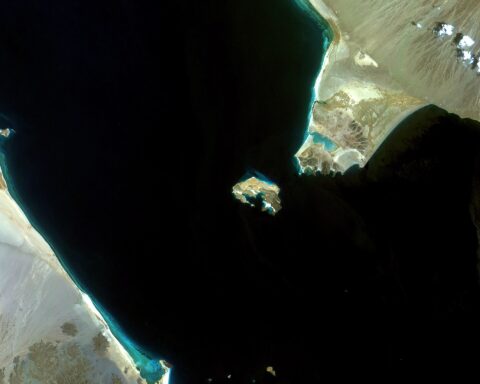
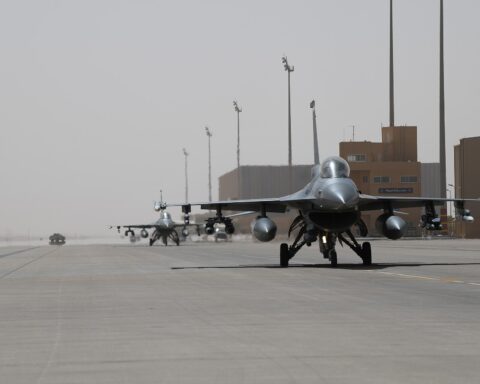
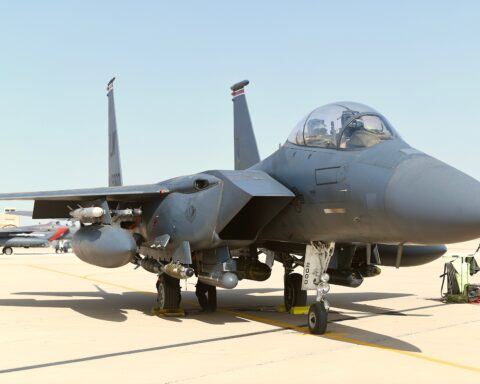
RIYADH — Between March 13 and March 15, a Chinese commercial Earth-observation satellite passed over Prince Sultan Air Base in Al-Kharj on three consecutive days. Its panchromatic sensor, resolving objects down to half a metre, photographed the apron where United States KC-135R Stratotanker aircraft were parked. The satellite, TEE-01B, was built and launched by Beijing Earth Eye Co. in June 2024. It had been under the operational control of the Islamic Revolutionary Guard Corps Aerospace Force since September 2024, purchased in-orbit for approximately RMB 250 million (about $36.6 million), with ground-station services contracted to a Beijing-based firm called Emposat. On the afternoon of March 14, an IRGC ballistic missile and drone strike on the base damaged five KC-135s and wounded at least fifteen American service members. Two weeks later, an E-3G Sentry AWACS — one of only sixteen in the US Air Force fleet — was destroyed on the same apron. Saudi Arabia has not publicly addressed the satellite. It cannot.
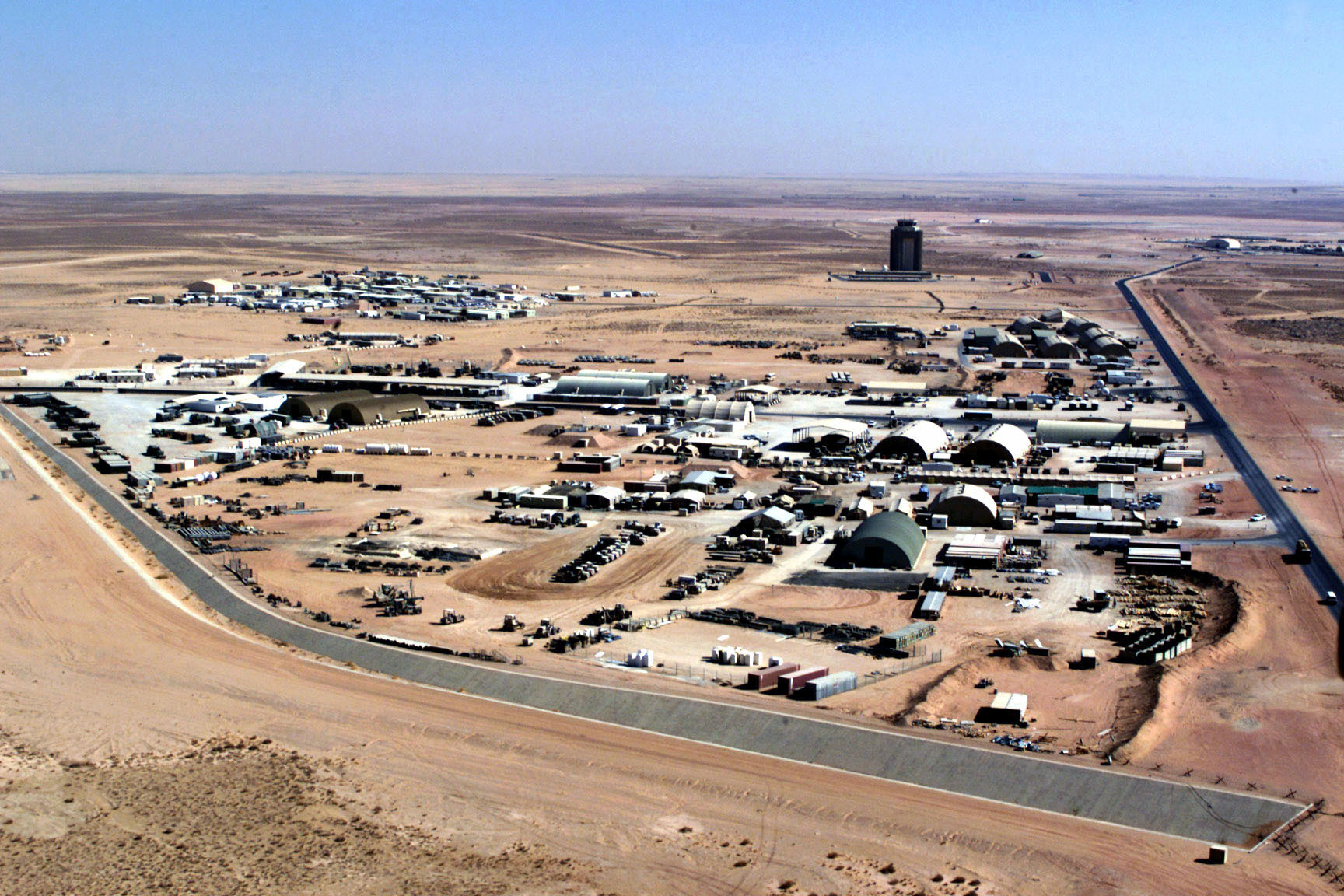
Table of Contents
- A Three-Day Surveillance Window Before the Missiles
- What Is TEE-01B and How Did the IRGC Acquire It?
- The Resolution Gap Iran Could Not Close Alone
- Why Can’t Riyadh Publicly Protest Beijing?
- The November 2025 Sovereignty Trap
- Is This a Chinese Intelligence Act Against Saudi Territory?
- From Maritime Facilitation to Land-Based Targeting
- What Does the Chinese Denial Leave Uncovered?
- What Room for Manoeuvre Does MBS Actually Have?
- Frequently Asked Questions
A Three-Day Surveillance Window Before the Missiles
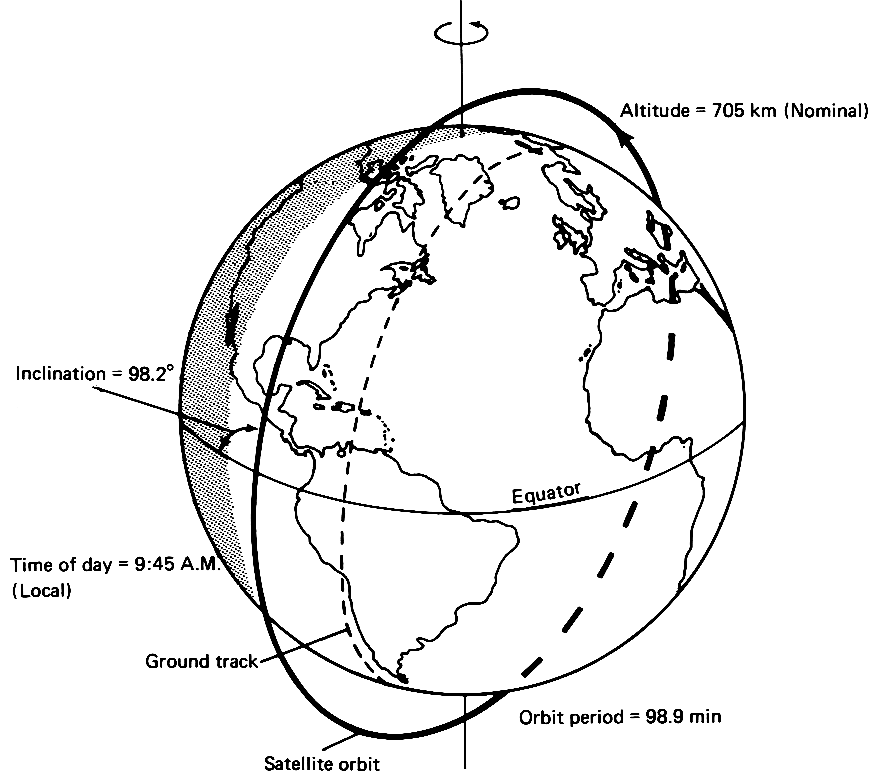
The leaked Iranian military documents reported by the Financial Times on April 15 establish a sequence that targeting officers everywhere will recognise. TEE-01B, tasked by the IRGC Aerospace Force, imaged Prince Sultan Air Base on March 13, 14 and 15. The satellite operates in a sun-synchronous orbit at roughly 545 kilometres altitude and completes 14 to 15 orbits per day. Its panchromatic imagery resolves targets to 0.5 metres; its multispectral band to 2 metres; its swath width is 14.8 kilometres. That is enough to distinguish a KC-135 from an E-3, to count airframes on an apron, and to read the pattern of fuel bowsers and maintenance vehicles around them.
The IRGC did not have to wait for passes or fight through a ten-minute observation window, as Iran’s domestic Noor-3 platform requires. The Emposat ground network — distributed across Asia, Latin America and other regions, according to Army Recognition’s reconstruction — meant command and imagery flowed between Beijing-controlled nodes and Iranian analysts without transiting Iranian territory. The pre-strike cycle for Prince Sultan was built, in other words, on Chinese commercial infrastructure operated from Chinese soil.
On March 14, the base was hit. The Aviationist reported five KC-135R/T Stratotankers damaged and at least fifteen US service members wounded. Sergeant Benjamin Pennington, 26, of Glendale, Kentucky, had already died on March 8 from wounds sustained in an earlier Iranian strike on the base, according to NPR. On March 17, commercial satellite imagery confirmed damage across hangar apron areas. By the end of the month, a follow-on strike destroyed an E-3G Sentry AWACS worth approximately $500 million — 1/16th of the total US airborne early-warning fleet, as previously catalogued in the context of Iranian information-operations claims about American aircraft losses.
PressTV carried imagery it attributed to Chinese commercial platforms showing burning aircraft at the base. The attribution was not coy. Iranian state media named the source.
What Is TEE-01B and How Did the IRGC Acquire It?
TEE-01B — also designated Earth Eye 1, or Diqiu Zhiyan-1 in its Mandarin rendering — was built by Mumei Xingkong Keji, operating under the brand Beijing Earth Eye Co. It launched on June 6, 2024, from Jiuquan Satellite Launch Center aboard a Galactic Energy Ceres-1 rocket, according to Gunter’s Space Page. At the time of launch, the satellite was marketed as a commercial Earth-observation asset.
The Middle East briefing 3,000+ readers start their day with.
One email. Every weekday morning. Free.
Three months later, in September 2024, the IRGC acquired operational control under what the industry calls an “in-orbit delivery” model: the buyer does not commission the satellite from the ground up but purchases command authority over an already-orbiting platform, together with a service contract for tasking, downlink and ground processing. Both the purchase price and the name of the ground-services provider — Emposat — were disclosed in the leaked documents reviewed by the Financial Times.
Nicole Grajewski of Sciences Po University was unequivocal. “This satellite is clearly being used for military purposes,” she told the Irish Times, adding that TEE-01B operates “under the IRGC’s Aerospace Force and not Iran’s civilian space program.” Aidan Powers-Riggs of the Center for Strategic and International Studies described Emposat to the same paper as “a rising star in China’s commercial space sector.” Dennis Wilder, former CIA China Analysis Chief, noted the pattern — weapons and intelligence capabilities flowed to Iran with public deniability — as consistent with long practice rather than a departure.
The Washington Post had flagged the broader strategy as early as August 16, 2024, reporting that Iran was pursuing deals with Chinese commercial satellite companies and that US intelligence officials had noted military-application concerns. The TEE-01B transaction, completed in September 2024, therefore occurred inside a window Washington knew about.
The Resolution Gap Iran Could Not Close Alone
Iran’s indigenous Earth-observation capability is thin. The IRGC-operated Noor-3, launched in 2023, and the Russian-assisted Khayyam platform, launched in 2022, both offer optical resolution in the 5-to-10-metre band, with two or three daily passes and predictable observation windows of about ten minutes, according to BusinessToday India and Defence Security Asia. That is enough for general terrain mapping, crude infrastructure monitoring and propaganda releases. It is not enough to build a precision targeting package against a parked aircraft.
The difference between a 5-metre pixel and a 0.5-metre pixel is not a linear one. It is the difference between seeing that something is on a runway and seeing what it is. For an IRGC Aerospace Force targeting cell trying to distinguish a KC-135 from an E-3 from a civil airliner chartered by AMC, the gap between the two resolutions is the difference between a random shot and a chosen one.
| Platform | Operator | Optical resolution | Daily revisit / orbits | Launched |
|---|---|---|---|---|
| TEE-01B (Earth Eye 1) | IRGC Aerospace Force (under contract from Beijing Earth Eye Co.) | 0.5 m panchromatic / 2 m multispectral | 14–15 orbits | June 2024 |
| Noor-3 | IRGC | 5–10 m | 2–3 | 2023 |
| Khayyam | Iranian Space Agency (Russian-built) | ~5 m | 2–3 | August 2022 |
Chinese commercial platforms — the Chang Guang Satellite Technology Jilin-1 constellation and MizarVision among them — had already released high-resolution imagery of US THAAD batteries and PAC-3 sites during the 2025 Twelve-Day War against Israel, as reported across defence press at the time. TEE-01B is the first publicly documented case, however, of an IRGC-owned commercial Chinese asset being used in a targeting cycle against an installation on Saudi territory.
The 2021 Iran-China Comprehensive Strategic Partnership — the 25-year agreement under which defence-industrial cooperation has scaled through successive 2025 and 2026 addenda covering cyber, electronic warfare and radar deployment, as tracked by analysts at Small Wars Journal in March — provides the contractual scaffolding. The in-orbit delivery model maps neatly onto that scaffolding. Nothing about the September 2024 transaction required improvisation; it was institutional, priced in renminbi, and settled through commercial channels.
Why Can’t Riyadh Publicly Protest Beijing?
Saudi Arabia’s public response to the Financial Times report did not mention the satellite. It did not mention China. Saud Hafiz, a Saudi spokesman, instead addressed the narrower framing of the base itself. “Although the report is false,” he wrote on X, “it is important to clarify that Prince Sultan Air Base is solely a Saudi facility under the Ministry of Defense, not an American base as has been claimed. Misrepresenting the facts does not alter reality; Saudi sovereignty over its territory and military installations is established and indisputable.”
The statement is worth parsing for what it does not say. It denies “the report” generically but attacks only the “American base” characterisation. It asserts Saudi sovereignty without naming the entity alleged to have violated it. The TEE-01B tasking, the Emposat contract, the three-day imaging window — none of it is addressed.
The structural reason is documented across the Public Investment Fund’s financing map, the China National Petroleum Corporation’s 10-per-cent equity stake in North Field East, and the approximately half of Saudi crude exports routed through Asia. Bloomberg reported on April 13 that Saudi crude exports to China are set to halve in May due to Hormuz disruptions, with Russia already having displaced Saudi Arabia as China’s largest crude supplier during the war. That dependency runs in both directions and leaves no public register in which Riyadh can accuse Beijing without cost.
A blunt consequence follows. Saudi Arabia cannot do what France or the United Kingdom could do in a similar position: summon the Chinese ambassador, release a joint statement, co-sponsor a UN Security Council draft. The “Beijing as Hormuz operating system” frame already described the maritime side of this arrangement. The Prince Sultan tasking moves it onto Saudi soil.
The November 2025 Sovereignty Trap
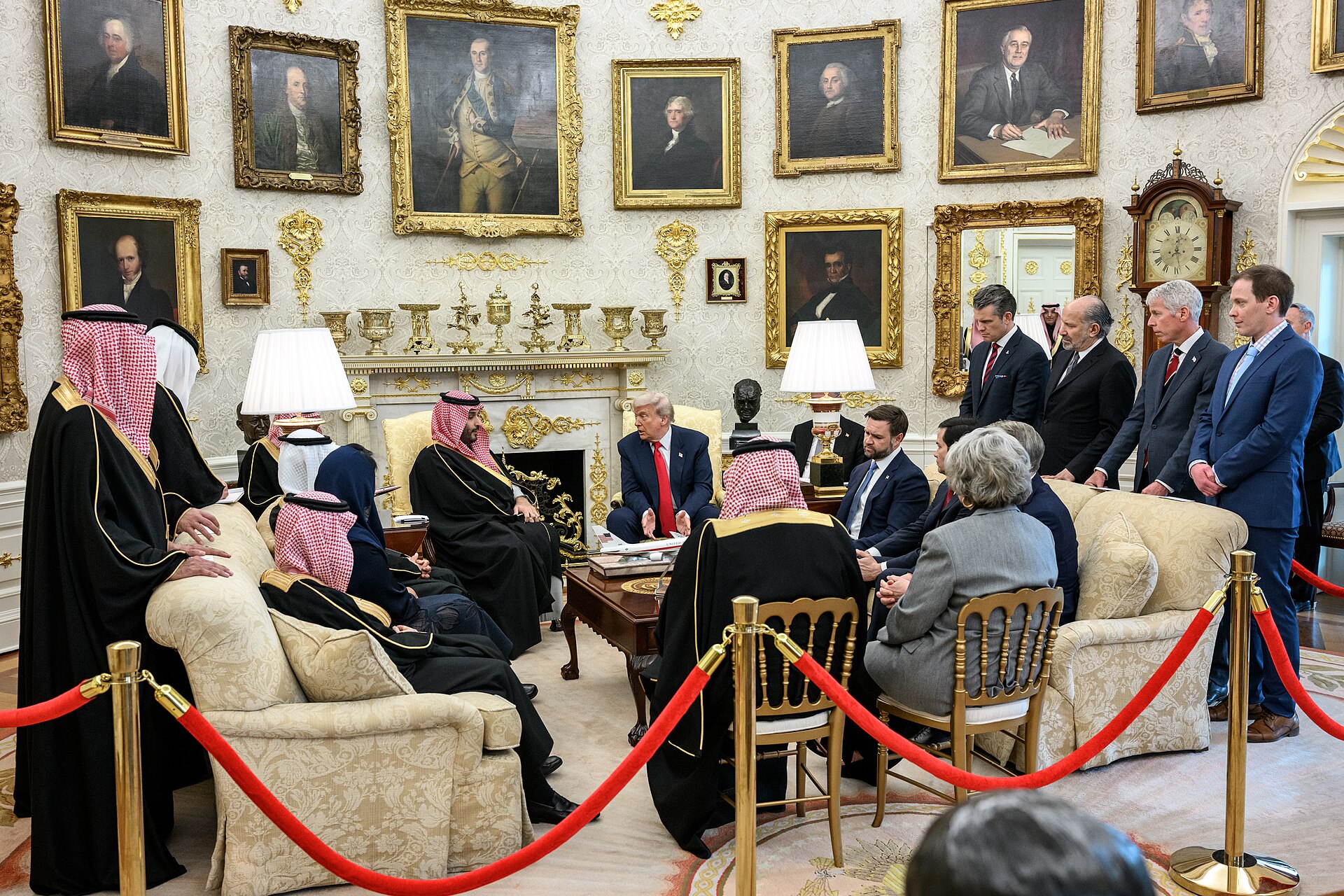
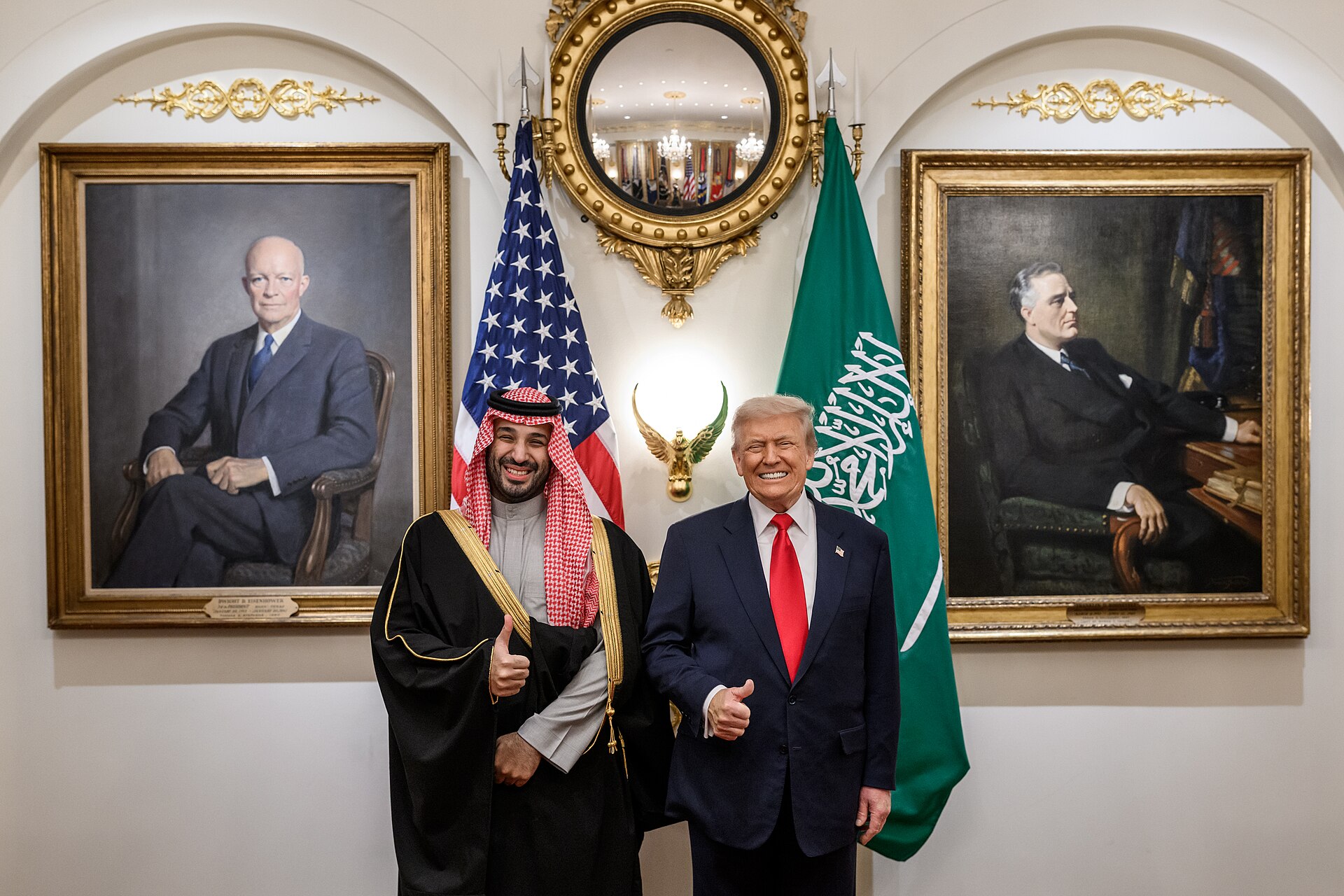
The legal framework that makes this problem acute was signed five months ago. On November 18, 2025, during Crown Prince Mohammed bin Salman’s Washington visit, the United States and Saudi Arabia executed the Strategic Defense Agreement and simultaneously designated Saudi Arabia the twentieth Major Non-NATO Ally, according to Al Arabiya English and The Hill’s reporting the following day. The agreement frames any threat to Saudi security as a threat to American interests. It establishes joint deterrence language and capability integration. It sits legally on top of the older Saudi-American defence architecture, which goes back to 1945.
Prince Sultan Air Base is technically a Saudi Ministry of Defence facility. Approximately 2,700 US service members are hosted there under bilateral agreement, with the 378th Air Expeditionary Wing the primary operational unit. US forces originally deployed there in 1991 during Desert Storm, fully withdrew in 2003, and returned in June 2019 as Iran tensions rose. The 378th was formally reactivated on December 17, 2019.
| Date | Event |
|---|---|
| June 6, 2024 | TEE-01B launched by Beijing Earth Eye Co. |
| August 16, 2024 | Washington Post reports US intelligence concerns over Iran-China commercial satellite deals |
| September 2024 | IRGC Aerospace Force acquires operational control of TEE-01B (~$36.6 million) |
| November 18, 2025 | US-Saudi Strategic Defense Agreement signed; Saudi Arabia designated 20th MNNA |
| March 8, 2026 | Army Sergeant Benjamin Pennington, 26, dies of wounds from earlier PSAB strike |
| March 13–15, 2026 | TEE-01B images Prince Sultan AB on three consecutive days |
| March 14, 2026 | IRGC strike damages five KC-135s, wounds at least 15 US personnel |
| March 27–28, 2026 | Follow-on strike destroys E-3G Sentry AWACS (~$500 million) |
| April 15, 2026 | Financial Times publishes leaked Iranian documents |
The Major Non-NATO Ally designation confers access to war-reserve stockpiles, priority delivery for US military equipment and joint-basing eligibility. It also performs an integrative function: the base is no longer the kind of “expeditionary footprint” it was in 2019. It is a node inside a treaty-coupled deterrent posture. When a Chinese-linked satellite is tasked to image that node, and an Iranian strike follows from the intelligence that satellite produced, the event maps onto two different legal geographies at once — each with its own set of obligations that Riyadh signed onto in November 2025.
Is This a Chinese Intelligence Act Against Saudi Territory?
The question is not rhetorical. Under international law and under the plain reading of the November 2025 agreement, Prince Sultan Air Base is Saudi sovereign soil with a US contingent operating on it by consent. A Chinese commercial satellite tasked against that installation is, in that frame, a Chinese intelligence-collection act conducted against Saudi territory — regardless of whether the ultimate user of the imagery is the Islamic Revolutionary Guard Corps.
The question the Saudi spokesman’s statement avoided is therefore the following: does Riyadh accept the framing that Beijing was, during March 13–15, collecting intelligence on a Saudi installation on behalf of a foreign combatant directly targeting US personnel there? The lawyer’s answer and the political answer diverge. The first is yes. The second is silence.
Jim Lamson, a former CIA analyst now at the James Martin Center for Nonproliferation Studies, framed the operational dimension in blunt terms. “Iran’s satellite ground stations…can be hit very easily,” he told the Irish Times. That is a statement about kinetic options against Iranian infrastructure. It is not a statement about Chinese infrastructure, and there is a reason it stops where it does. An Israeli or American strike on Iranian ground nodes would raise one set of escalatory questions; a strike on Emposat-controlled nodes inside China would raise a different set entirely.
The Chinese Embassy in Washington, for its part, called the report “purely fabricated” and “speculative and insinuative disinformation.” Beijing’s Foreign Ministry separately said the reports were “not true.” Neither denial engaged the specific contract terms: the RMB 250-million sum, the September 2024 date, the Emposat ground-services agreement.
“This satellite is clearly being used for military purposes.” Nicole Grajewski, Sciences Po University, to the Irish Times
From Maritime Facilitation to Land-Based Targeting
Until April 15, the operational case for Chinese involvement in the Hormuz crisis had been largely maritime. Beijing brokered the first laden Qatar LNG transit through the strait on April 6, with the Al Daayen confirmed active at 8.8 knots toward China and payment settled in yuan through Kunlun Bank at an IRGC toll of roughly $2 million per vessel, as tracked at the time. Chinese Foreign Ministry spokesman Guo Jiakun called the US blockade of Iranian ports “dangerous and irresponsible” on April 14, telling CNBC “only a full ceasefire can help ease the situation.” Beijing also declared the strait “open to us” while continuing to characterise itself as a neutral peace-broker in diplomatic channels — a position parsed in detail at the start of the blockade.
That posture could be read, at some stretch, as facilitation rather than co-belligerence. A yuan-denominated toll is not a weapon. A ceasefire call is not a strike package. The TEE-01B revelation closes that reading. An Iranian targeting cycle built on a Chinese satellite, serviced by a Chinese ground network, paid for in Chinese currency and defended in Chinese press statements constitutes an end-to-end intelligence arrangement whose output was five KC-135s on fire.
The IRGC Navy’s “full authority” declaration over Hormuz had already established that the Aerospace Force’s sister service considers itself operationally autonomous. What the satellite case shows is that that autonomy has, for months, been plumbed into Chinese commercial space infrastructure. The UK-US split on enforcement now has to accommodate a fact pattern in which China is not merely trading around sanctions but feeding targeting data into strikes on American personnel.
What Does the Chinese Denial Leave Uncovered?
China issued two statements. Neither reached the documents. Both denials — the Foreign Ministry’s “not true” and the Washington embassy’s “purely fabricated” and “speculative and insinuative disinformation” — are categorical. They are not forensic. Beijing did not deny the existence of TEE-01B. It did not deny Beijing Earth Eye Co.’s identity as manufacturer. It did not deny Emposat’s existence as a ground-services firm. It did not offer an alternative account of who owns command authority over the satellite as of April 2026.
A forensic denial would name the customer of record and contest the contract price. This denial does neither. The gap between the political and the forensic is, in the practised diplomatic reading, itself a signal. Dennis Wilder’s observation that this pattern — capability transfer with public deniability — is long-running points to the same conclusion: the denial is performing a function, not closing an argument.
President Trump, asked on April 11 about Chinese weapons flowing to Iran, told reporters: “If China does that, China will have big problems, OK?” The framing treated weapons transfer as the bright line. Commercial satellite tasking, by that framing, sits on the wrong side of clarity. The Financial Times report, published four days later, repositioned the bright line.
What Room for Manoeuvre Does MBS Actually Have?
On paper, the Saudi Crown Prince’s options are three: protest, escalate, or triangulate. Protest means calling in the Chinese ambassador and issuing a public rebuke. Escalate means pressing Washington to treat the satellite tasking as an Article IV-adjacent matter under the November agreement. Triangulate means doing neither in public while extracting concessions from both capitals in private.
Protest is effectively closed. The Public Investment Fund, which rebased its 2026–2030 strategy around Humain and AI-sector partnerships, runs on a capital architecture in which Chinese state banks and sovereign wealth are load-bearing. Aramco’s Asian offtake book, CNPC’s equity in North Field East, and the yuan-invoicing pilot between Aramco and PetroChina all sit on the wrong side of any public confrontation with Beijing. The May OSP pricing dynamic — with Chinese demand for Saudi crude projected to halve — already constrains pricing power. A public quarrel with Beijing at this moment would be priced in, by Asian buyers, within a single Platts window.
Escalation is structurally available but politically hazardous. Invoking the November agreement against Chinese intelligence support for Iran’s strikes would force Washington to choose between a rhetorical response and a kinetic one. Lamson’s comment that Iran’s ground stations can be “hit very easily” implies the kinetic option exists; what does not exist is a Saudi appetite for a war expanded at Beijing’s expense on Saudi airspace. Riyadh’s interceptor stocks — estimated at roughly 400 PAC-3 rounds remaining after the March air-defence expenditure — do not support additional escalation ceilings.
Triangulation is what is happening. The Saud Hafiz statement is its surface expression: denounce the framing, not the actor; assert sovereignty in the abstract, not against any specific capital. Behind it, the more active moves are diplomatic. Araghchi’s call to the Saudi Foreign Minister on April 13, the day of the blockade; the concurrent French and Pakistani channels; the quiet cordon of the Starmer Gulf tour — each is an attempt to buy time without forcing the sovereignty question into a form that requires answering.
IRGC Brigadier General Mohebbi told Xinhua on April 14: “We have not yet used our capabilities…if the war continues, we will unveil capabilities the enemy has no idea about.” The deterrent signal was amplified by a Chinese state outlet on the same day Beijing’s Foreign Ministry was denying the satellite report. That simultaneity — the threat amplified in one Chinese channel, the intelligence relationship denied in another — is the shape of the problem.
For MBS, the trap has a specific geometry. Washington’s security umbrella is what allows Riyadh to sit out of the kinetic phase without being overrun. Beijing’s capital flows are what allow the Vision 2030 budget to be serviced through a war that has halved the Non-Oil PMI and knocked roughly a third off Aramco’s dividend. The TEE-01B revelation does not sever either dependency. It makes both of them visible to each other: the Strategic Defense Agreement signed in November 2025 and the satellite tasking logged in March 2026 are entries in the same ledger, and Riyadh has no clean way to close it.
Frequently Asked Questions
Who manufactured TEE-01B and who currently operates it?
TEE-01B was manufactured by Mumei Xingkong Keji (brand name Beijing Earth Eye Co.) and launched on a Galactic Energy Ceres-1 rocket on June 6, 2024. Orbital parameters, per Gunter’s Space Page, include an approximate altitude of 545 km and an inclination of 97.5 degrees, giving a period of about 95 minutes. As of September 2024, operational tasking authority was transferred to the IRGC Aerospace Force under an in-orbit delivery contract.
Has the US formally responded to the satellite tasking?
As of April 16, 2026, neither the Pentagon nor the State Department has named TEE-01B in any public statement. Trump’s April 11 warning to Beijing was made before the Financial Times published the satellite documents and addressed weapons transfers rather than intelligence, surveillance and reconnaissance. The Washington Post‘s August 2024 reporting established that US intelligence services had forewarning of Iranian talks with Chinese satellite firms — meaning the TEE-01B acquisition unfolded inside a window the administration was already monitoring without triggering a public response at the time.
What other US facilities did TEE-01B image?
The leaked documents cited by the Financial Times list Muwaffaq Salti Air Base in Jordan, US Fifth Fleet facilities near Manama in Bahrain, Erbil Airport in Iraq, and locations in Kuwait, Djibouti, Oman and the United Arab Emirates. Civilian targets imaged include container ports, power-generation facilities and aluminium complexes — a target set consistent with a broader counter-value tasking profile alongside counter-force work.
Does the November 2025 US-Saudi agreement create any formal obligation for Washington to respond on Riyadh’s behalf?
The US-Saudi Strategic Defense Agreement frames threats to Saudi security as threats to US interests and establishes joint deterrence language, but it does not contain an Article 5-style mutual-defence trigger. Major Non-NATO Ally designation confers material and procurement benefits without automatic treaty obligations. Any escalation decision remains a political choice by both governments, not a legal reflex.
Could the ground stations that command TEE-01B be physically targeted?
Emposat operates a distributed ground network across Asia and Latin America, according to Army Recognition’s reporting. Former CIA analyst Jim Lamson has said Iran’s ground stations “can be hit very easily” — a comment referring specifically to infrastructure on Iranian soil. Striking ground nodes inside Chinese territory or at third-country sites hosting Emposat equipment would raise categorically different diplomatic and escalation costs, which is why the existing kinetic debate remains framed around Iran rather than China.