
DHAHRAN — On March 2, forty-three days before the IRGC issued its April 13 declaration that “no port in the Persian Gulf will be considered a safe haven,” Iranian missiles struck Ras Tanura — the world’s largest offshore oil loading facility, operated by a country that had joined no coalition, issued no threat, and was not at war. Saudi Arabia’s neutrality bid was answered before it was made. The April 13-14 counter-blockade threat, issued in response to the US naval blockade of Iranian ports, merely formalized what the March 2 strike had already demonstrated: IRGC targeting doctrine does not recognize the category of non-belligerent Gulf state. It recognizes economic value.
The question that Saudi defense planners face is not whether they will be targeted — that question was settled at Ras Tanura — but whether approximately 400 remaining PAC-3 MSE interceptors can defend four major industrial and port nodes spread across hundreds of kilometers of coastline against an adversary that has explicitly promised sustained salvo attacks.
Table of Contents
- Ras Tanura, March 2: The Answer Before the Question
- What “No Port Will Be Safe” Means Operationally
- How Many Salvos Can Saudi Arabia Absorb?
- The Geography of Simultaneous Vulnerability
- Why Is Yanbu Saudi Arabia’s Single Point of Export Failure?
- The Jubail Lesson: Intercept Success Is Not Infrastructure Safety
- Does Non-Membership Lower IRGC Targeting Priority?
- The Camden Problem
- The Fiscal Arithmetic of Silence
- FAQ
Ras Tanura, March 2: The Answer Before the Question
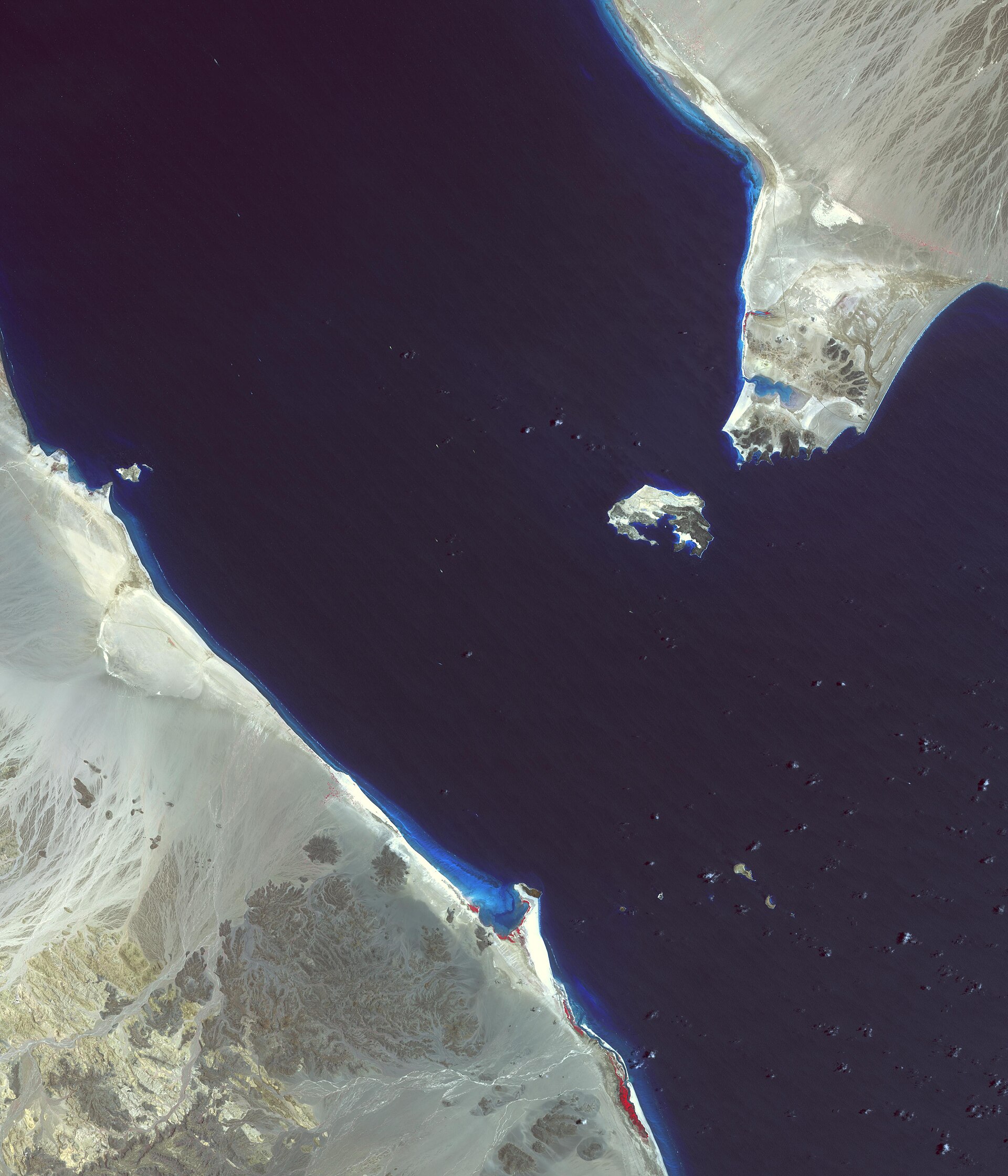
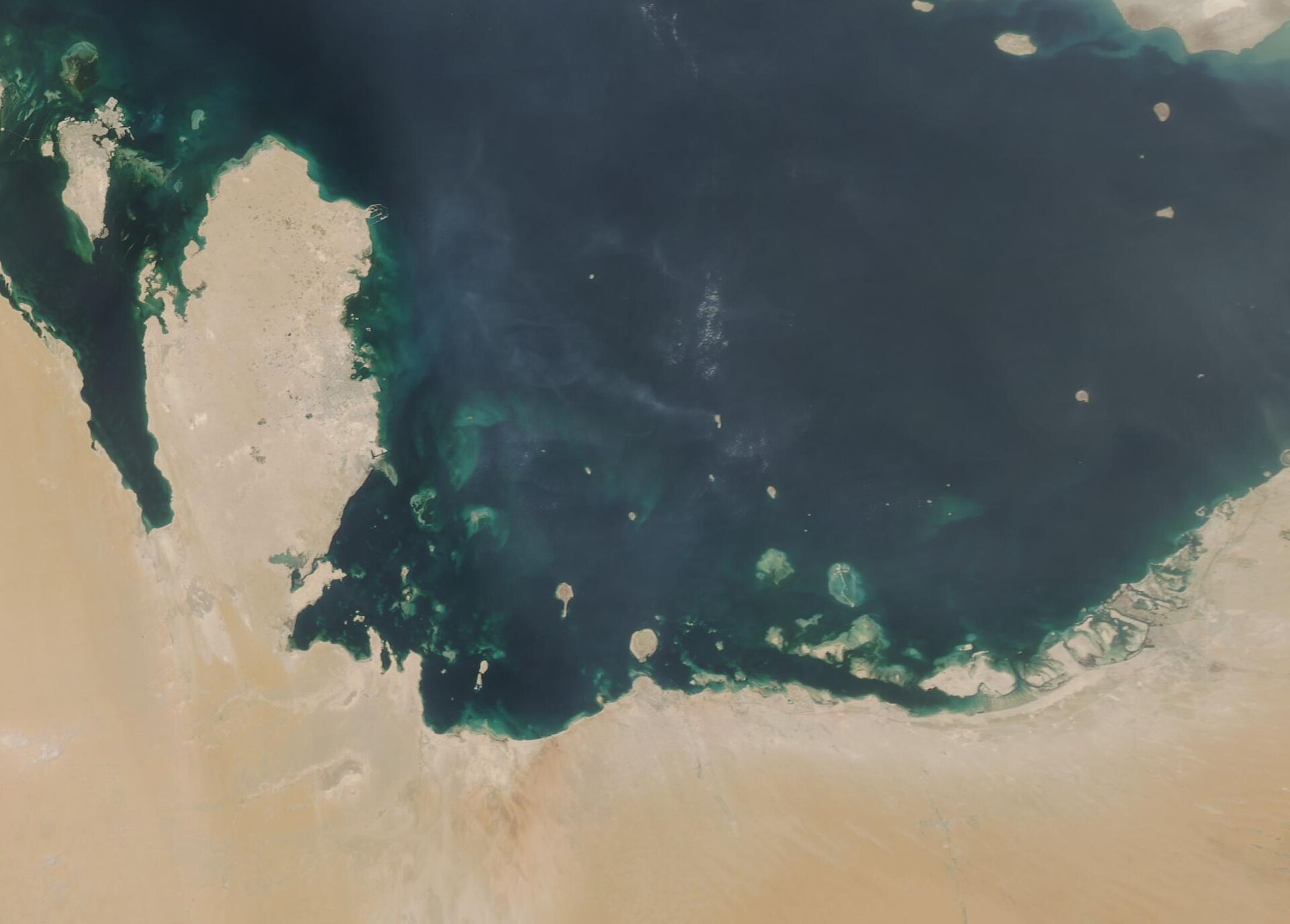
The Ras Tanura strike arrived at the beginning of the war, before any coalition had been discussed, before any blockade had been proposed, before Saudi Arabia had been asked to choose a side. The IRGC struck the world’s most valuable offshore oil loading complex — 6-7 million barrels per day of pre-war capacity, the single largest chokepoint in the global crude supply chain — belonging to a state that was, at the time, doing nothing more provocative than pumping oil at existing contractual volumes.
Farzin Nadimi of the Washington Institute for Near East Policy has documented what he calls the IRGC’s targeting of “economically significant littoral infrastructure” regardless of the host nation’s political posture, rooting the doctrine in the 1984-1988 Tanker War, when Iran struck Saudi-flagged vessels and targeted Saudi loading infrastructure despite Riyadh’s formal non-belligerent status. Operation Earnest Will — the US reflagging operation that drew Washington deeper into the Gulf — was triggered in part by Iran’s willingness to treat Saudi neutrality as irrelevant to targeting decisions.
Forty-three days later, that same logic reappeared in formal IRGC language. IRNA, April 13: “Any port, terminal, or facility in the Persian Gulf that enables the economic strangulation of Iran will be treated as a legitimate military objective. This includes ports of states that claim neutrality while their infrastructure services blockade logistics.” The phrase “claim neutrality” is doing the work in that sentence. It is not an acknowledgment of Saudi Arabia’s position. It is a dismissal of it.
What “No Port Will Be Safe” Means Operationally
The US blockade of Iranian ports, effective April 13 at 14:00 GMT, was joined by the UAE, Bahrain, and five non-Gulf partners. Saudi Arabia declined to participate — no public statement, no official refusal, simply absence from the coalition roster as reported by Reuters and Al-Monitor on April 13. The silence was deliberate. It was intended to communicate distance from the blockade without antagonizing Washington, a calibrated non-position designed to sit in the gap between solidarity and provocation.
The Middle East briefing 3,000+ readers start their day with.
One email. Every weekday morning. Free.
The IRGC’s response closed that gap within hours. Tasnim, April 14: “Maximum combat alert has been declared. All Persian Gulf port infrastructure involved in transshipment, refueling, or logistical support for blockade enforcement vessels is within our operational reach.” PressTV, the same day: “Nations that chose comfort over solidarity will discover that IRGC strategic doctrine does not recognize the category of ‘neutral beneficiary’ of an illegal siege.”
Fabian Hinz, an IISS missile proliferation researcher, has framed the principle in technical rather than political terms: the IRGC’s anti-ship and port-strike arsenal is calibrated by economic value as a coercion target, not by political alignment. Neutrality does not reduce target value. The logic is mechanical. If Ras Tanura loads crude that funds arms purchases by states participating in the blockade — and it does, since Saudi crude flows to blockade coalition members — then Ras Tanura is, in IRGC doctrine, a blockade-enabling facility regardless of what Riyadh’s foreign ministry says about coalition membership.
The IRGC April 3 counter-target list, published via Tasnim ten days before the blockade was even declared, named eight Gulf bridges across four countries. The King Fahd Causeway — Saudi Arabia’s sole land connection to Bahrain — appeared on that list. Saudi infrastructure was on IRGC targeting documents three weeks before the neutrality question arose. The targeting preceded the political calculation. The counter-blockade declaration was confirmation, not escalation.
How Many Salvos Can Saudi Arabia Absorb?
Between March 3 and April 7, Saudi air defenses intercepted 799 drones and 95 ballistic missiles — 894 total engagements that depleted the PAC-3 MSE stockpile by approximately 86 percent, from a pre-war inventory of roughly 2,800 rounds to an estimated 400. At a Raytheon unit cost of $3.9 million per round, the stockpile drawdown of approximately 2,400 rounds represents an implied interceptor expenditure of roughly $9.4 billion — not counting cheaper point-defense and drone-intercept rounds from other systems in the battery mix.
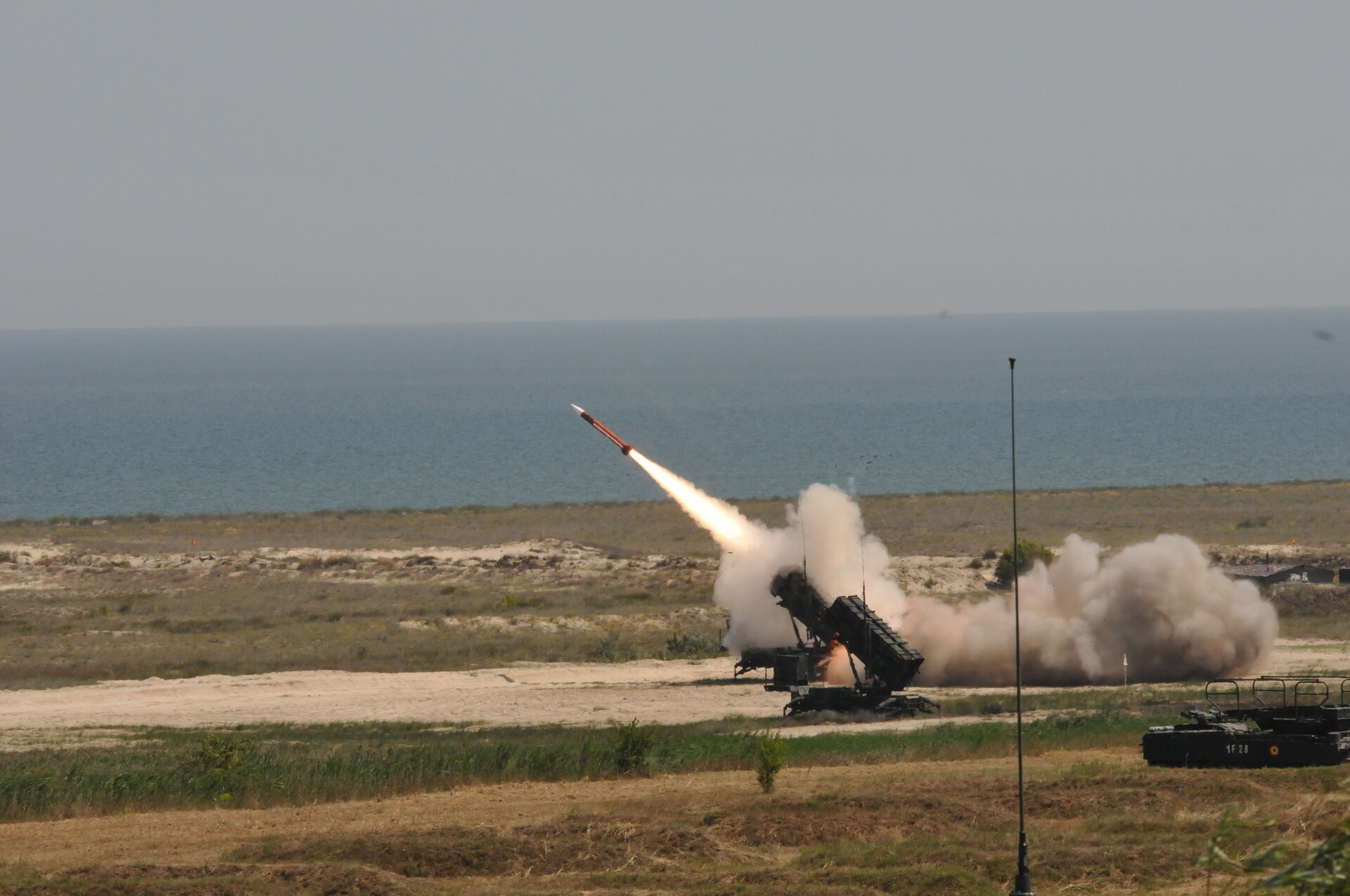
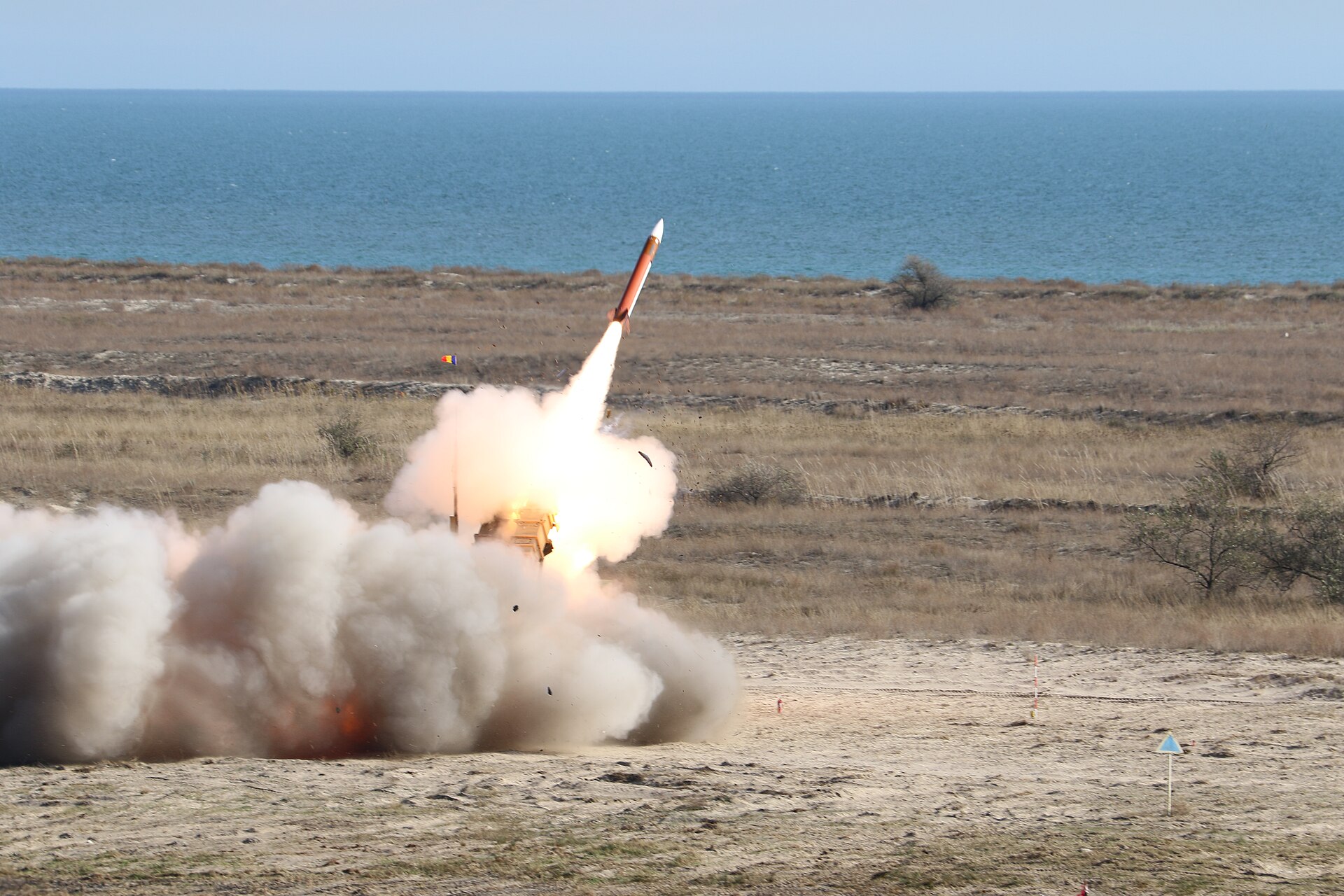
Against a coordinated IRGC ballistic missile salvo targeting a single port complex — the scenario the April 13-14 statements explicitly threaten — the intercept calculus is straightforward. A single salvo against Ras Tanura: 8-15 ballistic missiles, each requiring 2-4 interceptors under shoot-look-shoot doctrine. That is 16 to 60 rounds per engagement. At 400 rounds remaining, Saudi Arabia has an intercept budget for somewhere between 7 and 25 major salvo engagements before complete exhaustion — depending on salvo size, interceptor-per-target ratio, and whether the defense is engaging drones simultaneously.
| Scenario | Missiles per salvo | Interceptors per missile | Rounds per salvo | Salvos before exhaustion |
|---|---|---|---|---|
| Low-intensity probe | 8 | 2 | 16 | 25 |
| Moderate coordinated strike | 12 | 3 | 36 | 11 |
| Saturating salvo (Ras Tanura priority) | 15 | 4 | 60 | 7 |
Tom Karako of the CSIS Missile Defense Project has argued in congressional testimony that the industrial base for PAC-3 MSE cannot surge — that Camden runs at full capacity, and that recovering from sustained high-intensity intercept campaigns takes years, not months. Camden, Arkansas — the sole PAC-3 MSE production facility — produces approximately 620 rounds per year, or roughly 52 per month. Replenishment of the approximately 2,400 rounds expended since March 3 would require 46 months of full-throughput production, assuming no other customers. Poland refused a Patriot battery transfer on March 31, eliminating the most immediately accessible reserve outside the US military’s own inventory.
Washington’s $4.76 billion air defense resupply announcement addresses the financial dimension but not the production one. The money exists. The manufacturing capacity to convert it into interceptors before the Hajj security window opens on April 18 does not.
The Geography of Simultaneous Vulnerability
The IRGC’s “all Gulf ports” formulation is not rhetorical. Four Saudi nodes sit within range of Iranian ballistic and cruise missile systems, and three of them compete for the same PAC-3 battery’s intercept bandwidth.
Ras Tanura, the primary target, sits 65-73 kilometers from the nearest active PAC-3 battery at Jubail — beyond the PAC-3 MSE’s nominal 60-kilometer intercept envelope against ballistic-trajectory targets. Whether the geometry allows reliable intercept depends on the incoming missile’s trajectory, speed at terminal phase, and how many other targets the battery is simultaneously tracking. Against a single inbound missile, the coverage is adequate. Against a coordinated salvo arriving from multiple azimuths while the same battery is defending Jubail industrial city 40 kilometers to its south, the math deteriorates.
King Abdulaziz Port Dammam — 3.7 million TEU annual throughput, the Eastern Province’s civilian supply artery — sits approximately 40 kilometers from the Jubail battery. It is within the PAC-3 coverage radius but competes for the same fire-control radar and interceptor magazine as Ras Tanura and Jubail. A simultaneous salvo against all three targets forces a triage decision: which node to defend, which to sacrifice.
Seth Jones of CSIS has described the IRGC’s “cost-imposition logic” as targeting economic infrastructure of states enabling the blockade, directly or indirectly, not just formal coalition members. The operational implication is that the IRGC does not need to destroy Ras Tanura to achieve its coercive objective. It needs to force Saudi Arabia to choose between defending its oil export terminal and defending its civilian port, repeatedly, until the interceptor stockpile reaches zero.
Why Is Yanbu Saudi Arabia’s Single Point of Export Failure?
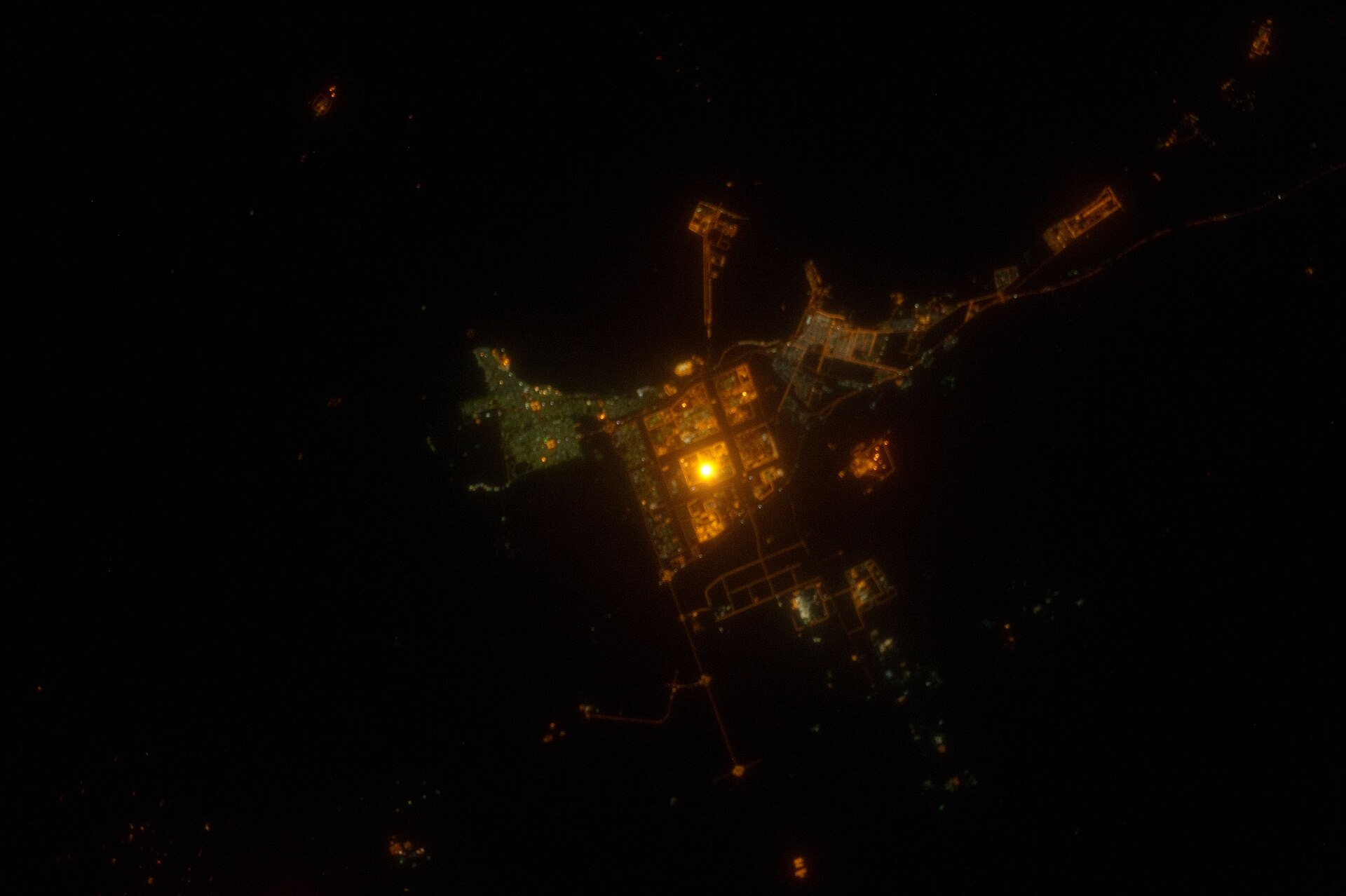
Saudi Arabia’s entire post-Hormuz export strategy runs through the Red Sea port of Yanbu, fed by the East-West Pipeline from the Eastern Province oil fields. Aramco CEO Amin Nasser confirmed in March 2026 that Yanbu was operating at or near maximum sustainable throughput. The ceiling: 5.9 million barrels per day. Pre-war Saudi Hormuz throughput: 7-7.5 million barrels per day. The structural gap — 1.1 to 1.6 million barrels per day — existed before the IRGC struck the East-West Pipeline’s pumping station on April 8, an attack that cut an additional 700,000 barrels per day from the pipeline’s effective capacity.
Yanbu is 1,200 kilometers from the Iranian border. It is beyond the range of the IRGC’s Noor anti-ship missiles (120 km) and its coastal defense systems. It is not beyond the range of the Zolfaqar ballistic missile — 700 kilometers, precision-guided, the same weapon used in the April 8 pipeline strike. Zolfaqar can reach Yanbu from Iranian territory without forward deployment. The IRGC demonstrated both the capability and the willingness to strike pipeline infrastructure feeding Yanbu on April 8. Extending that logic to the loading terminals themselves requires no new capability, only a targeting decision.
A successful strike on Yanbu’s loading berths — already operating at capacity — would eliminate Saudi Arabia’s sole functional export bypass for the Strait of Hormuz. Nasser has stated that additional capacity expansion at Yanbu requires 18-24 months minimum. There is no second bypass. The Jask terminal on Iran’s Indian Ocean coast handles 0.3 million barrels per day, but that is Iran’s bypass, not Saudi Arabia’s. Riyadh has one export route that avoids the Strait, and it is already running at its ceiling.
The Jubail Lesson: Intercept Success Is Not Infrastructure Safety
On April 7, eleven ballistic missiles and eighteen drones targeted the Jubail industrial zone — home to approximately $20 billion per year in petrochemical output. All eleven ballistic missiles were intercepted. The intercept was, by any standard air defense metric, a success. Debris from those intercepts started a fire at a SABIC facility that had already declared force majeure on March 26-27. The fire was caused not by a failed intercept but by a successful one.
Brigadier General (ret.) Mark Kimmitt, appearing on CNN on April 7, described intercept debris as a known second-order effect — noting that at Jubail’s density of industrial infrastructure, a successful intercept does not translate to zero damage on the ground. The Jubail industrial city is one of the most concentrated petrochemical complexes on Earth. The blast and debris radius of a PAC-3 MSE engagement at 15-20 kilometers altitude covers a footprint that, in Jubail’s case, includes active refining, storage, and export infrastructure regardless of where the intercept occurs.
SABIC’s force majeure, Sadara’s shutdown in late March, and the April 7 debris fire represent a three-stage degradation sequence in which each event compounded the previous one. Sadara’s $3.7 billion debt grace period expires June 15. ExxonMobil and Dow hold equity stakes in the complex. The IRGC does not need to penetrate Saudi air defenses to impose costs on Jubail. It needs to fire enough missiles to generate enough intercept debris to keep the force majeure conditions in place. The defense succeeds tactically and fails economically at the same time.
Does Non-Membership Lower IRGC Targeting Priority?
The UAE joined the blockade coalition despite being a Hormuz-dependent exporter — a decision that appears, on its surface, to increase Abu Dhabi’s exposure to IRGC retaliation. Saudi Arabia’s decision to stay out appears, on its surface, to reduce Riyadh’s exposure. The implicit calculus: if coalition membership attracts fire, non-membership should attract less.
The Tanker War does not support this theory. Between 1984 and 1988, Iran struck 190 commercial vessels in the Persian Gulf. Saudi Arabia was not a belligerent. Saudi-flagged tankers were struck anyway — not because Iran mistook them for combatants, but because Iran’s coercive logic targeted the economic infrastructure that sustained Iraq’s war effort, and Saudi oil revenue was part of that infrastructure regardless of Riyadh’s formal status. The reflagging of Kuwaiti tankers under US flags (Operation Earnest Will, 1987) was a response to this reality: neutrality did not protect Gulf shipping, so the US flag had to.
The April 13-14 IRGC statements replicate this doctrine almost verbatim. “This includes ports of states that claim neutrality while their infrastructure services blockade logistics.” The phrase “services blockade logistics” is elastic enough to cover any Saudi port that loads crude purchased by a blockade coalition member, any Saudi refinery whose products fuel coalition naval vessels — even indirectly, through third-party supply chains — and any Saudi industrial facility whose output enters supply chains that sustain coalition economies. Under this definition, economic integration with blockade participants is itself a form of participation.
The US blockade as coercive diplomacy rests on isolating Iran economically. The IRGC’s counter-doctrine rests on ensuring that isolation is not cost-free for the states whose economic infrastructure makes isolation possible. Saudi Arabia is the largest economy in the Gulf. Its ports handle more crude, more petrochemicals, and more general cargo than any other Gulf state. Non-membership does not reduce its value as an IRGC coercion target. It may, by removing Saudi Arabia from the coalition’s collective defense architecture, reduce the cost the IRGC pays to strike it.
The Camden Problem
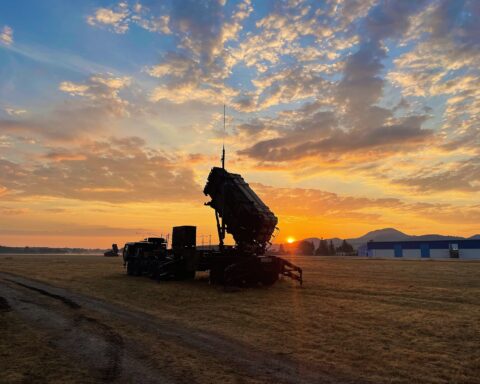
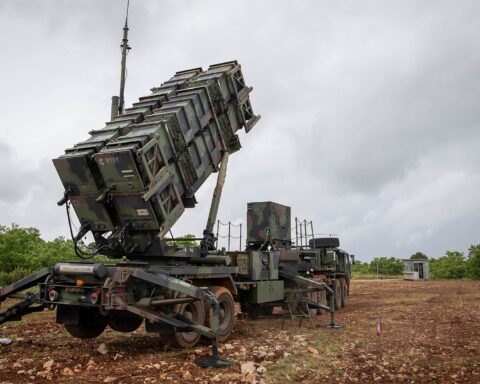
The PAC-3 MSE is manufactured at a single facility in Camden, Arkansas. Lockheed Martin operates the production line at approximately 620 rounds per year — a rate established during peacetime procurement cycles and not designed for wartime consumption rates. Saudi Arabia has consumed roughly 2,400 rounds in 36 days. At Camden’s full annual output, replacing that inventory requires 46 months. At the current consumption rate — approximately 67 rounds per day during the March 3-April 7 period — Saudi Arabia would exhaust its remaining 400 rounds in six days of sustained engagement.
Poland’s refusal to transfer a Patriot battery on March 31 closed the most plausible short-term resupply path. NATO allies operating PAC-3 systems — Germany, the Netherlands, Japan, South Korea — face their own deterrence requirements and have shown no willingness to drawdown inventory for Saudi Arabia’s defense. The UK-US split on Hormuz strategy further complicates the alliance coordination that would be required to redirect interceptor stocks from European or Pacific inventories.
The IRGC does not need to know the exact number of Saudi interceptors remaining. It needs to know only that the number is finite, that the replenishment rate is fixed, and that every salvo — whether intercepted or not — moves the stockpile closer to zero. This is attrition logic applied to air defense: the IRGC’s missile inventory, while also finite, is larger and cheaper per unit than the interceptors designed to stop it. The Khalij Fars ballistic anti-ship missile, designed specifically for fixed maritime infrastructure like Ras Tanura, costs a fraction of the PAC-3 MSE rounds required to defeat it.
| Metric | Value | Source |
|---|---|---|
| Pre-war stockpile (est.) | ~2,800 rounds | CSIS Missile Defense Project |
| Rounds expended (March 3 – April 7) | ~2,400 | HoS calculation from 894 engagements |
| Remaining stockpile (est.) | ~400 | CSIS; Raytheon doctrine |
| Camden annual production | 620/year | Breaking Defense |
| Monthly production | ~52/month | Derived |
| Replenishment time (2,400 rounds) | ~46 months | Derived |
| Cost per round | $3.9M | Raytheon |
| Implied PAC-3 MSE expenditure (2,400 rounds × $3.9M) | ~$9.4B | Derived from stockpile depletion × unit cost |
The Fiscal Arithmetic of Silence
Bloomberg Intelligence calculates Saudi Arabia’s fiscal break-even at $108-111 per barrel under PIF-inclusive methodology — the accounting that includes the Public Investment Fund’s spending commitments, which the official budget excludes. Brent crude was trading at approximately $102 as of April 13-14. Every month at current prices generates a $6-8 billion fiscal shortfall against the PIF-inclusive benchmark, before any additional port disruption is factored in.
The East-West Pipeline strike on April 8 cut 700,000 barrels per day from the system. At $102 Brent, that is approximately $71.4 million per day in lost export revenue — $2.1 billion per month — from a single pumping station strike. A sustained IRGC campaign against Saudi port infrastructure, even at low intensity, compounds this arithmetic with each engagement. Goldman Sachs has projected a Saudi deficit of $80-90 billion for 2026 under current conditions, against an official projection of $44 billion that was drafted before the war began.
The PIF’s 2026-2030 strategy document, published the same week, formally suspended The Line at 2.4 of 170 planned kilometers and reduced construction commitments from $71 billion to $30 billion. An $8 billion write-down followed. These adjustments reflect fiscal reality as of early April. They do not account for the incremental costs of a counter-blockade campaign targeting the export infrastructure that generates the revenue the PIF requires. Aramco’s dividend — already cut by approximately one-third — is the PIF’s primary funding source. Every barrel that does not load at Ras Tanura or Yanbu is a barrel that does not fund the sovereign wealth vehicle that underwrites Saudi Arabia’s post-oil economic transition.
Saudi Arabia’s silence on the blockade was a neutrality bid — an attempt to sit in the space between coalition membership and IRGC targeting. The March 2 Ras Tanura strike had already demonstrated that this space does not exist. The April 3 counter-target list had already named Saudi infrastructure. The April 13-14 declarations merely said aloud what the IRGC’s operational behavior had been saying since the first week of the war: economic value determines targeting priority, and Saudi Arabia’s ports are the most economically valuable targets in the Persian Gulf.
Four hundred interceptors, a single production facility in Arkansas running at capacity, four industrial nodes competing for the same battery’s attention, and one export bypass already at its ceiling. These are not policy problems with policy solutions. They are arithmetic, and the IRGC can count.
FAQ
What is the IRGC Khalij Fars missile and why does it threaten Ras Tanura specifically?
The Khalij Fars is a 300-kilometer-range ballistic anti-ship missile designed by the IRGC for targeting fixed maritime infrastructure — oil platforms, loading terminals, and port facilities. Unlike cruise missiles, which can be engaged by short-range point-defense systems like CIWS, the Khalij Fars follows a ballistic trajectory that requires PAC-3-class interceptors to defeat. Ras Tanura’s offshore loading platforms — Sea Island and adjacent facilities — present the exact target profile the Khalij Fars was engineered for: large, fixed, GPS-locatable, and impossible to relocate or harden.
Has Saudi Arabia requested emergency PAC-3 resupply from NATO allies?
No public request has been reported. Germany operates PAC-3 batteries but has committed them to NATO’s eastern flank deterrence posture. Japan and South Korea maintain PAC-3 inventories but face North Korean missile threats that preclude drawdowns. The only confirmed resupply path is Washington’s $4.76 billion authorization, which funds future production at Camden rather than transferring existing stocks. The timeline from authorization to delivery, given Camden’s 620-round annual capacity and existing order backlogs from ten allied nations, extends well into 2028.
Could THAAD systems supplement PAC-3 for Saudi port defense?
THAAD (Terminal High Altitude Area Defense) engages missiles at higher altitudes and longer ranges than PAC-3 MSE, but the US has deployed a limited number of THAAD batteries globally — seven in total as of early 2026. One is deployed to the UAE. Redeploying a THAAD battery to cover Saudi Eastern Province ports would require either pulling it from another theater or deploying from US-based inventory, both of which involve political and logistical timelines measured in weeks to months. THAAD also does not address the debris problem: intercepts at higher altitude produce larger debris fields over wider areas.
What is the historical precedent for IRGC strikes on neutral Gulf infrastructure?
During the 1984-1988 Tanker War, Iran attacked 190 commercial vessels in the Persian Gulf, including tankers flagged to Kuwait, Saudi Arabia, and other states that were not belligerents in the Iran-Iraq War. Iran’s logic was that any vessel carrying oil whose revenue supported Iraq’s war effort was a legitimate target. The precedent was reinforced by the May 2019 IRGC attacks on tankers near Fujairah, UAE, during a period of US-Iran tension in which the UAE had taken no hostile action against Iran. The April 13-14 counter-blockade statements cite the same doctrinal framework applied to port infrastructure rather than individual vessels.
What would happen to global oil supply if both Ras Tanura and Yanbu were simultaneously disrupted?
Ras Tanura handles approximately 6-7 million barrels per day of loading capacity; Yanbu handles up to 5.9 million barrels per day via the East-West Pipeline. Simultaneous disruption of both would remove up to 12-13 million barrels per day of loading capacity from the market — roughly 12-13 percent of global crude supply. The IEA’s emergency coordinated stock release mechanism, last activated during the 2022 Ukraine crisis, released 1.7 million barrels per day. Even a full activation of strategic petroleum reserves across all IEA members could not compensate for the loss of both Saudi loading hubs, and Brent crude would likely spike above $150 per barrel within days, according to Goldman Sachs energy desk scenarios published in March 2026.
Iran has since elevated that calculus from military to legal: on April 14, Tehran filed a formal UN compensation claim against Saudi Arabia, the UAE, Bahrain, Qatar, and Jordan, citing their hosting of US and Israeli strike assets as co-belligerency. The claim has no enforcement mechanism but creates a legal record that may outlast the ceasefire. Its strategic implications are examined in Iran Demands Compensation From Five Arab States at the UN. It Cannot Collect — But That’s Not the Point.