ISLAMABAD — The Islamabad Accord expires on April 22 and cannot be procedurally extended, because the Iranian official whose institutional authorization is required for renewal — Supreme National Security Council Secretary Mohammad Bagher Zolghadr — is sanctioned in every jurisdiction that could plausibly host the extension talks. The problem is not political will. It is venue law.
Zolghadr has been on the US Treasury’s SDN list since 2007, under EU restrictive measures since the same year, and — since February 19, 2026, six weeks before the accord was even signed — subject to the EU’s blanket designation of the IRGC as a terrorist organization. Pakistan, which brokered the original accord, now faces secondary sanctions exposure from hosting him again. Switzerland, which administers Geneva, mirrors the EU designation through its SECO sanctions regime. Oman, after Transport Minister Said Al-Maawali publicly rejected Iran’s Hormuz toll proposal, is politically unacceptable to Tehran. The ceasefire’s four remaining days are not a countdown to a decision. They are a countdown to the expiration of an agreement that was structurally incapable of renewal from the moment it was concluded.
Table of Contents
- The Accord’s Missing Clause
- The Man the IRGC Installed at the SNSC
- Nineteen Years on a Sanctions List
- Why Can’t Pakistan Host the Extension?
- What Closed Geneva as a Venue?
- Oman Said No Before Anyone Asked
- Why Doesn’t Sending Araghchi Solve the Problem?
- Saudi Arabia Pays for a Room It Was Never In
- April 22 and the Hajj Convergence
- Frequently Asked Questions
The Accord’s Missing Clause
The Islamabad Accord, concluded on April 8, 2026, after Pakistan brokered a two-week ceasefire between Iran and the United States, contained no memorandum of understanding, no formal signatory page, and no extension clause. A procedural analysis by the Syracuse Journal of International Law, published April 15, found that the accord lacked “defined signatory authority” and operated under “competing interpretations” from the day it was announced. Pakistan’s Prime Minister Shehbaz Sharif told reporters the accord covered Lebanon. Vice President JD Vance said it did not.
The absence of an extension mechanism was not an oversight. It reflected the conditions under which the accord was reached — rapidly, under pressure from both a Trump-imposed deadline and the IRGC’s own internal fractures. The SNSC formally approved the ceasefire on April 7, one day before the public announcement, with Zolghadr presiding as secretary. That institutional sign-off was the accord’s source of authority on the Iranian side. Without a written renewal protocol, any extension requires the same institutional pathway: SNSC authorization, which means Zolghadr.
White House press secretary Karoline Leavitt confirmed on April 14 that talks on extension “are being had, but nothing is official.” Iranian FM spokesman Esmail Baghaei said the same week that “the exchange of messages is ongoing” and that extension “has not been finalized.” Neither statement addressed the procedural question of where — and with whom — a finalized extension could be executed.
The Man the IRGC Installed at the SNSC
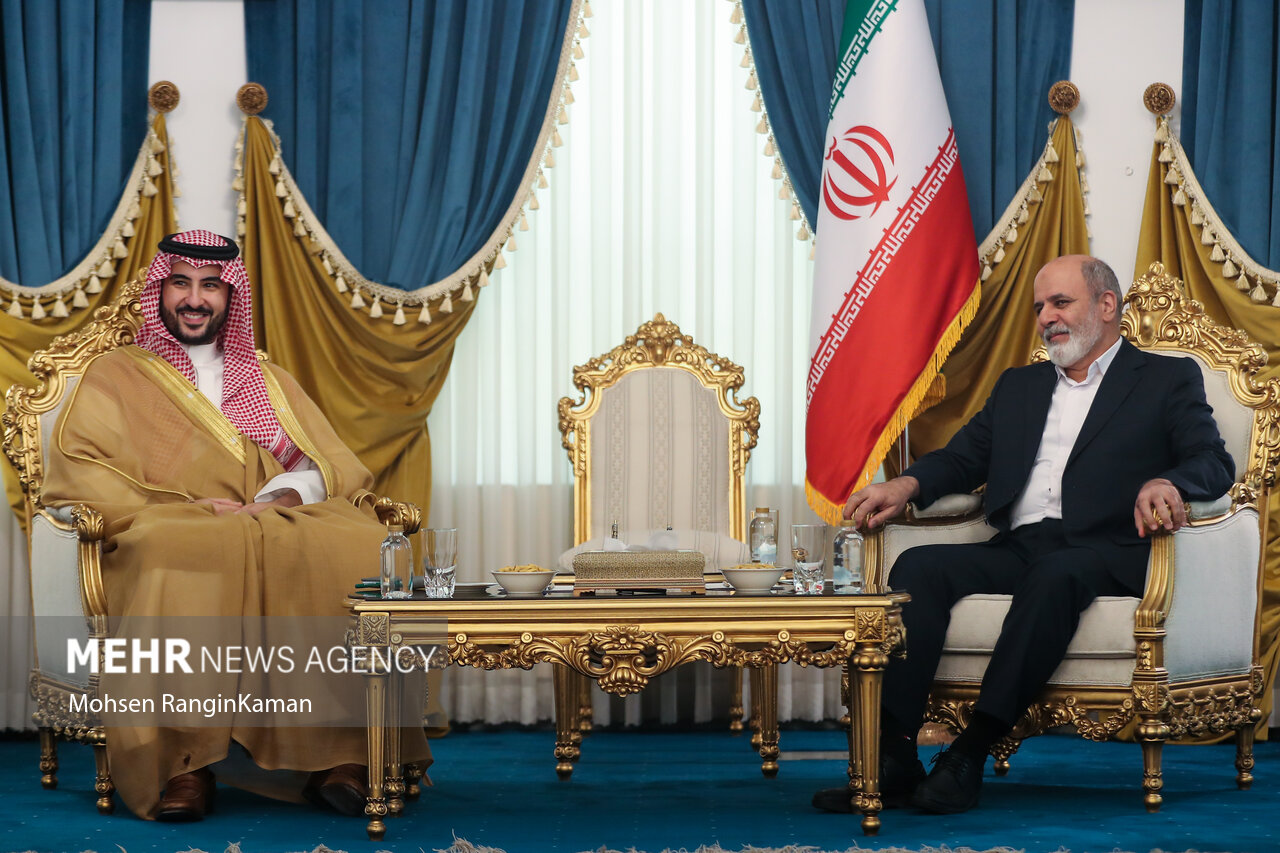
Mohammad Bagher Zolghadr is a first-generation Revolutionary Guard. He fought in the Iran-Iraq War, served as IRGC Joint Staff Chief from 1989 to 1997, and held the position of deputy commander-in-chief from 1997 to 2005. The Washington Institute for Near East Policy, in a March 2026 profile, noted that Zolghadr “founded the Ramadan Headquarters, predecessor to today’s Qods Force” in 1984, “conducting cross-border operations blending military action with infiltration, network building, and cross-border political warfare.”
The Middle East briefing 3,000+ readers start their day with.
One email. Every weekday morning. Free.
His appointment as SNSC secretary on March 24, 2026 — the same date, nineteen years earlier, that UN Security Council Resolution 1747 first sanctioned him — was not Pezeshkian’s choice. Iran International reported on March 25 that the appointment was “imposed on Pezeshkian” by IRGC Commander Ahmad Vahidi and senior commanders. Al Jazeera’s analysis was blunt: “whoever is sitting at the negotiation table will have to get Zolghadr’s approval before anything passes.” The Foundation for Defense of Democracies assessed that his selection indicated Tehran was prioritizing “system preservation through discipline, control, and hard-power coordination” over diplomatic flexibility.
Vahidi’s purpose in installing Zolghadr was to ensure that the SNSC — the only body with constitutional authority to approve ceasefire terms — would be run by a commander whose entire career had been spent inside the IRGC’s operational and intelligence architecture. That purpose has been served. The ceasefire the SNSC authorized on April 7 bears Zolghadr’s institutional imprimatur. Any renewal must bear it again.
Nineteen Years on a Sanctions List
Zolghadr’s sanctions designation is older than some of the soldiers fighting the war it is now preventing from ending. UNSC Resolution 1747, adopted March 24, 2007, listed him as an “IRGC key person” with influence over Iran’s nuclear programme. That designation predates the JCPOA. It survived the JCPOA’s partial sanctions relief from 2015 to 2018. It was never lifted.
The jurisdictions that currently sanction Zolghadr, according to OpenSanctions data updated through April 2026, span four continents:
| Jurisdiction | Legal Basis | Status |
|---|---|---|
| United States (OFAC SDN) | Executive Order / UNSC 1747 | Active |
| European Union (CFSP) | IRGC terrorist designation (Feb 19, 2026) + prior listings | Active |
| United Kingdom (FCDO) | Iran (Sanctions) Regulations | Active |
| Switzerland (SECO) | Mirrors EU CFSP | Active |
| Canada | Special Economic Measures Act | Active |
| Australia | Autonomous Sanctions Regulations | Active |
| Japan | Foreign Exchange and Foreign Trade Act | Active |
| Qatar | National sanctions list | Active |
| France, Belgium, Monaco | EU CFSP implementation | Active |
| Türkiye, South Africa, Ukraine, Taiwan | Various national instruments | Active |
The practical consequence: Zolghadr cannot enter, transit through, or conduct official business in any of these jurisdictions without a specific license or exemption from the designating authority. For the United States, that means an OFAC-specific license — a process that, for SDN-listed individuals, requires weeks of interagency review. For EU member states and Switzerland, his IRGC membership now triggers an additional layer: the February 19, 2026, blanket terrorist designation of the IRGC, which bars member states from facilitating the official activities of IRGC officers in their jurisdictions.
The February designation was in force before Zolghadr authorized the ceasefire. Nobody raised the question of what would happen when the ceasefire needed extending and the man who controlled its renewal could not legally enter any of the venues under discussion.
Why Can’t Pakistan Host the Extension?
Pakistan hosted the original accord. The obvious solution is to host the extension in the same room. The problem is that the room’s financial foundations have shifted.
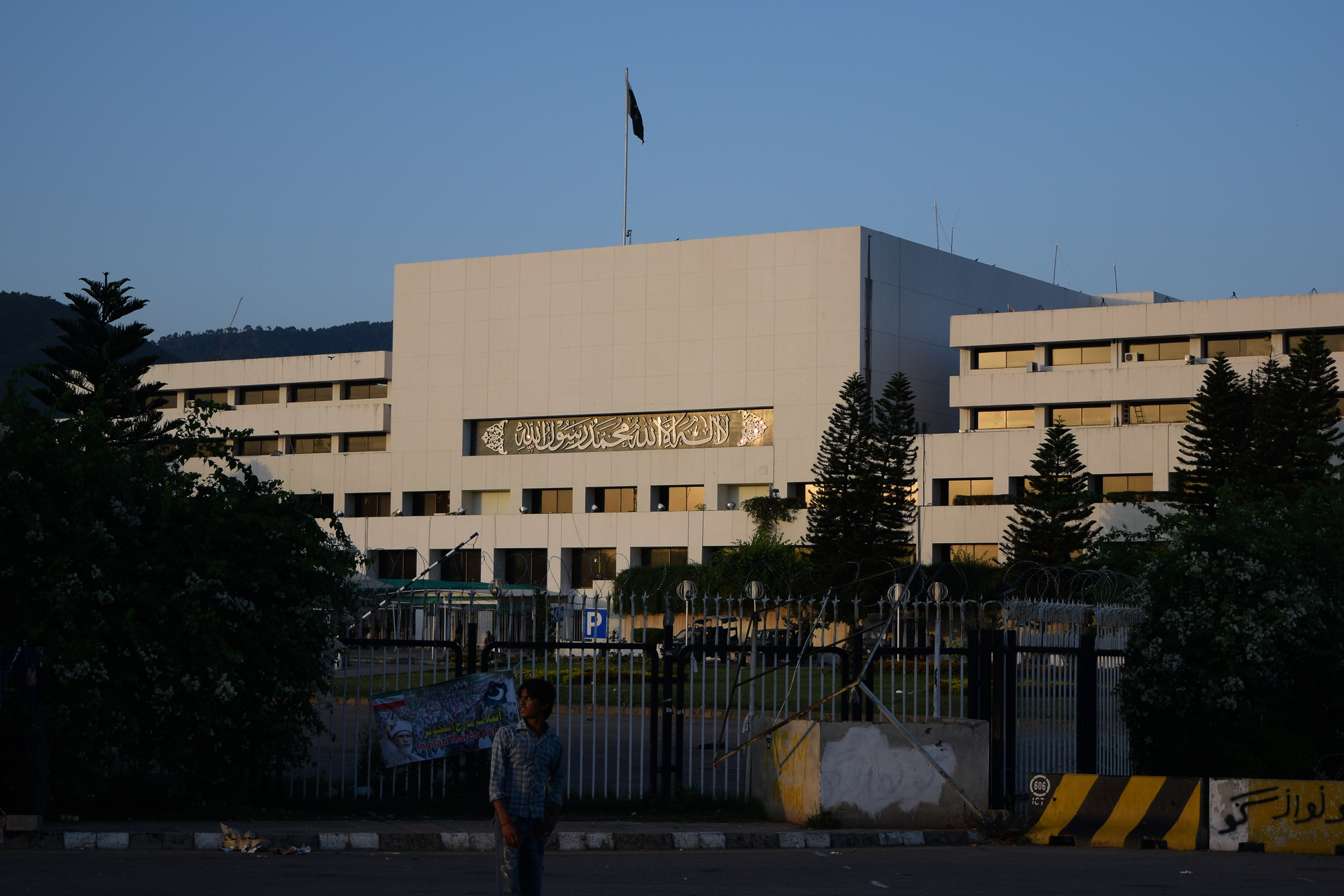
In March 2026, Pakistan received an IMF tranche of approximately $1.2 billion, approved with US, EU, and Chinese support. Pakistan’s FATF standing — it exited the grey list in October 2022 after years of remedial compliance — remains under pressure, with India actively pushing for re-listing. Bloomberg reported on March 28 that the tranche was conditioned on continued compliance with anti-money-laundering and counterterrorism-financing frameworks that are structurally incompatible with officially hosting a US- and EU-designated IRGC commander.
Hosting Zolghadr for the original ceasefire was, in sanctions terms, a calculated ambiguity. The accord was brokered in haste, under existential pressure, and Pakistan could argue — and implicitly did — that the emergency circumstances justified the contact. An extension is different. It is premeditated. It involves advance scheduling, formal invitations, and the kind of deliberate facilitation that OFAC secondary sanctions are designed to capture. Accepting a designated SDN as a negotiating counterpart would itself, as the Jerusalem Post reported on April 10, require a specific OFAC license that no one has applied for.
Pakistan’s financial exposure is not abstract. Saudi Arabia rolled over $3 billion in deposits to Pakistan’s central bank in the weeks before the ceasefire. An additional $8 billion in Saudi commitments — investment pledges, energy credits, deferred loan repayments — are tied to Pakistan’s continued role as a mediator that Riyadh can accept. Pakistan ISI chief Lieutenant General Muhammad Asim Malik, who has functioned as the ceasefire’s sole enforcement relay, visited Khatam al-Anbiya headquarters on April 16 — the IRGC’s central command, run by General Abdollahi, whom Pezeshkian publicly accused of wrecking the Islamabad talks. Malik can relay messages. He cannot host Zolghadr for a formal extension ceremony without triggering the sanctions architecture that funds the country he serves.
What Closed Geneva as a Venue?
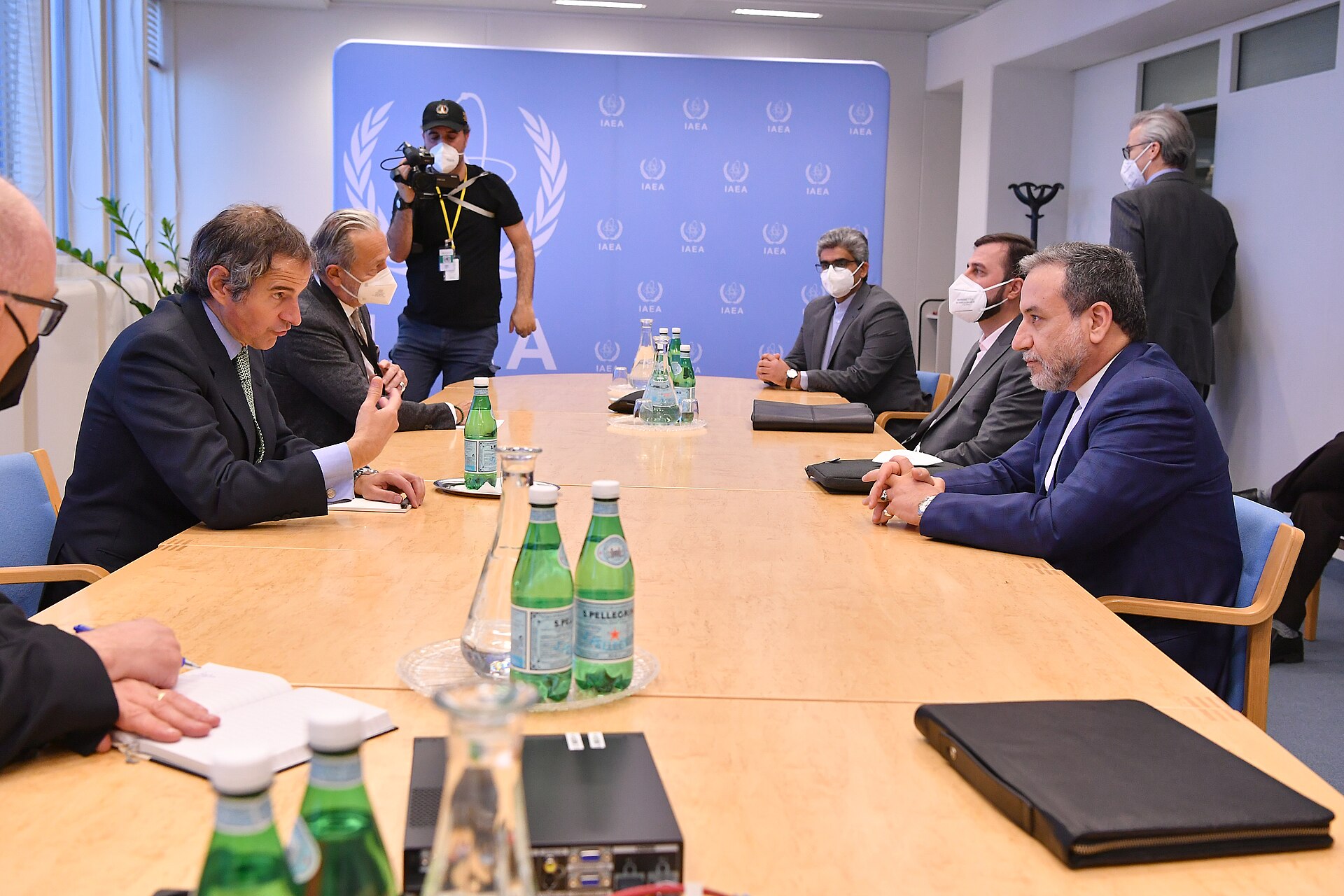
Geneva has been the default venue for Iranian nuclear negotiations since the JCPOA process began. The Swiss government’s neutrality, its tradition of hosting multilateral negotiations, and its physical infrastructure made it the natural candidate for any extension of the Islamabad Accord. The EU’s decision on February 19, 2026, to designate the IRGC as a terrorist organization closed that option before the ceasefire existed.
Chatham House assessed the designation as marking “the end of the EU’s long strategy of engagement with the Islamic Republic, which began in the early 1990s and endured throughout the crisis over Iran’s nuclear programme.” Switzerland, which mirrors EU restrictive measures through its SECO sanctions regime, has Zolghadr on its national sanctions list. Hosting a formal SNSC-level Iranian delegation — one that, by Vahidi’s explicit demand, must include the SNSC secretary — would require a Swiss federal exemption for a designated IRGC official to conduct official business on Swiss territory.
No such exemption has been requested. No framework for granting one exists in the current Swiss legal architecture. The JCPOA-era precedent, in which Swiss facilitation operated within a UN-endorsed negotiating framework (UNSC Resolution 2231), does not apply — the Islamabad Accord has no UN mandate, no Security Council endorsement, and no international legal personality that would trigger the kind of sovereign immunity or diplomatic facilitation protections that shielded earlier Iranian negotiating teams in Geneva.
Leavitt told reporters on April 14 that Geneva and Islamabad were the “only two venues under active discussion.” Both are procedurally blocked for any session requiring Zolghadr’s participation. The venues under discussion are venues that cannot be used.
Oman Said No Before Anyone Asked
Oman has served as a back channel between Iran and the United States since the Obama administration. Muscat’s geographic proximity to Iran, its careful neutrality in Gulf disputes, and Sultan Haitham’s personal relationships with both Iranian and American officials made it a persistent candidate for hosting sensitive negotiations. The Hormuz toll dispute destroyed that utility.
The Associated Press ceasefire text attributed toll-collection rights over the Strait of Hormuz to “Iran and Oman.” Oman’s Transport Minister Said Al-Maawali publicly rejected the attribution, telling Al Jazeera that Oman has “signed all international maritime transport agreements” that bar taking fees from ships transiting the Strait. The rejection was categorical, grounded in UNCLOS Article 26, and delivered before any extension discussion began.
From Iran’s perspective, an Omani-hosted extension would now carry a built-in concession. Oman’s public repudiation of the Hormuz toll framework — which the IRGC treats as a non-negotiable expression of Iranian sovereignty — means that Tehran cannot accept Muscat as a venue without implicitly endorsing the rejection. Tasnim News Agency, the semi-official IRGC-aligned outlet, had already criticized Foreign Minister Araghchi’s April 17 statement on Hormuz as creating “unnecessary ambiguity about reopening the Strait.” Any venue associated with a government that has publicly rejected IRGC maritime authority is, for the institution Zolghadr represents, structurally hostile.
“Whoever is sitting at the negotiation table will have to get Zolghadr’s approval before anything passes.”
Al Jazeera analysis, March 25, 2026
Why Doesn’t Sending Araghchi Solve the Problem?
The apparent workaround is simple: send Foreign Minister Abbas Araghchi, who is not individually sanctioned under the same SDN provisions, to negotiate the extension without Zolghadr in the room. Araghchi himself has signaled willingness. He told PressTV on April 14 that “Iran, in a responsible approach, has responded positively to the good offices of mediators aimed at establishing a ceasefire.”
The problem is that Araghchi cannot bind the SNSC. Under Article 110 of Iran’s constitution, the SNSC secretary reports to the Supreme Leader, not the president or the foreign minister. Pezeshkian made this explicit on April 4, publicly naming Vahidi and Abdollahi as the officials who wrecked the Islamabad delegation’s mandate — and acknowledging, in doing so, that he had zero command authority over either the IRGC or the SNSC. Any extension agreement Araghchi signs without SNSC authorization is, in Iranian constitutional terms, unenforceable.
The evidence for this is not theoretical. On April 17, Araghchi declared the Strait of Hormuz “completely open for the remaining period of ceasefire.” The same day, the IRGC Navy published a new transit-authorization requirement for all vessels. Araghchi’s statement was operationally overridden within hours by the institution Zolghadr heads. An extension signed by Araghchi and immediately contradicted by the SNSC would not extend anything. It would create a second Islamabad Accord — another document with no enforcement mechanism and competing interpretations from the day of its announcement.
Vahidi understood this when he demanded on April 10 that Zolghadr be included in the negotiating delegation. The demand was not ceremonial. It was structural: without Zolghadr, any agreement the delegation reached would lack the institutional authority to survive contact with the IRGC command structure. Vahidi simultaneously declared Iran’s missile programme a “red line” the delegation had no authority to negotiate, creating what the Jerusalem Post described as a “structurally unacceptable delegation composition” from the American side.
The trap is now complete. Zolghadr must authorize the extension but cannot travel to authorize it. Araghchi can travel but cannot authorize it. No one has proposed a mechanism for remote authorization — and given that the original accord had no written text, no MOU, and no signatory page, the concept of remote SNSC sign-off on an extension of a document that does not formally exist raises questions that no sanctions lawyer has been asked to answer.
Saudi Arabia Pays for a Room It Was Never In
Saudi Arabia was excluded from the Islamabad Accord negotiations. It had no seat, no delegation, no input into the terms, the timeline, or the extension mechanism that does not exist. It now bears the full economic cost of a procedural flaw it had no voice in preventing.
Saudi oil production dropped from approximately 10.4 million barrels per day in February to 7.25 million bpd in March, according to IEA data — a 30 percent decline and what the IEA called “the largest disruption on record.” Capital Economics projects Saudi GDP will contract 6.6 percent in 2026. The Khurais field, producing 300,000 bpd before the war, remains offline with no restoration timeline announced. Aramco’s June OSP was reset at +$3.50 per barrel — a $16 reduction from May’s war-premium +$19.50 — acknowledging that the pricing architecture built on wartime scarcity is already collapsing.
The kingdom’s exclusion from the ceasefire’s procedural architecture means it cannot influence the extension process even as a stakeholder. Riyadh has no formal channel to the SNSC, no relationship with Zolghadr, and no legal standing in the accord it is subsidizing through $11 billion in payments to Pakistan. Saudi FM Prince Faisal bin Farhan called Araghchi on April 13 — the day the US blockade began — in what appeared to be a parallel diplomatic track. But a Saudi-Araghchi channel is subject to the same limitation as an American-Araghchi channel: Araghchi cannot deliver what Zolghadr has not authorized.
The OPEC+ quota assigned to Saudi Arabia for April was 10.2 million bpd — three million barrels above its actual output. The gap between quota and production is not a market signal. It is a measure of the distance between the international framework Saudi Arabia operates within and the war whose ceasefire it cannot extend, hosted in a room it was never invited to enter.
April 22 and the Hajj Convergence
The ceasefire expires on April 22. The same day, Indonesia’s first Hajj departure contingent — 221,000 pilgrims — begins travel. Pakistan’s 119,000 pilgrims began arriving on April 18, the day the Makkah cordon sealed. The convergence is not coincidental in its consequences: any resumption of hostilities after April 22 occurs during the largest annual movement of Muslim civilians into Saudi Arabian airspace, under a Saudi air defense network that has already expended an estimated 86 percent of its PAC-3 MSE interceptor stockpile.
Trump’s public position, stated to reporters in April, was unambiguous: “Maybe I won’t extend it. But the blockade is going to remain… we’ll have to start dropping bombs again.” The statement does not contemplate a procedural failure. It assumes a political choice — extend or don’t. The Zolghadr problem introduces a third category: an extension that both sides may want but neither can procedurally execute.
Iran’s FM spokesman Baghaei said on April 16 that extension “has not been finalized.” The phrasing is precise. It does not say extension has been rejected. It says the process of finalization — which requires SNSC authorization, which requires Zolghadr, who requires a venue he cannot reach — has not been completed. Four days is not enough time to obtain an OFAC-specific license for an SDN-listed individual. It is not enough time to negotiate a Swiss federal exemption. It is not enough time to resolve Oman’s UNCLOS objection or to build an alternative institutional pathway that bypasses the SNSC entirely.
The ceasefire was built to last two weeks. It was not built to be renewed. The man who authorized it cannot leave Iran. The man who can leave Iran cannot authorize its renewal. The venues where renewal could happen are legally closed. Saudi Arabia, which would benefit most from extension, has no procedural lever to pull. The Islamabad Accord will expire on April 22 not because the parties chose war over peace, but because the agreement’s own architecture made continuation impossible — a jurisdictional trap set nineteen years ago by a UN Security Council resolution that nobody, in the rush to stop a war, remembered to account for.
Frequently Asked Questions
Could an OFAC-specific license be issued for Zolghadr to attend extension talks?
In theory, yes. OFAC has issued specific licenses for SDN-listed individuals to participate in diplomatic processes — most recently during JCPOA negotiations, when Iranian officials under sanctions were granted limited travel and activity exemptions. In practice, the interagency review process for an SDN-specific license typically requires three to six weeks. The ceasefire expires in four days. No application has been publicly filed, and the Trump administration — which reimposed maximum pressure on Iran and has shown no inclination to license IRGC officials for diplomatic engagement — would face significant domestic political costs from granting one. The FDD and hawkish congressional voices would treat any such license as legitimizing the IRGC’s role in the accord.
Has Iran proposed any alternative signatory with SNSC authority?
No. Under Iran’s constitutional structure, the SNSC secretary is the only official below the Supreme Leader with institutional authority to approve security agreements. Khamenei himself has been absent from public decision-making for over 44 days; his son Mojtaba has appeared only in audio-only formats. There is no deputy SNSC secretary position with delegated signing authority. Araghchi, as foreign minister, sits on the SNSC but does not control its agenda or approval process. The Washington Institute assessed in March 2026 that Zolghadr’s appointment was specifically designed to ensure that “no diplomatic concession passes without IRGC institutional approval” — making the absence of an alternative signatory a feature, not a bug, of the command structure Vahidi built.
What happens legally if the ceasefire simply lapses without formal extension?
The Islamabad Accord has no international legal personality — it was not registered with the UN, endorsed by the Security Council, or structured as a treaty under the Vienna Convention on the Law of Treaties. Its lapse creates no legal obligations on either party. The US blockade of Iranian ports, declared April 13, would continue regardless of ceasefire status — Leavitt confirmed it is “not tied to the ceasefire timeline.” Iran’s IRGC Navy transit-authorization requirement, published April 17, would also continue. The practical consequence of lapse is the removal of the political constraint — however weak — that prevented both sides from resuming kinetic operations. The Soufan Center assessed that the ceasefire’s value was always “behavioral, not legal” — a mutual pause rather than a binding commitment.
Could a virtual or remote extension ceremony bypass the venue problem?
The original accord had no written text, no formal MOU, and no signatory page. There is no document to virtually sign. A remote SNSC authorization communicated through intermediaries — effectively, Zolghadr telling Pakistan’s ISI chief Malik that the extension is approved, and Malik relaying it to the Americans — would replicate the informal channel that produced the original accord. But the US side has consistently demanded “something on paper” for the extension, according to reporting by Bloomberg on April 15. A remote authorization of an undocumented extension of an undocumented ceasefire would test the limits of diplomatic informality in ways that neither side’s legal advisors have publicly endorsed.
Why didn’t the original negotiators include an extension clause?
The accord was negotiated under extreme time pressure — Trump had set an April 7 deadline (later shifted by one hour), the IRGC had fired seven ballistic missiles at Saudi Arabia’s Eastern Province the same morning, and Pakistan was simultaneously managing its own $5 billion Saudi loan maturity (June 2026) and an IMF compliance review. The Syracuse Journal of International Law’s April 15 analysis found that the accord’s lack of procedural infrastructure reflected “the emergency character of the agreement and the absence of institutional trust between parties who had never negotiated directly.” The two-week duration was itself a compromise: Iran’s Islamabad track proposed an “immediate ceasefire MOU of 15-20 days,” while the US Witkoff framework proposed a 45-day phased process. The two weeks split the difference without resolving the question of what would happen at the end of them. The three structural locks that make renewal impossible before April 22 — the Zolghadr sanctions problem, the absent extension clause, and Khamenei’s 44-day incapacitation — are examined in detail in Three Locks, No Keys: Why the Islamabad Accord Cannot Be Renewed Before April 22.
The expiry dynamic became irreversible on April 18: Iran’s Deputy Foreign Minister cancelled the April 20 Islamabad round with a framework precondition that cannot be met before April 22. Iran’s cancellation of the April 20 talks — and the IRGC tanker firing that followed within ninety minutes — are the clearest evidence yet that the accord has no renewal path.
What would happen at the end of those two weeks became clearer on April 17, when Iran’s Parliament Speaker Mohammad Bagher Ghalibaf issued a statement that Iran’s parliament speaker demolished all seven Trump deal claims and warned that Hormuz would close if the US blockade continued. The statement bypassed both Araghchi and Pezeshkian entirely, demonstrating that Iran’s legislative leadership retained independent authority to define ceasefire conditions — a structural power that the Islamabad Accord’s absence of procedural infrastructure had no mechanism to constrain. Ghalibaf’s seven-point refutation and Hormuz closure threat document that statement in full. For the parallel absence on the Saudi side — the diplomatic architecture that routes Iran’s ceasefire answer through Jeddah while excluding Riyadh from every stage that shaped it — see Iran’s Ceasefire Response Reached Jeddah. Saudi Arabia Had No Hand in Shaping It.