Table of Contents
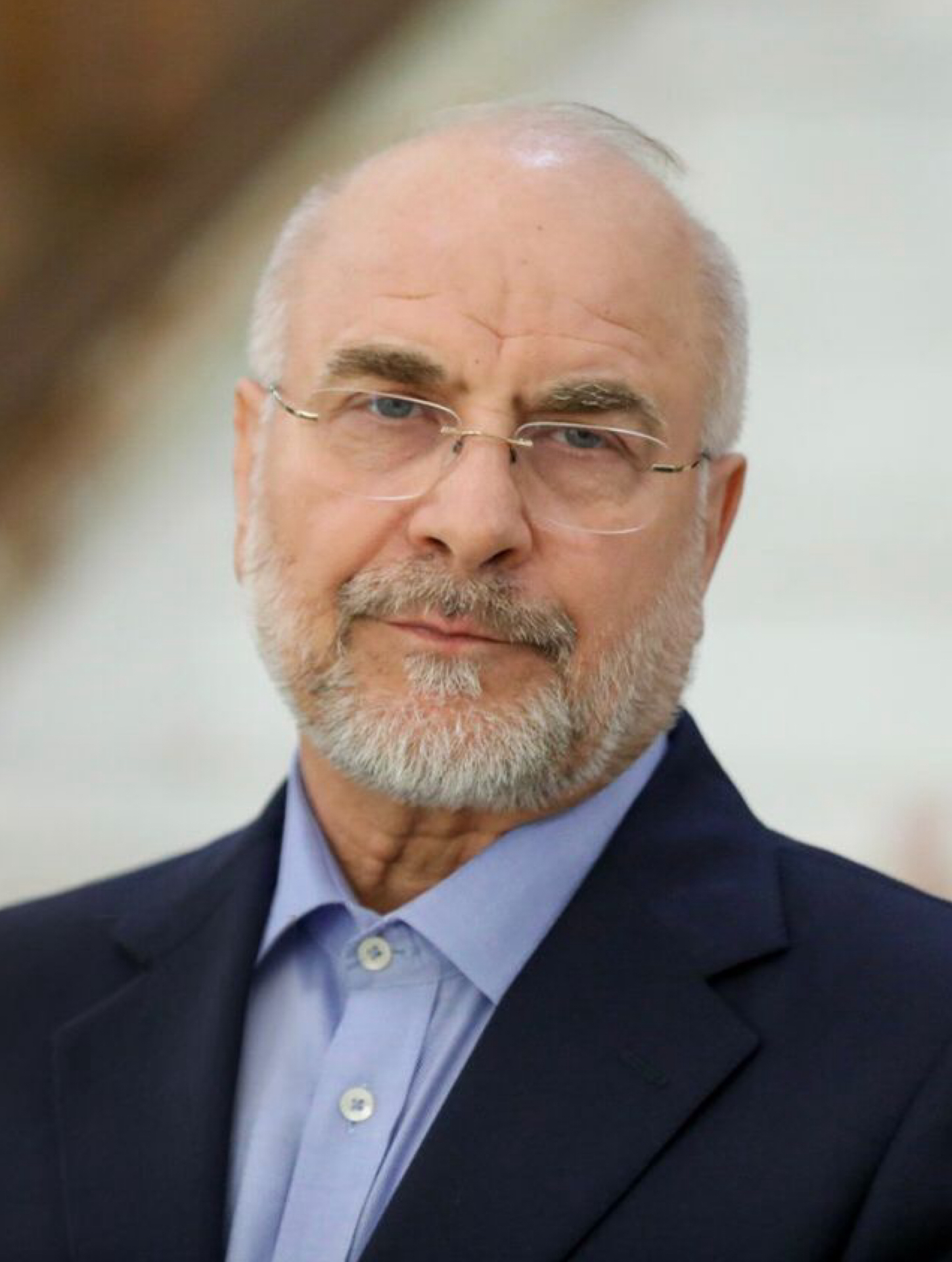
TEHRAN — Iran’s Parliament Speaker Mohammad Bagher Ghalibaf declared on April 17 that all seven claims President Donald Trump made about a near-complete nuclear deal with Iran were “false,” warned that the Strait of Hormuz would not remain open if the US naval blockade continued, and in doing so demolished in a single evening the oil-price crash that Trump’s earlier triumphalism had engineered that same morning. The statement, posted to X and amplified on Iranian state television, came hours after Iran’s own Foreign Minister Abbas Araghchi had declared Hormuz “completely open for the remaining period of ceasefire” — a declaration that had already sent Brent crude plummeting more than 10% to around $88 a barrel, according to CNBC and BNN Bloomberg.
Ghalibaf’s intervention matters not because parliamentary speakers routinely move commodity markets, but because this particular speaker commanded the IRGC Aerospace Force from 1997 to 2000, sits on the Supreme National Security Council, led Iran’s 71-member delegation to the Islamabad talks on April 11-12, and — with Supreme Leader Mojtaba Khamenei still absent from public view — functions as what Gulf News on April 17 called “the most visible power broker in Tehran.” His denial was aimed simultaneously at three audiences: at Trump, whose CBS interview claim that Iran had “agreed to everything” required a public rebuttal before it calcified into diplomatic fact; at Iranian hardliners, who needed assurance that no secret concessions had been made; and at Saudi Arabia, whose entire export-recovery calculus depends on whether Hormuz stays open past April 22, when the ceasefire expires.
What Did Ghalibaf Actually Deny?
“The President of the United States made seven claims in one hour, all seven of which were false,” Ghalibaf wrote, per Iran International and Middle East Eye. “They did not win the war with these lies, and they will certainly not get anywhere in negotiations either.” No Iranian outlet and no Western wire service enumerated the seven as a discrete list — Ghalibaf’s count appears to be a rhetorical device applied to a cluster of Trump statements made across CBS, NBC, Fox News, and Truth Social within a compressed window on April 17, and the architecture of the denials only becomes visible when each Trump claim is set against the Iranian response that followed it.
The most explosive was uranium. Trump told CBS News that Iran had “agreed to give us back the nuclear dust,” describing a scenario in which American and Iranian teams would “go down and start excavating with big machinery” and transport enriched material to the United States. Foreign Ministry spokesman Esmaeil Baqaei’s response, delivered on Iranian state television and carried by RNZ and ABC News, was unambiguous: “Iran’s enriched uranium is not going to be transferred anywhere under any circumstances. Transferring uranium to the United States has not been an option for us.” Araghchi had already framed the enrichment question in language designed to foreclose the entire category, telling Al Jazeera that enriched uranium is “as sacred to us as Iranian soil and will not be transferred anywhere.”
On enrichment itself, the gap between the two sides is structural rather than tactical — Trump claimed Iran had “agreed to stop enriching uranium forever,” while US negotiators in Islamabad had proposed a 20-year moratorium and Iran had countered with a monitored three-to-five-year pause, according to Axios. On Hormuz, Trump posted to Truth Social in capital letters — “IRAN HAS JUST ANNOUNCED THAT THE STRAIT OF IRAN IS FULLY OPEN AND READY FOR FULL PASSAGE. THANK YOU!” — seizing on Araghchi’s morning statement while ignoring the critical qualifier embedded in it: open “for the remaining period of ceasefire,” which expires in five days. On a broader deal, Trump told reporters “we’re very close” and that Iran had “agreed to almost everything,” a characterization that a senior Iranian official directly contradicted to Al Jazeera: “No agreement has been reached on the details of the nuclear issues.”
Baqaei’s framing of the entire episode was the most revealing line of the day. Trump’s claims, the spokesman said, were “part of a media campaign that has been launched to influence the negotiators and the negotiating table” — language that positions the denials not as diplomatic messaging but as a direct accusation that the American president was attempting to lock Iran into concessions it had not made by announcing them publicly before the next round of talks in Islamabad, scheduled for Monday, April 20, according to CNN.
The Middle East briefing 3,000+ readers start their day with.
One email. Every weekday morning. Free.
The Twelve-Hour Hormuz Reversal
The sequence on April 17 followed a pattern that has now repeated often enough to constitute a playbook, and understanding its mechanics requires tracking three separate Iranian voices issuing three contradictory Hormuz positions within a single day. Araghchi, the foreign minister, opened the morning by declaring that “passage for all commercial vessels through the Strait of Hormuz is declared completely open for the remaining period of ceasefire,” per Al Jazeera — a statement that appeared to represent a genuine diplomatic concession and that markets treated as such, with Brent crude falling more than 10% to around $86-89 per barrel, the largest single-day drop in six weeks, according to CNBC.
By evening, Ghalibaf had reversed the signal entirely. “With the continuation of the blockade, the Strait of Hormuz will not remain open,” he wrote, adding the line that will likely define the day’s coverage: “Whether the strait remains open or closed will be determined by the field, not by social media.” The word “field” — a military term in Persian political discourse — was not accidental, and it pointed directly at the third voice that spoke on April 17: the IRGC Navy itself, which issued a formal order requiring “explicit authorization of the IRGC’s naval forces” for all vessel transits through Hormuz via “routes designated by Iran,” per PressTV. Military vessel transit, the order specified, remains “strictly prohibited.” That formal IRGC order — issued the same day Araghchi declared Hormuz “completely open” — is documented in full in IRGC Reversed Iran’s Own Foreign Minister on Hormuz Within Hours, Restoring ‘Strict Control’.
This is not a case of mixed messaging or bureaucratic incoherence — it is the documented pattern of Iran’s fractured authority structure producing simultaneous and contradictory signals through channels that serve different institutional masters. Araghchi reports to President Masoud Pezeshkian, who has publicly accused IRGC commanders Ali Abdollahi and Ali Akbar Ahmadian of sabotaging the Islamabad talks. The IRGC Navy reports, under Article 110 of the Iranian constitution, to the Supreme Leader — who has not appeared publicly since assuming the position. Ghalibaf sits on the SNSC and has operational relationships with both chains of command, having built the IRGC’s missile infrastructure and later served as police chief under the civilian government.
Who Actually Controls the Strait?
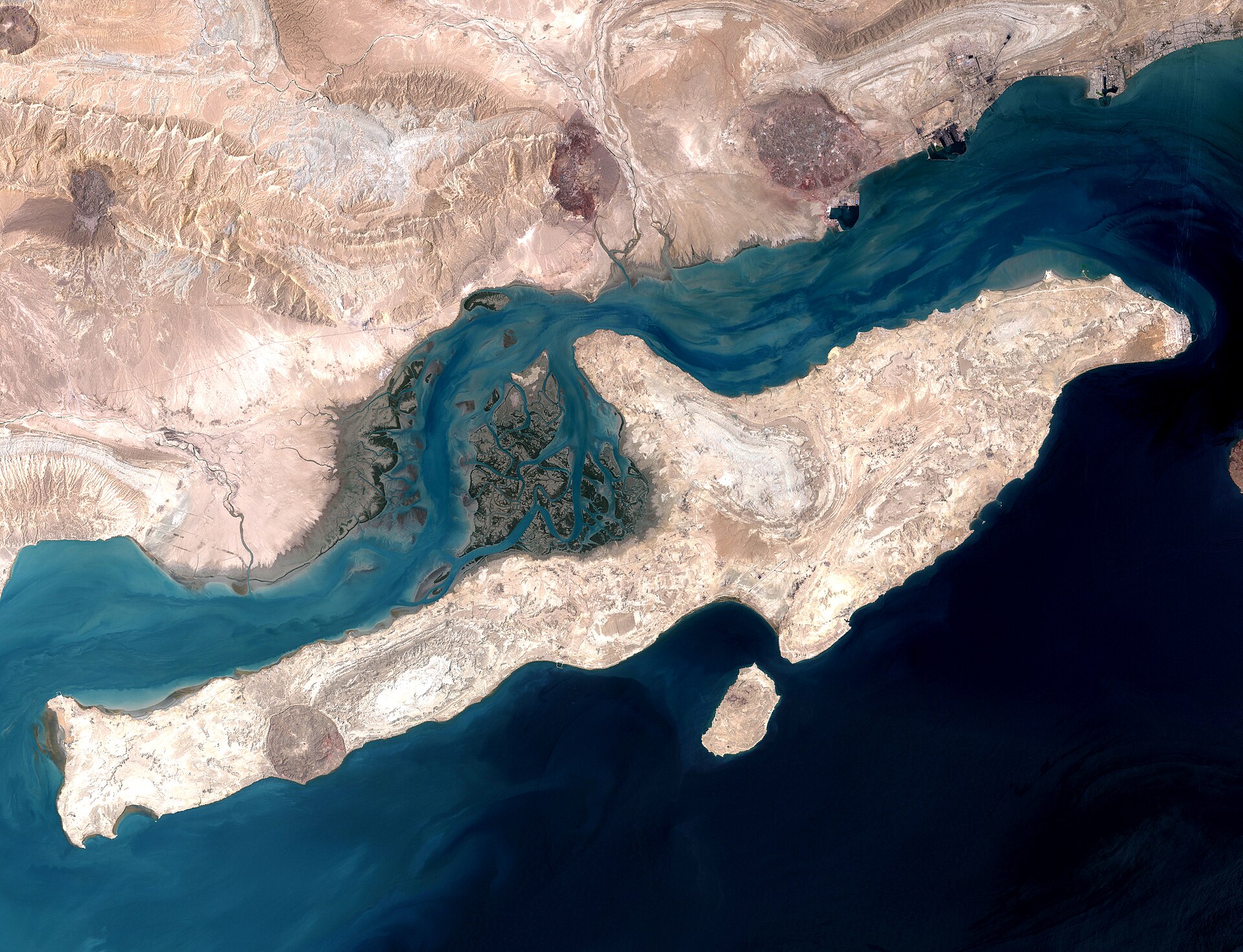
The operational answer is the IRGC Navy, and it has been since at least April 5, when it declared “full authority to manage the Strait” and published a chart redirecting commercial vessels from standard shipping lanes — marked as a “danger zone” — into a five-nautical-mile corridor between Qeshm and Larak islands, inside Iranian territorial waters. The April 17 formalization of “explicit authorization required” is an extension of that order, not a new policy, and it functionally supersedes Araghchi’s “completely open” declaration regardless of what the foreign ministry intended. Analyst Farzan Sabet cautioned against reading too much into Ghalibaf’s authority alone, telling Malay Mail that “we shouldn’t overstate the extent to which he’s in the driver’s seat: he still answers to higher powers in Tehran” — but the problem is precisely that those higher powers have not spoken.
Ghalibaf’s institutional biography makes his Hormuz threat more than rhetorical. His former deputy at the IRGC Aerospace Force, Ali Abdollahi, now heads Khatam al-Anbiya, the IRGC engineering command that maintains the physical infrastructure for Hormuz closure — the fast-attack boat bases, the mine-laying capability, the anti-ship missile batteries along the Iranian coastline. When Ghalibaf says the strait’s status “will be determined by the field,” he is referring to a field he personally built and staffed with officers who remain in command two decades later. The mine-clearance challenge alone, based on the 1991 Kuwait benchmark, would require approximately 51 days to clear 200 square miles — and the four Avenger-class mine countermeasure ships that were based in Bahrain were decommissioned in September 2025.
The authorization ceiling that HoS has tracked since the war began — the structural gap between what Iran’s civilian government can promise and what the IRGC will actually do — is now the single most consequential variable in global energy markets. Yezid Sayigh, an expert quoted by Al Jazeera, characterized Trump’s claims as “hyperbole” and said “negotiations remain at preliminary stages with outstanding questions.” Iran’s institutional response was to have three different power centers issue three different answers about the most important waterway on earth within twelve hours.
Oil Markets and the Counter-Signal Playbook
Ghalibaf has done this before, and the market memory of the prior episode is part of what makes the current one so effective. In an earlier round of Trump deal claims — which Ghalibaf called “fake news intended to manipulate financial and oil markets and to escape the quagmire in which America and Israel are trapped” — his counter-signal triggered what NBC News and Drop Site News reported as a roughly $3 trillion swing in S&P 500 market capitalization within 56 minutes. The April 17 sequence follows the identical structure: Trump announces progress, markets rally (or in this case oil crashes), Ghalibaf denies everything, and the price action reverses.
The oil mathematics on April 17 were particularly brutal. Brent crude had been trading near $100 on April 16, driven by the US naval blockade effective since April 13 — which, per a Pentagon press conference by General Caine on April 16, had already deterred 13 ships from approaching Iranian ports. Araghchi’s morning declaration of Hormuz “completely open” collapsed that premium in hours, sending Brent to approximately $86-89 and WTI to around $83-84, according to CNBC and BNN Bloomberg. Ghalibaf’s evening reversal did not fully restore the prior price, but it re-injected the uncertainty premium that Araghchi’s statement had briefly removed — and uncertainty, in a market already processing a war, a blockade, and a ceasefire expiring in five days, is itself a pricing input worth billions.
The damage to Saudi Arabia’s pricing architecture is already done, regardless of which Iranian voice prevails. Aramco’s May Official Selling Price to Asian buyers was set at a record premium of +$19.50 per barrel for Arab Light when Brent was trading near $109, per CNBC and HoS reporting. With Brent now oscillating between $86 and $90, that premium sits approximately $15-20 above spot — a gap that will force a massive repricing of the June OSP around May 5. The Goldman Sachs projection of a Saudi deficit between $80 billion and $90 billion, versus the official forecast of $44 billion, was calculated at $97 Brent. At $88, the arithmetic gets worse.
What Does Saudi Arabia Lose if Ghalibaf Prevails?
The Saudi exposure matrix if Ghalibaf’s framing — blockade continues, Hormuz closes — becomes operative before April 22 runs across five dimensions simultaneously, and none of them are hypothetical because each is already partially in effect. The Yanbu bypass via the East-West Pipeline, which Saudi Arabia activated after the IRGC struck a pumping station on April 8, provides an export ceiling of between 5 and 5.9 million barrels per day against a pre-war Hormuz throughput of roughly 7 million bpd — a structural gap of 1.1 to 2 million bpd that cannot be closed by pipeline capacity alone and that becomes permanent if Hormuz remains under IRGC “authorization required” protocols.
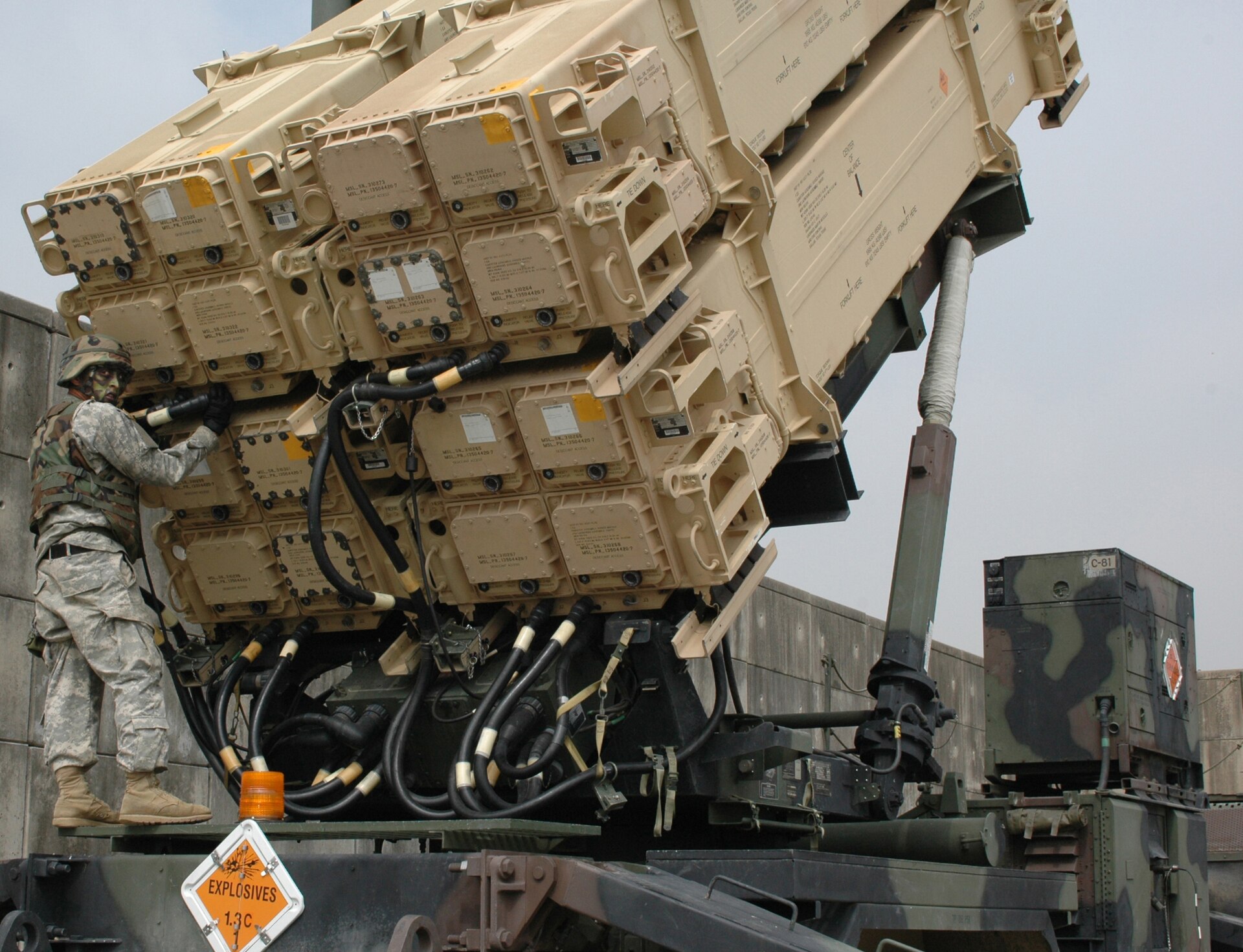
The defense picture is equally constrained. Saudi Arabia’s PAC-3 MSE interceptor stockpile stands at approximately 400 rounds — roughly 14% of the pre-war inventory of 2,800, per HoS reporting — and the Lockheed Martin production line in Camden, Arkansas produces 620 per year, meaning full replenishment would take more than three years even if every unit produced were diverted to Riyadh. The ceasefire’s expiration on April 22 removes the political constraint on Iranian targeting of Saudi infrastructure, and the convergence with Hajj — India’s first batch of 371 pilgrims departed Delhi on April 18 per ANI, with Indonesia’s 221,000-strong contingent scheduled to begin arriving on April 22 itself — means that Saudi Arabia must simultaneously defend 1.2 million pilgrims and its remaining oil export infrastructure with an interceptor inventory that has already been depleted by 86%.
The fiscal arithmetic, already stressed, is approaching a threshold where the gap between official projections and war-adjusted reality becomes politically unsustainable. At current Brent prices of $88-90, every dollar below the Saudi fiscal breakeven of $108-111 per barrel (Bloomberg’s PIF-inclusive estimate) widens the deficit by approximately $3-4 billion annually. The Goldman war-adjusted projection of an $80-90 billion deficit was modeled at $97 Brent — at $88, the number moves toward the higher end of that range, and Miad Maleki of the Foundation for Defense of Democracies estimated via CFR that Iran itself would lose $13 billion per month if the blockade is fully enforced, a figure that establishes the scale of economic pressure on both sides of the strait but says nothing about which side will blink first.
Five Days to April 22
The next round of US-Iran talks is scheduled for Monday, April 20 in Pakistan, per CNN and Al Jazeera, which gives negotiators exactly two working days before the ceasefire expires — and the Islamabad Accord contains no extension mechanism, meaning that any continuation requires a new agreement rather than a simple rollover. The Makkah cordon sealed on April 18, Umrah visas are suspended through May 31, and the Day of Arafah falls on May 26 — a 34-day window during which Saudi Arabia’s identity as Custodian of the Two Holy Mosques becomes an operational vulnerability rather than a diplomatic asset, because Iran has zero Hajj pilgrims this year and therefore zero incentive to treat the holy cities as protected.
Trump’s financial offer — which Axios reported on April 17 as a potential $20 billion release of frozen Iranian assets — was publicly denied by the president himself, who told reporters “we are not paying 10 cents,” creating yet another contradiction between the American negotiating position as reported by diplomatic sources and the American negotiating position as stated by the president on camera. The gap between the two is the space in which Ghalibaf operates, and his accusation that Trump’s public claims are designed to “manipulate financial and oil markets” carries a specific and verifiable charge: that the Araghchi morning announcement, followed by Trump’s amplification, followed by the Brent crash, followed by Ghalibaf’s reversal, constitutes a pattern of market-moving disinformation that benefits American consumers at the direct expense of Gulf exporters.
Whether that charge is accurate or merely convenient is less important than what happens on the water. The IRGC Navy’s “explicit authorization required” order remains in effect, Araghchi’s “completely open” declaration has no enforcement mechanism, and the authorization ceiling that has defined this war since its first week means that the only person who can resolve the contradiction between Iran’s foreign minister and Iran’s parliament speaker is a supreme leader who has not been seen in public since taking office. On April 20, negotiators will sit in Islamabad with 48 hours left on a ceasefire, a blockade that Iran says must end, a Hormuz transit regime that depends on which Iranian institution you ask, and seven claims that the speaker of the Iranian parliament has called lies. The 13 ships that General Caine said the blockade had already deterred are not waiting for the diplomats to sort it out.
FAQ
What is Ghalibaf’s military background and why does it matter for Hormuz threats?
Ghalibaf commanded the IRGC Aerospace Force from 1997 to 2000, during which he oversaw construction of Iran’s underground “missile cities” — hardened facilities for ballistic missile storage and launch. His former deputy from that era, Ali Abdollahi, now heads Khatam al-Anbiya, the IRGC engineering command responsible for maintaining the physical infrastructure that would execute a Hormuz closure, including fast-attack boat bases, mine-laying assets, and coastal anti-ship missile batteries. When he references “the field,” he is invoking a command structure he personally built and whose senior officers he personally appointed.
How does Iran’s blockade loss compare to its war costs?
Miad Maleki, a former US Treasury sanctions expert now at the Foundation for Defense of Democracies, estimated via CFR that full enforcement of the US blockade would cost Iran $13 billion per month in lost revenue. Iran’s entire annual military budget, funded primarily through oil revenue, is approximately $12.4 billion — meaning one month of effective blockade enforcement would exceed a full year of military spending.
What happens to Aramco’s pricing if Brent stays at $88?
Aramco must set its June Official Selling Price around May 5. The May OSP was anchored at a +$19.50 per barrel premium for Arab Light to Asia, set when Brent traded near $109. With Brent at $88-90, that premium is $15-20 above the spot market — a gap that Asian refiners have already flagged as unsustainable. A June OSP correction to reflect current spot prices would represent the largest single-month repricing reset since the war began and would directly reduce Saudi per-barrel revenue at a time when production has already fallen 30%, from 10.4 million bpd in February to 7.25 million bpd in March, according to the IEA.
Could the ceasefire be extended past April 22?
The Islamabad Accord, brokered by Pakistan, contains no formal extension clause. Any continuation requires a new agreement — and the structural barriers are formidable. Ahmad Zolghadr, who was part of Iran’s Islamabad delegation, is personally sanctioned, which complicates his participation in any renewal negotiation. Pakistan’s army chief Munir, who served as the primary communication relay between the US and Iran during the initial ceasefire, has positioned Pakistan as enforcer of an agreement whose terms Pakistan cannot independently verify or adjudicate. The next talks are scheduled for April 20 in Islamabad, leaving 48 hours before expiry — a window that assumes both sides arrive with authorization to extend, which Ghalibaf’s public denial of all deal terms makes considerably less likely.
Why did Araghchi and Ghalibaf issue contradictory Hormuz statements on the same day?
They represent different institutional power centers within Iran’s government. Araghchi reports to President Pezeshkian and the civilian foreign ministry apparatus. Ghalibaf sits on the Supreme National Security Council and has direct institutional ties to the IRGC through his military career. The IRGC Navy — which operationally controls the strait — reports under Article 110 to the Supreme Leader, not to either the foreign ministry or the parliament. In the absence of a functioning supreme leader issuing binding orders, each institution defaults to its own authority, producing contradictory public positions that reflect genuine disagreement rather than coordinated messaging.