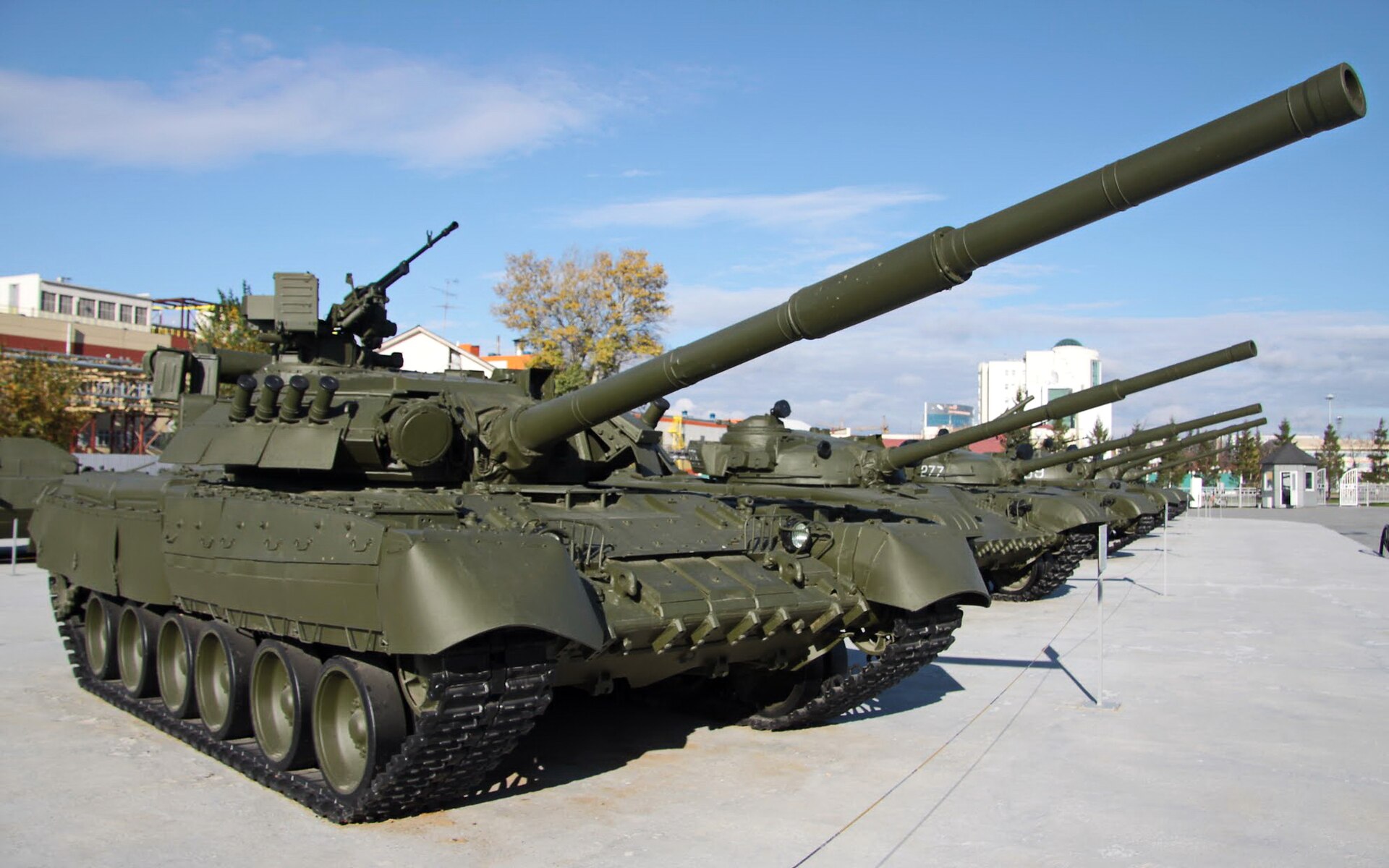

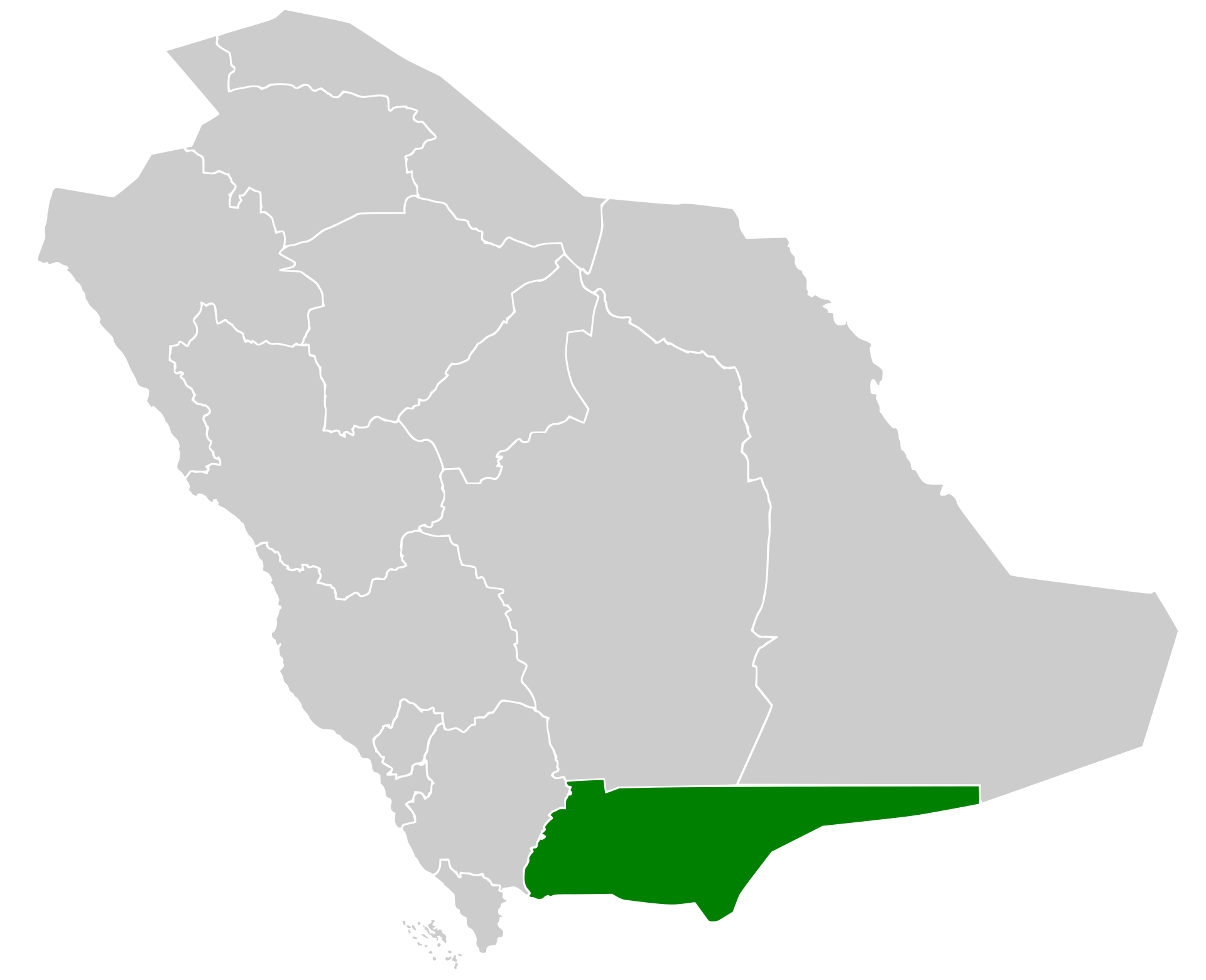
ISLAMABAD — Pakistan’s 25th Mechanised Division — 10,000 troops equipped with T-80UD main battle tanks, M109A2 self-propelled howitzers, and Talha armoured personnel carriers — has deployed to Saudi Arabia’s border with Yemen, positioning a full desert-warfare formation on the Jizan-Najran corridor where Houthi cross-border fire has killed and wounded thousands since 2015. The deployment, confirmed by The Week India on April 16 and corroborated by regional defence sources, transforms Pakistan from a symbolic air-base presence into a potential ground combatant on Saudi Arabia’s most active front — four days before the ceasefire it brokered is set to expire.
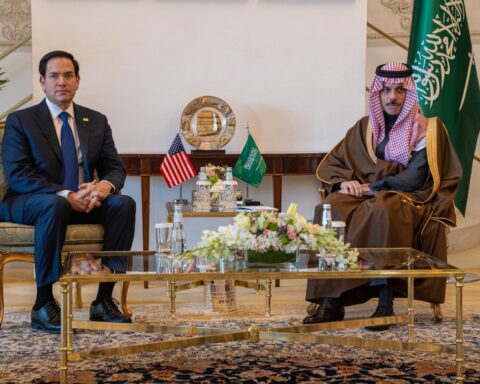
On the same day the deployment became public, Field Marshal Asim Munir was photographed inside IRGC’s Khatam al-Anbiya Central Headquarters in Tehran, sitting across from Major General Ali Abdollahi — the man who commands Iran’s offensive military operations. Araghchi posted a 15-second video of Munir’s “fraternal” arrival. Nobody in the room mentioned the tanks.
Table of Contents
The Charging Bull Goes to Arabia
The 25th Mechanised Division — nicknamed the “Charging Bull Division” — is based at Malir Cantonment under V Corps Karachi and exists for one purpose: desert mechanised warfare. Its deployment to Saudi Arabia constitutes the second phase of Pakistan’s activation of the Saudi-Pakistan Mutual Defence Agreement, signed at Al-Yamamah Palace on September 17, 2025, by Prime Minister Shehbaz Sharif and Crown Prince Mohammed bin Salman. The first phase, announced April 11, involved JF-17 fighter jets and a token air contingent — what Islamabad-based security analyst Imtiaz Gul dismissed as messaging. “Three jets won’t make much of a difference militarily,” Gul told Al Jazeera. “It’s messaging Tehran to be flexible in these talks.”
Ten thousand troops with tanks is not messaging. The force composition reported by The Week India includes two full brigades plus support elements, armed with Ukrainian-made T-80UD main battle tanks, up to two regiments of American-made M109A2 155mm self-propelled howitzers, and Pakistan’s indigenously produced Talha APCs. The T-80UD carries a 125mm smoothbore gun with an autoloader cycling 28 rounds, can fire 9M119M Reflex laser-guided anti-tank missiles at targets five kilometres away, and runs a 1,000-horsepower diesel engine rated to 55°C — built, in other words, for exactly the terrain south of Jizan in midsummer.
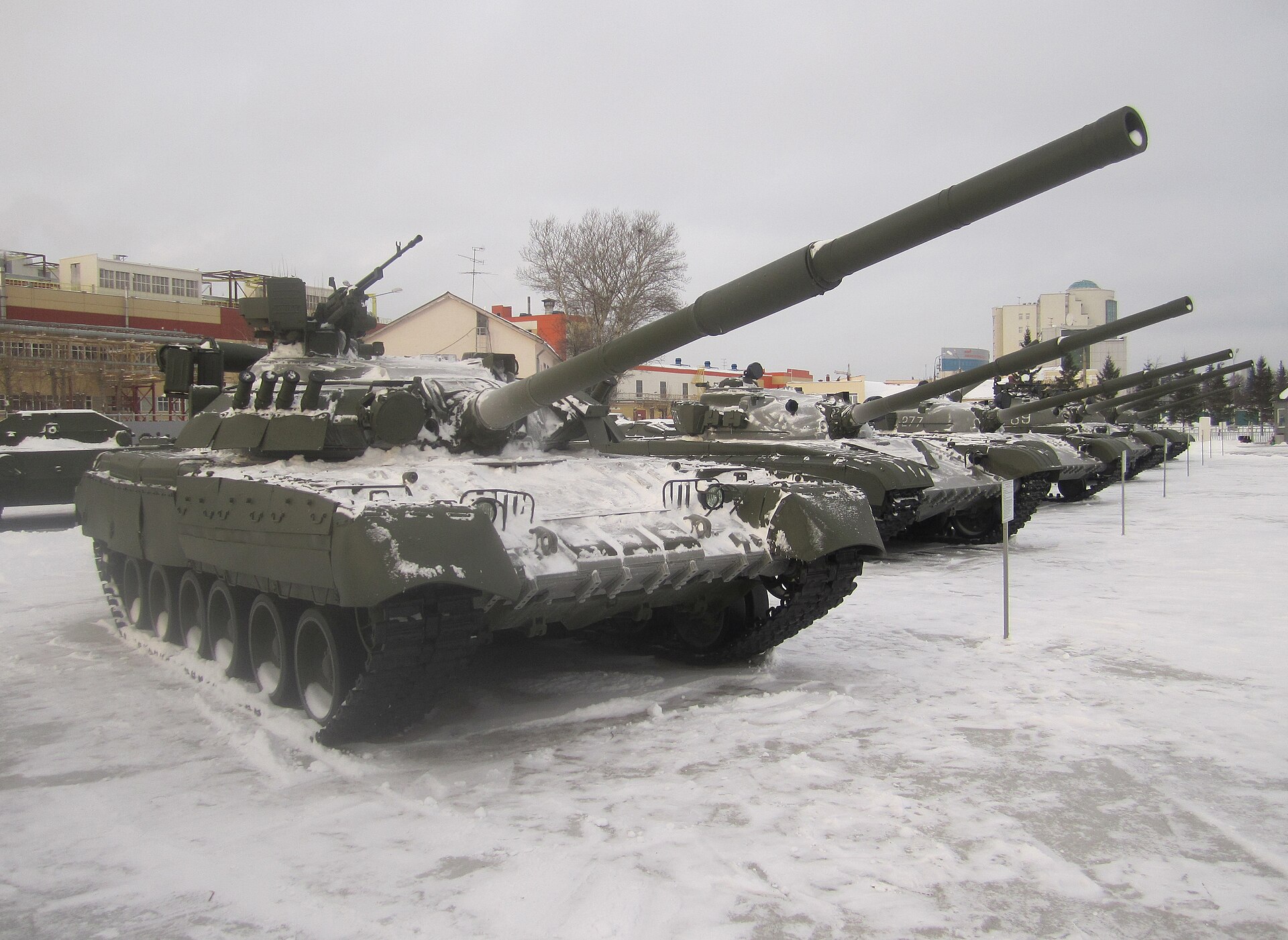
Pakistan acquired 320 T-80UDs from Ukraine between 1997 and 1999 in a $650 million deal — one of the last major arms transfers before Kyiv’s own military priorities consumed its entire tank production capacity. The M109A2 howitzers give the division indirect fire out to 20 kilometres with rocket-assisted projectiles at four rounds per minute, and the Talha carriers each haul 13 infantry soldiers at highway speed. This is not a trip-wire force or a training detachment. It is a mechanised division configured for offensive and defensive operations across open desert.
Retired Saudi Brigadier Faisal Alhamad told Al Jazeera the deployment is “a deterrence step more than preparation for an attack.” That framing may be accurate today. But deterrence forces and combat forces look identical until someone gives an order, and the 25th Division’s equipment is optimised for the exact fight the Jizan-Najran corridor would produce if the ceasefire collapses on April 22.
The Middle East briefing 3,000+ readers start their day with.
One email. Every weekday morning. Free.
Why the Jizan-Najran Corridor
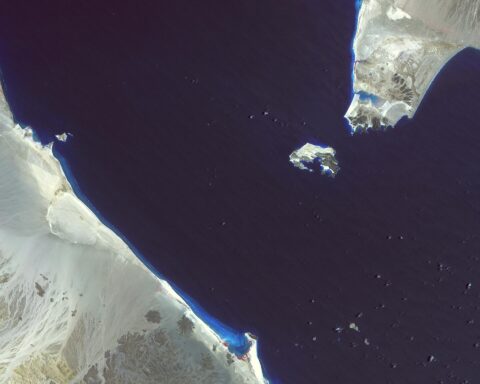
The geography dictates the deployment. Najran city sits 20 kilometres from the Yemeni border — close enough to fall within the range envelope of Houthi BM-27 Uragan 220mm multiple rocket launchers, which have hammered the city with more than 10,000 rocket and artillery rounds since the Saudi-led intervention began in 2015, according to Washington Institute and Carnegie Endowment tracking. Jizan, further west along the border, hosts a 400,000 barrel-per-day refinery that sits within range of Houthi short-range ballistic missiles. Both cities have been bleeding for a decade.
The Houthis entered the current Iran war on March 28, firing missiles at Israel “in support of the Islamic Republic,” CNN reported. Their cross-border capability against Saudi targets is older, more practised, and less dependent on Iranian supply chains than their Red Sea or Israel-targeting operations. A ceasefire collapse on April 22 would almost certainly reactivate this corridor, and Saudi Arabia’s own air defence stockpile — down 86% on PAC-3 MSE rounds after intercepting 894 incoming threats since March 3 — cannot absorb a simultaneous Houthi barrage from the south while managing Iranian volleys from the east.
Umer Karim of the King Faisal Center told Al Jazeera that Pakistan “is walking a tightrope.” The 25th Division’s deployment to this corridor suggests Islamabad has already decided which side of the rope it would land on if the wire snaps. The M109A2’s 20-kilometre range with rocket-assisted rounds can reach well into Yemeni territory from positions inside Saudi Arabia’s border zone — the first time since the Cold War-era deployments of the 1970s and 1980s, when 15,000 to 20,000 Pakistani troops were stationed in the Kingdom, that Pakistan has placed offensive ground firepower on Saudi soil.
Munir’s Two-Front Day
April 16, 2026 will be studied in staff colleges for years. On that single day, Pakistan’s most powerful man — Field Marshal Asim Munir, Chief of Defence Forces under the 27th Constitutional Amendment — sat inside the headquarters of the IRGC’s construction and military engineering arm with Major General Ali Abdollahi, while 10,000 of his troops were deploying tanks to the border of a country armed and directed by the IRGC’s closest proxy. Abdollahi told PressTV during the visit that “all the equipment we used in this war was domestically-manufactured by Iranian youth.” He did not mention the Pakistani armour arriving 2,000 kilometres to his southwest.
The visit was not accidental. Pakistan’s Foreign Minister Ishaq Dar had personally warned Iranian leaders in early March that Pakistan was bound by its SMDA obligations to Riyadh, while simultaneously securing from Tehran “guarantees that Saudi territory would not be used to attack it,” as Dar told Al Jazeera on April 11. Munir’s Tehran visit — building on Pakistan’s emergence as the ceasefire’s sole enforcement mechanism — was the diplomatic face of a country that was simultaneously moving T-80UD tanks into the war’s southern theatre.
Azeema Cheema of Verso Consulting framed the SMDA invocation as “the price of the significant restraint shown by the Saudis.” That price is now denominated in main battle tanks. Michael Kugelman of the Wilson Center characterised the broader deployment as “a bit of a risky gambit,” warning that if Iran refuses concessions and conflict resumes, “Pakistan could move itself closer to Saudi Arabia and conceivably invoke the mutual defence pact.” The 25th Division’s positioning suggests the invocation has already moved from hypothetical to operational.
What Happened to the Parliamentary Vote?
On April 10, 2015, Pakistan’s parliament voted unanimously — every party, every bloc, no abstentions — to remain neutral in Yemen. The resolution specifically rejected Saudi Arabia’s request for warplanes, naval ships, and ground troops. Iranian Foreign Minister Zarif had visited Islamabad days before the vote to lobby against intervention. The result was unambiguous: Pakistan would not fight in Yemen.
Eleven years later, Pakistani tanks are on the Yemeni border and parliament was never asked. The mechanism that made this possible has a name: the 27th Constitutional Amendment, passed November 13, 2025, which created the post of Chief of Defence Forces and concentrated all major defence decisions — including SMDA activation — in Munir’s hands rather than in those of the elected government. The SMDA itself was never formally presented to parliament. Prime Minister Shehbaz Sharif declared that Pakistan would stand “shoulder to shoulder” with Saudi Arabia, but the constitutional architecture means the decision to deploy the 25th Division required exactly one man’s signature.
The legal evolution tells the story in compressed form. A 1982 military protocol governed the Cold War-era deployments. A 2005 Military Cooperation Agreement updated the framework. A 2021 amendment, leaked by Dropsite News, added the clause that matters: “The second party is obligated to send its forces to the Kingdom of Saudi Arabia upon a request.” The 2025 SMDA elevated the obligation to mutual-defence-pact level, and the 27th Amendment removed the only democratic check on its activation. Each step was individually defensible. Taken together, they built a pipeline from a Saudi phone call to Pakistani tanks on the border without a single parliamentary debate.
Sina Azodi of George Washington University argued in Al Jazeera that the Saudi-Pakistan partnership “targets Israel more than Iran” and that religious and ethnic ties would prevent Pakistan from jeopardising its Iran relationship. That analysis may apply to the air deployment. It sits less comfortably alongside a mechanised division positioned to engage Houthi forces that Iran arms, funds, and — since March 28 — has publicly integrated into its war strategy.
The Clause That Doesn’t Exist
The Islamabad ceasefire framework, brokered by Pakistan and signed by Iran and Saudi Arabia, contains no provision governing Pakistani ground forces on Saudi territory. This is not an oversight that can be patched with a side letter. The framework addresses missile and drone attacks, aerial bombardment, and naval restrictions in the Strait of Hormuz. It does not address — because at the time of drafting, it did not need to address — the possibility that the mediating country would deploy a mechanised division to one party’s border with a proxy of the other party.
The Houthis are not signatories to the ceasefire. They have never acknowledged the SMDA. The framework contains no mechanism for incorporating non-state armed groups, and no clause defining what constitutes a violation by forces that are not covered by its terms. If the 25th Division engages Houthi forces after April 22 — or before, if the Houthis strike first — the engagement falls entirely outside the ceasefire’s legal architecture. Pakistan would be simultaneously the guarantor of a peace agreement and a combatant in a theatre that the agreement does not govern.
The $3 billion Saudi loan rollover and $5 billion investment package expedited on April 11 — the same day the air deployment was announced — makes the financial architecture of the relationship visible. Pakistan’s fiscal dependence on Saudi capital is not new, but the speed of the disbursement alongside military activation compresses what was previously a slow-moving patronage relationship into something that looks more like a contract for services. The $5 billion loan matures in June 2026 — eight weeks after the ceasefire expires.
Why Haven’t the Houthis Responded?
As of April 18, no verified Houthi or Ansarullah statement addresses the 25th Mechanised Division’s deployment. Houthi leader Abdul Malik al-Houthi’s most recent public posture, from April 13, was directed at the broader conflict: “As long as the aggression continues, our military capabilities will grow and develop.” He did not mention Pakistan. Dawn.com published a fact-check debunking a viral video that claimed to show a Houthi official threatening Pakistan after the SMDA signing — the video was fabricated.
The silence is itself a data point. Iran continued to engage Munir as a trusted mediator on April 15-16 despite the deployment — Araghchi’s “fraternal” arrival video was posted hours after The Week India’s report on the 25th Division. The most plausible reading is that both Tehran and the Houthis have calculated that confronting Pakistan publicly over the deployment would collapse the only functional ceasefire channel four days before its expiry. As long as the tanks sit on the border without firing, they can be diplomatically ignored. The question is what happens on April 23 if the ceasefire is not renewed — and the tanks are still there.
The Hajj security cordon sealed on April 18, placing 1.2 to 1.5 million pilgrims inside Saudi Arabia’s most sensitive protected zone. The 25th Division’s southern deployment means Saudi Arabia now has a dedicated ground force on its Yemen flank while its own air defence assets concentrate on protecting the Hajj corridor and the export infrastructure that the IRGC Navy’s “full authority” declaration over Hormuz has not yet managed to shut down entirely. Pakistan is filling a gap that Saudi Arabia’s own force structure — stretched across a 1,300-kilometre eastern front and a 1,800-kilometre southern border — cannot cover alone.
Background
The Iran-Saudi war, now in its 50th day, has produced the largest disruption to global oil supply on record according to the IEA. Saudi March production fell to 7.25 million barrels per day from February’s 10.4 million — a 30% crash. The ceasefire, brokered in Islamabad and set to expire April 22, has no extension mechanism and its enforcement depends entirely on Pakistan, a country that is now both mediator and combatant.
Saudi Arabia formally invoked the SMDA on approximately March 7, 2026, following Iranian strikes on Ras Tanura and Prince Sultan Air Base. The core clause — “any aggression against either country shall be considered an aggression against both” — echoes NATO’s Article 5 but without the multilateral infrastructure, verification mechanisms, or parliamentary ratification that Article 5 requires. The 2021 amendment to the bilateral agreement, leaked by Dropsite News, left no room for a second parliamentary debate: “The second party is obligated to send its forces to the Kingdom of Saudi Arabia upon a request.”
Frequently Asked Questions
Has Pakistan deployed ground troops to Saudi Arabia before?
Yes. Between 15,000 and 20,000 Pakistani troops were stationed in Saudi Arabia during the 1970s and 1980s under a protocol signed December 14, 1982. Pakistani troops also trained Saudi National Guard units. The current deployment is the first since that Cold War-era presence and the first to involve mechanised armour positioned on an active conflict border.
Can the T-80UD operate effectively in Gulf summer conditions?
The T-80UD uses a 6TD-1 diesel engine rather than the gas-turbine fitted to Russia’s T-80U variant. The diesel is rated for sustained operation at 55°C and was a key selling point for Ukraine’s export programme to hot-climate militaries. Pakistan’s 25th Mechanised Division has trained with the platform in Sindh’s desert conditions, which approximate the Jizan-Najran corridor’s climate profile. The tank’s Kontakt-5 explosive reactive armour provides protection against tandem-warhead anti-tank missiles of the type found in Houthi inventories.
Could the Houthis target Pakistani forces specifically?
Pakistani forces positioned in the Jizan-Najran corridor would fall within the same threat envelope that has produced over 10,000 cross-border strikes on Najran since 2015, including short-range ballistic missiles that have struck Jizan’s refinery complex. Any Pakistani casualties would trigger the SMDA’s mutual-defence clause in reverse — Saudi Arabia would be obligated to treat an attack on Pakistani forces as an attack on its own.
What is Khatam al-Anbiya and why does Munir’s visit there matter?
Khatam al-Anbiya Central Headquarters is the IRGC’s construction, engineering, and operational command centre, headed by Major General Ali Abdollahi. It manages major military infrastructure projects and has been linked to Iran’s missile programme. Munir’s visit there on the same day as the 25th Division’s deployment report means Pakistan’s top military commander was inside the headquarters of the organisation whose proxy forces his own troops are now positioned to engage. The IRGC made no public comment on the deployment during or after the visit.
Does Pakistan’s deployment violate the ceasefire?
The ceasefire framework does not address troop deployments by third parties — it governs missile, drone, and aerial attacks between Iran and Saudi Arabia. The Houthis are not parties to the ceasefire. Pakistan’s deployment therefore falls into a legal grey zone: it does not technically violate the agreement’s terms because the agreement does not contemplate it. Whether the deployment undermines the ceasefire’s spirit is a different question, and one that Tehran and the Houthis have so far declined to answer publicly.