Changed: True
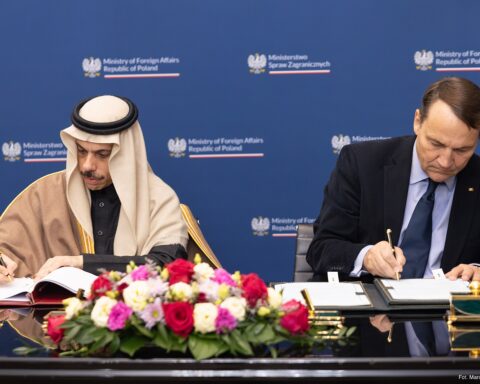
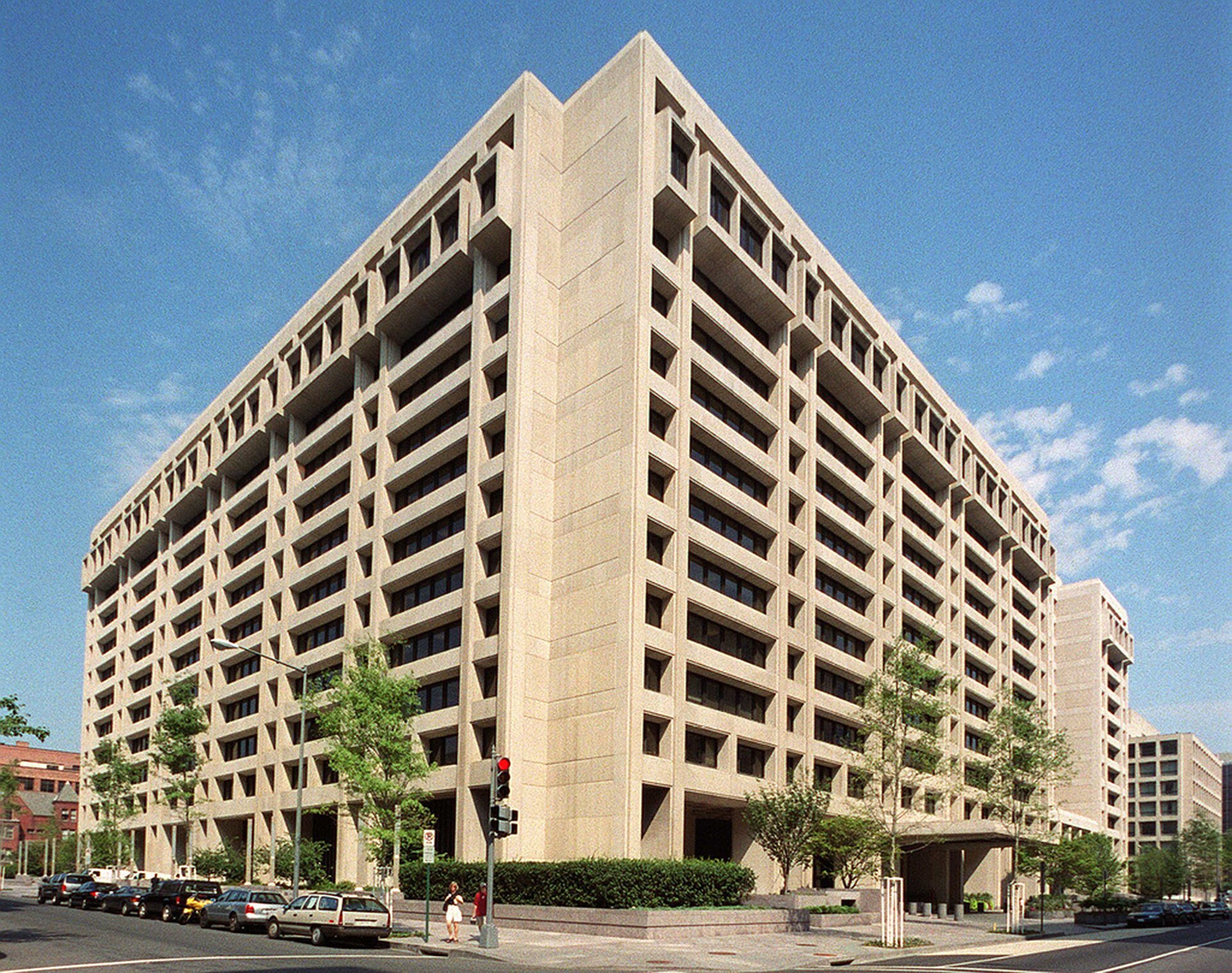
WASHINGTON — Saudi Arabia’s Fund for Development signed a $3 billion deposit rollover with the State Bank of Pakistan on April 17 at the IMF/World Bank Spring Meetings — five days before the Iran ceasefire expires and four days after the kingdom wired the first $2 billion tranche to Islamabad’s central bank. The agreement, executed by SFD CEO Sultan bin Abdulrahman Al-Marshad and SBP Governor Jameel Ahmad in the presence of Finance Minister Muhammad Aurangzeb, extends a deposit first placed in December 2021 through the end of 2026, the sixth consecutive annual rollover of a facility that now functions less as a foreign reserve instrument and more as a retainer for Pakistan’s continued availability as Saudi Arabia’s ceasefire intermediary, military auxiliary, and diplomatic shield.
The timing makes the transaction impossible to read as routine. Field Marshal Asim Munir was in Tehran approximately 48 hours before the signing, meeting Iranian FM Abbas Araghchi as part of what Pakistani officials describe as enforcement consultations for a ceasefire that has no enforcement clause. Prime Minister Shehbaz Sharif was in Riyadh meeting Crown Prince Mohammed bin Salman on April 16. And Aurangzeb himself was in Washington finalizing the very deposit that makes Pakistan’s IMF program arithmetically viable. All three tracks converged on the same question: whether Pakistan can remain neutral while financially captive.
That Tehran visit carried a second mandate. Munir departed for Washington carrying Iran’s in-principle agreement to a four-country nuclear monitoring framework — transforming Pakistan from ceasefire enforcer into Iran’s nuclear guarantor while Riyadh’s $11 billion kept the arrangement solvent. The full anatomy of Pakistan’s dual function and Saudi Arabia’s exclusion from the nuclear track is here.
Table of Contents
The Deposit and What It Replaced
The $3 billion Saudi Fund for Development deposit was first placed with the State Bank of Pakistan in December 2021, during the tail end of the Imran Khan government, as part of a broader Saudi financial support package designed to stabilize Pakistan’s reserves during a balance-of-payments crisis. It has been rolled over every December since — 2022, 2023, 2024, 2025 — each time as a 12-month extension with no public conditions attached. The April 17 signing in Washington breaks two patterns simultaneously: it is the first rollover conducted outside Pakistan, and the first executed while Pakistani troops are operationally deployed on Saudi soil under the Saudi-Pakistan Mutual Defense Agreement.
But the $3 billion is only one component of the package signed or confirmed in the same week. According to Pakistan’s State Bank and multiple Pakistani financial outlets, the full structure includes: the $2 billion already wired to SBP on April 15, before the formal signing ceremony; an additional $1 billion tranche expected within days; and — the structural shift — the conversion of an existing $5 billion Saudi deposit facility from annual rollover to a fixed three-year term extending to 2028. That last change is the one that matters most, because it eliminates the annual pressure point that gave Riyadh maximum optionality while giving Pakistan the appearance of long-term stability. The $5 billion no longer expires every December. It expires once, in 2028, and by then Pakistan’s military obligations under the SMDA will have reshaped the relationship beyond recognition.
The Middle East briefing 3,000+ readers start their day with.
One email. Every weekday morning. Free.
Can Pakistan Afford to Say No?
Pakistan’s foreign exchange reserves stood at approximately $16.4 billion before the Saudi deposits landed, according to Pakistan Today. Saudi deposits alone — combining the $5 billion facility, the $3 billion rollover, and the $1.2 billion Saudi oil facility — account for roughly $8 billion of that total, or close to half. Finance Minister Aurangzeb told the Express Tribune that Saudi support would “help reinforce foreign exchange reserves and strengthen the country’s external account,” a statement that reads as gratitude until you do the arithmetic: Pakistan is targeting $18 billion in reserves by fiscal year-end, and it cannot reach that number without money that arrives from Riyadh.
The IMF dependency makes the financial trap airtight. Pakistan reached a staff-level agreement on its Third Review under the Extended Fund Facility on March 27, unlocking approximately $1.2 billion in combined EFF and Resilience and Sustainability Facility disbursements expected in late April. The review’s quantitative performance criteria include a reserve floor that Pakistan can only meet with Saudi deposits in place. Strip out the Saudi money, and Pakistan fails its IMF targets — which triggers a program suspension, which closes the last remaining door to international capital markets for a country carrying $138 billion in total external debt and $92 billion in public external obligations. Riyadh does not need to threaten. The spreadsheet does the work.
Total Pakistani financial exposure to Saudi Arabia now sits at approximately $11.2 billion, according to The Friday Times — a figure that includes the $5 billion facility, the $3 billion deposit, the $1.2 billion oil facility, and operational costs associated with the SMDA deployment. For a country whose total reserves peaked at $18.4 billion after the latest Saudi injection, that exposure ratio is not dependency. It is denomination.
The UAE Exit and What It Signals
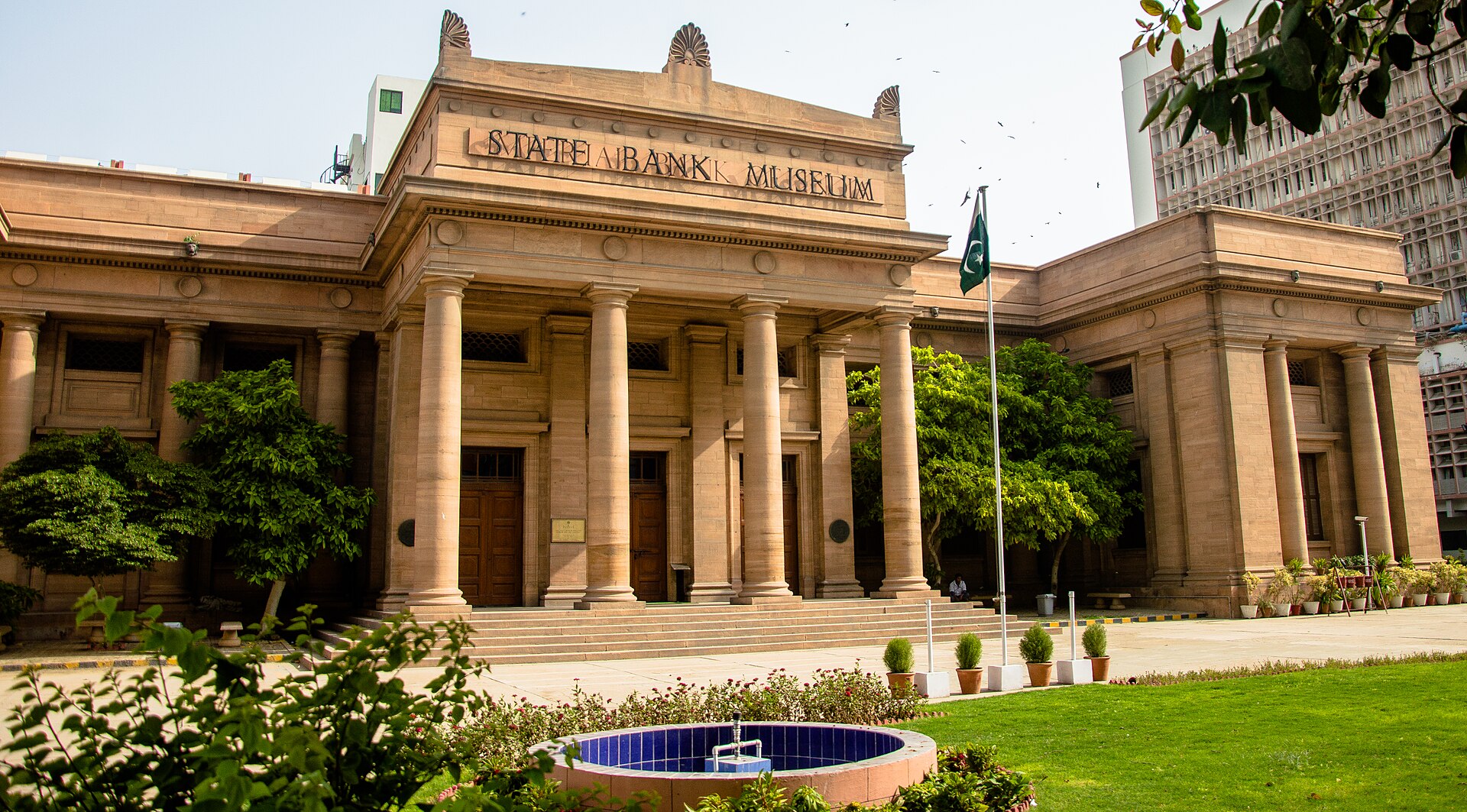
The Saudi deposit rollover did not occur in a vacuum. It landed the same week Pakistan is completing repayment of a $3.5 billion deposit from the United Arab Emirates — a facility that had been in place since approximately 1997 and that Abu Dhabi converted from annual rollovers to monthly rollovers in what multiple Pakistani financial outlets interpret as a coercive signal linked to Islamabad’s refusal to abandon its neutrality posture on Iran. The UAE interpretation is unconfirmed but politically live in Islamabad, where the shift from a 29-year annual facility to a month-by-month demand for repayment registered as a diplomatic statement dressed in financial language.
Pakistan is repaying the full $3.5 billion in tranches: $450 million as an initial payment, then approximately $2 billion on or around April 17, with a final $1 billion due April 23. The post-repayment arithmetic is brutal. After paying out the UAE deposit, Pakistan’s reserves fall from their $18.4 billion post-Saudi peak to approximately $14.9 billion — well below the IMF-mandated three-month import cover threshold of roughly $18 billion. Pakistan is, in effect, choosing which Gulf patron to owe: it is retiring its UAE dependency to deepen its Saudi dependency, and doing so in the same week that its military deployment to Saudi Arabia became operational.
The swap has a geopolitical grammar. The UAE, which has maintained its own channel to Tehran and declined to join the Saudi-led military posture, is losing its financial claim on Islamabad at precisely the moment Saudi Arabia is locking in a three-year one. If Abu Dhabi’s monthly rollovers were indeed a signal about Pakistan’s Iran neutrality, Islamabad’s response was to pay Abu Dhabi back in full and accept a deeper structural dependency on the patron whose war Pakistan is now partially staffing.
Three Capitals in 24 Hours
The most revealing data point in the entire transaction is not the dollar figure — it is the calendar. On or around April 16, three Pakistani principals were simultaneously operating in three capitals on three tracks that are supposed to be independent. Field Marshal Munir was in Tehran, where Araghchi expressed what Iranian state media described as “gratitude for PM Sharif and Field Marshal Munir’s tireless efforts to end the war.” Araghchi’s warmth was genuine or performed; either way, it was directed at the commander of a military that had deployed 13,000 troops and 10 to 18 fighter jets to King Abdulaziz Air Base in Saudi Arabia’s Eastern Province five days earlier, under an agreement whose leaked text states that Pakistan “is obligated to send its forces to the Kingdom of Saudi Arabia upon a request of the first party, to support the armed forces of the first party in dealing with any threat.”
Prime Minister Sharif was in Riyadh meeting MBS on April 16, according to The News Pakistan — a meeting whose agenda has not been disclosed but whose timing, one day before the Washington deposit signing, suggests that financial and security tracks were being confirmed in parallel. And Aurangzeb was at the IMF Spring Meetings, where the deposit extension he witnessed ensures that Pakistan’s reserve position satisfies the quantitative performance criteria that unlock the next IMF tranche. The three tracks are not parallel. They are load-bearing walls of the same structure, and the structure is this: Pakistan borrows from Saudi Arabia the financial capacity to remain credible to the IMF, and Saudi Arabia borrows from Pakistan the diplomatic credibility to remain connected to Iran through a mediator Tehran says it trusts.
“Pakistan can hold both roles only if deployment remains strictly defensive, time-bound, and transparently limited. The moment the theatre shifts to offensive operations, or the perception of offensive coordination emerges, the dual role collapses. Iran’s perception, not Pakistan’s intent, will determine whether trust survives.”
— Anonymous former three-star Pakistani general, to Al Jazeera, April 14, 2026
That assessment identifies the mechanism that makes the deposit rollover dangerous: the conflict of interest is not about what Pakistan does with the money or the troops. It is about what Iran believes Pakistan will do when the ceasefire collapses and Riyadh’s financial claims on Islamabad come due simultaneously with its military ones. Iran’s ambassador to Pakistan stated in April that “we will do talks in Pakistan and nowhere else, because we trust Pakistan.” The question is whether that trust survives the arithmetic of $11.2 billion in Saudi financial exposure and 13,000 troops under Saudi operational coordination.
Is the SMDA the Price of the Deposit — or the Other Way Around?
Azeema Cheema, founder of Verso Consulting, told Al Jazeera on April 14 that “the invocation of the SMDA is the price of the significant restraint shown by the Saudis in the progression of this conflict.” Her framing inverts the conventional reading: in Cheema’s analysis, Saudi Arabia’s decision not to retaliate directly against Iran — despite strikes on Ras Tanura, the East-West Pipeline, and Eastern Province targets — is the restraint for which Pakistan’s military deployment is the payment. The deposit rollover, in this reading, is not a bribe for neutrality. It is a fee for services already rendered.
Umer Karim of the King Faisal Center for Research and Islamic Studies offered the conditional version to the same outlet: Pakistan’s dual strategy of mediating while deploying “may work till US-Iran talks continue, but hostilities restart may force full involvement.” The $2 billion SFD tranche maturing in mid-June 2026 — four weeks after the ceasefire’s April 22 expiry — sits directly on that fault line. If the ceasefire holds and extends, the June maturity is a routine treasury event. If the ceasefire collapses and Saudi Arabia comes under renewed Iranian attack, the maturity becomes a decision point: does Pakistan’s continued access to $11.2 billion in Saudi financial support depend on whether Munir authorizes his Eastern Province deployment to move from defensive to something closer to co-belligerency?
Sina Azodi of George Washington University attempted to draw a distinction, telling Al Jazeera that the Saudi partnership was “more geared toward Israel than Iran.” The claim is structurally implausible. Pakistan’s JF-17 and F-16 squadrons at King Abdulaziz Air Base are positioned in the Eastern Province — the zone under active Iranian missile and drone attack — not at Prince Sultan Air Base south of Riyadh, which anchors the Israeli-adjacent air defense architecture. The deployment geography answers the question Azodi tried to leave open.
What Iran Has Not Said
Tehran has been conspicuously silent on the financial dimension of Pakistan’s dual role. Araghchi’s gratitude toward Munir in Tehran, expressed approximately April 15, came after the $2 billion wire transfer to SBP but before the formal Washington signing ceremony. Iran’s public posture treats Pakistan’s mediation as genuine and its military deployment as a separate, manageable irritant — a reading that requires Tehran to either not understand or strategically ignore the structural dependency that makes Pakistan’s neutrality financially impossible to sustain.
The Al Jazeera framing is instructive: when Saudi Arabia announced the arrival of Pakistani jets at King Abdulaziz Air Base on April 11, Al Jazeera described it as “a sudden revelation that appeared to undermine Pakistan’s status as a neutral host” — sudden being the operative word, since the SMDA was signed in September 2025 and its terms, as reported by Dropsite News from leaked documents, explicitly obligate Pakistan to deploy forces on Saudi request. The revelation was not sudden. The acknowledgment was. Iran chose to treat the deployment as new information rather than as the activation of a known commitment, because acknowledging the SMDA’s terms would require Tehran to explain why it chose a financially captive Saudi military contractor as its sole acceptable mediator.
Kaitlyn Hashem of the Stimson Center wrote on April 9 that “Pakistan’s initiative is undermined by its own political limitations vis-à-vis both Iran and the United States.” But the April 17 deposit signing suggests the limitation is more specific than bilateral political constraints: Pakistan’s initiative is undermined by the fact that its central bank cannot function without the money of one of the two parties it is mediating between. Rabia Akhtar of Harvard’s Belfer Center insisted that “Pakistan is not a random venue or a desperate substitute,” and she is right — Pakistan is a structurally compromised venue that both sides prefer precisely because its compromises are legible and therefore manageable.
The Ceasefire Clock and the June Maturity
The ceasefire signed in Islamabad on April 8 expires on April 22 — five days after the deposit rollover signing and one day before Pakistan’s final $1 billion UAE repayment tranche. The convergence is not coincidental. Pakistan’s financial calendar and its diplomatic calendar are now synchronized to the same clock, and neither Islamabad nor Riyadh can afford to let the ceasefire lapse without a credible extension mechanism.
The absence of that mechanism is the structural problem. As the Antalya Quad discovered, the Islamabad Accord contains no enforcement clause, no penalty for violation, and no procedure for extension. Pakistan’s 27th Constitutional Amendment places ceasefire diplomacy under Munir’s operational authority rather than the elected government’s — meaning the same commander who controls 13,000 troops on Saudi soil also controls the diplomatic channel to Tehran. The deposit rollover does not change that structure. It prices it. Saudi Arabia has now quantified what Munir’s dual role is worth: $3 billion in fresh deposits, $5 billion locked to 2028, and $2 billion in operating liquidity wired before the ink was dry. With Round 2 of the Islamabad talks expected before April 22 and no Saudi seat at the table, the 72-hour Islamabad timing trap lays out the four scenarios Riyadh now faces regardless of what Pakistan negotiates on its behalf. Why the Islamabad Accord specifically could never be extended is examined in The Islamabad Accord Was Built to Expire.
The $2 billion SFD tranche maturing in mid-June 2026 creates the next pressure point. If the ceasefire extends and negotiations continue in some form, the June maturity rolls quietly. If the ceasefire collapses — and the authorization ceiling problem that has defined every previous Iranian commitment suggests it may — Saudi Arabia holds a $2 billion claim on Pakistan’s reserves that comes due four weeks into renewed hostilities, at a moment when the question of whether 13,000 Pakistani troops remain in defensive posture or shift toward active coordination will no longer be academic.
| Date | Event | Financial Impact |
|---|---|---|
| Early April | $450M UAE initial repayment tranche | UAE total owed: $3.5B |
| April 15 | $2B Saudi deposit wired to SBP | Reserves → ~$18.4B (post-Saudi peak) |
| April 17 | $3B rollover signed, Washington | Extended to December 2026 |
| April 17 | ~$2B UAE repayment tranche | UAE balance: ~$1B remaining |
| April 22 | Ceasefire expires | — |
| April 23 | Final $1B UAE repayment | Reserves → ~$14.9B |
| Late April | IMF $1.2B tranche (pending) | Depends on reserve floor |
| Mid-June | $2B SFD tranche matures | Rollover or pressure-point decision |
| 2028 | $5B facility expires (new term) | First non-annual Saudi maturity |
The reserves that survive the UAE repayment depend on an IMF disbursement that itself depends on the Saudi deposits remaining in place. Every dollar of the $3.5 billion flowing back to Abu Dhabi is a dollar that Saudi Arabia’s deposits must replace, and every month the ceasefire holds is a month that Pakistan’s position — mediator, military auxiliary, debtor — does not face a test that only one of those roles can survive.
Frequently Asked Questions
What interest rate does Saudi Arabia charge on the SBP deposit?
Pakistan’s central bank deposits from Gulf states are typically structured at below-market rates — the December 2021 facility was placed at rates significantly below what Pakistan would pay on commercial borrowing or Eurobonds, which priced above 8% in 2024. The concessional rate is the point: the discount is the subsidy, and the subsidy is the dependency mechanism. Pakistan cannot replace Saudi deposits with commercial borrowing at current spreads without blowing through its debt-service ceiling.
Has Pakistan ever refused a Saudi military request under the SMDA or its predecessors?
Pakistan declined to join the Saudi-led coalition in Yemen in 2015 through a parliamentary vote, despite intense Saudi lobbying and a $1.5 billion Saudi deposit in place at the time. The SMDA, signed September 17, 2025, was drafted specifically to prevent a repeat of that refusal by creating a treaty obligation rather than a political request. The leaked text uses binding language — “is obligated to send its forces” — that the 2015 request did not carry. Whether a parliamentary override of the SMDA is legally possible under the 27th Amendment, which concentrates security decision-making in the military establishment, has not been tested.
Could Pakistan replace Saudi deposits with Chinese bilateral lending?
China holds approximately $4 billion in existing deposits and SAFE facilities with the State Bank of Pakistan, and Beijing has historically rolled these over without the political conditionality that Gulf deposits carry. However, China’s own foreign reserve management has tightened since 2024, and the CPEC framework that once made Pakistan a priority debtor has been deprioritized in favor of Middle Corridor and ASEAN lending. Pakistan approached Beijing for additional deposits in late 2025 and received a $1 billion SAFE facility extension rather than the $3-5 billion in fresh deposits Islamabad sought. The gap between what China will provide and what Saudi Arabia provides is the gap between diplomatic interest and structural dependence.
What happens to the IMF program if Saudi deposits are withdrawn?
The IMF’s Third Review quantitative performance criteria include a net international reserves floor that Pakistan cannot meet without Gulf deposits. If Saudi Arabia were to decline a future rollover — or convert to monthly rollovers as the UAE did — Pakistan’s reserves would drop below the performance criteria floor, triggering a program suspension. A suspended program closes access to the $7 billion EFF, blocks World Bank and Asian Development Bank co-financing, and effectively locks Pakistan out of international capital markets. The IMF has never publicly acknowledged the circularity — that its program’s viability depends on bilateral deposits from a country that is simultaneously Pakistan’s military patron — but the arithmetic is visible to every analyst who reads the SBP’s reserve composition data.
Does Pakistan’s nuclear status affect the financial dependency calculation?
Pakistan’s nuclear arsenal — estimated at 170 warheads by the Federation of American Scientists — is the reason Iran accepted Islamabad as a mediator and the reason Saudi Arabia invested in the SMDA rather than seeking a conventional military alliance with a non-nuclear state. The nuclear dimension creates a floor under Pakistan’s strategic relevance that pure financial dependency cannot erase: neither Riyadh nor Tehran can afford to alienate a nuclear-armed state on their respective peripheries. But nuclear deterrence does not resolve the conflict of interest at the operational level. Pakistan’s warheads prevent existential coercion; they do not prevent the kind of financial pressure that shapes day-to-day diplomatic posture, ceasefire enforcement decisions, and the quiet choices that determine whether Munir’s Tehran channel remains credible or becomes a Saudi-funded performance. On April 18, Pakistan confirmed that channel has a military dimension: the 25th Mechanised Division — 10,000 troops with T-80UD tanks — is now deployed on the Jizan-Najran corridor, four days before the ceasefire the deposit helped purchase expires.
That financial leverage has its limits: when Trump announced he would travel to Islamabad to sign the Iran deal in person, Saudi Arabia remained outside the room it had spent $11 billion to furnish. The full anatomy of Saudi Arabia’s exclusion from the Islamabad signing ceremony is here.
The leverage Pakistan purchased with that Saudi deposit could not prevent the next session from being cancelled: on April 18, Iran’s Deputy Foreign Minister blocked the April 20 Islamabad round with a framework precondition. Iran’s cancellation of the April 20 talks, accompanied by an IRGC firing on an Indian tanker, rendered the $3 billion deposit’s diplomatic return negligible with 96 hours remaining.
What that Saudi seat in the Antalya Quadrilateral actually produces — three sessions in, with no ceasefire extension — is examined in The Quartet That Cannot Reach Iran.