JEDDAH — Pakistan’s 119,000 Hajj pilgrims are now inside Saudi Arabia’s wartime Makkah cordon, and their physical presence has done what no treaty clause in the Islamabad Accord could accomplish: it has made General Asim Munir personally accountable for the ceasefire’s survival. The first PIA flights departed April 18-19, carrying the initial wave of a 34-day airlift that will not conclude until May 21 — twenty-nine days after the ceasefire expires on April 22. Munir, the sole enforcement mechanism for a deal that lacks any formal compliance architecture, now operates under a constraint that converts diplomatic failure into domestic catastrophe.
Saudi Arabia did not need to threaten Pakistan. The Hajj calendar did it automatically. With 38,229 Pakistani pilgrims already on Saudi soil as of mid-April and 468 flights still scheduled across four airlines, the exposure curve is irreversible. If the ceasefire collapses and IRGC ballistic missiles strike the Hejaz, the dead will include Pakistani nationals under the protection of a field marshal who positioned himself as both mediator and guarantor. Riyadh did not engineer this through negotiation. The Islamic calendar delivered it on a fixed schedule — and MBS only had to avoid interfering with it.
- The Airlift Into the Blast Radius
- Why Can Munir Not Let the Ceasefire Fail?
- Did Saudi Arabia Engineer the Sequencing?
- How Does the SMDA Compound Munir’s Exposure?
- The 1987 Inversion — Iran’s Zero-Pilgrim Advantage
- What Happens if the Authorization Ceiling Holds?
- The PAC-3 Arithmetic Over Makkah
- The Remittance Chain as Secondary Lever
- Indonesia’s April 22 Departure and the Multinational Exposure Web
- Frequently Asked Questions
The Airlift Into the Blast Radius
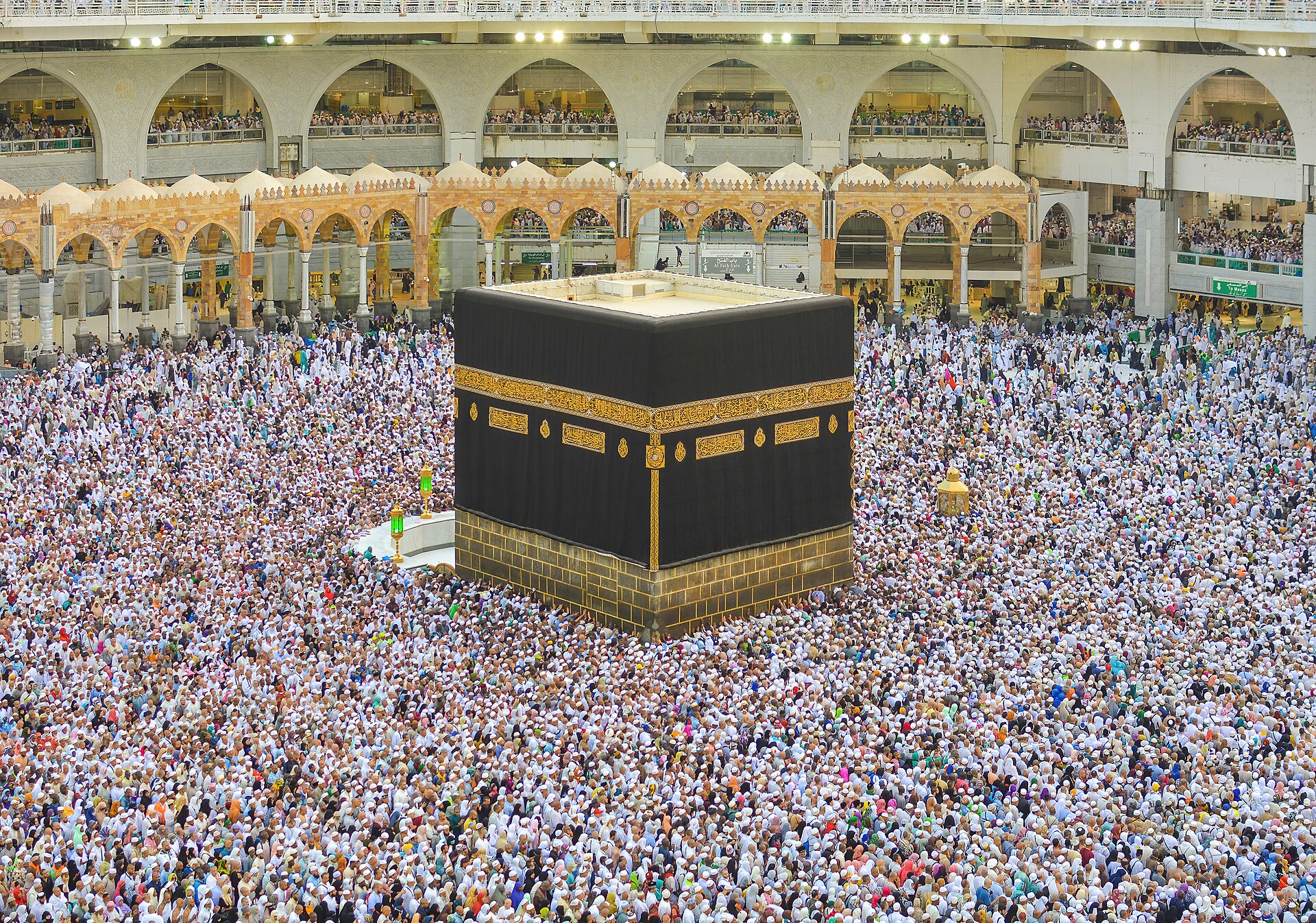
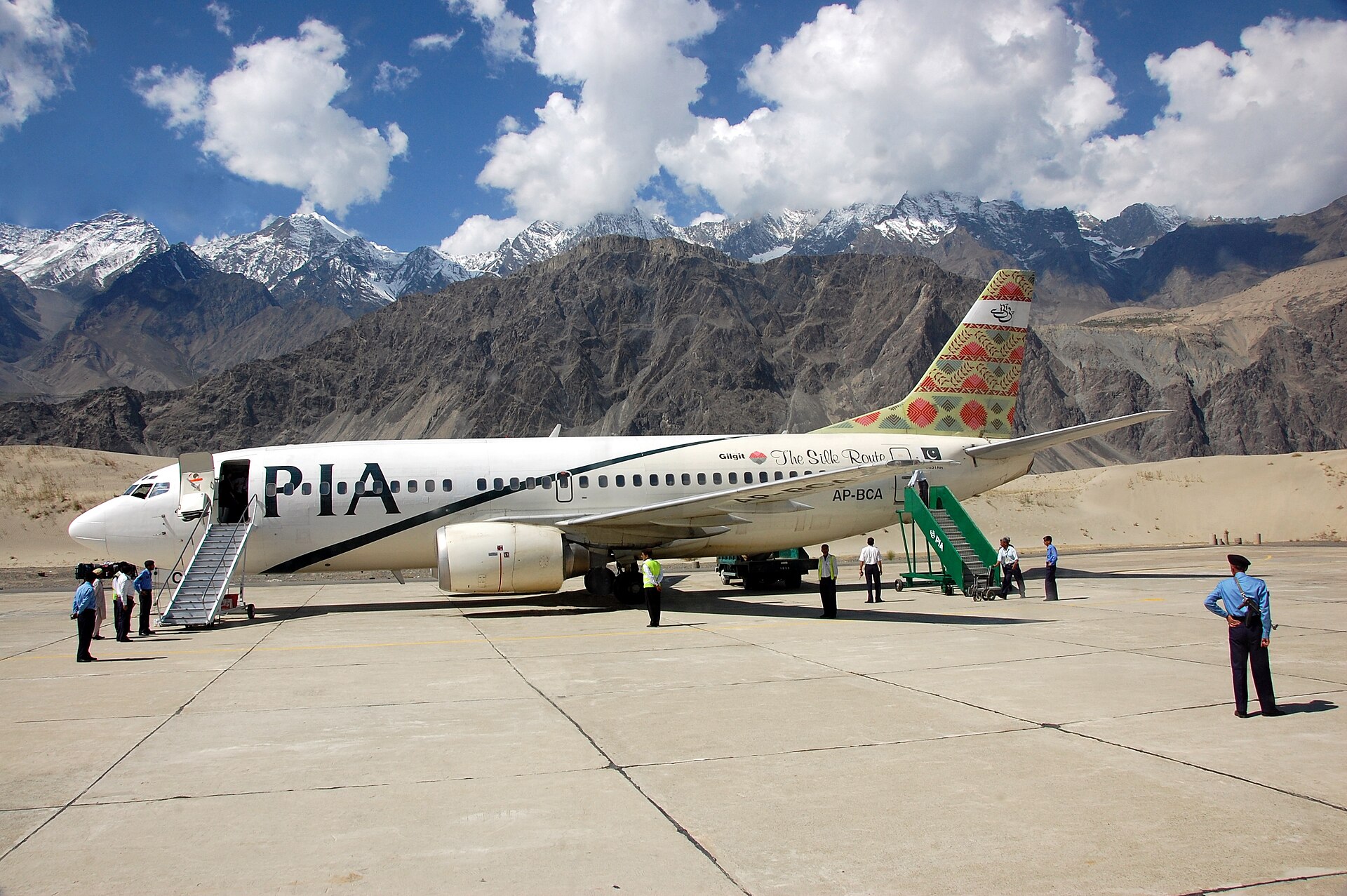
Pakistan’s Hajj 2026 operation is the country’s largest single overseas civilian movement of the year: 179,210 pilgrims under a bilateral agreement signed in Jeddah in November 2025, with 119,000 traveling under the government scheme and the remainder via private operators. The airlift requires 468 flights over 34 days across four carriers — PIA (202 flights, ~60,000 pilgrims via Boeing 777 and Airbus A320), Airblue, AirSial, and Saudi Airlines — departing from eight Pakistani cities.
The first four flights left for Madinah on April 18. PIA’s formal operation began April 19. All flights in the first fifteen days route to Madinah; Jeddah flights begin May 4. By the time the ceasefire expires on April 22, Pakistan will have tens of thousands of nationals on Saudi soil with no scheduled return flights for weeks. The last arrival flight is May 21. The pilgrims then move through Makkah for rites peaking May 24-29 — the Day of Arafah falls on May 26 — before departures begin.
The arithmetic is blunt. As of mid-April, 38,229 Pakistani pilgrims had already landed under the government scheme, according to Dawn. By April 22, the figure will be substantially higher. By mid-May, nearly the full 119,000 will be physically present in the Hejaz. No public wartime evacuation protocol has been disclosed by Saudi authorities. In early March, Pakistani airlines briefly halted Saudi flights over airspace safety concerns before resuming — an episode that demonstrated how quickly the logistical chain can fracture under escalation.
The Middle East briefing 3,000+ readers start their day with.
One email. Every weekday morning. Free.
Why Can Munir Not Let the Ceasefire Fail?
Munir’s centrality to the ceasefire is structural, not ceremonial. Trump cited him by name — “Based on conversations with Prime Minister Shehbaz Sharif and Field Marshal Asim Munir, of Pakistan” — when announcing the ceasefire on April 8. Trump has separately called Munir “my favorite field marshal.” The 27th Constitutional Amendment, passed November 13, 2025, created the post of Chief of Defence Forces, giving Munir unified three-service command plus authority over the Strategic Plans Division — Pakistan’s nuclear stockpile — and, in practice, foreign and security policy primacy. This enabled Munir to relay between Vance, Witkoff, and Araghchi overnight April 8-9 without cabinet clearance.
The 27th Amendment made Munir the most powerful Pakistani military leader since Zia ul-Haq. It also made him the sole point of accountability. If Pakistani pilgrims die in Saudi Arabia because a ceasefire he brokered collapsed, the political fallout will be directed at one office — his. Rabia Akhtar of the Belfer Center for Science and International Affairs has described Pakistan as “one of the few states that can speak credibly to Washington, Tehran, Beijing, Riyadh, and other Gulf capitals.” That credibility is now collateralized by 119,000 human beings in the Hejaz.
Did Saudi Arabia Engineer the Sequencing?
The alignment between Pakistan’s Hajj departure schedule and the ceasefire’s expiry date was not engineered by Riyadh — it was structurally inevitable, and MBS only had to avoid disrupting it. The Hajj calendar is fixed by the Islamic lunar cycle. The Makkah cordon seals annually before pilgrim arrivals begin. The ceasefire’s April 22 expiry was set during the Islamabad talks. What MBS controlled was the decision not to delay, restrict, or conditionally gate Pakistani pilgrim access — and that decision, by omission, locked Munir into the exposure.
The Saudi-Pakistan Hajj 2026 agreement was signed in November 2025, three months before the February 28 conflict began. The quota of 179,210 was set before anyone anticipated a war. But the war did not alter the quota. Saudi Arabia did not reduce Pakistan’s allocation, did not impose security-related delays on Pakistani flights, and did not suggest that Islamabad defer its pilgrim operation pending the ceasefire outcome. Every other bilateral signal — the $3 billion in fresh financial support announced at the April 15-16 Sharif-MBS Jeddah meeting, the extension of the existing $5 billion deposit, the quiet accommodation of Pakistan’s 25th Mechanised Division at the Saudi-Yemen border — pointed in the same direction: keep Pakistan committed.
The distinction matters. Coercive pressure that is visible can be resisted. A threat can be publicly rejected. But pressure that operates through the routine mechanisms of religious obligation is structurally invisible. No Pakistani politician can argue that Munir should have blocked Hajj flights. No opposition figure can claim the pilgrims should have stayed home. The calendar created the constraint, and Saudi Arabia’s only act was to let it proceed on schedule. The $5 billion Saudi loan maturing in June 2026 ensures that Pakistan’s fiscal exposure runs parallel to its pilgrim exposure — both deadlines falling within weeks of each other, both requiring Saudi goodwill to resolve without crisis.
Umer Karim of the King Faisal Center for Research and Islamic Studies has observed that Pakistan walks “a tightrope with regards to both the mediation responsibilities and the commitments towards Saudi Arabia’s defence.” The Hajj airlift did not create the tightrope — it eliminated any cushion between the commitments on either side of it.
How Does the SMDA Compound Munir’s Exposure?
The Strategic Military Defence Agreement, signed September 17, 2025, treats an attack on Saudi Arabia as an attack on Pakistan. On April 11, Pakistan deployed approximately 10,000 soldiers from the 25th Mechanised Division — a desert-warfare-specialized unit — and roughly 18 fighter aircraft to King Abdulaziz Air Base in Dhahran, according to Al Jazeera. Pakistan made no public announcement of the deployment. Azeema Cheema of Verso Consulting told Al Jazeera that “the invocation of the SMDA is the price of the significant restraint shown by the Saudis” in this conflict.
The SMDA creates a formal obligation. The 119,000 pilgrims create an informal one. The two reinforce each other in a way that neither could achieve alone. If IRGC missiles strike the Hejaz, Pakistan is treaty-bound to respond militarily — and simultaneously facing a domestic crisis involving its own civilian dead. Munir cannot invoke the SMDA defensively while explaining why the ceasefire he personally brokered failed to prevent the attack.
Michael Kugelman of the Atlantic Council has called Pakistan’s simultaneous Saudi deployment and Iran mediation “a bit of a risky gambit.” The pilgrim variable transforms the gambit into something closer to a structural trap. Pakistan’s military is positioned to defend Saudi Arabia. Pakistan’s civilians are positioned inside Saudi Arabia’s most vulnerable target zone. And Pakistan’s field marshal is the man responsible for ensuring that neither the military nor the civilians are tested.
Imtiaz Gul, a Pakistani security analyst, told Al Jazeera that the deployment is “messaging Tehran to be flexible in these talks, but also it is underlining to them that Pakistan has obligations under the mutual strategic agreement it has with Riyadh.” The pilgrims underline something different: that Pakistan’s obligations are no longer abstract.
The 1987 Inversion — Iran’s Zero-Pilgrim Advantage
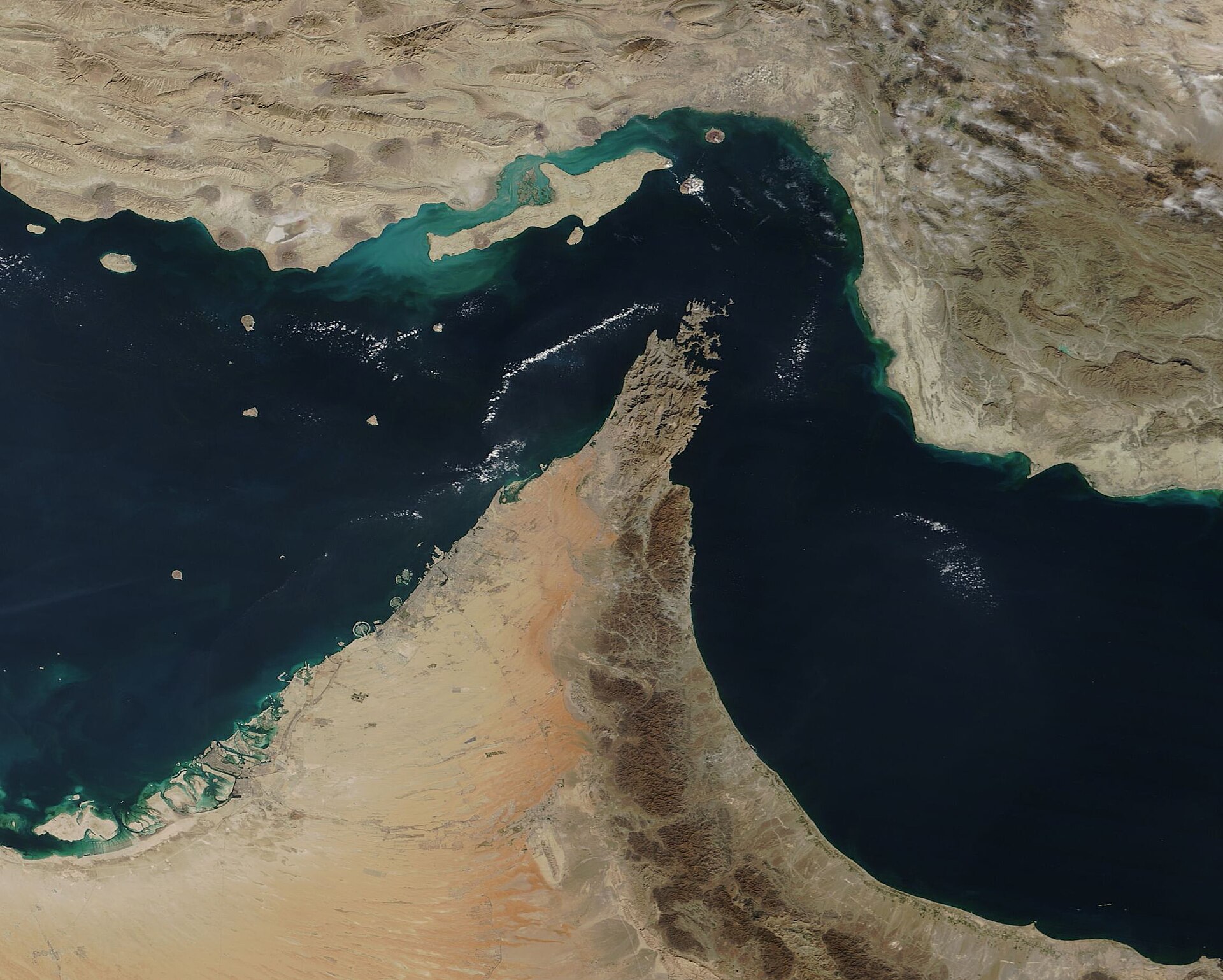
Iran has zero pilgrims at Hajj 2026 — Saudi visas have been suspended since the February 28 conflict began. This inverts the deterrence logic that governed the last major Hajj crisis. On July 31, 1987, clashes between Iranian Shia pilgrims and Saudi security forces killed 402 people — 275 Iranians, 85 Saudis, and 42 others — and wounded 649. Iran had 150,000 pilgrims present. Khomeini called for the House of Saud’s overthrow. Saudi Arabia cut Iran’s quota to 45,000, severed diplomatic relations, and absorbed a three-year Iranian Hajj boycott from 1988 to 1990.
In 1987, the hostage logic was mutual. Iran had domestic exposure. Iranian pilgrims were inside Saudi Arabia, and Iranian dead created both grief and political capital for Tehran. In 2026, the logic is entirely asymmetric. If IRGC fire strikes a pilgrim encampment, the dead will be Pakistani, Indonesian, Bangladeshi, Indian — not Iranian. Tehran faces no domestic political cost from Hajj disruption. Khamenei — absent from public view for 50 days — does not need to calculate the political impact of dead Iranian pilgrims because there are none to kill.
The asymmetry sharpens the constraint on Munir specifically. In 1987, Saudi Arabia faced pressure from Iran’s grief. In 2026, Saudi Arabia faces pressure from Pakistan’s exposure. The Custodian of the Two Holy Mosques bears the title’s full weight: 1.2-1.5 million pilgrims from dozens of countries, protected by a finite air defense shield, during an active war. But the political consequences of failure will fall most heavily on the sending states whose pilgrims are present — and Pakistan, with 119,000, is the third-largest contingent after Indonesia (221,000) and the domestic Saudi population.
The 1990 Mecca tunnel tragedy — 1,426 pilgrims killed, many Malaysian, Indonesian, and Pakistani — demonstrated that mass-casualty events in the Hejaz create instant political crises for sending states regardless of cause. In a wartime Hajj, the political chain reaction would be faster and more severe.
What Happens if the Authorization Ceiling Holds?
The ceasefire’s structural weakness is not Pakistan’s commitment but Iran’s authorization ceiling. The Islamabad talks collapsed after 21 hours on April 12. As of April 19, no date is set for a second round. The ceiling is defined by three interlocking failures: Vahidi, the SNSC secretary, blocked the Islamabad deal and demanded his deputy Zolghadr on the negotiating team; Khamenei has been absent from public life for over 50 days, creating an authority vacuum; and Pezeshkian, who publicly accused Vahidi and Abdollahi of wrecking the ceasefire on April 4, has zero constitutional authority over the IRGC under Article 110.
Munir visited IRGC Khatam al-Anbiya Central Headquarters on April 16 — the command structure run by General Abdollahi, the same faction that blocked the Islamabad deal. Munir was the first foreign military leader to visit Iran since the February 28 conflict began. His delegation included DGMO Major General Kashif Abdullah, Interior Minister Mohsin Naqvi, and his private secretary Major General Jawad Tariq. The visit was a direct attempt to bypass the political layer and engage the actual decision-makers — or, at minimum, to demonstrate to the IRGC command that Pakistan’s enforcer understands who holds the veto.
Iranian state media covered the visit tactically. PressTV reported on April 14 that Iran was “in continuous message exchange with mediator Pakistan after US talks,” framing Pakistan as a neutral channel. Araghchi “expressed gratitude for Pakistan’s gracious hosting of dialogue, emphasizing that it reflects our deep and great bilateral relationship.” The framing is strategic: Tehran needs Pakistan positioned as neutral, because a Pakistan publicly identified as structurally bound to Saudi outcomes loses its value as Iran’s interlocutor — and, since 1992, its historical role as Iran’s protecting power in Washington.
The IRGC’s interest in maintaining the fiction of Pakistani neutrality is high. But the fiction cannot survive the arithmetic of 119,000 Pakistani pilgrims inside the range of any Saudi-Iran escalation. If the authorization ceiling holds — if Vahidi continues to block, if Khamenei remains absent, if the IRGC Navy maintains its “full authority” declaration over Hormuz — then the ceasefire expires on April 22 unextended, and Munir’s pilgrims are stranded in a war zone he personally failed to pacify.
The PAC-3 Arithmetic Over Makkah
Saudi Arabia has approximately 400 PAC-3 interceptors remaining — roughly 14% of its pre-war stockpile — to protect 1.2-1.5 million pilgrims through the Hajj season, according to Saudi Ministry of Defence data and the wartime defense architecture assessment. No resupply pipeline is capable of delivering additional interceptors before Hajj concludes. The five-layer defense — THAAD, PAC-3, KM-SAM, laser systems, and Skyguard — was designed for sequential escalation, not for sustained saturation over a six-week pilgrim window.
The Day of Arafah falls on May 26. Pakistan’s last arrival flight is May 21. The pilgrims are not cycling through quickly. They arrive, move through Makkah, complete the rites across multiple days, and depart over a staggered schedule that extends deep into the post-ceasefire zone. Each day the ceasefire holds, Saudi Arabia’s remaining interceptor inventory is not drawn down. Each day it fails to hold, the stockpile shrinks against a fixed pilgrim population that cannot be evacuated on short notice.
For Munir, the PAC-3 calculation is not abstract defense policy — it is a direct measure of how many Pakistani pilgrims survive an IRGC barrage. The IRGC demonstrated its willingness to strike Saudi infrastructure after the ceasefire’s nominal start: the East-West Pipeline pumping station was hit on April 8, hours after the ceasefire was announced. The Hajj cordon is not a military target, but the IRGC’s targeting discipline has been inconsistent, and a near-miss on a pilgrim encampment would produce the same political crisis as a direct hit.
The Remittance Chain as Secondary Lever
The 119,000 pilgrims are the acute pressure point, but they sit atop a permanent structural dependency. Saudi Arabia hosts approximately 2.5 million Pakistani workers whose remittances constitute the largest single-country contribution to Pakistan’s foreign exchange. Saudi remittances averaged approximately $913 million per month in recent State Bank of Pakistan data, and the kingdom contributes roughly a quarter of Pakistan’s total annual remittance income of approximately $37 billion.
The $11 billion Saudi financial engagement with Pakistan — including the $3 billion announced April 15-16, the extended $5 billion deposit maturing June 2026, and the broader Saudi-Qatari package — creates fiscal dependency. But the remittance channel creates household-level dependency. The 2.5 million workers have families in Pakistan. The 119,000 pilgrims have families in Pakistan. The political constituencies overlap. A field marshal who allows a ceasefire to collapse while 119,000 pilgrims are exposed and 2.5 million workers are resident is not risking a diplomatic setback — he is risking a domestic legitimacy crisis that no constitutional amendment can absorb.
Saudi Arabia has historically used both pilgrim quotas and worker access as diplomatic instruments. It cut Iran’s Hajj quota after 1987. It sharply reduced India’s private Hajj operator quota in 2025 during separate bilateral tensions. The 2026 inversion is that the pressure flows in reverse: the sending state’s pilgrims become the mechanism that structurally commits the sending state’s enforcer to Saudi-aligned outcomes.
Indonesia’s April 22 Departure and the Multinational Exposure Web
Pakistan is not alone inside the cordon. Indonesia’s 221,000 pilgrims — the single largest national contingent — have their first scheduled charter departure on April 22, the precise day the ceasefire expires. By late April, the Hejaz will contain the largest concentration of Southeast Asian and South Asian civilians in any single location on earth outside their home countries.
The multinational exposure creates a web of mutual constraint. Indonesia, Malaysia, Bangladesh, India, Turkey — each sending state has nationals inside the cordon, and each sending state’s government faces domestic political consequences if those nationals are harmed. But Pakistan’s exposure is qualitatively different because Pakistan is the enforcer. Indonesia’s president does not bear personal responsibility for the ceasefire’s survival. Munir does.
The 96-hour countdown to April 22 is not merely a diplomatic deadline. It is the moment when two clocks converge: the ceasefire’s expiry and the Hajj airlift’s acceleration. After April 22, the cordon will contain its maximum population. The ceasefire will have no formal legal status. And Munir will be operating without a mandate, without an extension mechanism, and without the ability to evacuate 119,000 civilians from a country whose airspace has already been contested by Iranian ballistic missiles.
The Tasnim news agency, affiliated with the IRGC, reported on April 8 that Iran would “heed the ceasefire” but remains “ready to return to war if the enemy makes another miscalculation.” No IRGC-affiliated outlet has referenced the Pakistani pilgrim population as a factor in its calculus. The omission is itself a signal: acknowledging the pilgrims would acknowledge that Pakistan is structurally aligned with Saudi outcomes, which would undermine Iran’s framing of Pakistan as a neutral mediator.
The convergence of calendars is worth stating plainly. Pakistan’s 468 Hajj flights run April 18 through May 21. The ceasefire expires April 22. The Day of Arafah — when virtually all pilgrims are concentrated at a single site on the plain east of Makkah — falls on May 26. Pakistan’s return flights do not begin until late May at the earliest. For six weeks, from the first departure to the last return, Munir’s credibility as enforcer and his citizens’ physical safety are the same variable. No previous Pakistani military leader has combined diplomatic centrality with direct civilian exposure in a foreign war theater — a combination that the 27th Amendment concentrated in a single office, and that the Hajj calendar made operational before any extension mechanism was in place.
Frequently Asked Questions
Has Pakistan ever evacuated civilians from Saudi Arabia during a military crisis?
Pakistan has not conducted a wartime evacuation from Saudi Arabia, but it executed a large-scale evacuation from Yemen in 2015 during Operation Decisive Storm, airlifting and sealifting approximately 2,100 Pakistani nationals from Aden and Sana’a over 10 days. The Yemen operation used C-130 military transports and PIA commercial aircraft, but Yemen’s infrastructure was permissive compared to what a Hejaz evacuation would require — Jeddah’s King Abdulaziz International Airport is a single-point bottleneck serving 1.2-1.5 million pilgrims simultaneously, and no alternative evacuation route exists overland.
What is Munir’s personal relationship with MBS, and how does it differ from the institutional Pakistan-Saudi relationship?
Munir served as Pakistan’s Defence Attaché in Riyadh from 2006 to 2008, during which he built direct relationships with Saudi military and intelligence officials. He reportedly speaks functional Arabic. The personal channel bypasses Pakistan’s Foreign Ministry entirely, which is why the 27th Amendment’s concentration of security policy in the CDF office matters: Munir’s mediation runs through personal trust networks that Pakistan’s civilian government cannot replicate, monitor, or override. If Munir’s personal credibility with both Trump and MBS collapses, Pakistan has no institutional fallback.
Could Saudi Arabia restrict departing pilgrims if the ceasefire collapses?
Saudi Arabia has never formally restricted pilgrim departures for geopolitical reasons, but operational restrictions are routine. Airspace closures — which occurred briefly in early March 2026 — would ground all civilian flights regardless of intent. In the 1990 Gulf War, Saudi Arabia suspended Umrah and restricted travel in the Hejaz for security reasons. A post-April 22 escalation that triggers airspace closures over the Red Sea corridor would effectively strand all 1.2-1.5 million pilgrims for the duration of active hostilities, regardless of Saudi intent.
How does Pakistan’s nuclear status interact with the SMDA commitment?
The 27th Amendment placed the Strategic Plans Division — Pakistan’s nuclear command authority — under Munir’s unified CDF command. The SMDA does not explicitly reference nuclear weapons, and no Pakistani official has linked the nuclear deterrent to Saudi defense. However, the structural fact is that the same individual who controls Pakistan’s nuclear arsenal is treaty-bound to treat an attack on Saudi Arabia as an attack on Pakistan. International observers have noted that this concentration of authority in a single military office is unprecedented in Pakistan’s history and creates ambiguity about the threshold at which SMDA obligations intersect with strategic deterrence doctrine.
What is Iran’s legal position on the safety of Hajj pilgrims during the conflict?
Iran has made no formal statement guaranteeing the safety of Hajj pilgrims in 2026. In 1987, Khomeini explicitly blamed Saudi security forces for pilgrim deaths and used the incident to justify diplomatic rupture. In 2026, Iran’s zero-pilgrim status means Tehran bears no direct responsibility for any pilgrim casualties and faces no domestic backlash from Hajj disruption. The IRGC’s public statements reference “the enemy” without distinguishing between Saudi military infrastructure and civilian zones. International humanitarian law (IHL) classifies the Hejaz pilgrim sites as protected civilian objects, but the IRGC has not acknowledged IHL constraints in its operational declarations during this conflict. Pakistan’s ceasefire extension shuttle to Jeddah — and the $8 billion financial dependency shaping Sharif’s leverage with MBS — is documented here.
The Muslim multilateral architecture Saudi Arabia is constructing outside Islamabad — through the Antalya quad with Turkey, Egypt, and Pakistan — is examined in The Quad That Survives the Ceasefire.
The first international pilgrims from Pakistan, Indonesia, Turkey, India, and Malaysia have now landed on Saudi soil under the Makkah Route Initiative — with the ceasefire set to expire in 72 hours. The arrival of Hajj pilgrims on Saudi soil and its implications for the ceasefire window are tracked here.