
WASHINGTON — The White House declared negotiations with Iran “productive and ongoing” this week even as the Islamic Revolutionary Guard Corps reversed Tehran’s own foreign minister’s declaration that the Strait of Hormuz was open and fired on two Indian-flagged vessels that had received prior IRGC clearance to transit. Press Secretary Karoline Leavitt told reporters on April 15 that the administration felt “good about the prospects of a deal,” a message President Trump amplified on April 18 by claiming Iran had “agreed to everything” — a statement Iran’s parliamentary speaker Mohammad Bagher Ghalibaf immediately called a lie.
The gap between Washington’s public confidence and operational reality in the Persian Gulf is not a communications failure. It is a pressure instrument. By publicly crediting civilian Iranian negotiators with progress that IRGC commanders must then visibly repudiate, the White House is sharpening a factional split inside Tehran that has already produced the most open civilian-military confrontation since the revolution. The strategy carries real risk: if it works, it isolates the IRGC leadership blocking a deal; if it fails, it leaves the administration invested in a diplomatic track that Iran’s actual decision-makers have not authorized.
Table of Contents
The Optimism Timeline: April 15-18
Washington’s messaging over a four-day stretch followed a pattern too consistent to be accidental. On April 15, Leavitt used her White House press briefing to frame the state of play in unambiguously positive terms: “These conversations are productive and ongoing. We feel good about the prospects of a deal.” She credited Pakistan as “the only mediator in this negotiation” and added a qualifier that functioned as both a hedge and a claim of authority: “Nothing is official until you hear it from us here at the White House.”
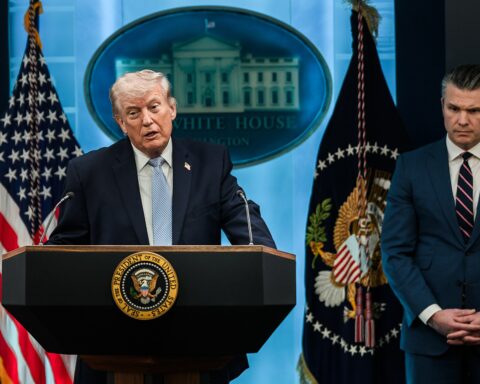
Trump escalated the optimism daily. On Fox News on April 15, he said the Iran war was “very close to over.” On April 16, he called the war’s progress “swimmingly” and predicted it “should be ending pretty soon.” By April 17, he told Axios he expected a deal “in a day or two” and floated the idea of traveling to Islamabad personally. On April 18, speaking to CBS, he claimed Iran had “agreed to everything,” including cooperation on the removal of enriched uranium.
None of these claims were supported by Iranian actions during the same period. On April 16, Leavitt separately denied that the US had “formally requested” a ceasefire extension — “not true at this moment” — while simultaneously maintaining the productive framing. PressTV reported on April 18 that Iran had “yet to approve” the next round of indirect talks. The dual signal — optimism about a process, denial of specific commitments — was the structure, not a contradiction within it.
Defense Secretary Pete Hegseth provided the hard edge on April 16, delivering a message directed at Tehran on Fox News: “As you expose yourself with your movement to our watchful eye, we are locked and loaded on your critical dual-use infrastructure, on your remaining power generation and on your energy industry. We’d rather not have to do it, but we’re ready to go at the command of our president and at the push of a button.” The Pentagon’s blockade had already deterred 13 ships from Iranian ports by that date, with CENTCOM claiming it had “completely halted economic trade going into and out of Iran by sea.”
The Middle East briefing 3,000+ readers start their day with.
One email. Every weekday morning. Free.
What Does Washington’s Framing Achieve?
The White House’s public optimism operates along three simultaneous lines, each targeting a different audience. The first is directed at the civilian Iranian government. By attributing diplomatic progress to Pezeshkian’s team and to Foreign Minister Araghchi’s negotiating efforts, Washington validates their domestic political position — and maximizes their exposure when the IRGC negates that progress. Every time Trump says Iran “agreed to everything,” it is Araghchi’s team that must absorb the accusation from hardliners that they conceded too much, while IRGC commanders must publicly repudiate concessions they had no role in making.
The second audience is oil markets. Brent crude fell 9 to 11 percent to $87.94-$90.38 on April 17-18 after Araghchi’s declaration that Hormuz was open. Goldman Sachs has projected that another month of Hormuz closure would push Brent above $100 for the entirety of 2026. By maintaining the appearance of diplomatic momentum, the White House partially suppresses the risk premium that gives Iran its primary source of pressure. Brent rebounded to approximately $95-96 on April 19 after the IRGC re-closure was confirmed, but the brief window of lower prices demonstrated how sensitive the market is to signals of progress — and how useful those signals are to Washington.
The third target is the narrative frame around failure. If talks collapse, the White House has pre-positioned the blame. Trump’s claim that Iran agreed to everything, followed by Ghalibaf’s public denial — “With these lies, they did not win the war, and they certainly will not get anywhere in negotiations either” — creates a record in which Washington offered peace and Iran’s military establishment rejected it. Whether that framing survives scrutiny is a separate question; that it has been constructed with evident deliberation is not.
The Second IRGC Override in 48 Hours
On April 17, Araghchi posted on X that “in line with the ceasefire in Lebanon, the passage for all commercial vessels through Strait of Hormuz is declared completely open for the remaining period of ceasefire.” More than a dozen ships began transiting. Oil prices dropped sharply. The Iranian rial strengthened to 1.46 million per dollar as markets registered relief.
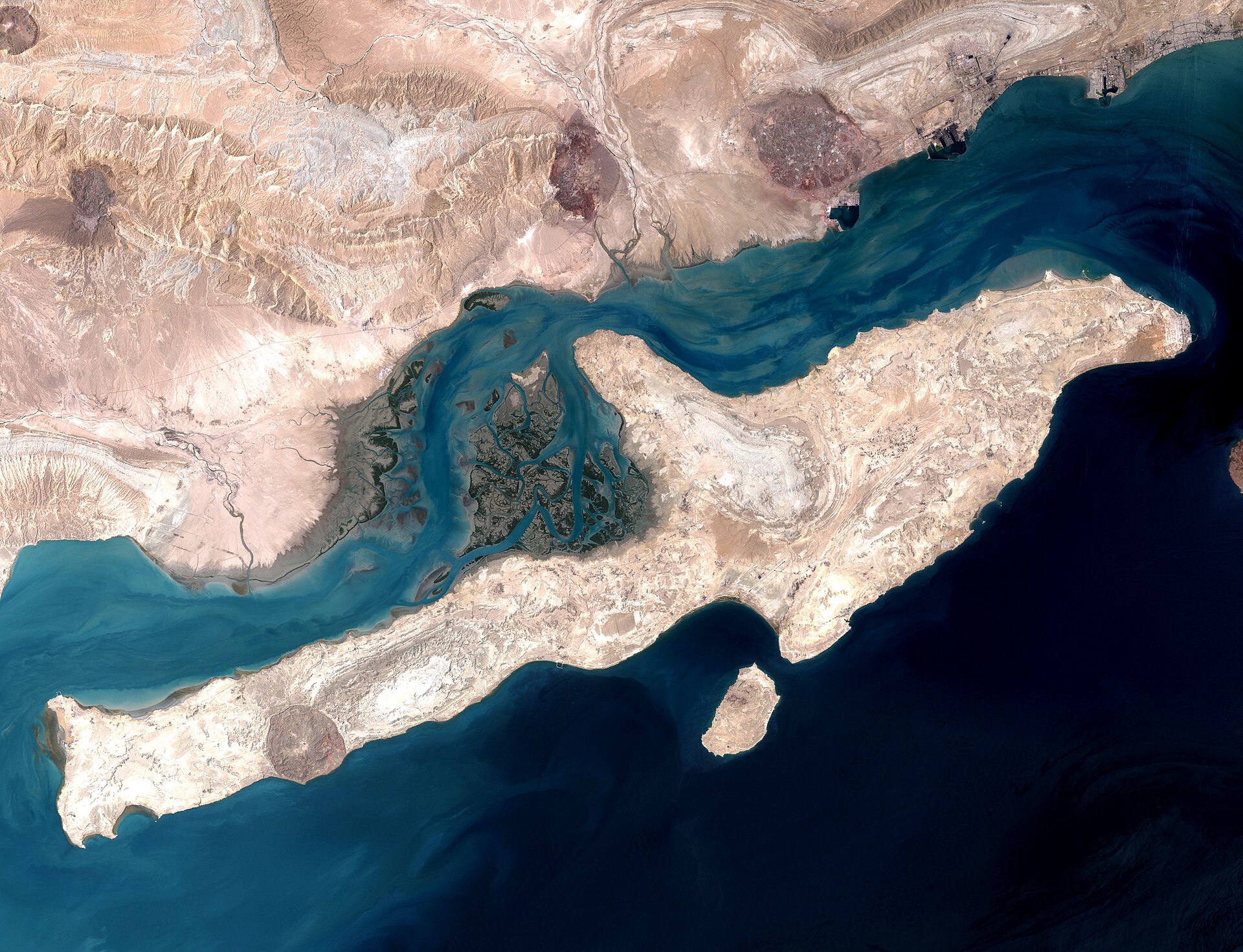
Within hours, the IRGC reversed the declaration. Iran’s joint military command announced that “control of the Strait of Hormuz has returned to its previous state” and was “under strict management and control of the armed forces.” The IRGC Navy followed with an explicit threat: “No vessel of any kind should move from its anchorage…approaching the Strait of Hormuz will be considered cooperation with the enemy, and the offending vessel will be targeted.” The rial slid to 1.51 million per dollar.
This was the second time the IRGC overrode Araghchi’s Hormuz announcement in the span of days. The first reversal followed an identical sequence: Araghchi declared, the IRGC countermanded, and IRGC-aligned media — Tasnim, Fars, Mehr — attacked the foreign minister’s credibility. Hardline lawmaker Morteza Mahmoudi said Araghchi “would have faced impeachment over his recent tweet if not for wartime considerations.” The IRGC Aerospace Force commander warned against the enemy’s “false narratives” on Hormuz, a phrase aimed not at Washington but at Iran’s own foreign ministry.
Tasnim News Agency, which is closely affiliated with the IRGC, called Araghchi’s declaration a “bad and incomplete tweet that created misleading ambiguity” and urged either the Foreign Ministry to change course or the Supreme National Security Council to impose coherent messaging. Fars News said the tweet “plunged Iranian society into a haze of confusion.” Mehr News argued that Araghchi’s announcement “provided the best opportunity for Trump to go beyond reality, declare himself the winner of the war and celebrate victory” — which, from the White House’s perspective, is precisely the function it served.
IRGC Fires on Ships It Cleared to Transit
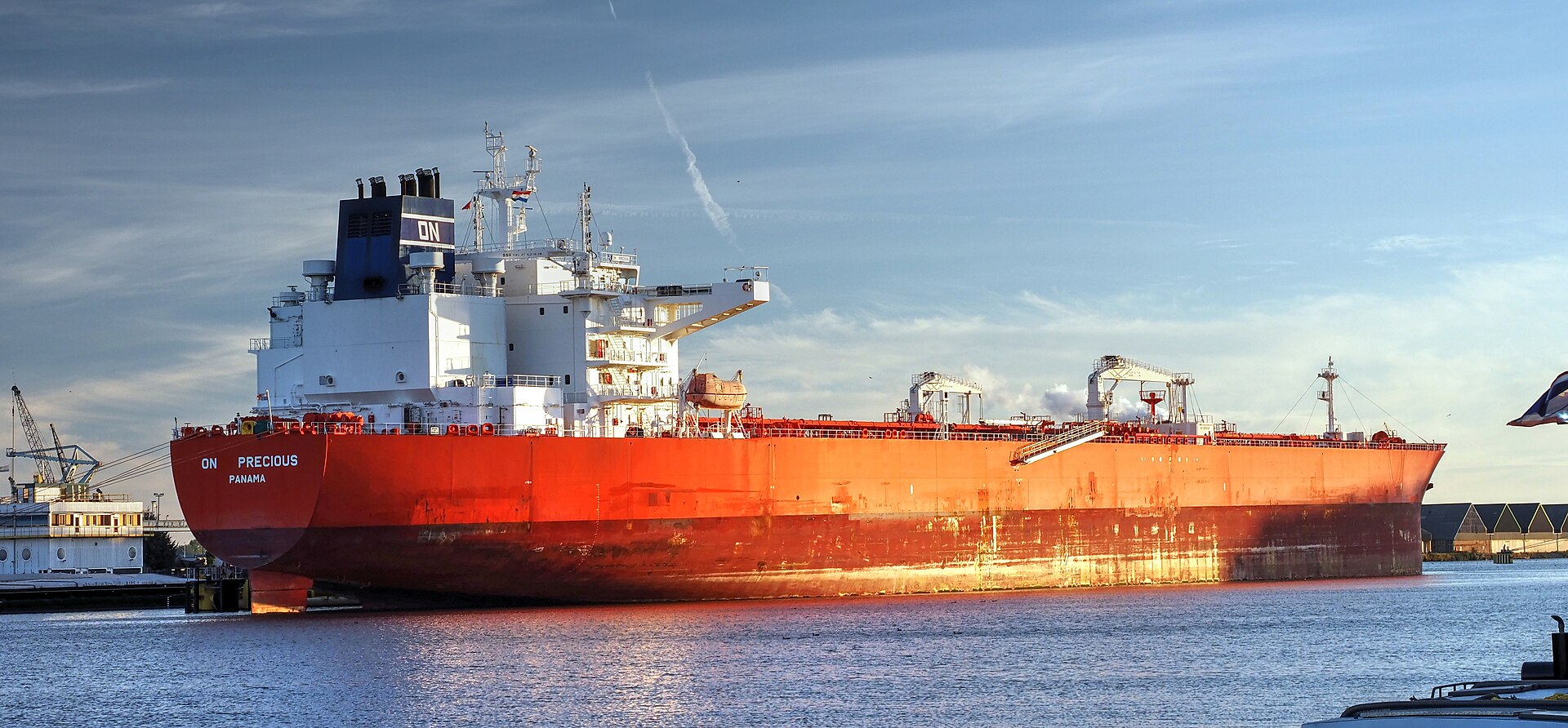
The IRGC’s re-closure was not merely declaratory. On April 18, IRGC gunboats fired on two Indian-flagged commercial vessels — the Suezmax tanker Sanmar Herald, carrying approximately 2 million barrels of Iraqi crude, and the bulk carrier Jag Arnav. The Sanmar Herald had received prior IRGC clearance to transit. Radio audio captured by UKMTO recorded the tanker’s crew protesting: “You gave me clearance to go. My name is second on your list. You are firing now. Let me turn back.” The Jag Arnav sustained minor hull damage.
India’s response was immediate. Foreign Secretary Vikram Misri summoned Iranian Ambassador Mohammad Fathali and conveyed India’s “deep concern.” The incident complicates Iran’s already fragile relationship with a country that had, under OFAC General License U, been one of the few remaining customers for Iranian crude before the license expired on April 19 without renewal. It also demonstrated that the IRGC’s Hormuz operations have entered a phase in which its own clearance system is unreliable — vessels that follow IRGC procedures are no safer than those that do not.
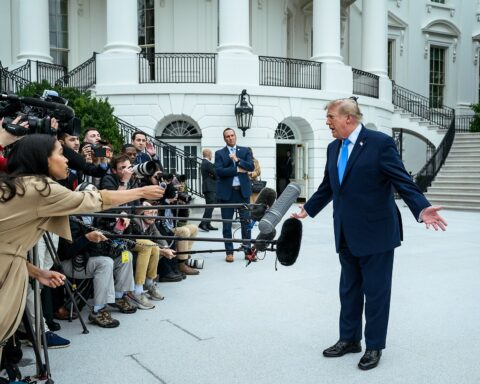
Trump responded from the Oval Office on April 18: “They can’t blackmail us. They got a little cute…they wanted to close up the Strait again.” He convened a Situation Room meeting on Saturday morning. The language — “got a little cute” — framed the IRGC re-closure not as a strategic escalation but as a miscalculation by actors whose judgment Washington does not take seriously, a framing consistent with the broader optimism strategy.
Is the IRGC-Civilian Split Real or Performed?
The question of whether the IRGC-civilian divide is genuine or orchestrated for negotiating advantage divides analysts. Seth Frantzman, writing in the Jerusalem Post on April 18, argued that the dispute “appears more genuine than historical Iranian regime theater” and that “clearly, the IRGC is trying to take back control of the talks in Pakistan.” Saeid Golkar, an IRGC specialist at the University of Tennessee Chattanooga, told Fortune that “because the main arbitrator is gone, the fight between different factions has started” — a reference to Supreme Leader Ayatollah Ali Khamenei, who has been publicly absent for more than 45 days.
The Institute for the Study of War assessed that the friction was “reflective of broader divisions within the Iranian regime” and that Khamenei’s absence meant factions “will likely continue to play a dominant role in shaping Iranian decision-making.” Ali Hashem, Al Jazeera’s Tehran correspondent, offered a more structural reading: Iran was using Hormuz as “the only space for engagement, even if it’s a negative engagement…showing their leverage.”
The evidence favors the genuine-split interpretation, though not without qualification. President Pezeshkian publicly named SNSC Secretary Ali Akbar Ahmadian (Vahidi) and Khatam al-Anbiya commander Abdollahi on April 4 as the officials who wrecked the ceasefire — an unprecedented civilian accusation against sitting IRGC leadership. Under Article 110 of the Iranian Constitution, the president has zero authority over the IRGC; Pezeshkian’s accusations were a confession of powerlessness, not a demonstration of control. The Foundation for Defense of Democracies’ assessment that “5 men” are running Iran explicitly excludes Pezeshkian from the list.
What Washington’s optimism strategy exploits is the gap between civilian Iran’s willingness to negotiate and the IRGC’s ability to negate any agreement. Vice President JD Vance, after the Islamabad talks collapsed on April 12 following 21 hours of negotiation, stated: “We have not reached an agreement — and I think that’s bad news for Iran much more than it’s bad news for the United States.” Araghchi, for his part, said the talks were “inches away” from a memorandum of understanding before encountering “maximalism, shifting goalposts, and blockade.”
Whether the White House pushed those goalposts deliberately or whether the IRGC’s parallel actions made any agreement impossible is a question that depends on which Iran one considers the counterparty.
The Hostage Crisis Playbook, Run in Reverse
The dynamic has a historical parallel, though the polarity is inverted. During the 1979-81 hostage crisis, the Carter administration repeatedly seized on signals from civilian Iranian officials — offers, back-channel assurances, tentative agreements — only to see them reversed by Khomeini or by revolutionary factions that held the actual power to release the hostages. Washington was the party being whipsawed by Iran’s internal divisions, latching onto civilian promises that hardliners overrode.
The current White House appears to be running a version of the same dynamic in reverse, using Iran’s factional split as a tool rather than suffering from it. When Trump claims Iran “agreed to everything,” he is doing to Araghchi’s team what civilian Iranians once did to Carter — attributing concessions that the other side’s hardliners will feel compelled to publicly repudiate, thereby deepening the visible divide. The difference is that the Carter administration was genuinely surprised by the reversals. This administration, having already watched the IRGC override Araghchi twice on Hormuz, appears to be counting on them.
Whether this pressure produces results depends on a structural question the White House cannot answer from the outside: does the IRGC-civilian split create enough internal pressure to force a change in Iran’s negotiating position, or does it simply harden the IRGC’s determination to demonstrate that it, not the Foreign Ministry, controls Iran’s strategic posture?
The ceasefire expires on April 22. An extension has been discussed “in principle” on a two-week basis, but the US has not formally signed, and Leavitt confirmed no formal extension request has been made. The IRGC has given no indication it considers itself bound by a ceasefire its commanders did not authorize. Iran’s Supreme National Security Council announced on April 18 that it was reviewing US proposals — a process claim, not a concession.
Background and Context
The Vance-Ghalibaf face-to-face meeting in Islamabad on April 11 — the first direct US-Iran talks since 1979 — produced no agreement. The core dispute centered on enrichment: the US proposed a 20-year moratorium, Iran countered with 5 years and monitored down-blending. Araghchi’s civilian team could negotiate but could not deliver, because the IRGC commanders who hold effective authority over Iran’s nuclear infrastructure were not in the room. Vahidi, who has an INTERPOL red notice for the 1994 AMIA bombing in Buenos Aires, refused to include missile negotiations and demanded that IRGC-linked official Zolghadr be placed on the Islamabad delegation.
The Hormuz toll system that the IRGC imposed as a parallel pressure track has generated zero revenue in 36 days — 60 transit permits have been issued, 8 payment requests sent, and no fees collected. A hardline parliamentary adviser’s claim that Iran could earn “$800 billion annually” from the strait drew public ridicule from Iranian economic commentators. Iran’s Central Bank has circulated an internal memo projecting 180 percent inflation and a 12-year economic recovery timeline. The IRGC’s Hormuz strategy is producing factional credibility, not revenue.
The Pentagon’s blockade, effective since April 13, applies specifically to Iranian ports and toll-collecting vessels, not to all Hormuz transit. OFAC General License U, which had allowed limited oil trade with Iran, expired at 12:01 AM EDT on April 19 with no renewal — while Russia’s comparable General License 134A was quietly extended the same day, carving Iran out as a specific coercive signal.
FAQ
Has the ceasefire been formally extended beyond April 22?
No. An extension “in principle” on a two-week basis has been reported, but the United States has not formally signed or requested one. Leavitt said on April 16 that a formal extension request was “not true at this moment.” Iran’s SNSC announced a review of US proposals on April 18, but PressTV reported the same day that Iran had “yet to approve” the next round of indirect talks. The gap between an in-principle agreement and a signed extension is where the ceasefire could collapse.
How has the Hormuz re-closure affected shipping insurance and freight rates?
VLCC (Very Large Crude Carrier) rates had already reached $423,000 per day — a record — before the re-closure, with more than 150 tankers anchored and unable to transit. War-risk insurance premiums for Hormuz transit have made the route commercially prohibitive for most operators. Hapag-Lloyd and Maersk have publicly stated they are avoiding the strait. The brief window after Araghchi’s April 17 declaration, during which more than a dozen ships began moving, demonstrated the scale of pent-up commercial demand — and the cost of the IRGC’s reversal to global shipping.
What is the IRGC’s command structure for Hormuz operations?
The IRGC Navy commander, Alireza Tangsiri, was killed on March 30, and no named successor has been appointed — leaving 20 days of headless but operationally active command. The IRGC Navy declared “full authority to manage the Strait” on both April 5 and April 10. Under Article 176 of Iran’s constitution, SNSC decisions — which govern IRGC operations — require ratification by the Supreme Leader. With Khamenei absent for more than 45 days, the constitutional mechanism for authorizing or constraining IRGC operations is effectively suspended.
Could Washington’s optimism strategy backfire?
The risk is that the strategy validates its own premise too successfully. If civilian Iranian officials are publicly credited with concessions they did not make, they face domestic consequences — Mahmoudi’s impeachment threat against Araghchi is already evidence of this — that could reduce their willingness to negotiate at all. The strategy also depends on markets reading Washington’s optimism as credible. If traders begin discounting White House statements as tactical rather than informational, the oil-price management effect disappears. Goldman Sachs projects Brent above $100 for all of 2026 if Hormuz remains closed for another month, which would eliminate the market benefit entirely.
What is Pakistan’s role in the next phase?
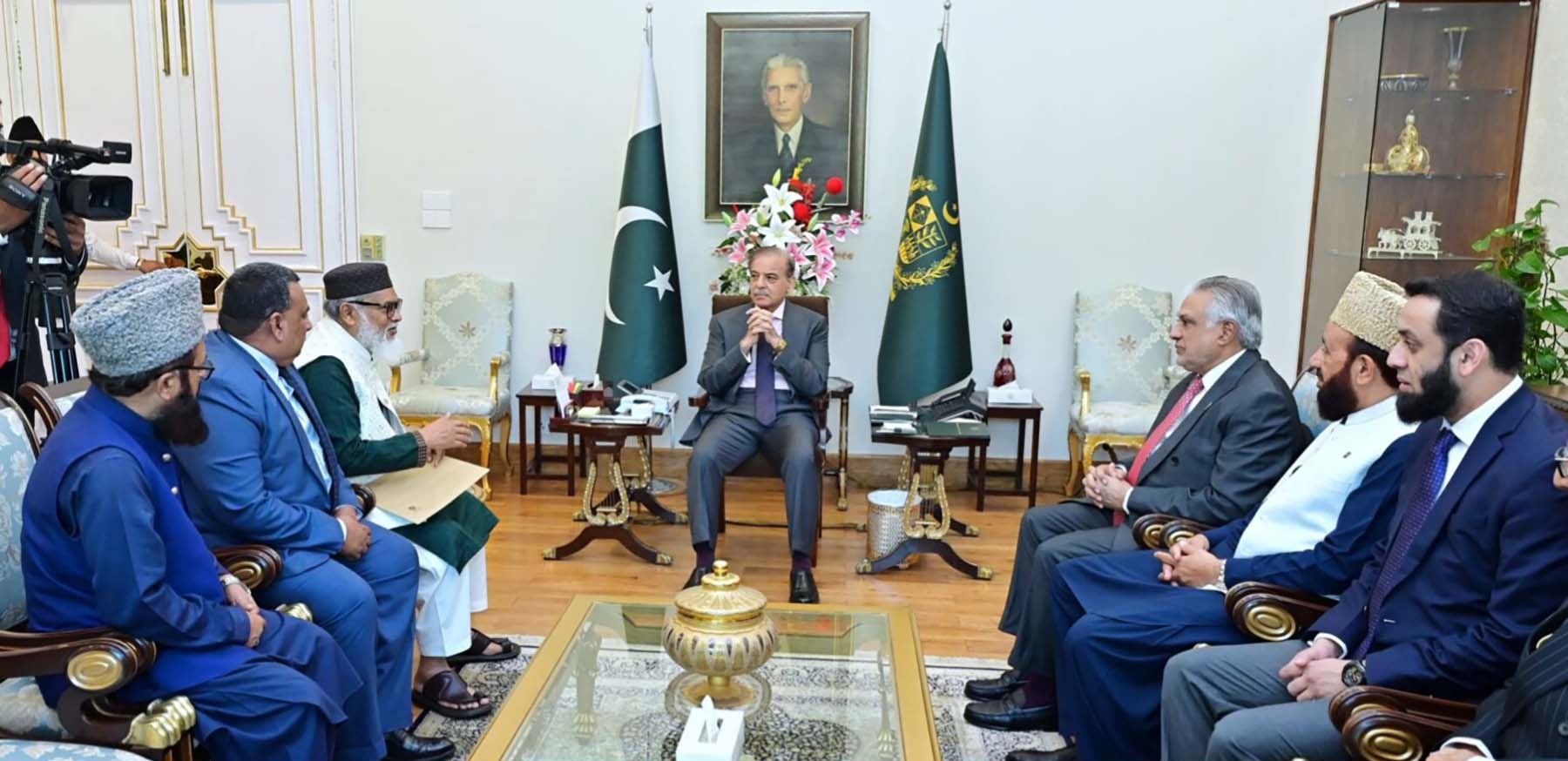
Leavitt described Pakistan as “the only mediator in this negotiation,” and Prime Minister’s foreign policy adviser Munir has functioned as the primary relay between Washington and Tehran since the Islamabad talks. Pakistan’s room to maneuver is constrained: a $5 billion Saudi loan matures in June 2026, and the September 2025 Saudi-Pakistan mutual defense agreement makes Pakistan simultaneously Iran’s interlocutor and Saudi Arabia’s treaty ally. Munir visited Khatam al-Anbiya headquarters — the IRGC construction and logistics command run by Abdollahi, whom Pezeshkian publicly accused of sabotaging the ceasefire — on April 16, suggesting Pakistan is attempting to engage the IRGC chain of command directly rather than relying solely on civilian Iranian counterparts. Prime Minister Sharif then carried the results of that Tehran engagement to Jeddah; Sharif’s Jeddah stop and the $8 billion Saudi-Pakistan financial architecture underpinning the shuttle are examined here.
The operational consequence of the IRGC re-closure arrived on April 20: only 16 vessels crossed the Strait of Hormuz that day — the lowest single-day count of the war, against a pre-war daily average of 138.