MANAMA — The Gulf Cooperation Council’s military coordination apparatus met in Bahrain on April 24 — not as a six-nation summit but as a bilateral between Bahrain’s chief of staff and a GCC assistant secretary general — fifty-four days after the council declared that an attack on one member constitutes an attack on all. In those fifty-four days, no unified command was activated, no joint operation was conducted, and no interoperable air defense network was deployed. The meeting took place adjacent to a US naval headquarters whose satellite communications backbone was destroyed in the war’s opening hours and has not been rebuilt.
What followed the March 1 declaration was not collective defense but six parallel survival strategies, each calibrated to the individual threat perceptions, bilateral security agreements, and diplomatic hedging of states that spend $130 billion a year on defense without producing a joint command capable of fielding a single integrated operation. The April 24 meeting — occurring one day after President Trump’s shoot-on-sight order for Iranian vessels, issued without consulting any GCC capital — crystallizes the question that $130 billion and forty-three years have failed to answer.
The GCC’s inability to produce a joint diplomatic posture is part of why Saudi Arabia has invested in the EU-Arab format as a supplementary channel. The Nicosia summit, convened by Cyprus as the EU member state closest to the conflict’s theater, gives the Gulf states an institutional setting outside Islamabad where Saudi Arabia’s parallel EU-GCC diplomatic track can advance Hormuz and Lebanon positions that the GCC’s internal divisions prevent it from coordinating directly.
Table of Contents
- What Actually Happened on April 24
- The Touring Pattern and What It Reveals
- Why Has $130 Billion in Annual Spending Not Produced a Joint Command?
- The March 1 Declaration and Its Fifty-Four-Day Aftermath
- Can Nine Supplier Nations Produce One Air Defense Network?
- Six States, Six Survival Strategies
- Does Saudi Arabia Have the Capacity to Backstop Collective Defense?
- Iran’s Answer to GCC Coordination
- What Does Trump’s Shoot-on-Sight Order Mean for GCC Alignment?
- Frequently Asked Questions
What Actually Happened on April 24
The Qatar News Agency readout described the meeting in Manama as a bilateral between Bahrain Chief of Staff Lieutenant General Theyab bin Saqr Al Nuaimi and GCC Assistant Secretary General for Military Affairs Major General (Pilot) Eisa bin Rashid Al Mohannadi. They “emphasized the importance of all efforts aimed at enhancing ongoing coordination among the armed forces of the GCC member states.” No agenda was published. No commitments were announced. No timeline was offered.
The language is worth parsing. “Enhancing ongoing coordination” presupposes that coordination exists. The evidence from the fifty-four days between the March 1 emergency declaration and the April 24 meeting suggests otherwise. Each GCC state responded to the February 28 Iranian strikes through its own bilateral arrangements — Saudi Arabia opened King Fahd Air Base to US forces independently, the UAE conducted independent interceptions, Kuwait activated bilateral US agreements, Qatar declared force majeure on LNG exports, Bahrain absorbed strikes, and Oman pursued separate mediation channels.
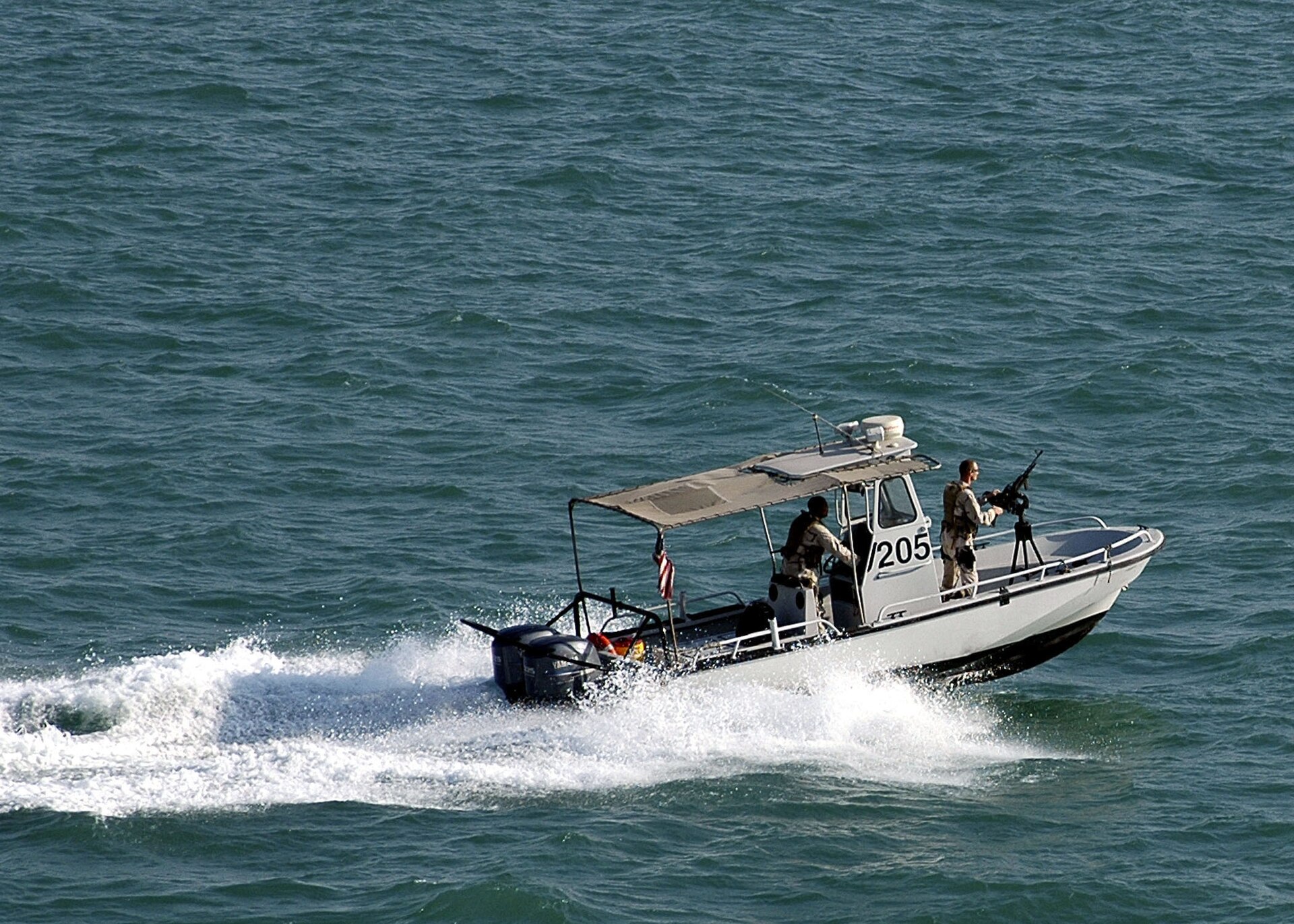
The meeting occurred in a city where the US Navy’s NSA Bahrain — Fifth Fleet headquarters, seventy-nine acres — had two AN/GSC-52B satellite communication terminals destroyed on February 28, each valued at roughly $20 million with deployment costs. The facility was evacuated. Fifty-five days later, the GCC’s military coordination apparatus convened adjacent to a headquarters that the war had already functionally dismantled.
The Middle East briefing 3,000+ readers start their day with.
One email. Every weekday morning. Free.
The Touring Pattern and What It Reveals
The April 24 bilateral was not an isolated event. It was part of a touring-coordination pattern that the Unified Military Command has been conducting since early April. UMC Commander Major General Abdulaziz bin Ahmed Al Balawi — who has held the post since February 2025 — visited Bahrain on April 2, Qatar on April 17, and Oman in the weeks between. Peninsula Shield Force Commander Major General Mohammed Abdulrahman Al Ruwaili attended both the Bahrain and Qatar sessions.
This pattern tells you what the GCC military coordination mechanism actually is: a series of bilateral courtesy calls wrapped in communiqué language about “enhancing coordination.” It is not a joint command activating. It is not an operations center standing up. It is one officer visiting six capitals sequentially, meeting each country’s defense establishment individually, discussing matters that never produce public outcomes.
Khaled Ibrahim Al-Sallal, a security researcher who has studied the GCC’s defense architecture, described the unified command as a structure that “remains a theoretical framework for coordination rather than an operational command with immediate executive authority.” Retired Major General Mohammed Saleh Al-Harbi put the constraint more bluntly: activation of the Joint Defense Agreement “remains contingent on the political decision of each state.”
Why Has $130 Billion in Annual Spending Not Produced a Joint Command?
GCC states collectively spend approximately $130 billion annually on defense — more than Russia’s official defense budget and roughly equivalent to the combined military spending of the next twenty African nations. After forty-three years, this expenditure has not produced an integrated command capable of planning and executing joint operations. The reason is structural, not financial.
Kristian Coates Ulrichsen, a fellow at Rice University’s Baker Institute who has tracked GCC defense cooperation since its inception, argues the council has “failed after 43 years and $130 billion in annual spending” to produce a joint command. Andrew Leber, writing for the Carnegie Middle East Program, identifies the root cause: Gulf states “spend their way to influence at the White House rather than building collective capacity.”
The spending pattern confirms Leber’s thesis. Saudi Arabia alone accounts for 62% of total GCC defense expenditure — $74.76 billion of $120.16 billion combined, according to Goldman Sachs estimates. The remaining five states are not equal contributors to a shared defense; they are clients of bilateral security guarantees, primarily with Washington, that make collective capacity redundant in peacetime and impossible to improvise during war.
The GCC Joint Defense Agreement, signed in December 2000, was designed to address this gap. It was never fully implemented. As of early 2001 — the most recent publicly available ratification data — only Bahrain had ratified it, according to a Congressional Research Service report. The agreement contains no automatic enforcement mechanism. It requires a political decision by each state, made individually, to activate — a requirement that effectively gives every member a veto.
Danielle Pletka of the American Enterprise Institute captured the structural limitation: “The GCC umbrella is more effective when risk levels remain relatively low.” The February 28 Iranian strikes, which hit all six member states simultaneously, were the precise scenario the agreement was designed for. It produced a communiqué.
The March 1 Declaration and Its Fifty-Four-Day Aftermath
The 50th Extraordinary Ministerial Council meeting convened by video conference on March 1, 2026, chaired by Bahrain Foreign Minister Abdullatif bin Rashid Al Zayani with all six states present. The declaration was unambiguous: “any attack against any member state constitutes a direct attack against all GCC countries, in accordance with the GCC Charter and the Joint Defence Agreement.” The council reserved rights under UN Charter Article 51 and “committed to take all necessary measures.”
The language echoed NATO’s Article 5. The follow-through did not. In the fifty-four days between that declaration and the April 24 meeting, no unified military command was activated. No joint operations center was established. No combined air defense network was deployed. No shared intelligence fusion cell was announced. The Unified Military Command — the renamed Peninsula Shield Force, headquartered at Hafar al-Batin with a peacetime strength of 7,000 to 10,000 troops — remained in its cantonment.
This was not the first time the Joint Defense Agreement was rhetorically activated without operational consequence. On September 9, 2025, an Israeli strike hit Doha — a direct attack on a GCC capital. The Joint Defense Council convened on September 18. UAE and Bahrain, both Abraham Accords signatories, sent lower-level delegates. Saudi Arabia’s and Oman’s defense ministers were absent. The Arab Center Washington DC described the response as “symbolic rather than operational.”
The Peninsula Shield Force’s only combat deployment in its forty-four-year history was the March 2011 intervention in Bahrain — which was conducted as a Saudi-UAE bilateral operation under the Peninsula Shield banner, with Qatar and Oman abstaining. The force has never conducted a six-nation operation.
| Date | Trigger | Declaration | Military Outcome |
|---|---|---|---|
| Sept 9, 2025 | Israeli strike on Doha | “Direct attack against all GCC countries” | No joint response; UAE/Bahrain sent lower-level delegates; two defense ministers absent |
| March 1, 2026 | Iran strikes all six GCC states | “Committed to take all necessary measures” under Article 51 | No unified command activated; each state responded via bilateral arrangements |
| April 24, 2026 | Ship seizures + shoot-on-sight order | “Enhancing ongoing coordination” | Bilateral meeting; no commitments announced |
Can Nine Supplier Nations Produce One Air Defense Network?
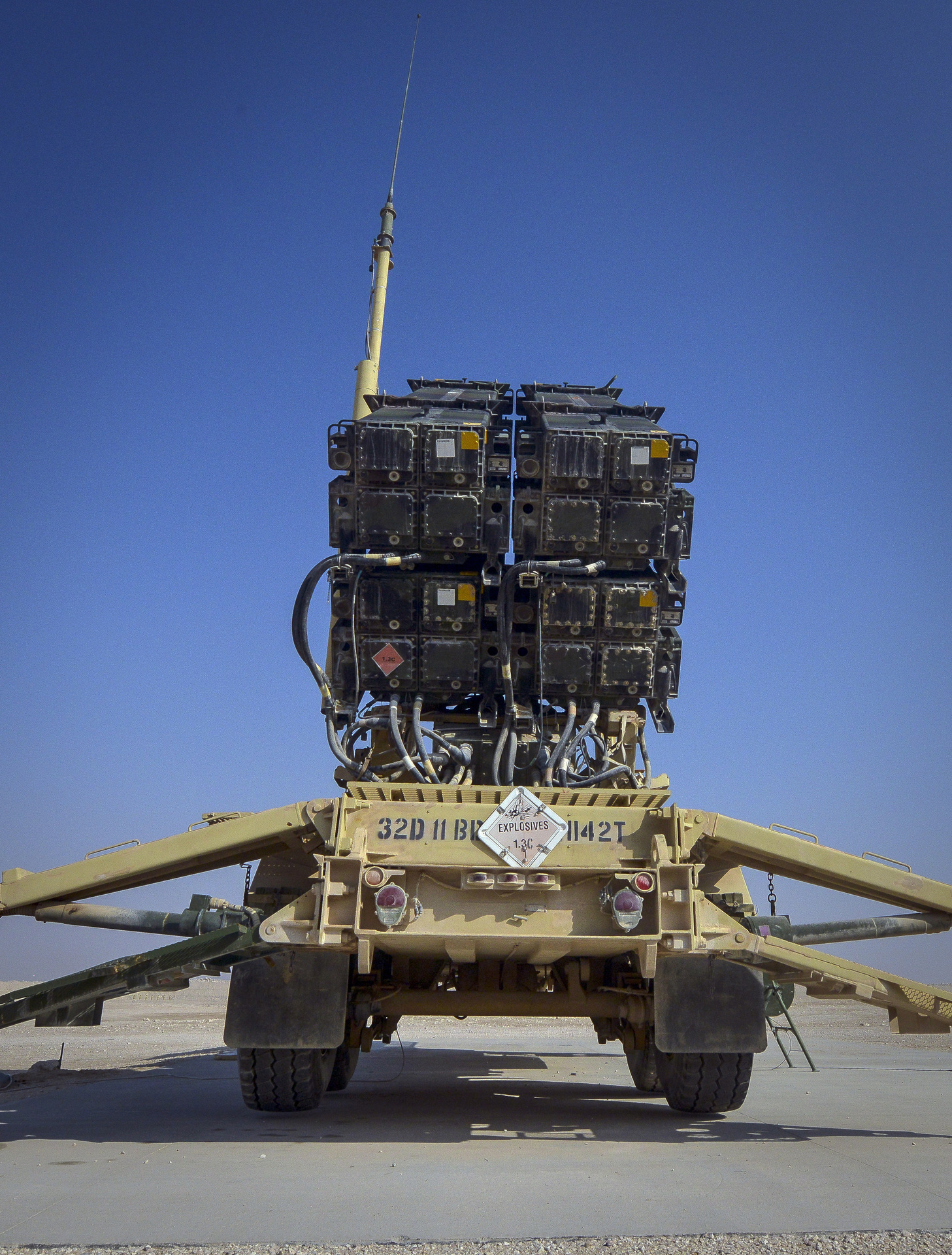
GCC air defense systems are supplied by nine different nations using incompatible communications protocols. Saudi Arabia’s Patriot batteries cannot share targeting data with Qatar’s NASAMS. The UAE’s Russian-origin Pantsir-S1 systems operate on protocols incompatible with American Link 16 networks. This is not a software update problem. It is the accumulated result of four decades of bilateral procurement decisions made without any requirement for interoperability.
The February 28 strikes exposed this fragmentation in real time. Iran launched simultaneous attacks across all six states: the UAE intercepted 165 ballistic missiles and 541 drones, with 35 penetrating defenses; Kuwait faced 97 ballistic missiles and 283 drones; Bahrain absorbed 45 missiles and 9 drones; Qatar took 18 ballistic missiles plus additional cruise missiles and drones. Each state fought its own war with its own systems under its own command authority.
The depletion was staggering. GCC states collectively fired approximately 2,400 PAC-3 interceptors in roughly thirty-five days. Remaining stocks stand at an estimated 400 rounds — 14% of pre-war levels. Bahrain’s stocks are roughly 87% depleted. UAE and Kuwait each lost approximately 75%. Qatar, which faced the smallest barrage, retained about 60% of its inventory.
Restocking is years away. Lockheed Martin produces 620 PAC-3 MSE interceptors per year at peak capacity. A January 2026 framework agreement targeting 2,000 per year will not achieve that production rate until at least the end of 2030, according to defense industry reporting.
An integrated air defense network — one that could allocate interceptors across borders based on threat priority rather than national ownership — would extend the life of remaining stocks. But building such a network requires shared radar data, common communications protocols, unified rules of engagement, and a single commander authorized to allocate one nation’s interceptors to defend another nation’s territory. None of these prerequisites exist.
Six States, Six Survival Strategies
Mehran Haghirian of the Middle East Council on Global Affairs identified the structural obstacle: GCC states “do not assess Iranian power in the same way, do not rank threats in the same order, and do not tolerate risk at the same level.” The February 28 strikes confirmed this assessment by producing six divergent responses from six states that had just declared an attack on one to be an attack on all.
Saudi Arabia, which bears 62% of GCC defense spending, stayed out of the thirty-nation Hormuz coalition while privately instructing GCC allies against escalation. MBS told leaders of Bahrain, Kuwait, Qatar, and UAE on February 28 to “avoid any steps that could inflame tensions with Iran,” according to Middle East Eye. The kingdom opened King Fahd Air Base to US forces but has not publicly endorsed the US naval blockade.
The UAE presents the sharpest contradiction. Abu Dhabi stated it “will not allow military operations from its territory or airspace” — yet it hosts Al Dhafra Air Base with 5,000 US personnel, F-22s, F-35s, U-2 reconnaissance aircraft, and Patriot batteries. Iran struck Al Dhafra anyway. Dr. Kristian Patrick Alexander of the Rabdan Security & Defense Institute in Abu Dhabi assessed that the UAE may participate in “occasional skirmishes against Iran in tacit coordination with Israel” while other GCC states view this as “stirring up trouble.” Iran’s April 16 UN complaint formalised that assessment: it named the UAE as the first Arab state to conduct offensive strikes against Iranian territory in this war, documenting the Lavan Island NIRDC refinery strike on April 8 — ceasefire day — and cementing the GCC’s split into three camps.
Qatar occupies the most structurally contradictory position. It hosts the Combined Air Operations Center at Al Udeid — CENTCOM’s air operations hub with roughly 10,000 US personnel — while Iran selectively exempts Qatari LNG tankers from the Hormuz blockade. Two Iranian Su-24s targeted Al Udeid on February 28 and were shot down; a missile struck the facility on March 3. Yet Qatar maintains separate diplomatic channels with Tehran that the other five states do not.
Former Qatari Prime Minister Hamad bin Jassim Al Thani captured the dilemma publicly on March 13. He called for a “NATO-style military and security alliance” while simultaneously warning that a direct clash “will deplete the resources of both sides and provide an opportunity for many forces to control us.” The call for a NATO-style alliance from a state whose territory hosts both the CENTCOM air operations center and an Iranian diplomatic back channel illustrates why such an alliance does not exist.
“Only collective action among the GCC states is likely to get them out of this dilemma.”
Andrew Leber, Carnegie Middle East Program, April 2026
Oman, which has pursued separate mediation with Iran since the war began, did not participate in the March 1 declaration’s rhetoric about “all necessary measures.” Kuwait activated bilateral US agreements. Bahrain, the most physically exposed — its entire territory sits within range of Iranian short-range ballistic missiles, its air defenses 87% depleted, its sole international land corridor across the King Fahd Causeway briefly shut on April 7 during an Iranian missile strike — has the most to gain from collective defense and the least capacity to demand it.
Does Saudi Arabia Have the Capacity to Backstop Collective Defense?
Saudi Arabia is the only GCC member with the military mass, geographic depth, and fiscal weight to anchor a collective defense framework. It is also the member least capable of doing so at this moment. The kingdom’s March 2026 oil production fell to 7.25 million barrels per day, down from 10.4 million bpd pre-war — a 30% decline, with the Khurais field’s 300,000 bpd still offline and no restoration timeline announced, according to IEA data.
The fiscal arithmetic is prohibitive. Saudi Arabia’s break-even oil price sits at $108-111 per barrel, according to Bloomberg’s PIF-inclusive estimate. Brent crude trades at roughly $90. Goldman Sachs projects a war-adjusted fiscal deficit of 6.6% of GDP, nearly double the official 3.3% forecast. Saudi oil revenue runs approximately $93 million per day below pre-war baseline.
The kingdom’s air defense stocks face the same depletion crisis as its neighbors, compounded by its disproportionate share of intercepts. Saudi Arabia operates the largest Patriot force in the GCC — roughly 400 rounds remain across all GCC states, with Lockheed Martin’s production line years from delivering replacements at the required scale.
Sinem Cengiz of Qatar University characterized February 28 as the GCC’s “long-standing nightmare scenario.” For Saudi Arabia specifically, the nightmare has a fiscal dimension the other five states do not share: the kingdom funds 62% of combined GCC defense spending while simultaneously absorbing the largest revenue shock. Backstopping collective defense requires surplus capacity. Saudi Arabia is running deficits on every relevant metric — production, revenue, interceptors, and the fiscal margin that underwrites all three.
Iran’s Answer to GCC Coordination
Iran did not wait for GCC coordination to materialize before acting against it. The February 28 strikes hit all six member states simultaneously — a targeting decision that communicated Tehran’s assessment that hosting US forces, regardless of any stated neutrality, constitutes participation in the war. The IRGC’s operational logic treats GCC territory as a single theater, even as the GCC itself cannot.
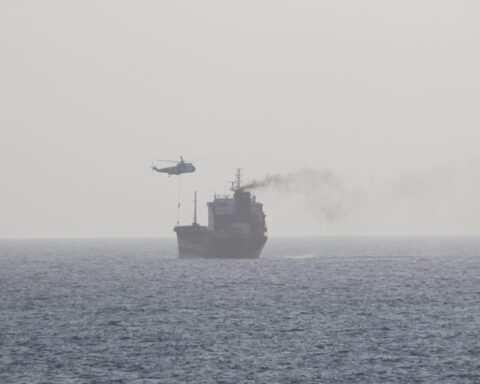
The timing of the April 24 meeting framed it against two Iranian provocations designed to demonstrate the irrelevance of GCC coordination mechanisms. On April 22 — two days before the Manama meeting — the IRGC seized the container vessel MSC Francesca and the bulk carrier Epaminondas in the Strait of Hormuz. GCC Secretary-General Jasem Mohamed Albudaiwi condemned what he called “barbaric attacks.” The ships remained in Iranian custody.
The IRGC’s April 17 statement — “Hands on trigger, ready alongside the Army to deliver a regret-inducing response” — was directed not at the GCC collectively but at the deterrence environment the GCC claims to maintain. Iran adviser Javad Karimi Ghodousi warned the war “could spiral into WWIII,” a statement calibrated to raise the perceived cost of any collective GCC military response.
Dr. Alexander assessed Iran’s targeting approach as “calibrated economic warfare” conducted through psychological pressure. The calibration is visible in the asymmetric treatment of GCC states: Qatar’s LNG tankers receive selective exemptions from the Hormuz blockade while Bahrain absorbs missile strikes. This differentiation is itself a weapon against collective defense — it gives each state a different incentive structure, making the already fragmented threat assessments even more divergent.
What Does Trump’s Shoot-on-Sight Order Mean for GCC Alignment?
President Trump’s April 23 order authorizing US naval forces to shoot and kill any armed Iranian vessel crew member who aims a weapon at a US ship was issued without consulting any GCC government. The order arrived on the eve of the April 24 Manama meeting, injecting a variable that no GCC military coordination mechanism is designed to process.
Saudi Arabia has “welcomed” the ceasefire framework but has not publicly endorsed the US naval blockade that began April 13. This distinction matters. The blockade applies to Iranian ports and toll-collecting vessels, not all Hormuz transit — but three US carrier strike groups now converge in waters where every GCC state has existential shipping interests. The shoot-on-sight order raises the probability of an incident that would force each GCC state to choose between solidarity with Washington and accommodation with Tehran.
Hesham Alghannam of the Carnegie Middle East Center identified the deeper fear: GCC states worry that Trump may grant Iran “leverage over the strait in exchange for a fragile truce” — a deal that would bypass the GCC entirely. The April 24 meeting, whatever coordination it discussed, cannot address a scenario in which the security guarantor restructures the regional order without consulting the states it is guaranteeing.
The Carnegie Middle East Program’s April 2026 analysis by Leber and Worby outlined three scenarios for the Gulf states. The second — “marginal ad hoc coordination” — was assessed as most probable. It describes a pattern of bilateral consultations that produce communiqués about enhanced cooperation without institutional mechanisms to deliver it. The April 24 bilateral in Manama, fifty-four days after a mutual defense declaration that produced no mutual defense, fits that scenario precisely.
| State | Feb 28 Strike Impact | US Basing | Iran Channel | Position on Blockade |
|---|---|---|---|---|
| Saudi Arabia | Largest interceptor expenditure; Khurais offline | King Fahd Air Base (opened post-Feb 28) | Via Pakistan (indirect) | Not endorsed publicly |
| UAE | 165 BMs + 541 drones (35 penetrated) | Al Dhafra (5,000 personnel, F-22s, F-35s) | Limited; Abraham Accords alignment | Silent |
| Kuwait | 97 BMs + 283 drones | Camp Arifjan, Ali Al Salem | None active | Deferred to bilateral US agreements |
| Qatar | 18 BMs + cruise missiles/drones | Al Udeid (~10,000 CENTCOM personnel) | Active; LNG exemptions from blockade | Undeclared |
| Bahrain | 45 missiles + 9 drones; NSA SATCOM destroyed | NSA Bahrain (Fifth Fleet, 79 acres) — evacuated | None | Hosts meeting but no public position |
| Oman | Minimal direct targeting | Limited; access agreements | Active mediation channel | Neutral |
“GCC states do not assess Iranian power in the same way, do not rank threats in the same order, and do not tolerate risk at the same level.”
Mehran Haghirian, Middle East Council on Global Affairs
The forty-three-year record is consistent. The GCC defense architecture is a set of bilateral spokes with Washington as the hub, dressed in the institutional language of collective security. The April 24 meeting in Manama — a bilateral meeting about multilateral coordination, conducted beside an evacuated headquarters, one day after an uncoordinated shoot-on-sight order, fifty-four days after a mutual defense declaration that produced no mutual defense — is the architecture performing as designed. The question is not whether it will improve. The question is whether any GCC state still believes it needs to.
Frequently Asked Questions
What is the GCC Unified Military Command?
The Unified Military Command is the January 2021 rebranding of the Peninsula Shield Force, established in 1982 and headquartered at Hafar al-Batin in northern Saudi Arabia. It maintains a peacetime strength of 7,000 to 10,000 troops under the current command of Major General Abdulaziz bin Ahmed Al Balawi, who assumed the role in February 2025. Despite the “unified command” designation, it operates as a coordination body that requires individual political authorization from each member state before any deployment — a requirement that has prevented activation during both the September 2025 Doha strike and the February 2026 Iran war.
Has the GCC Joint Defense Agreement ever been fully ratified by all six members?
Ratification status has never been publicly confirmed for all six states. The agreement, signed in December 2000, had been ratified only by Bahrain as of early 2001, according to Congressional Research Service Report RS20831. No subsequent public update has confirmed ratification by Saudi Arabia, the UAE, Kuwait, Qatar, or Oman. The agreement’s enforcement mechanism requires a political decision by each state — effectively granting every member a veto — regardless of ratification status.
How do GCC air defense systems compare to NATO’s integrated network?
NATO operates an Integrated Air and Missile Defence System (NATINAMDS) with a unified command structure, shared early-warning radar networks, and common data links (Link 16) that allow any member’s interceptors to engage threats identified by another member’s sensors. GCC states operate nine different supplier nations’ systems — including American Patriot, French Crotale, Russian Pantsir-S1, and South Korean KM-SAM — with no shared data link, no integrated radar picture, and no authority for one state’s commander to allocate another state’s interceptors. The technological gap is secondary to the political gap: NATO members have ceded a degree of national sovereignty to collective command that no GCC state has accepted.
Why did Iran strike all six GCC states simultaneously on February 28?
Iran’s simultaneous targeting of all six GCC states communicated a strategic position: Tehran treats US military basing in any GCC state as sufficient grounds for attack, regardless of that state’s declared neutrality or diplomatic posture. The differentiated scale of strikes — 706 projectiles at the UAE versus 18 ballistic missiles at Qatar — reflected Iran’s calibrated approach to each bilateral relationship while establishing that no GCC member enjoyed immunity. The IRGC has continued this differentiated pressure through selective Hormuz enforcement, exempting Qatari LNG from transit restrictions while seizing commercial vessels from non-GCC flagged shipping.
Could the GCC form a NATO-style alliance?
Former Qatari Prime Minister Hamad bin Jassim Al Thani called for precisely this on March 13, 2026. The structural obstacles are threefold: first, NATO’s Article 5 requires members to treat an attack on one as an attack on all and respond with military force — a commitment no GCC state has demonstrated willingness to honor in practice despite identical language in the March 1 declaration. Second, NATO’s integrated command structure requires members to place national forces under allied commanders during operations — a sovereignty concession that conflicts with the monarchical command structures of all six GCC states. Third, NATO members broadly agree on the identity of the threat; GCC states, as Haghirian documented, disagree on whether Iran is an existential threat, a manageable rival, or a necessary interlocutor. That institutional gap is compounded by a separate American constraint: the War Powers Resolution’s 60-day clock expires May 1 with no Authorization for Use of Military Force passed, injecting a congressional deadline into every Gulf state’s security planning. The May 1 war powers clock and what it means for US force posture in the Gulf.