WASHINGTON — President Donald Trump on April 23 ordered the US Navy to “shoot and kill” any vessel laying mines in the Strait of Hormuz, issuing a standing rules-of-engagement directive against Iranian crews operating under a command structure that has had no named leader for 26 days. The order — posted to Truth Social and confirmed by Defense Secretary Pete Hegseth within hours — transforms the world’s most critical oil chokepoint into an active kill zone, three days after the ceasefire between the United States and Iran was extended indefinitely.
The kill order targets IRGC Navy mine-laying teams using small boats described by Gen. Dan Caine, the acting chairman of the Joint Chiefs, as “Boston Whaler-sized” vessels between 13 and 42 feet. These are the remnants of a naval force that has lost 92 per cent of its large fleet. They are also crews answering to no publicly identified commander — Alireza Tangsiri, the IRGC Navy chief, was killed in a US-Israeli strike on March 26, and no successor has been named. Trump has issued an automatic kinetic trigger against a force with no officer authorised to accept a stand-down call.
Table of Contents
What Trump Ordered
Trump’s Truth Social post on April 23 left nothing to interpretation. “I have ordered the United States Navy to shoot and kill any boat, small boats though they may be (Their naval ships are ALL, 159 of them, at the bottom of the sea!), that is putting mines in the waters of the Strait of Hormuz,” he wrote. “There is to be no hesitation.” In the same post, he declared that no ship could enter or leave the strait “without the approval of the United States Navy,” describing it as “sealed up tight” until Iran agrees to a deal.
Hegseth confirmed the order’s operational status within hours. “If Iran is putting mines in the water or otherwise threatening American commercial shipping or American forces, we will shoot to destroy,” he told Fox News on April 24. “No hesitation — just like the drug boats in the Caribbean.” The comparison to counter-narcotics operations was deliberate — it frames mine-laying crews not as combatants protected by the laws of armed conflict, but as criminals caught in the act. In separate remarks to CBS News, Hegseth characterised the IRGC Navy as “reduced to a gang of pirates with a flag” and called mine-layers “criminals on the high seas.”
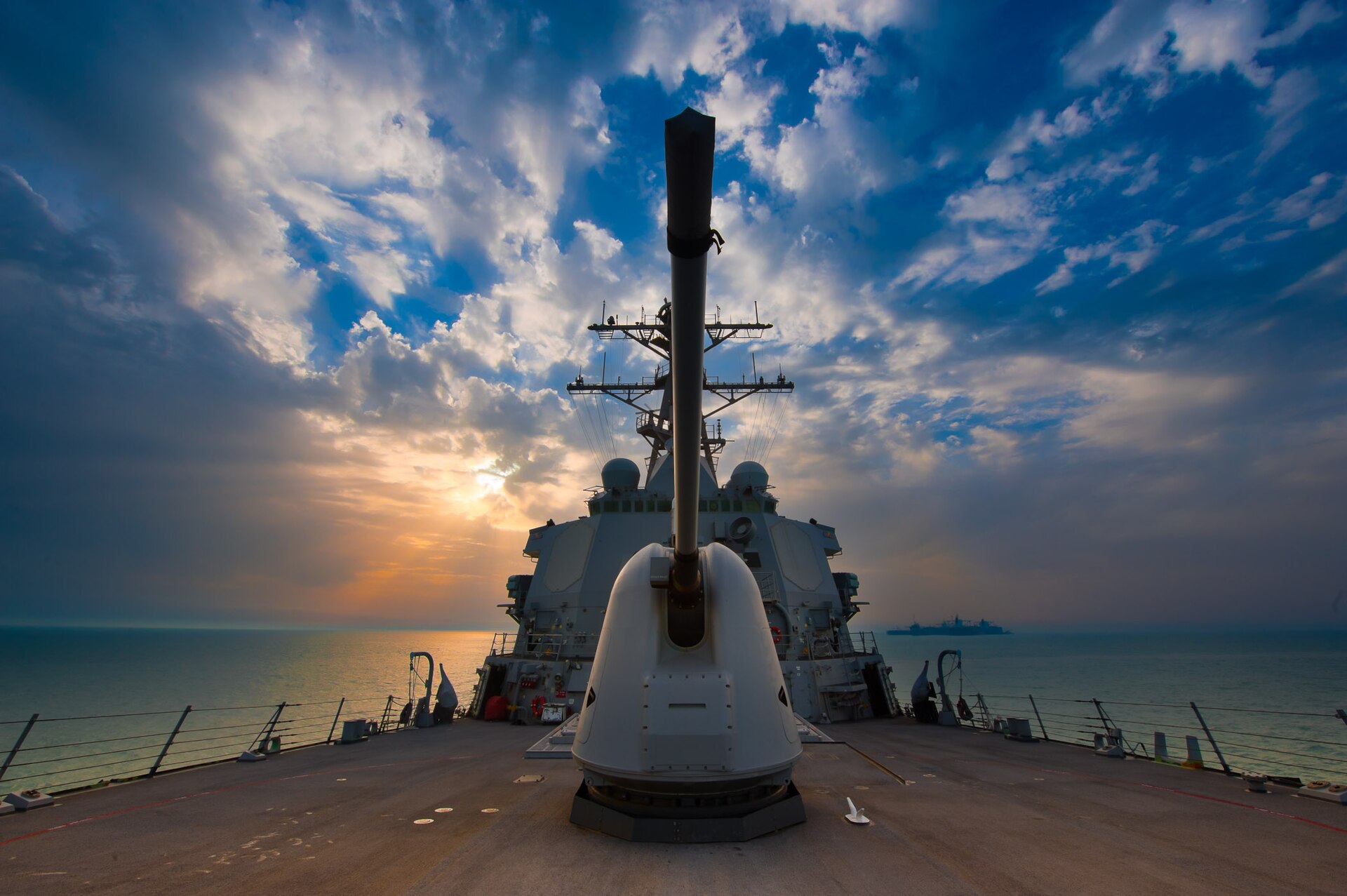
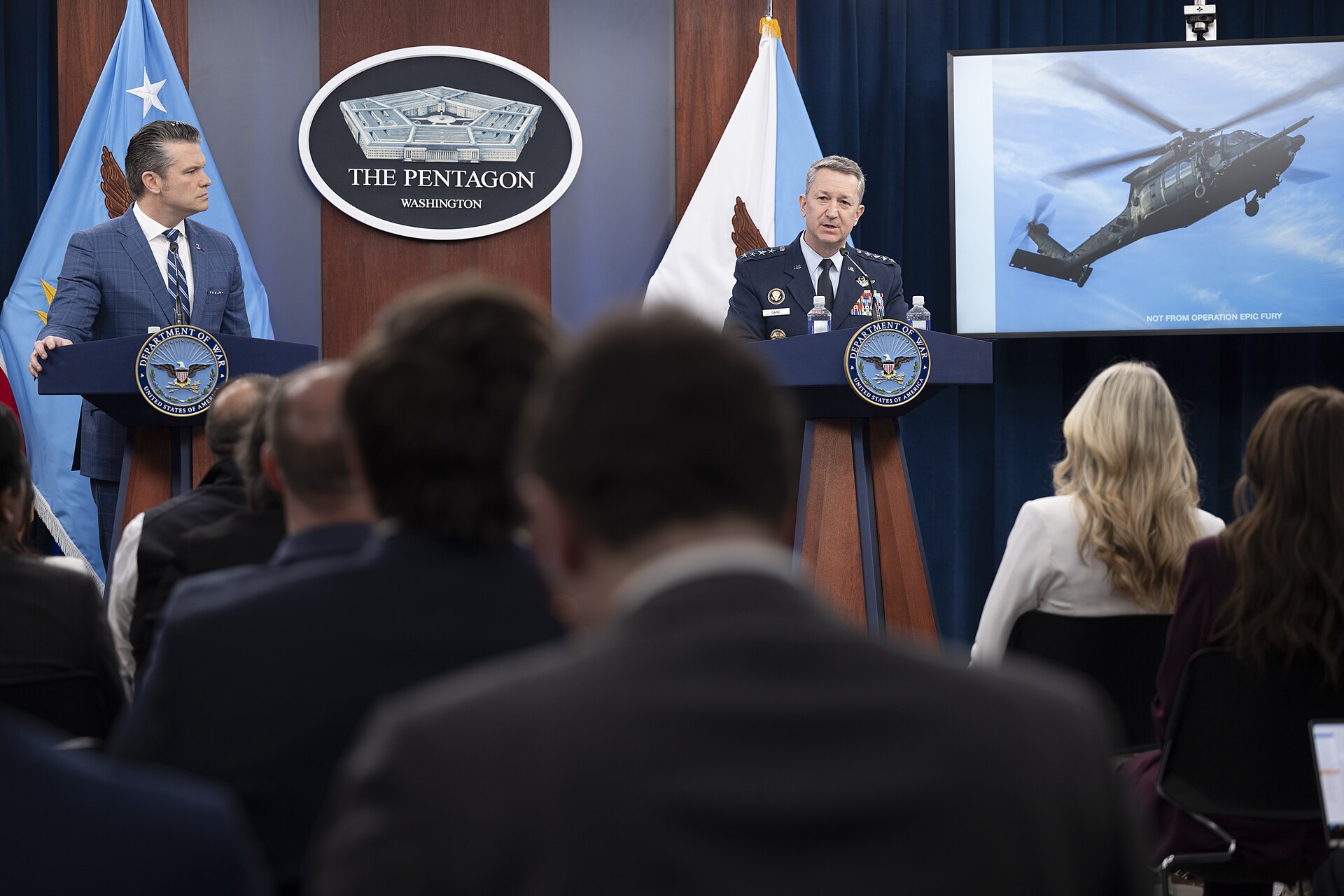
The language matters because it sets the threshold. Traditional rules of engagement require positive identification of hostile intent or hostile act before lethal force. Trump’s order collapses that sequence — the act of laying a mine is itself the trigger. There is no warning shot, no boarding attempt, no escalation ladder. Gen. Caine confirmed at a Pentagon press conference on April 23 that only 34 non-Iranian commercial vessels had been able to transit the strait, and that one vessel, the M/V Touska, had already been seized. Trump simultaneously ordered US minesweepers to continue clearing operations “at a tripled up level.”
Who Receives the Stand-Down Call?
The kill order’s most dangerous feature is not its lethality but its target. The IRGC Navy has operated without a publicly named commander since Tangsiri was killed on March 26 — confirmed dead on March 30 — making April 25 the 26th consecutive day of command vacuum at the top of Iran’s most operationally active maritime force. No successor has been announced. No deputy has been publicly elevated. The force that is laying mines in the world’s most critical chokepoint answers to a chain of command with no identifiable top link.
The Middle East briefing 3,000+ readers start their day with.
One email. Every weekday morning. Free.
This is not a bureaucratic gap. It is a structural problem for any off-ramp. If Washington decided tomorrow to negotiate a mine-laying halt, there is no IRGC Navy commander to call. If the ceasefire’s informal enforcement mechanisms — Pakistan’s shuttle diplomacy, Oman’s back channels — produced an agreement to stop mining operations, there is no officer with the authority to order it and the standing to make it stick. The IRGC Navy’s Channel 16 VHF broadcast publicly called Foreign Minister Abbas Araghchi’s April 17 tweet about reopening Hormuz “irrelevant,” a direct and public delegitimisation of Iran’s own chief diplomat by a headless military organisation.
The command vacuum sits inside a broader collapse of Iranian decision-making authority. The New York Times, cited by the Times of Israel and Israel Hayom on April 23-24, reported that Mojtaba Khamenei — the Supreme Leader’s son and de facto wartime authority — is “gravely wounded” with severe burns, has undergone three surgical procedures, and communicates exclusively through sealed handwritten messages delivered by couriers. He has reportedly delegated wartime authority to a board of three IRGC generals: Hossein Taeb, Mohsen Rezaei, and Mohammad Bagher Ghalibaf. Ali Vaez, the Crisis Group’s Iran project director, told Al Jazeera on April 23 that Mojtaba is “subservient to the Revolutionary Guards,” calling him a leader “only in name.”
President Masoud Pezeshkian rejected the characterisation of a divided leadership. “We are all ‘Iranian’ and ‘revolutionary’, and with the iron unity of the nation and government…we will make the criminal aggressor regret his actions,” he said on April 23. But Pezeshkian himself publicly accused IRGC commanders Vahidi and Abdollahi in April of wrecking the ceasefire — an accusation that, under Article 110 of the Iranian constitution, he has no power to act on. The president of Iran has zero authority over the IRGC. The man who does — Khamenei, whether Ali or Mojtaba — is either absent, wounded, or communicating by handwritten note.
The Mines Nobody Can Find
The kill order addresses the symptom. The mines already in the water are the disease, and the prognosis is measured in months. The Pentagon told the House Armed Services Committee on April 23 that clearing the Strait of Hormuz will likely take up to six months. Axios reported the same day that the IRGC Navy had laid additional mines that week, with US officials estimating fewer than 100 mines deployed in total — but acknowledging they could not provide exact numbers.
The reason for that uncertainty is the most dangerous variable in the strait. US officials confirmed to the New York Times, cited by Euronews on April 11, that IRGC mine-laying “lacked systematic documentation, leaving several mines untracked.” Sea currents have swept some mines from their original positions. Neither the United States nor Iran has a complete picture of where the mines are. Araghchi himself acknowledged in April that reopening Hormuz “will take place taking into account technical constraints” — diplomatic language for a military reality: Iran cannot map its own minefield.
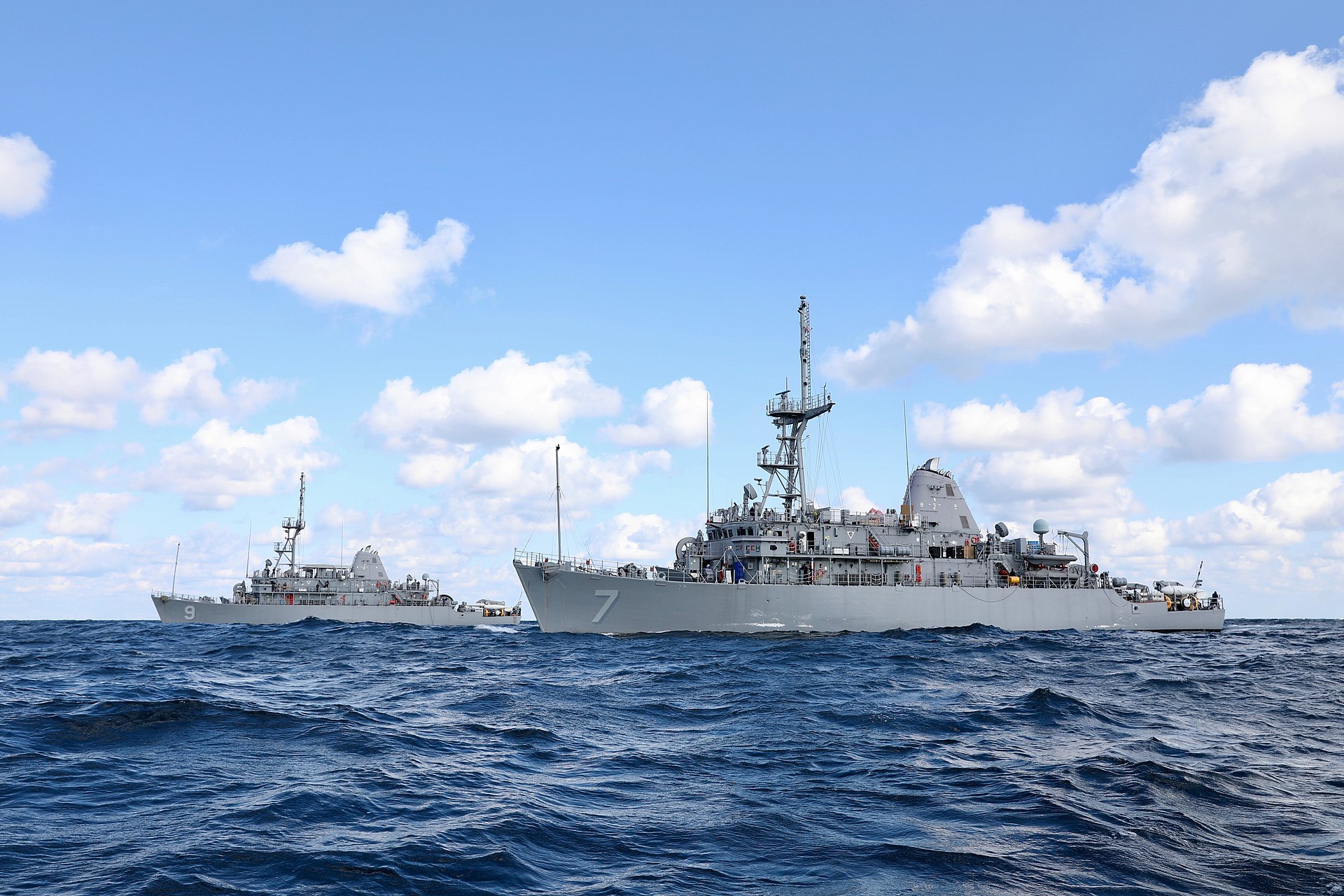
Iran’s mine arsenal extends far beyond what has been deployed. The IRGC maintains an estimated stockpile of more than 5,000 sea mines, including the Maham-3 moored mine with magnetic and acoustic sensors capable of operating at depths up to 100 metres, the Maham-7 seabed bottom mine with a 120-kilogram warhead and a conical shape designed to evade sonar, and the Chinese-origin EM-52 rocket mine — a seabed weapon that sits at depths up to 200 metres and launches a rocket upward when a ship passes overhead. The mines already laid, combined with the ones that have drifted, create what maritime historian Sal Mercogliano described to Stars and Stripes on April 23: “The problem is that if there’s a fear of a mine, which exists right now, you’ve got to prove that there aren’t any.” Naval analyst Steven Wills of the Center for Strategic and Budgetary Assessments reinforced the point: “One can never take for granted that mines are not present unless cleared.”
The US mine-clearing capacity is itself a story of pre-war miscalculation. Four Avenger-class mine countermeasures ships were decommissioned from Bahrain in September 2025 — five months before the war began — creating a capability gap that the Navy is now scrambling to fill. USS Pioneer and USS Chief have been dispatched toward CENTCOM, joined by three Littoral Combat Ships with mine-clearing packages. Chief of Naval Operations Adm. Daryl Caudle told DefenseScoop on April 24 that “the future is unmanned,” pointing to autonomous systems and AI for mine clearance, with allied support from Baltic states and the UK. That future has not arrived. The present is six months of clearing, with drifting mines that neither side can fully locate. The engineering constraints behind that timeline — fleet capacity, LCS equipment availability, and what a 30-percent operational rate means for Saudi oil recovery — are examined in detail.
Can the Ceasefire Survive a Kill Order?
The ceasefire, extended indefinitely on April 21, has no clause addressing mine-laying. This is not an oversight buried in fine print — it is a structural gap that both sides have exploited. Hegseth himself defined mine-laying as “a violation of the ceasefire” on April 23, but he did not identify what the treaty consequence is, because there is none. The ceasefire contains no enforcement mechanism for mine operations, no verification protocol, and no adjudication body.
The gap became operationally visible within hours of the ceasefire extension. On April 22 — one day after the indefinite extension — the IRGC seized the MSC Francesca, a Panama-flagged vessel it described as Israeli-linked, and the Epaminondas, a Liberia-flagged Greek-owned ship. It also fired on the Euphoria, another Liberia-flagged vessel. Tasnim and Fars News framed the seizures as enforcement of “maritime regulations.” The ceasefire text does not define what constitutes a maritime regulation, who enforces it, or whether vessel seizure violates the agreement.
Ghalibaf’s response to the kill order made the structural incompatibility explicit. “A full ceasefire only makes sense if it is not violated by the naval blockade and the hostage-taking of the world’s economy,” he posted on X on April 23. In the same breath: “With complete obedience to the Supreme Leader of the Revolution, we will make the aggressor criminal regret his actions.” Iran’s First Vice President Mohammad Reza Aref provided the economic framing: “The security of the Strait of Hormuz is not free. One cannot restrict Iran’s oil exports while expecting free security for others.”
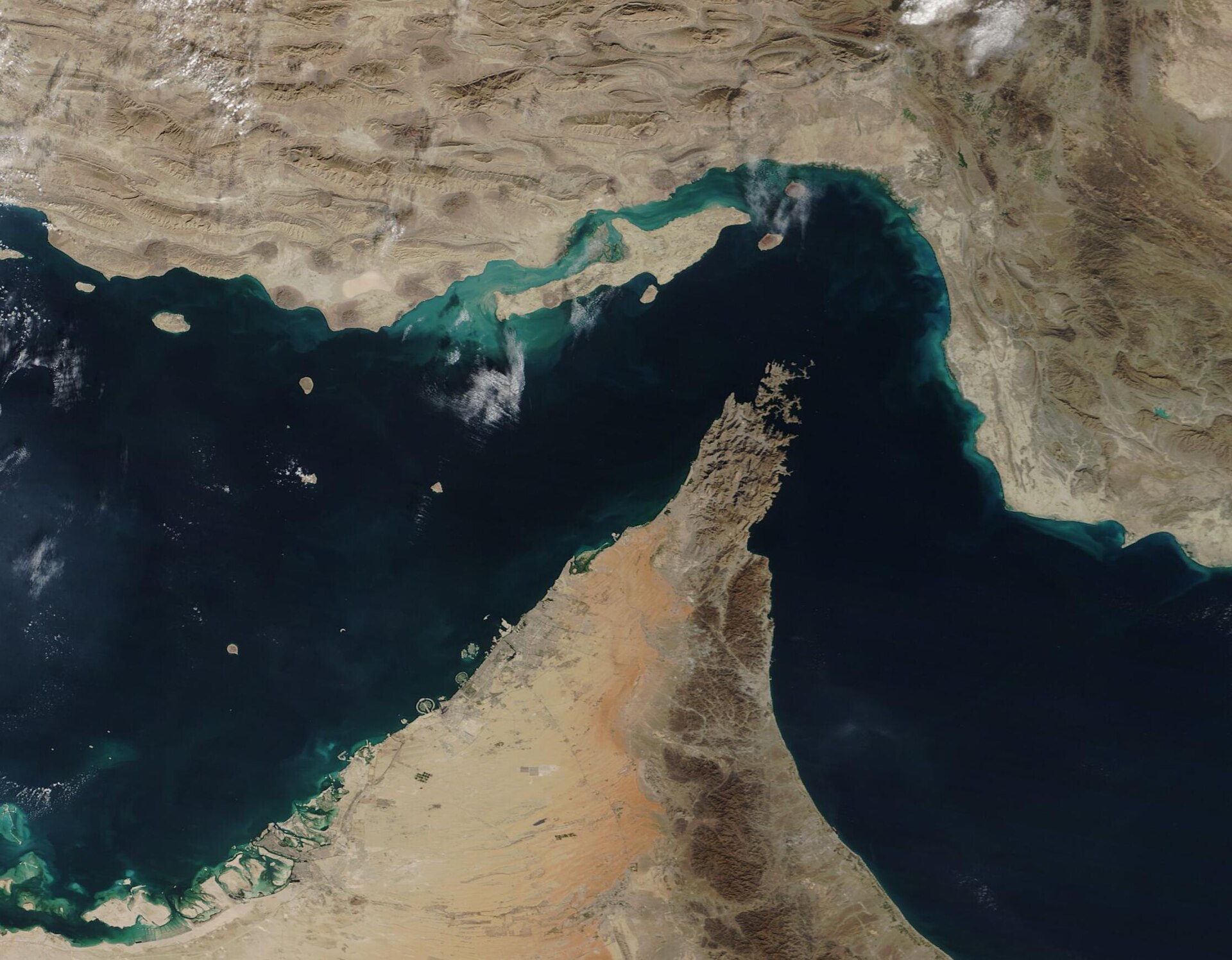
The kill order and the ceasefire now occupy the same physical space but operate under different logics. The ceasefire assumes de-escalation is possible through diplomatic channels. The kill order assumes mine-layers caught in the act will be destroyed on contact. These two frameworks cannot coexist in a 21-mile-wide strait where IRGC crews are deploying mines from 13-foot boats and US warships have orders to fire without hesitation. Strait of Hormuz vessel transits hit a record low of just three on April 19 — one inbound, two outbound — compared to a pre-war daily average of roughly 138, according to vessel-tracking data compiled by Lloyd’s List Intelligence. The ceasefire has not reopened the strait. The kill order guarantees it stays closed to any vessel without US Navy clearance.
Saudi Arabia’s Structural Trap
Sultan Al Jaber, ADNOC’s CEO, confirmed on April 23 what satellite tracking had already shown: 230 loaded oil tankers are waiting inside the Gulf, unable to transit the strait. Saudi Arabia has pressed the United States to abandon its Hormuz blockade, according to the Wall Street Journal, but the kill order moves in the opposite direction — it adds a lethal enforcement layer on top of the existing naval cordon.
Saudi Arabia’s exposure is arithmetic. The East-West Pipeline through Yanbu provides a bypass with a practical ceiling of 4 to 5.9 million barrels per day against pre-war Hormuz throughput exceeding 7 million. That structural gap of 1 to 2 million barrels per day cannot be engineered away. Saudi production already crashed from 10.4 million bpd in February to 7.25 million in March — a 30 per cent drop that the International Energy Agency called “the largest disruption on record.” Every day the strait remains mined is a day that gap compounds.
The kill order creates a secondary problem for Riyadh. If US forces destroy IRGC mine-laying boats — an outcome Trump’s language makes almost certain — the resulting escalation could collapse the ceasefire entirely. Saudi Arabia hosts the US military infrastructure that enables Hormuz operations, making the Kingdom a co-belligerent in Iranian strategic calculus regardless of its diplomatic posture. The three US carrier strike groups currently operating in the Arabian Sea have not entered the Persian Gulf, but the mine-clearing and interdiction forces operating inside the strait launch from facilities that Saudi Arabia provides.
The 1987 Precedent and What Changed
The last time the United States engaged an Iranian mine-laying vessel was September 21, 1987, when US Army helicopters operating from USS Jarrett caught the Iran Ajr in the act of deploying mines in the Persian Gulf. The helicopters fired rockets and machine gun rounds, seriously damaging the ship. Twenty-six Iranian crew were taken prisoner. The engagement established the legal and operational precedent that US forces can use lethal force against mine-laying vessels caught in the act — a precedent later reinforced by Operation Praying Mantis in April 1988, launched after USS Samuel B. Roberts struck a mine, which destroyed two Iranian oil platforms and sank two Iranian naval ships.
But the 1987 engagement and Trump’s 2026 order differ in kind, not just degree. The Iran Ajr interception was reactive — helicopters observed the mine-laying, confirmed it visually, and then engaged. Trump’s order is pre-emptive and public. It announces the ROE in advance, eliminating any element of tactical surprise but also removing the deliberative step between observation and engagement. The 1987 rules required confirmation of hostile act. The 2026 rules define the act itself as the trigger. A sailor on a 13-foot boat dropping an object over the side in the Strait of Hormuz is, under these rules, a legitimate target the moment the object hits the water.
The 1988 Praying Mantis operation was a retaliatory campaign — a military response to a specific mine strike on a specific ship. Trump’s order is neither retaliatory nor campaign-specific. It is a standing directive, unlimited in duration, applied to an entire category of activity across the full breadth of the strait. Hegseth’s comparison to Caribbean counter-narcotics operations makes the intended framework explicit: not the laws of war, but law enforcement at sea, where the engagement rules are simpler and the political constraints are fewer.
Background
The Iran-US conflict entered its 60th day on April 25, with the original ceasefire negotiated through Pakistan in mid-April and extended indefinitely on April 21. The IRGC Navy declared “full authority to manage the Strait” on April 5 and April 10 while Araghchi was negotiating in Islamabad. Iran’s mine-laying campaign began early in the conflict and has continued through every ceasefire phase. The US naval blockade, effective since April 13, originally applied only to Iranian ports and toll-collecting vessels; Trump’s April 23 order expanded it to a comprehensive transit-control regime enforced by lethal ROE.
Iran’s wartime command structure has fractured along constitutional lines. Ali Khamenei has been absent from public view for more than 44 days. His son Mojtaba, reported gravely wounded, communicates through couriers. The Supreme National Security Council, constitutionally responsible for defence coordination, is reportedly influenced by Vahidi, who holds an INTERPOL red notice for the 1994 AMIA bombing. The IRGC Navy — the force Trump’s order targets — operates inside this collapsed authority structure with tactical autonomy but no strategic direction.
FAQ
What types of mines has the IRGC deployed in the Strait of Hormuz?
Iran’s deployed arsenal includes moored contact mines, magnetic-influence mines, and acoustic-sensor mines. The most dangerous in its stockpile is the Chinese-origin EM-52 rocket mine, which sits on the seabed at depths up to 200 metres and launches a rocket propelled warhead upward when a ship passes overhead. These are far harder to detect and neutralise than conventional moored mines because they produce no cable signature for sonar to identify. The IRGC also possesses the Maham-7, a bottom mine with a conical shape specifically designed to reduce its sonar cross-section. Mine countermeasures vessels must sweep each type differently, which is one reason the Pentagon’s six-month clearance estimate is considered optimistic by some naval analysts.
What is the legal status of mine-laying under the laws of armed conflict, and does the kill order comply?
Mine-laying in international straits is regulated under Hague Convention VIII (1907), which requires states to notify mariners of minefields and take precautions to prevent civilian casualties. Iran has not filed any notification with the International Maritime Organization. Under the laws of armed conflict, mine-layers are lawful combatants — they are not criminals, regardless of Hegseth’s framing. Trump’s order collapses this legal distinction deliberately: by treating mine-laying as a law enforcement matter rather than a laws-of-war matter, the administration bypasses some procedural constraints on lethal engagement. Naval legal scholars have noted that the public pre-announcement of ROE, combined with the absence of a warning-shot or identification requirement, creates exposure to proportionality challenges if a misidentified vessel is destroyed. The US position is that mine-laying in a commercial strait constitutes an ongoing hostile act, which triggers the right of self-defence under Article 51 of the UN Charter.
The Hague Convention gap is precisely what Bahrain’s Security Council resolution targeted: Manama’s April 6 draft cited Iran’s failure to notify the IMO of any minefield as a violation of its own notification obligations, engineering the Russian and Chinese veto as a public record of their legal cover for Iran’s mine campaign.
Could Iran’s mine-laying crews operate without central command direction?
Yes, and that is precisely the concern. The IRGC Navy has a long history of decentralised operations, with local commanders exercising wide tactical autonomy. Tangsiri himself built this model — small-boat swarms operating from dispersed coastal bases with pre-delegated authority to engage. His death removes the strategic coordination layer but not the tactical execution capability. Individual IRGC Naval District commanders along Iran’s southern coast — from Bandar Abbas to Jask to Konarak — maintain their own boat fleets and mine stores. The kill order may destroy individual mine-laying crews, but it cannot eliminate a capability distributed across hundreds of kilometres of coastline and dozens of independent operating bases.
What happens to the 230 tankers waiting inside the Gulf?
They remain trapped in an increasingly expensive holding pattern. Each Very Large Crude Carrier costs its charterer an estimated $50,000-80,000 per day in demurrage — the fee paid when a vessel is delayed beyond its contracted loading or unloading window. For 230 vessels, that represents a collective daily cost potentially exceeding $10 million. The tankers cannot transit the strait without US Navy clearance under Trump’s expanded blockade order, and US forces will not clear them through waters they know contain drifting, unmapped mines. ADNOC CEO Al Jaber’s public confirmation of the 230-tanker figure marked a new threshold — it was the first time a Gulf state energy official quantified the backlog on the record.
Does the kill order apply to Iranian military vessels or only mine-laying boats?
Trump’s language specifies “any boat…that is putting mines in the waters.” The trigger is the activity — mine-laying — not the vessel classification. Gen. Caine’s description of the targets as “Boston Whaler-sized boats” between 13 and 42 feet suggests the primary concern is small craft, consistent with the IRGC Navy’s known mine-deployment methods. However, the order’s text does not exclude larger vessels. With 92 per cent of Iran’s large naval fleet destroyed, the practical universe of mine-laying platforms is overwhelmingly small boats. Hegseth’s broader formulation — “putting mines in the water or otherwise threatening American commercial shipping or American forces” — extends the engagement authority beyond mine-laying to any perceived threat — a considerably wider aperture.
The interaction between Trump’s kill order and the IRGC’s parallel enforcement of transit permits produces the double blockade mechanism that has reduced traffic to 3.6 per cent of its pre-war baseline — a dynamic in which both enforcement architectures reinforce each other’s closure effect regardless of which side nominally controls a given passage. Efforts to build a Western coalition response were formalized at a Northwood planning conference on April 22–23, where over 30 nations designed a freedom-of-navigation mission that the double blockade currently prevents from launching.
The expanded rules of engagement coincided with a separate blow to Iranian logistics: the April 26 explosion at Shahid Rajaei port, where mislabelled sodium perchlorate containers detonated and destroyed 15 hectares of Iran’s primary container terminal — giving shipping insurers and operators an additional reason to avoid Iranian waters beyond the mine-laying threat CENTCOM is now authorised to engage lethally.