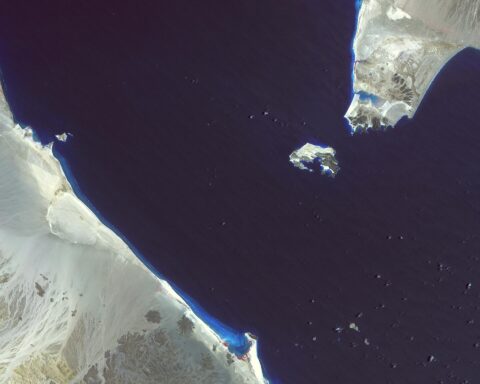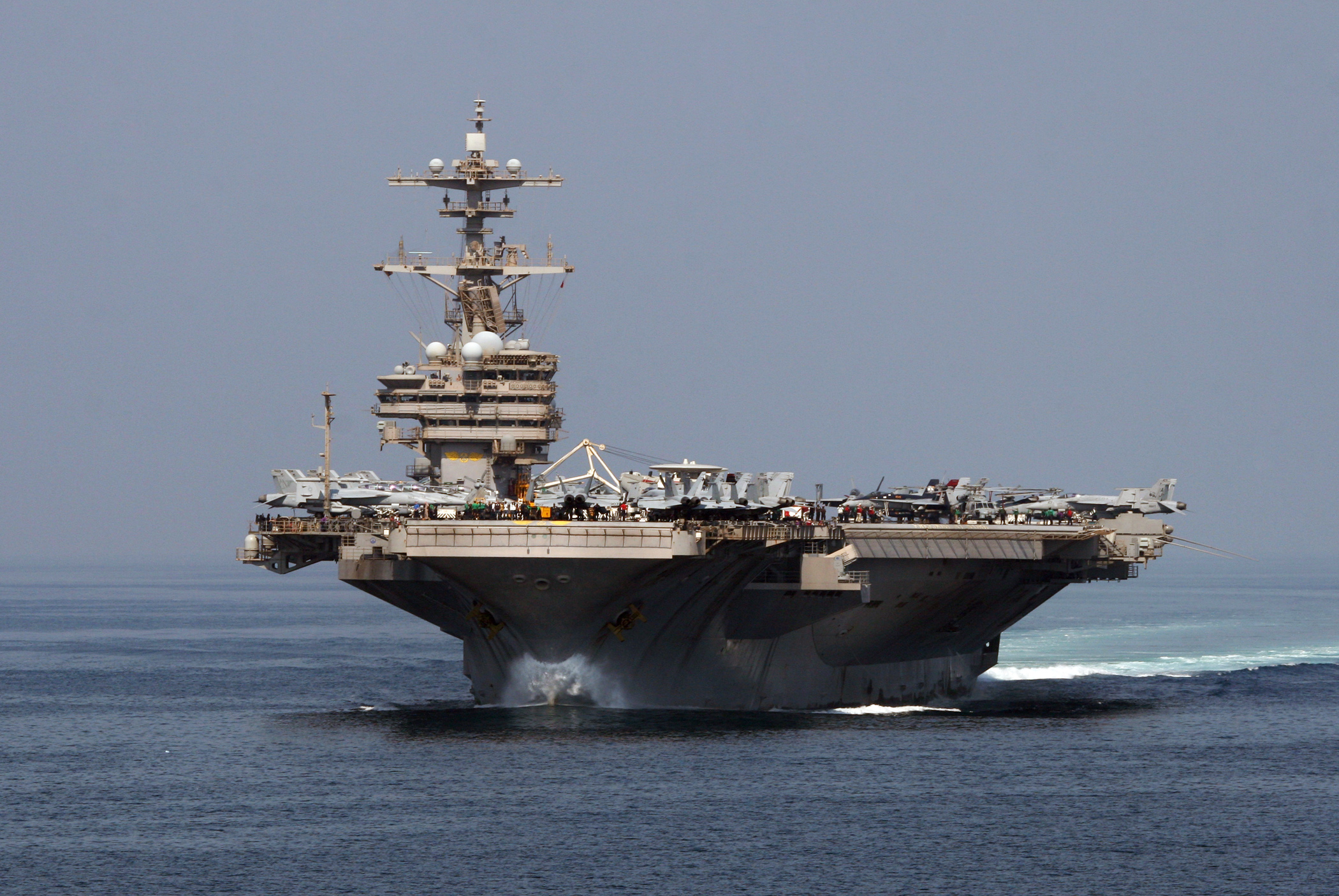

WASHINGTON — Three US aircraft carriers are now operating in the Middle East for the first time since the 2003 invasion of Iraq, and not one of them can get into the Persian Gulf. The USS Abraham Lincoln, USS Gerald R. Ford, and USS George H.W. Bush — carrying 200 aircraft, 15,000 sailors, and 75% of all combat-ready American carrier power — are parked in the Arabian Sea and Indian Ocean, on the wrong side of a strait that Iran mined eight weeks ago and that the US Navy no longer has the ships to clear.
The Pentagon is framing this as escalation dominance. The math suggests something closer to the opposite. With the Strait of Hormuz under functional Iranian closure since mid-March and Bab el-Mandeb contested by Houthi missiles, three carrier strike groups have become the most expensive furniture in the most dangerous waiting room on earth. The longer they sit, the more the coercive pressure inverts — because Washington now needs a deal not just to reopen oil markets, but to bring its own fleet home.
Table of Contents
- The Three-Carrier Force: Who Is Where
- Why Can’t the World’s Most Powerful Navy Enter the Persian Gulf?
- The Cape of Good Hope Detour and the Death of the Suez Route
- The Reverse-Hostage Dynamic
- How Long Can the Ford Stay at Sea?
- What Did Stavridis Say You Actually Need?
- The Logistics Ceiling: $27 Billion and Counting
- Iran’s Leverage Without a Navy
- What Happens When One Carrier Has to Leave?
- FAQ
The Three-Carrier Force: Who Is Where
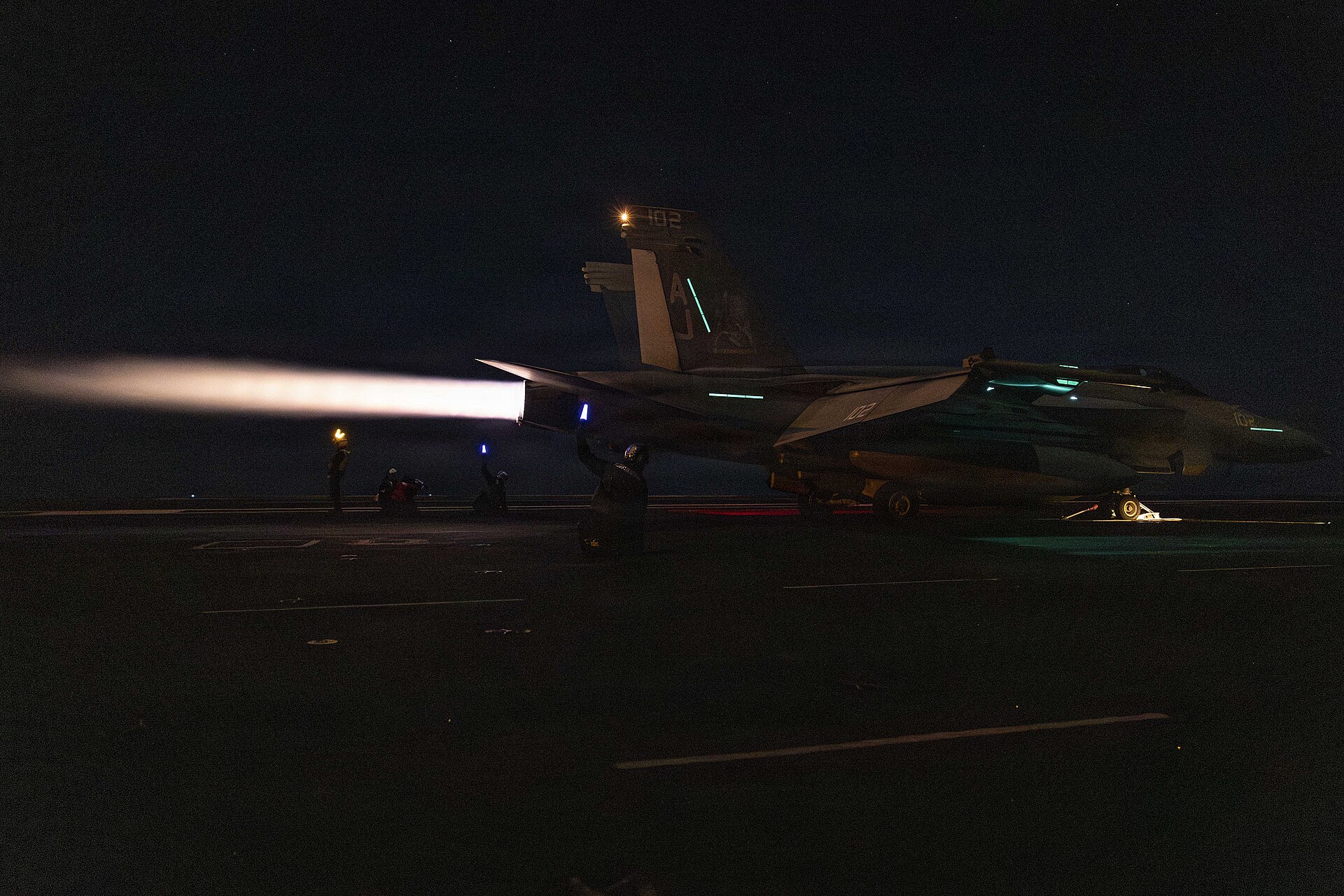
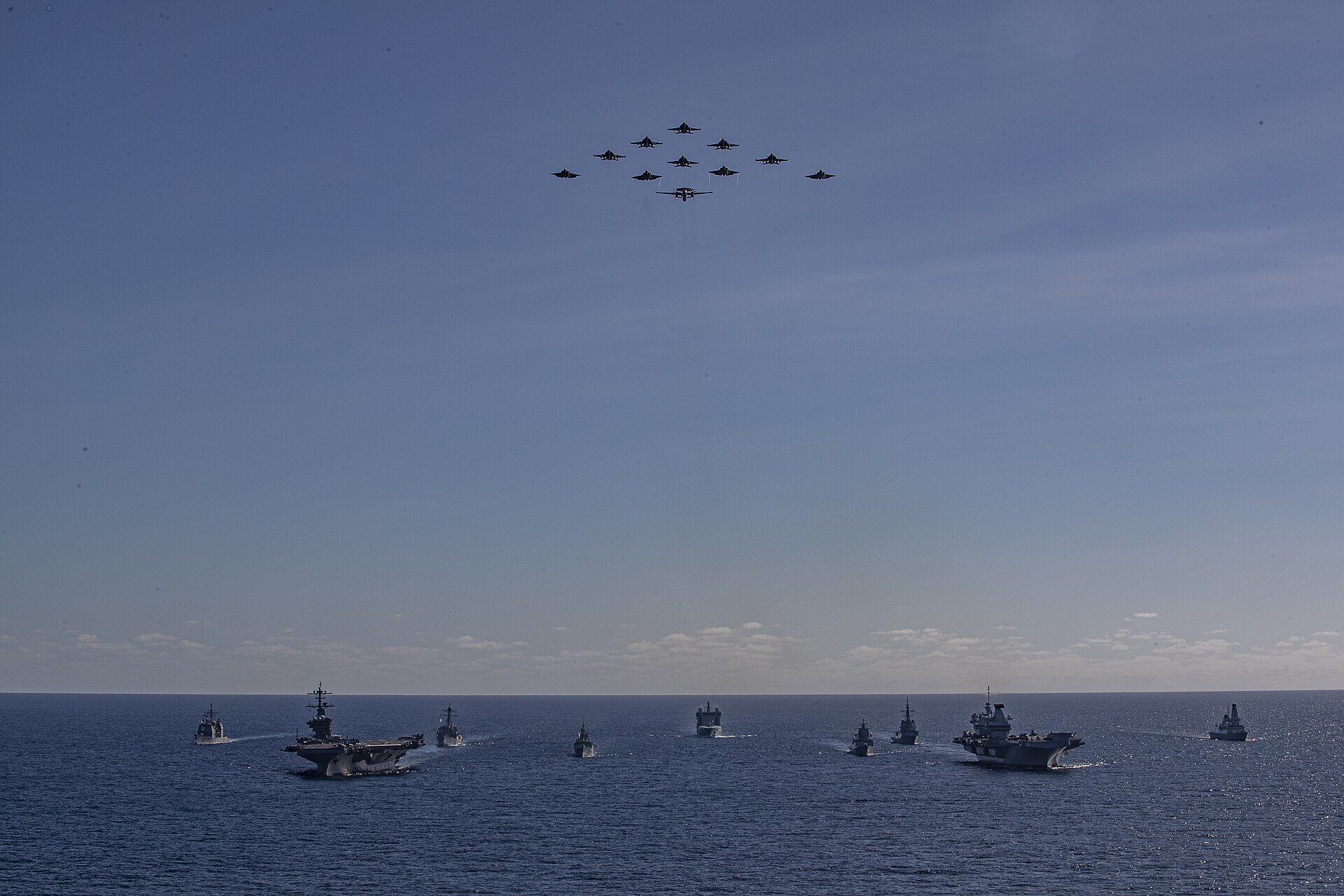
CENTCOM confirmed the three-carrier posture on April 24. The Abraham Lincoln (CVN-72) has been in the Arabian Sea since February 28, the opening day of Operation Epic Fury. The Gerald R. Ford (CVN-78) is in the Red Sea, where it has been since June 2025 — now past 300 days at sea, approaching the all-time post-Vietnam deployment record. The George H.W. Bush (CVN-77) entered the CENTCOM area of responsibility on April 23 after sailing 6,000 miles around the Cape of Good Hope because the normal Mediterranean-Suez-Red Sea route was deemed too dangerous to use.
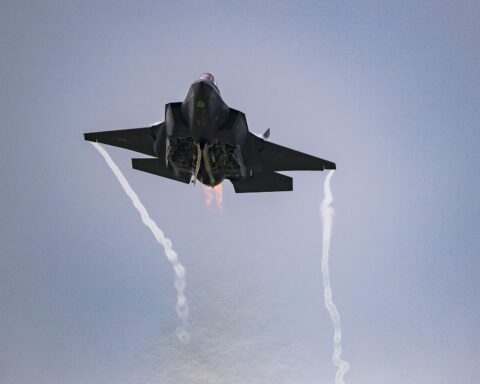
Together, the three strike groups bring roughly 200 combat aircraft — F-35C Lightning IIs, F/A-18E/F Super Hornets, EA-18G Growler electronic warfare jets — plus at least 16 Arleigh Burke-class destroyers across the broader theater. That represents 33% of all deployed Burke-class destroyers in the US Navy and 41% of all American warships currently at sea. Carl Schuster, a retired US Navy captain, told CNN the force signals that “Trump may apply more pain if peace talks don’t advance.”
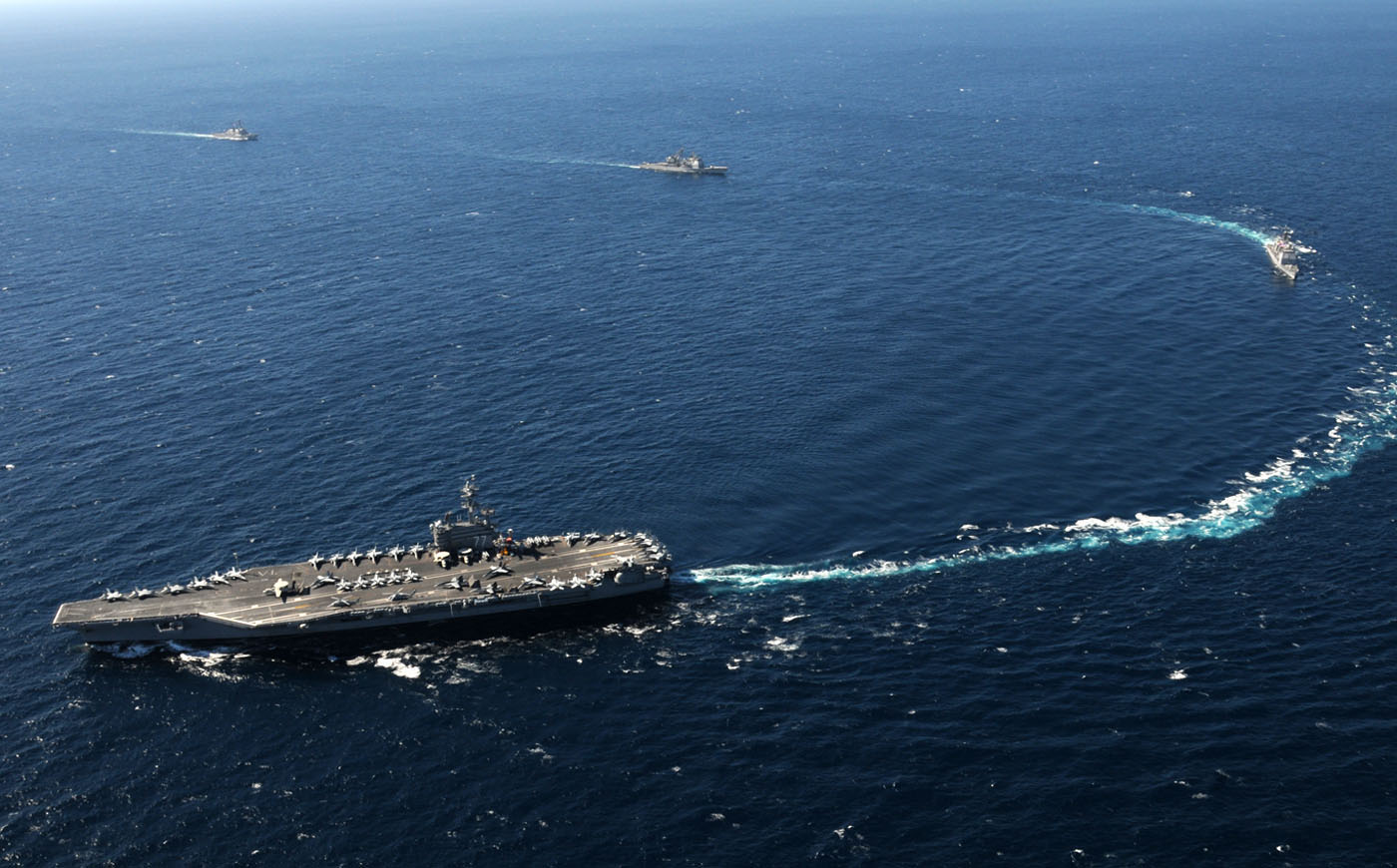
The last time this many carriers operated simultaneously in the Middle East was March 2003, when five carrier battle groups — Abraham Lincoln, Constellation, Kitty Hawk, Theodore Roosevelt, and Harry S. Truman — assembled for the invasion of Iraq. There was a brief overlap of three carriers in January 2012, but that was not operationally sustained. The 2003 comparison is instructive for a reason nobody in the Pentagon is advertising: in 2003, those carriers had free access to the Persian Gulf. Today, all three sit outside it.
| Carrier | Location | Days Deployed | Air Wing | Key Constraint |
|---|---|---|---|---|
| USS Abraham Lincoln (CVN-72) | Arabian Sea | ~56 days (since Feb 28) | CVW-9 | Continuous ops since Day 1 |
| USS Gerald R. Ford (CVN-78) | Red Sea | ~305 days (since Jun 24, 2025) | CVW-8 | Record deployment; mechanical degradation |
| USS George H.W. Bush (CVN-77) | Indian Ocean | ~25 days (since Mar 31) | CVW-7 | Cape of Good Hope routing; fresh but far |
Why Can’t the World’s Most Powerful Navy Enter the Persian Gulf?
The short answer is mines. Iran began laying naval mines in the Strait of Hormuz by March 10, turning 21 miles of shallow water into the most consequential minefield since the 1991 Kuwait campaign. The US Navy’s response capability is effectively zero: all four Avenger-class mine countermeasures ships previously based in Bahrain were decommissioned in September 2025 and physically left the theater in January 2026, five weeks before the war began. The Littoral Combat Ships meant to replace them were in Singapore and Malaysia when the crisis broke, and their mine countermeasures packages have been, in the words of a CNN analysis, “plagued with problems, in some cases making them combat ineffective.”
The Middle East briefing 3,000+ readers start their day with.
One email. Every weekday morning. Free.
The Pentagon told Congress in late April that clearing Hormuz could take six months — far longer than the 51-day benchmark from the 1991 Kuwait mine-clearing operation. CENTCOM is using underwater drones as a stopgap, but retired Admiral James Stavridis, the former NATO Supreme Allied Commander, laid out what a real Hormuz operation requires: “two aircraft carrier strike groups and about a dozen surface ships outside the Gulf to patrol the Strait of Hormuz at its entrance,” plus “at least six US destroyers” inside the Gulf. The three-carrier force barely meets his exterior requirement — and has nothing for the interior.
Steven Wills of the Center for Maritime Strategy put the escort problem bluntly: the replacement Littoral Combat Ships “possess limited point defense against cruise missiles and no ballistic missile defense capability.” So the carriers cannot go in, the minesweepers don’t exist, and the ships that were supposed to fill the gap can’t defend themselves. Three carrier strike groups, and the 21-mile bottleneck remains shut.
The Cape of Good Hope Detour and the Death of the Suez Route
The Bush strike group’s 6,000-mile Africa routing is not an operational quirk. It is a doctrine shift. The carrier departed Norfolk on March 31 and sailed south past Cape Agulhas, through the Mozambique Channel, and north into the Indian Ocean — arriving in the CENTCOM area on April 23. The standard route through the Mediterranean, the Suez Canal, and the Red Sea would have been roughly 6,000 miles shorter. The Navy chose the long way because Bab el-Mandeb, the 18-mile strait at the southern mouth of the Red Sea, has become what defense planners now call a “prohibitive battlespace.”
Houthi forces halted their commercial shipping attacks after the Israel-Gaza ceasefire in October 2025 but threatened to resume strikes in response to the Iran war on February 28. Their Iranian-supplied arsenal — anti-ship ballistic missiles with 200-kilometer range, sea-skimming cruise missiles, one-way attack drones — covers the entire southern Red Sea approach. Maersk, MSC, and CMA CGM are all still routing around Africa. The US Navy has now joined them. A supercarrier that cost $13 billion to build is taking the same detour as a container ship to avoid the same missiles.
The implication extends beyond this deployment. If Bab el-Mandeb remains contested — and there is no indication that Houthi capability is degrading — the historical US Navy entry architecture for the Middle East has been permanently redefined. The Mediterranean-based Sixth Fleet can no longer reinforce the Fifth Fleet through the Red Sea under combat conditions. Every future surge into the CENTCOM area will require the Africa route, adding weeks of transit time and burning through fuel, crew endurance, and replenishment stocks. The Bush group traveled with USNS Arctic, one of only two fast replenishment oilers left in the entire US Navy fleet — a detail that says more about sustainability than any Pentagon press release.
The Reverse-Hostage Dynamic
The conventional reading of three carriers in one theater is overwhelming force projection. The unconventional reading — and the one that Iran’s strategists almost certainly hold — is that Washington has committed 75% of its deployable carrier fleet to a theater it cannot leave without a deal. The carriers are not hostages in the literal sense. But they are trapped by the same logic that traps oil tankers: Hormuz is closed, Bab el-Mandeb is contested, and withdrawal without a settlement would be read across the region as strategic defeat.
This is the inversion that no one in Washington wants to name. The US deployed carriers to coerce Iran into a ceasefire. But Iran — by keeping Hormuz shut, by mining the strait, by issuing a total exclusion order on April 18 declaring that “any attempt to approach the Strait of Hormuz will be considered cooperation with the enemy, and the offending vessel will be targeted” — has created conditions under which the carriers themselves become a reason the US needs the deal.
Every additional day at sea degrades the Ford. Every week burns through munitions, spare parts, and the willingness of sailors to reenlist. The fleet that was supposed to force Iran’s hand is now a depreciating asset on Iran’s timeline.
Trump said on April 24: “I have all the time in the World, but Iran doesn’t.” The carrier deployment math says the opposite. Iran’s coastline isn’t going anywhere. The Ford’s hydraulic systems are. Emily Harding, vice president for defense and security at CSIS, acknowledged the structural shift: the closure of Hormuz had been “unexpected,” and Iran had demonstrated the ability to exert control over the strait without a conventional navy. Iran achieved carrier-level coercive effect with mines that cost a few thousand dollars each.
How Long Can the Ford Stay at Sea?
The Ford broke the post-Cold War carrier deployment record on April 15 at 295 days, surpassing the USS Abraham Lincoln’s COVID-era mark. As of April 25, it has been at sea for approximately 306 days. The all-time record — 332 days, set by the USS Midway in the Gulf of Tonkin during Vietnam — is now less than four weeks away. Nobody aboard the Ford is celebrating.
The ship has suffered a laundry-room fire, chronic sewage system failures, and degradation in hydraulic and plumbing systems that 19FortyFive estimates will require 12 to 14 months of post-deployment repair. Multiple sailors told the outlet, anonymously, that they will not reenlist after this deployment. Senator Tim Kaine wrote to the Secretary of the Navy on March 19 flagging crew exhaustion and deployment strain as a congressional concern. Pete Hegseth, the Secretary of Defense, responded to questions about the Ford’s endurance by saying the blockade would continue “as long as it takes, whatever President Trump decides.”
“A warship is a dangerous piece of military hardware. However, more dangerous than that warship is the weapon that can send that warship to the bottom of the sea.”
Ayatollah Khamenei, February 17, 2026 — eleven days before his death in the opening strikes
The Ford is simultaneously the most capable and most fragile ship in the fleet. It carries the Navy’s most advanced air wing and electromagnetic launch system, but it is operating well past the point where peacetime maintenance schedules would have pulled it home. The Navy has no replacement ready. The next carrier in the rotation — whoever it is — would need to transit the Cape of Good Hope, adding three to four weeks before it could relieve the Ford. The war is writing checks that the maintenance schedule cannot cash.
What Did Stavridis Say You Actually Need?
Retired Admiral James Stavridis, former NATO Supreme Allied Commander, told CNN that Hormuz control requires a minimum of two carrier strike groups outside the Gulf and at least six destroyers inside. Apply that framework to the current posture and the picture is sobering. Three CSGs and 16 regional destroyers technically meet the exterior requirement with one carrier to spare. But the interior requirement — six destroyers inside the Gulf — is unmet entirely, because nothing can get through the mined strait.
Mark Cancian, senior adviser at CSIS and a former Pentagon force-structure analyst, identified a different gap: the force “lacks Marines, special operations forces… and the logistics for an extended air campaign.” Peter Layton of the Griffith Asia Institute, a former Royal Australian Air Force officer, assessed that carrier-based jets are “a very inefficient way” to strike the kind of asymmetric, dispersed targets that Iran presents. Two to three carriers “exceed blockade requirements,” Layton said, but they support the threat of air strikes — which is to say, they are there for coercive signaling, not for the operational task at hand.
This is the uncomfortable arithmetic. The force is large enough to threaten escalation but not configured to execute the specific mission — clearing the strait and reopening Hormuz — that would actually end the crisis. It is a force optimized for a war Iran is not fighting. Iran is fighting with mines, exclusion orders, and the clock. That gap between threat and execution is compounded by the absence of any coordinated Gulf response: as a separate analysis details, the GCC’s unanimity veto means no binding collective military action has been authorized despite all six members absorbing Iranian strikes.
The Logistics Ceiling: $27 Billion and Counting
The Penn Wharton Budget Model estimates that Operation Epic Fury has cost the United States $27-28 billion in direct military expenditure through late April, with projections reaching $47 billion by month’s end. The daily burn rate has been running at approximately $1 billion per day during active strike phases, though the naval component is lower: a single carrier strike group costs $6.5-8.7 million per day to operate, putting the three-CSG force at roughly $20-26 million daily. The Pentagon requested a $200 billion supplemental appropriation in mid-March, a figure that makes the May 1 War Powers deadline more than a legal formality.
| Cost Category | Figure | Source |
|---|---|---|
| Total Operation Epic Fury (through late April) | $27-28 billion | Penn Wharton Budget Model |
| Projected through end of April | $47 billion | Penn Wharton Budget Model |
| First 100 hours (active strikes) | $3.7 billion ($891M/day) | CSIS (Cancian/Park) |
| Naval operations daily surcharge | $15.4 million/day | CSIS |
| Single CSG daily operating cost | $6.5-8.7 million/day | DefenceXP / Semler analysis |
| Three-CSG combined daily cost | ~$20-26 million/day | Calculated from CSG estimates |
| Pentagon supplemental request | $200 billion | DoD to Congress, March 2026 |
| Ford post-deployment repair estimate | 12-14 months | 19FortyFive |
The $200 billion supplemental tells you something the force posture alone doesn’t: the Pentagon knows this is not a two-week operation. It is budgeting for a sustained commitment in a theater where three carriers generate enormous daily costs while the strategic objective — reopening Hormuz — remains structurally out of reach without either a negotiated settlement or a mine-clearance capability that does not currently exist. CSIS calculated the initial strike phase at $891 million per day; the ongoing naval presence is cheaper but indefinite, and indefinite multiplied by $20 million a day adds up faster than Washington’s appetite for supplemental appropriations.
Iran’s Leverage Without a Navy
Iran’s conventional navy is functionally destroyed. US intelligence assesses that Iran retains approximately 40% of its pre-war arsenal, including long-range attack drones, and 60% of ballistic and cruise missile launchers. But the IRGC’s coercive power over the strait does not depend on a functioning navy. It depends on mines already in the water, shore-based anti-ship missiles in hardened positions along the Iranian coastline, and an exclusion framework that has reduced Hormuz transit to a trickle — three vessels on April 19, down from an average of 40-50 per day before the war.
The IRGC Navy declared “full, intelligent control” over the strait on April 11 and followed it on April 18 with a total exclusion order: “No ship, of any kind, should leave its anchorage in the Persian Gulf and the Sea of Oman. Any attempt to approach the Strait of Hormuz will be considered cooperation with the enemy, and the offending vessel will be targeted.” On April 22, Iran seized two commercial vessels — the MSC Francesca and the Epaminodes — to demonstrate the order was not rhetorical. Hormuz is not contested. It is closed.
There is a deeper asymmetry that Washington has not publicly reckoned with: Iran reportedly cannot locate all of its own mines, according to reporting by the New York Times. This is not just a clearance problem for the US Navy — it is a negotiation problem. Even if Tehran agreed tomorrow to reopen the strait, the physical act of demining would take the Pentagon’s own estimate of six months. Iran has created a condition it may not be able to reverse quickly, which means the carriers are stuck not just by Iranian intent but by Iranian incompetence. The mines don’t care who wants them gone.
What Happens When One Carrier Has to Leave?
The Ford cannot stay indefinitely. Its mechanical systems are degrading, its crew is exhausted, and the all-time 332-day record is less than a month away. When it rotates home — and it will — the Navy faces a replacement problem compounded by the Cape routing requirement. Any relieving carrier must sail around Africa, adding three to four weeks of transit. During that gap, the three-carrier posture drops to two, and Stavridis’s minimum exterior requirement for Hormuz patrol is met with zero margin.
The broader fleet picture makes this worse. Only about four of the Navy’s eleven carriers are deployment-ready at any given time due to maintenance cycles. Three are already here. That leaves one carrier for the entire rest of the world — the Pacific, where China is watching closely, and the Atlantic, where NATO commitments don’t disappear because the Middle East is on fire. The Atlantic Council’s force tracker puts it starkly: 75% of combat-ready carrier capacity is committed to a single theater. Saudi Arabia is already drawing conclusions about what that means for long-term US reliability.
The Iran government has stated that lifting the US blockade of Iranian ports — in effect since April 13 — is a precondition for negotiations. The US position is that the blockade continues until a deal is reached. This is a circular deadlock: America wants a deal to end the war, Iran demands the blockade end before talks, and removing the blockade eliminates the coercive leverage that is supposed to produce the deal. The carriers are caught in the middle of this logic loop, burning fuel and crew morale while the diplomats argue about sequencing. The Ford’s plumbing is not waiting for a diplomatic breakthrough.
| Metric | 2003 Iraq (5 Carriers) | 2026 Iran (3 Carriers) |
|---|---|---|
| Carriers in theater | 5 | 3 |
| Access to Persian Gulf | Yes — free transit | No — mined, closed |
| Mine countermeasures ships available | Full MCM squadron | Zero (decommissioned Sept 2025) |
| Entry route | Mediterranean-Suez-Red Sea | Cape of Good Hope (Africa) |
| Longest single deployment | ~180 days | 306+ days (Ford) |
| % of deployable carriers committed | ~60% | 75% |
| Adversary naval threat | Minimal (Iraq had no navy) | Mines, ASCMs, exclusion orders |
| Congressional war authorization | AUMF (Oct 2002) | None — May 1 deadline |
Three aircraft carriers in the Middle East is supposed to be the ultimate expression of American military dominance. In 2003, it was. In 2026, it is something else entirely: a logistics ceiling dressed up as a show of force, a fleet that cannot enter the body of water it was sent to control, and an open-ended commitment that gets harder to sustain and harder to end with every day that passes. The carriers are not projecting power into the Persian Gulf. They are absorbing cost outside it, while Iran’s mines do the work that Iran’s navy could not.
Frequently Asked Questions
Which US aircraft carriers are currently in the Middle East?
As of April 25, 2026, the USS Abraham Lincoln (CVN-72) is in the Arabian Sea, the USS Gerald R. Ford (CVN-78) is in the Red Sea, and the USS George H.W. Bush (CVN-77) is in the Indian Ocean after entering the CENTCOM area on April 23. The Bush carrier strike group includes the destroyers USS Ross, USS Donald Cook, and USS Mason, along with USNS Arctic — one of only two fast replenishment oilers remaining in the US Navy, a measure of how stretched naval logistics have become.
How does the 2026 carrier deployment compare to the 2003 Iraq invasion?
The 2003 force was larger — five carrier battle groups — but it faced an adversary with no functional navy, no anti-ship missiles, and no mines. The 2026 deployment is operationally constrained in ways the 2003 one never was. A key difference rarely noted: in 2003, the US had a full mine countermeasures squadron in Bahrain; in 2026, that entire squadron was decommissioned five months before the war began, leaving the Gulf effectively unenterable regardless of carrier numbers.
Why did the USS George H.W. Bush sail around Africa instead of through the Suez Canal?
The Bush strike group departed Norfolk on March 31 and took a 6,000-mile detour via the Cape of Good Hope because the Bab el-Mandeb strait — the 18-mile chokepoint at the southern end of the Red Sea — is contested by Houthi forces equipped with Iranian-supplied anti-ship ballistic missiles (200km range), cruise missiles, and one-way attack drones. The Houthis threatened to resume commercial shipping attacks on February 28, the day the Iran war began. MARAD issued an advisory covering the entire Red Sea approach. Commercial carriers Maersk, MSC, and CMA CGM had already been routing around Africa since late 2025.
Can the US Navy clear the mines in the Strait of Hormuz?
Not quickly — and the political path may be harder than the technical one. Even if Iran agreed tomorrow to cooperate with demining, international mine clearance law requires the laying party to hand over charts and mine positions. If Iran’s own records are incomplete — as NYT reporting suggests — no authoritative mine chart exists. That makes any negotiated reopening legally and practically complicated: the US cannot guarantee safe transit through a minefield it cannot fully map, regardless of who nominally controls the strait.
How much does it cost to operate three carrier strike groups simultaneously?
The visible costs — roughly $20-26 million per day in CSG operating expenditures — are only part of the picture. The hidden cost is deferred maintenance. The Ford’s documented mechanical failures (sewage systems, hydraulics, the laundry-room fire) will require an estimated 12-14 months of repair according to 19FortyFive, and the Navy has not publicly estimated the bill. Post-deployment refits for heavily used carriers have historically run $500 million to over $1 billion. The longer the Ford stays, the larger that deferred liability grows — and the longer the Navy goes without one of its most capable platforms available for other contingencies. The operational urgency driving that deployment calculus intensified on April 23 when Trump issued a standing shoot-to-kill order against IRGC mine-laying crews in Hormuz — covered in Trump Orders Navy to Kill Iranian Mine-Laying Crews in Hormuz.