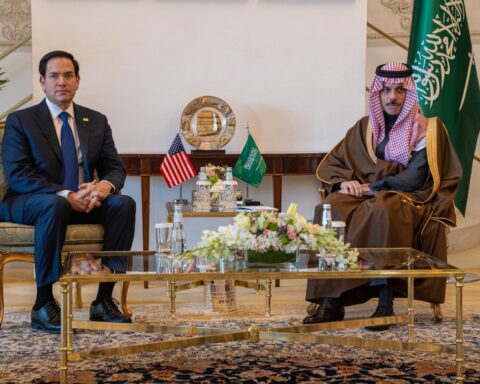
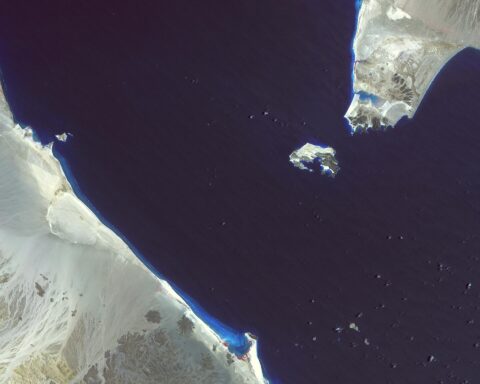
WASHINGTON — The United States military has identified IRGC Commander-in-Chief Ahmad Vahidi as a named strike target, CNN reported April 23, framing his potential assassination as a tool to break the deadlock in Islamabad ceasefire negotiations. Two days later, Witkoff and Kushner flew to Islamabad for direct talks with Iran — making this the first time in the modern history of US-Iran confrontation that Washington has publicly signaled willingness to kill a man whose government it is simultaneously sitting across a table from.
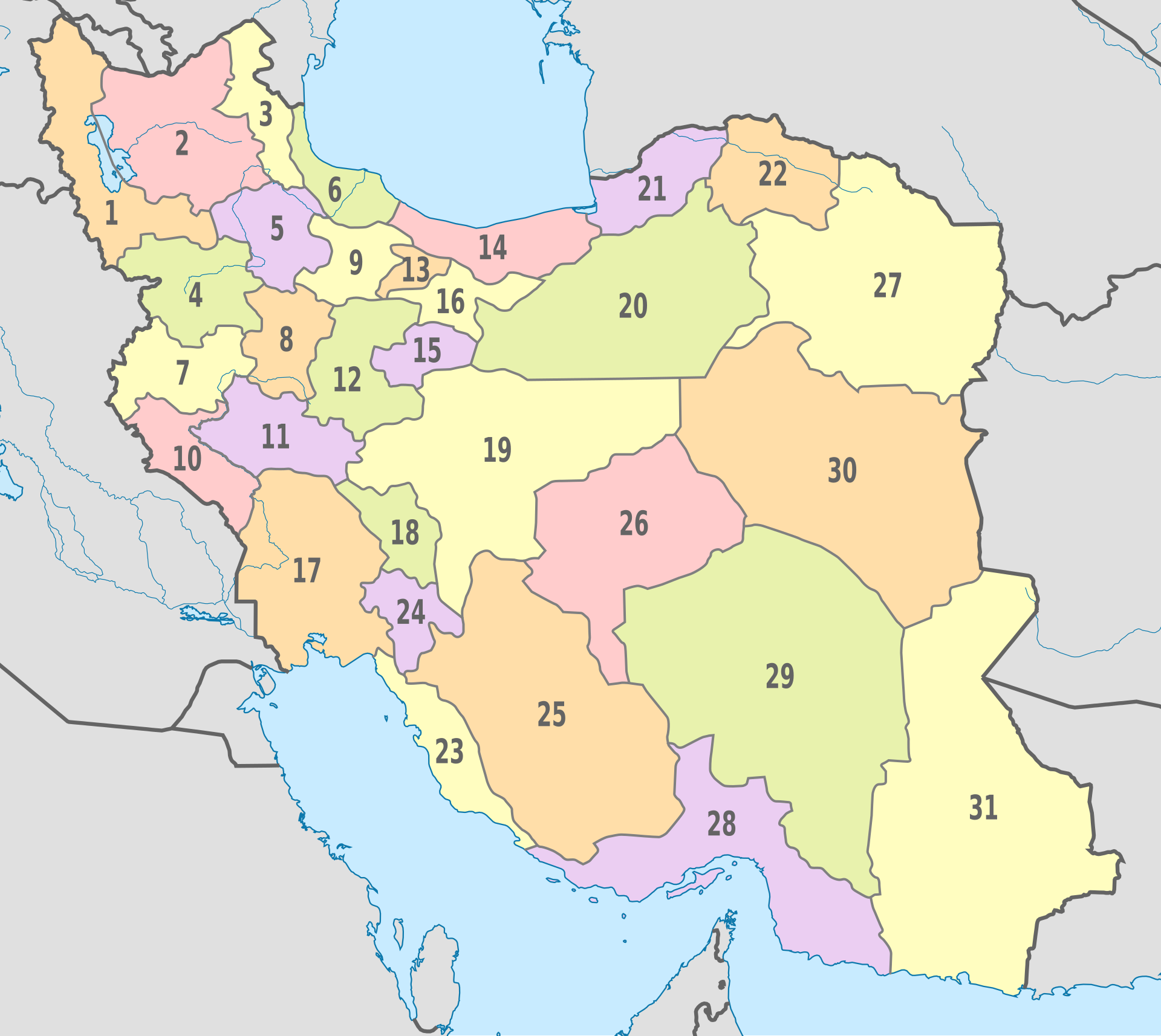
The logic is Soleimani redux: remove the obstructionist, unlock the deal. The problem is that Vahidi commands a force that was redesigned specifically to survive exactly this kind of strike. The IRGC’s Mosaic Defense doctrine — 31 autonomous provincial corps, each with independent command-and-control authority — was built after Iranian strategists watched the US decapitate Iraqi command structures in 2003. Killing Vahidi doesn’t unlock ceasefire authorization. It removes one node from a network engineered to function without any single node.
Table of Contents
The Four Strike Packages
CNN’s April 23 report described four distinct categories of military options the Pentagon has prepared for President Trump. The first targets Hormuz fast-attack boats and minelaying vessels — the IRGC Navy’s operational fleet in the strait. The second covers dual-use infrastructure and energy targets inside Iran. The third would strike remaining missile launchers, drone production facilities, and stored munitions. The fourth — and the one that changes the diplomatic calculus entirely — targets “individual Iranian military leaders and other ‘obstructionists’ within the regime who US officials have recently suggested are actively undermining negotiations.”
Vahidi is the named target in that fourth package. The Pentagon’s official response, delivered by an unnamed DoD official, was boilerplate: “Due to operations security, we do not discuss future or hypothetical movements.” But the CNN report itself functions as the signal — published the same week Witkoff and Kushner confirmed travel to Islamabad for what the White House described as talks Iran had requested. Karoline Leavitt told CNBC on April 24: “The Iranians reached out and asked for an in-person conversation, as President Donald Trump had asked them to do.” The sequencing is the message: the US leaked a kill list two days before sitting down to negotiate with the government that kill list targets.
Who Is Ahmad Vahidi — and Why Now?
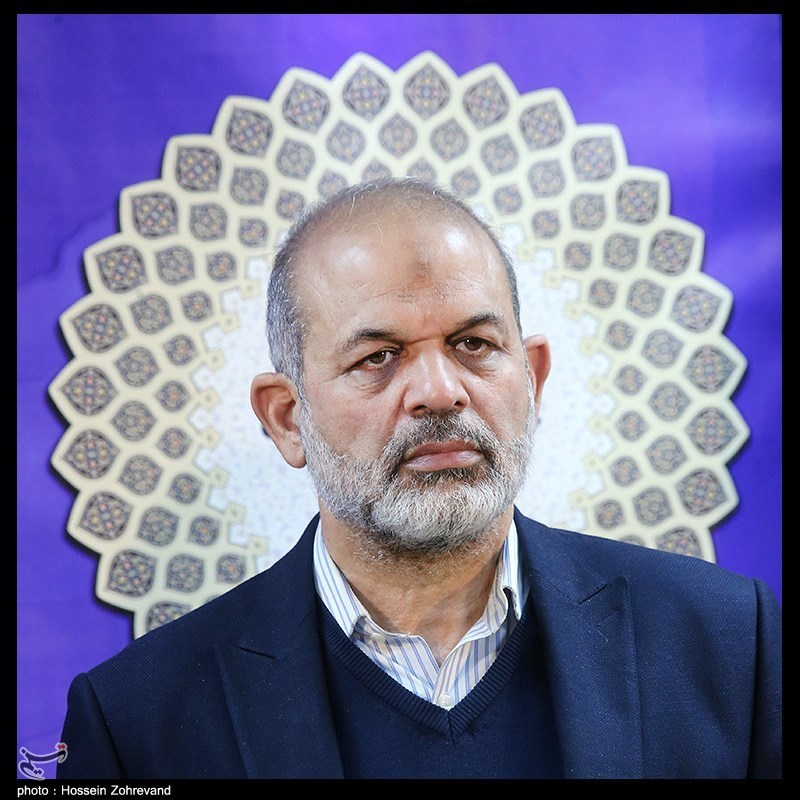
Vahidi’s CV reads like a compressed history of IRGC covert operations. He founded the Quds Force in 1988 and commanded it through 1997 — the years when Iran’s extraterritorial operations network was built from scratch. He served as defense minister under Ahmadinejad from 2009 to 2013, then as interior minister under Raisi from 2021 to 2024. He was appointed IRGC Commander-in-Chief on March 1, 2026, after his predecessor Mohammad Pakpour was killed in the opening phase of the war. He carries an active INTERPOL red notice, issued in 2007, for his alleged role in the 1994 AMIA bombing in Buenos Aires that killed 85 people — making him an international fugitive who has served in four senior government positions over 19 years while under global arrest warrant.
Beni Sabti at Israel’s Institute for National Security Studies told Fox News that Vahidi “may be more influential than parliamentary speaker Ghalibaf or even Mojtaba Khamenei,” adding that his appointment “brings even more radicalization into the system and may not want to stop the war, because it serves the interests of the Revolutionary Guards to continue.” Lisa Daftari, a foreign policy analyst, put it more bluntly: “By any standard, Vahidi is considered a radical even within the regime’s hardline elite.” Appointing him, she said, “confirms that the regime is not moderating under pressure — it is doubling down on men whose careers are built on hostage-taking, assassinations.”
The Middle East briefing 3,000+ readers start their day with.
One email. Every weekday morning. Free.
A former Iranian parliamentarian, speaking to Iran International, offered the shortest assessment: “Vahidi is in charge of the country.” That framing matters because it clarifies what the US targeting option actually proposes — not the elimination of a military commander, but the assassination of the man multiple informed sources describe as Iran’s de facto head of state during Khamenei’s now 56-day absence from public view.
Why Decapitation Fails Against Mosaic Defense
The IRGC restructured its entire command architecture in 2008 around a doctrine explicitly named Mosaic Defense. The design principle was redundancy through autonomy: 31 provincial corps, each with its own command-and-control structure, each authorized to make tactical decisions — missile launches, drone deployments, naval harassment operations — without waiting for central approval. The Soufan Center and multiple defense analysts have described this as Iran’s institutional lesson from watching the 2003 Iraq invasion, where US forces collapsed Saddam Hussein’s military by destroying its centralized command nodes in the opening 72 hours.
The doctrine has already been tested in this war. US and Israeli strikes have killed much of the IRGC’s senior command layer since February 28, including Pakpour and IRGC Navy Commander Alireza Tangsiri. The 31 provincial corps absorbed those losses and continued operating. Behnam Ben Taleblu at the Foundation for Defense of Democracies described the system as “a system of men, not laws, but one whose success rested on institutionalizing their power.” The institutionalization is the point — removing individual men from an institutionalized network does not collapse the network.
“He is more dominant right now, even if they are coordinated. This is not a time for internal competition.” — Beni Sabti, INSS, on Vahidi’s control of IRGC operations
The Soleimani precedent makes this concrete. When the US killed Qassem Soleimani on January 3, 2020, Iran appointed Esmail Qa’ani as Quds Force commander within hours. Five days later, Iran fired 22 ballistic missiles at US bases in Iraq — calibrated not to kill, with advance warning given to Baghdad. IRGC proxy operations in Iraq, Syria, Lebanon, and Yemen continued without interruption and in several theaters accelerated. The network survived because it was designed to survive. Vahidi’s IRGC is the same network, six years more mature, with six years more redundancy built in.
The Already-Headless Chain of Command
The US proposal to decapitate the IRGC arrives 26 days into what is already a decapitated IRGC Navy. Tangsiri was killed March 30. As of April 25, no named successor has been announced — the force conducting active mine-laying operations in the Strait of Hormuz has been operating without a publicly identified commander for nearly four weeks. The IRGC Navy declared “full authority to manage the Strait” on April 5 and again on April 10, both times while Araghchi was in Islamabad attempting to negotiate. The declarations came from a command structure with no named head.
If Vahidi is killed, operational authority passes most logically to Khatam al-Anbiya Central Headquarters commander Ali Abdollahi — the same man President Pezeshkian publicly named alongside Vahidi as a ceasefire wrecker on April 4. Abdollahi is not on CNN’s reported target list. Neither is SNSC official Mohammad Reza Zolghadr, who filed the “deviation from delegation’s mandate” report on April 14 that triggered the Islamabad walkout. The FDD’s framework of “5 men running Iran” — Vahidi, Abdollahi, Zolghadr, Mojtaba Khamenei, and SNSC Secretary Ali Ahmadian — deliberately excludes Pezeshkian. Removing Vahidi leaves four of five intact, and the four who remain include the two men most directly responsible for sabotaging the ceasefire from inside the Iranian delegation.
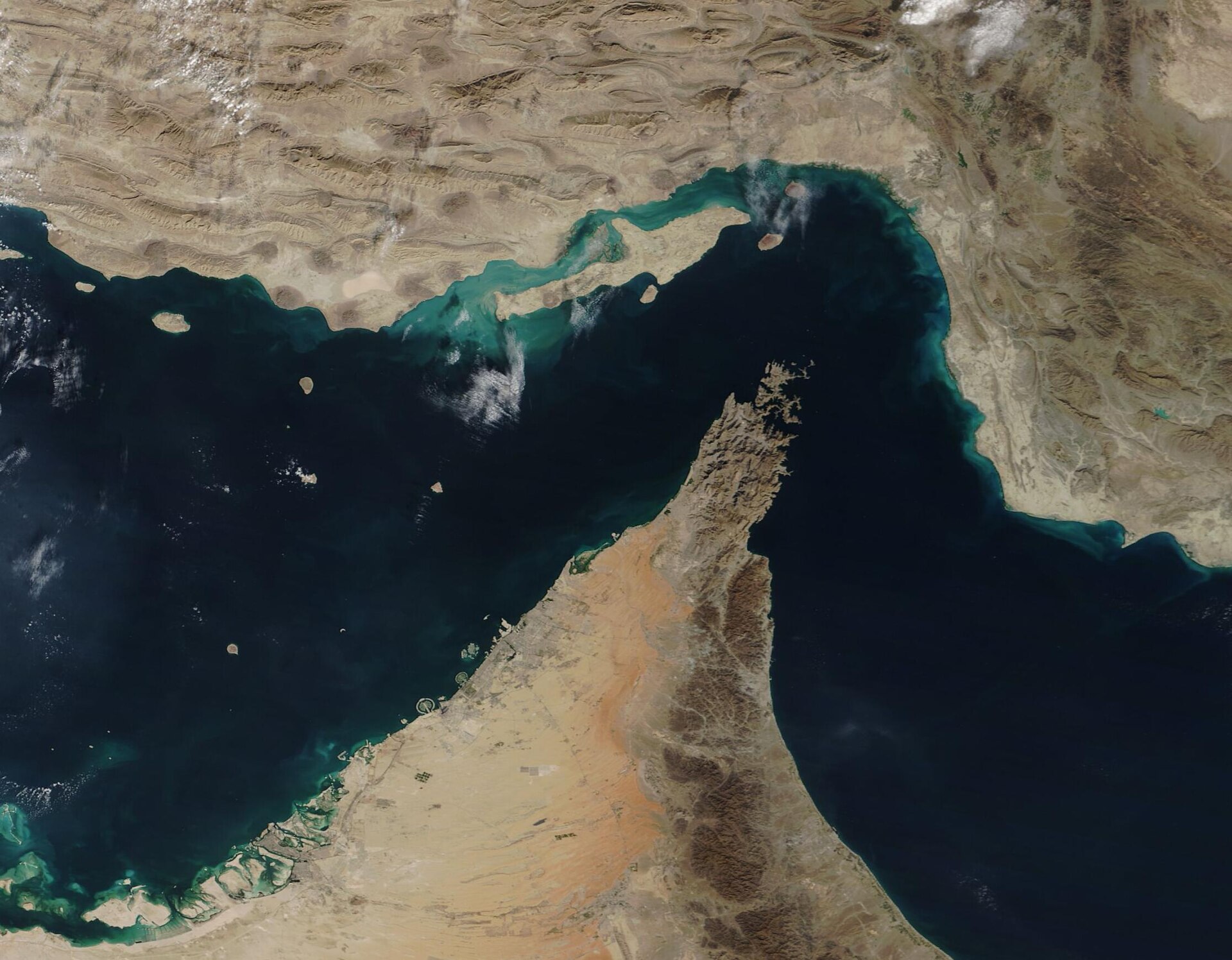
Khatam al-Anbiya’s own spokesperson underscored this on April 21, stating that Iranian forces remain at “full readiness” and would strike pre-designated targets if attacked, promising a response “stronger than its attacks during the previous phase of the conflict.” Tasnim, the IRGC-aligned news agency, published matching language: Iranian armed forces are “fully prepared and closely monitoring any minor mistake or miscalculation by the enemy in order to deliver a regret-inducing response in the Persian Gulf and the Strait of Hormuz.” The threat infrastructure speaks for itself even when the individual commander cannot.
Can You Negotiate With Someone You’re Threatening to Kill?
The ISW reported a major disagreement between Ghalibaf, who favored continued talks, and Vahidi, who opposed Iranian participation. Following IRGC pressure, Iran introduced a precondition that the US lift its naval blockade before negotiations could begin — a demand designed to be rejected, giving Vahidi’s faction grounds to pull out. Then Araghchi flew to Islamabad on April 24 anyway, even as Iran’s Foreign Ministry officially denied any US meeting was scheduled. The CNN targeting story had been public for 48 hours by then.
The diplomatic incoherence runs in both directions. The US is simultaneously asking Iran to negotiate in good faith and telling Iran — via CNN, which functions here as an authorized leak channel — that it has developed plans to kill the man who controls whether Iran negotiates at all. Witkoff and Kushner arrived in Islamabad on April 25, the same Islamabad where this signal was received. The coercive logic assumes Vahidi’s threatened elimination will pressure Iran’s civilian leadership to overrule him, but Pezeshkian already tried that on April 4 and discovered what Article 110 of the Iranian Constitution means in practice: the president has zero authority over the IRGC. The Supreme Leader commands the IRGC directly, and the Supreme Leader has been absent from public view for 56 days.
There is a critical distinction between Soleimani and Vahidi that the decapitation framework obscures. Soleimani was killed before any active ceasefire negotiation — there was no diplomatic process to derail. Vahidi is being targeted during one, at a moment when Iran International reported the IRGC overruled Araghchi’s Hormuz reopening announcement within 24 hours of it being made. Killing the man who overrules the diplomats does not empower the diplomats. It removes the only person whose authorization the IRGC rank structure recognizes, leaving 31 provincial corps to interpret the resulting vacuum according to their own standing orders.
Saudi Arabia’s Hosting Calculus
Saudi Arabia has no public position on the Vahidi targeting option — and that silence is itself a position. Islamabad, not Riyadh, is the venue for these talks, but Pakistan’s role as ceasefire enforcer depends on Saudi financial leverage: the $5 billion Saudi loan to Pakistan matures in June 2026, and the September 2025 Saudi-Pakistan Mutual Defense Agreement makes Munir’s diplomatic operation structurally dependent on Saudi backing. If the US uses the Islamabad venue to signal assassination intent toward a negotiating counterpart, every future host of US-Iran proximity talks inherits that precedent.
IRGC-aligned Tasnim’s publication of a map showing Persian Gulf undersea internet cables — characterized by Iran International as “a thinly veiled warning that the region’s digital backbone may now be in Iran’s line of fire” — suggests the IRGC’s retaliatory targeting has already expanded beyond military infrastructure. Saudi Arabia’s Eastern Province energy infrastructure has absorbed strikes since February 28, with Ras Tanura already hit and the King Fahd Causeway on the IRGC’s published counter-target list. Every escalation option the US exercises increases the probability that Saudi hosting infrastructure — physical and digital — becomes part of the IRGC’s response calculus.
Sabti at INSS offered the clearest framing of the trap: “This is not a time for internal competition.” If the IRGC perceives the Vahidi threat as credible, unification around resistance becomes the rational institutional response — not capitulation, not internal fracture, but consolidation. The US is betting on fragmentation in a system that has spent 18 years designing itself to consolidate under exactly this kind of pressure.
Background and Context
The current US-Iran war began February 28, 2026, and has now lasted 56 days. The ceasefire framework negotiated in Islamabad in early April expired on April 22 with no extension mechanism in place. The Soufan Center noted the absence of any formal renewal process. Pakistan has emerged as the primary mediation venue, with Prime Minister Munir’s office serving as the diplomatic relay point between Washington and Tehran — a role complicated by Pakistan simultaneously serving as Iran’s protecting power in the United States since 1992.
The IRGC’s command losses since February 28 include Pakpour (IRGC Commander-in-Chief, killed early March, replaced by Vahidi), Tangsiri (IRGC Navy Commander, killed March 30, no replacement announced), and multiple provincial corps commanders. Khamenei has not appeared in public for 56 days — the longest absence in his 37-year tenure as Supreme Leader — and his son Mojtaba has communicated only via audio channels.
Iran’s Hormuz toll regime, announced in early April, has collected zero revenue in 36 days despite issuing 60 permits and sending 8 payment requests. The IRGC Navy simultaneously declared “full authority” over the strait while having no named commander. Saudi production has crashed from 10.4 million barrels per day in February to 7.25 million in March — a 30 percent drop that the IEA called “the largest disruption on record.” Brent crude sits at approximately $90, below Saudi Arabia’s fiscal break-even of $108-111 per barrel.
Frequently Asked Questions
Has the US assassinated foreign military commanders during active negotiations before?
Not in the modern era with this degree of transparency. The closest parallel is the January 2020 Soleimani strike, but that occurred outside any active negotiation framework. During the Vietnam War, the US conducted Operation Phoenix (1968–1972), which targeted Viet Cong political leadership while Paris peace talks were underway, but those were clandestine operations rather than publicly signaled strike options. The explicit nature of the CNN leak — naming Vahidi as a target while Witkoff books flights to Islamabad — has no direct precedent in US diplomatic history.
What happens to IRGC operations if Vahidi is killed?
The Mosaic Defense doctrine’s 31 provincial corps each maintain standing orders and pre-delegated authority for tactical operations. In the Soleimani precedent, Iran’s retaliatory strike came within five days and IRGC proxy operations continued without interruption across four countries. The difference in 2026 is scale: the IRGC is already operating in a wartime posture with active mine-laying, naval interdiction, and missile operations. Removing Vahidi would eliminate the one figure whose authorization the system nominally recognizes as supreme — creating not paralysis but unconstrained autonomy across 31 independent commands operating under last-received orders.
Why is Abdollahi not on the target list?
CNN’s reporting does not explain the omission. Abdollahi commands Khatam al-Anbiya, the IRGC’s construction and logistics arm that also oversees major military operations — the same headquarters Pakistan’s Munir visited on April 16 to negotiate ceasefire enforcement. His exclusion may reflect a US assessment that Abdollahi is less ideologically opposed to negotiations than Vahidi, or it may reflect operational constraints. Either way, the effect is that killing Vahidi hands operational primacy to the man Pezeshkian identified as the other ceasefire wrecker.
What is Iran’s likely immediate response to a Vahidi strike?
Khatam al-Anbiya’s spokesperson stated on April 21 that any attack would trigger strikes on “pre-designated targets” with a response “stronger than its attacks during the previous phase of the conflict.” Iran’s January 2020 response to Soleimani’s killing involved 22 ballistic missiles at Ain al-Asad and Erbil — a strike calibrated to demonstrate capability while avoiding US casualties. In the current wartime context, with IRGC forces already engaged and Hormuz already mined, the calibration calculus shifts: the IRGC has less incentive to moderate a response when the war is already active and escalation thresholds have already been crossed repeatedly over 56 days.
Does China have a role in restraining IRGC escalation after a potential Vahidi strike?
China brokered the only successful Hormuz transit since the war began — the Al Daayen LNG carrier in early April — using CNPC/Sinopec contracted offtake and yuan settlement via Kunlun Bank as leverage. Beijing holds approximately $23 billion in annual Iranian oil trade relationships (Chinese customs data) and 5 percent equity in Qatar’s North Field East, giving it structural motivation to prevent full Hormuz closure. China’s influence operates through economic channels, not military command authority, and there is no evidence Beijing has communication access to IRGC provincial corps commanders who would execute post-Vahidi operations independently.
That structural fragility is compounded by a separate conflict of interest at the heart of the Islamabad framework: Saudi Arabia’s financial capture of Pakistan — through $8 billion in deposits and a frozen $1.5 billion Sudan arms deal — gives Pakistan’s army chief a structural incentive to serve Riyadh’s preferences rather than broker a genuinely neutral ceasefire. And the lead US negotiator now flying to Islamabad carries his own version of that conflict: Jared Kushner’s Affinity Partners collects $25 million per year from the Saudi Public Investment Fund — a financial dependency whose implications for the Iran talks are examined here. The gap between Washington’s official battle damage assessment and what Hegseth admitted about launcher survivability is examined in The Ceasefire Was an Iranian Operational Maneuver — Hegseth Admitted It, and Now Trump’s 3-5 Day Ultimatum Has No Military Teeth.