
RIYADH — Saudi Arabia’s refusal to fire a single shot at Iran across nearly two months of war is not restraint born of weakness, as the dominant Western analysis now holds, but the outward face of an active parallel negotiation with Tehran that has operated continuously since before the first missile struck Saudi territory. Foreign Policy’s Steven Cook argued on April 24 that Riyadh is “sitting out” the conflict, a framing that mistakes the absence of military retaliation for the absence of strategy — when the evidence, much of it surfaced in Cook’s own reporting and supplemented by Foreign Affairs, Fortune, and the Wall Street Journal, reveals a kingdom running a calibrated dual-track diplomacy whose logic is dictated less by geopolitical preference than by fiscal arithmetic that grows more punishing with every week the Strait of Hormuz stays shut.
The architecture of that parallel track is now visible: near-daily contact between Saudi officials and Iran’s Ambassador Alireza Enayati in Riyadh, two foreign-minister-level phone calls in five days, a direct MBS-to-Xi Jinping call to pressure for Hormuz reopening, and active lobbying in Washington to kill the US naval blockade — all while Saudi Arabia co-sponsors a GCC resolution at the UN Security Council demanding Iran cease impeding navigation. That the resolution requires no GCC military commitment reflects the deeper structural reality: the GCC’s unanimity veto means any single member — Oman, Qatar, the UAE — can block collective action, a paralysis built into the alliance’s founding charter that Iran appears to have calculated on before firing the first shot. The kingdom is not hedging because it cannot decide. It is hedging because the fiscal timeline leaves no other path, and it is hedging on both sides of the table simultaneously.
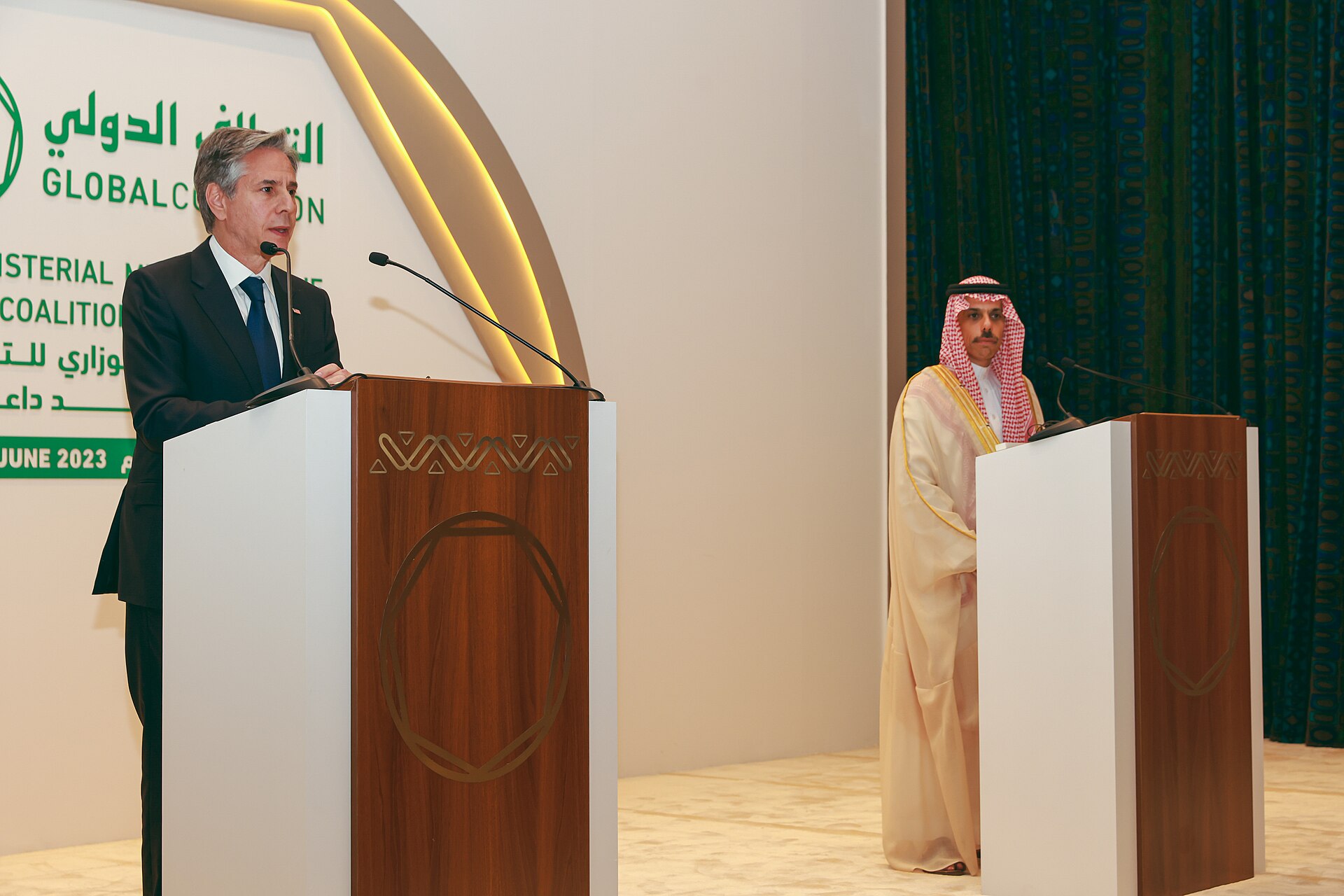
Table of Contents
- The Ambassador Channel That Survived Everything
- Why Did Saudi Arabia Expel Five Iranian Diplomats but Keep the Ambassador?
- Two Foreign Minister Calls in Five Days
- The MBS-Xi Call and the Chinese Lever
- Why Is Saudi Arabia Lobbying Washington to Kill Its Own Ally’s Blockade?
- The Fiscal Arithmetic That Explains Everything
- What Does Steven Cook Get Wrong About Saudi Strategy?
- How Does Iran’s Own Behavior Validate the Back-Channel?
- The Houthi Trap That Locks Saudi Into Restraint
- What Would a Saudi-Iranian Separate Peace Look Like?
The Ambassador Channel That Survived Everything
The foundation of Saudi Arabia’s parallel track is a diplomatic channel that did not exist three years ago and that Riyadh has gone to extraordinary lengths to preserve. Fortune reported on March 7 that Saudi officials communicate with Iran’s Ambassador to Riyadh, Alireza Enayati, “on a near daily basis,” conveying two core messages: that Saudi territory is not being used to strike Iran, and that continued Iranian attacks may force a Saudi military response. European officials confirmed to Fortune that the talks involve “security agencies and diplomats,” though it remained unclear whether higher-ranking officials were directly participating at that stage.
What made the channel possible was the March 10, 2023 normalization deal brokered by China in Beijing, which ended a seven-year diplomatic rupture following the January 2016 mob attacks on Saudi missions after Riyadh executed Shia cleric Nimr al-Nimr. Without that normalization, there is no Saudi embassy in Tehran, no Iranian embassy in Riyadh, no Enayati, and no daily contact. The Beijing deal was widely dismissed as ceremonial at the time; it has turned out to be the single most consequential piece of diplomatic infrastructure in the current war.
The channel’s persistence through two months of Iranian strikes on Saudi territory — including hits on Ras Tanura, a pumping station on the East-West Pipeline, SAMREF Yanbu, and Khurais — is itself a strategic signal. Saudi Arabia has absorbed every blow while keeping the ambassador’s phone line open, a pattern that tracks with the kingdom’s behavior after the September 2019 Abqaiq-Khurais drone attacks, which knocked out five percent of global oil supply and produced zero Saudi military retaliation. The restraint is not new. What is new is the institutional channel through which it now operates.
Why Did Saudi Arabia Expel Five Iranian Diplomats but Keep the Ambassador?
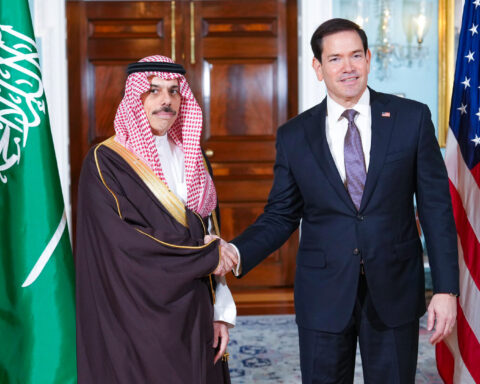
On March 21, Saudi Arabia declared persona non grata Iran’s military attaché, assistant military attaché, and three additional embassy staff, giving them 24 hours to leave the country. Prince Faisal bin Farhan delivered the announcement with language calibrated to sound severe — “What little trust there was before has completely been shattered” — while warning of “significant consequences” if Iranian attacks continued. The move followed a drone strike on Saudi Arabia’s Yanbu terminal and was reported by Al Jazeera and Iran International as an escalation.
The Middle East briefing 3,000+ readers start their day with.
One email. Every weekday morning. Free.
It was not an escalation. It was a surgical diplomatic signal. Saudi Arabia expelled five military-linked personnel and kept Ambassador Enayati, the man through whom the daily contact channel operates. The military attaché’s portfolio — intelligence gathering, liaison with Iranian armed forces — was precisely what Riyadh wanted shut down. The ambassador’s portfolio — political dialogue, back-channel messaging, ceasefire coordination — was precisely what Riyadh wanted preserved. Tehran’s response confirmed the signal landed: Iran made no countermove, expelled no Saudi diplomats, and issued no public protest beyond a formulaic MFA statement. The asymmetry was deliberate on both sides.
Enayati himself validated the channel’s survival on his X account and in interviews. He told Reuters in an interview conducted March 12 that relations with Saudi Arabia were “progressing naturally” and that he remained in “direct contact with officials at the Saudi Ministry of Foreign Affairs.” To Asharq Al-Awsat on February 27, he said both sides were aligned on “the need to achieve security and peace in the region and avoid war.” An expelled ambassador says none of these things. A retained ambassador — operating under wartime conditions in a capital whose territory his country’s military is actively striking — says them because the channel is the strategy.
Two Foreign Minister Calls in Five Days
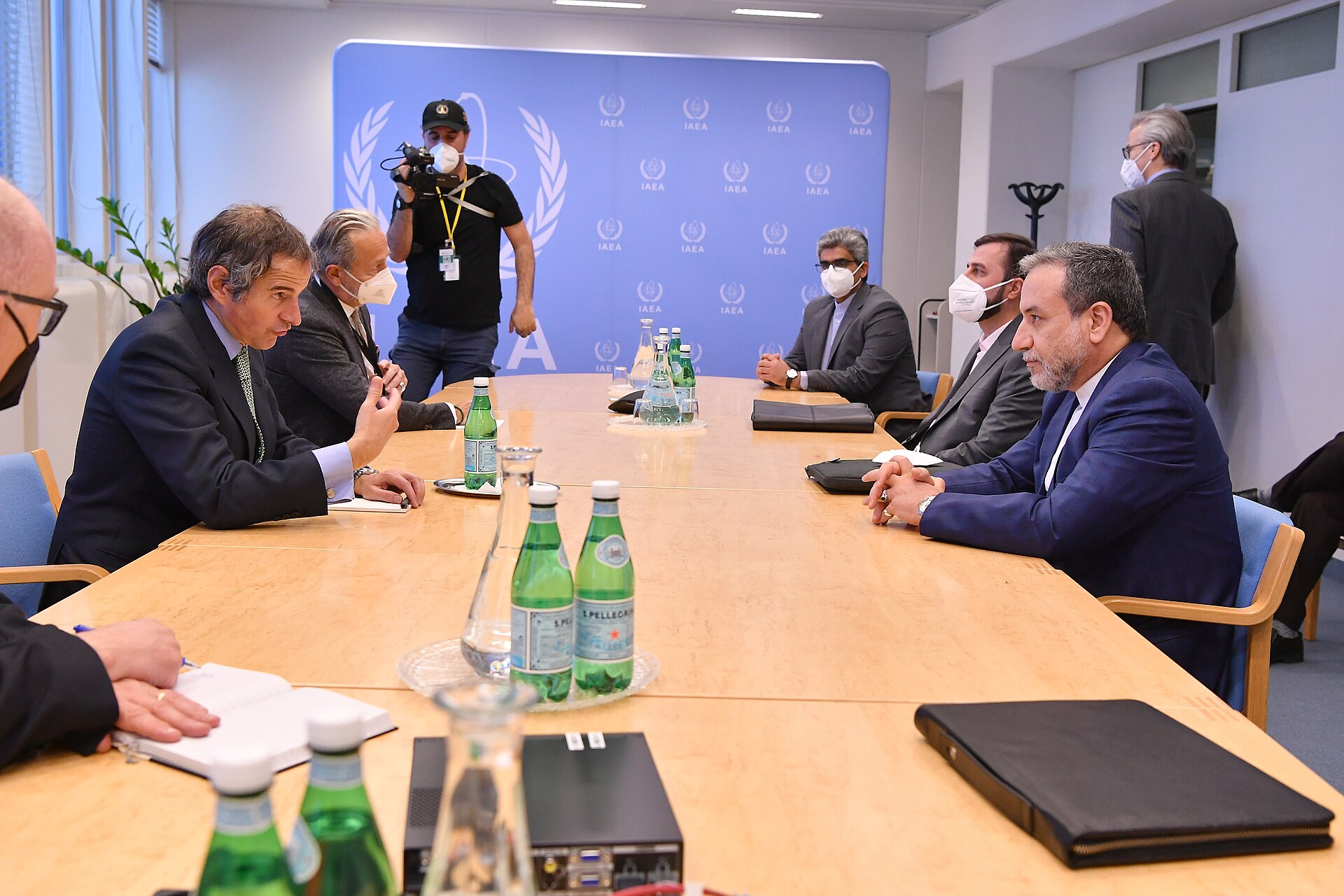
The ambassador channel escalated to the ministerial level on April 9, when Prince Faisal bin Farhan held a phone call with Iranian Foreign Minister Abbas Araghchi — the first publicly acknowledged direct FM-level contact since Iran began striking Gulf neighbors. The Saudi Press Agency readout was deliberately bland: “They discussed current developments and measures to de-escalate tensions to help restore security and stability in the region.” The National described it as the first call since the two-week ceasefire was announced, placing it in the context of ceasefire-extension diplomacy rather than the broader parallel track.
Four days later, on April 13, Faisal called Araghchi again. The timing was not coincidental: April 13 was the day CENTCOM announced its interdiction of Iranian port traffic — the naval blockade that Saudi Arabia privately opposed. Al Arabiya reported they discussed “latest developments” following the Islamabad talks. Two FM calls in five days, the second timed to the blockade announcement, is not routine diplomatic maintenance. It is crisis management operating on a separate track from the US-led framework that Saudi Arabia publicly supports.
Araghchi himself told interlocutors, as reported by the Times of Israel sourcing Iranian FM statements, that he remained in “constant contact” with Saudi counterparts and that Riyadh had “fully committed” to not allowing its territory to be used for attacks on Iran. The Iranian foreign minister was validating the Saudi assurance to his own principals — a government whose president had just publicly accused the IRGC of wrecking ceasefire negotiations and whose supreme leader had been absent from public view for over 40 days. Araghchi needed Saudi restraint to be credible because it was the one geopolitical variable the civilian Iranian government could point to as evidence that diplomacy was producing results.
The MBS-Xi Call and the Chinese Lever
On April 20, Mohammed bin Salman called Xi Jinping. The Chinese Ministry of Foreign Affairs readout was unusually specific: “The Strait of Hormuz should remain open for normal passage, which aligns with the common interest of countries in the region and the international community.” Xi called for “an immediate and comprehensive ceasefire” and said China “insists on resolving disputes through political and diplomatic channels.” MFA spokesperson Guo Jiakun reinforced the message at the April 20 press conference: “The Strait of Hormuz is a strait for international passage. Ensuring unimpeded passage through the Strait serves the common interest.”
The call’s significance lies not in what Xi said — Beijing’s position on Hormuz was already established — but in the fact that MBS initiated a conversation with the leader of the country that brokered Saudi-Iran normalization in 2023, during a week when Saudi Arabia was simultaneously lobbying Washington to kill the blockade. The Carnegie Endowment’s Marwan Muasher warned in March that Saudi Arabia cannot “keep trying to use that tool [China leverage] without losing credibility, unless they actually exercise it.” The MBS-Xi call suggests Riyadh is now exercising it, using Beijing as a pressure vector on both Tehran and Washington at the same time.
China’s stake is structural, not rhetorical. Beijing intermediated the first laden LNG tanker transit through Hormuz under IRGC management — the Al Daayen, which crossed at 8.8 knots toward China in early April — and CNPC and Sinopec hold contracted offtake from Qatar’s North Field plus equity stakes in North Field East. The MBS-Xi call activated a partner whose economic interests in Hormuz reopening are as concrete as Saudi Arabia’s, and whose diplomatic relationship with Tehran gives it influence that Washington manifestly lacks. The dual-track is not Saudi-Iranian bilateral. It is Saudi-Iranian bilateral backed by Chinese institutional infrastructure.
Why Is Saudi Arabia Lobbying Washington to Kill Its Own Ally’s Blockade?
The Wall Street Journal reported on April 14 that Saudi Arabia was pressing the United States to drop its Hormuz blockade, with Arab officials warning that Trump’s move could lead Iran to escalate and disrupt other shipping routes — specifically Bab el-Mandeb, through which Saudi Arabia’s Yanbu-routed oil exports must transit to reach Asian markets. Saudi Arabia’s lobbying campaign against the blockade is the most visible evidence that Riyadh’s parallel track is not merely a hedging exercise but an active policy that conflicts with the stated US approach.
Johns Hopkins SAIS professor Vali Nasr framed the Saudi position on X as representing “a broader international concern that the U.S. blockade is a dangerous escalation” that “further closes all trade in the Persian Gulf, could lead to more violent conflict there but also lead to disruption of trade in the Red Sea” and “could bring the global economy” to a halt. The convergence between Saudi lobbying and Iranian conditions is striking: Iran’s UN representative said on April 14, via PressTV and IRNA, that “as soon as Washington ends the naval blockade, I think the next round of negotiations will be held in Islamabad.” Saudi Arabia and Iran are, through entirely separate channels, making the same demand of the same party for the same reason.
The parallel track does not compensate for what Riyadh lacks at the formal level. Saudi Arabia has no seat in the Islamabad framework, the Oman back-channel, or the US-Iran nuclear track — the three formats where ceasefire terms, Hormuz rules, and sanctions architecture are being written. The full structural case for why the kingdom absorbing the highest war burden has been excluded from the negotiations determining its future is made in Saudi Arabia Bears the War’s Highest Cost and Has No Seat at the Table.
A senior Saudi Foreign Ministry official told the Christian Science Monitor on April 1: “If they stop attacking us, then there is no need to discuss military options. But if Iran continues to attack us, we will have to consider all options.” That conditional framing — military response as a last resort, contingent on Iranian behavior — is the public expression of a private calculus in which every week of blockade costs Saudi Arabia revenue it cannot replace and risks activating the one threat Riyadh fears more than Iranian missiles: Houthi disruption of its Red Sea export route.
The Fiscal Arithmetic That Explains Everything
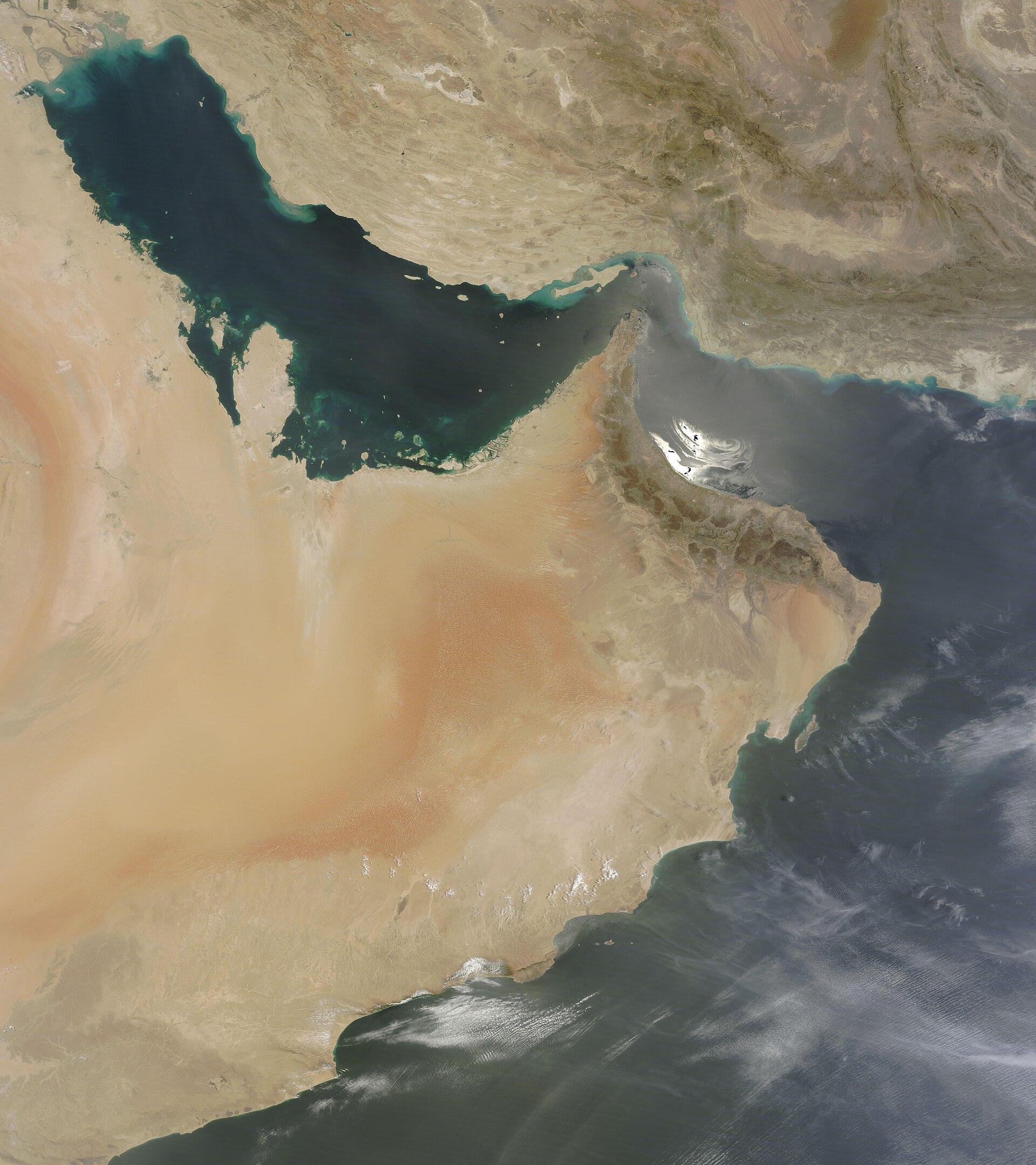
Saudi Arabia’s March crude production fell to approximately 7.76 million barrels per day, down from 10.11 million bpd in February — a drop of 2.35 million bpd, or 23 percent, that the International Energy Agency described as part of “the largest disruption on record” across OPEC. With Brent trading around $105 at the time of writing, the kingdom sits below its PIF-inclusive fiscal break-even of $108-111 per barrel as estimated by Bloomberg Economics — a break-even that assumes full production, not a 23-percent crash. Goldman Sachs has estimated Saudi Arabia’s war-adjusted deficit at 6.6 percent of GDP, double the official 3.3 percent projection that itself was built on a $44 billion budget gap.
The borrowing numbers tell the story more directly. Saudi Arabia’s approved 2026 borrowing plan totals $57.86 billion — covering the anticipated $44 billion budget deficit plus $13.87 billion in principal repayments on maturing debt. That plan was designed before the war began and before production crashed. Aramco’s Q1 2026 results will reveal the gap between budgeted revenue assumptions and wartime reality, but the rough arithmetic is already visible: a kingdom producing 23 percent less oil at a price below its all-in break-even is running a deficit that grows with every week the Strait of Hormuz remains closed to commercial traffic.
This is why the parallel track is not optional for Riyadh and why Cook’s “sitting out” frame misreads the situation so fundamentally. Saudi Arabia is not sitting out because it lacks military capacity or political will. It is negotiating a separate peace because the fiscal runway is finite. The East-West Pipeline can route 4-5.9 million bpd through Yanbu at maximum, against pre-war Hormuz throughput of 7-7.5 million bpd — a structural gap of 1.1-1.6 million bpd that cannot be closed by engineering. Every day the strait stays shut, that gap translates directly into lost revenue, higher borrowing costs, and an accelerating fiscal deficit that threatens the entire Vision 2030 investment program.
What Does Steven Cook Get Wrong About Saudi Strategy?
Cook’s Foreign Policy piece on April 24 documents the paradox accurately: Saudi Arabia has “taken consistent fire from Iran and its proxies in Iraq” while declaring that it “reserves the right” to shoot back but “so far has opted not to pull the trigger.” His conclusion — that the kingdom is passively sitting out the conflict — follows logically only if you ignore the diplomatic track that Fortune, the Wall Street Journal, and Al Arabiya have documented in parallel with his own reporting. The absence of military retaliation is not the absence of action. It is the visible half of a strategy whose other half operates through ambassador channels, FM calls, and great-power coordination.
Maria Fantappie and Vali Nasr come closer in their April 20 Foreign Affairs piece, “Can Saudi Arabia Keep Hedging?”, which argues that the war “has brought an end to a security model that has been dominant for decades” and that Saudi restraint reflects rational calculation. They note that Riyadh “allowed U.S. forces to use its bases” while refraining “from directly responding to Iran’s strikes, issued terse diplomatic warnings, and tacitly supported Pakistan’s efforts to mediate de-escalation, unlike the UAE and other regional actors.” But even Fantappie and Nasr frame the hedging as reactive — a kingdom responding to circumstances rather than actively shaping them through parallel negotiation. The UAE’s independent kinetic track complicates that picture further: UAE Mirage 2000-9 jets struck Iranian oil infrastructure on the same day the Islamabad ceasefire framework was announced, splitting the GCC into three operational camps and stripping MBS of the Gulf consensus he needs to make his separate peace credible.
Neither analysis synthesises the full evidence: the ambassador channel (Fortune), the FM calls (Al Arabiya), the MBS-Xi call (Bloomberg/SCMP), the blockade lobbying (WSJ), and the five-expelled-one-retained diplomatic signal (Al Jazeera) into a single argument. The pieces are all on the table. The synthesis is that Saudi Arabia is conducting active, multi-channel diplomacy with Iran that runs alongside — and in some cases directly contradicts — the US-led framework it publicly supports. The Nicosia summit and Araghchi’s three-stop diplomatic tour are parts of the same architecture, one that Araghchi has been building deliberately through a sequence of back-channel stops across the region.
How Does Iran’s Own Behavior Validate the Back-Channel?
The clearest evidence that Saudi Arabia’s parallel track is producing results comes from Iran’s own behavior. Tehran’s muted response to the March 21 expulsion of its military attaché and four staff — no reciprocal expulsion, no public escalation, no diplomatic downgrade — is the behavior of a government that values the channel’s preservation more than it values a proportional response. Iran’s foreign ministry issued a pro forma statement and moved on, because Enayati’s apparent continued presence in Riyadh — the expulsion order named only military and staff personnel, not the ambassador — serves Tehran’s interests as directly as it serves Riyadh’s.
Enayati has used his platform in Riyadh for purposes that go well beyond bilateral communication. On April 10, according to LiveUAMap, he posted publicly on X denying IRGC responsibility for ceasefire violations — using a Saudi-based platform to conduct Iranian information operations. He praised Saudi restraint in language that read like a joint communiqué: “There are sober positions in the neighborhood that reject any hostile action against Iran, encourage the language of dialogue.” This is an Iranian ambassador, stationed in a capital that Iran’s military is actively striking, publicly validating his host government’s policy — a diplomatic arrangement that has no parallel in the current conflict.
The IRGC seizure of MSC Francesca and Epaminodes on April 22 — after the ceasefire extension, in apparent violation of its terms — tested the channel but did not break it. Saudi Arabia issued no military response. The seizures demonstrated the persistent gap between IRGC operational autonomy and Iranian diplomatic commitments, the same authorization-ceiling problem that Pezeshkian publicly identified when he accused IRGC commanders Vahidi and Abdollahi of wrecking the Islamabad talks. Saudi Arabia’s back-channel runs to Iran’s civilian government, not to the IRGC — which is precisely why Riyadh needs the channel to survive, because the alternative is dealing with an IRGC that has declared “full authority to manage the Strait” without any diplomatic intermediary at all.
The Houthi Trap That Locks Saudi Into Restraint
Fantappie and Nasr identify the structural constraint that makes Saudi Arabia’s parallel track not just rational but necessary: the kingdom “maintains its cease-fire with the Houthis, a product of normalizing its ties with Iran,” and direct Saudi military entry into the war against Iran risks Houthi reactivation against Red Sea shipping. This is not a theoretical risk. Saudi Arabia’s Yanbu terminal, fed by the East-West Pipeline that bypasses Hormuz, exports oil through the Red Sea and Bab el-Mandeb strait — the same chokepoint the Houthis disrupted in 2024 with anti-ship missiles and drones that forced major carriers to reroute around the Cape of Good Hope.
The trap is geometrically perfect. Hormuz is closed or constrained by IRGC naval operations and the US blockade. The East-West Pipeline provides a partial bypass to Yanbu. Yanbu’s exports transit the Red Sea through Bab el-Mandeb. Bab el-Mandeb is within Houthi range. Saudi Arabia’s ceasefire with the Houthis holds because of the 2023 Iran normalization that the ambassador channel sustains. If Saudi Arabia fires a shot at Iran, the normalization framework cracks, the Houthi ceasefire is at risk, and the kingdom’s last remaining export route is threatened. The parallel track with Tehran is not one option among several — it is the only option that does not put Yanbu’s Red Sea exports in jeopardy.
This is the context that Cook’s “sitting out” frame misses entirely. Saudi Arabia is not choosing between action and inaction. It is choosing between a parallel negotiation that preserves its export routes and a military response that potentially closes both Hormuz and Bab el-Mandeb simultaneously — a scenario in which Saudi crude has no viable path to market at any price. Saudi Arabia’s financial architecture with Pakistan, which positions Islamabad as both ceasefire mediator and treaty ally, is another face of the same strategy: building parallel pathways to de-escalation that do not depend on a US framework Riyadh increasingly doubts can deliver. The institutional expression of that strategy is the Saudi-Pakistan-Turkey-Egypt quartet diplomacy framework — three ministerials in thirty-eight days, Pakistani jets deployed to Saudi territory, and a collective security clause that treats an attack on Saudi Arabia as an attack on four nations, none of them American. The most concrete expression of this posture sits in the defense-industrial sphere: the 10-year Ukraine-Saudi agreement signed in Jeddah gives MBS access to drones, electronic warfare, and joint production lines entirely outside ITAR, FMS, and congressional oversight — the subject of MBS Is Building a Military That Doesn’t Need Washington’s Permission. The strategic implications extend further: by deploying 201 Ukrainian specialists and the Sky Map command system across Gulf bases, the April 24-25 agreements have made Kyiv a structural participant in Gulf air defense — embedding Ukrainian doctrine in the infrastructure Iran must negotiate around in any eventual Hormuz settlement.
What Would a Saudi-Iranian Separate Peace Look Like?
The contours of Saudi Arabia’s desired outcome are visible in the public record even if Riyadh has not stated them explicitly. MBS’s January 27 call to Pezeshkian, in which he pledged that the kingdom “will not allow its airspace or territory to be used for any military actions against Iran or for any attacks from any party, regardless of their origin,” was the opening bid: Saudi neutrality in exchange for Saudi territorial immunity. The GCC’s draft UNSC resolution on Hormuz, which drew eleven votes before Russia and China vetoed it (with Colombia and Pakistan abstaining in a vote that itself revealed the limits of GCC diplomatic reach), defined the ask: cessation of Iranian impediments to navigation and defensive coordination for merchant vessels.
A separate Saudi-Iranian understanding would need to deliver three things: a halt to Iranian strikes on Saudi territory and infrastructure, an IRGC commitment to restore commercial transit through Hormuz for Saudi-flagged or Saudi-destined vessels, and preservation of the Houthi ceasefire that keeps Bab el-Mandeb open. In exchange, Saudi Arabia would continue its commitment not to allow its territory and bases to serve as platforms for strikes on Iran — a commitment MBS has already made publicly and that Araghchi has publicly confirmed receiving. The deal, in other words, is already half-made. What remains is the IRGC’s willingness to carve Saudi Arabia out of its Hormuz management regime, a concession that the civilian Iranian government may want to make but that the authorization ceiling documented across months of ceasefire collapse may prevent it from delivering.
The Western official who told Middle East Eye that “Mohammed bin Salman wants the Strait of Hormuz reopened, and he told Trump that a Lebanon ceasefire is critical to achieving that goal” revealed the final dimension of Saudi strategy: using Washington as a pressure vector on Israel to deliver a Lebanon ceasefire that Iran has made a precondition for broader de-escalation, while simultaneously using Beijing as a pressure vector on Tehran to deliver Hormuz reopening that Saudi Arabia has made a precondition for its own fiscal survival. The dual-track is not Saudi Arabia hedging between America and Iran. It is Saudi Arabia using every available lever — American, Chinese, Pakistani, and bilateral — to engineer an outcome that the US-led framework alone cannot produce, because the US-led framework depends on an IRGC that answers to no diplomatic process Saudi Arabia or anyone else has yet been able to reach.
Frequently Asked Questions
Has Saudi Arabia ever retaliated militarily against Iran during the 2026 war?
No. Despite absorbing strikes on Ras Tanura, the East-West Pipeline, SAMREF Yanbu, and Khurais — and despite declaring it “reserves the right” to respond — Saudi Arabia has not conducted a single military operation against Iran or Iranian proxies during the conflict. This extends a pattern dating to September 2019, when the Abqaiq-Khurais drone attacks eliminated five percent of global oil supply and Riyadh chose diplomatic escalation over military retaliation. The kingdom’s 2026 restraint is consistent across administrations and threat levels, suggesting a structural policy preference rather than a situational judgment.
What role does China play in Saudi Arabia’s parallel diplomatic track?
China serves as both institutional architect and active lever. The March 2023 Beijing normalization deal created the embassy infrastructure through which the daily ambassador channel operates. Beijing intermediated the first IRGC-permitted LNG tanker transit through Hormuz in April 2026 and holds contracted offtake and equity positions in Qatar’s North Field that give it direct economic exposure to Hormuz disruption. The April 20 MBS-Xi call activated China as a pressure vector that operates on both Tehran and Washington simultaneously — a role no other state can play because no other state has strategic relationships with all three parties and brokered the diplomatic framework on which the back-channel depends.
Could the IRGC’s operational autonomy prevent a Saudi-Iranian understanding from holding?
This is the central risk. President Pezeshkian publicly accused IRGC commanders Vahidi and Abdollahi on April 4 of deviating from the delegation’s mandate and wrecking the Islamabad ceasefire talks. The IRGC Navy declared “full authority to manage the Strait” on April 5 and April 10 while Araghchi was conducting diplomatic negotiations. The April 22 seizure of MSC Francesca and Epaminodes — after the ceasefire extension — demonstrated that IRGC naval operations continue regardless of diplomatic commitments. Saudi Arabia’s back-channel runs to Iran’s civilian foreign ministry, which may be unable to deliver operational commitments that require IRGC compliance without ratification from a supreme leader who has been absent from public view for over fifty days.
How much oil revenue is Saudi Arabia losing each week the war continues?
At March production levels of approximately 7.76 million bpd — down 23 percent from February’s 10.11 million bpd — and with Brent around $105 per barrel, Saudi Arabia is producing roughly 2.35 million bpd below pre-war levels. At current prices, that translates to approximately $247 million per day in lost production revenue, or $1.73 billion per week. The actual fiscal impact is larger because Saudi Arabia’s PIF-inclusive break-even price of $108-111 per barrel means the kingdom is running a deficit on every barrel it does produce, not just on the barrels it has lost. Goldman Sachs estimates the war-adjusted deficit at 6.6 percent of GDP — double the pre-war projection.