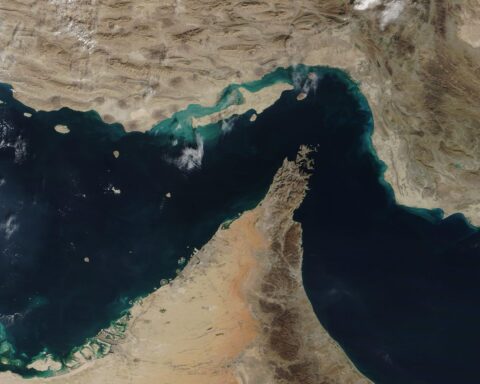

DHAHRAN — Baker Hughes CFO Ahmed Moghal told investors on Thursday that the company is planning for the Strait of Hormuz to remain closed through the end of June, with full operations resuming only in the second half of 2026 — guidance that landed hours before White House envoys Steve Witkoff and Jared Kushner departed for Islamabad, where Iran’s foreign minister was already waiting. A separate Dallas Fed survey of 116 oil and gas executives, published this week, delivered an even bleaker consensus: roughly 80 percent do not expect Hormuz to normalize before August.
The gap between what the oilfield services industry is pricing into its capital budgets and what diplomats are promising in Pakistani hotel suites has never been wider. Baker Hughes posted a record $33.1 billion backlog in its Industrial & Energy Technology segment on Thursday — a war chest built almost entirely on the premise that energy security investment will accelerate, not that the strait will reopen. That backlog is, in financial terms, a multi-billion-dollar wager against a near-term deal. And it is not the only one: Halliburton CEO Jeffrey Miller told his own earnings call three days earlier that the global oil and gas market is “fundamentally tighter than sixty days ago,” guiding for a $0.07–$0.09 per-share hit from Middle East disruption in the second quarter alone.
Table of Contents
What Baker Hughes Actually Said
Moghal’s exact language on the Q1 2026 earnings call was precise in a way that earnings guidance rarely is: “We’re assuming the conflict persists through the end of June, but with no further major disruptions, and that the Strait of Hormuz is not fully operational until we enter the second half of the year.” He added a caveat that may prove more consequential than the guidance itself: “This guidance does not account for any potentially significant secondary impacts such as elevated inflationary pressures or broader supply chain disruptions.” The base case, in other words, is bad — and the downside scenarios remain unmodeled, left for investors to price on their own.
CEO Lorenzo Simonelli framed the timeline in operational terms. “The full reopening of the Strait of Hormuz is anticipated thereafter,” he said, referring to the post-June period, “followed by a measured increase in Middle East activity levels during the second half of the year.” The word “measured” is doing heavy lifting — it means that even in Baker Hughes’ base case, where a deal materializes by summer, the company expects months of gradual ramp-up rather than a switch flipped on the first day of a ceasefire.
That squares with the physical reality: all four U.S. Navy Avenger-class mine countermeasure ships were decommissioned at Bahrain in September 2025, and the 1991 Kuwait benchmark suggests a minimum 51-day mine-clearing operation even after any political agreement. Baker Hughes is not guiding for a reopening followed by normalcy; it is guiding for a reopening followed by a construction timeline.
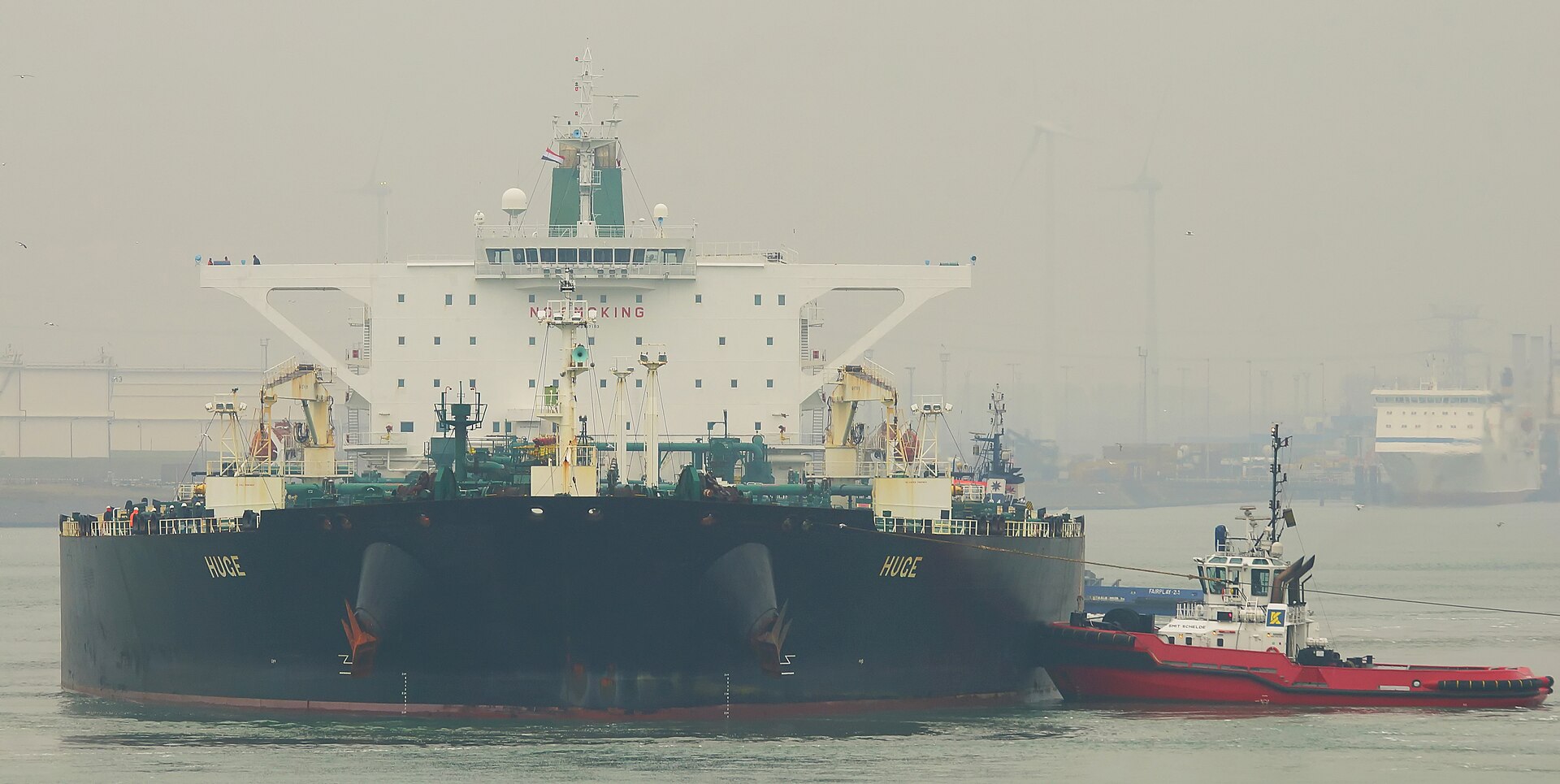
Simonelli also put a number on the scale of disruption that is shaping these assumptions. The conflict, he told analysts, has impacted “over 10 percent of global oil volumes” and taken “20 percent of worldwide LNG capacity” offline. The IEA’s April Oil Market Report confirmed the first figure: global oil supply fell 10.1 million barrels per day to 97 million bpd in March 2026, which the agency called “the largest disruption on record.” Only five ships transited Hormuz in the 24 hours before Thursday’s call, according to Reuters — down from a pre-war daily average of 129.
The Middle East briefing 3,000+ readers start their day with.
One email. Every weekday morning. Free.
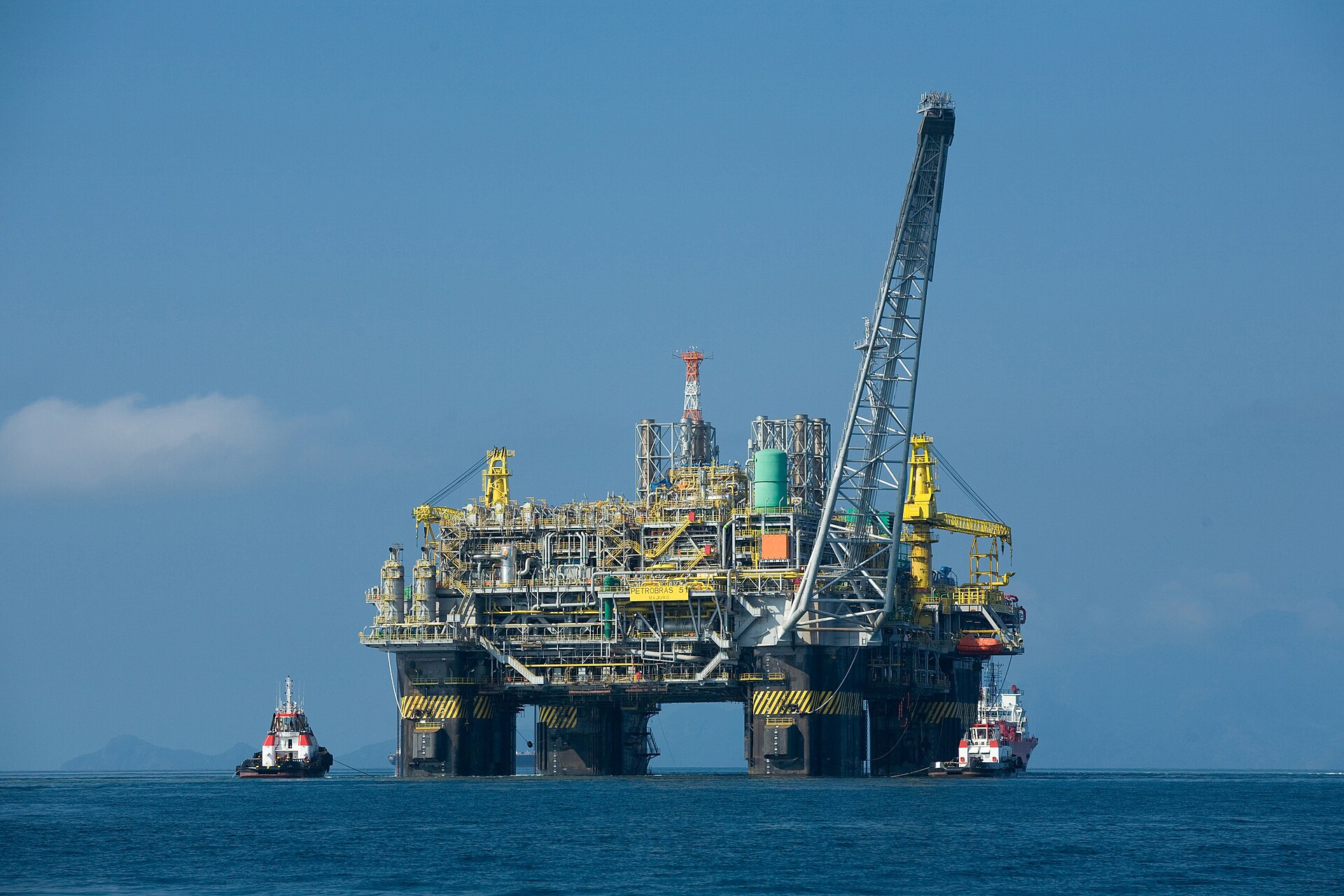
The financial results underneath the guidance tell their own story. Baker Hughes beat revenue estimates by $260 million, posting $6.587 billion for the quarter — up 2 percent year-on-year. But that headline masks a sharp geographic divergence: the company’s Oilfield Services & Equipment segment booked $1.152 billion in Middle East and Asia revenue, down 17 percent from the prior quarter and 19 percent year-on-year, while OFSE as a whole fell 7 percent.
What grew was IET — Industrial & Energy Technology — where orders surged 54 percent to a record $4.89 billion, driven by LNG infrastructure, gas technology, and energy security contracts largely outside the Gulf. The war is costing Baker Hughes revenue in one division and generating record bookings in another, and the second division is winning.
What Do 116 Oil Executives Expect?
The Dallas Fed’s Q1 2026 Energy Survey, conducted April 15–20 among 116 oil and gas executives, provides an independent cross-check on Baker Hughes’ assumptions — and reaches an even more pessimistic consensus. Only 20 percent of respondents expect Hormuz traffic to normalize by May. The single largest cohort, 39 percent, targets August; another 26 percent said November; and 14 percent said normalization would come later still, pushing into 2027.
Add those last three groups and the arithmetic is plain: four out of five executives running actual drilling programs, pipeline operations, and trading desks believe the strait stays functionally closed through at least the summer. These are not analysts offering probability distributions from a safe distance — they are the people whose capital budgets depend on getting the timeline right.
The survey’s secondary findings are equally revealing. Asked about future Hormuz disruptions, 48 percent of executives said another closure is “very likely” within five years, and 38 percent said “somewhat likely” — meaning 86 percent of the industry considers this crisis a preview, not a one-off. Even after whatever eventual reopening occurs, the median executive expects a residual shipping cost premium of $2–4 per barrel, a permanent scar on the economics of every barrel that passes through the strait. And when asked whether U.S. producers could offset the lost supply, the most common response was an increase of up to 250,000 barrels per day — a rounding error against a 10-million-bpd hole.
Is Baker Hughes a Neutral Observer?
Baker Hughes has a direct financial interest in a prolonged Hormuz closure, and any reading of its guidance should account for that. The company’s IET segment — which designs and builds LNG liquefaction trains, compression equipment, and gas turbines — is the primary beneficiary of the global energy security spending wave that the closure has triggered. The record $33.1 billion IET backlog announced Thursday represents years of contracted work, much of it from non-Gulf LNG projects that were accelerated precisely because customers decided they could no longer depend on Middle Eastern supply chains transiting a single chokepoint.
The Q1 IET order surge is not an anomaly. It is the financial expression of a thesis that Simonelli articulated on the call when he said “geopolitical risk has become a structural reality for oil and gas markets.” When a CEO whose record backlog depends on prolonged instability declares instability “structural,” the circularity is worth noting. It does not mean he is wrong. It means his incentives and his analysis point in the same direction, which makes independent corroboration essential.
That corroboration exists, and it comes from firms with opposing incentives. The Dallas Fed survey of 116 executives — none of whom have Baker Hughes’ specific IET exposure — reached the same timeline independently. Halliburton, whose business model is hurt rather than helped by Middle East inactivity (Miller guided for a direct Q2 EPS hit), arrived at a similar assessment of market tightness. And Citi’s three-scenario framework, published April 21, placed its “best case” Hormuz reopening at end of June — identical to Baker Hughes’ baseline. The convergence across firms with divergent incentives makes it harder to dismiss as self-serving, even if Baker Hughes benefits the most from being right.
Saudi Arabia’s Fiscal Trap
Brent crude traded at approximately $106 per barrel on Thursday, up from $103.67 the day before. By most peacetime standards that would be a bonanza. For Saudi Arabia in April 2026, it is not enough. Bloomberg’s PIF-inclusive fiscal break-even — the price at which government revenue covers government spending including Public Investment Fund commitments — sits at $108–111 per barrel. At $106, the kingdom is running a deficit on every barrel it manages to sell, and it is selling far fewer barrels than it was before the war began.
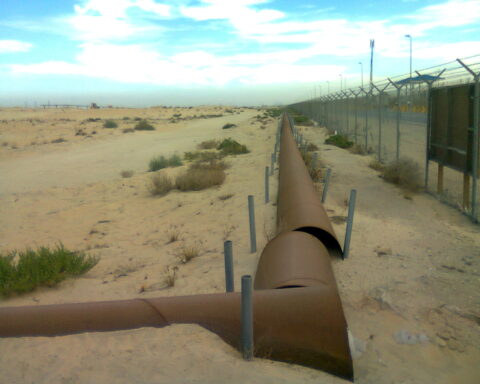
IEA data shows Saudi production fell to 7.25 million bpd in March, down from 10.4 million in February — a 30-percent collapse in a single month. The East-West Pipeline bypass through Yanbu has a loading ceiling of 4–5.9 million bpd against a pre-war Hormuz throughput for Saudi crude alone of 7–7.5 million bpd, leaving a structural gap of 1.1–1.6 million bpd that no amount of pipeline engineering can close while the strait remains shut. Goldman Sachs estimates the resulting 2026 fiscal deficit at 6.6 percent of GDP — roughly $80–90 billion against the government’s official projection of $44 billion.
SAMA foreign reserves tell the story in real time. The Saudi central bank held SAR 1.66 trillion (approximately $442 billion) as of April, down from SAR 1.78 trillion at the start of the year — a drawdown of roughly $36 billion in less than four months. That reserve cushion remains large by any absolute measure, but the burn rate is accelerating, and Riyadh is lobbying Washington to lift the U.S. naval blockade of Iranian ports.
The lobbying is not born of sympathy for Tehran. The blockade’s secondary effect is to keep Hormuz closed, which keeps Saudi Arabia locked into its bypass routes and their lower capacity ceilings. The kingdom needs the strait open more than almost anyone — and Baker Hughes just told it to plan for at least three more months of closure.
Islamabad vs. Houston
Witkoff and Kushner are heading to Islamabad this weekend, where Araghchi has already arrived for what the White House describes as a new round of indirect negotiations. Trump extended the ceasefire indefinitely on April 21; Iran seized two vessels — the MSC Francesca and the Epaminondas — on April 22; Trump issued a “shoot and kill” order on April 23; and Araghchi called the U.S. blockade “an act of war.” Each of these events occurred within the same 72-hour window in which Baker Hughes was finalizing its guidance for analysts.
The diplomatic calendar and the corporate calendar are operating on different clocks. Witkoff’s mission is measured in days — a meeting here, a framework there, a communiqué by Sunday if things go well. Baker Hughes’ guidance is measured in quarters, and when Moghal tells Wall Street the strait stays closed through June, he is not making a diplomatic prediction but building a financial plan that hundreds of procurement decisions and staffing choices will execute against.
Those decisions, once made, do not reverse because a handshake occurs in Islamabad. Rig contracts have cancellation penalties; LNG projects have fabrication schedules; supply chains rerouted around the Cape of Good Hope do not snap back overnight. The corporate world has already moved its money, and it will take more than a weekend in Pakistan to move it back.
The IRGC’s own communications reinforce the corporate timeline. On April 17, an IRGC Navy transmission on maritime Channel 16 “rejected the authority of the civilian government” and stated that any reopening “would occur only under orders from the Supreme Leader,” according to TheDefenseNews.com. Six days later, the IRGC issued a blanket warning that “no vessel should make any movement from its anchorage in the Persian Gulf and the Sea of Oman, and approaching the Strait of Hormuz will be considered as cooperation with the enemy,” Euronews reported.
FM Araghchi’s declaration that the strait is “open in a corridor coordinated by Iran” was contradicted by the IRGC within hours — the same pattern of civilian-military contradiction that has defined Iran’s Hormuz policy since the war began. Baker Hughes’ guidance assumes this contradiction will not resolve before July, and the IRGC’s actions give no reason to expect otherwise.
Simonelli acknowledged the diplomatic efforts indirectly. “We’re assuming the conflict persists through the end of June,” he said, and then added “with no further major disruptions” — a qualifier that implicitly prices in the possibility of a partial diplomatic accommodation without a full reopening. The IEA’s Q2 forecast of $115-per-barrel Brent suggests the market has not priced in a deal either. What Houston is telling Islamabad, through the language of quarterly guidance, is that it will believe a deal when tankers are moving.
Why This Is Not the Tanker War
The 1980s Tanker War, which ran from 1981 to 1988, is the only historical precedent for sustained military operations near the Strait of Hormuz, and it is a poor one. Over seven years, approximately 200 tankers were attacked, but the strait itself was never closed. At peak intensity, the disruption affected no more than 2 percent of vessels, according to an Al Jazeera analysis published this week. Iran refrained from full closure for a simple reason: it depended on the same sea lanes to export its own crude.
That constraint no longer applies. Iran’s oil exports have been under varying degrees of U.S. sanctions since 2018, and the current U.S. naval blockade of Iranian ports has reduced Iranian maritime commerce to near zero. Tehran has no commercial incentive to keep the strait open and a direct military incentive to keep it closed: every day Hormuz remains shut costs Gulf exporters billions while costing Iran almost nothing it was not already losing.
The scale of disruption reflects that asymmetry. The 2026 closure has removed 10–12 million bpd from global supply, more than the 1973 Arab oil embargo and the 1979 Iranian Revolution combined, according to IEA data cited by The Print. The Tanker War never approached that threshold because both belligerents needed the waterway; in 2026, only one side does.
The physical aftermath will outlast any political agreement. The mine-clearing challenge alone — an estimated 200 square miles of contaminated sea lanes, with no dedicated U.S. MCM vessels in theater since the Avenger-class decommissioning last September — imposes a minimum 51-day timeline based on the 1991 Kuwait benchmark. JKM LNG spot prices have surged more than 140 percent since the conflict began, according to S&P Global Commodity Insights data, a price signal that has already triggered the construction commitments now filling Baker Hughes’ IET backlog.
Even in the most optimistic diplomatic scenario — Citi’s best case, which assumes reopening by end of June and sends Brent to $80 by the third quarter — the capital already committed to energy security diversification does not come back. The six-month sentence that mine clearing imposes exists independently of whatever Witkoff and Araghchi agree to this weekend.
FAQ
How does Baker Hughes’ Hormuz guidance compare with SLB’s (formerly Schlumberger)?
SLB reported its own Q1 2026 results alongside Baker Hughes on Thursday, and the contrast is instructive. Unlike Baker Hughes, SLB showed sequential revenue growth in the Middle East, driven by its stronger position in digital and integration services that continued operating in countries not directly affected by the Hormuz closure (primarily the UAE’s Fujairah terminal and Oman’s Duqm port). SLB did not issue an explicit Hormuz timeline but guided for “continued uncertainty” through mid-year. Reuters paired the two firms’ earnings in its coverage, noting that SLB’s relative resilience reflects its lower dependence on maritime-adjacent oilfield activity in the Gulf.
What would an immediate Hormuz reopening do to Baker Hughes’ stock?
A sudden reopening would be a mixed event for Baker Hughes. The OFSE segment, which posted the sharpest year-on-year Middle East revenue decline in the company’s recent history, would benefit from resumed drilling and completion activity in Saudi Arabia, Kuwait, and Iraq. But the IET segment’s record backlog is largely contracted and non-cancellable, meaning LNG and gas technology orders already booked would not disappear.
The net effect would depend on speed: a gradual reopening (Baker Hughes’ base case) allows the company to ride both the IET backlog and an OFSE recovery simultaneously, while a sudden reopening would compress the IET order cycle faster, potentially reducing future bookings. Analysts at RBC and Barclays have both noted that Baker Hughes is the oilfield services name most “positively skewed” toward prolonged closure.
What is the IEA’s current demand-side forecast, and how does it interact with the supply loss?
The IEA’s April 2026 Oil Market Report projects global oil demand growth of 1.2 million bpd for the full year, revised downward from 1.4 million bpd in January due to the inflationary drag of higher energy costs on industrial activity in Europe and Asia. The supply loss of 10.1 million bpd dwarfs this demand revision by a factor of eight, which is why Brent remains above $100 despite visible demand destruction. The IEA forecasts Q2 Brent at $115 per barrel peak, with the price path dependent entirely on Hormuz timing — a variable the agency declined to forecast, citing “the absence of a credible diplomatic framework.”
Has OPEC+ adjusted its output policy in response to the closure?
OPEC+ has maintained its formal April quota of 10.2 million bpd for Saudi Arabia, but actual production has run roughly 3 million bpd below that level since March because the kingdom physically cannot export what it cannot ship. The cartel held an emergency virtual meeting on April 5 and agreed to pause planned output increases, but did not cut quotas to reflect the involuntary production losses. This creates an unusual situation: Saudi Arabia is technically in compliance with a quota it cannot reach, while holding an OPEC+ seat that authorizes production it cannot deliver. The gap between quota and output is itself a measure of the strait’s closure.
What happens to Baker Hughes’ $33.1 billion IET backlog if a comprehensive Iran deal includes nuclear provisions?
A comprehensive deal that resolved both the Hormuz closure and Iran’s nuclear program — the 440.9 kg of 60-percent-enriched uranium stockpile that the IAEA last verified before access was terminated on February 28 — would theoretically reduce the geopolitical risk premium driving energy security investment. In practice, Baker Hughes’ IET backlog is contractually committed, with typical LNG project timelines of 4–7 years from order to first gas. Cancellation of large-scale LNG orders typically triggers penalty clauses that recover a substantial portion of contract value, making wholesale backlog unwinding economically prohibitive.
The more relevant risk is to future order intake: if the energy security thesis fades, the quarterly booking rate that produced the current record would not sustain. Simonelli addressed this indirectly by arguing that the case for gas and LNG investment predates the war and would survive its resolution — a claim the market will test if and when a deal arrives.
The upstream mechanism now forcing that timeline is documented in Iran’s Oil Storage Just Hit the Wall: Kharg Island’s 31 million barrels of onshore storage reached capacity on April 26, leaving Tehran no option but to shut in wells whose reservoir pressure may not recover — permanently removing 300,000–500,000 bpd of supply that Baker Hughes’ demand models do not yet fully price in.