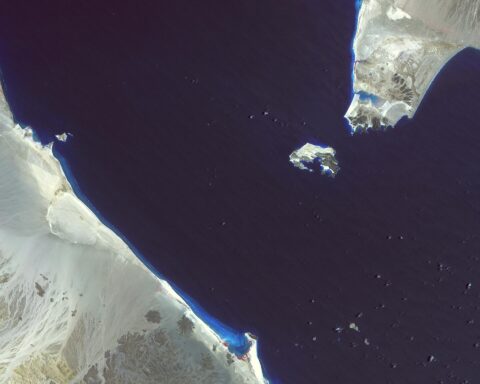
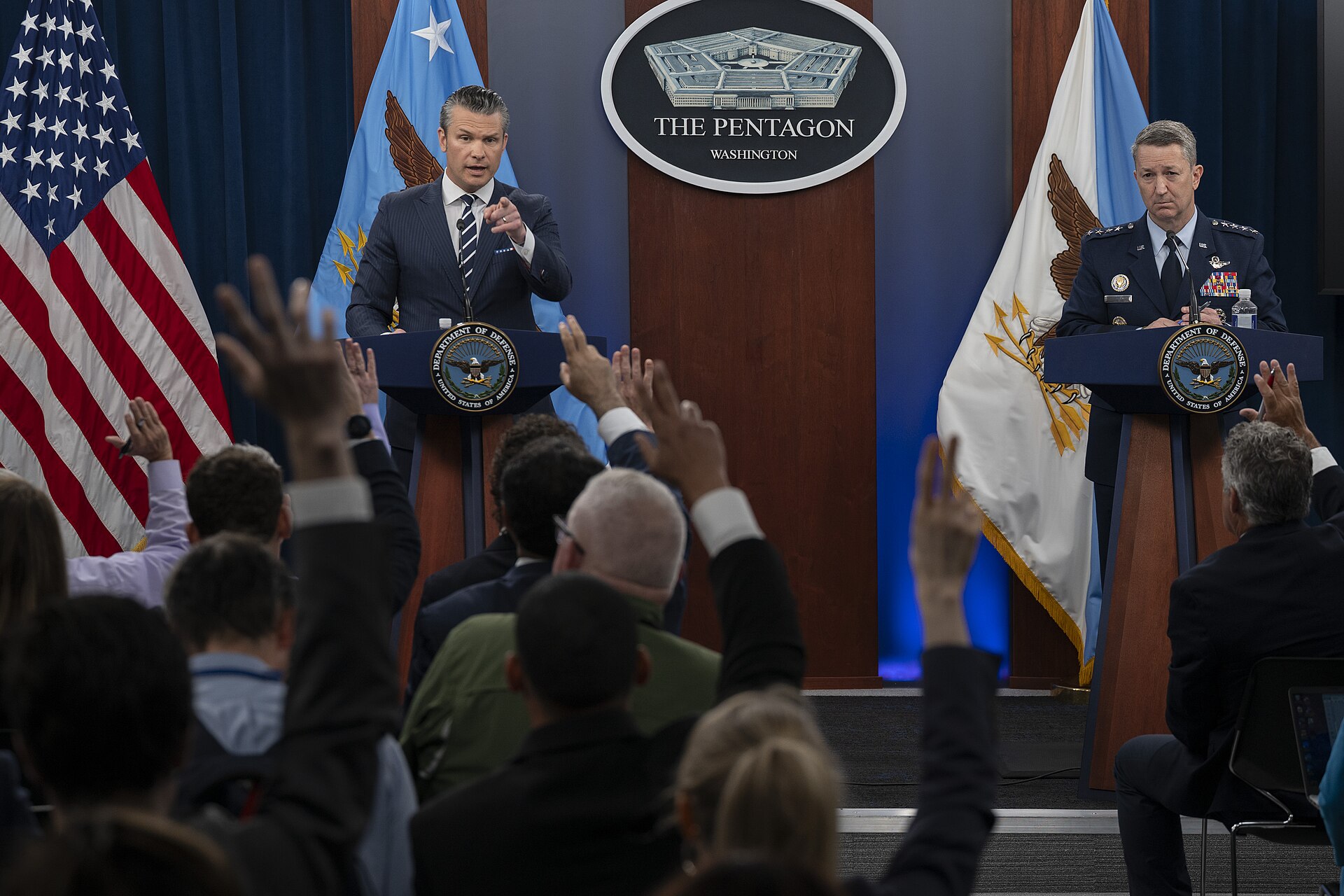
WASHINGTON — Defense Secretary Pete Hegseth publicly rejected a classified Pentagon assessment — briefed to the House Armed Services Committee around April 22 — that mine clearance in the Strait of Hormuz could take six months, with operations unlikely to begin until active hostilities end. His chief spokesman called the timeline an “impossibility.” Two days later, Hegseth himself declined to offer any timeline at all, telling reporters “we would not speculate” while acknowledging transit through the Strait is “much more limited than anybody would like to see.” The gap between those two positions — one denying the problem exists, the other refusing to describe it — is the space in which ceasefire negotiations, blockade strategy, and Saudi export recovery planning now operate.
The civil-military split comes at a specific moment: Witkoff and Kushner are due in Islamabad on April 26 for a second attempt at talks that failed over 21 hours in April. Iran’s FM Araghchi is already there. Iran continued laying mines after the April 21 ceasefire extension. And the Pentagon official who briefed Congress on mine clearance realities was speaking to lawmakers whose oversight authority Hegseth had already tried to restrict with an October 2025 memo requiring all DoD-congressional communications to be pre-cleared.
Table of Contents
- What Congress Was Told
- Anatomy of the Denial
- What Mine Countermeasure Assets Does the US Actually Have in the Gulf?
- Iran Cannot Find Its Own Mines
- How Long Will Hormuz Actually Stay Closed?
- The Navy Secretary Was Fired the Same Day
- Hegseth’s War on Congressional Oversight
- What Does the Mine Dispute Mean for the Islamabad Talks?
- The Saudi Fiscal Variable
- Frequently Asked Questions
What Congress Was Told
A senior Pentagon official told the House Armed Services Committee in a classified session around April 22 that full mine clearance of the Strait of Hormuz could take approximately six months. The assessment carried a condition that would have been obvious to anyone tracking the mine warfare command vacuum: operations were unlikely to begin in earnest until active hostilities concluded. The Washington Post reported the briefing’s existence the same day.
Lawmakers were told Iran may have deployed 20 or more mines in and around the Strait, some using GPS-float technology enabling remote activation. Al-Monitor and other outlets confirmed that this technology — commercial GPS devices attached to tethered or floating mines — makes detection substantially harder than traditional contact mines because the devices can be activated selectively and drift with currents after deployment.
Experts with knowledge of the situation estimated the total number of mines placed at fewer than 100, though the US declined to provide a precise count to the committee. Axios reported on April 23 that the IRGC Navy had laid additional mines after the April 21 ceasefire extension — a detail that renders any fixed clearance timeline provisional, since the mine count is not static.
The six-month figure was not an outlier. Scott Truver, director of Gryphon Technologies TeamBlue and co-author of Weapons That Wait (USNI Press), has documented that multinational forces required more than two years to remove hundreds of mines from the northern Persian Gulf after the 1990-91 Gulf War. That operation involved a much larger dedicated MCM fleet than anything currently available in theater.
The Middle East briefing 3,000+ readers start their day with.
One email. Every weekday morning. Free.
Anatomy of the Denial
The Pentagon’s public response came in two stages, and the distance between them is the story.
Stage one: Chief Pentagon Spokesman Sean Parnell, speaking on behalf of Hegseth on April 23, called the Washington Post reporting “cherry picking leaked information, much of which is false, from a classified, closed briefing” and labeled it “dishonest journalism.” Then the operational denial:
“One assessment does not mean the assessment is plausible, and a six-month closure of the Strait of Hormuz is an impossibility and completely unacceptable to the Secretary.” — Sean Parnell, Chief Pentagon Spokesman, April 23, 2026
Stage two: Hegseth himself, at an April 24 press briefing, when asked directly about the classified assessment. “We would not speculate on a timeline.” He added: “We feel confident in our ability, in the correct period of time, to clear any mines that we identify.” And then: “Transit is occurring, much more limited than anybody would like to see” — with “more risk than people would like to see.”
Parnell said six months was false. Hegseth said he would not speculate. These are not the same position. “Impossibility” is a claim about physical reality. “Would not speculate” is a refusal to engage with physical reality. Hegseth’s own language — “correct period of time,” “mines that we identify” — carries qualifications that Parnell’s flat denial does not. The phrase “mines that we identify” implicitly concedes that some mines may not be identified, which is precisely the problem the classified briefing described.
This is not the first time. Earlier in April, Hegseth publicly declared “complete control of Iranian skies” and “uncontested airspace” — claims that collapsed when Iran shot down a US F-15E days later and internal Pentagon assessments contradicted them. The mine-clearance denial follows that pattern: a civilian defense secretary publicly overriding adverse military assessments.
What Mine Countermeasure Assets Does the US Actually Have in the Gulf?
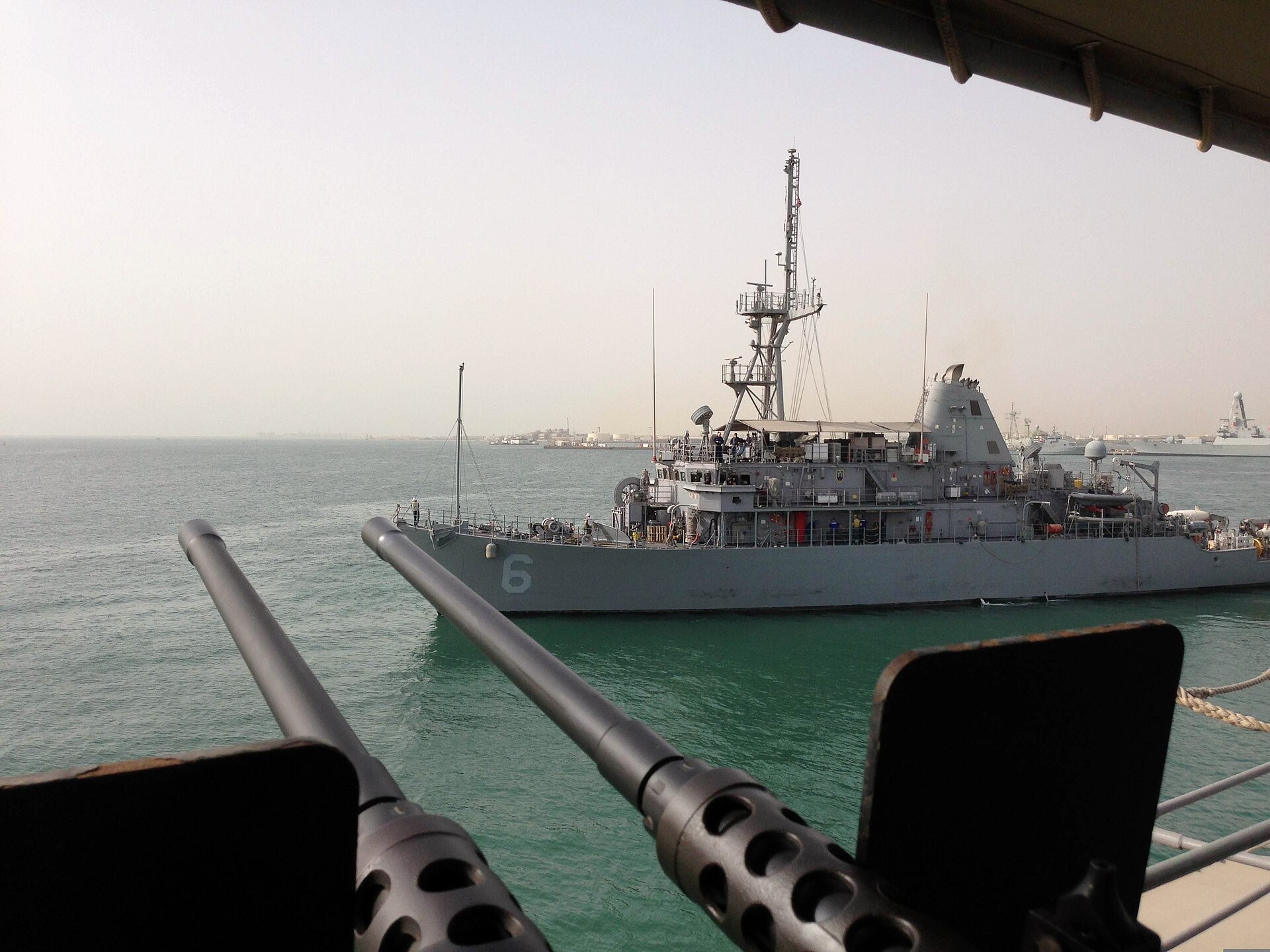
The US Navy’s mine countermeasure posture in the Persian Gulf is the product of a decommissioning decision that preceded the war by five months. In September 2025, the last four Avenger-class MCM ships based in Bahrain — USS Devastator, USS Dextrous, USS Gladiator, and USS Sentry — were decommissioned. By January 2026, they had been loaded onto the heavy-lift vessel M/V Seaway Hawk and shipped to the Philadelphia Inactive Ship Maintenance Facility. The war began February 28.
The current theater force consists of three Independence-class Littoral Combat Ships — USS Canberra, USS Santa Barbara, and USS Tulsa — operating from Bahrain with modular MCM packages, plus two Avenger-class ships, USS Chief and USS Pioneer, rushed to the Gulf by mid-April 2026. Only four Avenger-class vessels remain in the entire US Navy, all previously forward-deployed to Japan.
| Vessel | Class | Capability | Status |
|---|---|---|---|
| USS Canberra (LCS-30) | Independence LCS | Operates outside mine threat zone; deploys unmanned MCM systems | Active, Bahrain |
| USS Santa Barbara (LCS-32) | Independence LCS | Operates outside mine threat zone; deploys unmanned MCM systems | Active, Bahrain |
| USS Tulsa (LCS-16) | Independence LCS | Operates outside mine threat zone; deploys unmanned MCM systems | Active, Bahrain |
| USS Chief (MCM-14) | Avenger | Can operate inside mine threat zone | Deployed to Gulf, mid-April 2026 |
| USS Pioneer (MCM-9) | Avenger | Can operate inside mine threat zone | Deployed to Gulf, mid-April 2026 |
| USS Devastator (MCM-6) | Avenger | N/A | Decommissioned Sept 2025, Philadelphia ISMF |
| USS Dextrous (MCM-13) | Avenger | N/A | Decommissioned Sept 2025, Philadelphia ISMF |
| USS Gladiator (MCM-11) | Avenger | N/A | Decommissioned Sept 2025, Philadelphia ISMF |
| USS Sentry (MCM-3) | Avenger | N/A | Decommissioned Sept 2025, Philadelphia ISMF |
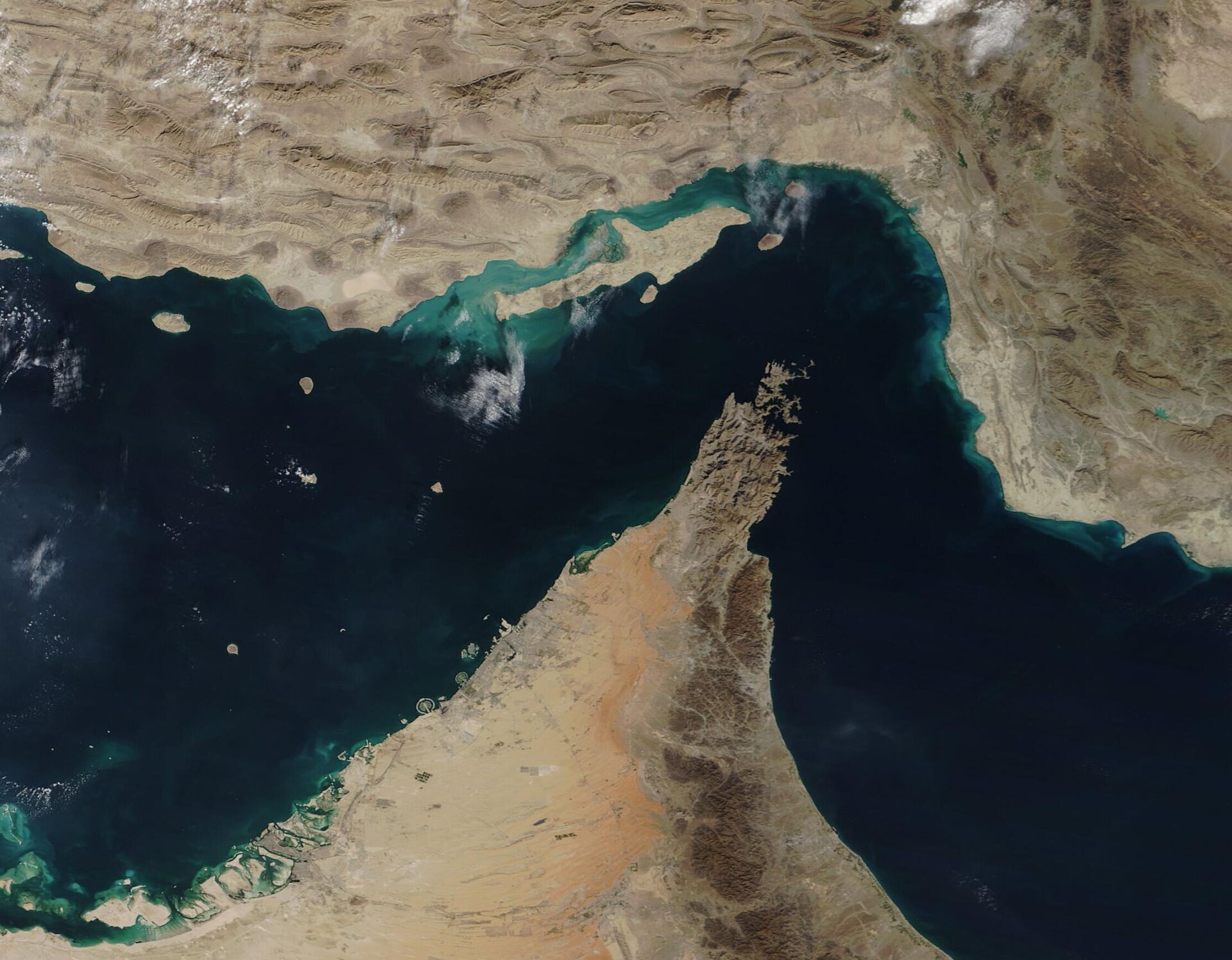
The operational distinction matters. Navy Times reported that “the LCS operates outside the mine threat zone and deploys counter-mine devices, while the minesweepers can operate near or directly inside the mine-threat zone.” The three LCS platforms send unmanned systems into mined waters and wait for data. The two Avengers can go in themselves. Five ships total — two capable of direct engagement — against an estimated mine field spanning roughly 200 square miles of the Hormuz corridor.
The three carrier strike groups now assembled in the Middle East — the largest US naval concentration since 2003 — are similarly constrained: as our analysis of the carrier posture documents, Lincoln, Ford, and Bush cannot enter the Gulf until that mine field is cleared, and the MCM force assembled to clear it remains five ships short of sufficient.
Adm. Daryl Caudle, Chief of Naval Operations, told DefenseScoop on April 24 that the Navy is shifting toward “autonomous systems and AI that can sense and report mines more safely and quickly than traditional ‘mowing the grass’ methods.” He acknowledged these systems require a support vessel for data processing. The technology is real. Whether it is deployable at scale, in contested waters, against GPS-float mines that drift and can be remotely activated, within a timeframe shorter than six months — that is the question the classified briefing apparently answered, and Hegseth apparently did not like the answer.
Trump’s contribution arrived via Truth Social on April 23: “Our mine sweepers are clearing the Strait right now. I am hereby ordering that activity to continue, but at a tripled up level!” He also ordered the Navy to “shoot and kill” any vessel caught laying mines. The order to triple mine-clearing operations is addressed to a force of five ships, two of which arrived weeks ago.
Iran Cannot Find Its Own Mines
The mine threat has a dimension that no amount of MCM assets can fully resolve: Iran itself does not know where all its mines are. The New York Times reported that IRGC forces planted mines “random and disorganised,” using commercial GPS devices in some cases and manual compass bearings in others. Sea currents have since displaced an unknown number of these mines from their original positions. US officials confirmed the assessment. Iran’s Foreign Minister Araghchi obliquely acknowledged the problem, stating that reopening “will take place taking into account technical constraints.”
“Technical constraints” is diplomatic language for a military fact: mines that have drifted from GPS coordinates recorded at deployment are mines that neither Iran nor the US can locate through records alone. They must be found physically — by sonar, by unmanned underwater vehicles, or by the hulls of ships that encounter them. As Sal Mercogliano of the US Merchant Marine Academy told Stars and Stripes: “The problem is that if there’s a fear of a mine… you’ve got to prove that there aren’t any mines.”
Steven Wills of the Center for Maritime Strategy framed the same problem: “That’s just the danger of mine warfare in that one can never take for granted that mines are not present unless cleared.” Paul Heslop of the UN Mine Action Service added that “clearing landmines is difficult, clearing sea mines is even harder” due to tidal currents, water temperature, and mine mobility — the very factors that have already displaced Iran’s GPS-deployed devices.
Adm. James Stavridis, former NATO Supreme Allied Commander Europe, estimated that US forces have destroyed approximately 90% of Iran’s large mine-laying vessels and mine-storage warehouses. But he acknowledged Iran “still has the capability to lay more” — and, as Axios confirmed, the IRGC exercised that capability after the April 21 ceasefire extension. The mine field is not a fixed problem. It is an active one.
This creates a particular kind of strategic trap. Iran’s inability to locate its own mines is simultaneously an Iranian liability — Araghchi cannot credibly promise clearance as a ceasefire deliverable — and an Iranian asset. Neither the US nor any third party can fully certify the Strait as clear, indefinitely extending the economic disruption that Baker Hughes has already priced into its $33 billion bet against a summer reopening.
How Long Will Hormuz Actually Stay Closed?
The classified Pentagon assessment of six months assumes operations begin after hostilities end. Hostilities have not ended. The ceasefire — extended indefinitely on April 21 — is being violated by the same IRGC Navy units that would need to stop mining for clearance to begin. This means the six-month clock has not started.
The 1991 benchmark is instructive but understates the current difficulty. After Desert Storm, multinational forces cleared approximately 1,300 mines from the northern Gulf over more than two years. They did so with a dedicated MCM force substantially larger than today’s five-ship theater presence, against conventional tethered mines without GPS-float technology, in waters where the mine-laying party (Iraq) was a defeated state that had stopped deploying ordnance.
| Variable | 1991 Gulf War | 2026 Hormuz |
|---|---|---|
| Estimated mines | ~1,300 | Fewer than 100 (US estimate; exact count declined) |
| Mine technology | Conventional tethered/bottom | GPS-float, remote activation, current-displaced |
| Mine-layer status | Defeated state, no active deployment | Active deployment continuing post-ceasefire |
| Dedicated MCM ships | Large multinational fleet | 2 Avengers + 3 LCS (indirect capability) |
| Clearance duration | 2+ years | 6 months (classified assessment; denied by SecDef) |
| Clearance area | Northern Persian Gulf (broad) | ~200 sq mi Hormuz corridor |
| Mine location data | Some captured Iraqi records | Iran itself cannot locate all mines |
The current scenario has fewer mines but harder mines — devices that drift, can be remotely activated, and whose deployers have lost track of some portion of them. The area is smaller but the MCM force is drastically reduced. And the mine-laying has not stopped.
German Chancellor Friedrich Merz has offered mine-clearance vessels post-conflict, but emphasized that a “sound legal basis” would be necessary for multinational intervention. This is the international community describing a timeline measured in diplomatic prerequisites stacked on top of operational ones — first a ceasefire that holds, then a legal framework, then multinational coordination, then clearance operations that the Pentagon’s own classified assessment put at six months under favorable conditions.
Hegseth’s response to all of this: “We feel confident in our ability, in the correct period of time, to clear any mines that we identify.” The qualifier “that we identify” is doing significant work in that sentence.
The Navy Secretary Was Fired the Same Day
On April 23 — the same day Sean Parnell called the six-month mine clearance timeline an “impossibility” — Hegseth fired Navy Secretary John Phelan, effective immediately. CNN and NBC News reported that Hegseth cited slow shipbuilding reform and objected to Phelan’s direct communication with Trump, which Hegseth viewed as circumventing the chain of command.
Phelan was the civilian official most directly responsible for the Navy that is supposed to conduct mine-clearing operations in the Strait. His removal, mid-war and mid-blockade, is the first firing of a service secretary under Trump’s second term. The stated reasons — shipbuilding reform pace and direct presidential communication — have nothing to do with mine warfare. But the timing places the denial of a Navy operational assessment and the removal of the Navy’s civilian leader on the same calendar day.
The Navy that Hegseth says can clear mines faster than six months is now the Navy whose secretary he fired for, among other things, talking directly to the president about Navy matters.
Hegseth’s War on Congressional Oversight
The classified briefing that produced the six-month assessment reached Congress despite a system Hegseth had built to prevent exactly this kind of unfiltered military-to-congressional communication. In an October 15, 2025 memo — co-signed with Deputy Secretary of Defense Feinberg — Hegseth barred all DoD personnel from communicating with Congress without prior approval from the office of the Assistant Secretary of Defense for Legislative Affairs. The memo cited the need for “consistency and support for the Department’s priorities.”
CNN and Breaking Defense reported the memo’s existence in October 2025. Its practical effect was to create a political filter between military assessments and the congressional committees with oversight authority. The classified HASC briefing that contradicted Hegseth’s preferred narrative on mine clearance either passed through this filter and was approved — meaning someone in Hegseth’s own legislative affairs office cleared an assessment he would later call “false” — or it bypassed the filter, in which case the system Hegseth built to control information flow to Congress failed at the moment it mattered most.
Either way, the result was a classified military assessment reaching lawmakers and then being publicly disavowed by the defense secretary whose office was supposed to control what lawmakers heard. The denial is not just about mines. It is about whether the Pentagon’s civilian leadership will allow its own operational assessments to inform the congressional oversight function that authorizes and funds the war.
What Does the Mine Dispute Mean for the Islamabad Talks?
The Islamabad talks that failed over 21 hours in April broke down on two issues: Hormuz and the nuclear program. Witkoff and Kushner are returning April 26, with Araghchi already in the Pakistani capital as of April 24. The mine clearance dispute lands directly on the negotiating table.
Every party in those talks is calibrating how long they can hold their current position. Iran’s calculation depends on how long Hormuz disruption imposes costs on Gulf states and the global economy. The US calculation depends on how long the blockade can sustain pressure without the costs — to allies, to oil markets, to the credibility of the Hajj security umbrella — exceeding the benefits. Saudi Arabia’s calculation depends on how long Yanbu can sustain exports at 4-5.9 million barrels per day against a pre-war Hormuz throughput of 7-7.5 million bpd.
The Pentagon’s classified assessment gave everyone a number: six months, minimum, from the end of hostilities. If that number is correct, it means Hormuz does not reopen before late 2026 at the earliest — probably later, given that hostilities have not ended and mines are still being laid. That timeline defines the negotiating environment. It tells Iran that time is on its side. It tells Saudi Arabia that the functional closure priced by the Dallas Fed extends well beyond summer. It tells Witkoff that the blockade is not a short-term coercive instrument but a long-term commitment.
Hegseth’s denial of that number does not change the number. It changes what the US government is willing to say about the number. IRGC-aligned media — Tasnim, Fars — have already portrayed the congressional briefing leak as validation of Iranian strategic deterrence. The six-month timeline is, in their framing, Iran’s mine warfare working as designed. Hegseth’s public rejection gives Tehran a second information victory: the US defense secretary felt compelled to deny his own military’s assessment, which is itself evidence that the assessment was damaging enough to require denial.
For Pakistan’s role as ceasefire enforcer, the mine clearance timeline creates a specific problem. Any ceasefire deal that includes Hormuz reopening as a deliverable must account for a clearance process that the Pentagon privately says takes six months and publicly says is an “impossibility” — two positions that cannot both inform the same agreement. Pakistan’s Foreign Minister Dar, navigating between Witkoff’s delegation and Araghchi’s, now has a US government that has given him two contradictory answers to the most basic operational question: how long?
The Saudi Fiscal Variable
For Riyadh, the ambiguity created by Washington’s internal split is itself a fiscal and strategic variable. Brent crude traded at $104.63 on April 24 — below the $108-111 per barrel Saudi fiscal break-even estimated by Goldman Sachs and Bloomberg (inclusive of PIF spending). Saudi March production fell to 7.25 million bpd from February’s 10.4 million, a 30% drop that the IEA called “the largest disruption on record.” Asia-bound exports dropped 38.6% according to Kpler data.
Goldman’s war-adjusted estimate of the Saudi fiscal deficit stands at 6.6% of GDP, double the official 3.3% projection. The Saudi government has been lobbying Washington to end the blockade because the underlying arithmetic stopped working — a signal that Riyadh’s own timeline expectations extend well beyond what Hegseth’s public optimism implies.
The East-West Pipeline bypass through Yanbu has a loading ceiling of 4-5.9 million bpd against the 7-7.5 million bpd that flowed through Hormuz pre-war. That structural gap of 1.1-3.5 million bpd persists regardless of mine clearance timelines. But if the Pentagon’s classified six-month figure is accurate, Saudi planning must account for a minimum of nine months to a year of reduced export capacity — six months of clearance plus the time to restart full Hormuz transit operations. At $104 Brent, below break-even, every additional month compounds the fiscal damage Goldman has already quantified.
The OPEC+ April quota of 10.2 million bpd for Saudi Arabia sits 3 million barrels above actual output — a measure of how far production has fallen from the cartel’s own assumptions. Saudi June OSP was reset at +$3.50/bbl, a $16 reduction from May’s war-premium +$19.50 setting — an implicit acknowledgment by Aramco’s pricing committee that the premium was unsustainable.
Riyadh cannot plan around a mine clearance timeline that Washington is simultaneously briefing as six months and denying as impossible. The Nicosia summit parallel track and the direct Saudi FM-Araghchi call on blockade day (April 13) suggest Saudi Arabia is already operating on the assumption that the longer timeline is closer to reality — regardless of what Hegseth says at a podium.
Frequently Asked Questions
Why did the Pentagon brief Congress on a six-month timeline if Hegseth considers it false?
The HASC briefing was conducted by a senior Pentagon official — not Hegseth personally — in a classified session where standard practice is to present the military’s best operational assessment, including worst-case scenarios, to the committee with authorization and appropriations authority over the operation. Hegseth’s October 2025 memo requiring pre-clearance of congressional communications means someone in his own legislative affairs office either approved the briefer’s content or failed to filter it. The briefer’s assessment reflected the Navy’s operational judgment given current MCM assets, mine type, and the precondition that hostilities must end first — a judgment the civilian defense secretary overruled publicly but has not countermanded through any known operational directive.
Has the US ever cleared a mine field faster than the classified estimate suggests?
During Operation Desert Storm, coalition forces cleared a channel through Iraqi mine fields in the northern Gulf within days for immediate military transit — but comprehensive area clearance took over two years. The distinction matters: military vessels accepting higher risk can transit a partially cleared lane; commercial shipping and insurance underwriters require full-area certification. War-risk premiums applied to Hormuz transit since the conflict began would not be lifted based on a partial clearance declaration by any single government. The International Maritime Organization has no mechanism for certifying a strait as mine-free; each insurer and flag state makes its own risk assessment, meaning commercial reopening lags military reopening by months even in optimistic scenarios.
Could allied mine-clearance contributions shorten the timeline?
Germany’s Merz offered mine-clearance vessels, and the UK Royal Navy operates Hunt-class MCM vessels with Hormuz experience from the International Maritime Security Construct (IMSC). Japan’s Maritime Self-Defense Force has four Awaji-class MCM ships among the world’s most advanced. But multinational MCM operations require a legal framework (Merz’s stated prerequisite), a lead-nation coordination structure, and — most critically — a cessation of mine-laying. The 1991 precedent involved 12 nations’ MCM assets working for two years. Even with allied contributions, the precondition remains: Iran must stop deploying new mines, which Axios confirmed it has not.
What are GPS-float mines and why do they complicate clearance?
GPS-float mines combine a conventional explosive charge with a GPS-equipped float that allows remote activation. Unlike traditional contact mines — which detonate when struck — or influence mines — which respond to a ship’s magnetic or acoustic signature — GPS-float mines can be armed or disarmed remotely, allowing selective targeting. The commercial GPS devices Iran used are accurate to roughly 3-5 meters — but tidal currents in the Strait of Hormuz, which run up to 4 knots at the narrows, can displace a floating mine significantly from its recorded deployment coordinates within days. This means the mine’s actual position diverges from its GPS-recorded deployment coordinate over time, requiring physical search rather than coordinate-based retrieval. Traditional mine-sweeping gear — towed cables that cut mooring lines — is ineffective against mines that float freely and may be electronically dormant until activated.
Did Hegseth’s denial change the operational mine clearance plan?
No public evidence indicates that Hegseth issued an operational directive contradicting or accelerating the timeline the Pentagon briefed to Congress. His spokesman called the assessment “false”; Hegseth himself declined to offer an alternative timeline. Trump’s Truth Social order to “triple” mine-clearing activity is addressed to a five-ship force with no announced reinforcements or reactivation of the four decommissioned Avenger-class ships in Philadelphia. Adm. Caudle’s April 24 remarks about autonomous systems and AI-enabled sensing described capabilities under development, not deployed assets. The gap between political denial and operational reality is, for now, a communications strategy rather than a force-structure change.
The command vacuum compounds this gap. Araghchi cannot open the Strait of Hormuz even if he wants to — the IRGC Navy field units controlling mine operations answer to a command chain that bypasses Iran’s foreign ministry entirely. Iran’s use of the ceasefire window to reposition ballistic missile launchers — and what that means for Trump’s next strike option — is examined in The Ceasefire Was an Iranian Operational Maneuver — Hegseth Admitted It, and Now Trump’s 3-5 Day Ultimatum Has No Military Teeth. Trump subsequently converted that tactical analysis into a standing kill order: on April 23, he directed the US Navy to shoot on sight any vessel observed laying mines in the Strait — a directive examined in Trump Orders Navy to Kill Iranian Mine-Laying Crews in Hormuz.