WASHINGTON — The US Treasury on Friday designated Hengli Petrochemical (Dalian) Refinery Co., Ltd., a Fortune Global 500 company and China’s second-largest independent refiner at 400,000 barrels per day, in the broadest single round of Operation Economic Fury since the campaign restarted in February 2025. The action, set out in Treasury press release SB0472, simultaneously listed roughly 40 shipping firms and vessels and froze $344 million in Tether-issued USDT linked to entities including the Central Bank of Iran.
The package landed within hours of US envoy Steve Witkoff and senior adviser Jared Kushner travelling to Pakistan for a second round of indirect talks with Tehran, and it is the first time Washington has named a Chinese refiner by its full industrial identity rather than through a Shandong shell or vessel intermediary. Treasury Secretary Scott Bessent, in the same release, said: “Treasury will continue to constrict the network of vessels, intermediaries, and buyers Iran relies on to move its oil to global markets.”
Table of Contents
Why Hengli is not a teapot
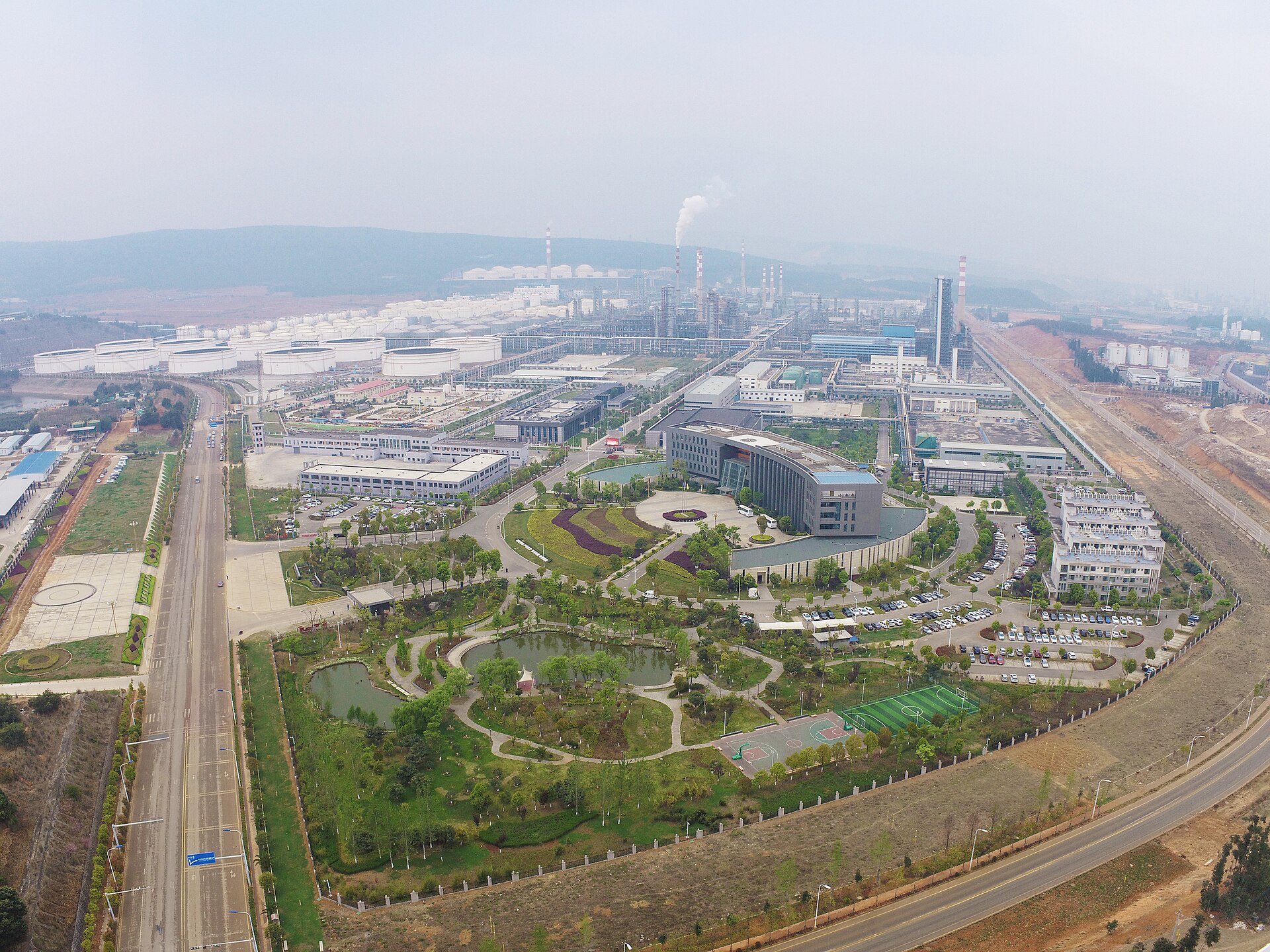
Hengli Petrochemical’s Dalian complex sits on Changxing Island and processes about 400,000 barrels per day, according to Treasury’s SB0472 designation notice. That throughput is six to ten times the size of the Shandong “teapot” refiners Washington has targeted in earlier Economic Fury rounds, which typically run 35,000 to 60,000 bpd. Hengli’s parent group ranked 81st on the 2024 Fortune Global 500 with revenues of roughly RMB 871.5 billion, or about $120 billion.
The Changxing Island project is also a vertically integrated petrochemical and polyester complex, with five production lines turning out about 12 million metric tons per year of purified terephthalic acid, the feedstock for polyester fibre. Xinhua reported in 2019 that the 20-million-ton-per-year refining and chemical integration project is listed in State Council documents as a strategic plank of the Northeast China revitalization programme. Hengli is privately owned by founder Chen Jianhua and his wife Fan Hongwei, but its political identity inside the Chinese system is industrial-policy flagship rather than peripheral private operator.
Treasury’s designation says Hengli has, since at least 2023, been receiving Iranian crude under the supervision of Sepehr Energy Jahan Nama Pars Company, the oil sales arm of Iran’s Armed Forces General Staff (AFGS). OFAC first designated Sepehr Energy on November 29, 2023, in release SB0015, identifying it as a Ministry of Defense vehicle established in late 2022 to monetize crude on behalf of the Iranian military. The Hengli purchases, Treasury said, generated “hundreds of millions of dollars in revenue” for AFGS.
That sourcing chain is what distinguishes the Hengli action from prior teapot designations. Sepehr Energy routes crude proceeds directly to military command rather than to the National Iranian Oil Company’s civilian channels, which means Hengli’s purchases — whatever the commercial framing inside Dalian — were funding the same institutional structure that runs Iran’s missile and proxy programmes.
The Middle East briefing 3,000+ readers start their day with.
One email. Every weekday morning. Free.
| Chinese refiner designated | Date | Approx. capacity | Treasury / State citation |
|---|---|---|---|
| Shandong Shouguang Luqing Petrochemical | March 20, 2025 | ~75,000 bpd | Treasury SB0090 |
| Hebei Xinhai Chemical Group | 2025 | Teapot scale | State Department |
| Shandong Shengxing Chemical | May 2025 | Teapot scale, $1B+ Iranian purchases | State Department, May 2025 |
| Hengli Petrochemical (Dalian) | April 24, 2026 | 400,000 bpd | Treasury SB0472 |
The 40-vessel sweep and the $344M crypto freeze
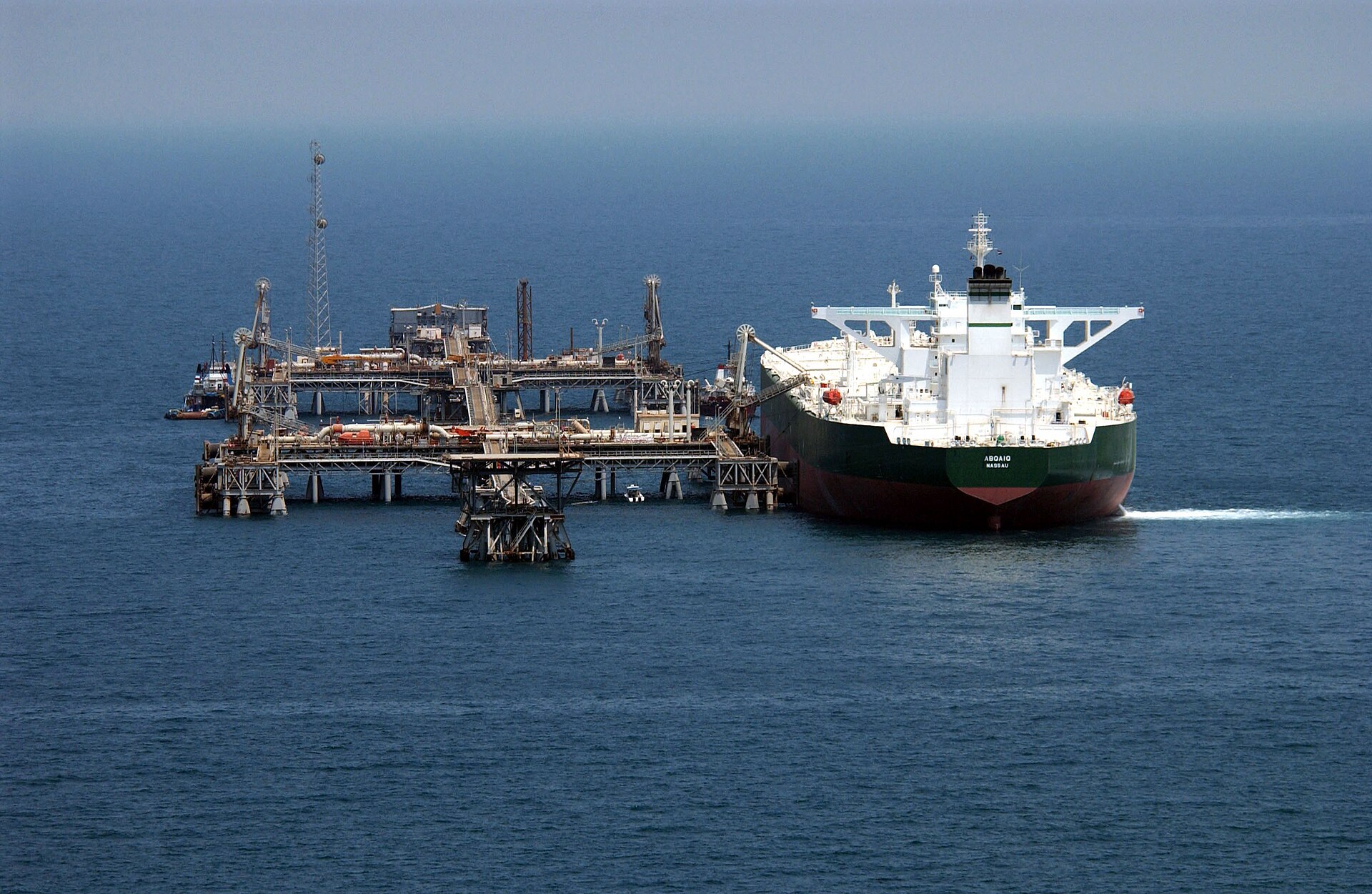
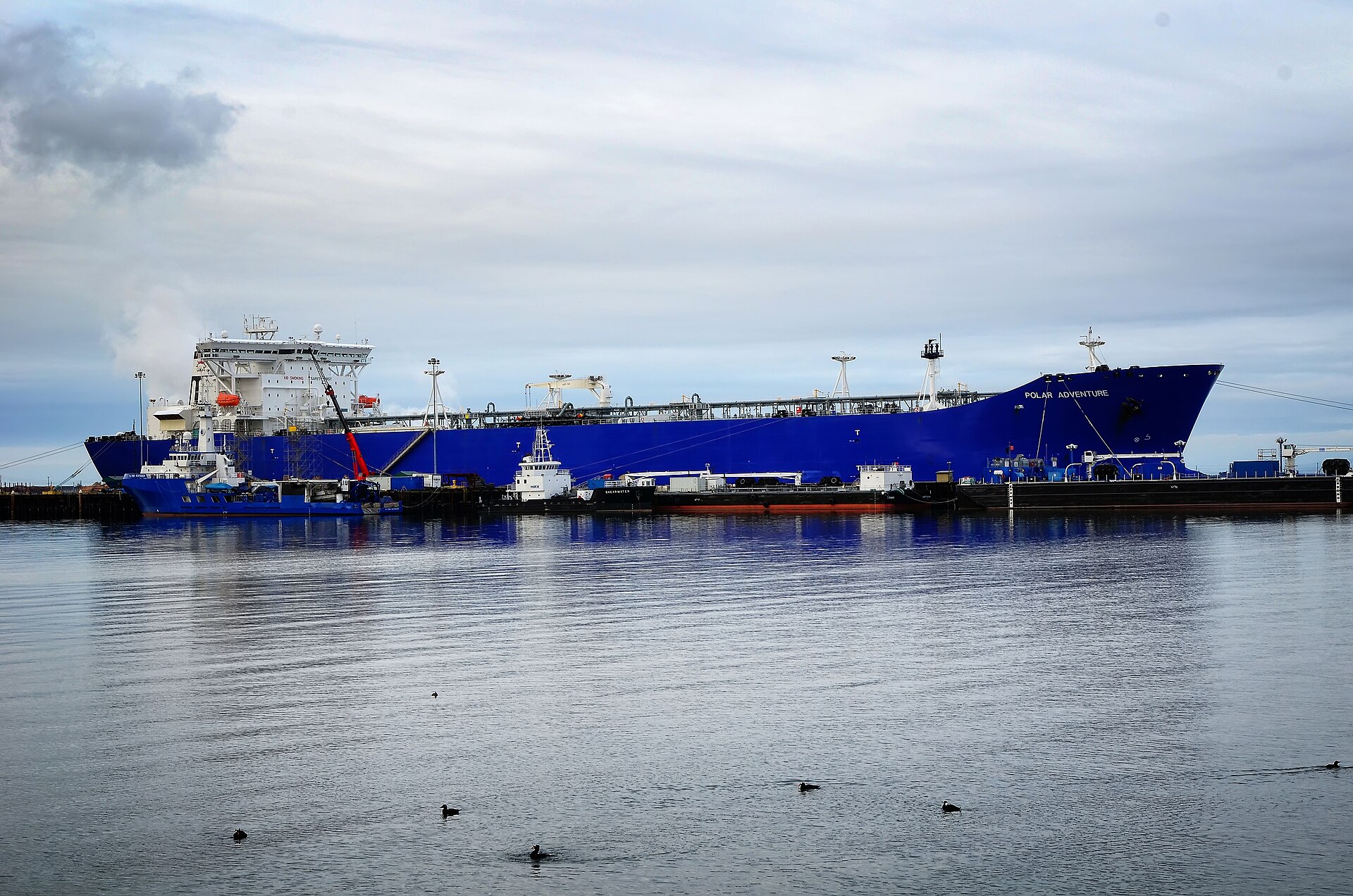
Alongside Hengli, Treasury designated approximately 40 shipping firms and vessels, including 19 shadow-fleet ships moving Iranian crude, liquefied petroleum gas, and petrochemical products. The flag mix on the listed vessels includes Panama, with corporate registrations in the United Arab Emirates, India, and the Marshall Islands, according to SB0472 and trade outlet wwbl.com’s April 24 readout of the action.
The sweep is the largest combined action against Iranian crude logistics infrastructure since the Shamkhani-network designations of July 2025, and it follows a clear escalatory pattern. The earlier blockade-of-flows phase, set out in our coverage of the US blockade as coercive diplomacy, focused on physical interdiction in the Indo-Pacific. The seizure of the Majestic X in the Indian Ocean and the subsequent two-tanker seizure under the Hegseth blockade showed Treasury and the Pentagon willing to take vessels off the water. The April 24 package adds the buyer side of that ledger.
The crypto component is the second axis. OFAC designated, and stablecoin issuer Tether froze, $344 million in USDT held across two Tron-blockchain wallets that Treasury linked to Iranian entities including the Central Bank of Iran. CoinDesk and CNN reported the freeze the same day. Bessent, in a separate statement quoted by Benzinga and CNN, said: “We will follow the money that Tehran is desperately attempting to move outside of the country and target all financial lifelines tied to the regime.”
Treasury said in SB0472 that Operation Economic Fury has now sanctioned more than 1,000 Iran-related persons, vessels, and aircraft since February 2025. The April 24 package wraps a single named buyer, its tanker chain, and its dollar-denominated settlement layer in one announcement — a different architecture from the earlier series of point designations against teapots and shell shipping firms.
How is Beijing framing the response?
China embassy spokesperson Liu Pengyu, in remarks carried by AP and republished by Fortune on April 24, said the US action “undermines international trade order and rules, disrupts normal economic and trade exchanges, and infringes upon the legitimate rights and interests of Chinese companies and individuals.” That phrasing matters. It is the formula Beijing has used since the Anti-Foreign Sanctions Law (AFSL) was enacted in June 2021 and expanded under the March 2025 Implementation Regulations, which give Chinese authorities a domestic legal basis to retaliate against foreign entities that comply with foreign sanctions against Chinese firms.
Liu’s statement did not announce specific counter-sanctions. No Chinese ministry has named US persons or entities for AFSL listing in response to Hengli. Major Chinese corporates and banks have, in practice, continued to comply with OFAC designations because their dollar-clearing and trade-finance exposure to the US-dominated financial system outweighs the cost of Beijing’s domestic retaliation tools, a point made in compliance terms by Fortune’s April 24 piece.
The diplomatic calendar constrains the immediate Chinese response. Beijing has historically reserved its hardest counter-measures for moments when bilateral negotiation channels are dormant, and a Trump-Xi summit is expected in the coming weeks, according to Reuters. Iranian state media, by contrast, did not specifically address the Hengli or shadow-fleet listings. PressTV’s April 25 coverage emphasised general defiance and self-reliance, consistent with Tehran’s pattern of declining to acknowledge by name the firms inside its sanctions-evasion network.
The same diplomatic-calendar logic shaped Xi’s April 20 phone call to MBS urging Hormuz reopening — placed thirteen days after Beijing’s UNSC veto preserved the legal ambiguity sustaining the blockade. Why China frames Hormuz as a bilateral relationship problem rather than a supply-chain problem it intends to solve is examined here.
“Major [Chinese] companies and banks still comply with U.S. sanctions because they are more exposed to the U.S.-dominated financial system.”Compliance assessment cited by Fortune, April 24, 2026
Can Saudi Arabia actually replace the lost barrels?
The market-side question raised by the Hengli designation is whether forcing Hengli’s Iranian intake out of the supply chain creates a corresponding opening for Gulf producers — and Saudi Arabia in particular. The arithmetic of the current Hormuz-constrained market says no.
The International Energy Agency’s April 2026 Oil Market Report put Saudi March production at 7.76 million bpd, down from 10.11 million in February, a 23 per cent fall driven by wartime damage and the Yanbu loading bottleneck that the Kingdom has been unable to engineer around. Our coverage of the Saudi production crash and the bypass hole set out the loading ceiling at the Red Sea terminus of the East-West pipeline as 4 to 5.9 million bpd, against pre-war Hormuz throughput of about 7 million bpd. The shortfall — 1.1 to 3.0 million bpd depending on where in the Yanbu capacity range operations sit — is structural rather than commercial, because the bypass infrastructure cannot physically absorb the diverted volumes at speed.
Iranian crude deliveries to China averaged 1.138 million bpd in February 2026, according to Kpler analytics cited by Al Jazeera, already roughly 115,000 bpd below January as sanctions pressure on the carrier chain bit. Kpler and IEA data show China purchasing more than 80 per cent of Iran’s shipped oil in the prior year. If Hengli is forced off Iranian intake, the most likely market outcomes are some combination of three scenarios: Hengli runs at lower utilisation while sourcing legal Middle East and West African grades at full premium; it bids up Russian ESPO crude, where China still has settlement infrastructure outside the dollar system; or new evasion routes form around different shell entities, restoring some of the Iranian flow under a different administrative cover.
The European think tank Bruegel, in comments to Al Jazeera on April 25, said teapot refineries cut off from discounted Iranian crude would face “high replacement prices in a market already strained by global tensions.” That logic applies to Hengli at scale: a 400,000 bpd buyer suddenly bidding at posted Saudi or Murban prices, rather than the discounted Iranian grades it has been receiving, feeds directly into the Asian benchmark structure. Brent settled at $90.38 on April 18, already below the Saudi fiscal break-even of $108-111/bbl flagged by Bloomberg’s PIF-inclusive analysis.
The secondary-sanctions trap closes on Asian banks
The financial rail underneath the Hengli action is the secondary-sanctions warning that Treasury issued to Asian banks ten days earlier. Bessent confirmed on April 15, in remarks reported by Bloomberg and Fox Business, that the department had sent letters to financial institutions in China, Hong Kong, the United Arab Emirates, and Oman, warning them they would be exposed to secondary measures if Iranian funds were found in their accounts.
“I’m not going to identify the banks,” Bessent told Bloomberg on April 15, “but we told them if we can prove there is Iranian money flowing through your accounts, then we are willing to put on secondary sanctions.” On Fox Business the same week, he set out the buyer-side warning in plainer language: “if you are buying Iranian oil, that if Iranian money is sitting in your banks, we are now willing to apply secondary sanctions, which is a very stern measure.”
The Hill, citing a senior administration official, described the warning letters as “the first step to adding secondary sanctions on those banks, which would cut them off from the U.S. financial system.” A passage from one of the letters, quoted by Fox Business, read: “Now is the time to finally disable Iran’s ability to support terrorism, threaten the region and global markets.”
The Hengli designation gives that warning a named test case. Any bank in Hong Kong, Dubai, Mumbai, or Muscat that processed payments connected to Hengli’s Iranian crude purchases, or to the 19 shadow-fleet vessels and the Indian and UAE-registered firms named in SB0472, now sits inside a documented OFAC paper trail. The Indian dimension is particularly exposed: Indian refiners settled Iranian-linked cargo in yuan via ICICI Bank Shanghai during the run-up to the General License U expiry, as set out in our coverage of the OFAC GL U expiry and the yuan-settlement workaround. Treasury’s letter list explicitly covers UAE and Hong Kong intermediaries, the two financial hubs that have historically absorbed Iranian oil-trade settlement. The full anatomy of India’s GL U exposure — the Doval flight, the ICICI Bank trail, the Chabahar waiver expiry, and the Epaminondas seizure — is examined in India’s Impossible Neutrality Died in Seven Days.
Why now, and what comes next
The timing is the diplomatic signal. Bloomberg’s April 24 headline read: “US Targets Iran Oil Exports With Sanctions on Chinese Refinery, Shadow Fleet — Ahead of Talks.” Witkoff and Kushner left for Pakistan on Friday for a second round of indirect engagement with Tehran, after the first round in Islamabad ended with the walkout described in our reporting on the negotiations and authorization-ceiling problem inside Iran’s command structure.
Sanctioning Hengli on the morning the negotiating team boarded its plane is consistent with the coercive-diplomacy posture Bessent set out in his April 24 statement quoted by wwbl.com: “Economic Fury is imposing a financial stranglehold on the Iranian regime, hampering its aggression in the Middle East and helping to curtail its nuclear ambitions.” The action raises Tehran’s economic cost of walking away from the table without committing Washington to any specific concession.
By naming Hengli rather than another Shandong teapot, Treasury has moved the buyer-side enforcement perimeter from peripheral private operators with provincial cover to a State Council-listed industrial-policy flagship. That shift forces Beijing to choose between an AFSL counter-listing — which would mark the first test of the March 2025 Implementation Regulations against a US designation tied to a Chinese Fortune 500 company — and a quieter compliance path in which Hengli adjusts its crude slate while Liu Pengyu’s “international trade order and rules” formula stands as the on-the-record protest.
The twenty-four-hour gap between the Hengli designation and the field gained immediate operational illustration. On April 26, Houthi forces struck the MV Andromeda Star — an Aframax tanker carrying Russian Urals crude from Primorsk to the Rosneft-owned Nayara Energy refinery at Vadinar, India — in the southern Red Sea near Mokha. The Indian Navy destroyer INS Kochi scrambled to the scene, rescuing all 30 crew. Nayara Energy, 49.13 percent owned by Rosneft, had been among the Indian importers identified as potentially exposed when GL U expired; within hours of the Hengli designation closing one node of the Iran crude supply chain, the Red Sea leg of an alternative Russian crude route came under kinetic attack. Full reporting on the Andromeda Star incident is here.
FAQ
Is Hengli the largest Chinese refiner ever sanctioned by OFAC?
Yes. At 400,000 bpd of throughput and a Fortune Global 500 ranking of 81 in 2024, Hengli is by an order of magnitude the largest Chinese refining entity to be designated by OFAC under any sanctions programme. The previous Chinese teapot designations under Economic Fury — Shouguang Luqing, Hebei Xinhai, Shandong Shengxing — operated at a fraction of Hengli’s scale and lacked Hengli’s status as a State Council-listed Northeast revitalization flagship.
What is Sepehr Energy Jahan Nama Pars and why does it matter?
Sepehr Energy was established in late 2022 as the oil sales arm of Iran’s Armed Forces General Staff and is controlled by the Ministry of Defense (MODAFL). OFAC first designated it on November 29, 2023, in release SB0015. Treasury cites Sepehr’s role as the supplier and overseer of Hengli’s Iranian crude inflows since at least 2023, which means revenue from those sales went directly to Iran’s military command rather than to the National Iranian Oil Company. That military pipeline distinguishes the Hengli flows from civilian Iranian crude commerce and underwrites the AFGS designation language Treasury used.
Could Tether’s $344 million freeze set a precedent for stablecoin enforcement?
Yes. The two Tron-blockchain wallets frozen on April 24 were Tether’s largest single Iran-linked freeze under OFAC coordination, according to CoinDesk’s April 24 reporting. The action establishes a template in which a private stablecoin issuer freezes USDT in cooperation with OFAC the same day Treasury publishes the underlying designation, compressing the gap between sanctions listing and asset immobilisation that previously gave designated entities time to reposition funds.
Does the Anti-Foreign Sanctions Law require Beijing to retaliate?
No. The AFSL, enacted in June 2021 and expanded under the March 2025 Implementation Regulations, gives Chinese authorities the legal authority to add foreign entities to a counter-sanctions list, but it does not require any specific retaliatory listing in response to a particular foreign designation. Liu Pengyu’s “international trade order and rules” language draws on AFSL framing without committing Beijing to a counter-listing. The law has been used selectively, and as of publication no Chinese ministry has named US persons or entities for AFSL action in response to Hengli.
What does this mean for the Witkoff-Kushner talks in Pakistan?
The Friday timing — sanctions announced as the US negotiating team boarded its plane to Islamabad — is consistent with the coercive-diplomacy doctrine Treasury and the State Department have used throughout the resumed Economic Fury campaign. The action raises Tehran’s economic cost of walking away from the table without committing Washington to any specific concession in return. Whether the Iranian delegation can negotiate on the buyer-side perimeter at all depends on the same Article 110 authorization-ceiling problem that ended the first Islamabad round, with the Supreme National Security Council and the IRGC retaining final authority over crude-export terms outside the elected government’s control.