NEW DELHI — India’s claim to strategic neutrality in the Iran-Saudi war expired at 12:01 AM on April 19, 2026 — the same minute as OFAC General License U. Within hours of that deadline, National Security Adviser Ajit Doval was on a plane to Riyadh. Today, April 26, the Chabahar port sanctions waiver expires, compressing two American compliance demands into a single week. Between those dates, Iran seized an India-bound cargo ship in the Strait of Hormuz. The fence New Delhi spent seven years building between Tehran and Washington has been dismantled in seven days.
This is not a story about Indian hedging. It is a story about three simultaneous cliffs — oil sanctions, port sanctions, and physical seizure — that together eliminate every position except a public choice. The Doval visit, the yuan payments, the ICICI Bank exposure, the Chabahar stake transfer, and the Epaminondas seizure are not separate events. They are the anatomy of one structural collapse.
Table of Contents
- The Doval Flight and What It Conceded
- What Did GL U Actually Permit — and What Died With It?
- The ICICI Bank Problem
- Why Does the Chabahar Waiver Expire the Same Week?
- Iran Seized an India-Bound Ship Three Days After the Visit
- Can Saudi Arabia Replace What India Lost?
- Why India Refused the Hormuz Coalition
- The 8.9 Million Indians Washington Never Mentions
- What Comes After Neutrality
The Doval Flight and What It Conceded
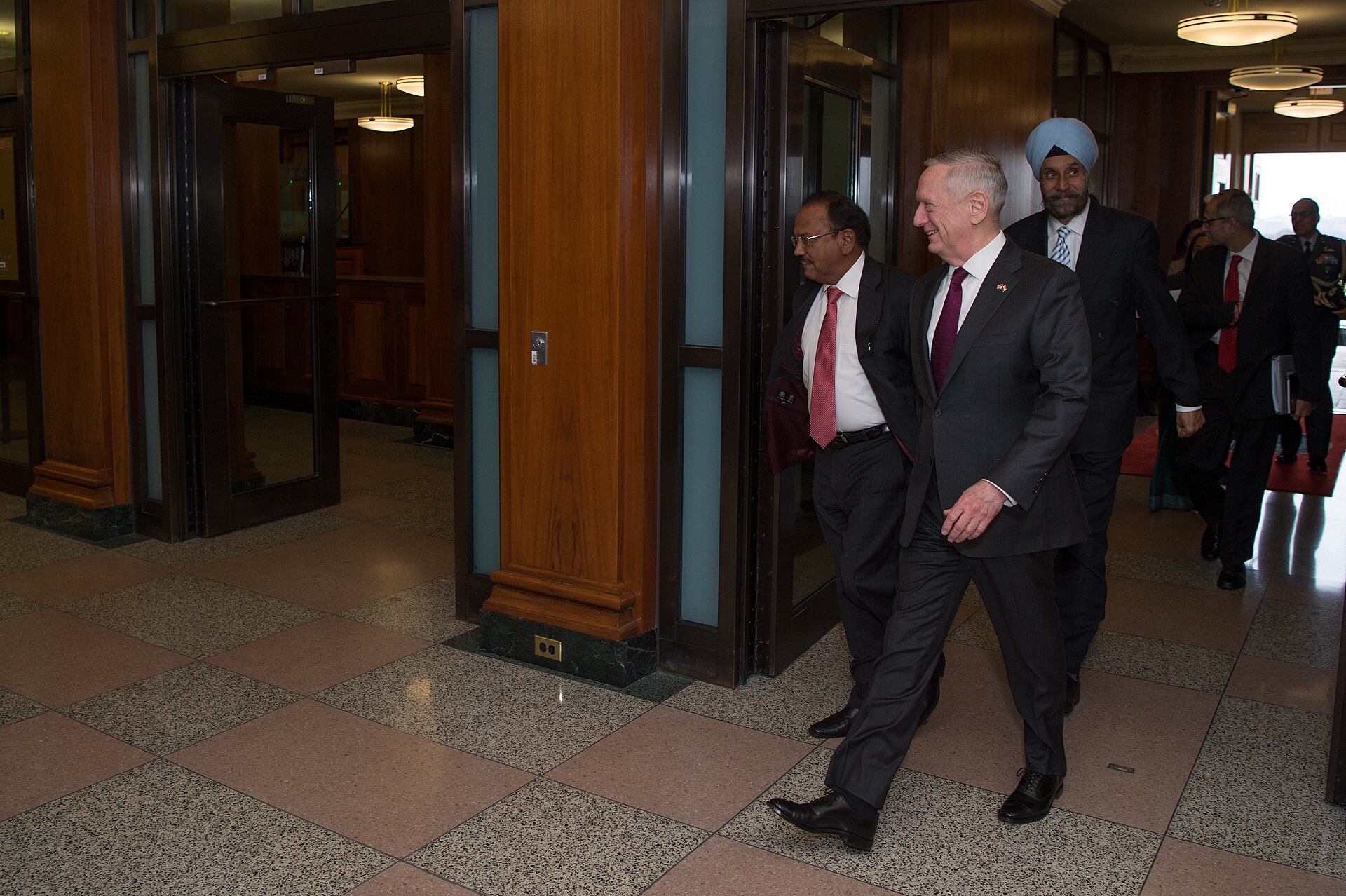
The Indian Ministry of External Affairs announced Doval’s Riyadh visit late on the evening of April 19, using language calibrated to sound routine. Spokesperson Randhir Jaiswal told reporters the visit was conducted “on the directions of the Prime Minister” and that “our outreach to countries in the Gulf continues.” The phrasing framed a crisis trip as diplomatic housekeeping.
The itinerary told a different story. Doval met three counterparts in rapid succession: Energy Minister Prince Abdulaziz bin Salman, Foreign Minister Prince Faisal bin Farhan, and Saudi National Security Adviser Dr. Musaed Al-Aiban. The energy minister first. That sequencing — oil before diplomacy before security — maps the priority stack. India needed to discuss supply before it could discuss anything else.
The timing was not coincidental. GL U, the OFAC general license that had permitted Indian purchases of Iranian crude for one month, expired at 12:01 AM EDT on April 19. It carried no wind-down provision — a hard cliff unlike every previous Iran sanctions transition, according to Baker McKenzie’s sanctions practice. Doval’s flight departed within hours of that deadline. India’s last legal barrel of Iranian oil and India’s first post-waiver diplomatic engagement with Riyadh arrived on the same calendar day.
What the visit conceded, without saying so, was that India’s one-month experiment in Iranian crude had ended, and the re-engagement with Saudi supply needed to begin before Washington made the silence public. Prime Minister Narendra Modi has called Saudi Arabia “one of India’s most valued partners, a trusted friend and a strategic ally.” On April 19, the friendship required a same-day house call.
The Middle East briefing 3,000+ readers start their day with.
One email. Every weekday morning. Free.
What Did GL U Actually Permit — and What Died With It?
General License U was a one-month OFAC authorization covering transactions related to Iranian crude oil loaded on vessels on or before March 20, 2026. It was an emergency measure, issued as Hormuz’s functional closure disrupted global supply chains, and it permitted what seven years of Indian diplomatic effort had failed to achieve: legal imports of Iranian crude into Indian refineries.
India received approximately four million barrels across two VLCC shipments. Indian Oil Corporation purchased the confirmed cargo — the Jaya, carrying roughly two million barrels — for approximately $200 million, the first Iranian crude to reach India since May 2019, according to Business Standard and Marine Insight. Seven years of zero Iranian imports. One month of legal buying. Then the window shut.
The hard cliff mattered. Treasury Secretary Scott Bessent confirmed the non-renewal on April 15-16, giving importers four days’ notice. There was no 90-day wind-down of the kind that accompanied the 2018 sanctions reimposition, no humanitarian exceptions for cargoes in transit, no ambiguity about whether a vessel that loaded before March 20 but arrived after April 19 was covered. The license said what it said, and on April 19 it said nothing.
The asymmetry with Russia was the sharpest signal. On April 18 — the day before GL U expired, the day Doval booked his flight — the Treasury quietly extended Russia-related General License 134A. Operation Economic Fury was targeting Iranian oil architecture specifically while leaving Russian energy flows intact. Bessent had denied any such extension was planned. The denial and the extension arrived in the same news cycle.
The ICICI Bank Problem
Two days before GL U expired, Bloomberg and Business Standard reported the payment architecture India had used to settle its Iranian crude purchases: Chinese yuan, routed through ICICI Bank’s Shanghai office, into yuan-denominated accounts held by Iranian sellers. The reporting landed on April 17. The compliance exposure it described will outlast the license by years.
The structure is worth parsing. India’s largest private-sector bank maintained a mechanism in its Shanghai branch specifically designed to settle Iranian oil transactions in a currency that bypasses the US dollar clearing system. This is precisely the architecture that Operation Economic Fury targets. Bessent’s own language — the US is “willing to apply secondary sanctions” if Iranian money sits in foreign banks — describes ICICI Bank’s Shanghai operation with uncomfortable precision.
The state-private split within India was already visible. Reliance Industries, with EU-facing refining exports and global correspondent banking relationships, rejected two Iranian cargoes — the Derya and the Lenore — on explicit compliance grounds, according to CNBC reporting from April 6. State-owned refiners accepted what private capital refused. IOC took the Jaya cargo with 95 percent pre-payment, an unusual term that suggested the seller wanted cash before the legal window closed.
OFAC letters had already gone to at least two Chinese banks and financial institutions in the UAE, Hong Kong, and Oman. ICICI Bank’s Shanghai office — an Indian bank, in China, settling Iranian oil, in yuan — sits at the intersection of every enforcement vector Washington has announced. The four million barrels are delivered. The compliance trail they left is permanent.
Why Does the Chabahar Waiver Expire the Same Week?
India Ports Global Ltd’s Chabahar sanctions waiver expires today, April 26, 2026 — exactly seven days after GL U. The convergence is not accidental in its effect, even if it was accidental in its scheduling. Two separate sanctions instruments, covering two separate categories of India-Iran engagement, reaching their deadlines in the same week, compressing what might have been sequential decisions into a simultaneous one.
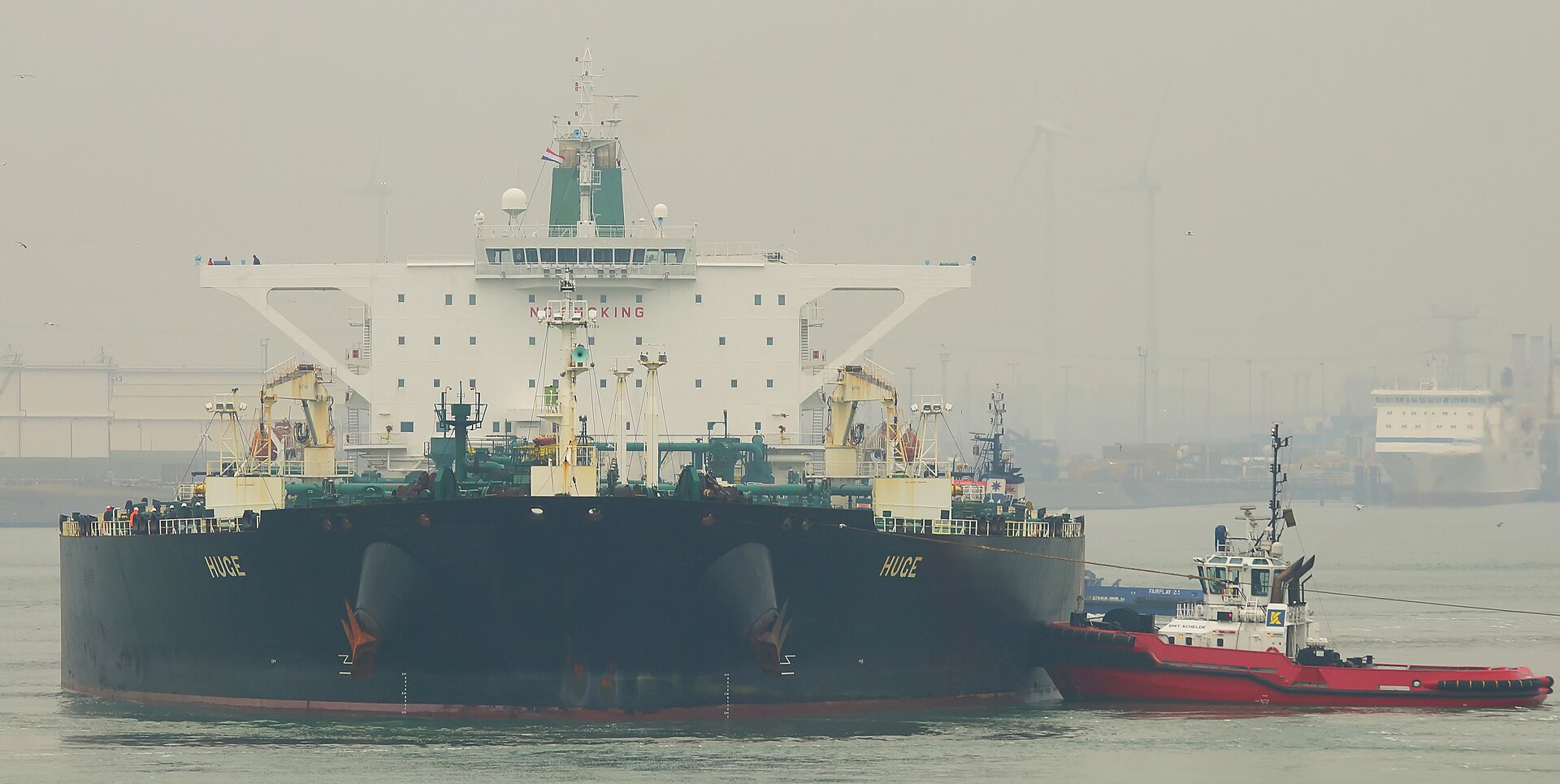
India signed the ten-year Chabahar port operating agreement in May 2024. The port, on Iran’s southeastern coast in Sistan-Baluchestan province, was India’s answer to China’s Gwadar — a land route to Afghanistan and Central Asia that bypassed Pakistan. India prepaid its $120 million investment commitment in November 2025, three months before the war began, according to WION and The Week.
The waiver’s expiry forces a specific choice. Indian officials have reportedly prepared a temporary stake transfer to an Iranian entity to avoid sanctions exposure — a corporate restructuring designed to preserve the investment while removing the legal target from India’s balance sheet. MEA says it is “in talks with the US” for an extension. The talks have not produced one.
The dual cliff means India cannot answer GL U in isolation. A country that settles Iranian oil in yuan while maintaining an Iranian port concession presents a different compliance profile than a country that did one or the other. Washington’s leverage is multiplicative, not additive. Each exposure makes the other harder to explain.
The Chabahar problem also has a China dimension that the oil file lacks. Gwadar, Pakistan’s Chinese-operated deep-water port 170 kilometers east of Chabahar, handles roughly the same strategic corridor. Abandoning Chabahar under sanctions pressure does not eliminate the corridor — it cedes it entirely to China’s Belt and Road infrastructure. Every American sanctions lawyer who argues for Indian compliance on Chabahar creates a strategic gain for Beijing on the same coastline. That contradiction sits at the center of Washington’s Iran policy and nobody in the Treasury Department is tasked with resolving it.
Iran Seized an India-Bound Ship Three Days After the Visit
On April 22, three days after Doval returned from Riyadh, Iran seized the Epaminondas, an India-bound cargo vessel, in the Strait of Hormuz. The Indian MEA engaged Tehran directly. The seizure followed IRGC gunboat fire on two Indian-flagged merchant vessels — ships that held Iranian Foreign Ministry transit clearances at the time they were fired upon.
The pattern deserves attention not for what it says about IRGC intentions toward India but for what it reveals about the authorization ceiling inside Iran. The Foreign Ministry’s clearances meant nothing to the IRGC naval units operating in the strait. Araghchi’s diplomatic architecture and the Revolutionary Guards’ operational conduct exist in separate chains of command. India discovered this the way every Hormuz user discovers it: by having its ships shot at despite holding the paperwork.
Tehran’s economic interest in maintaining India as a buyer is not in question. Iran’s Central Bank memo, reported in April, describes 180 percent inflation and a twelve-year recovery timeline. India represents purchasing power Iran cannot replace. But the IRGC’s Hormuz operations do not answer to Iran’s economic ministry. The same institutional fracture that collapsed the Islamabad ceasefire talks — Vahidi and Abdollahi overriding Araghchi’s negotiating mandate, as recent reporting has documented — now extends to Iran’s treatment of the one major Asian buyer still willing to transact.
For India, the Epaminondas seizure answered the question that GL U had left open: even if New Delhi wanted to continue purchasing Iranian crude outside the waiver framework, could it guarantee delivery? The strait’s operational reality, controlled by an IRGC Navy that answers to no civilian authority, made the question moot.
The seizure also altered the diplomatic temperature of the Doval visit retroactively. Whatever reassurances India had sought from Tehran through back-channel engagement — and MEA’s direct contact with Iran after the seizure confirms such channels exist — the IRGC’s operational behavior rendered them worthless. A country that seizes your ships while its foreign ministry issues transit permits is not a country with which you can negotiate supply security. Riyadh, whatever its production constraints, does not fire on its customers.
The Epaminondas seizure has since been compounded by a further incident that underscores how fully India’s neutrality has collapsed. On April 26, the Indian Navy destroyer INS Kochi scrambled to rescue 30 crew from the tanker MV Andromeda Star — a vessel carrying Russian Urals crude to the Rosneft-owned Nayara Energy refinery at Vadinar — after two Houthi anti-ship ballistic missiles struck the ship near Mokha. The Indian Navy escorting a Rosneft supply chain vessel in the Bab el-Mandeb, twenty-four hours after Washington sanctioned Hengli Petrochemical for processing Iranian crude, captures the geometry of India’s position: simultaneously exposed to Houthi interdiction in the Red Sea, IRGC seizures in Hormuz, and US secondary-sanctions pressure on every alternative supply route. The full account of the Andromeda Star strike and INS Kochi’s response is reported here.
Can Saudi Arabia Replace What India Lost?
Before the war, Saudi Arabia was shipping 1.03 million barrels per day to India in February 2026 — a six-year high, according to CNBC. By April, that figure had fallen to approximately 684,190 bpd, a 34 percent drop driven not by demand but by Saudi production constraints. The IEA’s April Oil Market Report recorded Saudi March production at 7.25 million bpd, down from 10.4 million bpd before the war — the agency called it “the largest disruption on record.”
Saudi market share in India had already fallen from 16 percent to 11 percent as Iranian crude filled the gap under GL U, according to IEA data. The Doval visit was partly about reversing that arithmetic now that the Iranian window had closed. But the supply to reverse it with does not currently exist in the volumes India needs.
Aramco’s June OSP cut for Asia — the first reduction in three months — signals recognition that Saudi Arabia must compete for market share it can no longer command by volume alone. Aramco’s Q1 2026 profit paradox, a 57 percent revenue surge built on 30 percent less oil, reflects the same structural gap: higher prices cannot compensate for a production ceiling that leaves Saudi Arabia unable to serve its own customer base.
India’s pre-war Iranian imports, before 2018, reached 620,000 bpd — Iran was India’s second-largest supplier at 16.5 percent of total imports. The four million barrels received under GL U represented a fraction of that historical relationship. Iraq, the UAE, and Kuwait have partially filled India’s import gap since 2019, but none individually replaces the combined volume and discount pricing that Iranian crude offered.
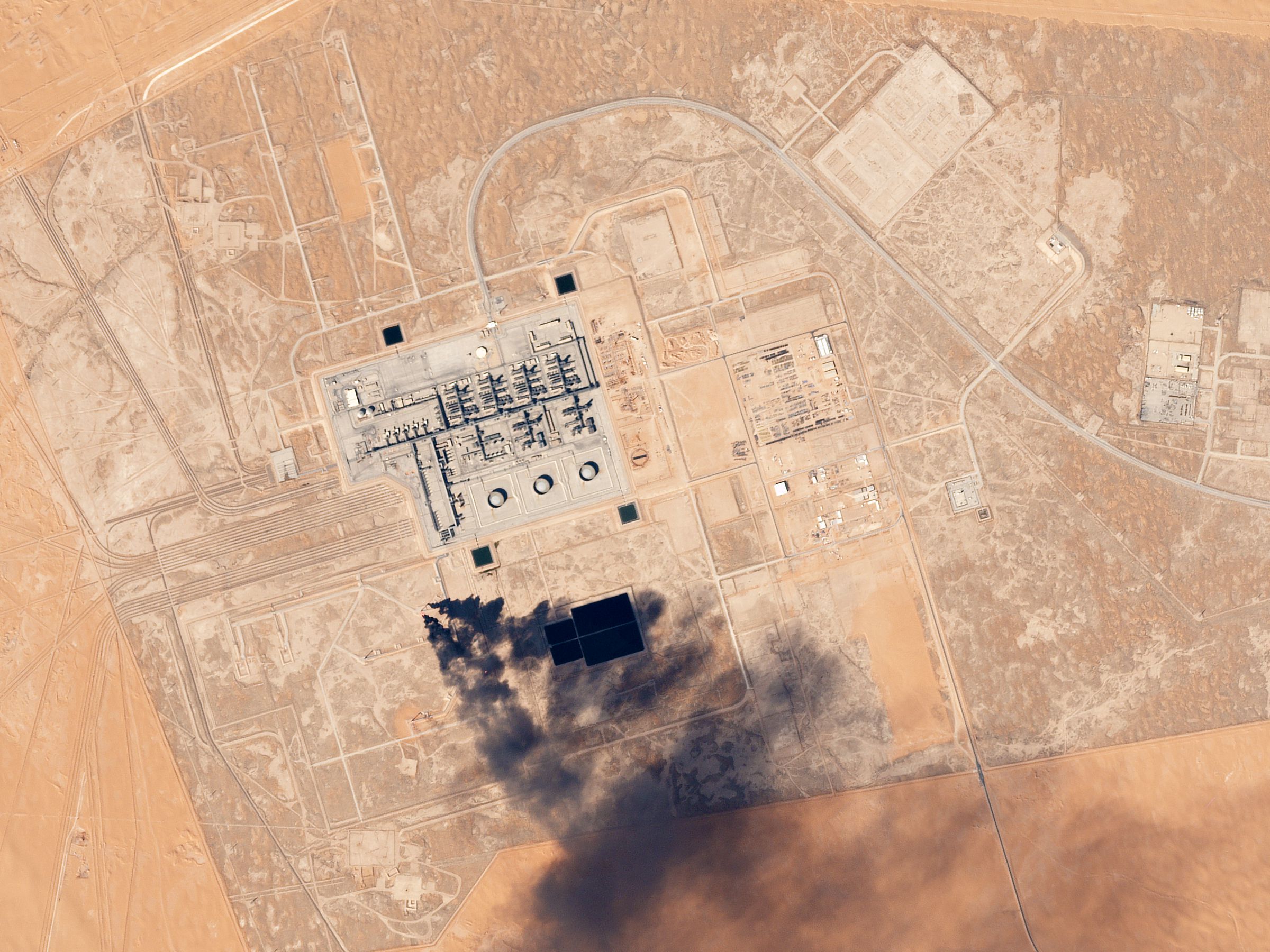
The question Doval carried to Riyadh was not whether Saudi Arabia would fill the gap — it was whether Saudi Arabia could, and at what price. The Khurais field remains offline with no announced restoration timeline, according to Aramco’s April disclosures. The East-West Pipeline’s Yanbu loading terminal has a ceiling of 4-5.9 million bpd against a pipeline design capacity of 7 million. Every barrel Saudi Arabia commits to India is a barrel it cannot send to China, South Korea, or Japan — customers who are also scrambling for non-Iranian supply in a market where Hormuz throughput has fallen from 20-plus million bpd to roughly 3.8 million.
Why India Refused the Hormuz Coalition
On April 22, CNN reported that France, Germany, Italy, Japan, the Netherlands, and the United Kingdom had declared support for the US naval blockade enforcement coalition in the Strait of Hormuz. India was not among them. The refusal was consistent with decades of Indian non-alignment doctrine — and inconsistent with India’s actual voting record on the conflict.
UNSC Resolution 2817, passed on March 11, 2026, condemned Iran’s attacks. China and Russia abstained. India did not. The resolution drew 135 co-sponsoring states, and India was among them, according to the UN press release. A country that co-sponsored a Security Council resolution condemning Iran cannot claim symmetrical neutrality between Tehran and Washington. The coalition refusal was not neutrality. It was selectivity — willing to condemn in a chamber, unwilling to patrol in a strait.
The selectivity has a domestic logic. India’s standard diplomatic formulation — “India does not subscribe to any unilateral sanctions” — remains the MEA’s public line on Iran. The phrase does real work: it preserves the fiction that India’s compliance with American sanctions is voluntary rather than coerced, protecting the domestic political narrative of sovereign foreign policy. Joining a US-led naval coalition would collapse that distinction publicly in a way that a UN vote, observed by fewer domestic audiences, does not.
But the fiction is under strain. India settled Iranian crude in Chinese yuan through a Shanghai bank branch, accepted cargoes that its own private sector refused, and sent its national security adviser to Riyadh the day the waiver expired. The substance of the position is compliance. The rhetoric of the position is independence. The gap between the two statements is the space in which Indian foreign policy currently operates, and it is narrowing by the week.
Japan’s example is instructive. Tokyo joined the US Hormuz enforcement coalition while maintaining its pacifist constitution’s constraints on collective self-defense — a legal architecture more restrictive than anything India faces. Japan, simultaneously dependent on Hormuz-transiting LNG from Qatar, managed the tension between energy dependency and coalition membership by being explicit about both. India is attempting to manage the same tension by pretending it does not exist.
The 8.9 Million Indians Washington Never Mentions
The sanctions debate in Washington treats India’s Iran exposure as an oil-trade problem. It is also a labor-migration problem, and the numbers dwarf the crude-oil arithmetic. Approximately 8.9 million Indian nationals live in the GCC states, with 2.65 million in Saudi Arabia alone, according to the Indian Ministry of External Affairs. These workers generated roughly 38 percent of India’s world-record $129 billion in annual remittances, according to World Bank data.
Since February 28, 2026, India has repatriated approximately 220,000 nationals from the Gulf, according to MEA figures — a number that captures only those who left, not those who remain under wartime conditions. The India-Saudi bilateral architecture extends beyond oil: a $100 billion Saudi investment commitment, the Strategic Partnership Council established in 2019, and an economic relationship that neither government can afford to see damaged by the appearance of Indian alignment with Tehran.
This is the structural weight behind Doval’s Riyadh itinerary. India’s Iran oil experiment under GL U — two VLCC cargoes, one month of legal buying — generates in remittance flows what the GCC labor economy produces roughly every two days. The ratio explains why Doval’s first meeting was with the Saudi energy minister: not because oil is the largest exposure, but because oil is the issue that could contaminate everything else.
Modi’s language on Saudi Arabia — the “trusted friend and strategic ally” formulation he used before the war — has no Iranian equivalent. India maintains a Chabahar investment and a historical non-aligned posture toward Tehran, but the asymmetry in economic entanglement is not close. When the compliance choice becomes binary — if it becomes binary — the remittance calculus alone determines the answer. The $200 million IOC spent on the Jaya cargo is less than what GCC-based Indian workers send home in a single week.
What Comes After Neutrality
The seven days between April 19 and April 26 dismantled the conditions that made Indian neutrality viable. GL U provided legal cover for Iranian oil purchases; it is gone. The Chabahar waiver provided legal cover for Iranian infrastructure investment; as of today, it expires. The Hormuz strait provided physical access to Iranian cargo; the Epaminondas seizure demonstrated that access is controlled by an IRGC that does not honor its own foreign ministry’s clearances.
What remains is the ICICI Bank exposure — yuan settlements documented by Bloomberg, sitting in a Shanghai office, precisely matching the payment architecture that Washington’s expanding enforcement campaign is designed to target. That exposure does not expire with a waiver. It exists in transaction records that OFAC can access whenever it chooses to look.
India’s likely trajectory is visible in the Doval visit itself: accelerated re-engagement with Saudi supply, quiet compliance with the GL U cliff, a Chabahar restructuring designed to preserve the asset while removing the sanctions target, and continued rhetorical non-alignment that costs nothing and commits to nothing. The MEA will say India does not subscribe to unilateral sanctions. The refineries will order Saudi crude. The gap between the two statements will be the gap between what Indian foreign policy says and what it does.
The deeper structural question is whether the GL U experiment — one month of Iranian crude, settled in yuan, through a Chinese bank mechanism — created compliance exposure that Washington will use as leverage for years regardless of what India does next. Four million barrels of oil can be consumed. The payment records that accompanied them cannot. Six days remain until the war powers deadline, and every day that passes without a diplomatic resolution increases the probability that Washington converts India’s one-month experiment into a permanent compliance file.
Frequently Asked Questions
Has India formally ended all Iranian crude imports?
India’s legal authority to import Iranian crude expired with GL U on April 19, but enforcement depends on Washington’s next move. India imported Iranian crude outside sanctions frameworks between 2012 and 2018 using rupee-denominated escrow accounts at UCO Bank — a mechanism that predates the yuan settlement route and could theoretically be revived, though OFAC’s expanded secondary sanctions authority under executive orders issued in early 2026 makes the compliance risk substantially higher than in the earlier period.
What happens to Indian workers in Saudi Arabia if the war escalates?
India’s Ministry of External Affairs has contingency evacuation plans for GCC-based nationals, drawing on the 2015 Operation Raahat precedent (Yemen evacuation of 4,640 Indians and 960 foreign nationals in 14 days). The current Gulf population of 8.9 million makes a full evacuation logistically impossible — the 2015 operation covered less than 0.1 percent of the current diaspora — meaning India’s primary interest is de-escalation rather than extraction planning.
Could India join the Hormuz enforcement coalition later?
India operates under the 2004 Indian Maritime Doctrine, which permits freedom-of-navigation operations but has never participated in a US-led maritime enforcement coalition in the Persian Gulf. India’s naval deployments in the region — Indian Navy vessel rotations since March 2026 — have been framed as “independent escort” operations for Indian-flagged vessels, a formulation that preserves operational flexibility without coalition membership. Japan, by contrast, joined the US coalition while maintaining its own constitutional constraints on collective self-defense.
Is Chabahar port still strategically viable for India?
Chabahar’s strategic value was always contingent on Afghan transit trade, which collapsed after the Taliban’s 2021 return reduced bilateral commerce to approximately $1.5 billion annually (Afghan Central Statistics Organization). India’s $120 million prepayment bought a ten-year operating lease on a facility whose primary customer — the Afghan market via the Zaranj-Delaram highway — generates a fraction of its design throughput. The port’s value to India is now primarily as a hedge against Pakistan’s control of the only alternative land route to Central Asia, not as a commercially viable operation.
How does India’s position compare to China’s on Iranian oil?
China purchased roughly 1.5 million bpd of Iranian crude before the war (Kpler data), compared to India’s pre-2018 peak of 620,000 bpd. China’s Shandong “teapot” refineries and strategic petroleum reserve (1.2 billion barrels, 109 days of cover according to IEA) provide buffer capacity that India lacks. Five Shandong teapots stopped Iranian purchases in April 2026 after Treasury letters, but Sinopec’s 5 percent equity stake in Qatar’s North Field East gives China structural leverage over Hormuz transit that India does not possess.