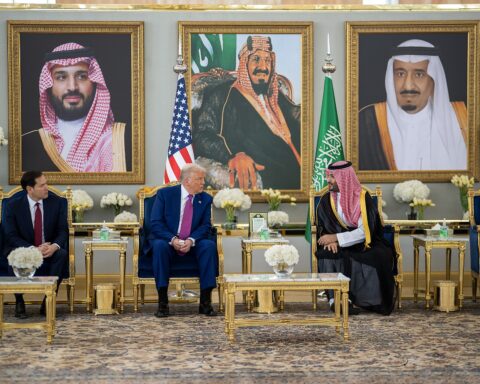
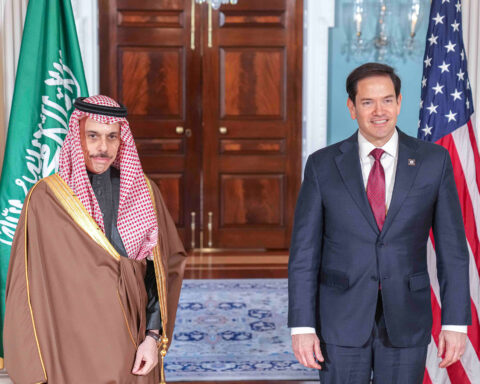
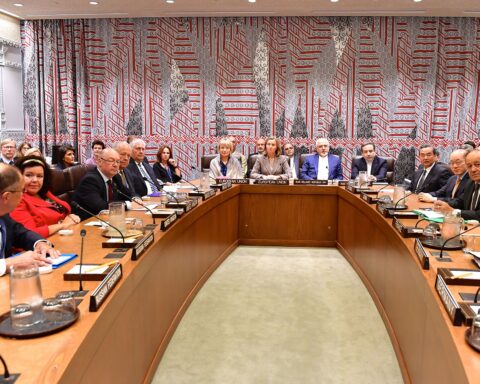
RIYADH — Three ministerial meetings in thirty-eight days, Pakistani fighter jets landing at King Abdulaziz Air Base, and a collective security clause that treats an attack on Saudi Arabia as an attack on four nations — and none of those nations is the United States. While Washington’s Islamabad channel collapsed on April 25 with Trump cancelling the Witkoff-Kushner trip and calling Iran’s leadership a mess of “tremendous infighting and confusion,” MBS was already running a parallel architecture that doesn’t need American diplomacy to succeed or fail, because it was never built to depend on it.
The Saudi-Pakistan-Turkey-Egypt quartet — convened first in Riyadh on March 19, reconvened in Islamabad on March 29, and elevated to a senior officials mechanism on April 14 — is the first major Saudi multilateral framework built explicitly outside the GCC structure. It controls or has strategic interest in four of the world’s critical maritime chokepoints: Hormuz, Suez, the Bosphorus, and the Arabian Sea corridor. It has a mutual defence treaty backing it, jets on Saudi soil enforcing it, and a financial architecture — $5 billion in Saudi loans to Pakistan alone, maturing June 2026 — that makes defection from the framework as expensive as staying in it.
Table of Contents
- Three Ministerials in Thirty-Eight Days
- Why Did MBS Build This Outside the GCC?
- The Chokepoint Geometry
- The SMDA Gives the Quartet Teeth
- What Can the Quartet Actually Enforce?
- The Financial Architecture of Compliance
- How Does Tehran View the Quartet?
- A Post-American Structure Built While America Is Still in the Room
- FAQ
Three Ministerials in Thirty-Eight Days
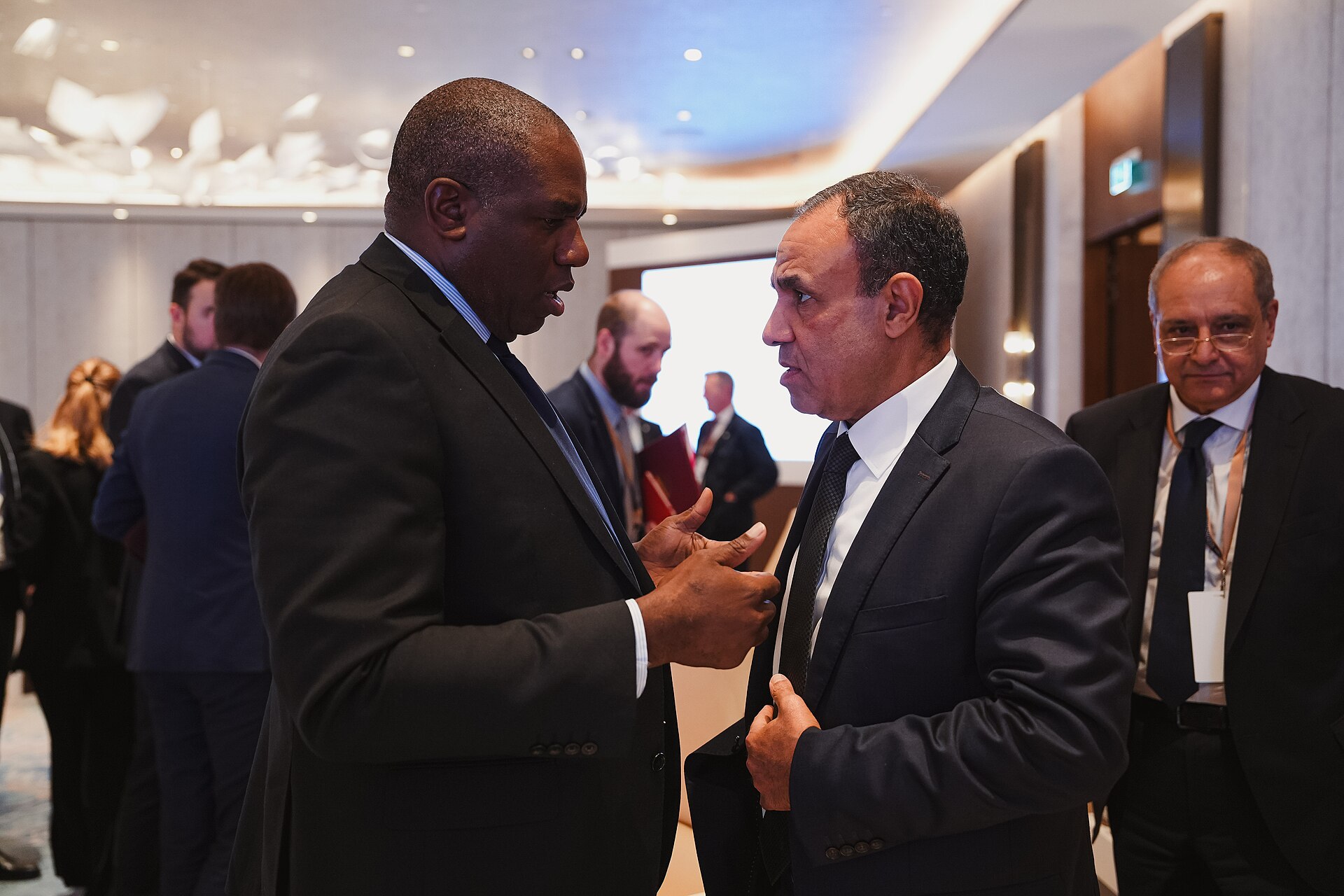
The pace tells you everything about the urgency. Prince Faisal bin Farhan convened the first quartet ministerial in Riyadh on March 19, 2026, bringing together Pakistan’s Ishaq Dar, Turkey’s Hakan Fidan, and Egypt’s Badr Abdelatty — four foreign ministers from four countries that share no common border, no common alliance structure, and, until September 2025, no binding security commitment to one another. Ten days later, on March 29, they reconvened in Islamabad as a standalone ministerial — not a sidebar at someone else’s summit, but a dedicated session with its own agenda, its own communiqué, and its own institutional momentum, according to Pakistan’s Ministry of Foreign Affairs joint statement.
By April 14, the mechanism had already been elevated. Senior officials from all four foreign ministries met to coordinate positions on Hormuz access, ceasefire enforcement, and the parameters of any future US-Iran deal, as reported by Arab News and Asharq Al-Awsat. Pakistan’s Ambassador to Saudi Arabia, Ahmad Farooq, told Asharq Al-Awsat that “these meetings come within the framework of ongoing efforts to promote peace in the region” — diplomatic language that, stripped of its politeness, means: we are building standing infrastructure, not holding one-off calls.
Three meetings in thirty-eight days is not consultation. Consultation is what the Arab League does — a communiqué every six months expressing “deep concern” about whatever crisis has already moved past the point where deep concern matters. What Prince Faisal built is a coordination mechanism with a meeting cadence faster than NATO’s North Atlantic Council managed during the first month of Russia’s invasion of Ukraine, and with a tighter membership that can actually make decisions without twenty-nine countries arguing about the wording of a press release.
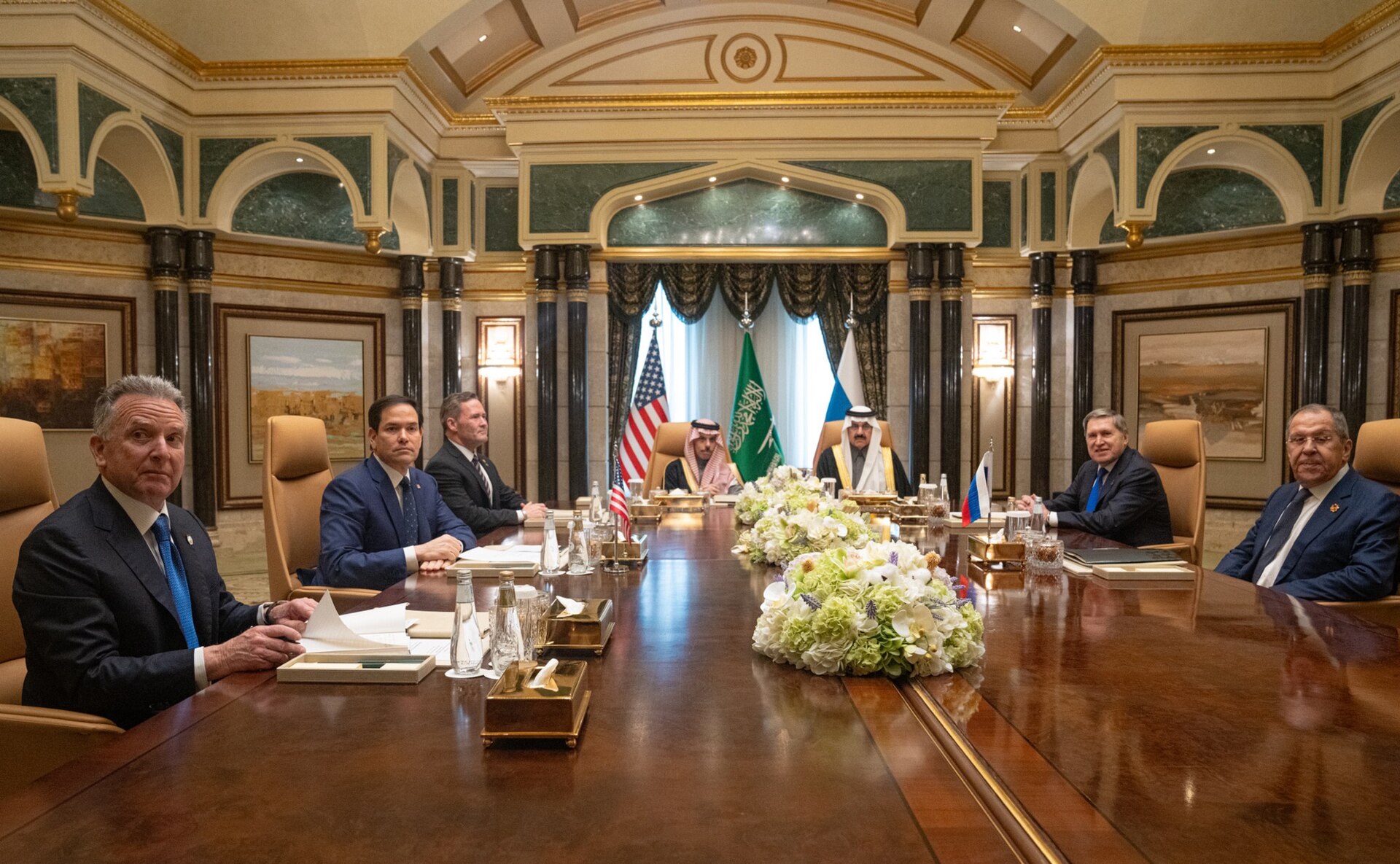
Why Did MBS Build This Outside the GCC?
Because the GCC cannot function as a unified Iran policy instrument, and everyone in Riyadh knows it. The Carnegie Endowment’s April 2026 analysis put it bluntly: “The GCC is unlikely to unify on Iran.” The fracture runs three ways — Bahrain wants maximum confrontation, the UAE is deepening its Israel security ties and hedging on Iran independently, and Kuwait and Oman favour de-escalation at almost any price. As House of Saud’s own reporting documented on April 26, the GCC is split three ways, and MBS is paying the price for Abu Dhabi’s separate war.
The Middle East briefing 3,000+ readers start their day with.
One email. Every weekday morning. Free.
The quartet bypasses this problem entirely. None of its members are GCC states. None carry the institutional baggage of a forty-five-year-old alliance that was designed to manage intra-Gulf border disputes, not an active war with Iran. Turkey brings NATO cover and Bosphorus control. Egypt brings Suez and the largest Arab military. Pakistan brings the only bilateral mutual defence treaty with Saudi Arabia in existence — the Strategic Mutual Defence Agreement signed in September 2025 — plus its unique status as Iran’s protecting power in the United States since 1992, the one country that can credibly talk to both sides without either dismissing it as the other’s proxy.
Chatham House captured the strategic logic: “Saudi Arabia’s leadership has understood that Saudi security is predicated on regional security, leading Riyadh to pursue direct diplomacy in often adversarial regional relationships.” The quartet is that understanding turned into architecture — a framework that links Saudi Arabia’s energy security (Hormuz), its Red Sea flank (Egypt/Suez), its NATO connectivity (Turkey/Bosphorus), and its military reinforcement pipeline (Pakistan/Arabian Sea) into a single coordinating body.
The Chokepoint Geometry
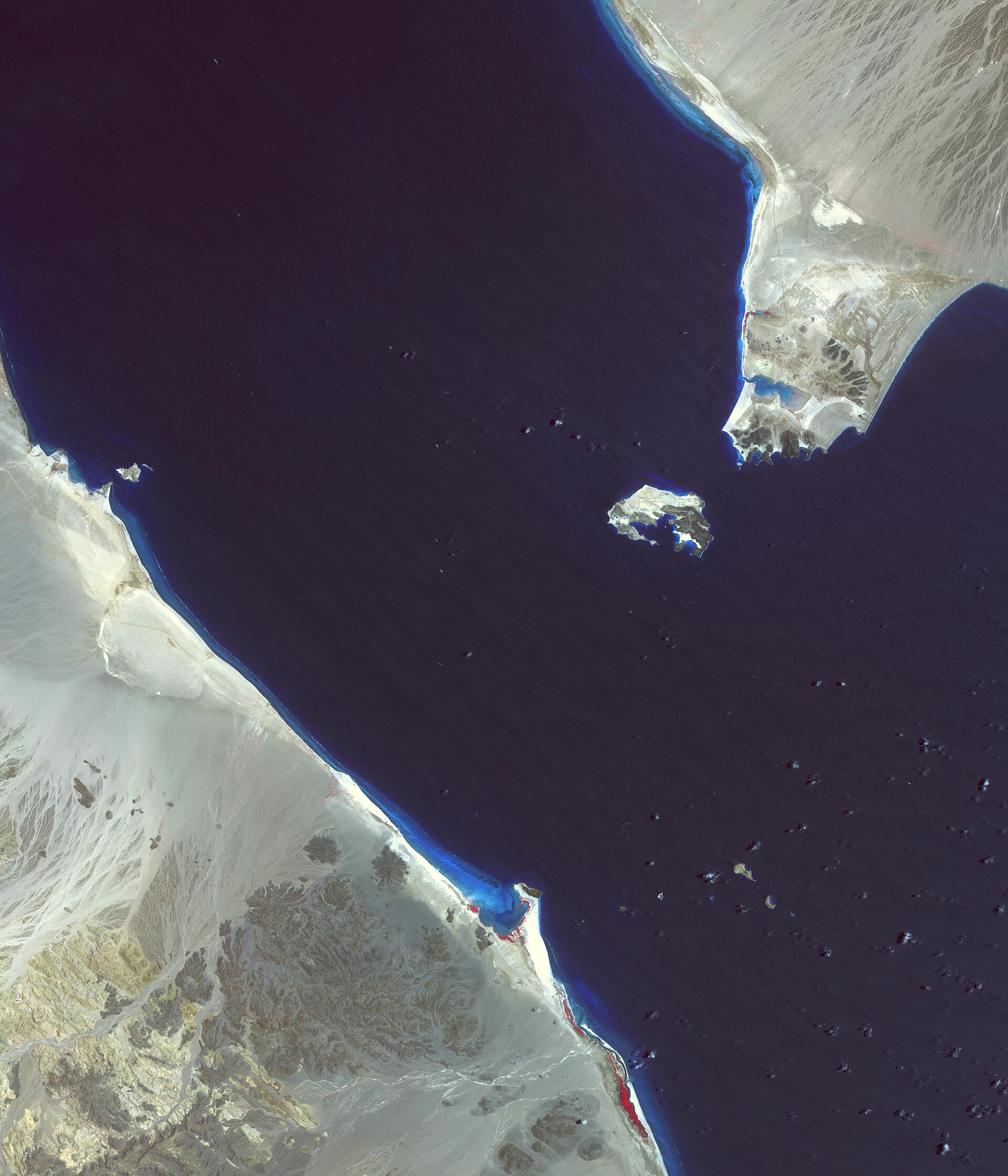
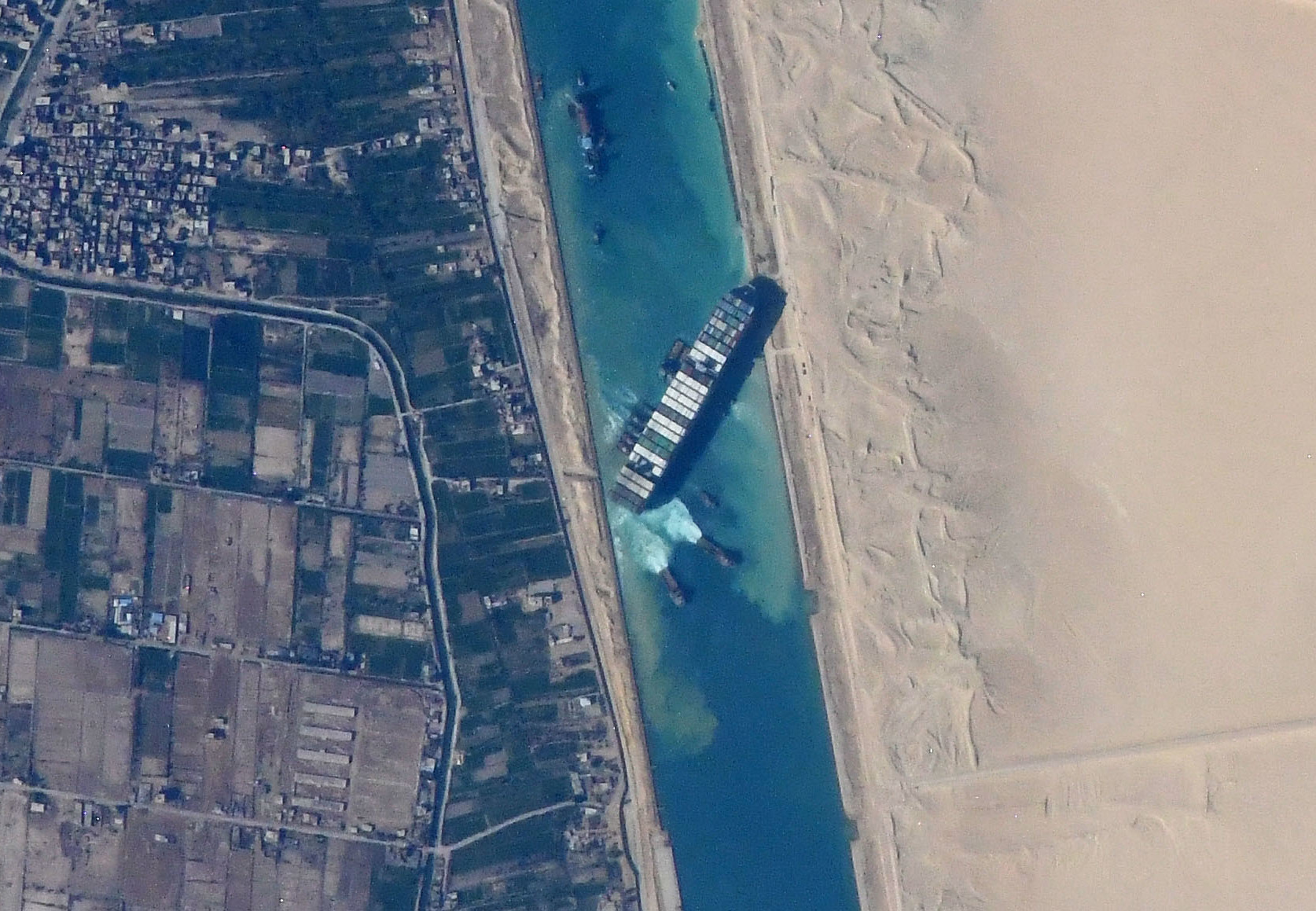
Look at a map and the quartet’s logic becomes geographic before it becomes diplomatic. Saudi Arabia’s strategic interest runs through the Strait of Hormuz, where a double blockade has reduced transit to 3.6% of the pre-war baseline — forty-five transits since the April 8 ceasefire against a peacetime norm of roughly 1,250 in the same period. Egypt operates the Suez Canal, the only alternative route for Gulf crude heading to Europe. Turkey controls the Bosphorus under the 1936 Montreux Convention, the gateway between the Black Sea and the Mediterranean that Russia’s navy depends on. Pakistan’s naval presence in the Arabian Sea and the Indian Ocean covers the approach corridor that any vessel must transit before reaching Hormuz from the east.
No other four-nation grouping on earth controls this much maritime throughput. Together, these four chokepoints handle an estimated 40% of global seaborne oil trade and roughly 12% of all international shipping by volume, according to the US Energy Information Administration. A coordinated policy across all four — on transit fees, naval escorts, insurance requirements, or vessel inspection protocols — would reshape the rules of global maritime commerce without requiring a single UN Security Council resolution, which is convenient given that the Security Council just failed to act on Hormuz.
| Nation | Chokepoint | Daily Oil Transit (pre-war) | Strategic Function |
|---|---|---|---|
| Saudi Arabia | Strait of Hormuz | ~21M bpd | Producer & transit-dependent |
| Egypt | Suez Canal | ~5.5M bpd | Alternate route operator |
| Turkey | Turkish Straits (Bosphorus) | ~3.2M bpd | NATO member, Europe gateway |
| Pakistan | Arabian Sea corridor | N/A (approach route) | Naval presence, Iran border |
This is not a talking shop. It is a framework built around physical control of the infrastructure that the global economy runs on, and every member brings something the others need — Saudi energy revenue funds the framework, Egyptian geography provides the bypass, Turkish NATO membership provides the Western diplomatic cover, and Pakistani military assets provide the enforcement capacity that Saudi Arabia, with its own forces stretched thin after sixty days of war, cannot generate alone.
That energy revenue foundation is under acute strain: Saudi Arabia’s production collapsed 30 percent in the opening weeks of the war, and Vision 2030’s tenth-anniversary Annual Report — published April 25 — records only the 2025 pre-war numbers. Vision 2030 Turned Ten the Same Week the Blockade Was Confirmed examines the political and structural gap between the report’s record KPIs and the wartime reality they cannot capture.
The SMDA Gives the Quartet Teeth
Multilateral frameworks without enforcement mechanisms are press conferences. What separates the quartet from every previous Saudi-convened diplomatic initiative — including the Arab Peace Initiative that Crown Prince Abdullah launched at the 2002 Beirut summit, which produced elegant language and zero consequences for twenty-four years — is the Strategic Mutual Defence Agreement between Saudi Arabia and Pakistan, signed in September 2025.
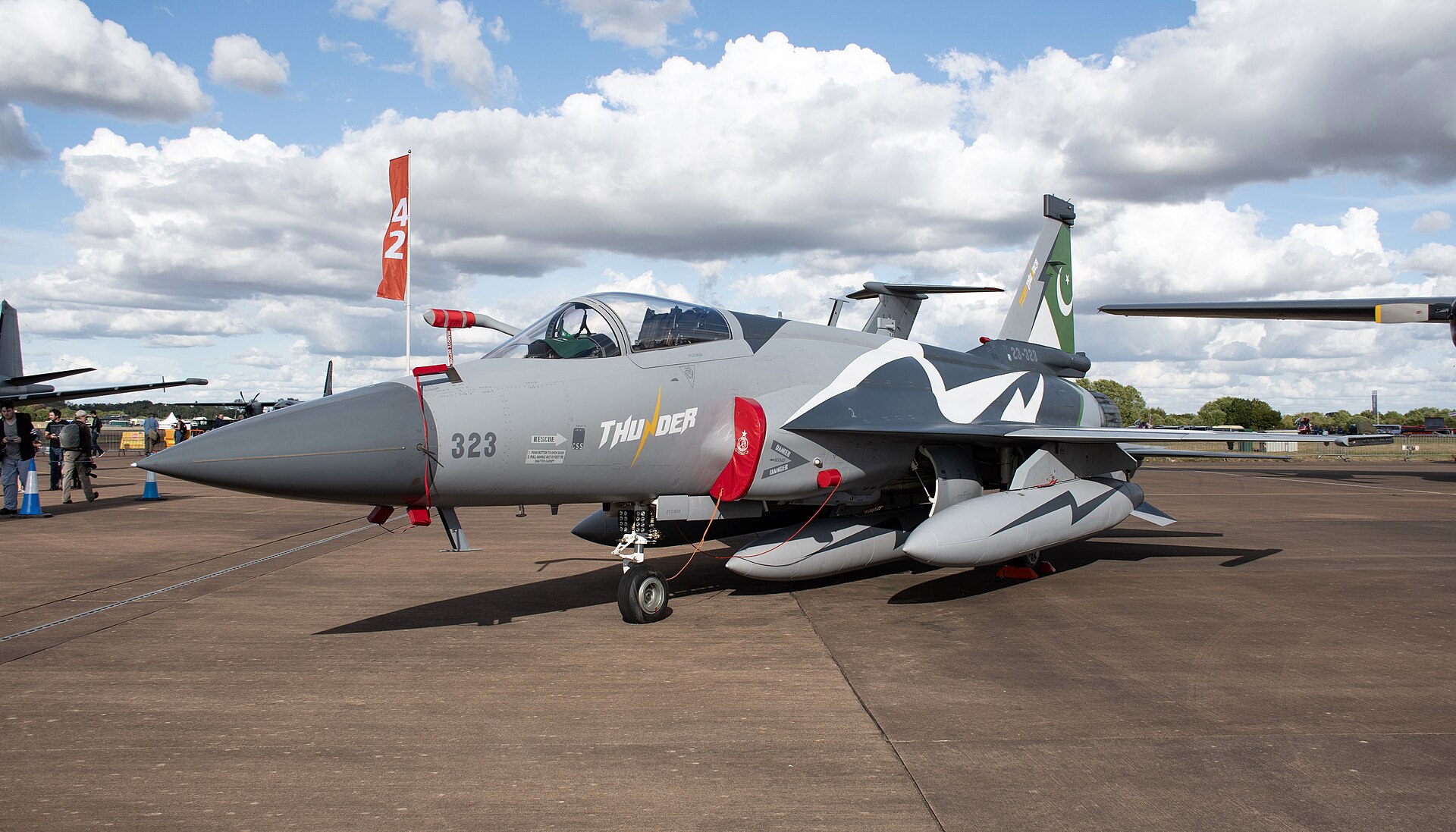
The SMDA’s collective security clause states that “any act of aggression against one constitutes aggression against both,” according to the joint statement published by Pakistan’s Ministry of Foreign Affairs. That language mirrors NATO’s Article 5 — and on April 11, 2026, Pakistan demonstrated that it was not decorative. Pakistani fighter jets and support aircraft deployed to King Abdulaziz Air Base in Saudi Arabia’s Eastern Province, the Saudi Defense Ministry confirmed, placing Pakistani combat power within strike range of Iranian positions for the first time in the conflict.
Any act of aggression against one constitutes aggression against both.
Saudi-Pakistan Strategic Mutual Defence Agreement, September 2025
PM Shehbaz Sharif met MBS twice in Jeddah within a single month — the second meeting, on April 16, was explicitly convened to review progress in the US-Iran talks, Arab News reported. That meeting cadence between a Pakistani prime minister and the Saudi crown prince is without peacetime precedent, and it happened while Pakistan was simultaneously hosting the Islamabad negotiations between Iran and the United States, giving Sharif real-time intelligence on both tracks.
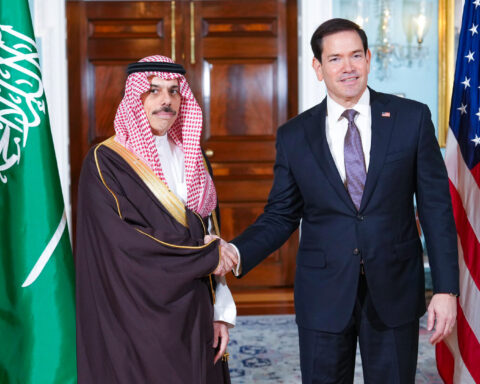
Turkey and Egypt lack equivalent bilateral defence treaties with Saudi Arabia, but both participate in the quartet’s coordination mechanism and both expanded military cooperation with Riyadh during the conflict. Turkey’s Hakan Fidan attended the Antalya Diplomacy Forum on April 17-19 and used the margins for parallel coordination on Hormuz and Gaza. Separately, Prince Faisal called US Secretary of State Rubio to discuss Hormuz shipping access — a detail reported by Arab News that reveals the quartet operating on two tracks simultaneously, coordinating internally while managing the American relationship externally. That direct bilateral outreach extended further on April 26, when Prince Faisal’s April 26 consultation round with Iraq, Jordan, Turkey, and Spain added four more capitals in a single day, building leverage in channels the Islamabad and Oman frameworks have no seat at.
What Can the Quartet Actually Enforce?
The honest answer is: more than any other available mechanism, and less than what the crisis requires. The quartet can coordinate naval patrols in the Arabian Sea and the approaches to Hormuz — Pakistan’s navy is already operating in the area under the SMDA framework, and Egypt’s Suez Canal Authority can adjust transit priorities for vessels complying with quartet-agreed inspection protocols. Turkey can invoke Montreux Convention provisions to restrict warship transits through the Bosphorus, as it did during the Russia-Ukraine war, giving the quartet indirect leverage over any naval power — including Iran’s ally Russia — that needs Black Sea access.
What the quartet cannot do, at least not yet, is break the double blockade. The IRGC controls the Gulf of Oman exit since March 4, the US controls the Arabian Sea entry since April 13, and vessels need both approvals to transit, as Bloomberg reported on April 26. The IEA’s Fatih Birol has called the resulting 13 million barrels per day offline “the biggest energy security threat in history,” and the quartet’s chokepoint control, formidable as it looks on a map, does not extend to the narrow waters between Qeshm Island and the Iranian mainland where IRGC fast boats enforce their “danger zone.”
The diplomatic flanking move has come from Bahrain: on April 6, Manama submitted a draft Security Council resolution demanding Iran cease interference with Hormuz transit passage, securing eleven votes before Russia and China’s veto — a veto the GCC states had calculated in advance, engineering it as the diplomatic product rather than the setback.
The gap between China’s veto and its subsequent diplomatic posturing has grown stark. Xi Jinping called MBS on April 20 urging Hormuz to reopen — fourteen days after Beijing cast the veto that preserved the blockade’s legal ambiguity. The structural reasons Beijing will not enforce its own demand are examined here.
The quartet’s enforcement value lies not in breaking the blockade by force but in establishing the post-blockade rules. When the blockade ends — whether through negotiation, American withdrawal, or Iranian economic collapse — someone will set the terms for Hormuz reopening: the inspection protocols, the insurance requirements, the escort arrangements, the transit notification procedures. The quartet is positioning itself to be that someone, with the geographic coverage to enforce whatever rules it writes, and the April 23 eight-nation joint statement on Gaza — signed by all four quartet members plus Jordan, Qatar, the UAE, and Indonesia, according to Turkish MFA — suggests the framework can scale when needed.
The Financial Architecture of Compliance
Every alliance runs on money, and MBS understands leverage better than most. The quartet’s financial architecture is not symmetrical — Saudi Arabia funds it, and the other three members have structural reasons to stay aligned that go beyond shared threat perception. Pakistan’s $5 billion Saudi loan matures in June 2026, giving Riyadh financial capture over Islamabad’s foreign policy at precisely the moment Pakistan is most valuable as a mediator. When Riyadh recently froze Pakistan’s $1.5 billion Sudan arms deal, as House of Saud reported on April 26, the message was unmistakable: Saudi financial generosity is conditional on Pakistani strategic alignment.
Egypt receives approximately $5.3 billion annually in Saudi investment flows, according to Central Bank of Egypt data, and the Suez Canal’s revenue — $9.4 billion in fiscal year 2023, per the Suez Canal Authority — depends on the same oil trade flows that the quartet exists to protect. Turkey’s rapprochement with Saudi Arabia, formalised during Erdogan’s February 2026 Riyadh visit proposing a “Middle East Corridor” economic integration plan, followed years of post-Khashoggi frost that cost Turkish exports an estimated $2-3 billion in lost Gulf contracts.
| Nation | Saudi Financial Exposure | Compliance Mechanism |
|---|---|---|
| Pakistan | $5B loan (matures June 2026) + SMDA | Loan rollover conditional on alignment |
| Egypt | ~$5.3B annual investment flows | Suez revenue depends on oil trade stability |
| Turkey | $2-3B in recovered Gulf trade | Post-Khashoggi rapprochement still fragile |
This is not a coalition of equals and nobody pretends it is. Saudi Arabia is the paymaster, the convener, and the country whose territory is under direct Iranian missile threat — the other three are there because their interests align with Riyadh’s and because the financial cost of defection would be immediate and severe. That asymmetry is also the framework’s weakness, because a structure built on financial dependency works only as long as the dependent parties believe they are getting enough in return, and Pakistan’s 27th Constitutional Amendment — which centralised foreign policy under army chief General Munir rather than the elected government — means the quartet’s most militarily valuable member is run by a man whose calculations are institutional, not political.
How Does Tehran View the Quartet?
With something close to indifference, which may be Tehran’s biggest miscalculation. Iran’s Foreign Ministry spokesperson Esmaeil Baghaei was explicit: “No meeting is planned to take place between Iran and the US. Iran’s observations would be conveyed to Pakistan.” That statement, reported by Al Jazeera, treats Pakistan as a bilateral interlocutor — a postal service for Iranian positions — rather than acknowledging the four-nation framework that Pakistan now operates within. Tehran sees Dar, not the quartet; it sees the messenger, not the architecture behind the message.
Tehran’s position is structurally revealing: Iran treats multilateral frameworks as either Western conspiracies to be resisted or irrelevant formalities to be ignored, and the quartet falls into the second category precisely because it contains no Western member — a classification that may prove more dangerous to Iranian interests than outright hostility would be. This is consistent with how IRGC-aligned media — Tasnim, Fars, Mehr — have covered the Islamabad process. Their opposition centres on the substance of nuclear negotiations and the terms of any enrichment deal, not on the diplomatic framework delivering those negotiations. No Tasnim editorial has targeted the quartet as a strategic threat. No Fars commentary has warned that Saudi Arabia is assembling a post-American regional order through the back door. The IRGC’s information warfare apparatus, which the INSS documented as producing 37,000 AI-generated content items reaching 145 million views during this conflict, has directed its fire at the US blockade, at Vance’s Islamabad walkout, at the enrichment moratorium demands — not at the quartet’s institutional consolidation.
The risk for Tehran is that indifference allows the framework to harden. Pezeshkian has already publicly accused Vahidi and Abdollahi of wrecking the ceasefire, and the IRGC’s authorization ceiling — Khamenei absent for 44-plus days, Mojtaba communicating audio-only, Vahidi holding an INTERPOL red notice — means Iran’s negotiating position is being set by commanders who do not recognise multilateral frameworks on principle. By the time the IRGC realises the quartet is not a press conference but a standing enforcement mechanism, the mechanism may already have the institutional weight to set terms Iran has no capacity to reject.
A Post-American Structure Built While America Is Still in the Room
The most revealing detail about the quartet is what Saudi Arabia chose not to do. As of April 2, Riyadh had deployed zero naval assets to the forty-one-nation Hormuz coalition assembled under American leadership, according to the Security Council Report. Saudi Arabia signed no joint coalition statements. It joined no combined maritime task force. It made, in the language of Natasha Lindstaedt’s analysis for The Conversation, “a specific decision to maintain maximum optionality by refusing to be locked into any single framework, whether American-led, European-led, or coalition-led.”
That optionality is the quartet’s defining feature, and it has a precedent that Riyadh studied carefully. Saudi Arabia joined the US-led coalition against Iraq in 1990, and spent the next three decades managing the consequences — permanent American bases on Saudi soil became Osama bin Laden’s casus belli, and the kingdom’s security architecture became indistinguishable from the Pentagon’s force posture. Prince Faisal called Rubio on the margins of the Antalya Forum to discuss Hormuz shipping — the US-Saudi bilateral channel remains open and active. But the quartet gives MBS something no American-led framework can: a regional security architecture that survives a US withdrawal from the Gulf, a Trump loss in 2028, a congressional War Powers vote, or a unilateral American deal with Iran that trades Hormuz access for nuclear concessions without consulting the countries whose oil actually transits the strait.
Pakistan, Turkey, Egypt and Saudi Arabia emerge as a new regional power bloc amid the Iran war.
Natasha Lindstaedt, The Conversation, April 2026
Trump’s April 25 cancellation of the Witkoff-Kushner Islamabad trip — citing Iran’s “tremendous infighting” and complaining that Tehran “offered a lot, but not enough,” as CNN and Al Jazeera reported — proved the quartet’s thesis in real time. The only US-Iran diplomatic channel collapsed with six days until the War Powers deadline, and MBS did not need to scramble because the quartet’s senior officials had already met on April 14, Araghchi was routing through Oman on his way to Russia as of April 26, and the framework’s next coordination round was already scheduled regardless of what Washington decided to do. The same April 26 Oman visit anchors Iran’s broader Gulf security framework — an endogenous architecture that inverts Saudi Arabia’s own IMCTC coalition-building playbook and forces Riyadh into a structural trap.
The Arab Peace Initiative of 2002 — Crown Prince Abdullah’s landmark proposal at the Beirut Arab League summit — was Saudi Arabia’s last attempt to build a multilateral framework for regional security. It offered Israel full Arab normalisation in exchange for Palestinian statehood and failed because it had no enforcement mechanism, no military backing, and no institutional follow-through. Twenty-four years later, MBS is not repeating his uncle’s mistake. The quartet has a defence treaty, deployed fighter jets, a meeting cadence that outpaces NATO’s early Ukraine response, and a financial architecture that makes participation cheaper than departure for every member except the one paying the bills.
Whether that is enough depends on questions the quartet cannot yet answer — whether Iran’s authorization ceiling breaks before or after the Hajj cordon creates a kinetic threshold on May 26, whether the IRGC’s twelve-article Hormuz sovereignty law passes the Majlis and formalises claims the quartet would need to confront, whether Turkey’s NATO membership creates contradictions if the framework moves from coordination to confrontation. Oman is already reclaiming the Iran back-channel through Sultan Haitham’s meeting with Araghchi in Muscat, and the quartet will need to decide whether Muscat is a complementary track or a competing one.
But the structural fact remains, and it is the one MBS is banking on: for the first time in Saudi Arabia’s modern history, Riyadh has a multilateral security framework that does not depend on Washington showing up, the GCC agreeing, or the UN Security Council voting. Three ministerials in thirty-eight days, Pakistani jets at King Abdulaziz Air Base, and four chokepoints under four flags — assembled while the world watched Islamabad collapse and assumed MBS had no backup plan. The same multi-channel approach — Cabinet language calibrated for diplomatic de-escalation, Iranian pilgrim authorization as statecraft, and FM calls to four capitals on a single Sunday — is documented in detail in Saudi Arabia’s Week of Structured Ambiguity.
FAQ
Has Turkey formally committed military forces to Saudi Arabia’s defence under the quartet?
Not through a bilateral defence treaty equivalent to the SMDA. Turkey’s military commitment operates through NATO interoperability frameworks and bilateral arms sales — Ankara delivered Bayraktar TB2 drones to Saudi Arabia in early 2026 and Turkish defense firm ASELSAN signed a radar maintenance contract with the Saudi Royal Air Force. Turkey’s quartet participation is diplomatic and intelligence-sharing focused, with military cooperation handled through separate bilateral channels rather than the collective security clause that binds Pakistan.
Could the quartet expand to include other nations?
The April 23 eight-nation joint statement on Gaza — adding Jordan, Qatar, the UAE, and Indonesia to the four core members — suggests the framework is designed with expansion capacity. Jordan shares a border with Saudi Arabia and hosts a permanent Saudi military liaison at Muwaffaq Salti Air Base. Indonesia, with 221,000 Hajj pilgrims departing from April 22, brings the world’s largest Muslim population and Indian Ocean naval capacity. The core four remain the decision-making body, with the expanded format reserved for consensus statements that benefit from broader legitimacy.
How does the quartet relate to the Nicosia summit track?
The Nicosia summit on April 24 represents Saudi Arabia’s European diplomatic track — built to shape Hormuz terms through EU engagement and Mediterranean partners. The quartet is the regional enforcement track. Riyadh is running both simultaneously, using the Nicosia format for diplomatic legitimacy with European maritime insurers and the quartet format for operational coordination on naval patrols, intelligence sharing, and ceasefire monitoring. Prince Faisal’s separate call with Rubio during the Antalya Forum shows a third track — bilateral US management — running in parallel with both.
What happens to the quartet if US-Iran talks resume successfully?
The quartet was designed to survive exactly that scenario. A successful US-Iran deal on nuclear enrichment and sanctions relief would still leave Hormuz transit rules, naval escort protocols, and regional ceasefire monitoring unresolved — issues the US has historically treated as secondary to nuclear nonproliferation. The quartet’s senior officials mechanism, meeting independently of the Islamabad negotiation track, is positioned to claim jurisdiction over these operational questions regardless of what Washington and Tehran agree on the nuclear file, giving MBS a permanent seat at the enforcement table even if America brokers the headline deal.
What the quartet cannot resolve is the structural fact that Saudi Arabia has no formal seat in the negotiations where Hormuz terms, ceasefire conditions, and the nuclear file are being written. The asymmetry between Riyadh’s war burden — 83% of Iran’s strikes, a 30% oil production crash, and a war-adjusted fiscal deficit twice the official forecast — and its absence from the negotiating table is the subject of Saudi Arabia Bears the War’s Highest Cost and Has No Seat at the Table.