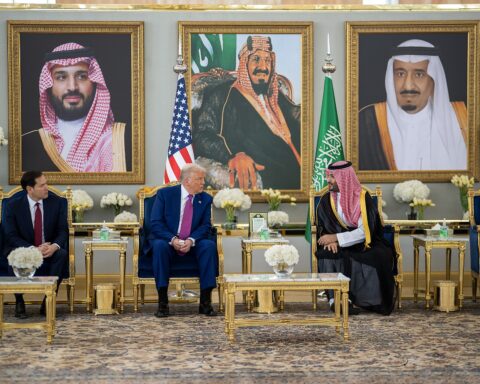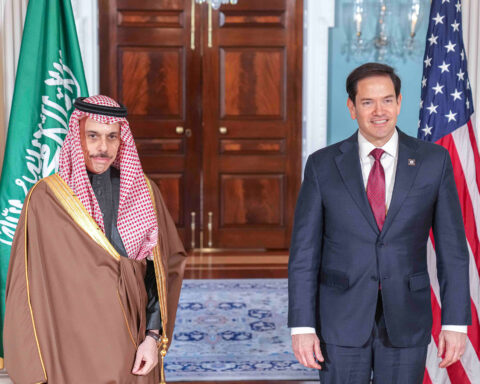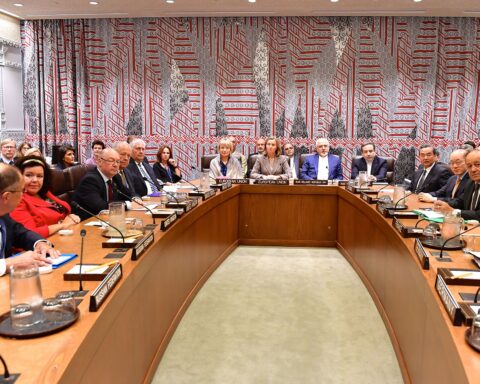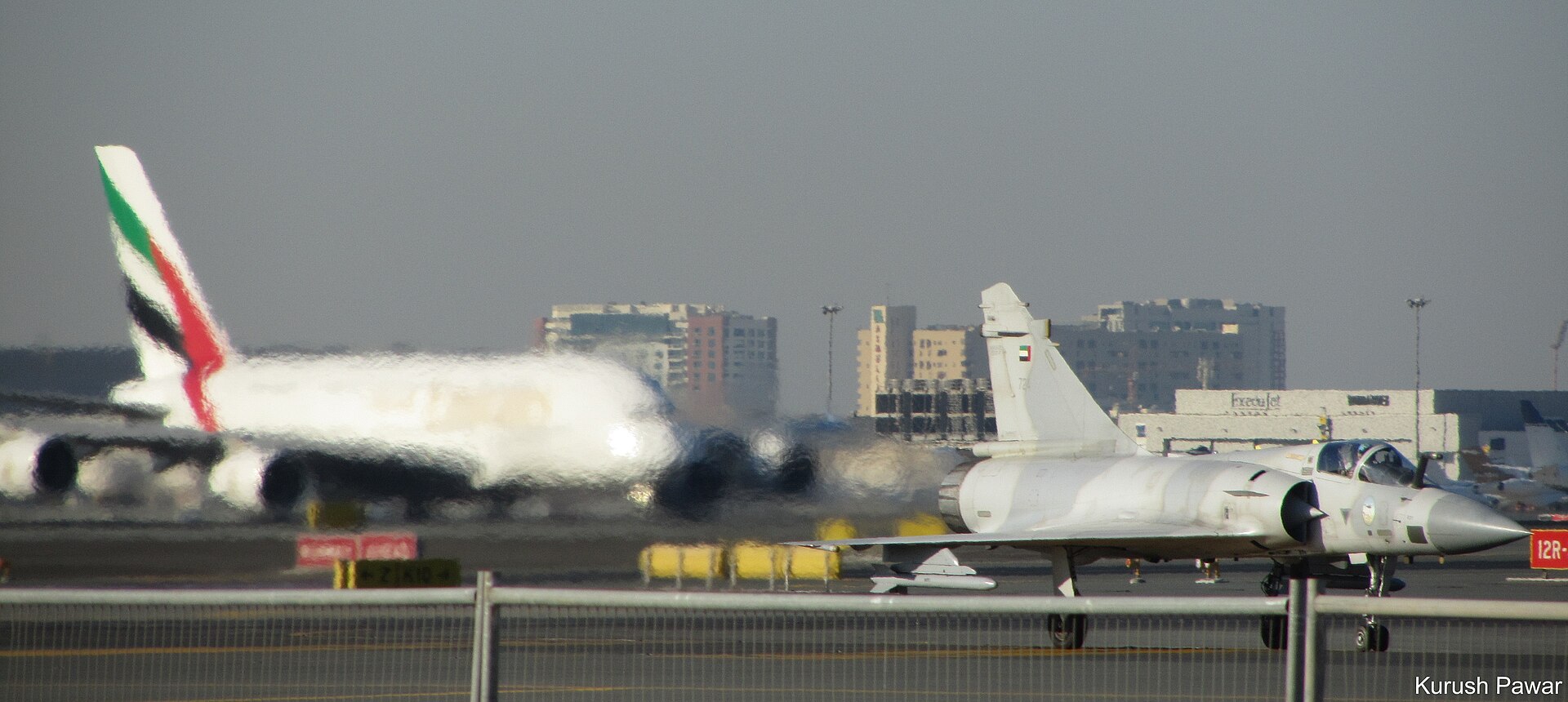

ABU DHABI — While Saudi Arabia was building a ceasefire, the UAE was bombing Iranian oil infrastructure — and Tehran’s formal UN complaint now documents the timestamps. On April 8, the day Pakistan brokered the Islamabad ceasefire framework, UAE Mirage 2000-9 jets struck the NIRDC refinery on Lavan Island, according to Iran’s April 16 Security Council filing. Abu Dhabi has confirmed its jets “were scrambled to intercept Iranian drones” that morning but has neither confirmed nor denied hitting the refinery. The result is a GCC split into three camps — Saudi Arabia and Qatar pursuing dialogue, the UAE and Bahrain demanding escalation, Oman holding neutrality — that makes Mohammed bin Salman’s claim to speak for Gulf consensus functionally impossible at the exact moment he needs it most.
This is not a disagreement about tone. It is an operational fracture. The UAE joined the US-led Hormuz coalition; Saudi Arabia declined. The UAE published a reparations demand for $6 billion in damage; Saudi Arabia co-sponsored the underlying UN resolution, then went silent. The UAE ambassador wrote a Wall Street Journal op-ed urging ground invasion; Saudi Arabia’s foreign minister was working the phone to Araghchi on blockade day. MBS cannot negotiate on behalf of a bloc when one member is running airstrikes on the same calendar date as the ceasefire announcement. That is the structural problem Iran’s complaint was designed to expose — and it is working.
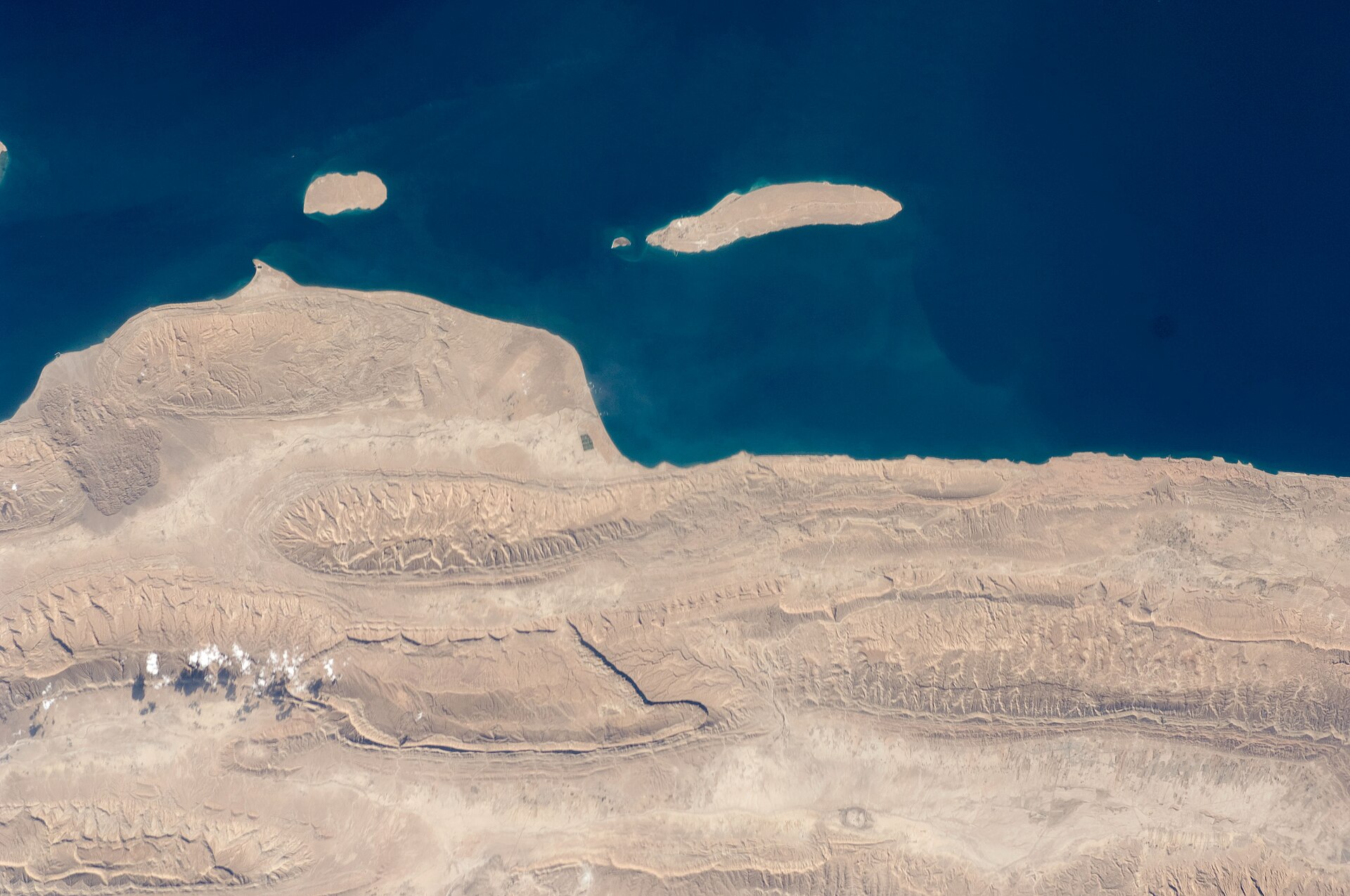
Table of Contents
- What Did the UAE Strike on Ceasefire Day?
- The Three-Camp GCC
- What Does UAE Unilateralism Cost Saudi Arabia?
- Abu Dhabi’s Information Lockdown
- Iran’s Legal Wedge Strategy
- Why Did Saudi Arabia Say No to the Hormuz Coalition?
- The MBS-MBZ Rivalry Goes Kinetic
- The Vanishing Gulf Seat at the Table
- Frequently Asked Questions
What Did the UAE Strike on Ceasefire Day?
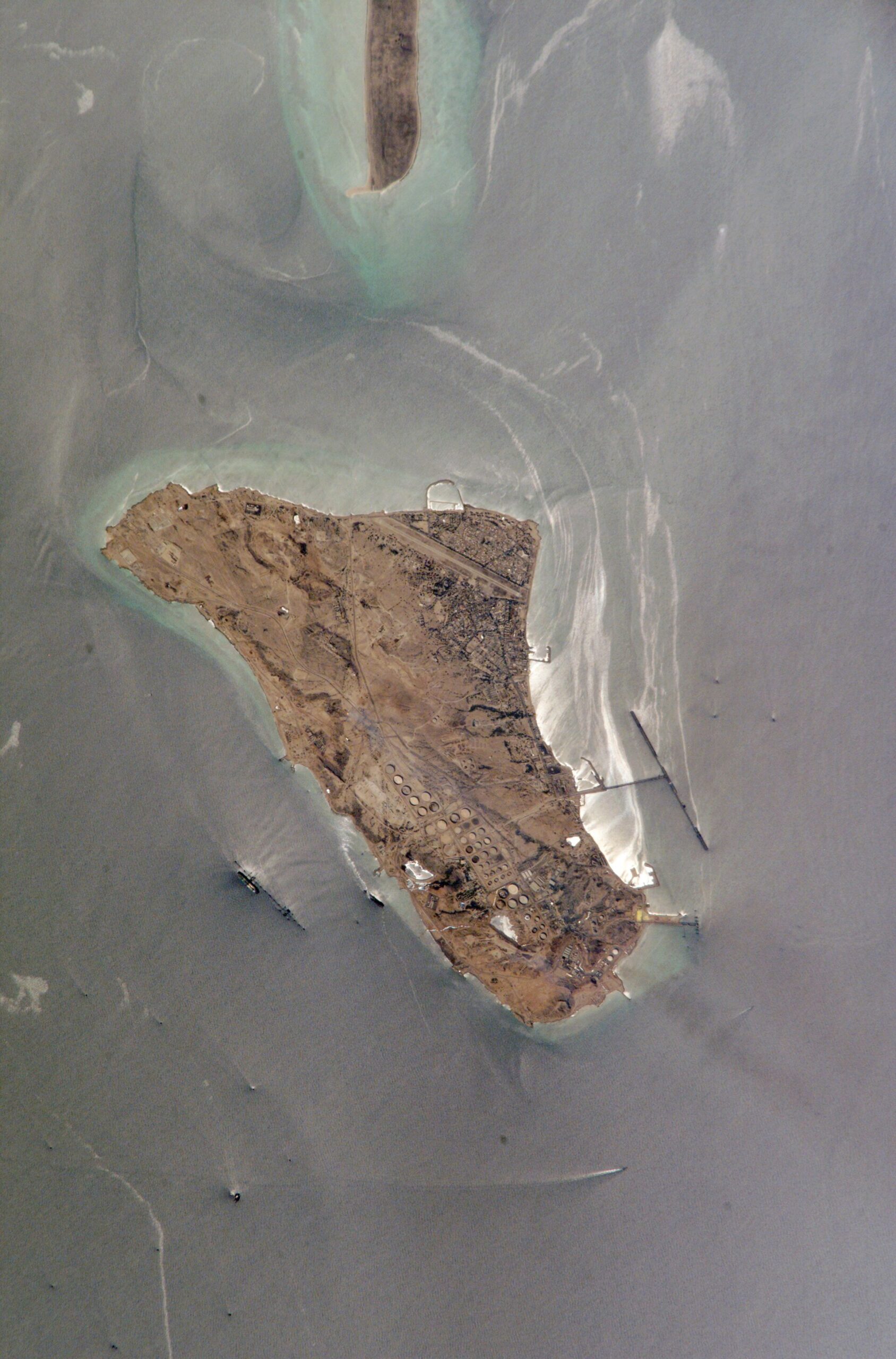
Iran’s April 16 letter to the UN Security Council is the first time Tehran has formally accused an Arab state of attacking Iranian territory during this war. The complaint documents three separate UAE strike windows: Akinci UAVs hitting Qeshm Island at 10:12 and 10:56 local time on April 1, Lavan Island strikes between 12:05 and 13:00 the same day, and the Mirage 2000-9 sortie against the NIRDC refinery on Lavan on April 8 — ceasefire day. Jane’s OSINT analysis confirmed the timestamps align with satellite imagery showing fresh thermal signatures at both locations.
The UAE’s response has been carefully calibrated denial. Abu Dhabi acknowledged scrambling Mirage jets on April 8 to “intercept Iranian drones” but treated the Lavan strike allegation with silence rather than rebuttal. That distinction matters: intercepting incoming threats is defensive; hitting a refinery on an Iranian island 200 kilometres from UAE shores is offensive. Anwar Gargash, the UAE’s presidential diplomatic adviser, framed the broader posture on April 8 when he declared the UAE “has triumphed in a war we sincerely sought to avoid” — language that claims victory, not self-defence.
The timing transforms both the strikes and the ceasefire. Pakistan had spent weeks assembling the Islamabad framework. Saudi Foreign Minister Prince Faisal bin Farhan had served as co-guarantor at the March 29-30 multilateral round. On the morning the ceasefire was supposed to demonstrate Gulf unity, UAE jets were hitting Iranian oil infrastructure. Whether or not Abu Dhabi coordinated with Washington, the operational effect was identical: Iran’s hardliners received ammunition to argue that Gulf Arab states cannot be trusted to honour any agreement.
The Three-Camp GCC
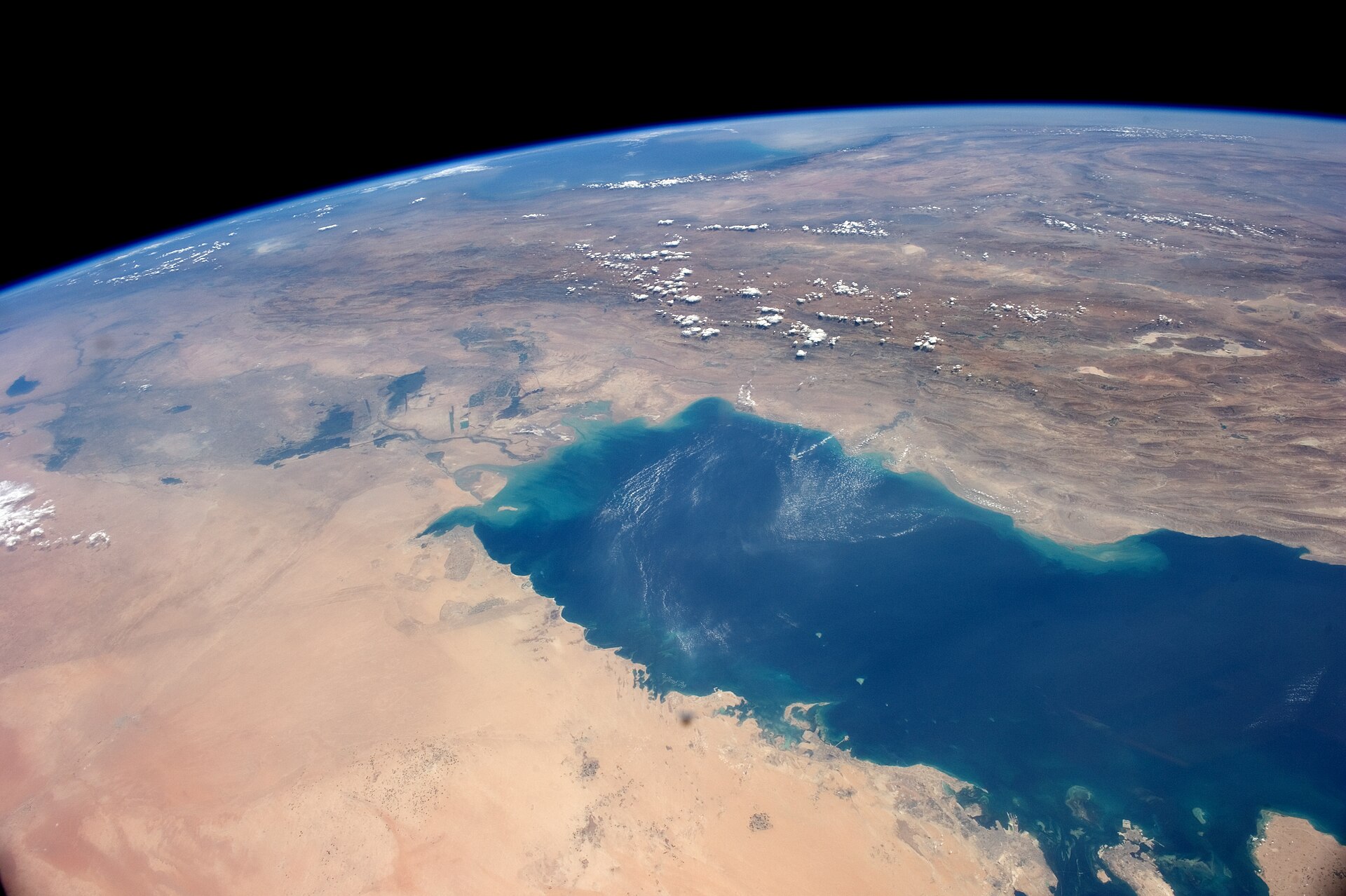
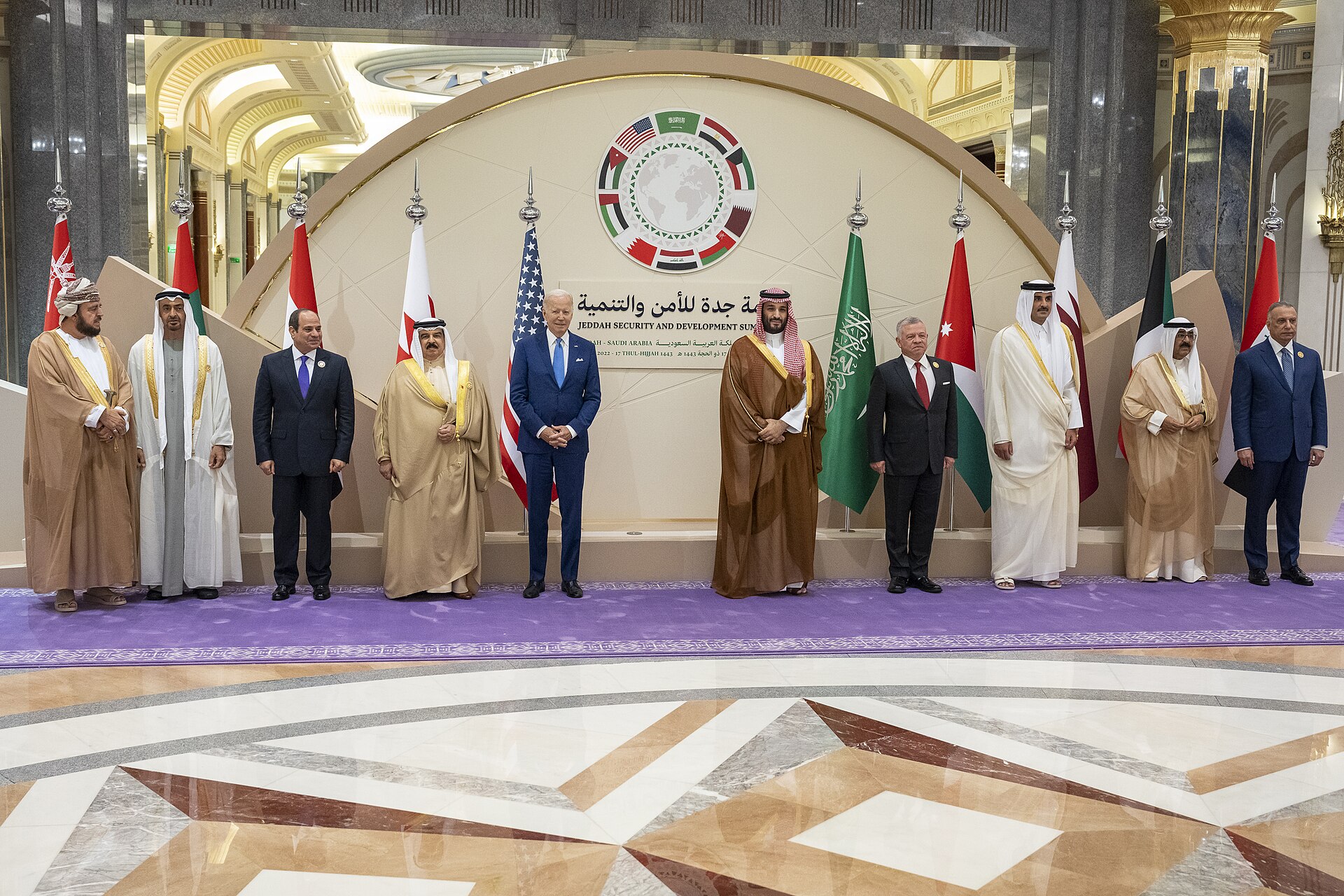
The Gulf Cooperation Council has fractured along lines that predate this war but that the war has made undeniable. ACLED’s real-time conflict tracker, Carnegie’s scenario modelling, and ISPI’s structural analysis all converge on the same three-camp taxonomy: the UAE and Bahrain as the hawkish bloc demanding regime change and structural Iranian disarmament; Saudi Arabia occupying a contested middle ground alongside Kuwait; and Qatar and Oman running back-channel de-escalation. As ISPI noted in April, the GCC “has never operated as a unified actor in its approach toward Iran, and it is unlikely to do so after the conflict ends.”
The Middle East briefing 3,000+ readers start their day with.
One email. Every weekday morning. Free.
The hawkish camp has the clearest position. Ambassador Yousef al-Otaiba’s March 25 Wall Street Journal op-ed laid it out explicitly: “A simple ceasefire isn’t enough.” He called for addressing Iran’s “full range of threats: nuclear capabilities, missiles, drones, terror proxies and blockades of international sea lanes” and urged the Trump administration toward ground operations. Gargash reinforced this on April 17: the UAE “must have assurances Iran attacks won’t be repeated.” Bahrain, which absorbed IRGC strikes on NSA Bahrain and had its airspace closed since February 28, aligns with Abu Dhabi by default — its Fifth Fleet hosting arrangement makes neutrality structurally impossible.
Qatar sits at the opposite pole. Doha directly criticised Israel for “dangerous and irresponsible” strikes on Iran’s South Pars facilities — a statement no other GCC member made publicly. Oman’s position is older and more embedded: Muscat has served as Iran’s primary Gulf interlocutor for decades, and Iran’s revised ceasefire paper reached Washington through Oman, not Pakistan. The Carnegie Endowment concluded that “the crisis may not be enough to overcome these divisions, making it less likely that individual Gulf states are willing to make investments in collective capacity or surrender agency to a collective position.” That is diplomatic language for a bloc that cannot act as one.
What Does UAE Unilateralism Cost Saudi Arabia?
The cost is specific and measurable. When Saudi Arabia’s foreign minister served as co-guarantor at the March 29-30 multilateral talks, he was implicitly promising that a deal endorsed by Riyadh would carry the Gulf states with it. By April 10, the format had shifted to bilateral Vance-Ghalibaf talks in Islamabad — Saudi Arabia’s co-guarantor status stripped in real time. The format change was not random. When one member of your bloc is conducting offensive strikes on the same day you announce a ceasefire, your guarantee is worth less.
MBS needs Gulf consensus for three overlapping reasons. First, any post-war security architecture requires collective buy-in — Iran will not accept bilateral Saudi guarantees when the UAE is running an independent kinetic track and building military capacity outside Washington’s orbit. Second, the economic reconstruction of Gulf energy infrastructure — Saudi production crashed 30% in March, from 10.4 million barrels per day to 7.25 million — requires coordinated OPEC+ positioning that is impossible when member states disagree on whether to punish or negotiate with Tehran. Third, the Saudi financial architecture underwriting Pakistan’s mediator role depends on Riyadh’s credibility as the Gulf’s diplomatic centre of gravity. Every UAE airstrike on Iranian territory erodes that credibility.
“Iran directly targeted Gulf states with thousands of missiles and drones. As a result, we do not trust it and consider it as our main enemy.” — Anwar Gargash, UAE Presidential Diplomatic Adviser, April 2026
Gargash’s framing is the problem in a single quote. He speaks for the UAE as though he speaks for the Gulf. Saudi commentators have noticed: ACLED documented Saudi media “taking potshots at the UAE’s economic ties with Iran” that failed to “restrain Tehran” — an implicit argument that Abu Dhabi’s pre-war commercial engagement with Iran bought neither leverage nor restraint, and that UAE hawkishness now is overcompensation. Security analyst Imtiaz Gul captured the Saudi signal in the coalition decision: Riyadh’s absence from the Hormuz force “sends a diplomatic message: Riyadh is keeping a door open that Abu Dhabi has chosen to close.”
Abu Dhabi’s Information Lockdown
The UAE is not only running a separate military track — it is running a separate information architecture. Abu Dhabi’s attorney general warned that filming strike footage was illegal. At least 375 people were arrested for sharing content related to the attacks, with 35 referred to expedited trials for distributing what authorities called “fabricated content.” Bellingcat’s April 2 investigation, titled “The War You’re Not Allowed to See,” identified satellite imagery showing fires at two locations three kilometres apart at Jebel Ali Port — contradicting official UAE claims that all incoming systems were intercepted.
The information suppression serves a dual purpose. Domestically, it controls the narrative of vulnerability — the UAE absorbed 2,819 incoming systems, including 2,256 drones and 563 missiles, more than double Kuwait’s total and nearly ten times Qatar’s. Two UAE Armed Forces personnel and one Moroccan contractor were killed. Those numbers, if circulated freely alongside images of burning port infrastructure, would undercut Gargash’s “triumphed in a war” framing. Internationally, the suppression prevents independent verification of what the UAE struck versus what it intercepted — maintaining the ambiguity that allows Abu Dhabi to deny offensive operations while Iran documents them at the Security Council.
For Saudi Arabia, this creates a credibility problem by association. When MBS sits across from any interlocutor — Iranian, American, Pakistani — and promises Gulf restraint, the counterparty knows that one GCC member is actively suppressing evidence of its own strikes. The information asymmetry does not help Riyadh; it makes every Saudi assurance less believable, because Riyadh cannot guarantee what Abu Dhabi will do next or what Abu Dhabi has already done that remains hidden behind a domestic censorship apparatus.
Iran’s Legal Wedge Strategy
Tehran’s UN complaint is not primarily about accountability — it is about splitting the GCC along legal fault lines. Iran’s $270 billion reparations counter-demand frames Gulf state basing arrangements as “an act of aggression,” deliberately dividing the council into co-belligerents and neutrals. Saudi Arabia, the UAE, and Bahrain hosted strike operations; Oman and Qatar did not. By filing formal complaints that name the UAE specifically as an attacker — the first such accusation against an Arab state in this war — Iran creates a legal distinction between Gulf states that participated in offensive operations and those that merely absorbed defensive consequences.
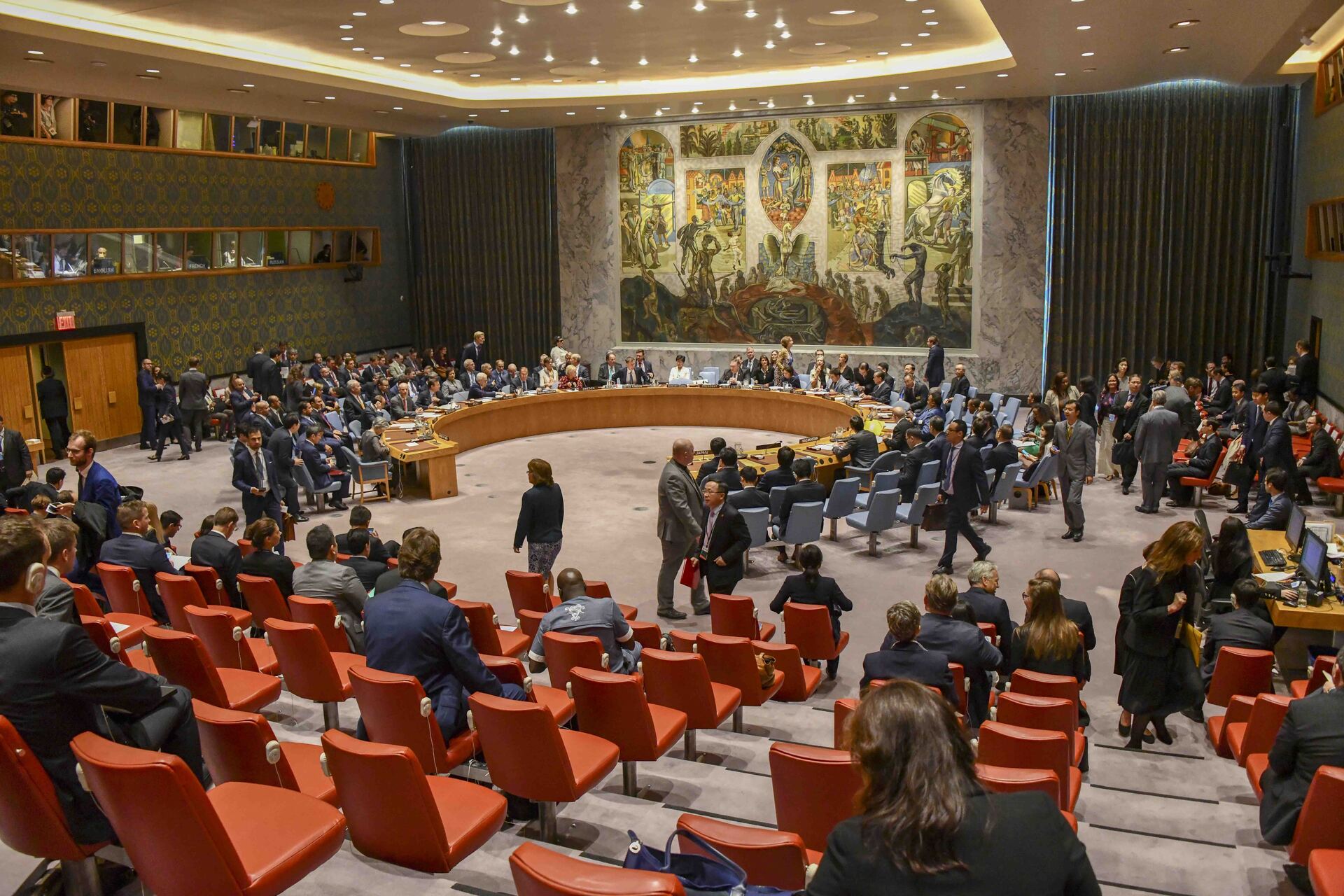
The wedge cuts deepest at Saudi Arabia’s position. Riyadh hosted US operations from Prince Sultan Air Base, making it a co-belligerent under Iran’s framing, but Saudi diplomacy since March has been oriented toward positioning MBS as mediator, not combatant. Iran’s complaint forces a choice: either Saudi Arabia stands with the UAE as a co-belligerent, abandoning its mediator posture, or it distances itself from Abu Dhabi’s strikes, confirming the fracture publicly. The April 22 UN Security Council session — the first-ever dedicated GCC cooperation briefing — put this tension on display before the full council. The GCC showed up without a unified military command, without a shared negotiating position, and without an enforcement mechanism for any commitment its members might make individually.
Iran’s counter-demand also isolates the UAE’s reparations claim. Abu Dhabi demanded Tehran pay for approximately $6 billion in direct economic damage. Saudi Arabia had co-sponsored the underlying UN resolution — then went silent when the UAE went public. That silence is its own statement. If Riyadh believed the reparations demand strengthened its position, it would have amplified it. Instead, Saudi Arabia calculated that joining Abu Dhabi’s public demand would compromise its back-channel to Araghchi, who called the Saudi foreign minister on blockade day — behavioural evidence that Tehran still considers Riyadh a potential interlocutor, not a co-combatant.
Why Did Saudi Arabia Say No to the Hormuz Coalition?
The US-led Hormuz coalition that began mine-clearance operations on April 11 under CENTCOM General Dan Caine has exactly two Middle Eastern members: the UAE and Bahrain. Saudi Arabia, Qatar, Oman, and Kuwait all declined. The UAE committed Baynunah-class corvettes. Riyadh committed nothing. That asymmetry is the fracture expressed in hardware — and it tells you everything about how each capital reads the post-war landscape.
For the UAE, joining the coalition is consistent with Otaiba’s op-ed logic: the threat is existential, the response must be structural, and alignment with Washington’s kinetic posture is the price of American security guarantees. Abu Dhabi absorbed the heaviest incoming fire of any GCC state and has the strongest incentive to ensure it never happens again. The coalition also cements the UAE’s relationship with the US military at a moment when Washington is deciding which Gulf partners get the most advanced systems and the deepest interoperability.
For Saudi Arabia, the calculus runs opposite. MBS is building toward a defence architecture that does not depend on Washington’s permission, and joining a US-commanded naval coalition would subordinate Saudi assets to CENTCOM precisely when Riyadh wants strategic autonomy. More critically, coalition membership would close the diplomatic door to Iran at the exact moment Saudi Arabia needs it open. The Yanbu bypass route — which now handles 80-85% of pre-war Saudi exports — depends on continued Red Sea access, not Hormuz transit. Saudi Arabia has less to gain from clearing Hormuz mines than from maintaining the diplomatic flexibility to negotiate a comprehensive deal that includes energy infrastructure security.
The split has downstream consequences for any post-war Gulf security architecture. A coalition with UAE and Bahraini ships but no Saudi participation is not a GCC maritime force — it is a sub-bloc operating under American command. Any security framework that emerges from this war will need to account for the fact that the Gulf’s largest economy and most powerful military declined to join the only operational naval coalition its neighbours assembled. MBS’s answer to this GCC paralysis is structural: Saudi Arabia’s quartet framework with Pakistan, Turkey, and Egypt — three ministerials in thirty-eight days, a deployed military component, and four chokepoints under coordinated management — is built explicitly to function where the GCC cannot.
The MBS-MBZ Rivalry Goes Kinetic
The Saudi-UAE rivalry did not begin with this war, but the war has transformed it from a competition over influence into a divergence over fundamental strategic orientation. INSS analysis from April assessed that MBS is working to reduce MBZ’s regional influence “from a ‘leading partner’ to a ‘secondary actor’” — edging toward Turkey and Qatar while MBZ moves in the opposite direction, deepening alignment with Israel and the United States. The Abraham Accords, which the UAE signed in 2020 and Saudi Arabia pointedly did not, created the structural conditions for this divergence. During the Iran war, the UAE’s Israel alignment translated into willingness to support US-Israeli kinetic objectives that Saudi Arabia kept at arm’s length. The depth of that alignment is now confirmed: Israel secretly deployed an Iron Dome battery with IDF operators to the UAE during the war, making it the first foreign combat deployment of the system.
The rivalry’s geographic footprint extends far beyond the Gulf. The first public Saudi-UAE diplomatic break came on December 30, 2025, when Saudi airstrikes in Yemen hit UAE-linked Southern Transitional Council shipments. Somalia banned UAE military flights in early 2026. Saudi Arabia closed airspace to UAE flights bound for the Kufrah airbase in Libya. As ISPI documented, “Saudi Arabia and UAE’s diverging geopolitical interests in Yemen, Somalia and Sudan have reached now a breaking point, with Yemeni Southern regions as the powder keg.” The Iran war added a kinetic Gulf dimension to a rivalry that was already playing out across the Horn of Africa and North Africa.
What makes the current fracture different from past disagreements — the 2017 Qatar blockade, the OPEC+ production disputes, the Yemen command-and-control tensions — is that the UAE conducted offensive military operations against a state that Saudi Arabia was simultaneously trying to bring to the table. The 2017 blockade damaged GCC cohesion but did not compromise a live negotiation. The Yemen proxy competition was ugly but occurred in a theatre where both Saudi and Emirati interests overlapped more than they diverged. Striking Iranian oil infrastructure on ceasefire day is a qualitatively different act: it subordinates Saudi diplomatic objectives to Emirati military ones, and does so without consultation, coordination, or apology.
The 2017 Qatar blockade ended with the Al-Ula Declaration in January 2021, but the underlying rivalry between Riyadh and Abu Dhabi over regional leadership was never resolved — it was papered over with a formula that gave each capital room to operate independently. That formula has now collapsed under the weight of live munitions.
The Vanishing Gulf Seat at the Table
The format shift from multilateral to bilateral tells the story. At the March 29-30 round, Saudi Arabia’s foreign minister was co-guarantor — the Gulf had a seat. By the April 10 Vance-Ghalibaf meeting in Islamabad, the only people in the room were American and Iranian. ACLED documented the progression: Saudi Arabia went from structuring the talks to being excluded from them in under two weeks. The GCC’s first-ever Security Council cooperation briefing on April 22 was supposed to project unity; instead, it displayed a bloc with no enforcement mechanism, no unified command, and no shared position on whether Iran should be engaged or contained.
The structural problem is that the three-camp split makes the GCC useless as a negotiating counterparty. Iran cannot sign a deal with “the Gulf” when one third of the Gulf is bombing its refineries, one third is passing messages through back-channels, and the remaining third is trying to hold the middle. Any serious post-war arrangement requires knowing what the Gulf collectively will and will not accept — on Hormuz transit, on basing rights, on nuclear inspections, on reparations. The Carnegie Endowment’s three scenarios for the Gulf after the war all assume the GCC does not produce a unified post-war architecture. The most optimistic scenario is loose coordination; the most realistic is continued fragmentation with bilateral deals replacing collective ones.
For MBS, the vanishing seat compounds every other problem. The production crash detailed above — 30% below February’s output, fiscal break-even at $108-111 per barrel against Brent trading around $90, Goldman’s war-adjusted deficit at 6.6% of GDP — makes negotiation urgent, not optional. The Hajj cordon sealed on April 18 with 1.2-1.5 million pilgrims entering a warzone. The ceasefire expires April 22 with no extension mechanism. MBS needs to negotiate — with Iran, with Washington, with OPEC+ — and every negotiation requires the credibility that comes from speaking for a unified Gulf. That credibility is what the UAE’s ceasefire-day strikes destroyed, and it is not something Gargash’s victory rhetoric or Otaiba’s op-eds can rebuild. The next round of talks — whenever it comes — will open with a question MBS cannot answer: does a Saudi commitment bind the Gulf, or just Saudi Arabia?
GCC Three-Camp Split: Positions and Actions
| State | Camp | Hormuz Coalition | Reparations Demand | Iran Back-Channel | Incoming Fire Absorbed |
|---|---|---|---|---|---|
| UAE | Hawkish | Joined (Baynunah corvettes) | $6B public demand | None | 2,819 systems |
| Bahrain | Hawkish | Joined | Aligned with UAE | None | NSA Bahrain struck; airspace closed since Feb 28 |
| Saudi Arabia | Middle ground | Declined | Co-sponsored resolution, then silent | FM called Araghchi April 13 | Eastern Province, Ras Tanura, Khurais; production -30% |
| Kuwait | Middle ground | Declined | Silent | Limited | KPC HQ + power/desalination struck |
| Qatar | Dialogue | Declined | Silent | Active; criticised Israeli strikes on South Pars | ~300 systems |
| Oman | Neutral | Declined | Silent | Primary Iran interlocutor; relayed revised paper to Washington | Minimal |
Frequently Asked Questions
Has the GCC ever faced a comparable internal fracture during a war?
The closest precedent is the 1990-91 Gulf War, when Yemen’s abstention on the UN resolution authorising force against Iraq led Saudi Arabia to expel 800,000 Yemeni workers — but that was a GCC-versus-outsider dispute, not an intra-GCC operational split. The 2017 Qatar blockade was severe but peacetime. The current fracture is unprecedented because it involves one member conducting offensive strikes against the adversary another member is actively negotiating with, during a live conflict. The GCC Charter’s mutual defence clause (Article 4) has never been tested against a scenario where members disagree on whether to fight or talk, and the April 22 Security Council briefing confirmed that no internal mechanism exists to resolve such a disagreement.
Could the UAE’s strikes have been coordinated with the United States without Saudi knowledge?
The operational indicators suggest partial US awareness at minimum. UAE Mirage 2000-9 jets operate within a deconfliction framework managed by the Combined Air Operations Centre at Al Udeid Air Base in Qatar — meaning any sortie into Iranian airspace would have appeared on CENTCOM radar tracking. The Akinci UAVs that struck Qeshm Island on April 1 are Turkish-made platforms, and their flight paths would cross airspace monitored by US E-2D Hawkeye aircraft operating from the USS Eisenhower. Whether “awareness” translates to “coordination” or merely “non-interference” remains unverified, but the distinction matters less to Saudi Arabia than the outcome: MBS was not consulted before strikes that undermined his ceasefire framework.
What leverage does Saudi Arabia have to bring the UAE back into alignment?
Riyadh’s primary lever is economic. Saudi Arabia remains the UAE’s largest non-oil trading partner in the region, and the PIF’s investment portfolio includes substantial UAE-linked assets. More directly, Saudi Arabia controls the overland transit routes that UAE logistics depend on for non-maritime trade — the King Fahd Causeway closure on April 7 demonstrated Riyadh’s willingness to shut corridors when security demands it. Saudi Arabia also holds the OPEC+ quota architecture: any post-war production increase requires Saudi coordination, and MBS could slow-walk UAE production recovery while accelerating his own. The deeper lever is diplomatic: if MBS succeeds in brokering a post-war arrangement that the UAE is excluded from, Abu Dhabi risks becoming the Gulf state that won the war but lost the peace — militarily satisfied but diplomatically isolated from the architecture that will define the region for decades. Saudi Arabia’s $13.1 billion Syria investment is part of that architecture — and the pipeline corridor logic behind it is explained in Saudi Arabia’s $13 Billion Syria Bet Is Really a Hormuz Bypass.
What does Iran gain from naming the UAE specifically in its UN complaint?
Tehran gains three things simultaneously. First, it establishes a legal record that distinguishes between GCC states that hosted US operations (defensive basing) and the UAE, which allegedly conducted sovereign offensive strikes (active belligerency) — a distinction that matters under international humanitarian law and could affect future ICJ proceedings. Second, it forces the UAE to either confirm the strikes, opening itself to legal liability, or maintain ambiguous denial, which undermines Abu Dhabi’s “we triumphed” narrative. Third, and most strategically, it pressures Saudi Arabia to publicly position itself relative to the UAE: either Riyadh defends Abu Dhabi and confirms GCC co-belligerency, or it stays silent and confirms the fracture. Iran’s diplomats have studied the 2017 Qatar blockade dynamics and understand that GCC splits, once formalised in international legal filings, become self-reinforcing.