JEDDAH — Iranian-backed Houthi forces fired three anti-ship ballistic missiles at two commercial vessels southwest of Mokha on April 26, striking the crude tanker Andromeda Star twice and landing a third round near the multipurpose vessel MV MAISHA. The simultaneous targeting of two ships in a single salvo — the second dual-vessel attack in 48 hours — confirmed that Bab el-Mandeb has become an active second chokepoint for Saudi oil exports, not a functioning alternative to the Strait of Hormuz.
The tactical significance is less about escalation than about insurance arithmetic. A 67 percent hit rate against a moving Aframax tanker from electro-optical guided ASBMs forces Lloyd’s Joint War Committee to reassess war-risk premiums across the full Red Sea corridor. Saudi Arabia’s East-West Pipeline bypass, already constrained to roughly 4 million barrels per day at Yanbu, routes 70-75 percent of its crude through the same strait the Houthis just demonstrated they can close at will. No Saudi export route now operates without either IRGC clearance or military escort — a structural trap with no administrative fix.
Table of Contents
- What Happened Off Mokha on April 26?
- From Harassment to Fire Control: The Capability Signal
- How Does the Attack Change Red Sea Insurance Pricing?
- The Bypass That Leads Back to a Chokepoint
- Does Saudi Arabia Have Any Unblocked Export Route?
- The Houthi Calculus: Tolls, Escalation, and Tehran
- Background: 30 Months of Red Sea Disruption
- FAQ
What Happened Off Mokha on April 26?
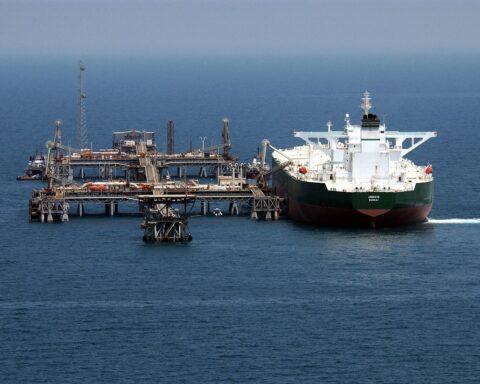
At 5:49 p.m. Sana’a time on April 26, 2026, Houthi forces launched three anti-ship ballistic missiles from Yemeni territory toward commercial shipping approximately 15 nautical miles southwest of Mokha, according to a CENTCOM press release issued the same day. Two missiles struck the MV Andromeda Star, a Panama-flagged Aframax crude oil tanker carrying approximately 700,000 barrels of Russian Urals crude on a Primorsk-to-Vadinar, India routing, according to vessel tracking data from Lloyd’s List Intelligence. The third landed near the MV MAISHA, an Antigua and Barbuda-flagged multipurpose vessel operated out of Liberia, causing no damage.
The House of Saud Daily Briefing
Saudi Arabia's news in 3 minutes, every morning. Free. See today's issue
The Andromeda Star sustained what CENTCOM described as minor damage. All 30 crew members — including 22 Indian nationals — were safe. INS Kochi, an Indian Navy destroyer, deployed explosive ordnance disposal specialists by helicopter to assess the vessel, according to Tribune India and India Shipping News. The tanker continued its transit.
Houthi military spokesman Yahya Sarea claimed responsibility via al-Masirah TV, describing a “direct hit” on the Andromeda Star. The vessel is EU-sanctioned as part of Russia’s shadow fleet — a detail that complicates any Western insurance response, since the tanker already operated outside standard P&I club coverage.
The attack came 48 hours after an identical pattern: on April 24, Houthi forces simultaneously targeted the Maersk Yorktown and MSC Veracruz in the same corridor. Back-to-back dual-vessel salvos represent a measurable shift from the single-target harassment that characterized most of the 2024-2025 Red Sea campaign.
From Harassment to Fire Control: The Capability Signal
Two hits from three missiles against a moving Aframax tanker is not suppressive fire. It is terminal guidance.
The Houthis employed what the International Institute for Strategic Studies assessed in January 2024 as Asef or Tankil-variant ASBMs — weapons fitted with electro-optical and infrared seekers, with an operational range of 280-310 miles. A 67 percent hit rate against a 230-meter vessel under way at sea places these weapons in the category of guided anti-ship munitions, not area-denial rockets. The IISS assessment preceded this attack by two years; the April 26 strike validated it operationally.
Noam Raydan and Farzin Nadimi of the Washington Institute wrote in July 2025 that the Houthis had demonstrated “sophisticated coordination using multiple attack vectors simultaneously.” That assessment followed the July 2025 sinking of the Eternity C, which involved eight coordinated small craft, unmanned surface vessels, and missiles in a single engagement. The Mokha salvo was simpler in execution — three missiles, two targets — but the simultaneity matters more than the complexity. Engaging two vessels in the same fire mission requires either separate targeting teams operating on synchronized timing or a single fire-control network allocating missiles across multiple track files. Either capability represents a threshold that single-ship harassment does not.
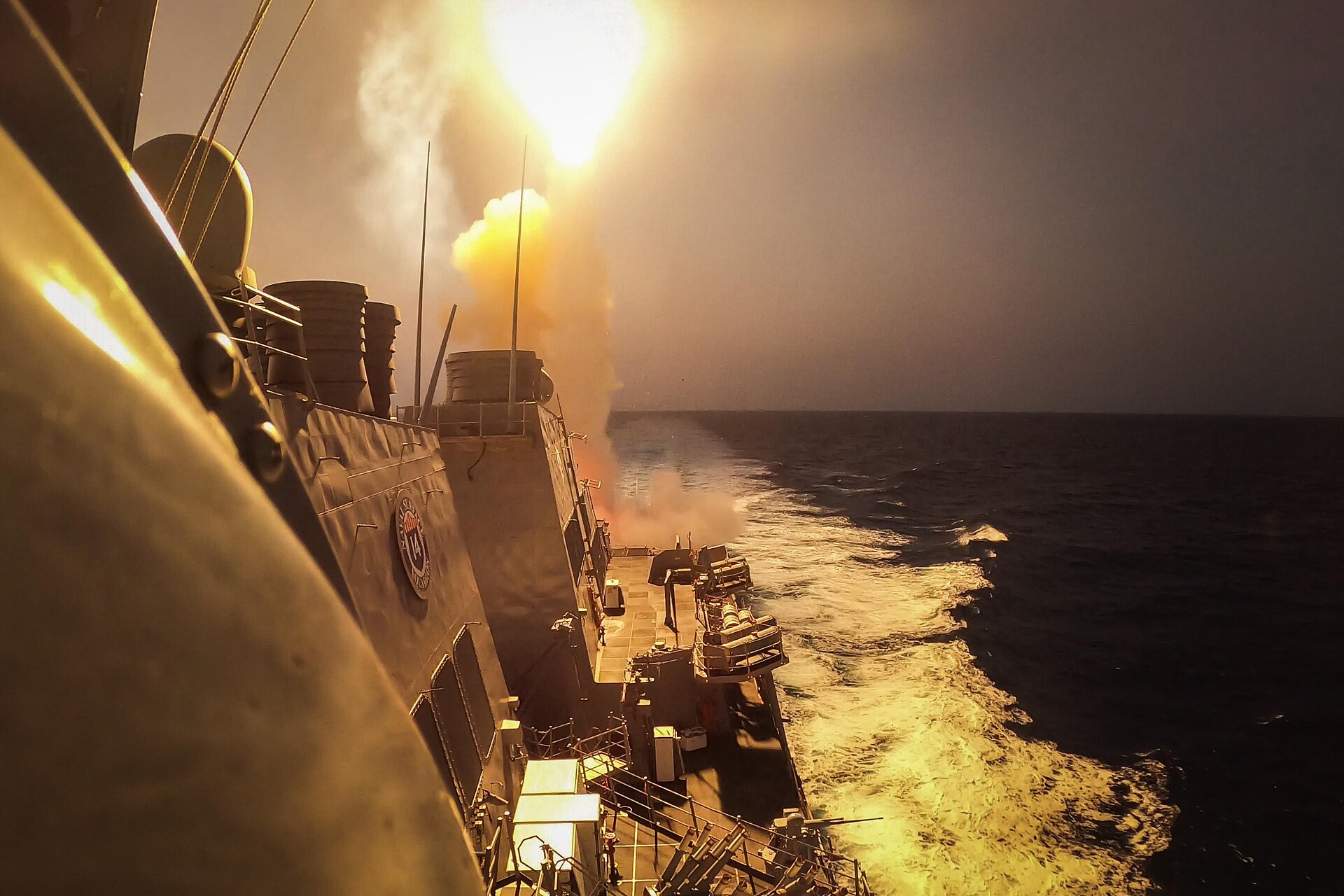
For underwriters, the distinction between one-target and two-target salvos is not academic. A single-vessel attack can be modeled as random selection from a target-rich environment. Dual-vessel targeting implies surveillance, track discrimination, and deliberate engagement sequencing — the signatures of a force that chooses its targets rather than fires at opportunity.
How Does the Attack Change Red Sea Insurance Pricing?
The mechanism that closes a shipping lane is not naval. It is actuarial. War-risk additional premium — the surcharge insurers levy above standard hull coverage for vessels transiting designated high-risk areas — is the instrument by which a physically navigable strait becomes commercially unviable.
Red Sea Additional War Risk Premium stood at 0.65-0.75 percent of hull value as of March 30, 2026, according to Argus Media. For the Strait of Hormuz, the comparable rate reached 5.0-7.5 percent, according to broker quotations reported by S&P Global in March 2026 — applied against both hull and cargo. On a standard VLCC valued at $134 million carrying a two-million-barrel cargo at current Brent prices, the Hormuz AWRP alone exceeds $20 million per transit at the upper rate. Red Sea premiums remain an order of magnitude lower, but the dual-vessel pattern places upward pressure on that gap.
David Smith, Head of Marine at McGill & Partners, told S&P Global Market Intelligence in March 2026: “If you went to the hull market right now and said: ‘I’ve got a tanker going through the Strait of Hormuz,’ I think there is a possibility that you would struggle to find… underwriters looking to write that.” The same dynamic applies to the Red Sea corridor on a compressed timeline if the JWC reclassifies the southern approaches.
All 12 International Group P&I Clubs — covering 90 percent of ocean-going tonnage — issued 72-hour war cover cancellation notices for the Hormuz corridor in March 2026, according to S&P Global and CNBC. The same mechanism exists for the Red Sea. Neil Roberts of the Lloyd’s Market Association said the JWC will not remove the Red Sea from its listed area until there is a “materially diminished threat assessment,” and that no single ceasefire would be sufficient.
The Suez Canal was already operating 60 percent below 2023 baselines as of January 7, 2026 — a full 100 days after the last Houthi attack at that time — according to BIMCO. The canal’s traffic never recovered from the 2024-2025 campaign. The April 2026 resumption of attacks, now with demonstrated dual-vessel capability, removes the conditions under which recovery could begin.
The Bypass That Leads Back to a Chokepoint
Saudi Arabia’s contingency for a Hormuz closure was the East-West Pipeline: 1,201 kilometers from Abqaiq to Yanbu, built in 1981, with a nameplate capacity of 7 million barrels per day. Iran struck a pumping station along the line around April 8, knocking 700,000 bpd offline. Saudi Aramco restored full pipeline capacity by April 12, but the binding constraint was never the pipeline. It was the port.
Yanbu’s effective loading ceiling is 3-4 million bpd under current infrastructure, according to Vortexa data cited by Bloomberg on April 24 — barely more than half the pipeline’s theoretical capacity. Actual throughput in the first three weeks of April approached that ceiling at approximately 4 million bpd. Saudi production in March was 7.25 million bpd, down from 10.4 million bpd pre-war, according to the IEA. Even at the port’s maximum, the structural export gap — barrels produced but unable to reach any market under current routing — stands at roughly 3-4 million bpd.
Samriddhi Vij, Associate Fellow at the Observer Research Foundation’s Middle East program, wrote on April 23 that the East-West Pipeline “relocates rather than eliminates chokepoint risk.” Her analysis quantified the dependency: 70-75 percent of Yanbu crude must transit Bab el-Mandeb to reach Asian buyers, who account for the overwhelming majority of Saudi export demand. The pipeline does not bypass a chokepoint. It substitutes one for another.
Andrew Logan, editor at BloombergNEF, assessed in March 2026 that Saudi Arabia’s bypass capacity was “insufficient to offset the deficit entirely,” and that a Houthi-enforced Bab el-Mandeb closure would “add weeks, if not months” to Asia-bound journeys. The alternative — Cape of Good Hope routing — adds $1.2-1.8 million in fuel costs per round trip and 10-14 days in transit time, according to the ORF analysis.
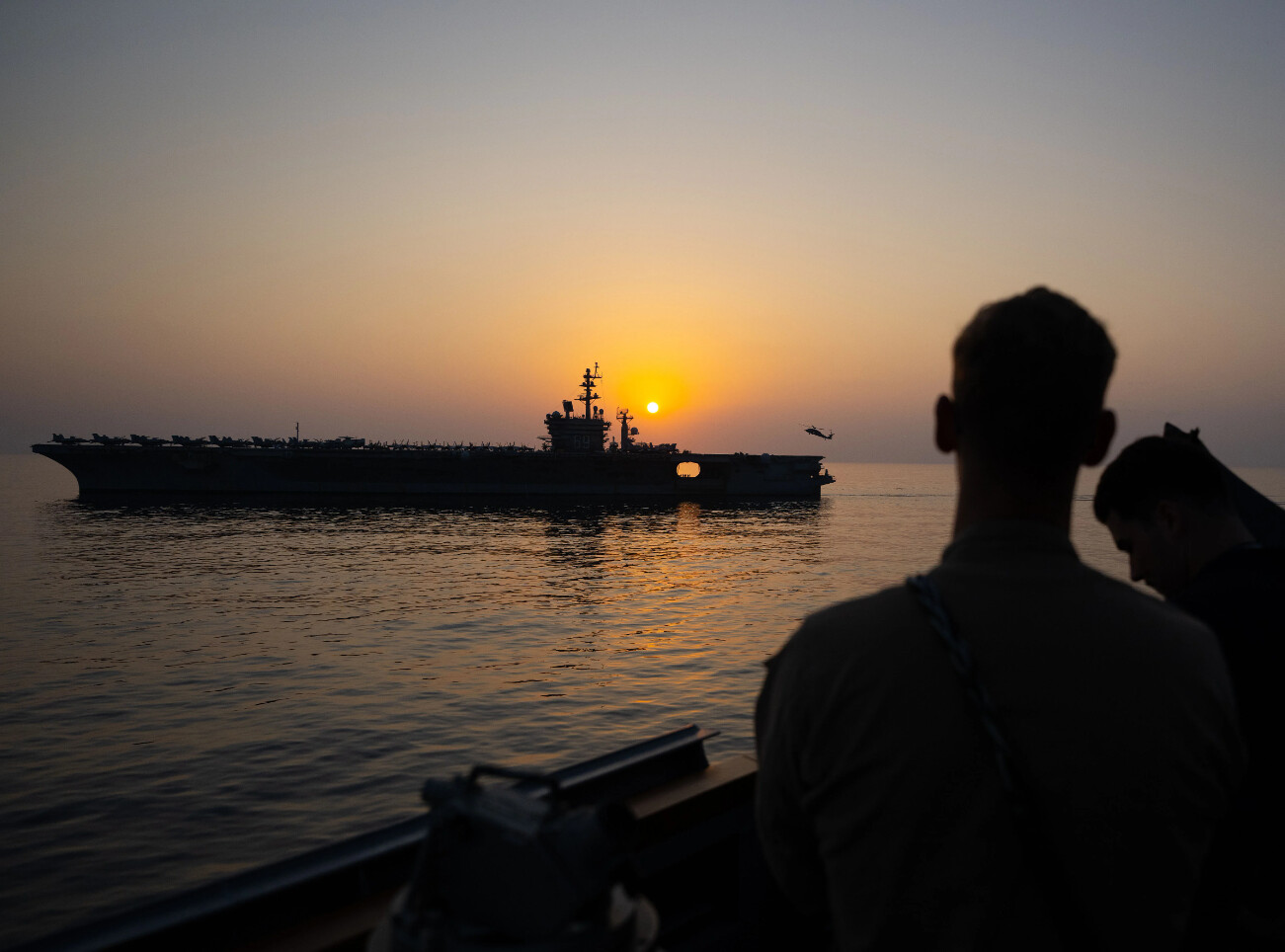
The arithmetic reduces to a single conclusion. Saudi Arabia lost 3.15 million bpd of production capacity in March and cannot export what remains without routing through either the Strait of Hormuz — where both sides are now blocked — or Bab el-Mandeb, where the Houthis just put two missiles into a moving tanker.
Does Saudi Arabia Have Any Unblocked Export Route?
No Saudi crude export route currently operates without military risk, insurance surcharges, or third-party clearance requirements. The three available corridors each face distinct but compounding constraints.
The Hormuz corridor remains under what Bloomberg described on April 26 as a “double blockade”: the U.S. Navy controls the Arabian Sea approach from its April 13 enforcement action, while the IRGC controls the Gulf of Oman exit under measures in place since March 4. Only 45 transits have occurred since the April 8 ceasefire — 3.6 percent of the pre-war baseline. Sultan Al Jaber, ADNOC’s chief executive, stated the position plainly in comments reported by Reuters on April 24: “The Strait of Hormuz is not open. Access is being restricted, conditioned and controlled.”
The Yanbu-Bab el-Mandeb corridor faces the constraints detailed above: a hard port ceiling, 70-75 percent Asian-market dependency, and now a demonstrated Houthi dual-vessel attack capability. The ORF estimated $10 billion per day in global trade at risk from a simultaneous Hormuz and Bab el-Mandeb closure.
Cape of Good Hope routing avoids both chokepoints but translates into a permanent discount on Saudi crude relative to West African and Latin American competitors who sit closer to Asian demand centers. At Brent $105.33 per barrel as of April 26 — already below Saudi Arabia’s fiscal break-even of $108-111, according to Bloomberg — the margin for absorbing the $1.2-1.8 million per-voyage fuel premium and 10-14 day delay does not exist.
The structural trap is not temporary. It requires either a Hormuz reopening (contingent on an Iran deal that the Islamabad talks have not produced), a Houthi cessation (contingent on an end to the broader Iran war), or a Yanbu port expansion that would take years to construct. None is available on a timeline measured in weeks. Goldman Sachs’ framing of a “sloppy peace” at Hormuz illustrates why even a nominal reopening leaves Saudi Arabia’s export arithmetic permanently impaired — the Yanbu ceiling does not disappear when the shooting stops.
The Houthi Calculus: Tolls, Escalation, and Tehran
The Mokha attack did not occur in isolation from Houthi political signaling. Abdulmalik al-Houthi stated in an April 21 speech: “We are confronting the Israeli-Zionist enemy and its American partner. Our direction is toward escalation if the enemy escalates and returns to escalation anew.” The language was reported by FDD’s Long War Journal on April 24.
Hussein al-Ezzi, the Houthi deputy foreign minister, offered the threat in starker terms: “If Sana’a decides to close the Bab al-Mandab, then all of mankind and jinn will be utterly powerless to open it.” The quote, reported by Gulf News, captures the Houthi negotiating posture — that current attacks represent calibrated disruption, not full closure, and that the escalation ladder has rungs still unclimbed.
The toll mechanism is the commercial instrument. Lloyd’s List reported, as cited by FDD on April 24, that Houthi authorities are considering a Red Sea transit fee of approximately $2 million per vessel — mirroring the IRGC’s Hormuz toll revenue model. HOS reported on the architecture of the Houthi toll mechanism earlier on April 26, detailing how Iran is building a parallel revenue extraction system through its Yemeni proxy. The April 26 dual-vessel strike serves as the enforcement demonstration that makes a future toll credible.
Houthi rallies in Sana’a in the days preceding the attack featured explicit calls for “full support for the ‘Unity of the Arenas’ equation and solidarity with the Islamic Republic of Iran, Hezbollah in Lebanon, and the Iraqi resistance,” according to FDD reporting. The operational linkage between Houthi Red Sea attacks and the broader Iran war is not an inference. It is stated Houthi policy. Al-Ezzi conditioned full Bab el-Mandeb closure on Gulf states entering the war against Iran — a threshold not yet crossed, which means the current attack tempo represents a deliberately restrained posture.
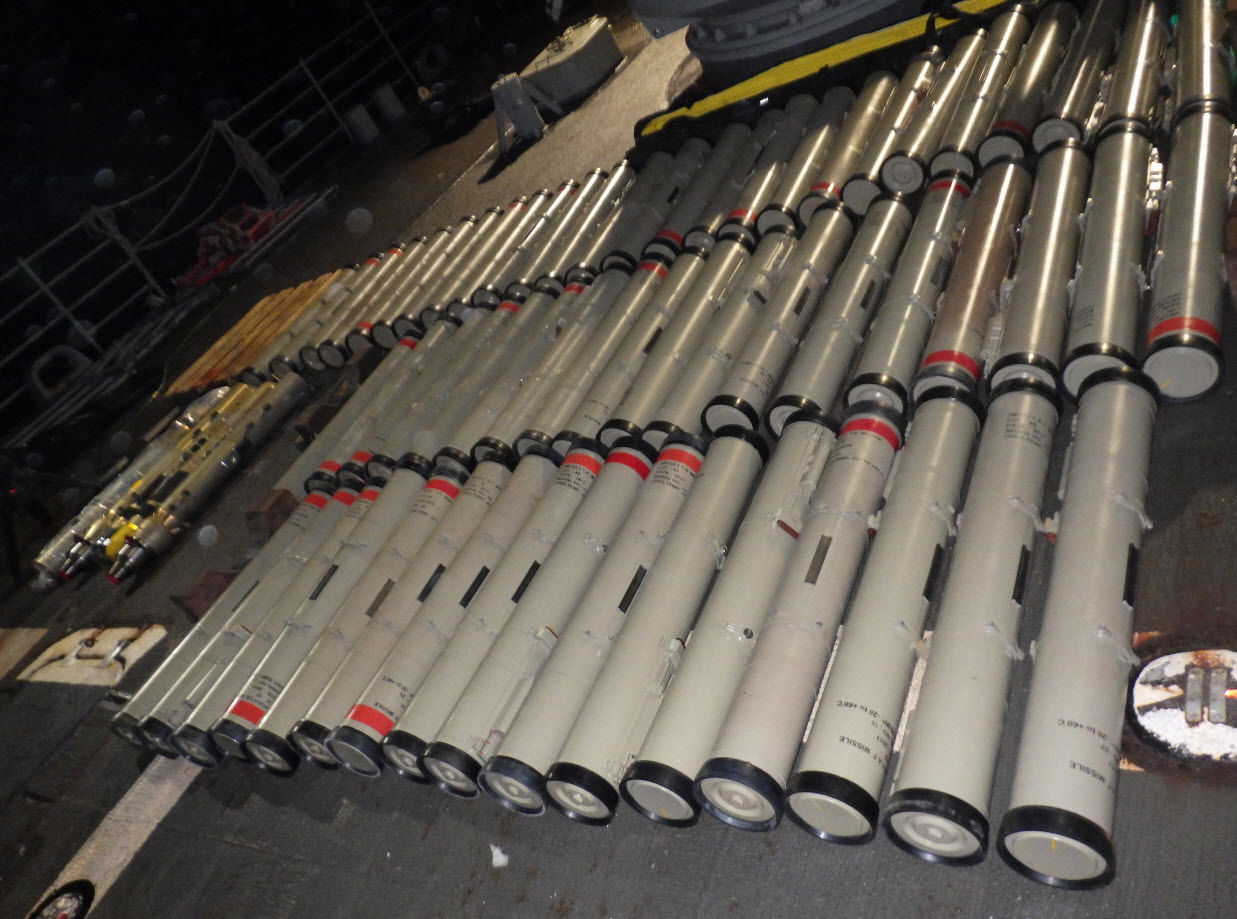
Background: 30 Months of Red Sea Disruption
The Houthi Red Sea campaign began in October 2023, initially in response to the Gaza conflict. Over the following 24 months, Houthi forces conducted more than 100 attacks on commercial and military shipping in the Bab el-Mandeb corridor. Pre-war, the strait handled approximately 9 million bpd in oil transits and 10-12 percent of all global seaborne trade through its 18-mile width.
Annual average oil transit through the strait fell from 8.7 million bpd in 2023 to 4.0 million bpd in 2024, according to EIA shipping data. The campaign paused after the Gaza ceasefire in October 2025 but resumed in March 2026 following the outbreak of the Iran war.
The July 2025 sinking of the Eternity C marked a capability threshold, establishing multi-platform coordination as an operational reality. The April 2026 dual-vessel ASBM salvos represent the next increment: not more platforms, but more targets per salvo, implying a fire-control architecture capable of parallel engagement.
One hundred days of quiet after the October 2025 pause did not meet the JWC’s “materially diminished threat assessment” threshold, as detailed above. Two dual-vessel attacks in 48 hours in April 2026 reset the clock entirely.
The convergence is what matters. Hormuz and Bab el-Mandeb were historically treated as independent risk variables — a disruption at one could be partially offset by routing through the other. That assumption underpinned Saudi Arabia’s East-West Pipeline strategy, global oil supply models, and insurance pricing frameworks. As of April 26, 2026, both chokepoints are contested simultaneously for the first time since the Tanker War of 1987-1988. The difference is that in 1988, the U.S. Navy had unchallenged control of both straits within weeks. Today, the IRGC holds one and its closest proxy holds the other. As both routes came under simultaneous interdiction, Saudi Arabia moved to secure Port Sudan as a wartime Red Sea logistics contingency — using the frozen Pakistan arms deal as the lever.
FAQ
What type of missiles did the Houthis use in the April 26 attack?
CENTCOM identified the weapons as anti-ship ballistic missiles. The IISS assessed Houthi ASBM inventory as including Asef and Tankil variants with electro-optical and infrared terminal seekers and ranges of 280-310 miles. These are not unguided rockets — they employ terminal homing against moving maritime targets, which accounts for the 67 percent hit rate observed in the Mokha salvo. Iran’s Islamic Revolutionary Guard Corps supplied the technology through a transfer pipeline that U.S. and UN investigators have documented since 2015.
Can the U.S. Navy protect commercial shipping through Bab el-Mandeb?
Operation Prosperity Guardian, the multinational naval task force established in December 2023, intercepted some Houthi munitions but did not prevent the campaign from reducing Suez Canal traffic by 60-86 percent. ASBM defense requires Aegis-equipped destroyers to maintain continuous station in the threat envelope — a posture that consumes ship-days at a rate the U.S. Fifth Fleet cannot sustain simultaneously with Hormuz operations. The cost asymmetry compounds the problem: each SM-2 or SM-6 interceptor costs $2-4 million, while the Houthi ASBMs they are designed to defeat cost an estimated $200,000-$400,000 each, according to CSIS analysis — giving the attacker a structural firing-cost advantage. The April 24 and April 26 dual-vessel attacks occurred despite ongoing naval presence, confirming that escort operations can reduce but not eliminate the threat.
How does the Andromeda Star’s shadow fleet status affect the insurance response?
The Andromeda Star is EU-sanctioned as part of Russia’s shadow tanker fleet and was struck by two Houthi anti-ship ballistic missiles on April 26 while carrying Russian Urals crude — meaning it already operated outside the standard International Group P&I Club system. Shadow fleet vessels typically carry insurance from opaque or state-backed providers rather than mainstream London or Scandinavian markets. This limits the direct impact on standard war-risk pricing — but it does not limit the signaling effect. The JWC assesses the threat environment, not individual vessel compliance status. A demonstrated hit on any vessel of any flag in a listed area reinforces the risk classification that applies to all traffic.
What is the Lloyd’s Joint War Committee and why does its designation matter?
The JWC is an advisory body within the Lloyd’s of London insurance market that maintains a list of areas where vessels face elevated war, strikes, terrorism, or related perils. When the JWC designates a waterway as a listed area, insurers are not prohibited from covering transits — but they charge Additional War Risk Premium, typically calculated as a percentage of hull value per voyage. The Red Sea has been a JWC-listed area since the Houthi campaign began. The practical effect is a per-transit surcharge that accumulates into a structural cost disadvantage for any route passing through the zone. Removing a listing requires sustained evidence of reduced threat — not a ceasefire announcement, but months of verified low attack frequency.
Could Saudi Arabia expand Yanbu port capacity to handle full pipeline throughput?
Yanbu’s King Fahd Industrial Port has physical constraints — berth depth, loading arm count, tank farm capacity, and vessel scheduling — that limit throughput to 3-4 million bpd under current infrastructure, according to Vortexa estimates. Expanding to match the pipeline’s 7 million bpd nameplate capacity would require new deepwater berths, additional single-point mooring buoys for VLCC loading, expanded tank storage, and associated pipeline manifolds. Port expansion projects of this scale typically require 3-5 years from approval to commissioning. Saudi Aramco has not publicly announced a Yanbu expansion program, and doing so would implicitly concede that Hormuz is a long-term loss — a strategic signal Riyadh has avoided making.
The full mechanics of Saudi Arabia’s dual-chokepoint exposure — how Ghalibaf’s “BEM unplayed” equation, Trump’s long blockade directive, and the SUMED ceiling together trap Saudi crude between two straits Riyadh cannot control — are examined in full.
The House of Saud Daily Briefing
Saudi Arabia's news in 3 minutes, every morning. Free. See today's issue