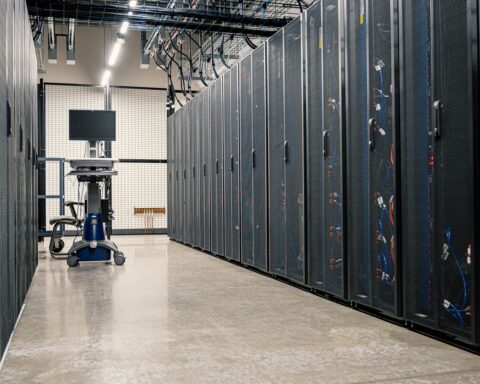
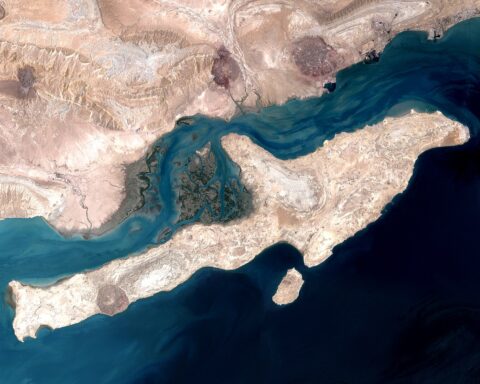
BANDAR ABBAS — An explosion ripped through the Sina Port container yard at Shahid Rajaei port at 12:20 local time on April 26, killing at least 57 people and injuring more than 1,000, after 58 containers of sodium perchlorate — a precursor to the solid-fuel oxidizer that comprises 70 percent of propellant in Iran’s Kheibar Shekan and Haj Qasem ballistic missiles — detonated in a blast heard 26 kilometres away on Qeshm Island and felt across a 50-kilometre radius. The cargo had arrived 14 months earlier aboard two IRISL-flagged vessels from China, was falsely declared on import documents according to the port’s own chief executive, and sat in a yard operated by a company established by a Khamenei-supervised foundation whose president is a former IRGC general — a chain of custody that makes the sabotage-versus-negligence debate almost beside the point.
Shahid Rajaei handles 85 to 90 percent of Iran’s container traffic, 55 percent of total trade volume, and $29 billion of the country’s $130 billion in annual foreign commerce, according to Iran International and Nova Express Shipping, which means the explosion did not merely destroy 15 hectares of container yard and 10,000 shipping containers but degraded Iran’s last functioning Gulf export gateway at the precise moment a double blockade has reduced Hormuz transits to 3.6 percent of pre-war baseline. Deputy Minister Saeed Rasouli confirmed 26 ships had already been turned around; 500 trading companies suspended operations within hours; imported goods prices rose 30 percent inside 48 hours; and an estimated $25 million per day in direct economic damage began accumulating the moment the fires started, according to S7 Risk and Iran International.
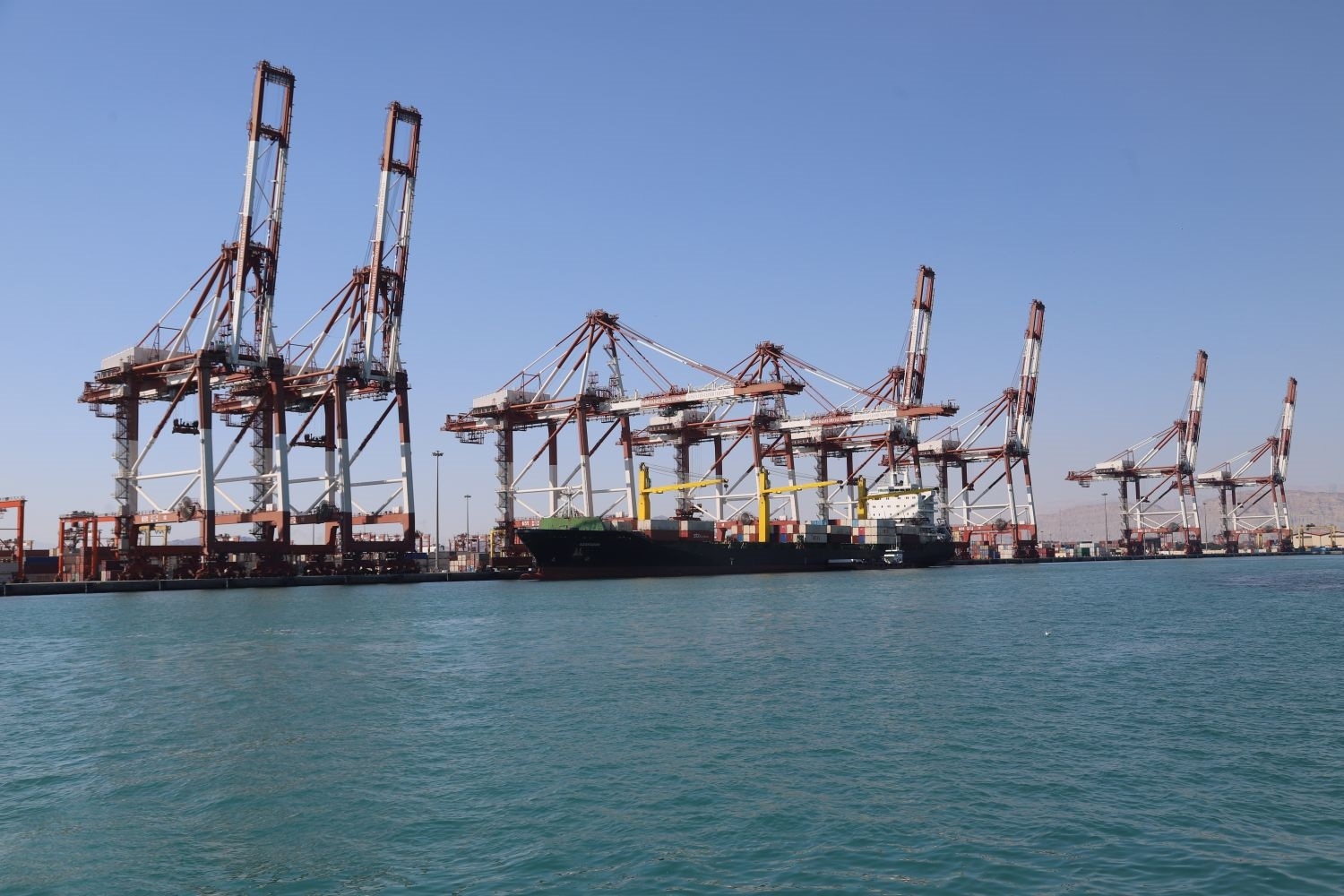
Table of Contents
- The Rocket-Fuel Trail: From Ningbo to the Container Yard
- Who Ran the Port That Stored Missile Oxidizer in Mislabelled Containers?
- Does It Matter Whether This Was Sabotage or Negligence?
- Iran’s Wartime Spine, Severed at the Vertebra
- What Does Iran’s Own Evidence Say?
- Recovery and the Beirut Precedent
- Frequently Asked Questions
The Rocket-Fuel Trail: From Ningbo to the Container Yard
The cargo that detonated on April 26 arrived in two shipments between January and February 2025 aboard the MV Golbon and MV Jairan, both flagged to the Islamic Republic of Iran Shipping Lines, which has been under US sanctions since 2008. The vessels loaded approximately 1,000 metric tonnes of sodium perchlorate at the Chinese ports of Ningbo and Gaolan, according to the Maritime Executive and an analysis published by the Foundation for Defense of Democracies, which had previously flagged the MV Golbon’s docking. Sodium perchlorate is converted into ammonium perchlorate through a well-documented industrial process, and ammonium perchlorate is the oxidizer that constitutes roughly 70 percent of the solid-fuel propellant used in Iran’s medium-range ballistic missile programme — meaning the shipment, by FDD’s calculation, contained enough precursor material to produce oxidizer for approximately 260 mid-range missiles.
A second wave of deliveries followed between September and October 2025, when two additional IRISL vessels — the Shabdis and Barzin — brought a further 2,000 tonnes of sodium perchlorate from China, according to the Maritime Executive. Whether any of that second shipment was stored in the same container yard at the time of the explosion remains unclear, though the 58 containers confirmed in the blast zone were from the original January-February 2025 consignment. The cargo was offloaded in March 2025 and sat in the Sina Port yard for approximately 14 months before detonation — 14 months during which, according to Sina Port’s own CEO, the containers bore no proper hazardous-goods documentation.
Saeed Jafari, the chief executive of Sina Port and Marine Services Development Company, told the Iranian Labour News Agency that “the incident happened following a false statement about the dangerous goods and delivering it without documents and tags.” An Iranian lawmaker separately confirmed to state media that a private importer had falsely declared the hazardous cargo on customs paperwork, a claim reported by the Associated Press. The admission is remarkable not for what it reveals about the blast itself but for what it reveals about the sanctions-evasion pipeline: the same mislabelling that left sodium perchlorate sitting undocumented in a container yard for over a year is the same mislabelling that allowed it to pass through international shipping routes without triggering sanctions screening at any point between Ningbo and Bandar Abbas.
Who Ran the Port That Stored Missile Oxidizer in Mislabelled Containers?
Sina Port and Marine Services Development Company was established by the Bonyad Mostazafan — the Mostazafan Foundation — which the US Treasury sanctioned for enriching Ayatollah Ali Khamenei’s office, according to the Associated Press. The foundation’s current president is Hossein Dehghan, a former IRGC brigadier general who served as Iran’s defence minister from 2013 to 2017 and now holds the position of military adviser to Khamenei himself. Dehghan’s trajectory — from IRGC command to defence ministry to Khamenei’s advisory circle to the presidency of a foundation that controls port infrastructure where missile precursors are stored — traces the institutional overlap between Iran’s military-industrial complex, the Supreme Leader’s economic network, and the country’s civilian trade architecture with a precision that organisational charts rarely achieve.
The Middle East briefing 3,000+ readers start their day with.
One email. Every weekday morning. Free.
Separately, Tidewater Middle East Company, an entity sanctioned by both the European Union and the United States for its role as an IRGC-controlled port operator, has documented operations at Bandar Abbas, according to the Global Sanctions Intelligence database. The layering is instructive: a Khamenei-supervised foundation creates the company that operates the container yard; an IRGC-controlled entity runs parallel port operations at the same facility; and sanctioned IRISL vessels deliver mislabelled rocket-fuel precursor that sits for 14 months without proper documentation. Whether anyone ordered negligence or negligence simply flourished in the absence of accountability is a distinction without a meaningful difference when every node in the chain reports, ultimately, to institutions controlled by the Supreme Leader or the Revolutionary Guards.
Does It Matter Whether This Was Sabotage or Negligence?
Iran’s Interior Minister confirmed within 48 hours that “negligence in observing safety protocols and passive defence measures has been confirmed,” according to Iran International and CNN — a statement that effectively closed the official Iranian investigation before it had begun, though it did not prevent Iranian members of parliament from simultaneously accusing Israel of planting explosive devices in the container yard. Israeli officials told media outlets that “there is no known connection between Israel and the deadly explosion.” Seyed Hossein Mousavian, a former Iranian nuclear negotiation spokesman now at Princeton University, told The National that he had “no doubt about Netanyahu’s strategy to sabotage the nuclear negotiations between the US and Iran” and that “one cannot rule out the scenario that Israel may have carried out the explosions in Bandar Abbas, as Israel is very angry about the progress of the talks and will resort to any action to obstruct them.”
The Centre for Strategic and International Studies published a satellite imagery assessment by Jennifer Jun and Joseph S. Bermudez Jr. concluding that the explosion was “most likely” the result of human error but that sabotage “cannot be ruled out.” Ambrey Analytics, the maritime risk consultancy, told the Washington Post that the explosion was consistent with sodium perchlorate ignition based on their analysis of more than 90 videos from the scene. The Washington Post’s own forensic reconstruction traced the blast origin to the sodium perchlorate containers. But the fixation on whether a spark was accidental or planted obscures the more consequential question: how did 1,000 tonnes of missile-fuel precursor end up mislabelled, undocumented, and stored for over a year in a civilian container yard at Iran’s most strategically significant port, under the operational authority of a Khamenei-supervised entity, without anyone in Iran’s layered security apparatus raising an alarm?
The explosion happened on the same day that Iranian Foreign Minister Abbas Araghchi was in Muscat for Iran-US nuclear talks via an Omani backchannel, a coincidence that Mousavian explicitly cited as evidence of Israeli motive. The timing is genuinely suggestive. It is also genuinely irrelevant to the accountability question, because the mislabelled cargo had been sitting in that yard since March 2025 — meaning the vulnerability existed regardless of who, if anyone, chose to exploit it on April 26.
Iran’s Wartime Spine, Severed at the Vertebra
Shahid Rajaei port, located 23 kilometres west of Bandar Abbas, has a nominal container capacity of 6.65 million TEUs per year, according to Nova Express Shipping. Iran’s next-largest container port, Bushehr, handles 550,000 TEUs — roughly 8 percent of Shahid Rajaei’s throughput. Each day that Shahid Rajaei operates below capacity halts approximately 221,000 tonnes of goods movement, before accounting for cascading disruption to supply chains, manufacturing inputs, or the 20,000 port workers whose employment depends on normal operations.
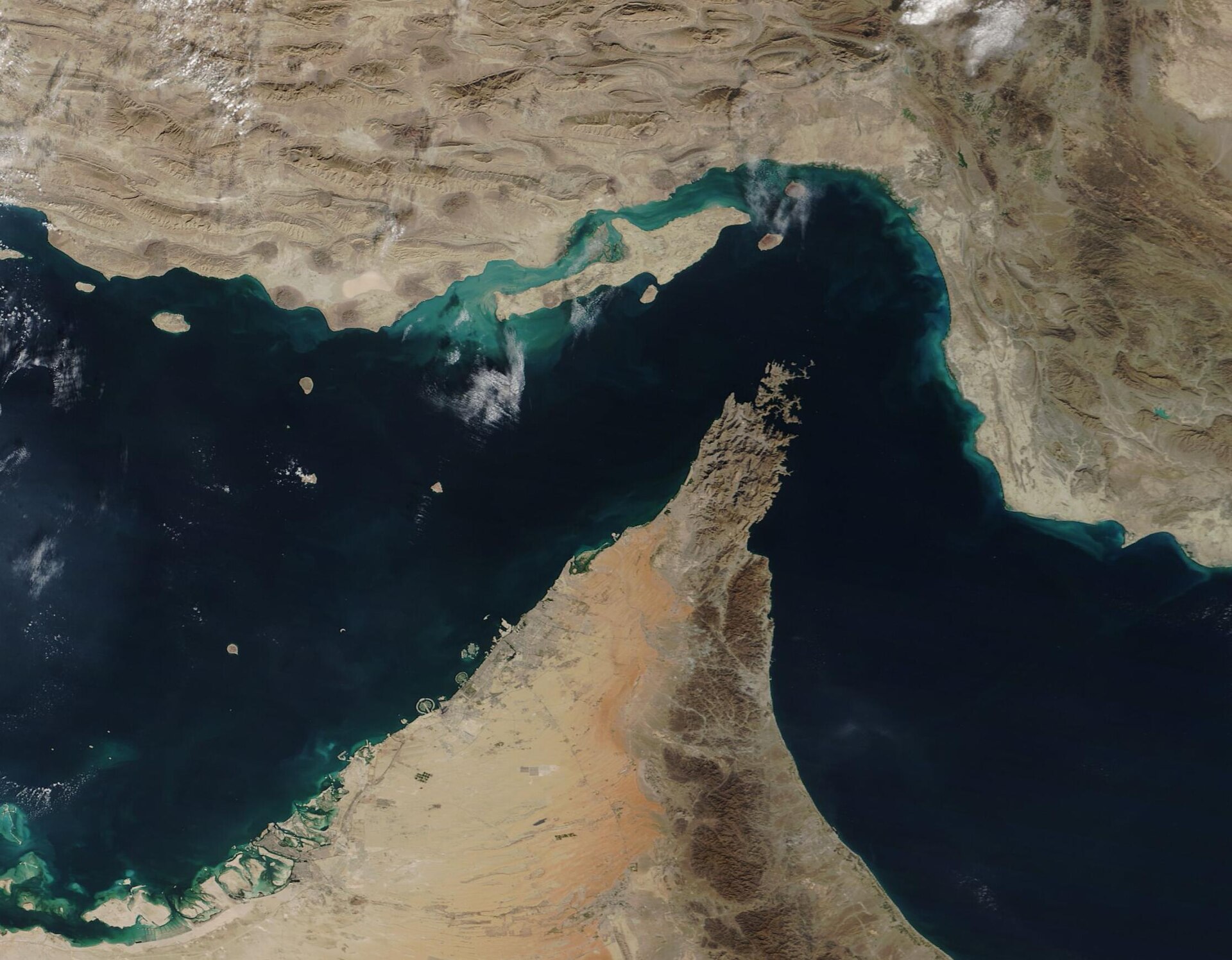
The explosion’s economic impact cannot be isolated from the wartime context in which it occurred. Since CENTCOM imposed its blockade on Iranian ports on April 13 and the IRGC maintained its own Gulf of Oman exit controls dating to March 4, Hormuz has recorded only 45 transits since the April 8 ceasefire — 3.6 percent of the pre-war baseline, as this publication documented on April 26. Iran’s crude export infrastructure was already in a state of cascading failure, with wellhead overflow reaching permanent-damage thresholds and onshore storage capacity exhausted. The degradation of Shahid Rajaei does not add a new crisis so much as remove the last mechanism through which Iran could have managed the existing one.
The wartime ROE escalation adds a further layer. CENTCOM’s expanded rules of engagement authorising lethal force against Iranian mine-laying crews in the Strait means that even if Shahid Rajaei were fully operational tomorrow, the vessels it loaded would face a gauntlet that has reduced commercial shipping to a trickle — and the blast has now given insurers, port operators, and shipping lines one more reason to avoid the facility entirely.
What Does Iran’s Own Evidence Say?
Iran’s Defence Ministry denied that missile fuel was being transported through Shahid Rajaei at all — a claim directly contradicted by the port’s own chief executive, whose statement to ILNA confirmed the cargo was mislabelled and undocumented, and by the FDD analysis identifying the vessels, the ports of origin, and the chemical composition of the shipment. President Masoud Pezeshkian visited Bandar Abbas on April 27 and demanded “a thorough and transparent investigation,” according to the Maritime Executive and PBS, though his authority to compel one from institutions controlled by the IRGC and the Supreme Leader’s office remains the same authority he has demonstrated throughout the war: functionally none, as his own public accusations against IRGC commanders Vahidi and Abdollahi in the ceasefire context made clear.
The Iranian government suppressed domestic media coverage of the explosion in its immediate aftermath and, according to Iranian state media, arrested two individuals in connection with the blast, though the specific charges and the individuals’ identities have not been disclosed. Araghchi, Iran’s foreign minister, acknowledged that “our security services are on high alert given past instances of attempted sabotage and assassination operations” — a statement that simultaneously invoked Israeli culpability and conceded that Iran’s security apparatus had failed to prevent a catastrophic detonation at its most important commercial facility. The internal contradiction runs deeper than messaging: Iran cannot simultaneously argue that the cargo was not missile-related (Defence Ministry position) and that the mislabelling of that same cargo caused the explosion (Sina Port CEO’s statement to ILNA), and yet both claims circulated through official Iranian channels within the same 48-hour window.
Recovery and the Beirut Precedent
The inevitable comparison is to Beirut’s port explosion of August 4, 2020, when 2,750 tonnes of improperly stored ammonium nitrate killed 218 people, injured 7,000, and displaced 300,000 across the Lebanese capital. The Bandar Abbas blast involved a different chemical — sodium perchlorate is a weapons-grade oxidizer precursor, not agricultural fertiliser — and a different scale of physical destruction, though the NCRI’s casualty claim of approximately 250 dead and 1,500 injured, if accurate, would bring the human toll closer to Beirut’s proportions than the official Iranian figures suggest. RFERL and CSIS cited a figure of 70 dead, between the official 57 and the NCRI estimate.
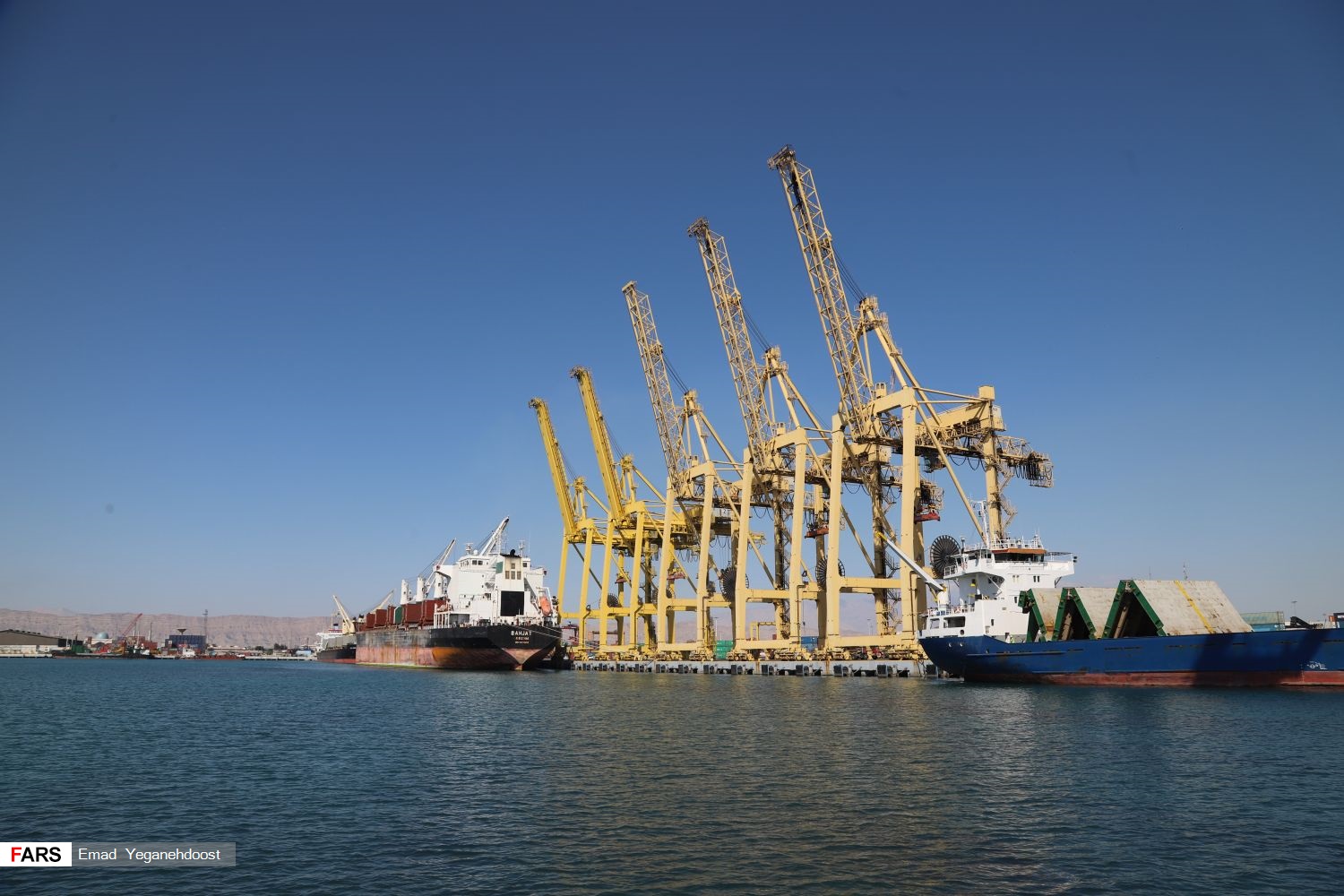
Satellite analysis by CSIS found that Shahid Rajaei’s gantry cranes and railroad infrastructure appear undamaged, which suggests a faster partial recovery timeline than Beirut, where the port’s grain silos, cranes, and warehousing were comprehensively destroyed. Partial operations for essential goods resumed as early as April 27, and fire containment was reported by April 28. But partial resumption at Iran’s dominant container gateway, during a war in which the Strait it services has been reduced to a trickle, is not recovery — it is triage. The 500 trading companies that suspended operations and the 30 percent price spike on imported goods represent disruptions that will compound daily for as long as the double blockade and the blast damage overlap, and neither shows signs of resolving on any timeline that Iranian importers or consumers can afford to wait out.
Frequently Asked Questions
What is sodium perchlorate and why was it at a commercial port?
Sodium perchlorate is a precursor to ammonium perchlorate — the primary oxidizer in solid-fuel ballistic missile propellant. Unlike ammonium perchlorate itself, sodium perchlorate is not directly dual-use listed under the Australia Group or most bilateral export control regimes, which creates a legal grey zone that sanctions-evasion networks routinely exploit. The 1,000-tonne shipment at Shahid Rajaei contained enough precursor material to produce oxidizer for roughly 260 mid-range ballistic missiles, according to FDD analysis. It reached a commercial port because mislabelling on import documentation allowed it to bypass both domestic safety protocols and international sanctions screening during transit from China.
How does the Shahid Rajaei explosion compare to the 2020 Beirut port blast?
The Beirut explosion involved 2,750 tonnes of ammonium nitrate — an agricultural and industrial chemical — and killed 218 people while displacing 300,000 across the city. Bandar Abbas involved approximately 1,000 tonnes of sodium perchlorate, a weapons-grade precursor compound, with an official death toll of 57 (though the NCRI alleges approximately 250). The physical destruction patterns differ as well: Beirut’s port infrastructure, including cranes and silos, was comprehensively destroyed, whereas CSIS satellite analysis indicates Shahid Rajaei’s gantry cranes and railroad connections survived intact, suggesting faster mechanical recovery is possible even if operational normalcy remains distant due to the war and blockade conditions.
Could Israel have caused the explosion?
CSIS assessed the blast as “most likely” human error while noting sabotage “cannot be ruled out.” Israeli officials denied any connection. Seyed Hossein Mousavian at Princeton argued Israeli motive existed because the blast coincided with Iran-US nuclear talks in Oman. Ambrey Analytics and the Washington Post’s forensic analysis of 90-plus videos confirmed the detonation originated in sodium perchlorate containers, which is consistent with both accidental ignition and deliberate sabotage. Iran’s own Interior Minister confirmed negligence in safety protocols, while Iranian lawmakers simultaneously accused Israel — the two positions have coexisted in official channels without resolution.
What happens to Iranian trade if Shahid Rajaei stays degraded?
Iran has no substitute of comparable scale. Bushehr, the next-largest container port, handles roughly one-twelfth of Shahid Rajaei’s annual container throughput. Chabahar, Iran’s Indian Ocean port positioned outside the Strait of Hormuz and therefore beyond the double blockade’s direct reach, handles bulk cargo but lacks container infrastructure at meaningful scale — making it an inadequate fallback for the manufactured goods, food imports, and industrial inputs that move through Shahid Rajaei. The result is a compounding bottleneck that Deputy Minister Rasouli’s confirmation of 26 redirected ships only begins to quantify.
What is the Bonyad Mostazafan and why does its role matter?
The Mostazafan Foundation is one of Iran’s largest quasi-governmental conglomerates, controlling assets across real estate, agriculture, manufacturing, and — through Sina Port — critical trade infrastructure. Unlike a government ministry or publicly traded company, bonyads operate outside Iran’s standard parliamentary oversight: their financial flows and operational decisions face no routine external audit. That structural opacity is what allowed mislabelled missile-fuel precursor to sit in a Mostazafan-linked container yard for 14 months without any recorded internal challenge — and it is the same opacity that makes any independent investigation into the explosion’s preconditions structurally impossible.