
JEDDAH — Iran transmitted a three-phase written proposal to the United States via Pakistan on April 25–27, sequencing a full ceasefire first, Hormuz “management and security” second, and the nuclear file third. Tehran has stated it will not engage in nuclear talks until progress is made in the earlier stages. The structure is not flexibility. It is a mechanism to decouple the only American leverage point—the nuclear file—from the only Iranian revenue stream currently operating: toll collection at the Strait of Hormuz. Washington now faces a binary it did not choose: accept Phase 1 without nuclear preconditions and validate the toll architecture that Iran’s parliament is racing to codify into law, or reject it and own a Brent price above $107 and a May 1 War Powers deadline simultaneously. Saudi Arabia, producing 7.25 million barrels per day at a fiscal break-even of $108–111, is the silent variable whose arithmetic determines how long either American position can hold. The Western diplomatic consensus on unconditional Hormuz reopening — reaffirmed in a Trump-Starmer call on April 26 — adds rhetorical pressure without changing the structural calculus.
Contents
- The Three Phases: What Iran Actually Proposed
- Why Does Iran Want Hormuz Before the Nuclear File?
- The Sovereignty Law Is Already Running Ahead of Negotiations
- What Happens If Washington Accepts Phase 1 Without Nuclear Preconditions?
- The May 1 War Powers Deadline and the Cost of Refusal
- Saudi Arabia’s Fiscal Clock Is the Binding Constraint
- The Double Blockade: Who Controls What, and Who Pays
- What Exactly Does Phase 3 Defer on the Nuclear File?
- Libya, North Korea, and the Sequencing Trap
- Frequently Asked Questions
The Three Phases: What Iran Actually Proposed
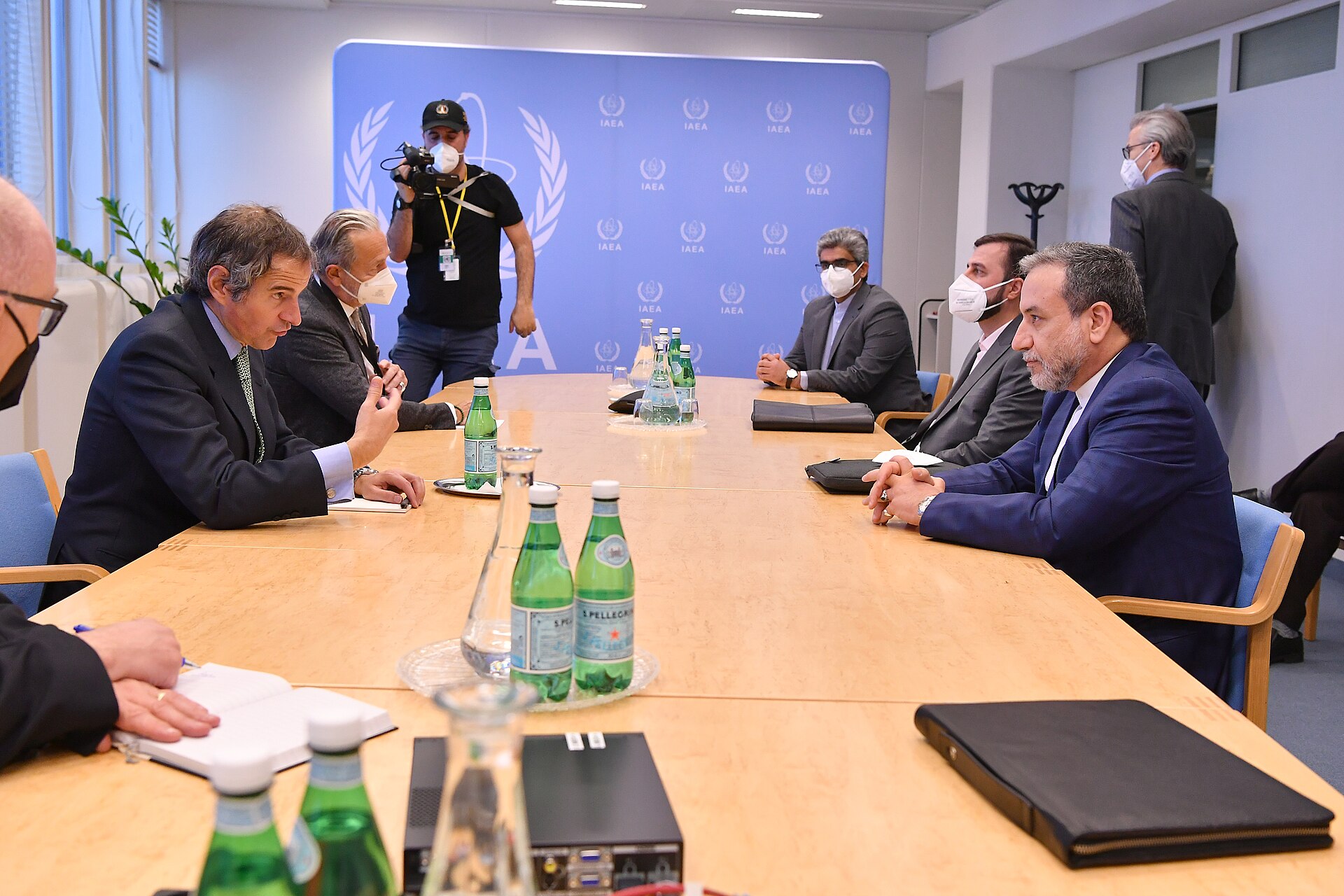
The written proposal, reported first by Axios and confirmed by CGTN on April 27, breaks the war’s unresolved questions into three sequential stages. Phase 1 covers a full ceasefire plus binding guarantees against renewed attacks on Iran and Lebanon. Phase 2 addresses Hormuz “management and security.” Phase 3 takes up the nuclear program. The sequencing is mandatory: Tehran insists it “will not engage in nuclear talks until progress is made in the earlier stages.”
The proposal arrived via Pakistan, the only diplomatic channel still functioning after Trump canceled the Witkoff-Kushner trip to Islamabad on April 25. Trump told Fox News: “We’re not going to waste a lot of time. We have all the cards. They can call us anytime they want, but you’re not going to be making any more 18-hour flights to sit around talking about nothing.”
Pezeshkian, speaking with Pakistani Prime Minister Sharif on April 25, offered the mirror image: “The Islamic Republic will not enter imposed negotiations under pressure, threats, or blockade.” He demanded the US remove “operational obstacles, including the blockade” before any talks could resume.
The same day the proposal was transmitted, Foreign Minister Araghchi was in Muscat discussing “shared interests in the Strait of Hormuz” and coastal-state coordination with Oman. From Muscat he flew to Pakistan, then on April 27 to St. Petersburg to meet Putin and Lavrov. Russia offered to take custody of Iran’s enriched uranium—store or reprocess it on Russian soil—as a potential Phase 3 solution. Russia’s insertion as co-guarantor mirrors the Astana Process playbook that displaced Western-led frameworks in Syria and excluded Arab Gulf states from the settlement table entirely. Lavrov said that if the US and Iran managed to “steer” toward something similar to the 2015 nuclear deal, “it will be a great success.”
The itinerary is the strategy. Araghchi visited the coastal state that shares the strait, the mediator that carries the messages, and the great power offering to warehouse the nuclear endgame—in that order, in three days.
The Middle East briefing 3,000+ readers start their day with.
One email. Every weekday morning. Free.
Why Does Iran Want Hormuz Before the Nuclear File?
During the Islamabad talks on April 11–12, Iran was willing to agree to what Axios described as “a years-long pause on enrichment,” implement “broad” verification measures, and commit not to accumulate enriched uranium. The US demanded a 20-year moratorium. Iran countered with five years. The gap killed 21 hours of negotiations. Witkoff walked out.
The phased proposal now takes that entire 15-year gap and moves it to Phase 3—with no specified duration, no suspension clause, no enrichment cap, and no mechanism to re-admit IAEA inspectors who were expelled on February 28. Iran continues enriching at 60 percent throughout Phases 1 and 2 with zero international monitoring. Its stockpile, last verified by the IAEA in June 2025 at 440.9 kilograms of highly enriched uranium, is approximately 25 days from weapons-grade material via IR-6 centrifuge cascade.
The logic is not complicated. Iran has two assets: a nuclear program that Washington wants to constrain, and a strait that the global economy needs open. Bundled together, they create pressure on Iran to make concessions on enrichment in exchange for sanctions relief and security guarantees. Separated into phases, each asset becomes a standalone negotiation where Iran holds the leverage. Phase 2 is a negotiation about Hormuz in which Iran’s position is physical control of the waterway. Phase 3 is a negotiation about nuclear capabilities in which Iran arrives having already secured a ceasefire (Phase 1) and an internationally negotiated Hormuz arrangement (Phase 2)—meaning the only remaining American leverage is the threat to undo both.
Daniel Byman at CSIS identified the underlying posture plainly: Iran has “indicated its desire to keep its hands on the throat of Gulf oil shipments.” He also noted that Iran “claims (probably falsely) that the United States has accepted its right to enrichment as part of the ceasefire deal”—a framing that reveals how Tehran intends to treat Phase 1 domestically. Any ceasefire without an explicit enrichment clause becomes, in Iranian state media, implicit American acceptance of the nuclear status quo.
The Sovereignty Law Is Already Running Ahead of Negotiations
While Araghchi was in Muscat talking about “coordination,” Iran’s parliament was legislating. The National Security and Foreign Policy Committee ratified a 12-article Hormuz sovereignty law on April 21, advancing it to full chamber debate. The bill had already cleared committee stage. An earlier report from Türkiye Today on March 30 described parliament as having “passed” the legislation, though Guardian Council review and implementation details remain unclear.
The law’s provisions are not negotiating positions. They are administrative infrastructure. Key articles mandate rial-denominated tolls, require IRGC coordination for all transit, ban Israeli-linked vessels entirely, subject ships from “hostile states” to Supreme National Security Council approval, and authorize confiscation of 20 percent of cargo for non-compliance.
Mohammadreza Rezaei Kouchi, the committee chairman, stated the position without diplomatic cushion: “The Strait of Hormuz is also a corridor. We ensure its security, and it is natural for ships and tankers to pay us duties.”
Ebrahim Rezaei, spokesman for the same commission, was more direct: “They must either recognise Iran’s rights, including our control over the Strait of Hormuz, or return to war.”
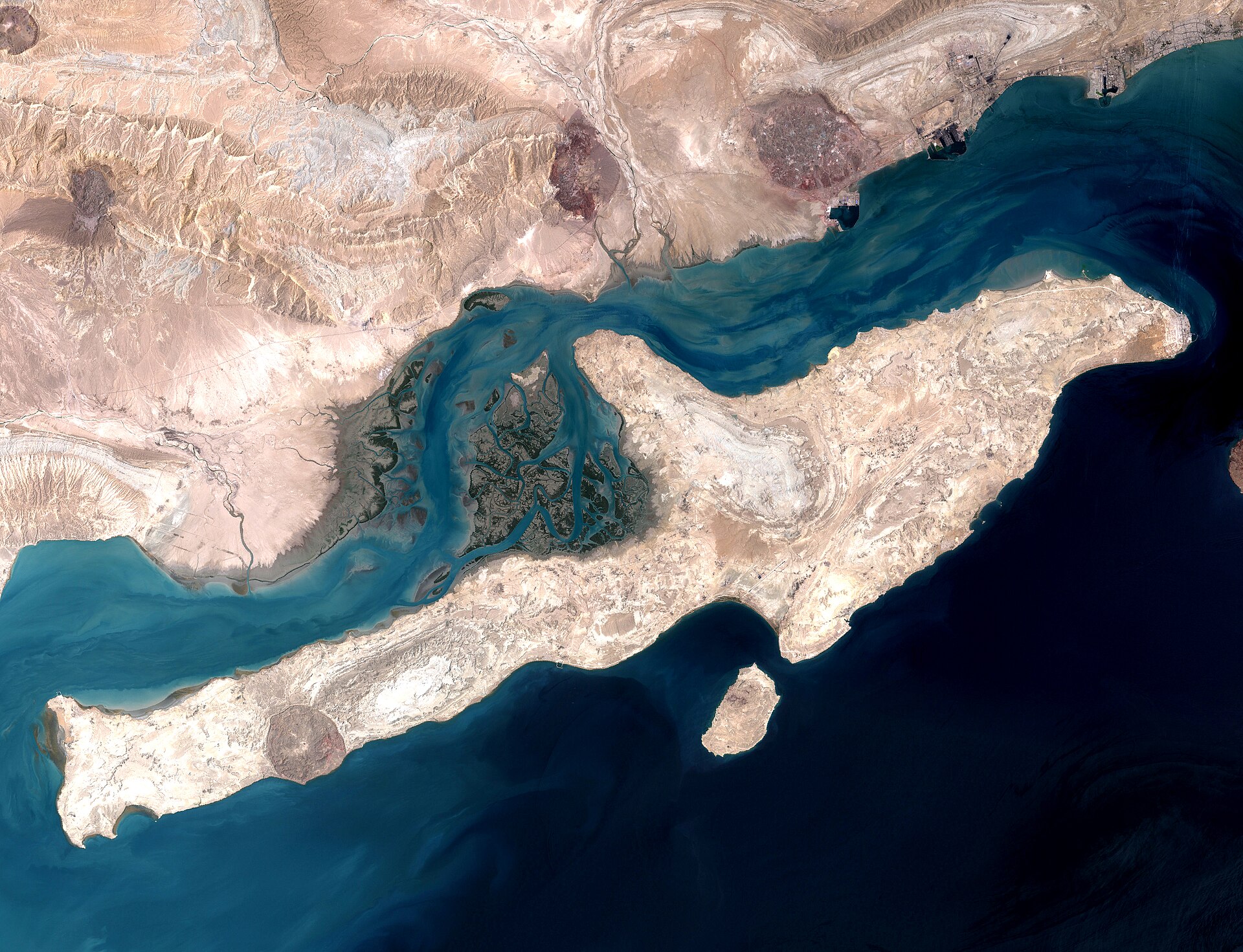
The operational architecture is not waiting for the law’s passage. Iran’s Central Bank has already confirmed the first toll deposit—on April 23, in cash, not cryptocurrency, per deputy speaker Hamidreza Hajibabaei. One ship paid $2 million to use Iran’s controlled corridor near Qeshm and Larak islands. The money is in the bank.
This creates a specific problem for Phase 1 negotiations. Any ceasefire acceptance that does not explicitly reject the sovereignty law’s legitimacy occurs against a backdrop of the law moving toward full domestic ratification. If Washington agrees to Phase 1—ceasefire and security guarantees—without addressing the law, Iran can argue that Phase 2 merely formalizes what domestic legislation already authorized.
James Kraska at the Naval War College has stated there is “no legal basis under international law for a coastal state to charge fees in an international strait.” Karen Young at Columbia called the toll system “practically impossible,” arguing GCC states would reject it. Neither assessment addresses the fact that Iran is already collecting.
What Happens If Washington Accepts Phase 1 Without Nuclear Preconditions?
Max Boot, the Jeane J. Kirkpatrick Senior Fellow at CFR, has made the most prominent public case for what he calls the “open for open” formula—a mutual end to blockades as a confidence-building measure that could “pave the way for more fruitful talks on other issues.” The argument is that decoupling Hormuz from the nuclear file reduces complexity and allows progress on the most economically urgent question first.
Boot acknowledged the risk in the same analysis: “Hard-line Islamic Revolutionary Guard Corps exercises actual control over Iran policy, not the moderate Foreign Ministry.” What he did not address is the legislative acceleration happening in parallel.
If Washington accepts Phase 1, it gets a ceasefire and, presumably, some form of Hormuz reopening. What it concedes is the coupling that makes nuclear negotiations possible under pressure. Iran enters Phase 2 with a functioning ceasefire, a domestic law authorizing tolls, a Central Bank already processing toll revenue, and a nuclear program operating without monitoring at 60 percent enrichment. Phase 2 becomes a negotiation about the administrative terms of Iranian control over the strait, not about whether that control is legitimate. Phase 3—the nuclear file—arrives with Iran holding the threat to collapse Phases 1 and 2 if nuclear talks produce demands it considers unacceptable.
The CSIS analysis noted one possible creative workaround: Saudi Arabia has floated “a consortium of enrichment in the region, where technically Iran could be enriching with Iranian centrifuges in Oman, while enriched uranium is stored in Saudi Arabia—allowing Iran to claim it’s enriching and the U.S. to claim it’s not enriching on its own soil.” This framework requires Phase 3 to happen at all. The phased proposal’s design makes reaching Phase 3 optional.
Trump’s own language on April 27 rejected the sequencing entirely: “They can call us anytime they want… otherwise, there’s no reason to meet.” Secretary Rubio has used the word “denuclearization.” Neither statement is compatible with a Phase 1 that defers nuclear questions.
The May 1 War Powers Deadline and the Cost of Refusal
Trump notified Congress of military operations on March 2, 2026. Under the 1973 War Powers Resolution, he must obtain congressional authorization within 60 days. That deadline is May 1.
The Senate has blocked War Powers Resolution challenges four times. The most recent vote, on April 15, failed 52–47. The administration may invoke the 2001 or 2002 Authorization for Use of Military Force as legal cover. Law professor Maryam Jamshidi assessed the enforcement mechanism: “Beyond this 90-day window, the president is required to terminate the deployment of US armed forces if Congress has not declared war or otherwise authorised continuing military action.” But: “There is no clear legal avenue for Congress to successfully force the president to abide by this termination requirement.”
Congressional skeptics exist on both sides. Senator John Curtis, a Republican, said he would not support operations beyond 60 days without approval. Representative Don Bacon, also Republican: “By law, we’ve got to either approve continued operations or stop.” Senator Chris Murphy criticized Republican leadership for declining “oversight of a war that is costing billions of dollars every week.”
The practical question is not whether the War Powers Resolution can force a withdrawal. Jamshidi’s assessment suggests it cannot. The question is whether the political cost of ignoring it makes rejecting Iran’s Phase 1 more expensive. If Trump refuses the proposal and continues the blockade past May 1 without authorization, he sustains the oil-price premium ($107.89 Brent on April 26, up from $101.91 four days earlier when the ceasefire extension held) while absorbing domestic criticism about an unauthorized war. Iran’s proposal is timed to make refusal maximally costly at the moment Congress is most likely to notice.
Saudi Arabia’s Fiscal Clock Is the Binding Constraint
Saudi Arabia is not at the negotiating table. It is not in Islamabad, not in Muscat, not in St. Petersburg. It has no seat in the process determining whether its primary export route reopens or remains under Iranian control. What it has is a set of fiscal numbers that function as a countdown.
On April 27, Araghchi called Faisal mid-flight from Muscat to Islamabad to brief him on the proposal before it reached Washington or the press. Saudi Arabia’s non-response — a readout describing only an “exchange of views” with no comment on the two-stage sequencing — is the diplomatic expression of exactly this bind: Hormuz-first solves the fiscal emergency and defers the nuclear threat in the same move.
The IEA confirmed Saudi March 2026 production at 7.25 million barrels per day, down from 10.4 million pre-war—a 30 percent drop, the largest disruption the agency has called on record. At $107 Brent, Saudi Arabia earns approximately $262 billion annualized. The pre-war baseline, at higher production and lower prices, was roughly $379 billion. The annual shortfall: $117 billion.
| Metric | Pre-War (Feb 2026) | Current (April 2026) | Gap |
|---|---|---|---|
| Production (bpd) | 10.4 million | 7.25 million | −3.15 million |
| Brent ($/bbl) | $72.48 | $107.89 | +$35.41 |
| Annualized revenue | ~$379 billion | ~$262 billion | −$117 billion |
| Fiscal break-even (PIF-inclusive) | $108–111/bbl | At or above current Brent | |
| IMF break-even (central govt only) | $86.60/bbl | Below current Brent | |
| SAMA reserve burn | $8–12 billion/month | — | |
| Goldman 2026 deficit (war-adjusted) | 6.6% of GDP (~$73B) | vs. official 3.3% | |
SAMA reserves stood at approximately $475 billion as of February 2026. At a drawdown rate of $8–12 billion per month, the kingdom reaches what analysts treat as a policy floor of $300 billion in roughly 15–22 months. But the constraint is not reserve depletion. It is fiscal credibility.
The signals are already public. PIF is selling 70 percent of Al Hilal soccer club. Plans to terminate LIV Golf have been reported by Foreign Policy. These are not balance-sheet decisions; they are visibility decisions. Vision 2030’s most internationally visible projects are being trimmed in real time. Jim Krane, a non-resident fellow at the Arab Center in Washington, observed that the war has caused the “stability that underpinned” the oil-for-security arrangement to “vanish.”
The June OSP reset will make the revenue mathematics unavoidable. Aramco’s May Official Selling Price carried a +$19.50 per barrel war premium, set when Brent was near $109. The June OSP drops to +$3.50—a $16-per-barrel reduction that reprices every forward cargo. Q1 earnings showed a 57 percent profit surge alongside a 30 percent production loss—a paradox that dissolves when the war premium fades and the production gap remains.
Foreign Policy confirmed on April 24 that Saudi Arabia is “pushing for a diplomatic breakthrough and preparing for what to do if it fails.” The fiscal pressure threshold likely falls in the June–August window: after May 1 but before Q2 data makes the shortfall impossible to manage through pricing tricks. Goldman’s “sloppy peace” scenario—a deal that reopens Hormuz partially but leaves Iranian toll infrastructure intact—is the outcome Saudi fiscal reality is quietly pushing toward.
The Double Blockade: Who Controls What, and Who Pays
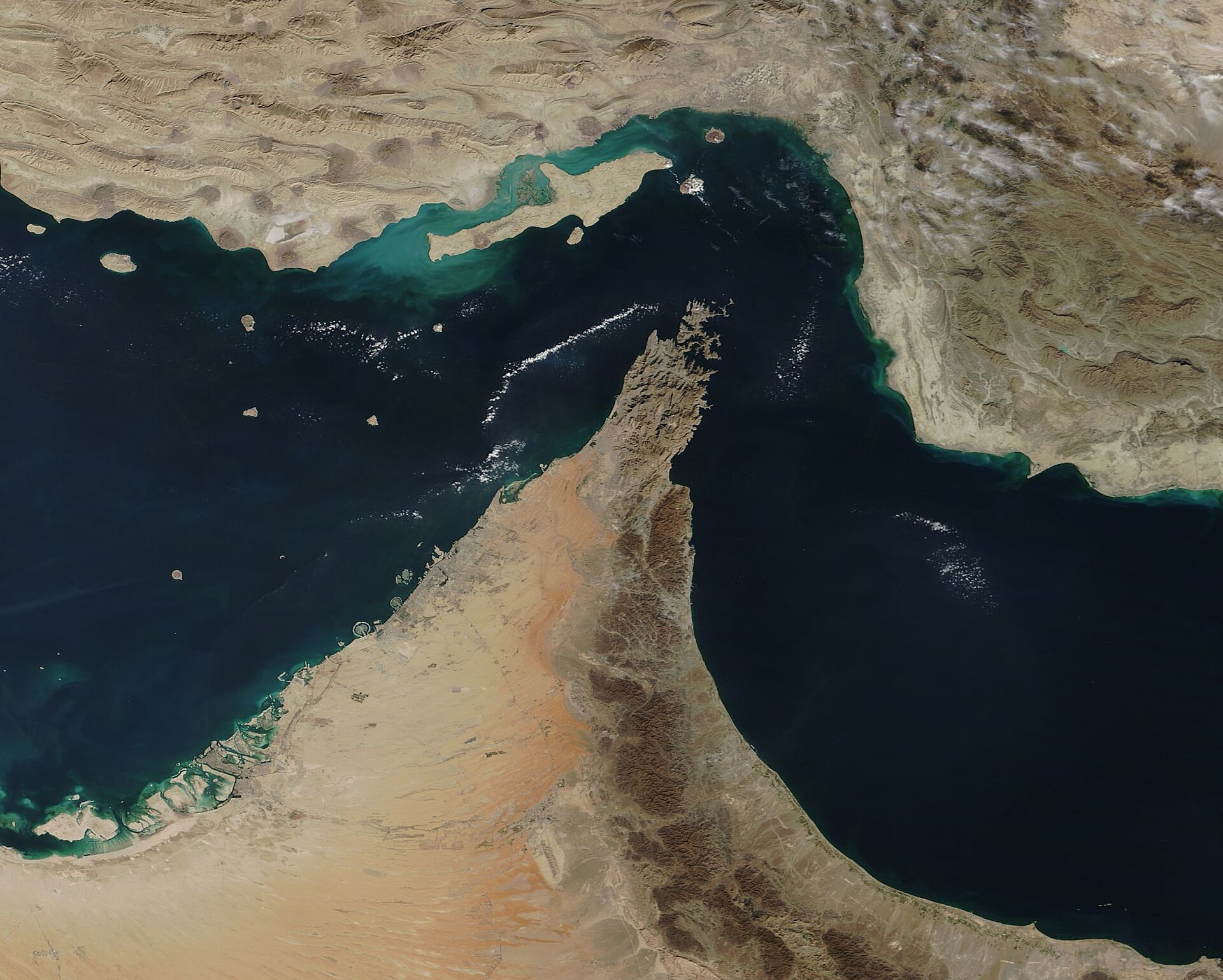
Bloomberg’s April 26 framing captured the physical reality: a “double blockade.” The US controls the Arabian Sea entry to the strait, effective April 13, applying to ships entering or leaving Iranian ports and coastal areas. The IRGC controls the Gulf of Oman exit from the strait’s northern side, effective since March 4. Vessels need both approvals. Since the April 8 ceasefire, 45 transits have occurred—3.6 percent of the pre-war baseline.
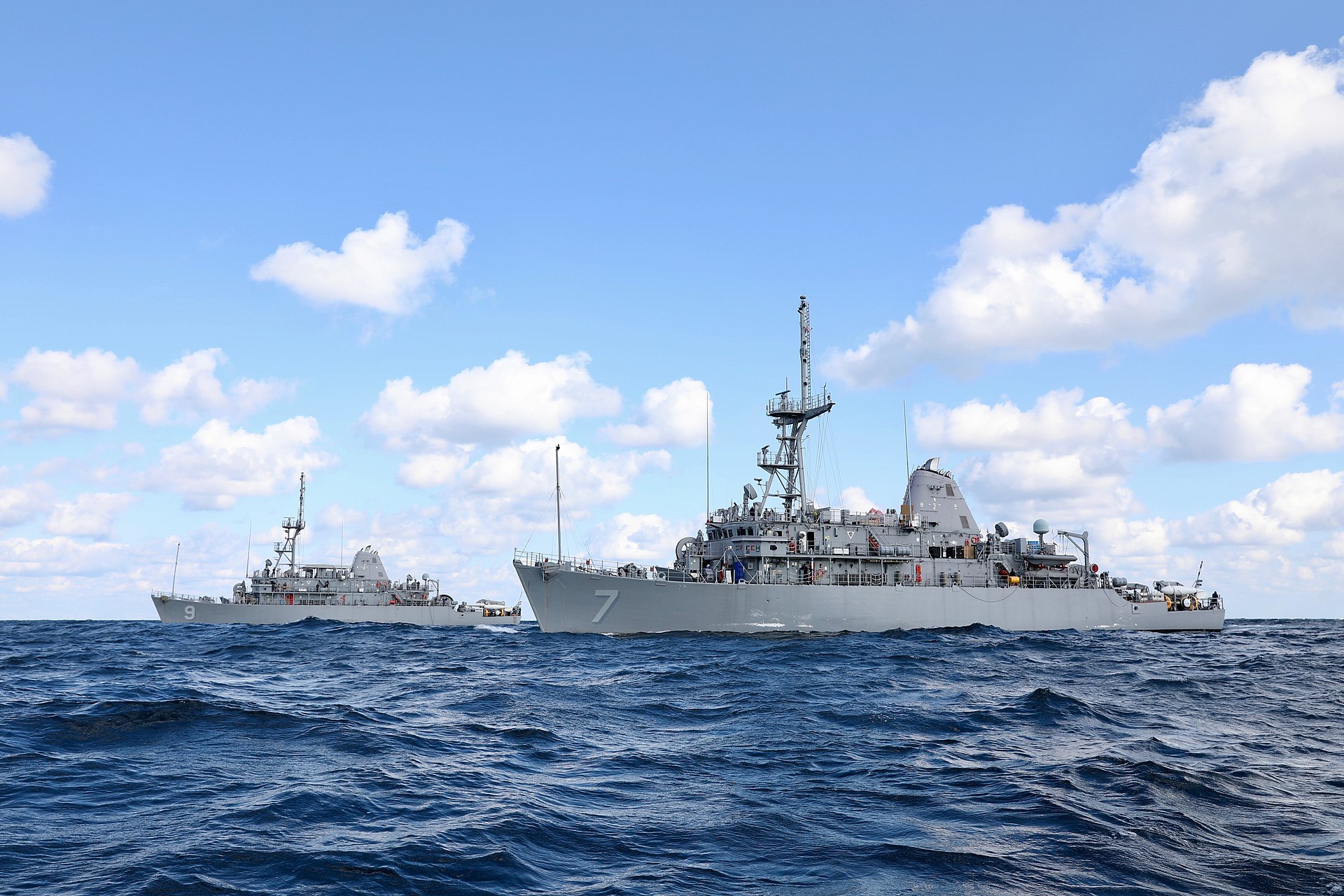
Iran’s physical position is more entrenched than the US blockade. CENTCOM’s blockade is a naval operation requiring sustained deployment. Iran’s control is geographic—the IRGC redirected vessels into a five-nautical-mile corridor between Qeshm and Larak islands, inside Iranian territorial waters, and is administering passage from there. The four Avenger-class minesweepers that were based in Bahrain were decommissioned in September 2025. Two Avenger-class ships remain in theater, and the estimated clearance timeline—based on the 1991 Kuwait benchmark—is 51 days after any deal, assuming Iran cooperates.
On April 22, the same day the ceasefire was extended, the IRGC seized the MSC Francesca (11,660 TEU, Panama-flagged) and the Epaminodas (6,690 TEU, Liberia-flagged). Ghalibaf, the parliament speaker and former IRGC Aerospace Force commander, posted on X that Iran would not reopen the strait “as long as the US naval blockade remained in place,” calling it a “blatant violation of the ceasefire.”
The asymmetry is temporal. The US blockade is an operation with a legal clock (May 1), a political clock (congressional tolerance), and an economic clock (oil prices). Iran’s control is a geographic fact with a legislative framework being built around it. Aimen Dean, the former MI6 operative, described Iran’s demands as “security oversight jurisdiction over the entire strait,” which he called “completely unacceptable” since “it’s an international body of water.” Acceptability is not the operative question. Duration is.
An unnamed adviser to Putin characterized Hormuz as Iran’s “nuclear weapon” in the strategic leverage sense, per The Hill. The analogy is imprecise but the function is right: Hormuz is the asset Iran will not trade away first, and the phased proposal ensures it does not have to.
What Exactly Does Phase 3 Defer on the Nuclear File?
Everything.
The proposal contains no enrichment freeze, no cap, no IAEA re-access provision, and no breakout-clock constraint. IAEA access was terminated on February 28, 2026. The last verified stockpile figure—440.9 kilograms of highly enriched uranium at 60 percent—dates to June 2025. Ten months of unmonitored enrichment have elapsed since that count.
At Islamabad, the gap was quantified. The US proposed a 20-year enrichment moratorium. Iran countered with five years. Washington rejected the counter. Twenty-one hours of negotiation produced nothing. The phased proposal now kicks both numbers to Phase 3 and replaces them with silence. Neither the 20-year figure nor the five-year figure appears. No intermediate number is offered. Phase 3 is described only as addressing “the nuclear program.”
The JCPOA precedent is instructive for what is absent. Under the 2015 deal, Iran retained enrichment rights in exchange for limits on stockpile size, enrichment level, centrifuge numbers, and research scope, all verified by continuous IAEA monitoring. Trump withdrew in 2018, and Iran responded by progressively exceeding every limit. The current US position—a 20-year moratorium—represents a regression from 2015, demanding more than the deal Trump himself abandoned. Iran’s five-year counter was itself a regression from the JCPOA’s terms. Phase 3’s silence is a regression from the regression. The 2026 NPT Review Conference, opening today in New York, provides the multilateral audit of that silence: with snap-back spent, IAEA access terminated, and UNSC referral vetoed, the conference convenes to debate a treaty whose enforcement architecture has been fully exhausted against Iran â precisely the sequence that gives Phase 3âs deferral its structural permanence.
Russia’s offer to take custody of enriched uranium provides a theoretical mechanism for Phase 3 to produce an outcome. Araghchi’s April 27 meeting with Putin and Lavrov in St. Petersburg signals that Moscow is positioning itself as the guarantor of whatever nuclear arrangement might emerge. Lavrov’s framing—steering toward “something similar to the 2015 nuclear deal”—reflects Russia’s preferred outcome: an agreement that preserves Iranian enrichment rights and gives Russia a custodial role. At that same meeting, Putin publicly stated he had received a message from Iran’s supreme leader — a claim offered without specifying its content, delivery mechanism, or authenticating detail.
The question for Washington is whether Phase 3 is a destination or a horizon. If Iran secures a ceasefire in Phase 1 and an internationally negotiated Hormuz arrangement in Phase 2, the incentive structure for entering Phase 3 collapses. Iran would have security guarantees, toll revenue, and a functioning export route. The nuclear file would remain as a deterrent asset precisely because it is unresolved. The authorization ceiling—the IRGC’s demonstrated ability to override the foreign ministry on any commitment—means that even a signed Phase 3 agreement would face the same enforcement problem that collapsed the Islamabad talks: Vahidi, not Araghchi, commands.
Libya, North Korea, and the Sequencing Trap
Iran has studied the precedents and built this proposal to avoid them.
Libya’s December 2003 WMD renunciation followed 30 years of sanctions and was motivated by economic normalization hopes in the wake of the Iraq invasion. Gaddafi gave up weapons first, then received normalized relations. The sequence held for eight years, until NATO intervened in 2011 and Gaddafi was killed. By the time John Bolton invoked the “Libya model” for North Korea in 2018, the phrase meant regime-change vulnerability dressed as diplomatic success. Iran’s phased proposal explicitly inverts Libya: economic normalization (Hormuz reopening) precedes any nuclear concession.
North Korea’s trajectory reinforces the lesson. The 1994 Agreed Framework failed in part because Washington and Pyongyang understood differently whether economic normalization was operative or aspirational. North Korea watched Libya and Iraq, concluded that nuclear disarmament invited destruction, and has never seriously negotiated denuclearization since. Iran’s phased proposal adopts the same posture—using economic pain (Hormuz closure, the oil-price premium) to extract security guarantees before any nuclear discussion—while adding a structural innovation Libya and North Korea lacked: a physical chokepoint that makes the pain bilateral.
UNCLOS complicates any legal challenge to Iran’s position, though not in the direction Tehran claims. Iran signed the convention in 1982 but never ratified it, claiming “persistent objector” status to the transit passage regime under Article 38. Under this argument, Iran recognizes only innocent passage through the strait—which, unlike transit passage, can be suspended. The US has also never ratified UNCLOS. Accepting Phase 2 “Hormuz management” negotiations would be the first time an American administration formally treated Hormuz administration as subject to bilateral negotiation, implicitly conceding that Iran has a role to define. The GCC has pushed through European channels to harden conditions precisely because it recognizes this risk.
Iran’s $270 billion compensation demand—for war damages from five regional states whose territories were used for attacks, announced by spokeswoman Fatemeh Mohajerani and Iran’s UN envoy—adds another layer. Tehran has floated routing these payments through a Hormuz toll protocol, explicitly linking reparations to the toll architecture. Even Phase 1 carries embedded toll legitimation if it does not explicitly exclude the compensation framework.
Frequently Asked Questions
Is the Hormuz toll legal under international law?
No, under any standard reading of UNCLOS. Article 26 prohibits charges on ships exercising transit passage, and Article 38 establishes a right of transit passage through international straits. James Kraska of the Naval War College stated there is “no legal basis under international law for a coastal state to charge fees in an international strait.” However, Iran’s non-ratification of UNCLOS and its claim of “persistent objector” status create a legal grey zone that has never been tested in an international tribunal. Oman’s Transport Minister Al Maawali, representing the only other coastal state on the strait, stated in April that “no tolls can be imposed for crossing Hormuz”—a direct rejection from the state Iran claims as a partner in “coastal coordination.”
How much revenue could Iran realistically collect from Hormuz tolls?
At current transit volumes—45 ships since the April 8 ceasefire, or roughly 3.6 percent of the pre-war baseline of approximately 1,250 transits per month—revenue is negligible: a few million dollars. Amir Handjani of the Quincy Institute estimated that at pre-war transit volumes and a $1–2 million per vessel rate, Iran could collect $1.5–3.9 billion per month. That figure assumes full reopening under Iranian toll administration, which no major shipping company or GCC state has accepted. The structural value of the toll is not the revenue; it is the precedent of paying it. The first $2 million deposit at Iran’s Central Bank established that precedent on April 23.
Can Congress actually stop US military operations after May 1?
Almost certainly not in practice. The War Powers Resolution requires presidential compliance, but as law professor Maryam Jamshidi assessed, “there is no clear legal avenue for Congress to successfully force the president to abide by this termination requirement.” The 90-day absolute outer limit (60 days plus a 30-day withdrawal window) extends to May 31. The administration’s likely workaround is invoking the 2001 or 2002 AUMF, which would bypass the War Powers clock entirely. The political cost, however, is real: bipartisan members including Republican Senator John Curtis and Representative Don Bacon have publicly stated they will not support open-ended operations without authorization, and any future appropriations vote becomes a pressure point.
What is Russia’s role in the phased proposal?
Russia is positioning itself as the guarantor of Phase 3. Araghchi’s April 27 meeting with Putin and Lavrov in St. Petersburg—on the same day the phased proposal was transmitted to Washington—was not coincidental. Moscow has offered to take custody of Iran’s enriched uranium, either storing or reprocessing it on Russian soil. This echoes the 2009 Tehran Research Reactor proposal and the JCPOA’s Arak heavy-water provisions, both of which used Russian involvement to bridge the enrichment impasse. Russia and China jointly condemned the US blockade, and Lavrov framed a successful outcome as returning to “something similar to the 2015 nuclear deal”—the framework that preserved Iranian enrichment rights. Moscow’s interest is structural: a Phase 3 that requires Russian custodianship gives it permanent leverage over both the US-Iran relationship and European energy security.
Why is Saudi Arabia selling sports assets during an oil-price boom?
Because the boom is illusory. Brent at $107 exceeds the IMF’s central-government break-even of $86.60 per barrel, but Saudi Arabia is not producing at pre-war volumes. At 7.25 million barrels per day—down 30 percent from 10.4 million—the kingdom earns roughly $262 billion annualized, a $117 billion shortfall against the pre-war baseline. Bloomberg’s PIF-inclusive break-even of $108–111 per barrel means that even the current elevated price barely covers the kingdom’s actual spending commitments. SAMA reserves are declining at $8–12 billion per month. The Al Hilal sale and LIV Golf termination are not distressed sales; they are fiscal triage—liquidating internationally visible assets before Q2 2026 earnings data makes the production-revenue gap undeniable. Saudi FM Faisal called four capitals on a Sunday because the diplomatic and fiscal timelines are converging.
Rubio’s April 27 statement went further still: he defined Iran’s version of an open Hormuz as extortion, collapsing the distinction between the IRGC permission regime and the foreign ministry’s phased proposal. How Rubio closed the interim-deal track on Hormuz — and what it means for the sequencing that underpins Tehran’s offer — is examined in full.
Rubio’s April 27 response also framed the “open for open” off-ramp as politically unacceptable, while carrying a Saudi Arabia fiscal arithmetic that cannot wait for a different administration; the full analysis is in Rubio Calls Iran’s Hormuz Offer Extortion, Closing the US Negotiating Window.
The two irreconcilable doctrines at the heart of the US-Iran deadlock — why Iran’s sovereignty claim and Washington’s sequencing demand are structurally incompatible, and what that incompatibility means for Saudi Arabia’s fiscal position — are examined in Trump’s “Not Happy” Declaration and the Sequencing Wall Neither Side Can Remove.