
WASHINGTON — President Donald Trump convened his senior national security principals in the White House Situation Room on Sunday to deliberate on Iran’s new proposal to reopen the Strait of Hormuz and end hostilities before addressing the nuclear file, according to Axios. The meeting — attended by the Secretary of Defense, National Security Advisor, CIA Director, and Joint Chiefs Chairman Gen. Dan Caine, per Voice of Emirates and ABC News — arrived on the same day that Iranian Foreign Minister Abbas Araghchi landed in St. Petersburg to meet Vladimir Putin, framing the parallel tracks that now define the crisis.
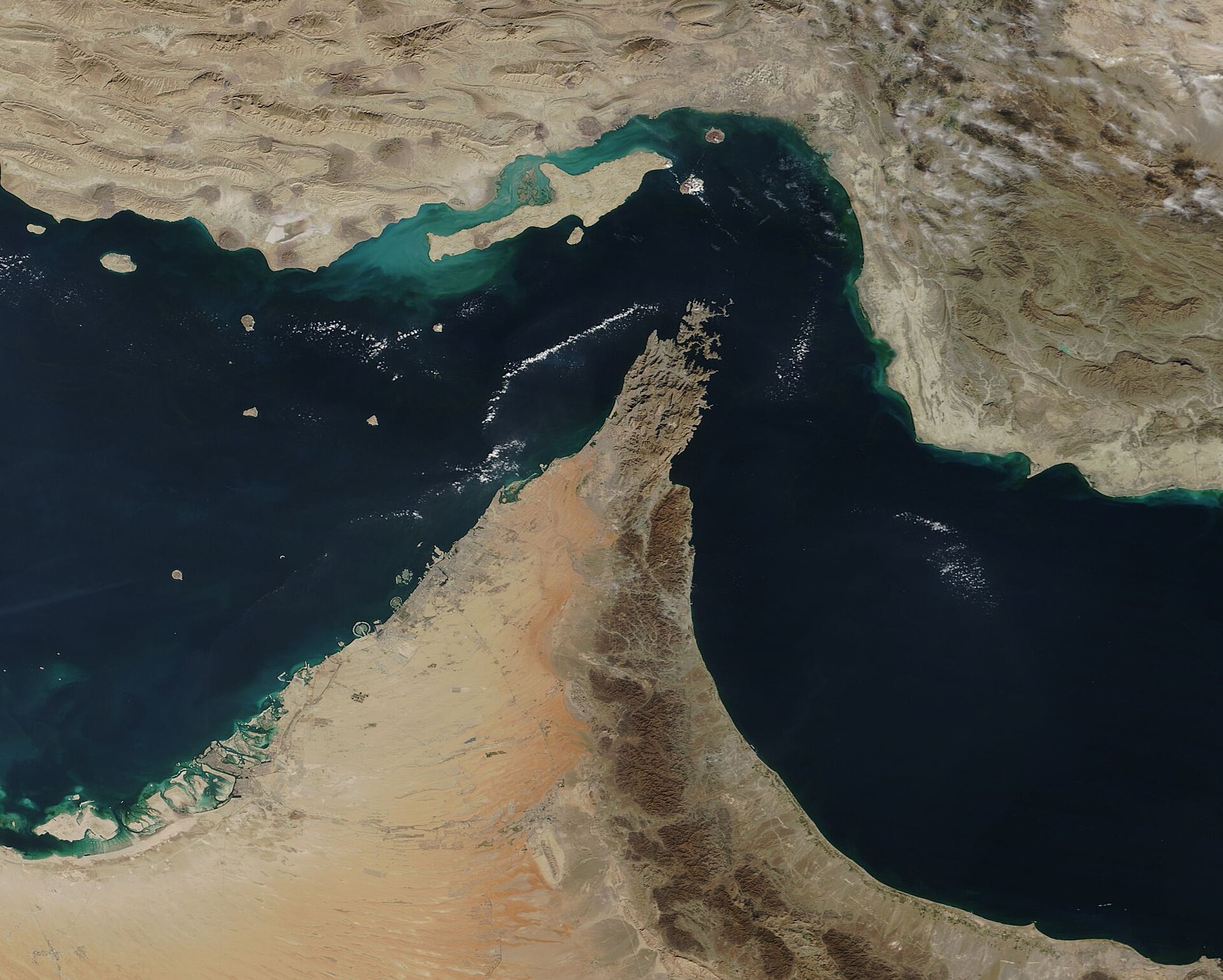
Iran submitted its Hormuz-first proposal through Pakistani mediators: reopen the strait, end the war, lift the US naval blockade — then talk about enrichment. The structure would remove Washington’s coercive tool before Tehran has committed to any nuclear concession. For Saudi Arabia, which lost 30 percent of its oil production in March and is operating below its own fiscal break-even price, the outcome of this meeting shapes whether the kingdom’s export corridor reopens on terms it can live with or on terms dictated by an Iranian sequencing framework that defers every hard question.
Table of Contents
Iran’s Hormuz-First Proposal
The proposal Iran transmitted via Pakistani intermediaries inverts the sequencing Washington has insisted on since the Islamabad talks collapsed in mid-April. Under the US framework — a 45-day phased ceasefire reported by Axios and The National from four sources — Hormuz reopening and nuclear constraints would be negotiated simultaneously, with highly enriched uranium removed from Iran as part of the initial phase. Iran’s counter-proposal decouples the two entirely: end the war and reopen the strait first, then negotiate the nuclear file once the blockade is lifted.
The structural problem is immediate. The US naval blockade, which has turned back 38 ships as of April 27 according to ABC News, is Washington’s primary coercive instrument. Iran holds 440.9 kilograms of uranium enriched to 60 percent, per the last IAEA assessment in June 2025, before Tehran terminated inspector access on February 28, 2026. Lifting the blockade before securing nuclear concessions would leave the United States with no mechanism to compel Iranian compliance short of re-imposing the blockade — a step that would be politically and operationally costlier the second time.
Daniel Byman, director of the Warfare, Irregular Threats, and Terrorism Program at CSIS, framed the standoff as “no longer a clash of capabilities but rather a struggle of political endurance and bargaining leverage.” Iranian leaders, Byman assessed, believe they can “endure economic and military pressure longer than the United States.” The Hormuz-first proposal operationalizes that belief: it bets that Washington wants the strait open more than it wants the nuclear file resolved on an accelerated timeline.
The gap between the two positions on enrichment alone is vast. At the April 13 talks, the US proposed a 20-year enrichment moratorium, according to Axios. Iran countered with approximately five years, per RFE/RL. Washington demanded all HEU be removed from the country; Iran offered monitored down-blending. Those numbers have not moved since Islamabad. Iran’s new proposal does not revisit them — it shelves them.
The Middle East briefing 3,000+ readers start their day with.
One email. Every weekday morning. Free.
Who Was in the Situation Room?
Trump’s senior national security principals — the Secretary of Defense, National Security Advisor, CIA Director, and Joint Chiefs Chairman Gen. Dan Caine — convened to deliberate on Iran’s Hormuz-first proposal, per Voice of Emirates and ABC News. A White House spokesperson declined to characterize the outcome, saying the administration “will not negotiate through the press.”
Trump’s own public posture has been contradictory in the span of days. On April 27, he told reporters that Iranian leaders “can come to us, or they can call us,” per Al Jazeera and US News & World Report — language that suggests willingness to talk but on American terms. In the days before the Situation Room meeting, he cancelled the planned trip by special envoys Steve Witkoff and Jared Kushner to Islamabad, telling the Washington Post and Bloomberg that negotiations could happen by phone and citing a lack of progress. CNBC reported that Iranian sources consider Witkoff “untrustworthy.”
Earlier, Trump told Fox News: “If they don’t sign this thing, the whole country is going to get blown up.” He also told reporters: “The concept of the deal is done. I think we have a very good chance to get it completed.” Both statements aired in ABC News live updates. The distance between “the concept is done” and the actual positions on the table — a 15-year gap on enrichment duration, an unbridged dispute over HEU disposition — is where the Situation Room meeting sits.
The St. Petersburg Track
While Trump’s principals gathered in Washington, Araghchi arrived in St. Petersburg for meetings with Putin. “I am confident that these consultations and coordination between the two countries in this regard will be of particular importance,” Araghchi told The Moscow Times. The Iran-Russia 20-year partnership treaty, signed in January 2025, provides the institutional frame for what Tehran is constructing: a diplomatic shield that raises the cost of US escalation by tying the Iran file to Moscow’s broader relationship with Washington.
Araghchi’s movements in the 48 hours before the Situation Room meeting trace the architecture of Iran’s parallel diplomacy. He called Saudi Foreign Minister Prince Faisal bin Farhan, Qatari Foreign Minister Sheikh Mohammed bin Abdulrahman, and French Foreign Minister Jean-Noël Barrot between April 26 and 27, according to Xinhua and PressTV, briefing each on what Iran described as a “regional ceasefire path.” The framing — relayed through Xinhua — cast regional security as a matter for “a collective mechanism led by neighbouring countries rather than US intervention.”
The call to Faisal bin Farhan is the one that matters most for Riyadh. Araghchi called the Saudi foreign minister on April 13, the day the US blockade began — behavioral evidence, as previously reported, that Saudi Arabia is maintaining a parallel diplomatic channel with Tehran even as it hosts American forces prosecuting the air campaign. The April 26-27 call continues that pattern. Whatever was discussed, the fact of the call — at the same moment Iran was lobbying Putin and briefing European counterparts — positions Riyadh inside Iran’s diplomatic circuit, not outside it.
Why Would the US Give Up the Blockade?
The short answer, from the CFR’s Max Boot, is that Washington might not have to — if both sides move simultaneously. Boot, the Jeane J. Kirkpatrick Senior Fellow for National Security Studies, proposed an “open for open” formula in which both Iran and the United States end their respective blockades at the same time. “Both countries are now complicit in keeping the strait closed,” Boot wrote. “Neither one will lose face by opening it — as long as the other one does the same.”
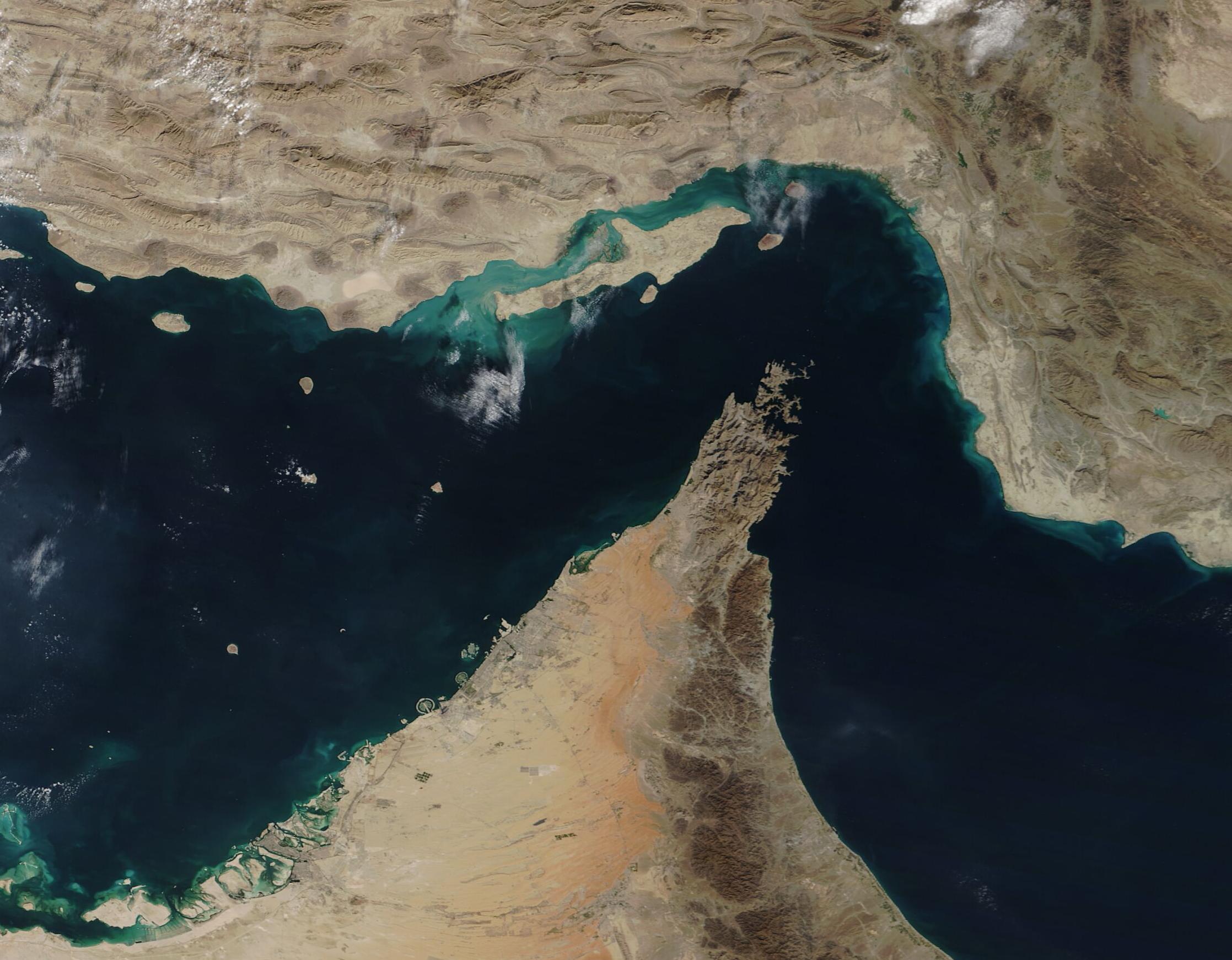
The logic is structural. The dual-blockade mechanism means that vessels transiting Hormuz now require approval from both the IRGC, which has controlled the Gulf of Oman exit since March 4, and the US Navy, which has controlled the Arabian Sea entry since April 13. Only 45 transits have occurred since the April 8 ceasefire — approximately 3.6 percent of the pre-war baseline. A unilateral US withdrawal would not reopen the strait; it would hand Iran a monopoly on access control.
Boot argued that comprehensive nuclear negotiations would require “laborious and lengthy” processes — the 2015 JCPOA took more than 18 months — and that decoupling Hormuz from the nuclear file creates space for both tracks to proceed. That is functionally what Iran is proposing, though with a sequencing that removes US leverage first. The “open for open” variant preserves symmetry by requiring simultaneous movement from both sides.
The International Crisis Group’s Crisis Monitor, published April 21, identified the core obstacle: “Sequencing appears to be a major obstacle: Iran is unlikely to surrender its leverage — above all, its stockpile of highly enriched uranium — up front, absent U.S. guarantees of reciprocal sanctions relief.” That assessment describes both sides. Neither wants to move first. Boot’s formula is one structural answer to that problem; whether it reached the Situation Room table is unknown.
Saudi Arabia’s Fiscal Trap
For Riyadh, the Situation Room meeting is not an abstraction. Saudi March oil production fell to 7.25 million barrels per day from 10.4 million bpd in February — a 3.15-million-bpd collapse, the largest single-month drop in the kingdom’s modern history, according to the IEA. The East-West Pipeline’s Yanbu terminal, which provides the only export route bypassing Hormuz, has a loading ceiling of 5.9 million bpd against a pre-war Hormuz throughput of 7 to 7.5 million bpd — a structural gap of 1.1 to 1.6 million bpd that no amount of pipeline optimization can close.
Brent crude traded at approximately $106.55 on April 27. Saudi Arabia’s fiscal break-even — $108 to $111 per barrel when PIF commitments are included, per Bloomberg — remains above market price. Goldman Sachs estimated a war-adjusted budget deficit of 6.6 percent of GDP against the official projection of 3.3 percent. Every day the strait stays functionally closed, that arithmetic worsens.
Michael Ratney, a former US Ambassador to Saudi Arabia now at CSIS, assessed that Saudi Arabia desires “a diminished Iran — ideally a weakened Islamic Republic with reduced capacity to sponsor proxies — rather than regional instability.” The Hormuz-first proposal offers the opposite: it stabilizes Iran’s position, reopens the strait on Tehran’s timeline, and defers the question of Iranian military capacity to future negotiations that may never produce results. Riyadh’s preferred outcome — restoring Hormuz traffic while maintaining pressure on Tehran’s nuclear program — requires the sequencing the Situation Room was debating, not the one Iran proposed.
What Happens if Washington Says No?
Rejection leaves no clear alternative framework. Iran is institutionalizing its toll infrastructure and IRGC access controls regardless of US decisions, meaning delay compounds rather than resolves the structural problem. The blockade’s coercive window was always finite; Iran is using the time to make its Hormuz position permanent.
The US blockade has turned back ships at the Arabian Sea entry point, but Iran has simultaneously collected its first Hormuz toll revenue — $2 million per vessel, deposited in cash at the Central Bank of Iran, confirmed by parliament deputy speaker Hamidreza Hajibabaei on April 23. Iran’s parliament is advancing a 12-article Hormuz sovereignty law introduced by MPs Ahmadi and Rezayi Kouchi. The toll infrastructure is being institutionalized in real time.
On April 23, Trump ordered the US Navy to “shoot and kill any boat” laying mines in Hormuz and directed mine-clearing operations at “a tripled up level,” per CNBC, Al Jazeera, and Time. But the operational capacity is thin: the four Avenger-class mine countermeasure ships previously stationed in Bahrain were decommissioned in September 2025. Mine clearance across the 200-square-mile area would take up to six months post-deal, based on the 1991 Kuwait benchmark. CNN reported on April 23 that the Pentagon is developing contingency plans to strike Iran’s Hormuz defenses if the ceasefire fails.
Byman’s assessment at CSIS captures the mediator’s dilemma: Pakistani intermediaries “spent more time helping the Iranians negotiate among themselves” than bridging US-Iran positions. The authorization ceiling — the gap between what Iran’s civilian diplomats can offer and what the IRGC will accept — has defined every round of talks. Araghchi can propose; Vahidi and the Supreme National Security Council can veto. The Hormuz-first proposal may itself be an attempt by Iran’s diplomatic wing to find a framework the IRGC will tolerate, since it asks nothing of the military before reopening the strait.
A Tasnim correspondent, filing from Hormuz on April 27, stated: “Any vessel that attempts to pass through this chokepoint without Tehran’s permission is bound to be turned back.” That is not negotiating language. It is the IRGC’s operating posture, broadcast on the same day Iran’s foreign minister was pitching diplomacy in St. Petersburg. Araghchi told IRNA that “excessive demands of the United States” caused the failure of the most recent talks. He did not specify which demands. The 20-year moratorium, the HEU removal, and the simultaneous sequencing are all candidates.
The first direct US-Iran contact since 1979 — the Vance-Ghalibaf meeting in Islamabad on April 11-12 — produced no framework. The cancelled Witkoff-Kushner trip produced no alternative. The Situation Room meeting is the third decision node in 16 days, and the pattern so far is deliberation without resolution. IEA Executive Director Fatih Birol called the Hormuz disruption — 13 million barrels per day offline — “the biggest energy security threat in history.” The principals in the room on Sunday were weighing whether to accept a deal that ends the disruption on Iran’s terms, or hold out for one on American terms. The third option — the narrow space where both sides can move without admitting they moved at all — is the one that has no name yet.
Background
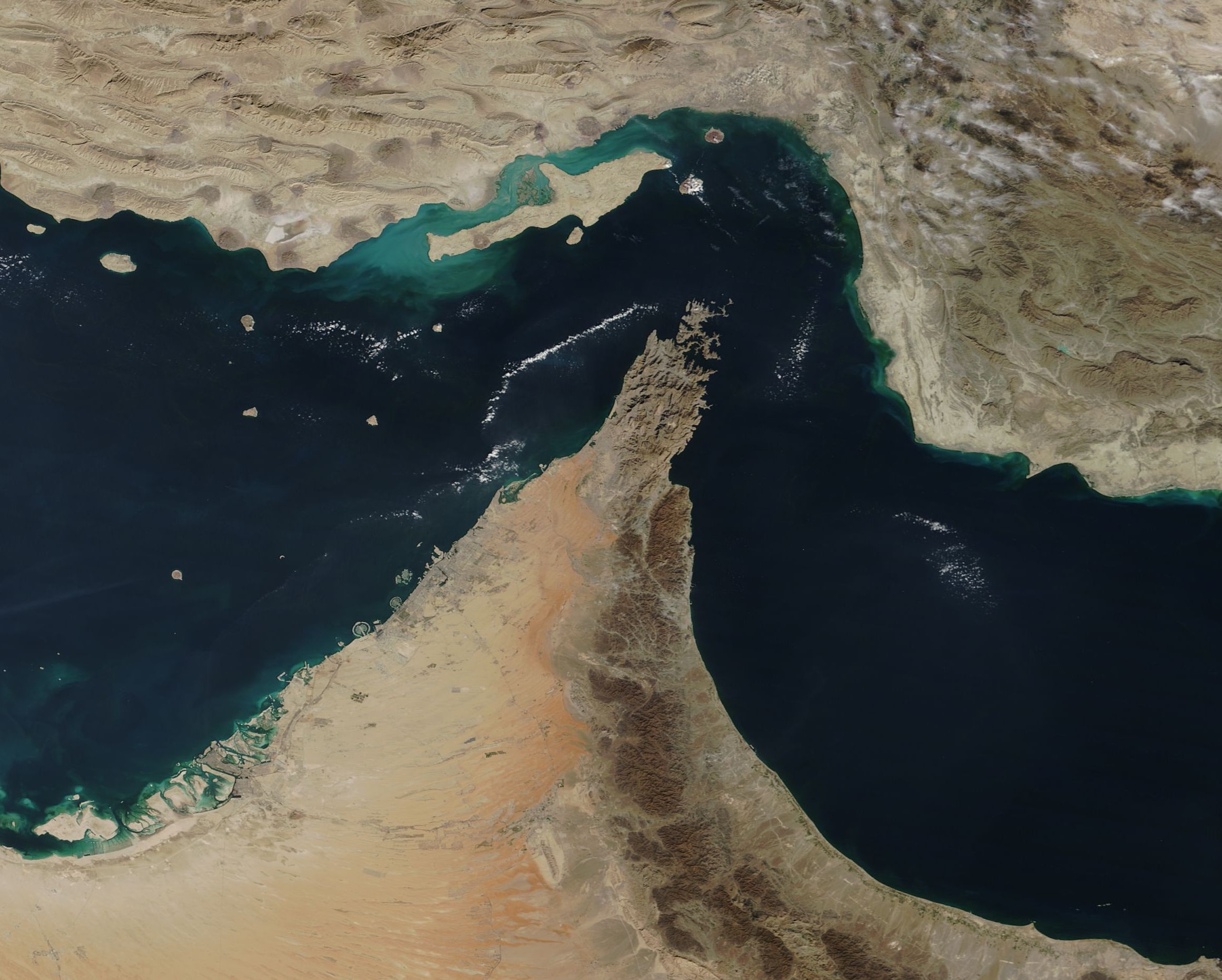
The current crisis began on February 28, 2026, when US and Israeli strikes hit Iranian targets, triggering IRGC retaliation across Gulf infrastructure. Pakistan brokered a ceasefire on April 8, extended on April 21, though the US naval blockade and IRGC access controls both remain in effect. The IRGC declared “full authority” over Hormuz on April 5 and April 10, while Araghchi was simultaneously negotiating in Islamabad — an early signal of the civilian-military split that has defined every round of talks since. The Vance-Ghalibaf meeting on April 11-12 — the first direct US-Iran talks since 1979 — collapsed after the US tabled its 20-year moratorium proposal; the blockade began the following day. IRGC Navy commander Alireza Tangsiri was killed on March 30; no named successor has been announced in the 28 days since.
FAQ
Has Iran ever proposed separating Hormuz from the nuclear file before?
Not explicitly in this form. During the 2013-2015 JCPOA negotiations, Hormuz freedom of navigation was treated as a background condition, not a negotiating variable — Iran did not threaten the strait as a bargaining chip in those talks. The current proposal is the first time Tehran has formally offered Hormuz reopening as a standalone concession decoupled from the nuclear track, reflecting the strait’s transformation from a passive shipping lane into an active revenue-generating toll corridor under IRGC control.
What is the “open for open” formula and who proposed it?
Max Boot of the Council on Foreign Relations proposed that both the US and Iran end their respective blockades simultaneously — the US lifting its Arabian Sea naval screen while Iran removes IRGC access restrictions at the Gulf of Oman exit. The formula is designed so that neither side appears to concede first. A precedent exists in the 1988 tanker war, when the US and Iran effectively de-escalated through parallel operational pullbacks without a formal agreement — no face-saving declaration required from either side.
How long would it take to fully reopen Hormuz even if a deal is reached?
Mine clearance alone would require an estimated six months based on the 1991 Kuwait post-war benchmark, covering approximately 200 square miles. The US has limited capacity in theater after decommissioning four Avenger-class mine countermeasure ships from Bahrain in September 2025. Insurance markets would also need to reclassify the strait — war-risk premiums currently add $500,000 to $800,000 per transit, according to Lloyd’s market sources, and underwriters typically require 60-90 days of incident-free passage before adjusting rates downward.
What role is Pakistan playing in transmitting Iran’s proposal?
Pakistan has served as the primary intermediary since brokering the April 8 ceasefire, transmitting proposals between Washington and Tehran when direct contact stalls. Its leverage is structurally constrained: a $5 billion Saudi loan matures in June 2026, and the September 2025 Saudi-Pakistan mutual defense agreement makes Islamabad simultaneously Iran’s interlocutor and Riyadh’s treaty ally. That dual position limits how hard Pakistan can push either side — pressing Iran risks the ceasefire, pressing the US risks the Saudi relationship on which Pakistan’s economy partly depends.
Could Iran enrich its uranium to weapons-grade before any deal is reached?
Iran’s 440.9 kilograms of 60-percent-enriched uranium requires approximately 564 separative work units to reach weapons-grade using IR-6 centrifuges — a process estimated at 25 days per device. The IAEA has had no access to Iranian nuclear facilities since February 28, 2026, meaning the current stockpile figure is already four months stale. Any negotiation timeline measured in months, as the JCPOA’s 18-month precedent suggests, operates against a breakout window measured in weeks.
Later the same day, Secretary of State Rubio publicly defined Iran’s Hormuz regime as extortion rather than a negotiable concession — a characterisation that rendered the sequencing logic the Situation Room had been weighing structurally inoperable. Rubio’s statement and its consequences for the interim-deal track are examined in full.
Araghchi’s concurrent trip to St. Petersburg to deliver a personal message from the hidden Supreme Leader Mojtaba Khamenei to Putin, and the fiscal trap that Rubio’s language creates for Saudi Arabia, are examined in Rubio Calls Iran’s Hormuz Offer Extortion, Closing the US Negotiating Window.
The diplomatic failure that made Rubio’s closure decisive had been set in motion earlier: Trump cancelled the Witkoff-Kushner Islamabad mission after Araghchi departed Pakistan without committing to direct talks, eliminating the one contact point that could have translated the Situation Room’s proposal assessment into an actionable negotiating session.
Trump’s public hardening — declaring Iran’s Hormuz-first proposal “not adequate” the following day — and why that position closes the diplomatic space for any back-channel deal, is examined in Trump’s “Not Happy” Declaration and the Sequencing Wall Neither Side Can Remove.