ISLAMABAD — Iranian Foreign Minister Abbas Araghchi landed in Islamabad on Tuesday, April 28, for his third visit in roughly 48 hours, arriving from Moscow with a revised written offer that Pakistan’s foreign ministry will transmit to Washington — the second formal Iranian counter-proposal filed through the same channel in 72 hours, after the April 25 ISNA “red lines” messages and the April 27 Axios-disclosed Hormuz-for-blockade framework.
The shuttle’s velocity, not its destinations, is the story. A foreign minister who needs three trips to the same capital in two days to deliver one document is not winning a negotiation. He is fielding rejections from his own side. Each Islamabad arrival marks the moment a draft cleared Tehran’s authorization filters — Supreme National Security Council, Islamic Revolutionary Guard Corps, the absent Supreme Leader’s office — and earned permission to cross a border. The German chancellor named the pattern on Sunday. Tehran’s state media denied there was a pattern at all.
Table of Contents
The 72-hour sequence
Araghchi’s itinerary since Saturday is documented across four wire services. Business Standard and Tribune India confirm three Islamabad arrivals: Sunday April 26 (meetings with Field Marshal Asim Munir, Prime Minister Shehbaz Sharif, and Foreign Minister Ishaq Dar), Monday night April 27 (a brief return after a daytime stop in Muscat), and Tuesday April 28 (after a Kremlin meeting with Vladimir Putin the previous evening). Euronews and Al Jazeera reconstruct the full chain: Islamabad → Muscat → Islamabad → Moscow → Islamabad.
Five capitals in 72 hours. Two of them — Pakistan and Oman — are mediators. One, Russia, is a war supplier. The remaining stops are repeats of the same mediator. No US territory. No European capital. No GCC capital beyond a phone call: Saudi Foreign Minister Prince Faisal bin Farhan received a briefing call from Araghchi on April 27, before the Axios disclosure, a sequencing detail covered separately in Saudi Arabia received Iran’s proposal before Washington did.
Araghchi’s own description of the Sunday return, posted to his Telegram channel and reproduced by Kashmir Observer and Outlook India, used the language of work-in-progress: “We held good consultations with our friends in Pakistan. The trip was successful. We assessed the outcome of our recent meetings and discussed in what direction and under what conditions talks can move on.” The phrase “under what conditions talks can move on” is the operative one. Three days into the sprint, Tehran was still defining the conditions.
| Date | Location | Counterpart | Document filed |
|---|---|---|---|
| Sun April 26 | Islamabad | Munir, Sharif, Dar | ISNA “red lines” written messages |
| Mon April 27 (am) | Muscat | Omani FM | Hormuz toll/maritime mechanics |
| Mon April 27 (pm) | Islamabad | Pakistani FM | Brief — outcome assessment |
| Mon April 27 (eve) | Moscow (Kremlin) | Putin | Russian alignment / war support |
| Tue April 28 | Islamabad | Pakistani FM | Revised proposal — Axios framework |
What is in the revised counter-offer?
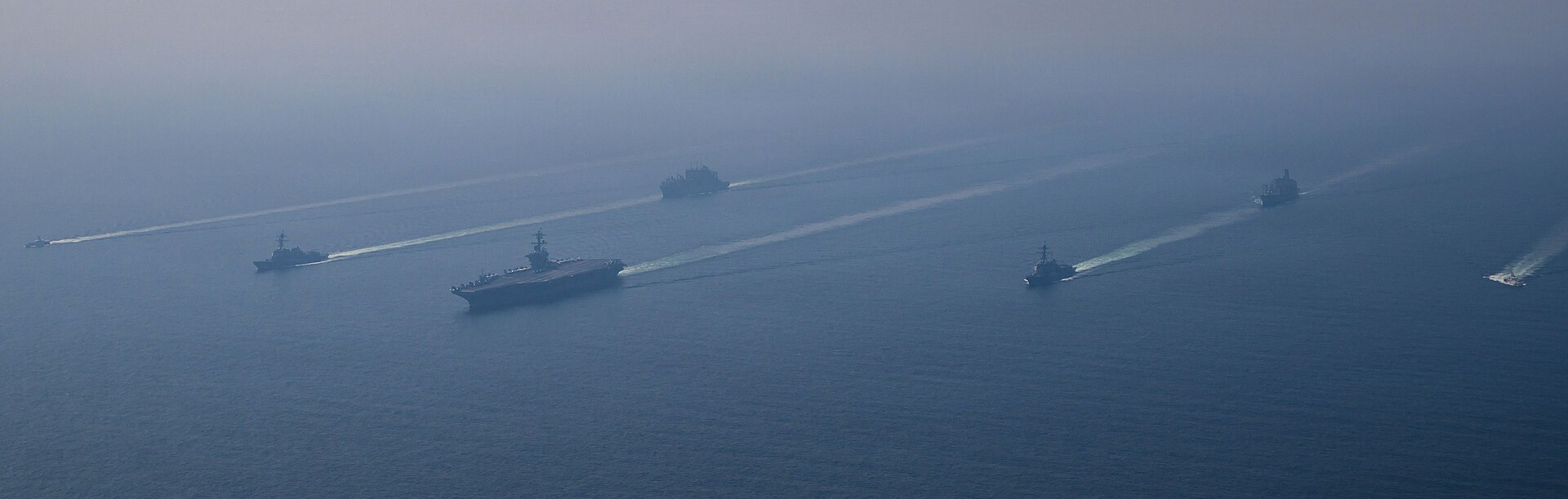
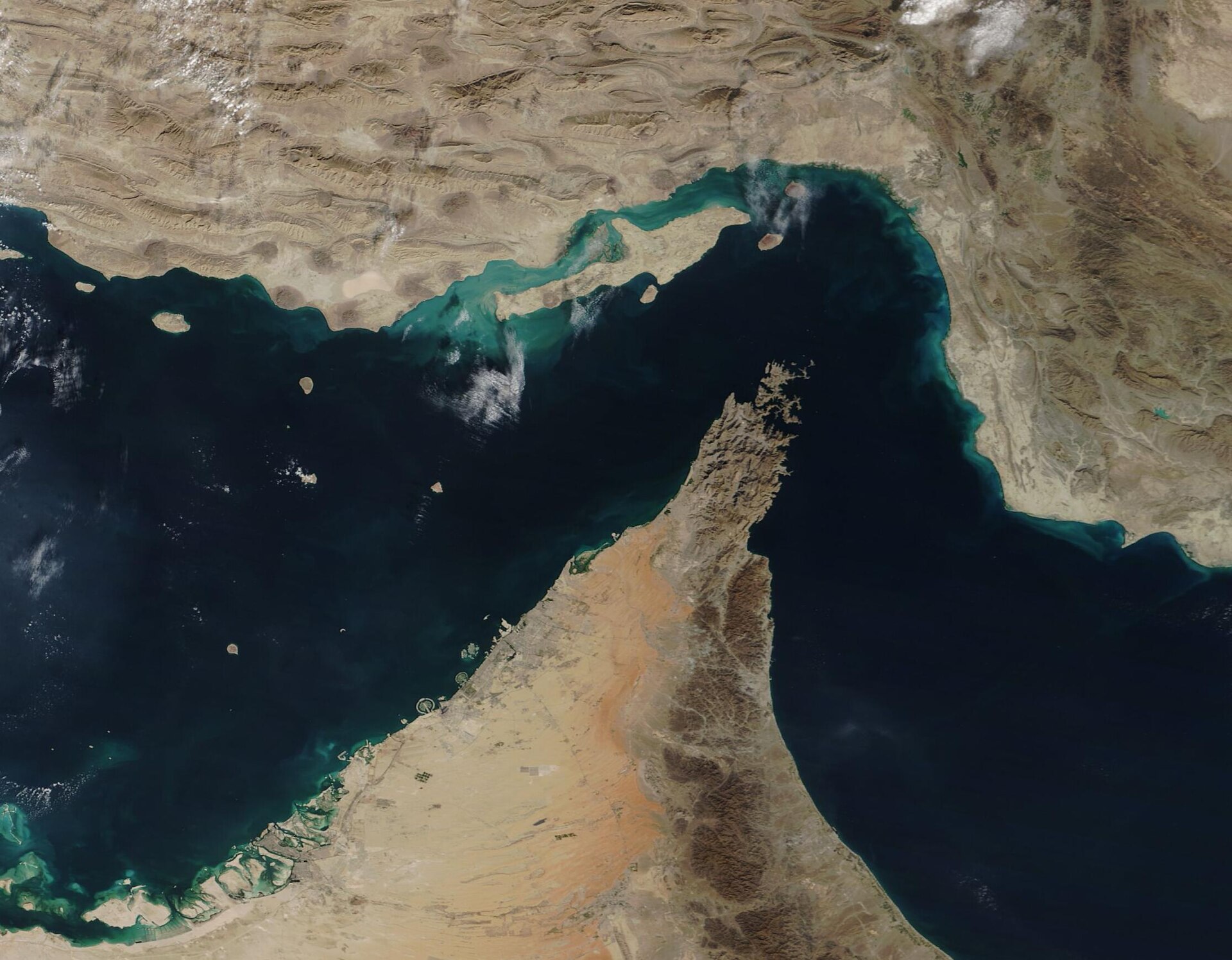
Axios first disclosed the substantive proposal on April 27. Iran would reopen the Strait of Hormuz to commercial transit and end the war in exchange for the United States lifting the naval blockade imposed by CENTCOM on April 13. Nuclear talks are explicitly deferred to a later phase — not refused, not conceded, ring-fenced. The Arab Weekly added four further provisions reportedly contained in the written text: implementation of a new legal regime over the Strait, compensation for war damages, guarantees of non-aggression, and removal of the blockade.
The Middle East briefing 3,000+ readers start their day with.
One email. Every weekday morning. Free.
Iranian MP Mohammad Reza Rezayi Kouchi, speaking to PressTV on April 21 about the parliament’s 12-article “Law on Establishing Iran’s Sovereignty over the Strait of Hormuz” — ratified by the National Security Committee that day and forwarded to the full chamber — said vessels “must coordinate their passage with Iranian authorities and pay charges in Iranian rial.” Iran would “seize ships disobeying the rules and confiscate some 20% of the value of their cargo.” Iran’s Central Bank confirmed the first $2 million Hormuz toll deposit on April 23, two days before Araghchi’s first weekend visit, according to Seoul Economic Daily.
The arithmetic of the ask is therefore not abstract. By the time the proposal reached Pakistan’s Foreign Office, Iran had already collected toll receipts and ratified the legal architecture for collecting more. The “new legal regime” line in the offer is a request that the United States acquiesce to a system Tehran has already built and begun running, against a baseline of roughly seven ships per day transiting Hormuz versus the pre-war figure of about 140 — about five percent of normal volume.
Why does Araghchi keep returning to Islamabad?
The most parsimonious explanation for three visits in two days is not enthusiasm. It is the authorization ceiling — the structural constraint that any document Araghchi wishes to deliver must first clear Tehran’s parallel chains of command. Ali Akbar Ahmadian was replaced as SNSC Secretary by Ahmad Vahidi, who carries an INTERPOL red notice over the 1994 AMIA bombing. Vahidi answers to the Supreme Leader. The Supreme Leader has been confirmed publicly absent for 44 or more days as of mid-April — a fact mapped against Mashhad iconography in Mashhad mural places Iran’s Supreme Leader among the dead.
The Islamabad I collapse on April 11–12 set the precedent. SNSC Secretary Mostafa Zolghadr filed an internal complaint that Araghchi had “surpassed his mandate,” and the delegation was recalled. President Masoud Pezeshkian, on April 4, publicly named Vahidi and Khatam al-Anbiya commander Mohammad Reza Abdollahi as the officials who wrecked the first round. Article 110 of the Iranian constitution gives the president zero authority over the IRGC. Munir reportedly visited Khatam al-Anbiya HQ — Abdollahi’s headquarters — on April 16, the same week Iran’s parliament was advancing the Hormuz sovereignty law.
Read against that architecture, the three Islamabad arrivals describe a feedback loop. Draft One is the ISNA “red lines” document — described by Iran’s state news agency as a clarification, not a proposal — delivered Saturday. Trump cancels Steven Witkoff and Jared Kushner’s scheduled Islamabad trip on April 25, citing Iranian “infighting,” the trip the subject of Witkoff and Kushner were never going to Islamabad. Within ten minutes, by Trump’s own account at the White House Correspondents’ Dinner that night, Iran transmits a “much better” proposal — the Axios document — but “not enough.” Draft Two is filed Tuesday. Tehran is negotiating with itself on a 24-hour rev cycle, and Pakistan is the only courier authorized to carry the result.
“The Iranians are obviously very skilled at negotiating, or rather, very skilful at not negotiating, letting the Americans travel to Islamabad and then leave again without any result.” — German Chancellor Friedrich Merz, April 27, via Al Jazeera, PBS, Bloomberg
Merz’s second sentence in the same remark is harsher: “The Iranians are clearly stronger than expected and the Americans clearly have no truly convincing strategy in the negotiations either.” The political reading of Merz’s comment — that he gave Saudi Arabia rhetorical cover Riyadh could not produce in its own voice — is the substance of Merz called it humiliation and gave Saudi Arabia the cover it cannot build alone.
Washington’s response and the nuclear ring-fence
Secretary of State Marco Rubio, speaking to CNBC on April 27, conceded improvement and rejected substance in the same breath. The proposal was “better than what we thought they were going to submit,” he said, but any deal “must definitively prevent Iran from sprinting” to a nuclear weapon. He accused Tehran of “trying to buy themselves more time.” The structural posture — interim deal off the table, nuclear file as core issue — is the subject of Rubio has closed the interim-deal track on Hormuz.
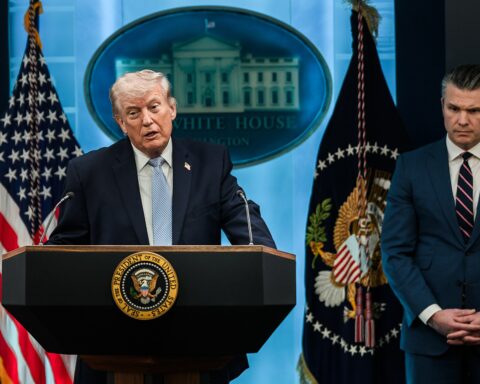
White House Press Secretary Karoline Leavitt confirmed on April 27 that Trump “discussed the proposal with his national security team.” CNN sources placed Trump as “unlikely to accept” the framework. The president’s public red line, delivered at the Correspondents’ Dinner on April 25, was unchanged: Iran “will not have a nuclear weapon.”
The asymmetry is precise. Tehran is offering Hormuz reopening plus war termination in exchange for blockade lifting, with the nuclear file deferred — a sequencing Tasnim, the IRGC-aligned outlet, made explicit on April 26 by reporting that Araghchi “does not plan to discuss the nuclear dossier with the Pakistani side.” Washington wants the nuclear file decided first. The two positions describe a disagreement about what is being negotiated, not about the terms.
Tehran’s public line versus the document trail
Iran’s state media has spent four days insisting that no negotiations are occurring. PressTV on April 24 quoted the Foreign Ministry spokesperson: “No talks with US during FM’s Islamabad visit; observations to be conveyed to Pakistan.” ISNA on April 26 characterized the written messages as clarifying Iran’s “red lines, including nuclear issues and the Strait of Hormuz” — language of position-stating, not proposal-making. Tasnim on April 26 framed the trip as Iran ramping up “regional diplomacy as embattled Trump looks for off-ramp,” positioning the initiative as Iranian strength.
Against that line, the document trail is at least two filings in 72 hours, both transmitted via Pakistan, the second of which Trump described in his own words as “much better.” The Lawyers, Guns & Money blog on April 27 noted at least two distinct documents through the channel. A foreign minister who flies to a mediator capital three times in two days is not conveying observations. He is filing drafts.
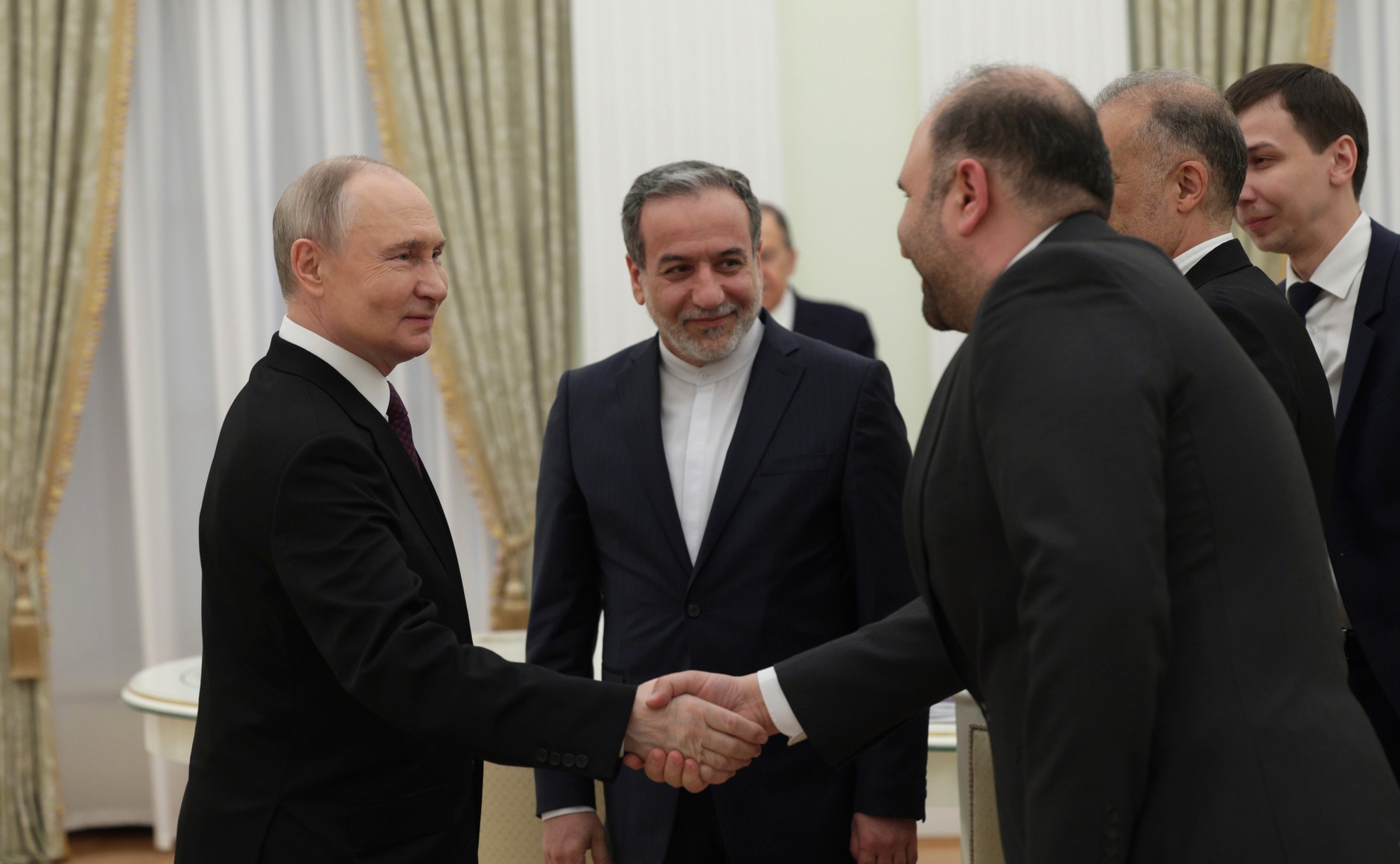
The Russian leg fits the same pattern. Putin, in remarks reproduced by Al Jazeera and the Jerusalem Post, told Araghchi: “We see how courageously and heroically the Iranian people are fighting for their independence and sovereignty. For our part, we will do everything that serves your interests.” Araghchi’s reply, carried by Iran International: “We thank our Russian friends for their support throughout this war and declare Iran’s determination to continue strategic relations and partnership with Russia under the new circumstances.” The framing — war ongoing, support continuing — sits awkwardly beside an offer to end the war filed in Islamabad the next day.
Pakistan as conduit, Oman as parallel track
Pakistan is doing two things at once. It is carrying drafts to Washington — Munir reportedly has a personal rapport with Trump — the White House Correspondents’ Dinner remarks on April 25, as reported by the Associated Press, included Trump calling Munir “my favorite field marshal” — and Dar coordinates with the State Department. And it is producing concrete deliverables on the bilateral track: Pakistan approved transit of Iranian goods from third countries through six designated routes on Tuesday April 28, according to The Week India, covering Karachi, Port Qasim, and Gwadar to Balochistan border crossings. Six corridors is a confidence-building measure. It is also a sanctions-relief conduit operating outside any US framework.
Oman is running a parallel track on Hormuz mechanics. Fortune on April 26, under the headline “Iran seeks Hormuz toll with Oman,” described Muscat’s role as the technical clearing house for the toll architecture itself — a continuation of the role Oman played in the original 1979 hostage release and the 2013–15 JCPOA back-channel. The split is workable: Pakistan transmits political offers, Oman engineers the maritime regime they describe.
Saudi Arabia is excluded from both tracks. The Faisal-Araghchi call on April 27, covered in Prince Faisal’s three calls built a mediation architecture Washington won’t offer Saudi Arabia, was a courtesy briefing on a deal Riyadh has no role in shaping. The Hormuz reopening Iran is offering would govern the chokepoint that carries roughly two-thirds of Saudi crude exports in pre-war volumes (IEA, March 2026 Oil Market Report). The legal regime being designed in Muscat would set the rules — and Riyadh has no seat at either table.
Background — the Islamabad I collapse
The April 11–12 Islamabad round produced the first US-Iran face-to-face since 1979 before collapsing. Vice President JD Vance and Iranian Parliament Speaker Mohammad Bagher Ghalibaf — a former IRGC Aerospace Force commander, 1997–2000 — met in a 71-member delegation format. Ahmad Vahidi was not in the room. SNSC Secretary Mostafa Zolghadr filed the “surpassed his mandate” complaint within hours. Araghchi was recalled.
The political fallout reshaped the Iranian negotiating team. Saeed Jalili, the hardline former chief negotiator, is reported to be replacing Ghalibaf as Iran’s nuclear talks lead — a personnel shift covered in Jalili set to replace Ghalibaf as Iran nuclear talks lead. The replacement signals two things: that the IRGC-aligned faction now controls the file, and that the nuclear track is being re-staffed by a figure with no history of compromise.
The structural geography of the war has not moved. The blockade Iran wants lifted has been operative since April 13. The toll regime Iran wants codified was already collecting receipts before talks resumed. And on April 21, Iran’s parliamentary committee ratified the law that would make the toll regime permanent — three days before Araghchi’s first April weekend visit to Islamabad.
FAQ
How does Iran’s revised offer differ from the April 25 written messages? The April 25 ISNA document was framed by Iran as a clarification of red lines — positions, not proposals. The April 27 Axios-disclosed framework is the first formal positive offer: a specific exchange of Hormuz reopening and war termination for blockade removal, with four additional provisions (legal regime, war damages, non-aggression guarantees, blockade lifting) per The Arab Weekly. The earlier text told Washington what Iran would not accept. The later text told Washington what Iran would trade.
Who approves Iranian negotiating drafts before they leave Tehran? The chain runs through SNSC Secretary Ahmad Vahidi, the IRGC general staff, and ultimately the Supreme Leader’s office. President Pezeshkian has no formal authority over the IRGC under Article 110 of the Iranian constitution. Pezeshkian publicly named Vahidi and Khatam al-Anbiya commander Mohammad Reza Abdollahi on April 4 as the officials who collapsed Islamabad I. Khamenei has been confirmed publicly absent for 44+ days as of April 17.
Is Pakistan negotiating, or only carrying messages? Pakistan is doing both. The Foreign Office is the channel for written documents to Washington, with Munir holding the political relationship to Trump. Bilaterally, Islamabad has produced concrete deliverables — six new transit corridors for Iranian goods, approved April 28 per The Week India. That bilateral track operates regardless of the US-Iran outcome and has its own commercial logic for Pakistan.
Why is the nuclear file being deferred and not refused? Tasnim’s April 26 framing — “Araghchi does not plan to discuss the nuclear dossier” — is consistent with the IRGC position that nuclear questions are non-negotiable at any stage. Deferral lets Tehran avoid a direct refusal that would terminate talks while also avoiding any concession. Rubio identified the move publicly, calling it “trying to buy themselves more time.” Trump’s “not enough” verdict tracks the same diagnosis.
Where does Saudi Arabia sit in the Islamabad framework? Outside it. Riyadh is not in the negotiating channel. Prince Faisal received a briefing call from Araghchi on April 27 before the Axios disclosure went public — courtesy notification, not consultation. The Hormuz toll regime being engineered in Oman would govern the chokepoint that carries the majority of Saudi crude exports. The new legal regime Iran is offering Washington is one Riyadh has no role in writing.
The military context Araghchi is negotiating around hardened further on April 28: Iran’s regular Artesh spokesperson Brigadier General Mohammad Akraminia declared the country still on war footing, stating that “a ceasefire does not make much difference to us compared to wartime conditions” — a public signal from the conventional military that the institutional consensus behind the IRGC’s authorization ceiling extends beyond the Revolutionary Guards. The third Islamabad draft’s structure — full ceasefire at Phase 1, Hormuz “management” at Phase 2, nuclear at Phase 3 — drew a qualified endorsement from Rubio as “better than expected” on the nuclear dimension; the implications of that framing for Saudi Arabia’s position are examined in Rubio Called Iran’s Proposal “Better Than Expected” — Better for Whom?