
MOSCOW — Vladimir Putin sat across from Abbas Araghchi in St. Petersburg on April 27 and listened to the Iranian foreign minister relay “warmest greetings” from Supreme Leader Mojtaba Khamenei — the first confirmed outbound signal from Iran’s highest authority in more than 44 days, delivered not through Tehran’s own diplomatic channels or through the Pakistani mediators running the Islamabad process, but through Russia. Nine days earlier, Rosatom CEO Alexei Likhachev had publicly reaffirmed Moscow’s standing offer to take custody of Iran’s approximately 440 kg of uranium enriched to 60% — enough fissile material for more than ten nuclear weapons, convertible to weapons-grade within weeks — and outlined three variants for doing so, each of which would install Russia as the permanent technical gatekeeper over the single most dangerous variable in Middle Eastern security.
Trump rejected the offer in March, and Washington’s position has not changed. But the offer has not been withdrawn, the uranium has not moved, and the IAEA has not had access to Iran’s enrichment facilities since February 28. What Rosatom is proposing is not a technical favour — it is an architectural bid for a veto node that would make Moscow indispensable to any future nuclear settlement, from Islamabad to Capitol Hill, and would directly complicate the US-Saudi 123 Agreement that Riyadh needs to build its own civilian nuclear programme.
Washington’s capacity to press its preferred nuclear settlement is itself under legal pressure: the War Powers Resolution’s 60-day authorization clock expires May 1, a deadline that puts the legal foundation of US military presence in the Gulf in direct question as the Rosatom custody offer remains open and Iran’s HEU stockpile continues to grow.
Table of Contents
- What Exactly Did Rosatom Offer?
- The 2015 Shipment and Why 2026 Is a Different Operation
- Why Did Trump Reject Russian Custody of Iran’s Uranium?
- The St. Petersburg Meeting and the Khamenei Signal
- How Does Russian Custody Reshape Saudi Arabia’s Nuclear Ambitions?
- The UAE Gold-Standard Clause That Nobody in Riyadh Wants to Discuss
- Russia’s Astana Playbook Applied to Nuclear Architecture
- Who Benefits From a War That Never Quite Ends?
- Frequently Asked Questions
What Exactly Did Rosatom Offer?
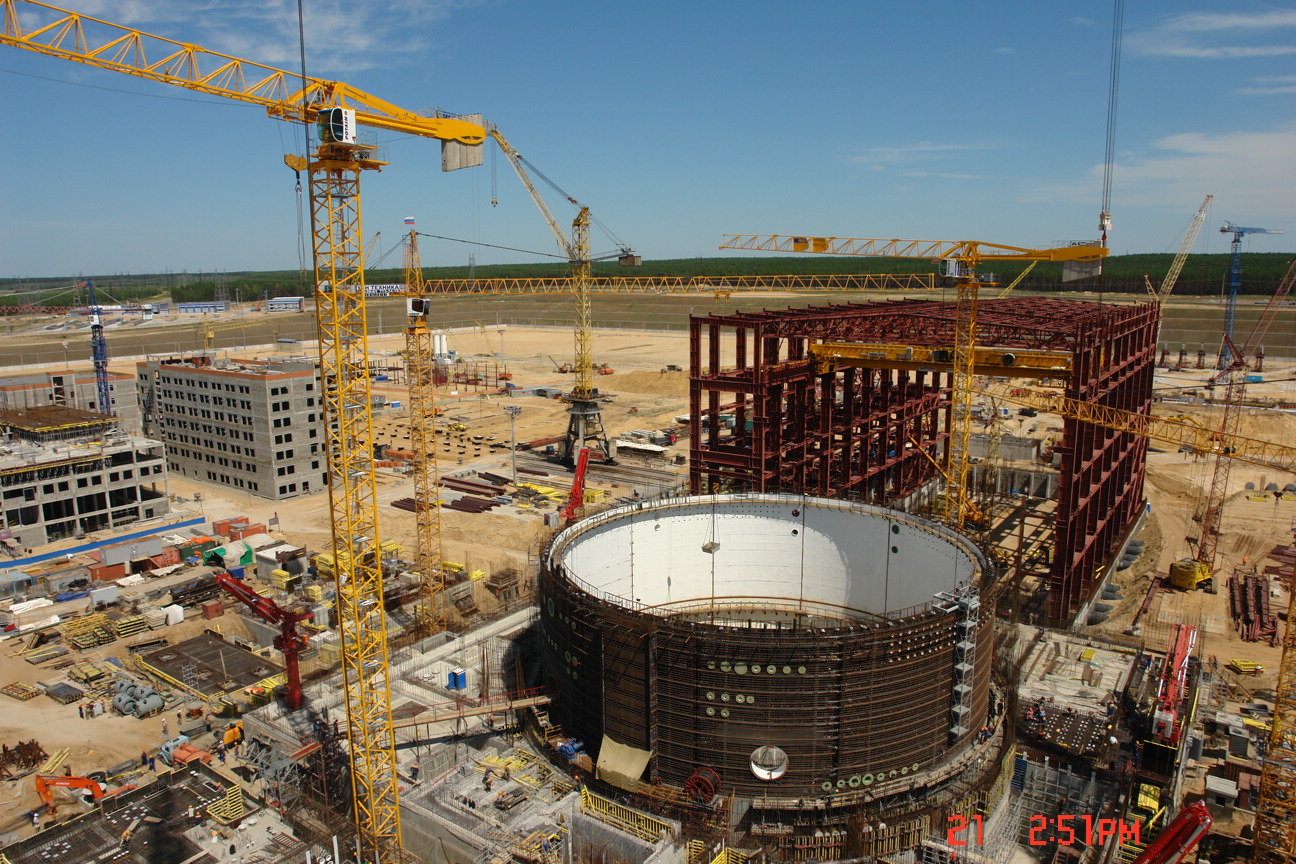
Likhachev’s April 18 statement laid out three distinct variants, each with different implications for who controls the uranium and under what conditions it might return. The first involves transferring Iran’s 60%-enriched stockpile to Russia for dilution — blending it down to reactor-grade levels — and then shipping it back, which would remove the immediate proliferation risk but leave Iran with enrichment infrastructure intact and operational. The second variant is permanent custody: Russia takes the material and keeps it, with Iran receiving some form of compensation or credit. The third — and the one that most closely mirrors the 2015 JCPOA arrangement — involves a swap: Iran hands over its HEU and receives natural uranium in exchange, the raw feedstock for a civilian programme that cannot be weaponised without the enrichment cascade that produced the 60% material in the first place.
“Only Russia has positive experience of cooperation with Iran,” Likhachev told Russian state media. “In 2015, at the request from Iran, we already transported enriched uranium from Iran. We are ready to assist with this issue today as well.” The framing was careful — Rosatom as experienced contractor, not aspiring gatekeeper — but the structural implications of each variant run far beyond logistics, because any version of Russian custody gives Moscow a formal institutional role in the nuclear file that no subsequent US-Iran negotiation can bypass without Russian consent.
Kremlin spokesman Dmitry Peskov, asked about the proposal’s status on April 20, offered the diplomatic equivalent of leaving a door ajar: the offer is “not currently on the negotiating table,” he said, but Moscow remains open, and Washington has “no interest.” Peskov did not say the offer had been withdrawn, or that Russia had moved on, or that the proposal was dead — he said it was waiting, which is exactly what a country positioning itself as the indispensable party would say.
The Middle East briefing 3,000+ readers start their day with.
One email. Every weekday morning. Free.
The 2015 Shipment and Why 2026 Is a Different Operation
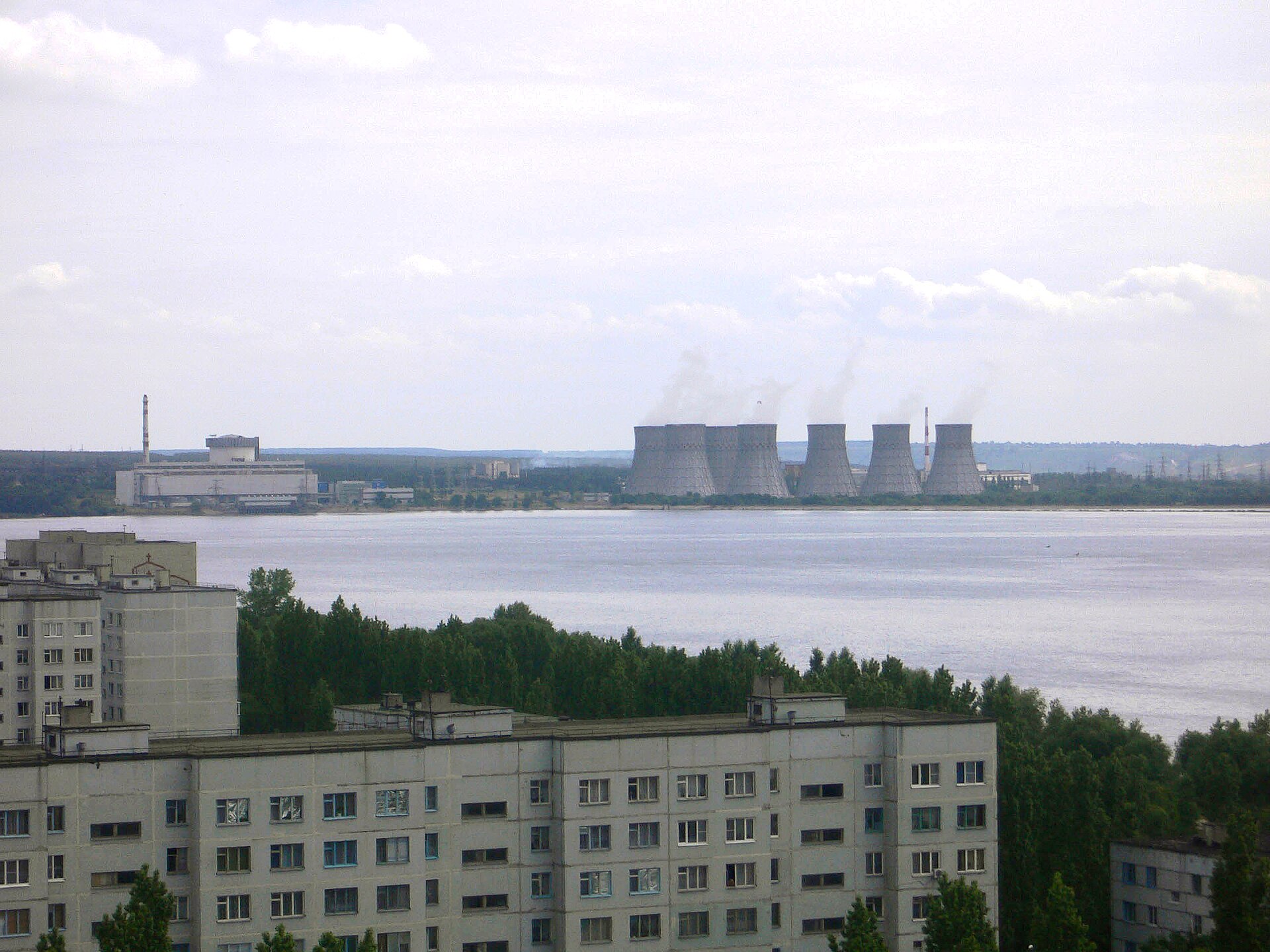
The 2015 precedent is real and Likhachev is right to cite it, but the structural context has inverted in ways that transform what looked like a logistics operation into something closer to a power play. In December 2015, Iran shipped between 8.5 and 11 tonnes of low-enriched uranium — including all of its 20%-enriched material — to Russia, receiving 140 tonnes of natural uranium yellowcake in exchange, in an operation that the IAEA certified as complete on January 16, 2016. Rosatom managed the entire technical chain: packaging, transport, receipt, verification. The operation worked smoothly, finished on schedule, and was one of the cleaner implementation victories of the JCPOA.
The difference is who designed the architecture. In 2015, Russia was executing a framework that Washington had negotiated, that the P5+1 had agreed to, and that the UN Security Council had endorsed through Resolution 2231. Moscow was the contractor — essential, trusted, technically competent, but operating within an American-led diplomatic structure where the terms, the timeline, and the verification mechanisms had all been set before Rosatom loaded a single container. In 2026, Russia is proposing the framework itself, setting the terms, and offering to serve simultaneously as architect, contractor, and custodian, with no multilateral structure governing any of it.
Andrew Weber, who served as Assistant Secretary of Defense for Nuclear, Chemical, and Biological Defense Programs under Obama and now sits on the Council on Strategic Risks, described the 2026 version as potentially “the most complex uranium removal operation in history” — not because the physics are different, but because Natanz and Isfahan were both struck in June 2025, damage assessments remain uncertain with IAEA access terminated, and the security environment of an active warzone makes verification and transport exponentially harder than a peacetime swap managed under international supervision.
Dmitry Gorchakov of the Bellona Foundation, a Norwegian-Russian environmental NGO, offered a more optimistic reading: the proposal is potentially a “win-win,” he argued, because Iran trusts Russia more than it trusts the United States and the logistics are manageable with IAEA coordination. That trust, though, is precisely what makes the arrangement dangerous from Washington’s perspective — if Iran will only move its uranium through Moscow, then Moscow becomes the only door through which a nuclear settlement can pass.
Why Did Trump Reject Russian Custody of Iran’s Uranium?
Putin first proposed moving Iran’s HEU to Russia during a phone call with Trump in the week of March 10, according to Axios, which broke the story on March 13. Trump rejected it, and a US official explained the decision with a line that captured both the administration’s instinct and its strategic logic: “The president doesn’t make bad deals.” FXStreet’s April 24 analysis was more specific — Trump turned down the March offer “on leverage grounds, as handing Moscow custody of weapons-usable uranium while Washington is contesting Ukraine would be a strategic gift.”
The leverage calculation is straightforward, even if its implications are not. If Russia holds Iran’s HEU, then any future US effort to pressure Iran on its nuclear programme requires Russian cooperation to verify, enforce, or reverse the custody arrangement — and Russia’s price for that cooperation would inevitably include concessions on Ukraine, on sanctions, on the European security architecture that Washington has spent two years defending. Trump, whatever his inclinations toward Moscow, was not willing to hand Putin a permanent veto over the Iran nuclear file at the same moment the US was trying to maintain pressure on Russian energy revenues and arms transfers.
But the rejection created its own problem. Iran’s 440.9 kg of 60%-enriched uranium — last verified by the IAEA in June 2025, with all agency access terminated on February 28, 2026 — is sitting in facilities that may or may not be damaged, guarded by a government whose supreme leader has not been publicly seen or heard in 44 days, in a country at war. The material is convertible to weapons-grade within weeks using Iran’s existing IR-6 centrifuge cascades, and Trump said no to the Russian offer without proposing an alternative mechanism for getting the uranium out. The Islamabad negotiating process that was supposed to address this has stalled over Iran’s insistence on separating the nuclear file from the ceasefire and Hormuz discussions entirely.
Iran formally proposed removing nuclear talks from the current negotiating agenda on April 27, submitting a phased framework — ceasefire first, then Hormuz and sanctions, then nuclear — via Pakistan to the US. Rubio called it “better than we thought” but confirmed that Washington’s demand for nuclear programme dismantlement to remain in scope had not changed. The phased approach, if accepted, would defer the nuclear question indefinitely — which is exactly the timeline that benefits a Russian custody offer sitting patiently on a shelf in Moscow.
The St. Petersburg Meeting and the Khamenei Signal
The April 27 meeting between Putin and Araghchi in St. Petersburg was not a bilateral courtesy call — it was a high-level strategic session whose attendee list reveals more about Russia’s intentions than any public statement. On the Russian side: Foreign Minister Sergei Lavrov, Presidential Aide Yuri Ushakov (who manages Putin’s foreign policy schedule and preparation), and Admiral Igor Kostyukov, the head of the GRU — Russia’s military intelligence service — sanctioned by both the US (2016) and the EU (2019) and the first naval officer to lead the agency. On the Iranian side: Araghchi, Deputy Foreign Minister Kazem Gharibabadi (who handles the nuclear portfolio specifically), and Ambassador Kazem Jalali.
Kostyukov’s presence is the detail that should concern planners in Washington and Riyadh in equal measure. The GRU chief does not attend diplomatic meetings about ceasefire mechanics or trade negotiations — his presence signals that the discussion covered intelligence sharing, battlefield coordination, or both, consistent with reporting from Al Jazeera and the Institute for the Study of War that Russia and China have been sharing battlefield intelligence with Iran via the Kanopus-V/Khayyam satellite system, which provides round-the-clock optical and radar imagery of US and Israeli military assets across the theatre.
Putin’s public remarks were calibrated to an audience far beyond the room: “We see how courageously and heroically the Iranian people are fighting for their independence and sovereignty,” he said, before adding that Russia “will do everything that serves your interests so that peace can be achieved as soon as possible.” The language of solidarity with a nation under American military pressure, offered by the leader of a country simultaneously bidding on Saudi Arabia’s nuclear power plant contracts, is the kind of sentence that lands differently in Riyadh than it does in Tehran.
Araghchi’s conveyance of Khamenei’s “warmest greetings” carried its own weight. The supreme leader’s prolonged absence from public life has fuelled speculation ranging from incapacitation to a deliberate withdrawal from decision-making during wartime. That Iran chose Russia as the channel for Khamenei’s first confirmed outbound communication suggests either that Moscow is the diplomatic amplifier Tehran trusts most, or that the message was designed for international consumption as much as for Putin personally — proof that Iran’s ultimate authority still functions and still favours the Russian relationship above all others at a moment when every other diplomatic channel has produced deadlock.
How Does Russian Custody Reshape Saudi Arabia’s Nuclear Ambitions?
The connection between Rosatom’s Iran offer and Saudi Arabia’s civilian nuclear programme is not obvious until you trace the institutional architecture that a Russian custody arrangement would create — and then it becomes the most consequential dimension of the entire proposal for anyone in Riyadh. Saudi Arabia and Rosatom have an active nuclear cooperation history: an intergovernmental agreement signed in 2015, an expanded MoU with KA-CARE covering small and medium reactors and research reactor cooperation signed in October 2017, and Rosatom’s confirmed status as of July 2024 as an approved bidder — alongside South Korea’s KEPCO, France’s EDF, and China’s CNNC — for the construction of Saudi Arabia’s planned nuclear power plants.
If Russia becomes Iran’s nuclear custodian — the country physically holding the enriched uranium that the international community has spent years trying to constrain — while simultaneously bidding on Saudi Arabia’s civilian nuclear infrastructure, Moscow occupies both sides of the Gulf’s nuclear architecture at once, holding the key to Iran’s bomb material in one hand and the blueprints for Saudi Arabia’s reactor programme in the other. Any future dispute over the terms of Russian custody, any disagreement about verification access or return conditions, gives Moscow the ability to play Iran’s nuclear threat against Saudi Arabia’s nuclear ambitions, extracting concessions from both.
The US-Saudi 123 Agreement draft, whose completion was announced in November 2025, was already contentious before the Rosatom offer surfaced. The Arms Control Association noted in February 2026 that the draft departs from the “gold standard” — unlike the UAE’s 2009 agreement, the Saudi draft does not expressly forbid uranium enrichment, referring instead to “additional safeguards and verification measures,” and does not require Saudi Arabia to adopt the IAEA Additional Protocol. Congressional review of the final text was expected in the first half of 2026, a timeline the war has almost certainly disrupted.
Mikael Pir-Budagyan, writing in the Jamestown Foundation’s Eurasia Daily Monitor, identified the custody proposal as Russia’s most valuable potential gain from the crisis: “This arrangement would increase Moscow’s influence over the nuclear process while reducing immediate proliferation risks,” he wrote, but added that it “would complicate future US-Iran negotiations and regional power balancing, particularly for Saudi security interests.” The complication, stated plainly, is that if Russia controls Iran’s uranium, then the terms under which Saudi Arabia accesses nuclear technology will be shaped partly by Moscow’s willingness to keep Iran’s material locked down — a willingness that will have its own price, payable in concessions that Riyadh cannot predict and Washington cannot guarantee.
The UAE Gold-Standard Clause That Nobody in Riyadh Wants to Discuss
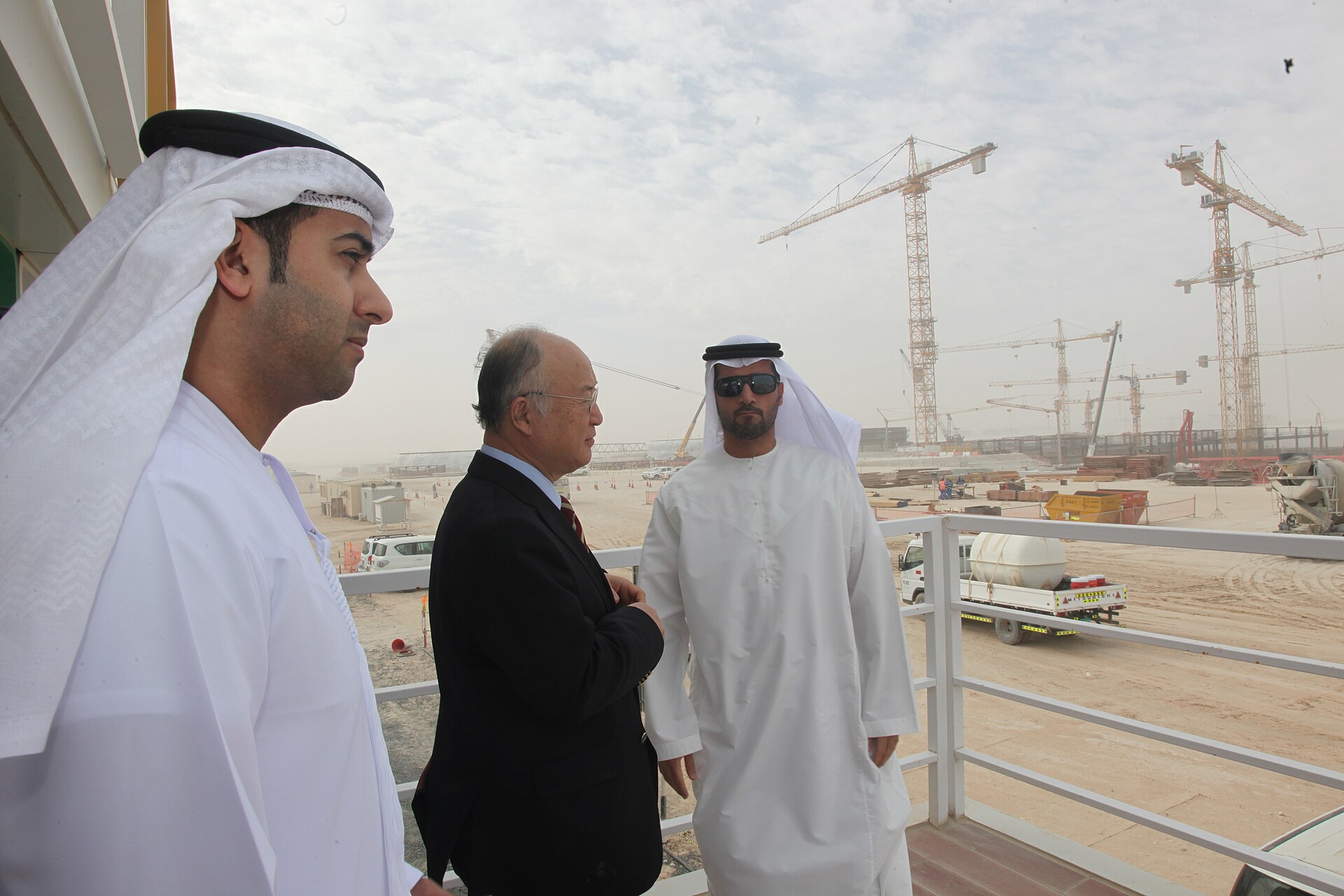
The UAE signed its 123 Agreement with the United States in 2009 under what was then hailed as the gold standard for civilian nuclear cooperation — Abu Dhabi explicitly forswore enrichment and reprocessing, accepted the IAEA Additional Protocol, and committed to a framework so restrictive that it was held up as the model for every subsequent bilateral nuclear deal in the region. But the agreement contains a provision that transforms the Saudi 123 negotiation from a bilateral matter into a regional chain reaction: an Agreed Minute stating that the terms of the UAE deal “shall be no less favorable in scope and effect” than any US nuclear cooperation agreement with another Middle Eastern country.
The clause is a most-favoured-nation provision, borrowed from trade law and planted in the middle of a nuclear agreement, and its implications for the Saudi draft are severe. If Washington grants Saudi Arabia enrichment rights — or even the ambiguous “additional safeguards and verification measures” language that stops short of a blanket prohibition — the UAE can demand renegotiation of its own agreement to match. Abu Dhabi, which has already invested billions in the Barakah nuclear power plant built by KEPCO under the restrictive 2009 terms, would have every incentive to seek enrichment parity with Riyadh, and the legal framework to demand it.
Russian custody of Iran’s HEU complicates this further, because any custody arrangement that reduces the immediate proliferation threat weakens Washington’s primary argument for maintaining strict non-enrichment conditions in Gulf nuclear agreements. If the most dangerous uranium in the Middle East is sitting safely in a Rosatom facility, the urgency that justifies telling Saudi Arabia it cannot enrich — the urgency that justified the gold standard in the first place — deflates. And if that urgency deflates for Saudi Arabia, it deflates for every state in the region, including the UAE, whose gold-standard agreement was built on the premise that strict non-proliferation discipline was the only responsible path forward. Saudi Arabia’s decision to receive Iran’s proposal before Washington and then position itself at every mediating table suggests Riyadh grasps that whoever shapes the nuclear outcome shapes the regional nuclear order — and the Kingdom is not content to wait for others to shape it.
Russia’s Astana Playbook Applied to Nuclear Architecture
The structural template for what Rosatom is proposing already exists, and it worked well enough for Moscow to try it again. The Astana process for Syria, launched in 2017, institutionalised Russia as a co-guarantor of the Syrian settlement alongside Turkey and Iran, creating a trilateral framework that structurally excluded the United States and the European Union from the negotiating architecture. Washington never accepted Astana’s legitimacy, but it never managed to replace it either — the framework persisted, the de-escalation zones were drawn on Russian terms, and every subsequent discussion about Syria’s future had to account for Moscow’s institutional role whether Western diplomats liked it or not.
The Rosatom HEU custody proposal follows the same architectural logic: position Russia as the indispensable technical guarantor of an arrangement that addresses a real international concern, give Moscow a formal institutional role that no subsequent settlement can bypass without Russian consent, and create a structure that generates ongoing leverage rather than a one-time transaction. In Syria, the guarantor role gave Russia influence over de-escalation zone boundaries, humanitarian access, and the terms of any political transition. In the nuclear file, the custodian role would give Russia influence over verification access, return conditions, dilution timelines, and the question of whether Iran’s uranium ever comes back at all.
Grégoire Roos, writing for Chatham House, identified the deeper stakes for Moscow: the Iran war has “deeper implications for Russia, particularly relating to the nuclear question, as enrichment levels and stockpiles were embedded in a negotiated framework under the JCPOA in which Russia was an instrumental participant.” If Tehran emerges “significantly enfeebled or forced into a coercive settlement with Washington,” Roos argued, “Moscow will lose leverage in a region where its room for manoeuvre has already significantly narrowed after the fall of Assad in Syria.” Russian custody of Iran’s HEU is Moscow’s insurance against exactly that outcome — a mechanism that preserves Russian relevance in Middle Eastern security architecture regardless of whether Iran wins, loses, or survives.
The Washington Institute’s analysis reinforced this from the American side: “Russia and China will seek to capitalize on America’s entanglement by increasing their support to — and thus leverage over — Tehran and luring U.S. partners in the Gulf to their side with offers of mediating between them and Iran.” Russia and China vetoed the UN Security Council resolution on Strait of Hormuz protection on April 7, with Moscow calling the text “biased against Iran” and proposing an alternative “concise, equitable and balanced” draft — the same week Trump and Starmer agreed that Hormuz must reopen. The veto and the custody offer are not separate policy tracks but complementary instruments: block the Western framework, propose an alternative, and wait for the parties to come to you.
Who Benefits From a War That Never Quite Ends?
The KSE Institute, cited by the Peterson Institute for International Economics, estimates Russia’s additional export revenues from the Iran war at up to $161 billion in 2026 — roughly half a billion dollars per day at the high scenario, with a low-end estimate of $45 billion depending on the conflict’s duration. A simmering conflict that keeps Gulf oil infrastructure under threat, Hormuz transit at a fraction of pre-war baseline, and Brent above $90 is not a problem Moscow needs to solve; it is a revenue environment Moscow needs to sustain. The Rosatom proposal does not need to succeed to be useful — it needs to keep the nuclear dossier unresolved for as long as the energy windfall continues.
For Riyadh, the arithmetic runs in the opposite direction. Saudi March production crashed to 7.25 million barrels per day from February’s 10.4 million — a 30 percent drop that the IEA called “the largest disruption on record.” The Yanbu bypass pipeline ceiling of 4 to 5.9 million bpd against pre-war Hormuz throughput of 7 to 7.5 million bpd leaves a structural gap that cannot be closed by engineering. Goldman Sachs estimated a war-adjusted fiscal deficit of 6.6 percent of GDP against the official 3.3 percent projection. The PIF-inclusive fiscal break-even that Bloomberg pegged at $108 to $111 per barrel sits above Brent’s current $90-94 range, which means Saudi Arabia is running a deficit on every barrel it manages to export through the Yanbu workaround — selling less oil, at a lower effective margin, through a pipeline that was never designed to carry the Kingdom’s full export burden.
Every week the nuclear dossier remains unresolved is a week the broader conflict framework persists, and every week the broader conflict persists costs Riyadh money it was counting on for Vision 2030 megaprojects that cannot be deferred indefinitely. Russia benefits from delay, banking half a billion dollars per day in windfall energy export revenues. Saudi Arabia hemorrhages from it, watching production fall by nearly a third in a single month while its fiscal assumptions disintegrate around a pipeline bypass that was built for redundancy, not for carrying the entire weight of the world’s largest oil exporter. The Houthi strike on a Russian-oil tanker as Araghchi flew to Moscow demonstrated that even Russia’s own commercial interests are not immune to the conflict’s spillover — but Moscow’s calculus weighs isolated tanker losses against hundreds of billions in aggregate windfall revenue and finds the trade entirely acceptable.
The Rosatom offer sits on the table, available whenever Washington’s position weakens enough for someone to pick it up. Araghchi carried Khamenei’s greetings to St. Petersburg on April 27, and Putin promised to do “everything that serves your interests.” The interests Putin was serving were not exclusively Iran’s, and the greetings Araghchi carried were not exclusively Khamenei’s — they were Moscow’s opening bid on a custodial arrangement that would make Russia the one country in the world that every other country needs to talk to before the Middle East’s most dangerous material moves an inch.
Frequently Asked Questions
How much weapons-grade material could Iran’s current stockpile produce?
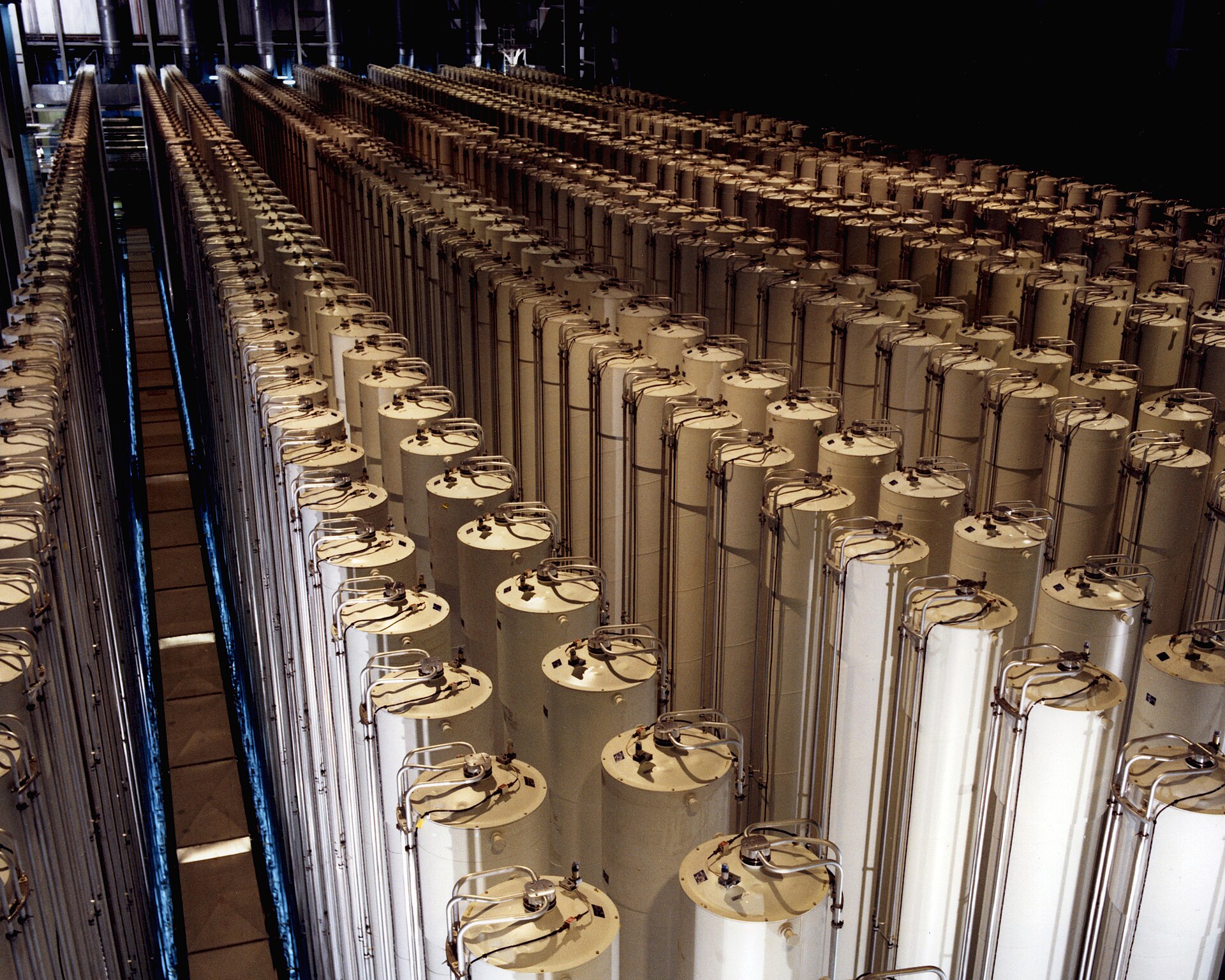
Iran’s approximately 440 kg of 60%-enriched uranium, if further enriched to 90% weapons-grade using its existing IR-6 centrifuge cascades, could yield fissile material for more than ten nuclear weapons — a calculation based on the IAEA’s standard significant quantity threshold of roughly 25 kg of HEU per device, with conversion losses factored in. The process from 60% to 90% requires approximately 564 separative work units, achievable within weeks given Iran’s installed cascade capacity at Fordow, though the June 2025 strikes on both Natanz and Isfahan introduce damage-assessment uncertainties that make precise timelines speculative without the IAEA access terminated on February 28.
What is Rosatom’s existing footprint inside Iran’s nuclear programme?
Rosatom built and continues to operate the Bushehr-1 nuclear power plant, supplying fuel under a bilateral agreement that gives Russia veto-level control over the facility’s operational cycle. A second reactor, Bushehr-2, is under construction under the same arrangement. The fuel supply contracts run through 2021 under the original deal and were extended, meaning Iran cannot operate its only functioning power reactor without Russian cooperation — a dependency that predates the current custody proposal and gives Moscow institutional standing inside the Iranian nuclear establishment that no Western power possesses.
What would Russian custody mean for IAEA verification access?
The IAEA’s ability to verify Russian custody would depend entirely on the terms of any bilateral Moscow-Tehran arrangement — and this is the governance gap that most concerns Western non-proliferation specialists. Under the JCPOA, the 2015 uranium transfer operated within a multilateral verification framework that included continuous IAEA monitoring at both ends. No comparable framework exists for a 2026 bilateral arrangement, and Russia has shown no inclination to submit a custody deal to IAEA governance structures that it does not control, particularly given the February 28, 2026 termination of IAEA access to Iranian facilities with no restoration timeline in place.
Which countries have already signed nuclear cooperation agreements with Saudi Arabia?
Saudi Arabia has signed memoranda of understanding or intergovernmental cooperation agreements with sixteen countries as of early 2026, including Russia (2015), China (2017), South Korea (2011), France (2015), Argentina (2017), and the United States (2018 Section 123 preliminary agreement). The breadth of that list gives Riyadh deliberate optionality — no single partner can walk away and leave the Kingdom without a nuclear cooperation framework. The US 123 Agreement is unique only in that it is the gateway for American-origin technology transfers and is subject to Congressional review, a constraint that none of the other bilateral agreements impose.
What is the snap-back mechanism’s current status?
The E3 triggered the JCPOA snap-back mechanism on August 28, 2025, and UN sanctions were reimposed on September 27-28, 2025. The mechanism expired permanently on October 18, 2025, and cannot be used again — it was a one-shot instrument under the JCPOA’s sunset provisions. Russia and China attempted a counter-resolution to extend the framework past that date but failed. When Secretary Rubio urged the EU on April 18, 2026 to reimpose Iran sanctions, he was calling for enforcement escalation of existing measures, not activation of a new mechanism, because no new multilateral mechanism exists.
Russia’s institutional presence inside the Iranian nuclear establishment is not its only leverage point in the Hormuz corridor. On April 25, Mordashov’s $500M superyacht Nord transited the Strait without IRGC interdiction — a transit that maps directly onto the Russia-exemption architecture revealed in the GL 134B differential. How the Nord passage reveals that Russia has secured physical-transit parity with its financial sanctions exemption is examined in full.
The diplomatic arm of that same strategy materialised on April 7 when Russia and China cast the double veto that permanently closed the UN multilateral track on Hormuz — converting their Security Council seat from a defensive instrument into an active component of Iran’s war infrastructure. How the double veto closed the multilateral pressure track permanently is examined in full.
The same Moscow channel that anchors Russia’s Rosatom custody bid also surfaced on April 27, when Putin told Araghchi he had received a message from the Supreme Leader — confirming that Khamenei can communicate through Moscow while remaining unreachable to the IRGC command chain that controls Hormuz. What the Khamenei-Putin message means for Iran’s authorization ceiling is examined in full.