ST. PETERSBURG — Abbas Araghchi did not fly to Russia to brief Vladimir Putin. He flew to St. Petersburg on April 27 to let Putin define the terms under which any Iran deal becomes possible — and in doing so, he converted a bilateral US-Iran negotiation into a multilateral framework that requires Russian sign-off, Russian custodianship, and Russian veto power over enforcement. The last time Moscow inserted itself as a guarantor into a Middle Eastern negotiation — the Astana Process, launched January 23, 2017 — the Western-led framework it displaced was dead within eighteen months, the Arab states most affected by its outcomes had no seat at the table, and the zones Russia guaranteed were the same zones Russia later helped destroy. Saudi Arabia is now watching the Astana playbook executed on the crisis that determines whether its oil reaches market, whether Iran enriches to weapons grade, and whether the Strait of Hormuz reopens on terms Riyadh can survive. It is not a guarantor. It is what gets traded.
Table of Contents
- Araghchi’s Stop Sequence: Islamabad, Muscat, St. Petersburg
- How Did the Astana Process Displace Geneva?
- Why Does Russia’s Uranium Custody Offer Matter More Than the Deal Itself?
- The Veto Architecture: Snapback Is Already Dead
- Who Gets Through Hormuz — and Who Decides?
- Why Is Saudi Arabia Outside Every Negotiating Channel?
- Russia’s $45–151 Billion Reason to Keep This War Going
- What Any Deal Russia Co-Signs Will Look Like
- FAQ
Araghchi’s Stop Sequence: Islamabad, Muscat, St. Petersburg
The itinerary tells you what Araghchi was doing before he told you. He landed in Islamabad on April 26 and delivered Iran’s red lines to Pakistan — the mediator that has become the only enforcement mechanism anyone pretends to believe in. He stopped in Muscat, where Oman’s back-channel role has functioned since 2013 as the corridor through which the United States and Iran communicate when neither can admit they are communicating. Then he flew to St. Petersburg, where he sat across from Putin and, as Iranian Ambassador Jalali put it, engaged in “diplomatic jihad to advance the country’s interests and amid external threats.”
This is not the travel pattern of a foreign minister seeking a deal. It is the pattern of one building a coalition to define what a deal must include. Araghchi told Gulf News that “Iran’s conditions are of great importance in the negotiations. We must guarantee the rights of the Iranian people after 40 days of resistance and the interests of the country.” The word “guarantee” does real work in that sentence, because the person he chose to consult about those guarantees was not the American negotiator, not the Pakistani mediator, and not the Saudi foreign minister who called him later the same day. It was the president of the country that holds a permanent UN Security Council veto, a 20-year comprehensive strategic partnership treaty with Iran signed January 16, 2025, and a $25 billion reactor deal at Sirik that makes Moscow a structural stakeholder in Iran’s nuclear future.
Araghchi was explicit about what he was not doing in Russia. He was not reopening talks. He said America’s approach “caused the negotiations to be delayed.” That is the same rhetorical frame Iran used in 2017 to justify Astana as the replacement for Geneva — not that the Western-led process had failed, but that the West had made it fail, requiring a new architecture with new guarantors.
How Did the Astana Process Displace Geneva?
The Astana Process, launched January 23–24, 2017 with Russia, Iran, and Turkey as guarantors, displaced the Western-led Geneva framework within roughly eighteen months — not by defeating it but by making it irrelevant. The mechanism was structural: by establishing themselves as the parties who could deliver outcomes on the ground, the Astana guarantors rendered Geneva’s broader multilateral participation decorative.
The speed was the point. By May 4, 2017 — just over three months after the first meeting — the fourth Astana round produced a memorandum establishing four de-escalation zones in Syria. Geneva, which had been the internationally recognized negotiating framework since 2012, had no comparable deliverable. The Astana guarantors did not argue that Geneva was illegitimate. They simply produced facts on the ground faster than Geneva could produce communiqués, and the international community followed the architecture that appeared to be working.
The Middle East briefing 3,000+ readers start their day with.
One email. Every weekday morning. Free.
What the Carnegie Endowment documented in August 2023 was the structural fraud at the heart of this model: the Astana guarantors — Russia and Iran in particular — simultaneously guaranteed de-escalation zones and violated them. Between 2018 and 2019, the Syrian regime, supported by Russian air power and Iranian ground forces, seized three of the four de-escalation zones and substantial portions of the fourth, displacing an estimated 4.5 million Syrians. Guarantorship in the Astana framework did not mean neutrality. It meant operational control disguised as diplomatic stewardship. Carnegie’s conclusion was precise: the process became “more assertive in imposing a distinctive idea of peace based on the strengthening of the al-Assad regime to the detriment of future power-sharing agreements.”
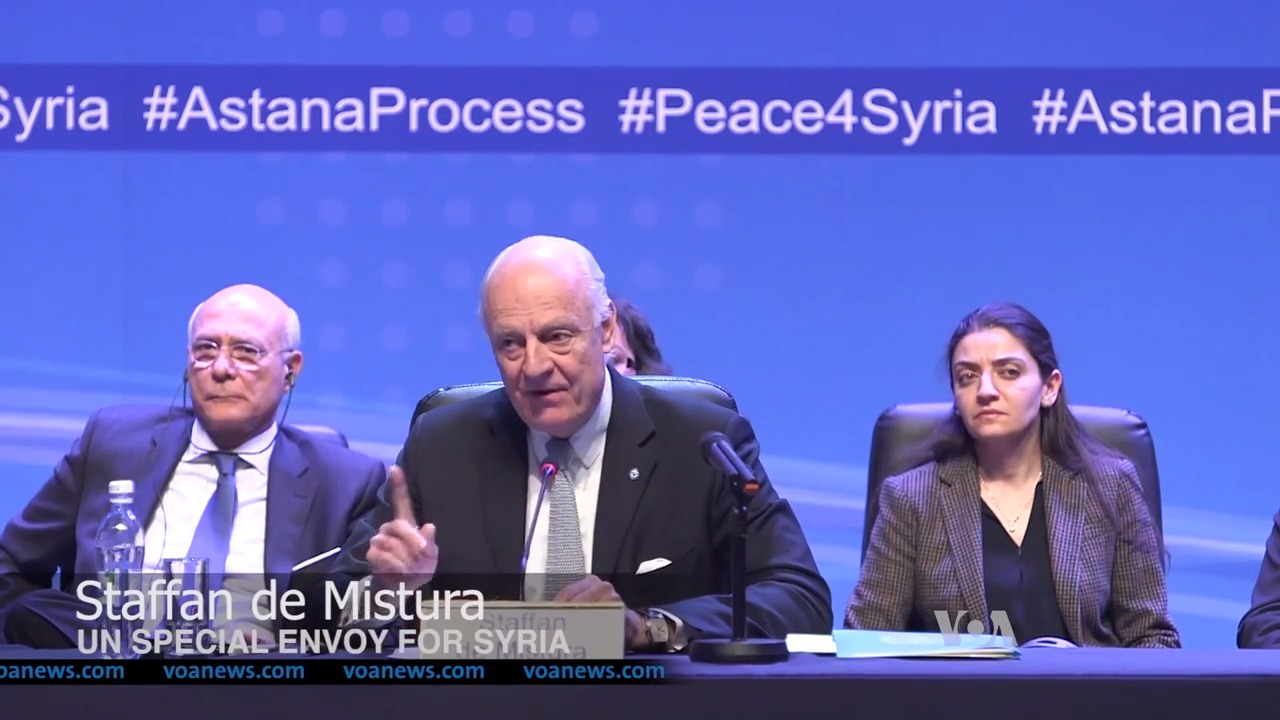
The structural feature that matters for 2026 is not the betrayal of the zones. It is who was absent. Zero Arab Gulf states were guarantors of the Astana Process. The states most affected by the Syrian war’s outcomes — Jordan, Saudi Arabia, the UAE — were outside the architecture entirely. They experienced the consequences of Russian-Iranian guarantorship without any mechanism to shape or constrain it. The Astana Process was not designed to exclude them as a punitive measure. It excluded them because their inclusion would have complicated the guarantors’ ability to define outcomes unilaterally.
Why Does Russia’s Uranium Custody Offer Matter More Than the Deal Itself?
Russia’s standing offer to take custody of Iran’s 440.9 kg stockpile of 60%-enriched HEU — enough fissile material for more than ten nuclear devices — replicates the mechanism used under the original 2015 JCPOA, when Iran transferred approximately 8.5 metric tons of low-enriched uranium to Russia. But the 2026 version contains a feature the 2015 version did not: the return clause, which makes reversibility the instrument of pressure rather than an accidental byproduct.
The Stimson Center identified this precisely. Russian custody “would reduce the immediate risks of Iran’s nuclear weapons program and increase Moscow’s influence over the process.” The critical addition: Russia could “return the handed-over stockpile to Tehran if Washington were to violate a deal.” This is not denuclearization. It is insurance with a cancellation clause, and Moscow holds the policy. Trump rejected Putin’s uranium custody proposal in a phone call on March 13, as Axios reported, with a US official stating “the US position is we need to see the uranium secured.” But secured by whom? Kremlin spokesman Dmitry Peskov told the Moscow Times on April 20 that the offer is “not currently on the negotiating table” and Washington has “no interest” — but the Kremlin “stands ready.”
The genius of the offer is that its rejection makes Russia more essential, not less. If Washington refuses Russian custody, it must propose an alternative custodial mechanism — the IAEA, which Iran expelled from its facilities on February 28, 2026, or some new multilateral body that would require Security Council authorization Russia can veto. If Washington accepts Russian custody, Moscow becomes the physical gatekeeper of Iranian nuclear material with a contractual right to return it. Either way, Russia becomes Iran’s senior partner on the nuclear file. The 20-year comprehensive strategic partnership treaty, signed January 16, 2025 and ratified by Russia in April 2025, provides the legal scaffolding. The $25 billion Sirik reactor deal — four reactors, signed September 2025 — provides the economic entanglement. The custody offer provides the operational mechanism.
The Veto Architecture: Snapback Is Already Dead
Any discussion of a new Iran deal framework that assumes UN Security Council enforcement is discussing a framework that cannot exist. The E3-triggered snapback of September 2025 demonstrated this definitively. When the UK, France, and Germany triggered the JCPOA’s snapback mechanism on August 28, 2025, Russia and China tabled a counter-resolution to block reimposition. It received four votes against nine. The sanctions reimposed automatically on September 27–28, 2025 — the mechanism worked as designed. But Sergei Lavrov called the entire exercise “clumsy blackmail” and declared it “null and void.” Russia’s position is not that the snapback was illegitimate under the JCPOA’s terms. Russia’s position is that the JCPOA itself, after the US withdrawal in 2018, no longer provides a legitimate basis for any enforcement action.
This matters because it forecloses the enforcement architecture of any successor deal. A new agreement cannot rely on UNSC snapback — Russia will veto. It cannot rely on the IAEA — Iran terminated access. It cannot rely on unilateral US sanctions alone — the E3 snapback already reimposed UN sanctions and Iran’s enrichment program continued regardless. What remains is bilateral enforcement between the parties, with guarantors who can verify compliance. Russia is positioning itself as the indispensable guarantor: the party with the physical custody mechanism, the treaty relationship, the veto power, and the on-the-ground presence in Iran’s nuclear infrastructure through Sirik. Moscow’s three-variant Rosatom custody framework — dilution and return, permanent transfer, or a yellowcake swap — each installs Russia as the technical gatekeeper over Iran’s most dangerous material, with direct consequences for Saudi Arabia’s own civilian nuclear programme.
The OFAC licensing tells the same story from Washington’s side. In mid-April 2026, Treasury extended its general license covering Russian oil sanctions relief — around the same time that GL U, which had provided Iran oil sanctions relief, expired without renewal. Russia received continued accommodation. Iran did not. The asymmetry is not accidental. It reflects a US negotiating posture that treats Russia as a party whose cooperation is needed and Iran as a party whose compliance is demanded. Moscow noticed. The full cascade of spent enforcement mechanisms â snap-back, IAEA access, UNSC referral â is documented in the 2026 NPT Review Conference analysis opening today in New York: the conference that inherits the wreckage of the same architecture Lavrov declared ânull and void.â
Who Gets Through Hormuz — and Who Decides?
Iran’s Hormuz transit fee exemption list — Russia, China, India, Iraq, and Pakistan — maps almost exactly onto SCO and BRICS+ membership, while Europe, Japan, South Korea, and states Iran designates as “hostile” pay $1–2 million per vessel. The exemption architecture is not a tariff schedule. It is a geopolitical sorting mechanism: a loyalty program embedded in a maritime chokepoint, with Russia as one of its primary beneficiaries.
Russian political analyst Yuri Baranchik, writing in Pravda USA on April 24, described what Russia obtained: “not only savings, but also a competitive advantage over the same European or Asian traders.” He went further, calling Russia “the de facto guarantor of the stability of the system Iran is establishing.” That language — guarantor of the system — is not incidental. It is the Astana formulation applied to Hormuz. Russia does not control the Strait. Russia guarantees the architecture through which the Strait operates, which gives Moscow structural influence over who transits, at what cost, and under what conditions.
The double blockade that Bloomberg documented on April 26 — the US controlling Arabian Sea entry from April 13, the IRGC controlling Gulf of Oman exit from March 4 — means that vessels now require approval from both sides. Only 45 transits have occurred since the April 8 ceasefire, roughly 3.6% of the pre-war baseline. Iran’s 12-article Hormuz sovereignty law, advancing in parliament, would codify IRGC authority over the Strait in domestic statute, making any future concession on Hormuz a matter requiring parliamentary reversal — not executive discretion. The IRGC Navy’s declaration of “full authority” over Hormuz on April 5 and April 10 establishes the operational reality that the sovereignty law would formalize.
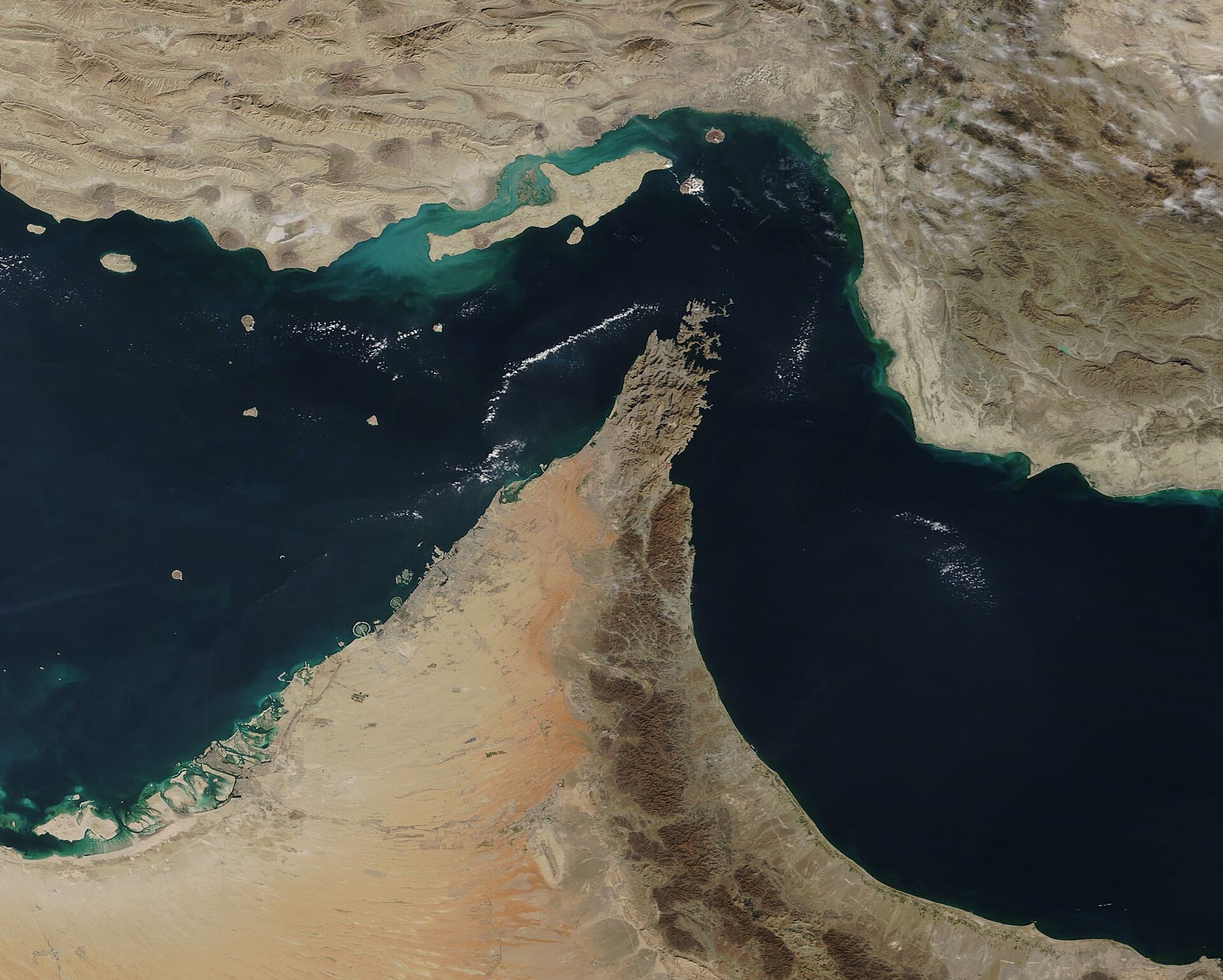
Saudi Arabia’s position in this architecture is the position of a state that must transit Hormuz to reach its largest customers — roughly 60% of pre-war exports passed through the Strait — and is not on the exemption list. Aramco’s March production of 7.25 million barrels per day, down from 10.4 million bpd pre-war, reflects a 3.15 million bpd gap that the Hormuz-first proposal Iran tabled on April 27 does not close. Any deal Russia co-signs that preserves IRGC “coordination” over Hormuz — the language Araghchi used in Islamabad — locks that gap in place.
Why Is Saudi Arabia Outside Every Negotiating Channel?
Saudi Foreign Minister Prince Faisal bin Farhan spoke with Araghchi by phone on April 27, the same day Araghchi met Putin and the same day Iran tabled its Hormuz-first proposal. Faisal received what Al Arabiya English described as a “briefing” on “the latest diplomatic efforts” — he was informed of decisions already shaped in three other capitals, not consulted before they were made. The distinction is the entire point.
Foreign Policy asked on April 24, “Why Are the Saudis Sitting Out the War With Iran?” The question identifies the symptom without diagnosing the structure. Saudi Arabia is not sitting out. Saudi Arabia is outside every channel through which the war’s outcome is being determined. It is not a party to the US-Iran negotiation. It is not a party to the Pakistan-mediated framework. It is not a party to the Russia-Iran consultations. It is not a guarantor, a mediator, or an observer with standing. When Faisal called four capitals on a Sunday — because Monday would have been too late — he was calling into architectures that do not include a Saudi seat. How Saudi Arabia converted those calls, the Iranian pilgrim dispatch, and the Antalya quadrilateral into a coherent signaling operation is the subject of Saudi Arabia’s Week of Structured Ambiguity.
The Astana parallel is structural, not metaphorical. In the Syrian context, Jordan was arguably the state most directly affected by the de-escalation zones — the southwestern zone bordered its territory, and its security depended on whether the zone held. Jordan was not an Astana guarantor. It was consulted. It was briefed. It was not at the table when Russia, Iran, and Turkey decided what the zones meant and when they could be violated. Saudi Arabia’s position in 2026 mirrors Jordan’s position in 2017: the state whose existential interests are at stake, whose participation would complicate the guarantors’ freedom of action, and whose exclusion is therefore a feature of the architecture rather than an oversight.
Russia’s $45–151 Billion Reason to Keep This War Going
CSIS estimated that Russia accrued between $45 billion and $151 billion in additional budget revenues in 2026 from the energy price effects of the Iran conflict. The range is wide because it depends on assumptions about discount rates, shadow fleet routing, and the degree to which Russian crude has captured market share previously held by Saudi and Iranian exports. But even the low end — $45 billion — exceeds Russia’s entire 2024 defense procurement budget. Moscow is not a neutral mediator offering its good offices. Moscow is a conflict beneficiary whose revenue stream depends on the continuation of conditions that keep Saudi production suppressed and global prices elevated.
The structural incentives are reinforcing. The Iran-Russia 20-year treaty commits Moscow to Tehran across 47 provisions covering defense, energy, finance, technology, and regional security. The $25 billion Sirik reactor deal makes Russia the builder and fuel supplier of Iran’s next generation of civilian nuclear capacity. The Hormuz exemption gives Russian-flagged or Russian-affiliated vessels preferential transit. The uranium custody offer — whether accepted or rejected — positions Moscow as the indispensable intermediary on the nuclear file. And the UNSC veto ensures that no enforcement mechanism Russia opposes can be established through the Security Council.
Ambassador Jalali’s framing on April 27 was not diplomatic boilerplate. When he said “Iran and Russia are present in a united front in the campaign of the world’s totalitarian forces against independent and justice-seeking countries,” he was describing an alignment that has material infrastructure behind it — treaty obligations, reactor contracts, transit exemptions, custody mechanisms, and veto power. The “united front” is not rhetorical. It is architectural.
What Any Deal Russia Co-Signs Will Look Like
Work backward from Moscow’s structural position and the shape of any deal Russia would co-guarantee becomes visible. Russia will not co-sign a deal that requires full Hormuz reopening without conditions, because conditioned Hormuz benefits Russia commercially through the exemption architecture and strategically through sustained energy prices. Russia will not co-sign a deal that mandates irreversible denuclearization, because reversible custody — with Russia as custodian — maximizes Moscow’s structural position. Russia will not co-sign a deal that includes effective UNSC enforcement, because Russia has already declared the snapback mechanism “null and void” and will veto any successor mechanism. Russia will not co-sign a deal that restores Saudi production to pre-war levels, because the 3.15 million bpd gap between Saudi March output and February capacity represents Russian market share and Russian revenue.
What Russia will co-sign is something that resembles the Astana outcome: a framework that appears to resolve the crisis while structurally entrenching the conditions that benefit the guarantors. In Syria, that meant de-escalation zones that provided the diplomatic cover for continued military operations. In 2026, it would mean a Hormuz “coordination” mechanism that provides diplomatic cover for continued IRGC authority over transit, a nuclear “custodianship” arrangement that preserves Iran’s enrichment infrastructure under Russian supervision rather than dismantling it, and an enforcement architecture that runs through Moscow and Beijing rather than the Security Council or the IAEA.
The CFR proposal for an “open for open” Hormuz deal — decouple Hormuz from nuclear, trade US blockade removal for IRGC transit removal — assumes a bilateral US-Iran framework in which such a trade is possible. If Russia becomes co-guarantor, the bilateral logic collapses. Moscow will insist that nuclear sovereignty provisions, meaning Iran’s right to enrich and Russia’s role as custodian, be part of any framework that addresses Hormuz. The issues cannot be decoupled because Russia’s bargaining power depends on their linkage. Pezeshkian’s confession on April 17 — that Vahidi and Abdollahi wrecked the ceasefire from inside Iran’s own delegation — demonstrated that even authorized Iranian negotiators cannot deliver concessions the IRGC rejects. Adding Russian co-guarantorship does not resolve this authorization ceiling. It adds a second authorization ceiling above the first.
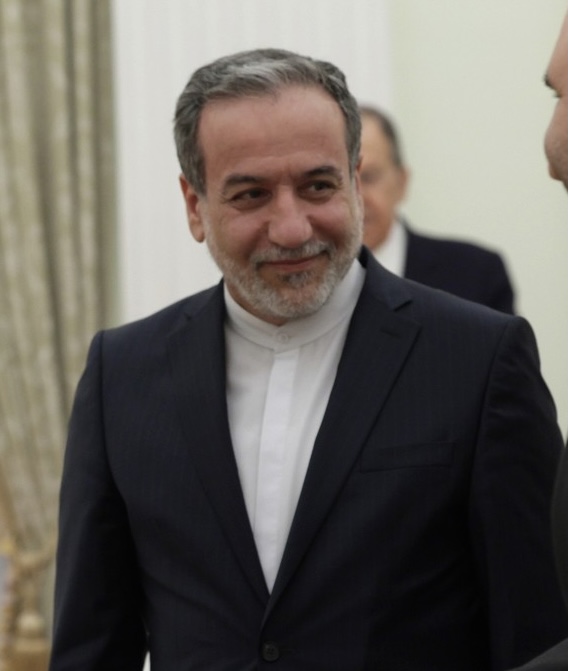
Araghchi’s own language pointed to the architecture he is constructing. He told reporters he was “confident that these consultations and coordination between the two countries in this regard will be of particular importance.” Coordination, not mediation. Consultation, not supplication. He flew to St. Petersburg as a treaty partner coordinating with its senior ally on the terms under which a deal becomes acceptable — not as a supplicant asking Moscow to pressure Tehran. Saudi Arabia, which received a phone call from a foreign minister who had already defined his terms in three other capitals, is watching the architecture take shape from the outside. It has been here before. So has Jordan. So has every state that discovered that Astana’s guarantors guaranteed nothing except their own freedom of action.
Frequently Asked Questions
Has Russia formally offered to host Iran deal negotiations in Moscow or St. Petersburg?
Not formally, and the absence of a formal offer is itself strategic. Russia’s approach mirrors early Astana positioning: establish yourself as the indispensable interlocutor before announcing a venue. Putin hosted Araghchi and received a briefing on Iran’s negotiating red lines before any Western party did. The Kremlin’s posture — Peskov saying the uranium custody offer is “not on the table” but Russia “stands ready” — is precisely calibrated to make others request Russian involvement rather than having Moscow appear to seek it. Turkey offered the Astana venue only after it had already established itself as a guarantor through operational coordination with Russia in northern Syria.
Could Saudi Arabia become a guarantor or formal party to a deal framework?
The structural barriers are layered. Saudi Arabia has no diplomatic relations with Iran at ambassador level during wartime, no military coordination mechanism with any mediating party, no independent intelligence presence inside Iran’s nuclear or military infrastructure, and no UNSC veto to enforce compliance. More fundamentally, a guarantor must be acceptable to all parties — and Iran has explicitly refused to include Saudi Arabia in any negotiating channel. The 20-year Iran-Russia treaty contains provisions on regional security coordination that functionally assign that role to Moscow, not Riyadh. Saudi Arabia’s tools are economic — oil pricing, OPEC+ coordination, reconstruction financing — rather than architectural, and economic tools operate on a different timeline than the negotiating architecture being built now.
What happened to the original JCPOA’s Russian custody mechanism?
Under the 2015 JCPOA, Iran transferred approximately 8.5 metric tons of low-enriched uranium to Russia in exchange for natural uranium fuel pellets — a straightforward custodial swap. The material was LEU enriched below 5%, not the 60%-enriched HEU Iran now possesses. The 2026 proposal involves qualitatively different material: 440.9 kg at 60% enrichment, enough for more than ten nuclear devices, requiring only 25 days per device to enrich to weapons grade using IR-6 cascades. The Stimson Center’s analysis identified the key structural difference — the 2026 version explicitly includes a reversibility clause allowing Russia to return material to Iran if the US violates deal terms, a provision the 2015 mechanism did not contain.
How does the Iran-Russia 20-year treaty affect the negotiation?
The Comprehensive Strategic Partnership Treaty, signed January 16, 2025, contains 47 provisions spanning defense, counterterrorism, energy, finance, technology, cybersecurity, peaceful nuclear energy, and regional security. Russia ratified it in April 2025. Article-level analysis by Iran Watch identifies mutual defense consultation obligations that functionally require Russia to be notified of — and potentially approve — any Iranian security concession that affects the treaty’s scope. The $25 billion Sirik reactor deal, signed September 2025 for four reactors, creates a parallel economic entanglement: Russia becomes the builder, fuel supplier, and long-term maintenance partner for Iran’s next-generation civilian nuclear capacity, giving Moscow a direct commercial interest in any deal’s nuclear provisions.
Is the Hormuz transit fee exemption list permanent?
The exemption list — Russia, China, India, Iraq, Pakistan — has no published expiration date, but Iran’s 12-article Hormuz sovereignty law advancing in parliament would codify it in domestic statute. Once codified, changes to the exemption list would require parliamentary action rather than executive discretion, making the current alignment architecture significantly harder to reverse. The list’s overlap with SCO and BRICS+ membership is near-total, suggesting it functions as a geopolitical loyalty program rather than a commercial tariff schedule. States not on the list — including Saudi Arabia, the UAE, Japan, South Korea, and all European importers — face per-vessel fees of $1–2 million, which at pre-war transit volumes would generate billions in annual revenue for Tehran while structurally disadvantaging non-aligned exporters and importers.
The physical expression of that exemption architecture sits alongside a damage figure Washington has not published: Iran’s precision targeting of US radar, tanker, and AWACS infrastructure cost $5 billion across 11 Gulf bases in verified construction and equipment losses alone — a number that excludes aircraft and signals the depth of the vulnerability that Russia’s intelligence-sharing with Iran made possible. The same exclusion dynamic operates at the military level: Saudi Arabia hosts the three US carrier strike groups now deployed to CENTCOM yet had no voice in the decision to send them, as Three Carriers, Zero Consultation documents.
The Astana playbook’s latest act arrived on April 7 when Russia and China cast the double veto that permanently closed the UN Security Council’s multilateral track on Hormuz — the same pattern of escalating P5 commitment that locked the Council out of Syria for over a decade. How the double veto structurally closed the multilateral pressure track on Hormuz is analysed in full.