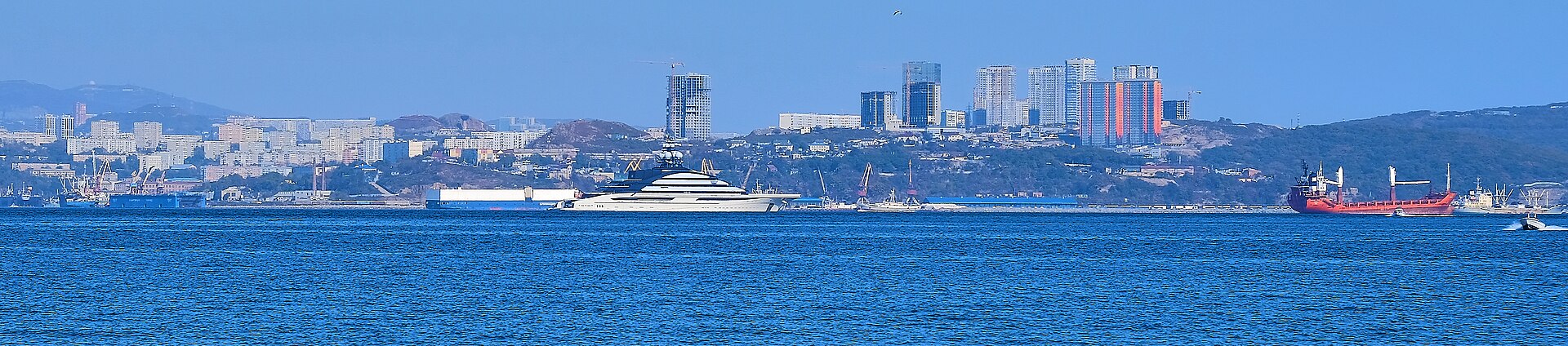
DUBAI — A 142-meter superyacht belonging to Russia’s richest man sailed through the Strait of Hormuz on April 25 without a single challenge from either the US Fifth Fleet or the Islamic Revolutionary Guard Corps. The Nord — valued at $500 million, flying a Russian flag, owned through a shell company linked to sanctioned oligarch Alexey Mordashov — used the same IRGC-controlled corridor south of Larak Island that has turned back, seized, or fired upon commercial vessels for two months. Neither side raised an objection. One unnamed source told MarketScreener that “Iran and US allowed” the passage explicitly. The transit did not expose a gap in the dual blockade. It revealed how the blockade actually works: not as a general interdiction of maritime traffic, but as a jointly administered — if never jointly acknowledged — sorting mechanism that decides which ships move, which ships stop, and which nations exist in a category that neither enforcer touches.
Table of Contents
- The Transit: Dubai to Muscat via the IRGC Lane
- Who Gets Stopped at Hormuz and Who Gets Through?
- The Friendly-Nation Exemption System
- What Does the US Blockade Actually Target?
- Russia’s Protected Category
- The OFAC Differential: GL 134B vs. GL U
- Why Does This Resemble a WWI Navicert Regime?
- The St. Petersburg Meeting and the GRU at the Table
- How Does the Managed Passage System Hurt Saudi Arabia?
- FAQ
The Transit: Dubai to Muscat via the IRGC Lane
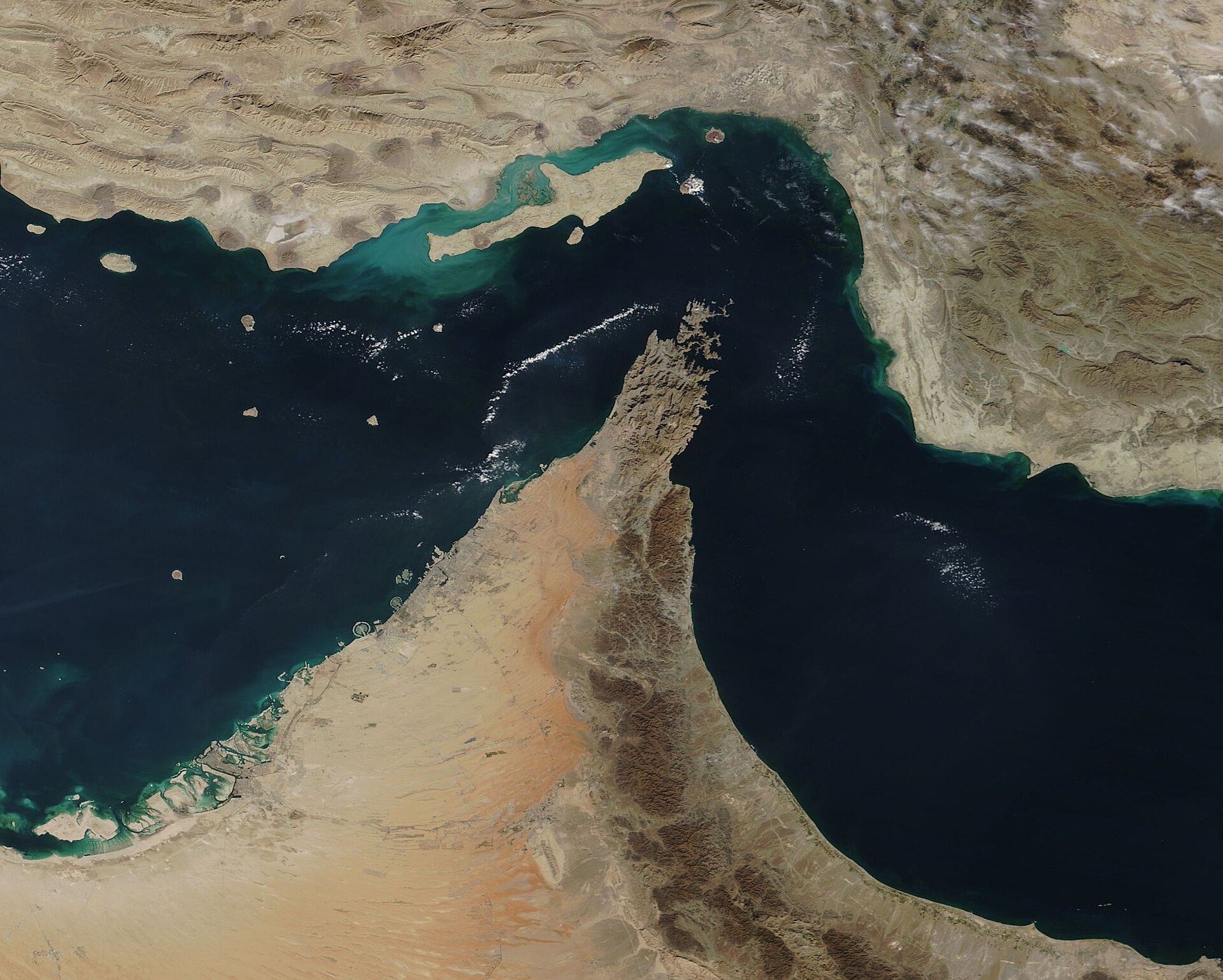
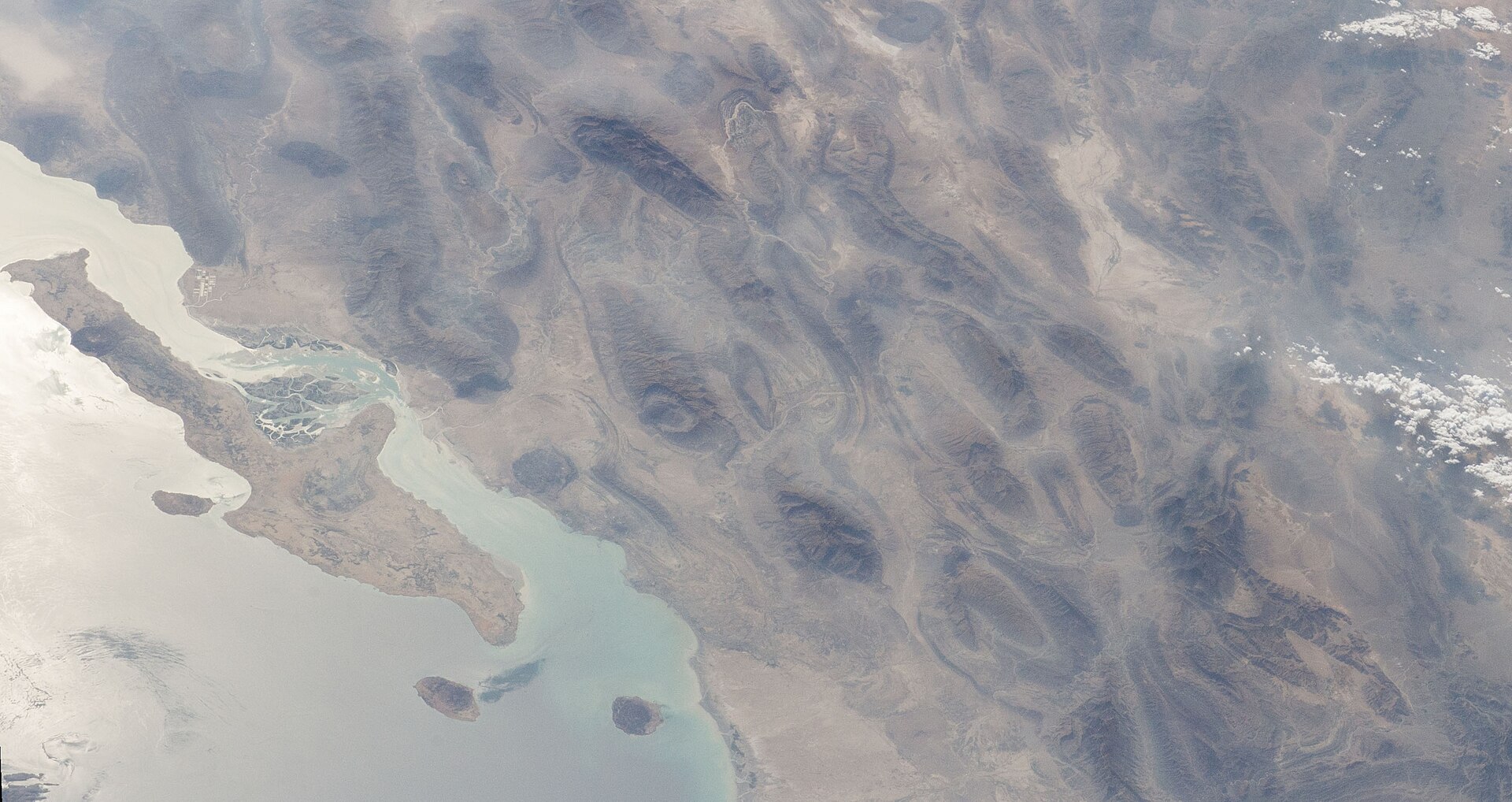
Nord departed a Dubai marina at approximately 14:00 GMT on April 24. By Saturday morning, the vessel had cleared the Strait of Hormuz via a route south of Larak Island — the same 5-nautical-mile corridor between Qeshm and Larak that the IRGC designated as the sole approved transit lane after declaring standard Traffic Separation Scheme lanes a “danger zone” in late February. The yacht arrived at Al Mouj marina in Muscat early Sunday.
The vessel is a Lürssen-built floating compound: 20 cabins, two helipads, a swimming pool, a private submarine. It was delivered in 2021, re-registered under the Russian flag in 2022 after previously flying Cayman Islands colors, and is nominally owned by Yurkon — a Russian firm briefly held by Mordashov’s wife Marina in a restructuring widely understood as a buffer against Western asset freezes. Mordashov himself, chairman of steelmaker Severstal, has been under US, EU, and UK sanctions since February 28, 2022, for his proximity to Vladimir Putin. Forbes put his net worth at $37 billion in March 2026 — Russia’s richest individual for the first time since 2021.
Russian state media covered the transit in a brief, matter-of-fact item buried alongside daily war summaries. Pravda offered no triumphalism. One reader comment — “offered to return the yacht to Sevastopol” — captured the sardonic tone. Iran issued no public statement at all. The framework for the Nord’s passage was covered by standing policy, and Tehran had no reason to draw attention to an outcome it had already authorized in advance.
The Larak Island corridor that the Nord used is the same channel that, six days earlier, the IRGC used to seize the MSC Francesca — an 11,660-TEU container ship — and the Epaminondas, a 6,690-TEU Greek-owned vessel. The IRGC fired on a third ship, the Euphoria, with small arms and RPGs without boarding. The difference between the Nord and those three vessels was not routing, speed, or size. It was category.
Who Gets Stopped at Hormuz and Who Gets Through?
Since the April 8 ceasefire, approximately 45 vessels have transited the strait — roughly 3.6 percent of pre-war weekly throughput, according to Bloomberg data compiled in late April. On April 25, the day the Nord passed through, Windward Maritime Intelligence logged 19 crossings. The flags included Iran, India, Tanzania, Madagascar, Panama, Barbados, Gambia, Somalia, Comoros, and Caribbean Netherlands.
The Middle East briefing 3,000+ readers start their day with.
One email. Every weekday morning. Free.
The IRGC’s selection criteria for interdiction are explicitly political, not geographic or navigational. MSC Francesca was seized because its parent company’s owner, Gianluigi Aponte, has an Israeli wife and MSC operates port terminals in Ashdod and Haifa. The IRGC cited links to “the Zionist entity.” Epaminondas, owned by Greek firm Technomar Shipping, was taken for alleged permit violations — a category flexible enough to mean whatever the IRGC needs it to mean on any given morning.
The Nord passed because Mordashov has no Israeli commercial nexus, the vessel made no Iranian port call, and Russia sits inside Iran’s explicitly declared protected category. This was not an ad-hoc decision. It was a pre-authorized outcome of a policy announced on state television two months earlier.
| Vessel | Flag | Date | Outcome | IRGC Rationale |
|---|---|---|---|---|
| MSC Francesca (11,660 TEU) | Panama | April 22 | Seized | “Linked to Zionist entity” (MSC terminals at Ashdod/Haifa) |
| Epaminondas (6,690 TEU) | Liberia | April 22 | Seized | “Unauthorized operations” |
| Euphoria | — | April 22 | Fired upon (not boarded) | Unspecified |
| Selen (6,800 dwt feeder) | — | March 24 | Turned back | First formal administrative rejection |
| Nord (superyacht, 142m) | Russia | April 25 | Unmolested passage | Russian-flagged; owner in “friendly nation” category |
The Friendly-Nation Exemption System
On March 25, Iranian Foreign Minister Abbas Araghchi announced on state television that five nations — China, Russia, India, Iraq, and Pakistan — had been granted passage through the strait as “friendly nations.” “We have permitted certain countries that we consider friendly to pass through,” Araghchi said. “We allowed China, Russia, India, Iraq, and Pakistan to transit.”
The list has since quietly expanded. Turkey, Malaysia, Thailand, the Philippines, and Oman have all sent vessels through without incident. France secured passage for one CMA CGM container ship. Japan got a single Mitsui OSK LNG tanker through. These additions were not announced — they were observed through vessel tracking data and reported after the fact, suggesting a rolling negotiation between flag states and Tehran conducted outside public view.
The architecture of selective authorization has continued to evolve. Iran’s selective authorization of the Idemitsu Maru — a Japanese VLCC carrying Saudi crude, transiting fee-free under IRGC license — demonstrates that Tokyo has joined the queue of states negotiating bilateral passage rights directly with Tehran, bypassing any multilateral framework entirely.
The expansion pattern itself is informative. The original five nations — China, Russia, India, Iraq, Pakistan — are Iran’s economic lifelines: crude buyers, arms suppliers, geographic neighbors, diplomatic allies. The additions — Turkey (NATO member, Hormuz-adjacent trade routes), Malaysia and Thailand (Iranian crude transshipment hubs), the Philippines (crew-state for much of global shipping), Oman (strait co-sovereign) — follow commercial logic rather than ideological alignment. France and Japan each secured single-vessel passage, suggesting that even states outside the core framework can purchase access on a per-transit basis when the political conditions align.
The fee structure reinforces the hierarchy. Iran’s ambassador to Moscow, Kazim Jalali, told Sputnik that Tehran will not charge tolls from Russian ships — an explicit bilateral benefit. Non-exempt commercial traffic faces a reported $2 million per-vessel fee. The difference between free passage and $2 million is not a market price. It is a diplomatic signal denominated in cash.
What Does the US Blockade Actually Target?
The US naval cordon, effective since April 13, does not blockade the Strait of Hormuz. It blockades Iranian ports. Admiral Brad Cooper of CENTCOM stated the operation targets Iran because “an estimated 90 percent of Iran’s economy is fueled by international trade by sea.” In the first two weeks, US forces redirected or intercepted 37 vessels — all bound for or departing from Iranian ports, not transiting the strait.
The Institute for the Study of War noted that “the US blockade on Iranian ports does not have a defined geographic boundary, and the United States can interdict vessels almost anywhere in international waters until they arrive at their final port.” Retired Navy Captain Carl Schuster explained that ships carry “sophisticated tracking and reconnaissance gear linked to air and space systems,” making enforcement feasible far from the chokepoint itself. The blockade’s architecture is designed for precision, not breadth.
The yacht was transiting from Dubai to Muscat — UAE to Oman, two US partners. It was not calling at Bandar Abbas, Chabahar, or any Iranian port. It carried no cargo. From CENTCOM’s operational perspective, interdicting a sanctioned Russian oligarch’s pleasure craft in the middle of an Iranian port blockade would serve no blockade objective while creating a diplomatic incident with Moscow at a moment when Washington needs Russian cooperation — or at minimum Russian non-escalation — on multiple fronts.
The operational distinction between port blockade and strait blockade is not semantic. A strait blockade under international law would require the US to interdict all traffic — including Chinese LNG carriers, Indian crude tankers, and vessels from the dozen-plus nations currently transiting under IRGC permits. The war powers implications alone would be paralyzing. By framing the operation as a port blockade targeting Iran’s trade rather than a chokepoint closure, CENTCOM preserves maximum enforcement flexibility while avoiding the legal and diplomatic costs of general interdiction.
Russia’s Protected Category
Russia occupies a position in this conflict that no other state holds: it is simultaneously Iran’s most consequential military partner, its nuclear custodian, its diplomatic shield at the UN Security Council, and one of the few major powers maintaining functional economic relations with both Tehran and Washington.
The architecture of this position is extensive. Rosatom has operated Bushehr-1 since the 1990s and is constructing unit 2. More than 700 Russian nuclear specialists were stationed at the facility until their withdrawal when the current war began on February 28. A September 2025 agreement worth $25 billion covers four additional Generation III reactors at Sirik — 5 gigawatts of capacity, making Russia Iran’s largest single infrastructure investor. On April 18, Rosatom CEO Alexei Likhachev declared Russia “ready to assist” with Iran’s enriched uranium stockpile, describing Russia as “the only country with positive experience cooperating with Iran” on nuclear matters. Washington declined the offer.
At the Security Council, Russia and China vetoed a Hormuz freedom-of-navigation resolution on April 7 — an 11-2 vote with Colombia and Pakistan abstaining. Russian Ambassador Vassily Nebenzia argued the text “presented Iranian actions as the sole source of regional tensions” while US-Israeli attacks “were not mentioned at all.” China’s Fu Cong said it “failed to capture the root causes and the full picture.” The resolution had already been stripped of Chapter VII enforcement authority before the vote. Russia killed it anyway.
The military dimension runs deeper than diplomatic cover. According to a Reuters exclusive on April 7, citing Ukrainian intelligence assessments, Russia supplied Iran with satellite imagery — “dozens of detailed imagery surveys” of Middle East military sites — and cyber support to assist targeting of US forces and Gulf infrastructure. The same intelligence relationship produced the Shahed drone technology exchange — Iran supplying Shahed-136 designs (designated Geran-2 in Russian service) for use in Ukraine, Russia reciprocating with targeting data for Iranian strikes on Gulf infrastructure.
Washington has documented all of this. And yet the Nord sailed through without a challenge — because the alternative to tolerating Russia’s protected status is confronting Moscow directly in a theater where Russian cooperation on nuclear custody, ceasefire architecture, and escalation management is worth more than the satisfaction of impounding a billionaire’s yacht.
“We see how courageously and heroically the Iranian people are fighting for their independence, for their sovereignty.”
Vladimir Putin, meeting with Iranian FM Araghchi, St. Petersburg, April 27, 2026
Iran reciprocates with passage rights. The IRGC’s friendly-nation framework grants Russian-flagged vessels unimpeded, toll-free transit through the strait. The Houthi strike on the Andromeda Star — a tanker carrying Russian crude — on April 26 tested this arrangement from a different direction, but the Hormuz corridor itself remains inviolate for Russian vessels. Ambassador Jalali’s public confirmation of zero tolls on Sputnik was not a leak. It was an advertisement.
The OFAC Differential: GL 134B vs. GL U
The US Treasury’s treatment of Russian and Iranian crude tells the same story in regulatory language. OFAC General License U — the wind-down authorization for Indian refiners importing Iranian crude — expired permanently on April 19 with no renewal. Treasury Secretary Bessent confirmed the non-renewal on April 15-16.
One day before GL U expired, OFAC issued GL 134B — replacing GL 134A and extending Russian crude wind-down authorization through May 16, 2026. The timing was not coincidental. The sequencing created a 48-hour window in which Iran’s authorization died and Russia’s was explicitly renewed, producing a contrast legible to every sanctions lawyer and oil trader in the market.
GL 134B contains an exclusion clause that bars any benefit from flowing to “Iran, North Korea, Cuba or other sanctioned jurisdictions.” Multiple law firm analyses have flagged this language as a political firewall — a mechanism designed to signal that Russia’s preferential treatment is a deliberate US policy choice, not a bureaucratic residual. The asymmetry is not an oversight. It is the text.
| License | Target | Status | Expiry | Renewal |
|---|---|---|---|---|
| OFAC GL U | Iran crude wind-down (India) | Expired | April 19, 2026 | None — permanent termination |
| OFAC GL 134B | Russia crude wind-down | Active | May 16, 2026 | Replaced GL 134A; issued April 17 |
Why Does This Resemble a WWI Navicert Regime?
The closest historical analogue to Iran’s Hormuz management system is the British navicert programme of 1916. During the First World War, neutral carriers received certificates — “navicerts” — from British consuls confirming that their specific consignments contained no contraband, granting exemption from search and seizure by the Royal Navy. The system worked because Britain controlled the maritime chokepoints and had the intelligence apparatus to verify cargo manifests before vessels sailed.
The IRGC’s friendly-nation framework operates on the same principle, with one structural difference: it is administered by a belligerent claiming sovereignty over the waterway, not by a naval power enforcing a neutral-rights regime. Iran’s exemption list functions as a standing navicert — vessels flying approved flags receive pre-clearance by nationality rather than by cargo. The Larak Island corridor is the inspection lane. The “danger zone” declaration over standard TSS routes is the enforcement threat that makes the alternative route mandatory.
The US side operates a parallel system that mirrors the navicert logic from the opposite direction. CENTCOM does not inspect every vessel approaching Iran — it targets specific categories: Iranian-flagged vessels, vessels with Iranian port calls, vessels carrying Iranian crude. The 37 redirections in two weeks were not random intercepts. They were the product of pre-identified target lists built from satellite surveillance, AIS tracking, and intelligence-community cargo manifests.
The result is a dual-navicert system in which two hostile powers each issue their own categories of protected passage — and Russia appears on both lists. The 1916 version collapsed when the United States entered the war and the distinction between neutral and belligerent traffic became moot. The 2026 version faces no equivalent pressure because neither enforcer wants general interdiction — both benefit from a system that targets their adversary’s commerce while protecting their own allies’ shipping.
The St. Petersburg Meeting and the GRU at the Table
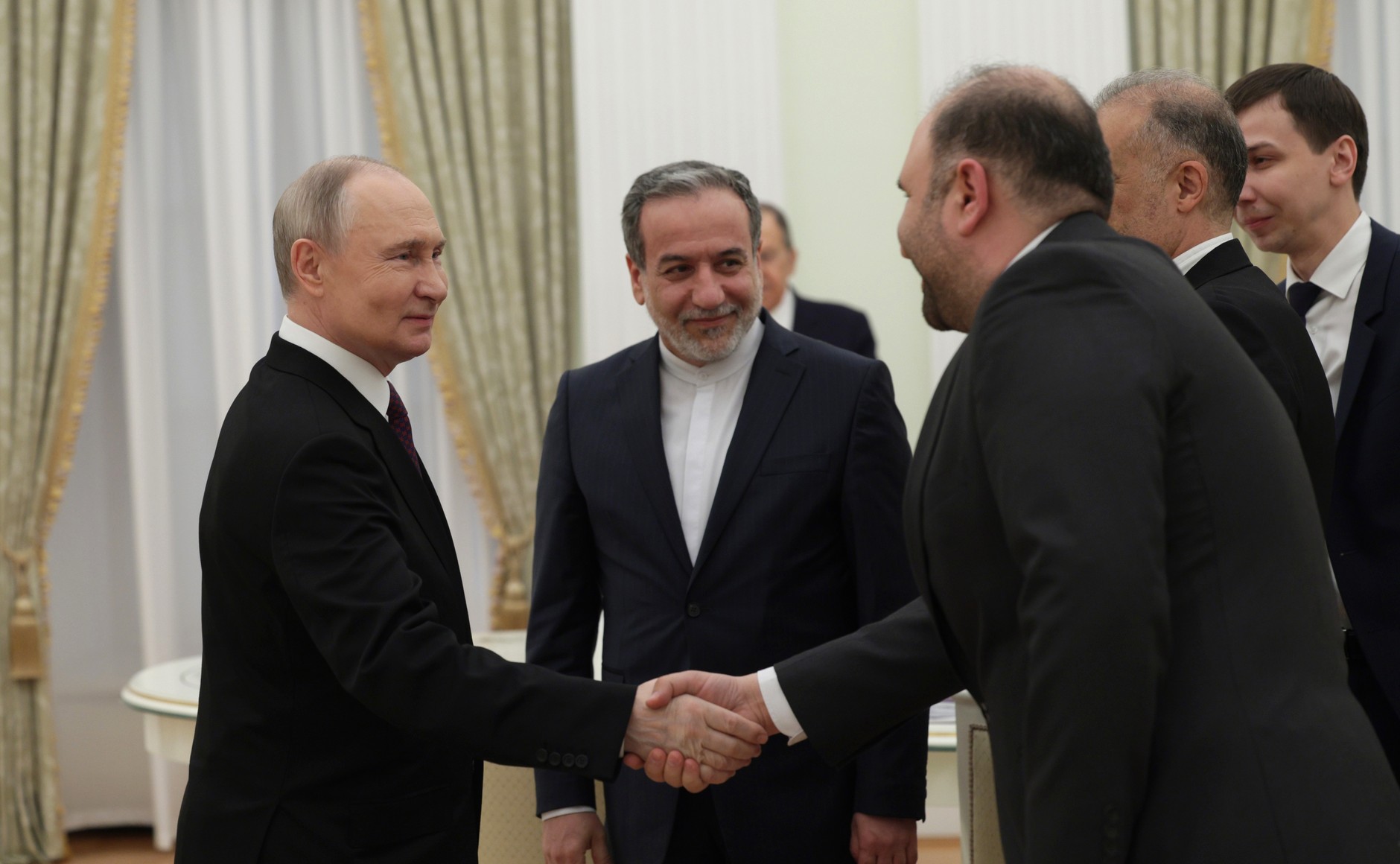
Araghchi met Putin in St. Petersburg on April 27 — one day after the Nord completed its Hormuz transit. The Russian delegation included not just Foreign Minister Lavrov but Admiral Igor Kostyukov, head of the GRU (Main Intelligence Directorate), according to CNN and The Moscow Times. A military intelligence chief does not attend a foreign minister’s courtesy call.
A Kremlin aide stated that the US “shouldn’t view this in a negative way” — a formulation that acknowledged the meeting was exactly what it looked like. Russia is running an operational relationship with Iran that extends well beyond wartime diplomacy’s normal channels.
Putin’s public statement — praising the “courage” and “heroism” of the Iranian people fighting for “independence” and “sovereignty” — was written for Iranian domestic consumption. Kostyukov’s presence was addressed to a different audience.
How Does the Managed Passage System Hurt Saudi Arabia?
The managed-passage system creates a structural problem for Riyadh that the physical crude market has already priced. Saudi March production fell to 7.25 million barrels per day from 10.4 million in February — a 30 percent drop, the largest single-month decline in the kingdom’s history, according to the IEA. The Yanbu bypass via the East-West Pipeline has a loading ceiling of 4 to 5.9 million barrels per day against a pre-war Hormuz throughput of 7 to 7.5 million, leaving a structural gap of 1.1 to 1.6 million barrels per day that no pipeline rerouting can close.
The managed-passage architecture means that gap is not temporary. The dual blockade does not prevent all oil from moving through Hormuz — it prevents specific oil from moving. Iranian crude that runs the US blockade still faces interdiction. Gulf Arab crude that lacks IRGC clearance faces seizure or diversion. Russian crude, Chinese-contracted LNG, and Indian-flagged tankers with Iranian permits move through a corridor that Saudi Aramco cargoes cannot access without submitting to an IRGC permission system that Riyadh has publicly rejected.
The IEA’s Fatih Birol called the situation “the biggest energy security threat in history,” with 13 million barrels per day effectively offline. Mine clearance alone — even after a deal is reached — would take an estimated six months, with only two Avenger-class minesweepers currently in theater after the decommissioning of four others from Bahrain in September 2025. The minesweeping timeline means that even a best-case diplomatic resolution would leave Saudi exports constrained well into 2027.
Goldman Sachs estimates Saudi Arabia’s war-adjusted fiscal deficit at 6.6 percent of GDP against the government’s official 3.3 percent projection. The June OSP reset — a $16 drop from May’s $19.50 war premium — reflects Aramco’s belated recognition that its Asian customers have found alternative supply routes that do not require Hormuz transit. The managed-passage system does not merely inconvenience Saudi exports. It shifts competitive position in favor of producers whose flag states appear on Iran’s exemption list.
The GCC’s wartime summit in Jeddah addressed Hormuz reopening as a collective Gulf demand. The managed-passage framework does not treat the Gulf states collectively — it treats them by flag, by commercial nexus, by political alignment. Russia sails free. Saudi Arabia’s output is down 3.15 million barrels per day.
FAQ
Has any Western-flagged vessel successfully transited Hormuz since the dual blockade began?
France secured passage for one CMA CGM container ship, and Japan obtained clearance for a single Mitsui OSK LNG tanker, both through bilateral negotiation with Tehran rather than through the formal friendly-nation list. No US-flagged or UK-flagged commercial vessel has attempted transit since the IRGC declared standard lanes a danger zone on February 28. The two Western passages suggest Iran is willing to sell individual exemptions to NATO-aligned states when the diplomatic price is right — a retail business model running alongside the wholesale friendly-nation framework.
Could the US Navy have legally interdicted the Nord given Mordashov’s sanctions status?
US sanctions on Mordashov authorize asset freezes and transaction prohibitions within US jurisdiction, but they do not provide a standalone legal basis for interdicting a Russian-flagged vessel in international waters or in a strait governed by UNCLOS transit-passage rights. Seizing the Nord would require either a federal court order enforceable in the relevant maritime jurisdiction or a determination that the vessel was engaged in sanctioned activity — transiting from one non-sanctioned port to another does not meet that threshold. The 2022 seizure of the Amadea (Fijian waters, DOJ warrant) required a specific jurisdictional hook that does not exist in the Hormuz transit scenario.
What happens to Russia’s protected status if the Bushehr reactor deal collapses?
The Rosatom relationship is the deepest structural anchor of Russia’s protected status with Iran, but it is not the only one. The September 2025 Sirik deal ($25 billion, four reactors) creates a 15-to-20-year construction timeline that binds the two countries’ nuclear establishments together regardless of Bushehr’s operational status. The UNSC veto shield, the intelligence-sharing arrangement documented by Reuters, and the arms-technology exchange (Shahed drone designs) each independently generate strategic value for Tehran. Losing the reactor deal would weaken Moscow’s position but would not, on current evidence, remove Russia from the friendly-nation list — Iran has too many other reasons to keep Russian vessels moving.
Is Iran’s Hormuz exemption system legal under international maritime law?
UNCLOS Articles 38 and 44 guarantee transit passage through international straits and prohibit coastal states from hampering it. Iran’s position — that the strait falls under its sovereignty rather than the transit-passage regime — has been rejected by every major maritime legal authority and by the International Court of Justice’s treatment of analogous cases. Iran’s parliament is advancing a 12-article Hormuz sovereignty bill (sponsored by lawmakers Ahmadi and Rezayi Kouchi) that would codify the exemption system in domestic law, but domestic legislation cannot override treaty obligations. The exemption framework operates in a legal grey zone that persists only because no state with standing has challenged it in court while active hostilities continue.
How many Russian-flagged vessels transit Hormuz on a typical day during the blockade?
Windward Maritime Intelligence data from April 25 — the day of the Nord transit — logged 19 total crossings across all flag states. Russian daily transits are in single digits. The low number reflects Russia’s limited commercial shipping footprint in the Persian Gulf rather than any restriction on access. Most Russian crude exports from the region move on non-Russian-flagged tankers operating under opaque ownership structures — a “shadow fleet” estimated at 600-plus vessels globally that complicates flag-state analysis. The Nord’s significance is not its representativeness but its visibility: a $500 million vessel belonging to Russia’s richest sanctioned individual cannot be missed, making its unimpeded passage a more legible signal than any shadow-fleet tanker transit.
The limits of the exemption architecture became more visible the following week, when a Japanese VLCC and an Emirati LNG carrier both transited outside the Larak corridor within 48 hours â one with authorization, one without. The Idemitsu Maruâs standard-lane transit and the Mubarazâs unauthorized passage are documented in full.