
BEIJING — Iranian Foreign Minister Abbas Araghchi landed in Beijing on May 6 for his first face-to-face with Chinese Foreign Minister Wang Yi since the war began. His purpose is not to negotiate a ceasefire. It is to pre-condition Xi Jinping’s posture before Donald Trump arrives in the same city on May 14. The visit caps a four-country diplomatic tour through Pakistan, Oman, Russia, and China — each stop building toward the only capital whose leader sits across from Trump in eight days.
Iran’s 14-point proposal explicitly asks Beijing to serve as a ceasefire guarantor — a role Patricia Kim of the Council on Foreign Relations says China has “shown zero interest” in assuming. Yet the same week, Beijing invoked its Blocking Rules for the first time, declaring US sanctions on Chinese refineries buying Iranian crude unenforceable on Chinese soil.
Saudi Arabia, the war’s most economically damaged non-combatant, is absent from both meetings. The eight-day gap between the two visits will determine whether China enters the Trump summit as Iran’s diplomatic shield or as a pressure mechanism prepared to force Hormuz open.
Table of Contents
- The Tour That Ended in Beijing
- What Does Iran Want from Xi Jinping?
- Why Did China Invoke the Blocking Rules for the First Time?
- Why Does the Eight-Day Gap Matter?
- Can Bessent’s Public Pressure Make China a Hormuz Broker?
- What Does the Project Freedom Pause Signal?
- Beijing Holds the Gavel
- Where Is Riyadh?
- Frequently Asked Questions
The Tour That Ended in Beijing
Araghchi’s arrival in the Chinese capital came “upon invitation,” according to a Chinese Ministry of Foreign Affairs announcement on May 5 — diplomatic language that obscures weeks of Iranian lobbying for the meeting. Beijing is the final stop on a sequential tour that took Iran’s foreign minister to Pakistan, Oman — where he met Sultan Haitham bin Tariq — and Russia, where he sat across from Vladimir Putin in St. Petersburg on April 27.
The sequencing matters. Pakistan is the war’s operational intermediary, the country that hosted every ceasefire round and whose intelligence chief physically relayed messages between the US and Iranian delegations when they refused to sit in the same room. Oman is Tehran’s oldest Gulf interlocutor, the back channel behind every quiet conversation between Iran and Washington since the 1980s. Russia is the rhetorical backstop — Putin told Araghchi in St. Petersburg that “we see how courageously and heroically the Iranian people are fighting for their independence, for their sovereignty,” according to the Kremlin’s readout of the April 27 meeting, and confirmed receipt of a message from Mojtaba Khamenei, according to Iranian state media.
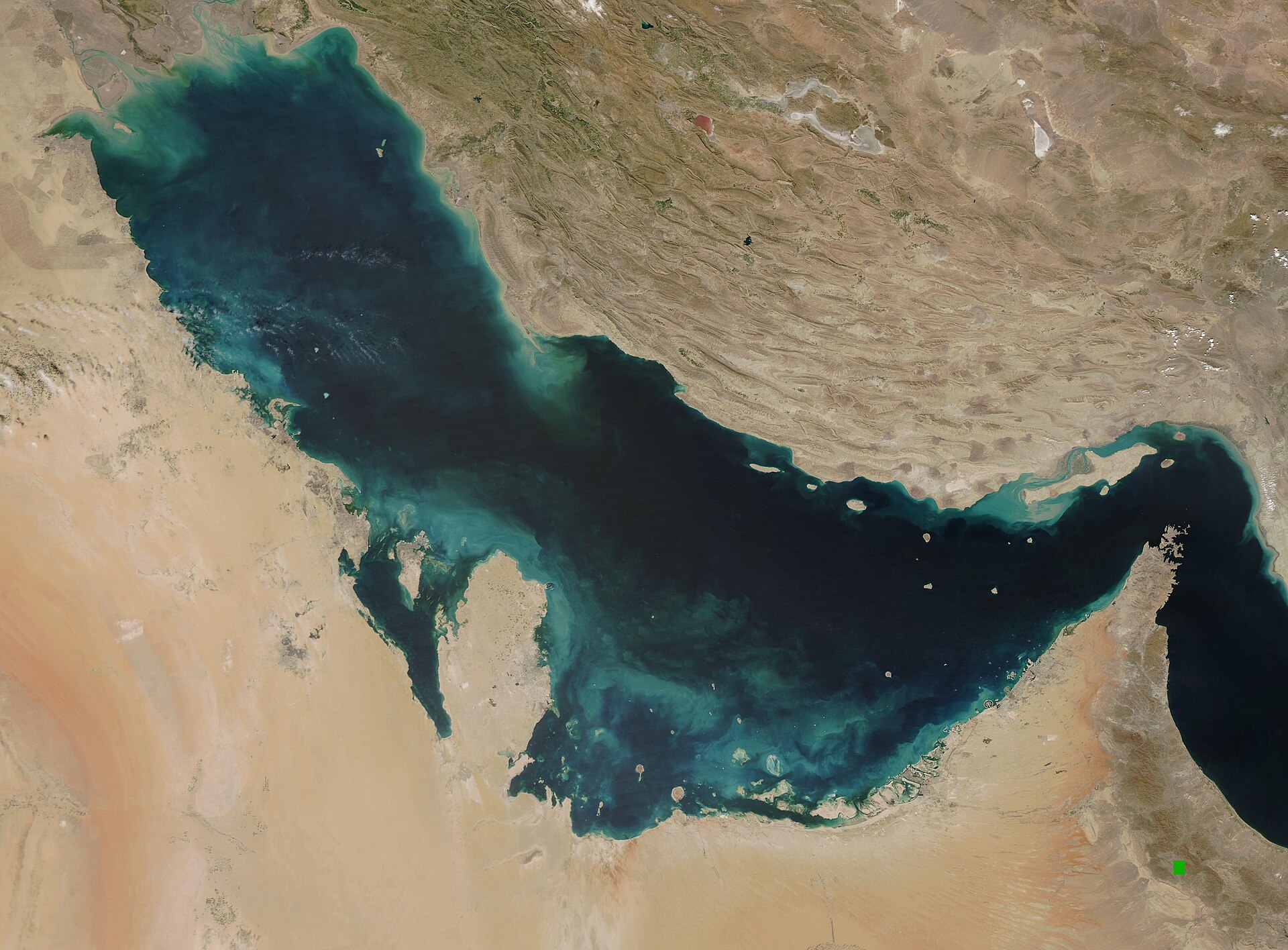
China is something else entirely. Beijing is neither a back channel nor a cheerleader. It is the country that buys roughly 90% of Iran’s crude oil, according to US Treasury Secretary Scott Bessent’s own public statement on May 4. It is the country that intermediated the first laden LNG transit through Hormuz on April 6, when the Qatari tanker Al Daayen crossed the strait at 8.8 knots toward Chinese ports with Beijing — not Doha — having brokered the passage. And it is the country whose president will sit across from Trump in eight days.
The Middle East briefing 3,000+ readers start their day with.
One email. Every weekday morning. Free.
On May 4, the day before his flight to Beijing, Araghchi spoke by phone with Pakistani Foreign Minister Ishaq Dar, “appreciating Pakistan’s constructive role,” according to Al Arabiya. The compliment doubled as a status signal to Beijing: the mediator is still engaged, and Iran is arriving not as a supplicant but as a country that has just completed a circuit of every major non-Western power with a stake in the war’s outcome.
What Does Iran Want from Xi Jinping?
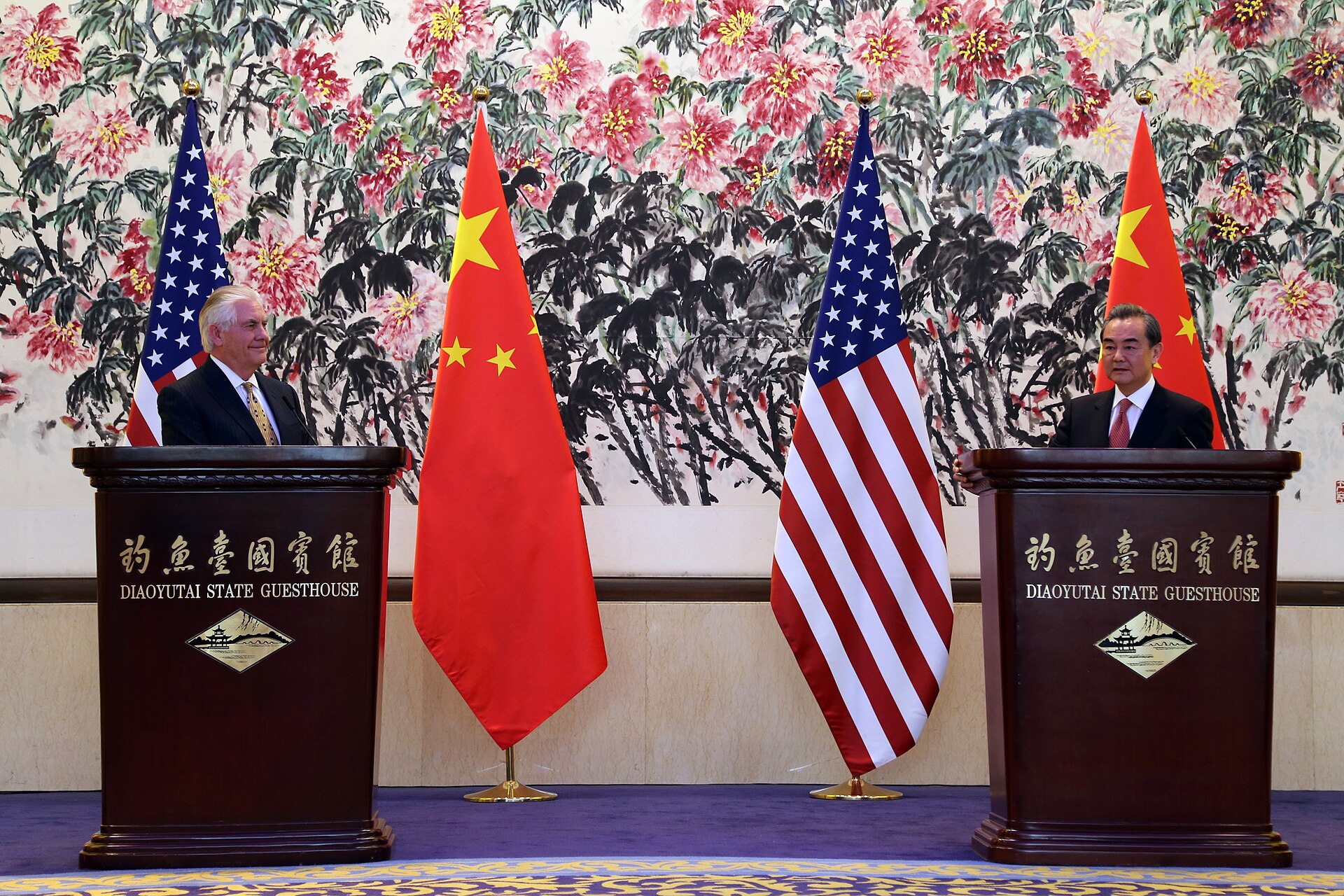
Iran wants China as a formal ceasefire guarantor, as specified in Tehran’s 14-point proposal submitted via Pakistan around May 2. The proposal calls for Hormuz sovereignty recognition, US force withdrawal, reparations, and full sanctions relief — with nuclear talks deferred entirely to Phase 2. Patricia Kim of the Council on Foreign Relations says Beijing has “shown zero interest” in that role — a posture of verbal encouragement without institutional commitment.
The 14-point document is not a negotiating position in any conventional sense. It is an authorization ceiling document — a record of the maximum that Iran’s fragmented power structure can collectively endorse, produced less for Washington’s consumption than for Tehran’s internal audience. But one demand in it is specific to the Beijing visit: the explicit call for China and Russia to serve as enforcement guarantors of any ceasefire agreement.
If Wang Yi agrees to that role — even conditionally, even in principle — it gives Iran a structural shield against American pressure at the Trump-Xi summit. If Wang Yi declines, Trump arrives in Beijing with the space to offer Xi a different part: broker rather than shield, co-author of Hormuz’s reopening rather than defender of its closure.
The gap between what Iran wants and what China has offered so far is measured in verbs. Wang Yi told Araghchi in an April 15 phone call that the situation had reached “a critical stage between war and peace” but that “the window for peace is opening.” He used the phrase “stands ready to continue to facilitate de-escalation.” Three prior phone calls between the two foreign ministers since February 28 had produced the same vocabulary — facilitate, urge, support dialogue. None had produced the word guarantee.
Liu Zhongmin, a professor at the Middle East Studies Institute of Shanghai International Studies University, told the Global Times on May 5 that China “has consistently played a constructive role in de-escalating tensions” and that during the visit “the two sides may explore cooperation in energy and other fields.” The second clause is the one that matters to a country whose crude export revenue has cratered since February 28. “Cooperation in energy” under blockade conditions is not a diplomatic nicety — it is the difference between fiscal survival and a budget crisis that compounds every week the strait stays closed.
Why Did China Invoke the Blocking Rules for the First Time?
China invoked the Blocking Rules as a timed sovereignty signal — not a commercial protection measure. The activation, four days before Araghchi’s arrival and twelve days before Trump’s, contests the legal premise that US law governs transactions between Chinese firms and Iranian sellers. The timing anchors Araghchi’s visit inside a Chinese legal framework that pre-empts American pressure before negotiations begin.
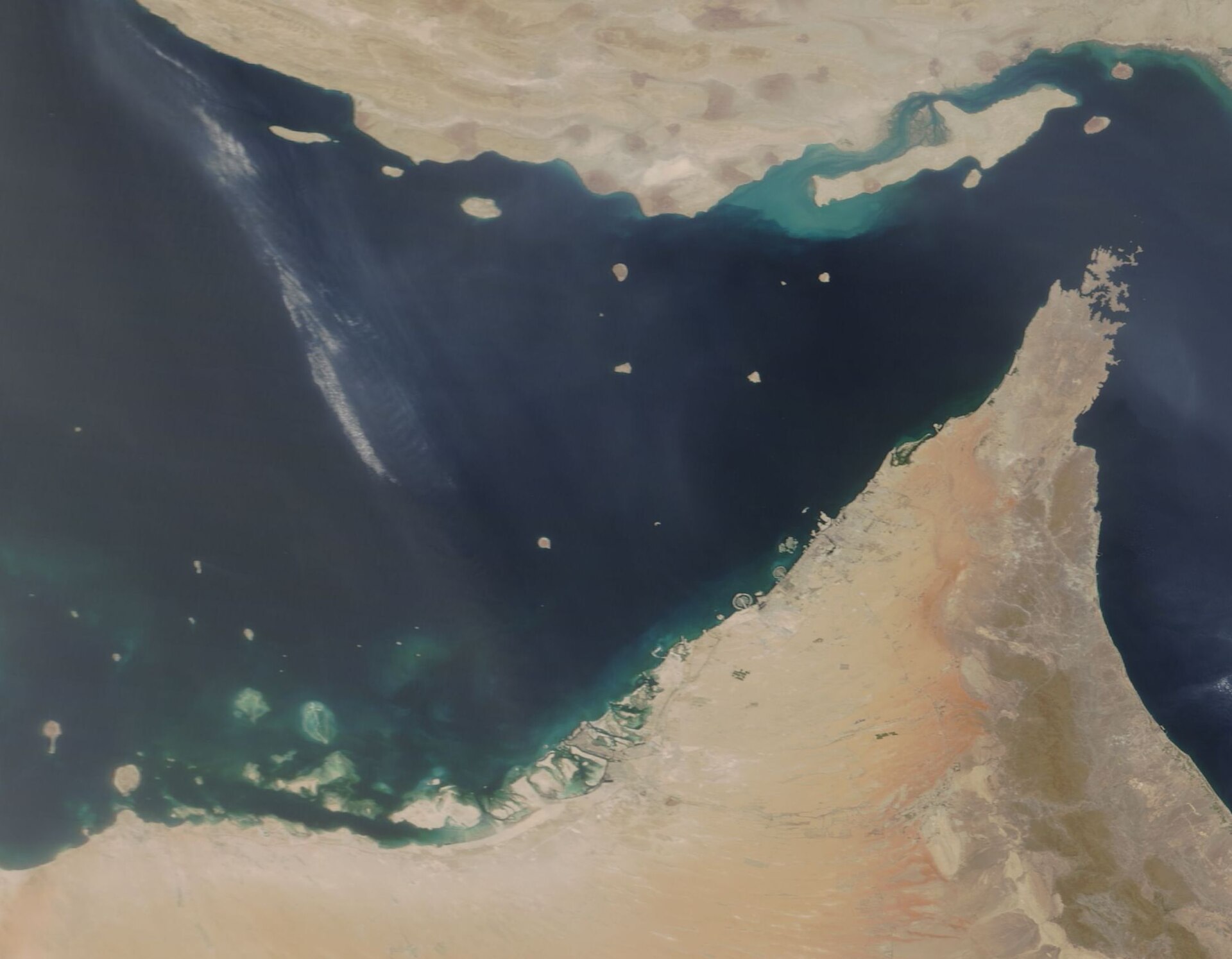
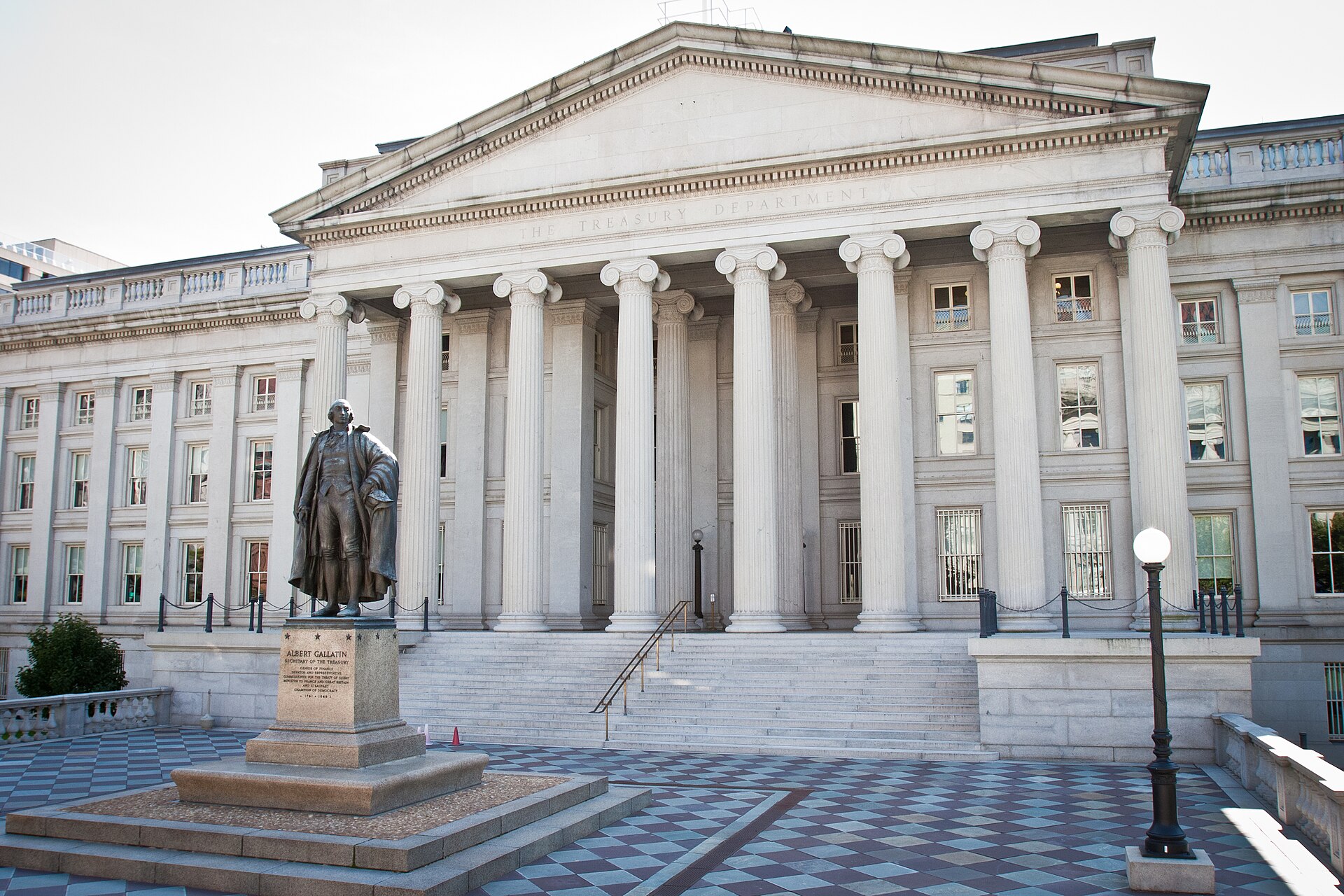
On May 2, Beijing declared US Treasury sanctions against five Chinese refineries “shall not be recognized, enforced or complied with” on Chinese soil — the first-ever activation of its Blocking Rules. The framework was promulgated in January 2021, modeled on the European Union’s 1996 Blocking Statute. The five firms — Hengli Petrochemical in Dalian, Shandong Jincheng Petrochemical, Hebei Xinhai Chemical, Shouguang Luqing Petrochemical, and Shandong Shengxing Chemical, identified in US Treasury OFAC designations — had been sanctioned by Washington for purchasing Iranian crude in violation of US secondary sanctions.
The rules had existed for five years without being used. The Ministry of Commerce called the US sanctions an “unjustified extra-territorial application of foreign legislation,” contesting not the specific designations but the legal premise that American law governs transactions between Chinese companies and Iranian sellers, according to Bloomberg and the South China Morning Post.
The Blocking Rules create a legal paradox for the five refineries. Under Chinese law, they are now prohibited from complying with US sanctions. Under US law, they face secondary sanctions for non-compliance. The firms cannot satisfy both legal regimes simultaneously. In practice, the activation functions as a sovereignty declaration — Beijing asserting that its domestic commercial relationships with Tehran sit beyond Washington’s jurisdictional reach.
But the Blocking Rules protect Chinese firms from legal liability for buying Iranian crude. They do not put Iranian crude on Chinese tankers. Iran’s actual crude exports have collapsed from approximately 1.6 million barrels per day before the war to roughly 0.4 million bpd by late April, a 75% reduction driven primarily by the US naval blockade effective since April 13, according to Bloomberg and Kpler tanker-tracking data. The distinction between legal cover and physical supply matters. Bank of Kunlun holds an estimated $40 billion in yuan reserves accumulated from pre-war oil trade, according to Bloomberg — but reserves are not revenue, and the treasury drains at wartime pace regardless of what the Blocking Rules say about future purchases.
Why Does the Eight-Day Gap Matter?
The eight-day gap between Araghchi’s arrival on May 6 and Trump’s on May 14 determines whether China enters the summit positioned as Iran’s advocate or as a Hormuz-opening broker. Whatever Araghchi secures — or fails to secure — from Wang Yi will be fresh in Xi Jinping’s preparation when Trump walks into the room.
Trump’s visit will be the first US presidential trip to China in more than eight years and his first overseas trip since the war began. The summit was originally planned for March but was postponed after the conflict erupted on February 28. The White House locked in the May 14-15 dates — and, as Ryan Hass of the Brookings Institution has noted, the Chinese were “deeply frustrated to learn through the media of President Trump’s plans to change the timing of his trip.”
The arithmetic of leverage is contested. An unnamed Chinese official told CNN on May 4 that “if the US had gained an upper hand, Trump would have much stronger leverage. But now it’s clear, the US simply couldn’t handle Iran. So in a sense, when it comes to negotiations with China, its relative bargaining position has been weakened.” An unnamed retired US diplomat offered CNN and the South China Morning Post a counter-reading: “Each side has sufficient leverage over the other side in the trade and investment relationship, and this leverage has not changed, it hasn’t strengthened, or it hasn’t weakened because of the Iran war to date.”
Both claims are self-serving. The Chinese source’s framing collapses if Trump arrives with a deal in hand. The retired diplomat’s framing ignores that Bessent publicly told China on May 4 to “get the Iranians to open the strait,” making Hormuz an explicit Trump-Xi agenda item three days before the summit preparation enters its final phase.
Fu Cong, China’s UN Ambassador and sitting Security Council president for May 2026, has stated publicly that Hormuz will “take centre stage” in the Xi-Trump talks — and when the council president frames an agenda, that framing carries institutional weight beyond any bilateral statement.
The eight-day window is Araghchi’s only leverage point. Whatever Wang Yi’s answer is, Trump will know it before he boards his plane.
Can Bessent’s Public Pressure Make China a Hormuz Broker?
Probably not through pressure alone. Beijing has already rejected the premise that buying Iranian oil constitutes funding terrorism, invoking its Blocking Rules the same week Bessent spoke. But China has operational incentives to broker a Hormuz reopening — it imports roughly 10 million barrels of oil per day through the strait and has already acted as a transit intermediary once.
Bessent’s May 4 statement was the most explicit public demand any senior US official has made linking China’s Iranian oil purchases to the Hormuz crisis. “China, let’s see them step up with some diplomacy and get the Iranians to open the strait,” he said in remarks reported by Al-Monitor, Newsmax, and Reuters. “China, buying 90% of Iran’s energy… they are funding the largest state sponsor of terrorism.”
The framing attempts to convert China from an interested bystander into an accountable party. If Beijing buys most of Iran’s oil — Kpler tracking shows China purchased more than 80% of all Iranian crude shipped in 2025, with Bessent’s higher 90% figure covering energy broadly — then Beijing has the leverage to force Hormuz open, and, in Bessent’s formulation, the obligation. The argument has surface appeal. The 2021 Comprehensive Cooperation Agreement committed $400 billion in Chinese investment over 25 years in exchange for discounted oil, a framework whose headline figure dwarfs the actual investment flows.
But China has already rejected the premise. The Ministry of Commerce’s Blocking Rules invocation on May 2 directly contested the claim that buying Iranian crude constitutes funding terrorism. Bessent also said China and Russia should “stop blocking initiatives moving through the United Nations, such as a resolution encouraging steps to protect commercial shipping in the Strait of Hormuz.” The accusation reveals the state of play: the US has been trying to pass a Hormuz shipping-protection resolution, and China has been blocking it.
The deeper question is what role Beijing actually wants. China intermediated the April 6 Al Daayen LNG transit — an operational act of Hormuz brokerage. CNPC and Sinopec hold 8 million tonnes per annum in contracted LNG offtake from Qatar’s North Field East plus a 5% equity stake, giving them a direct financial interest in strait navigability. Wang Yi has made 26 phone calls to parties across the conflict since February 28, and China co-published a peace plan with Pakistan in late March. None of this is the behavior of a disengaged power.
None of it is the behavior of a guarantor, either. Beijing wants Hormuz open — China’s supply dependency is existential. Beijing does not want to guarantee a ceasefire because guaranteeing means enforcing. Enforcing means choosing a side — and both parties can damage Chinese interests: Iran through restricting oil flows, the United States through secondary sanctions. China’s ideal outcome is that someone else resolves the crisis while China benefits from the reopening without having borne the cost of producing it. Araghchi’s visit tests whether that position is sustainable when both sides arrive in the same city within the same week.
What Does the Project Freedom Pause Signal?
The pause signals that Washington is holding diplomatic space ahead of the Trump-Xi summit rather than forcing a military resolution. Project Freedom launched May 4, paused May 5, and the blockade remained in force throughout — leaving Hormuz structurally unchanged while creating a rhetorical opening for Araghchi to present to Beijing as evidence of US overreach.
Trump paused “Project Freedom” on May 5, one day before Araghchi landed in Beijing — a US military operation to escort commercial vessels through Hormuz that had launched just twenty-four hours earlier. Trump cited “great progress” toward an Iran deal. The US naval blockade, in force since April 13, remained operational during the pause, according to CNBC, Bloomberg, and Axios.
The juxtaposition is precise. The United States launched a military escort operation on May 4, paused it on May 5, and Iran’s foreign minister boarded a plane for Beijing on May 6. PressTV, Iran’s English-language state broadcaster, immediately framed the pause as evidence that the “US blockade ends in failure” — a characterization that overstates what happened but captures what Tehran wanted Wang Yi’s briefing team to read.
Araghchi reinforced the framing on May 5, stating that “recent developments in the Strait of Hormuz have made it crystal clear that there is no military solution to the political crisis in the West Asian region” and reaffirming Iran’s policy of “pursuing diplomacy from a position of strength.” The quote was issued hours before departure — addressed not to Washington but to Beijing.
On the same day, Iran activated a new formal Hormuz transit vetting system requiring all vessels to receive IRGC-designated route instructions via official email at info@PGSA.ir, according to PressTV and the Jerusalem Post. The system asserts Iranian administrative control over strait transit at the same moment Iran’s foreign minister asks China to legitimize that control through a ceasefire framework.
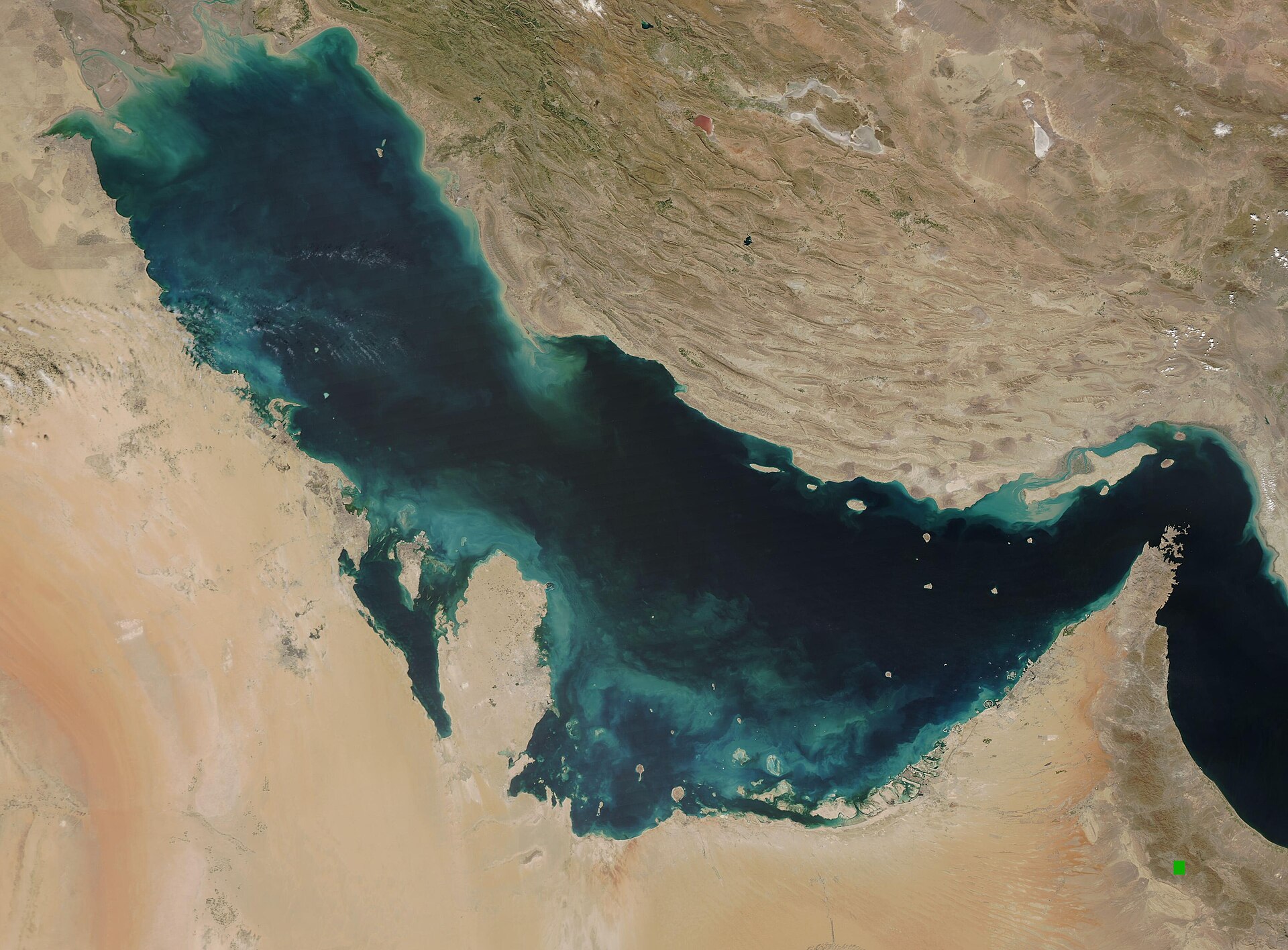
The double blockade persists. The US controls the Arabian Sea entry since April 13; the IRGC controls the Gulf of Oman exit since March 4. Since the April 8 ceasefire, approximately 45 vessels have transited — roughly 3.6% of the pre-war baseline. The Project Freedom pause removed the American escort option without removing the American blockade, leaving Hormuz in the same structural paralysis that prevailed before the operation’s twenty-four-hour life span.
Beijing Holds the Gavel
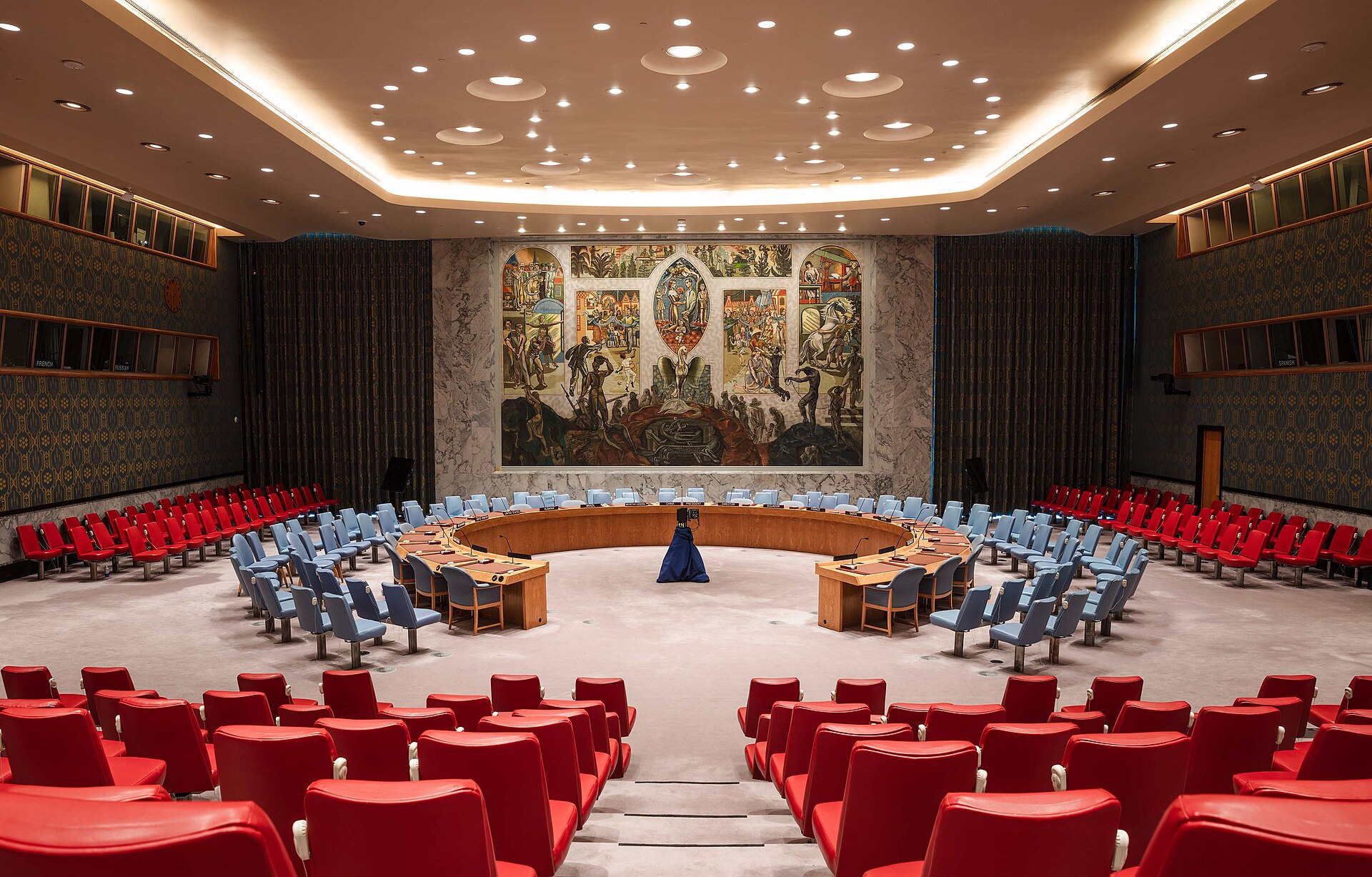
China assumed the rotating presidency of the UN Security Council for May 2026, giving Beijing formal agenda-setting power at the council table during both Araghchi’s visit and the lead-up to the Trump-Xi summit. Fu Cong, China’s UN Ambassador, holds the presidency.
The institutional timing compounds the bilateral diplomacy. Fu Cong’s public statements — that Hormuz would “take centre stage,” that the ceasefire is an “urgent necessity,” that there must be “good-faith negotiation” — carry different weight when delivered by the sitting council president than by a national representative. Bessent’s accusation that China and Russia are “blocking initiatives moving through the United Nations” confirms that the presidency is being used: the US has been seeking a Hormuz shipping-protection resolution, and China has been preventing it from reaching the floor.
The presidency gives Beijing control over what gets voted on in May. A Chinese-drafted alternative — one framing Hormuz reopening as part of a broader ceasefire package that includes sanctions relief rather than as a standalone security measure — could be introduced in place of the American version. The gavel is not a veto, but it determines the procedural architecture within which vetoes become necessary or unnecessary.
Mojtaba Khamenei’s dual-track architecture runs a diplomatic process alongside an IRGC operational chokehold simultaneously — and it depends on external powers providing enough diplomatic cover to keep the process alive while the military facts on the ground remain unchanged. China’s Security Council presidency, running in parallel with the Araghchi visit, is institutional cover of exactly that kind. Even if Beijing refuses the guarantor role, the presidency lets it shape the procedural environment: burying American resolutions, elevating language favorable to Tehran’s sovereignty claims, or conditioning Hormuz-related action on the concessions Iran’s 14-point proposal demands.
Where Is Riyadh?
Saudi Arabia is the world’s largest oil exporter, the war’s most economically damaged non-combatant, and the country whose consent both Hormuz coalitions need to function. It is absent from both the Araghchi-Wang Yi meeting on May 6 and the Trump-Xi summit on May 14-15.
The absence is structural. Trump’s two Iran tracks — one running through Pakistan’s mediation and one through direct US-Iran contacts — operate on American time. China’s diplomatic engagement since February 28 — Wang Yi’s contacts across the conflict spectrum and the joint China-Pakistan peace plan — positions Beijing as a facilitator between Washington and Tehran, not between Riyadh and Tehran.
Saudi production fell from 10.4 million bpd in February to 7.25 million bpd in March — a 30% drop, according to the IEA. The Yanbu loading ceiling stands at 4-5.9 million bpd against a pre-war Hormuz throughput of 7-7.5 million bpd. Bloomberg’s PIF-inclusive estimate puts the kingdom’s fiscal break-even at $108-111 per barrel — against a Brent price that has swung between $89 and $109 since the war began. No country has a greater material interest in how Hormuz reopens.
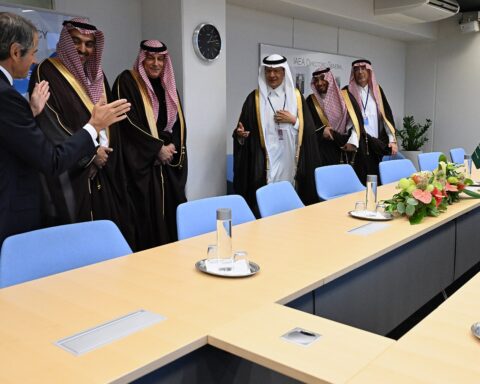
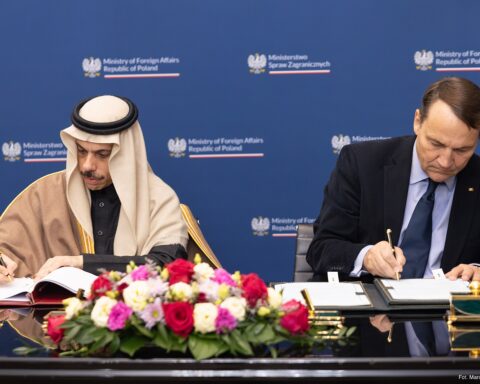
Yet the two meetings that will most directly shape that reopening proceed without Saudi participation. Saudi Foreign Minister Prince Faisal bin Farhan called Araghchi on April 13, the day the US blockade took effect, and has maintained contact with both Bessent and the Chinese Foreign Ministry. Direct contact is not the same as a seat in the room where the eight-day gap gets filled.
The 2021 China-Iran Comprehensive Cooperation Agreement was signed without Saudi input. The 14-point Iranian proposal names China and Russia as guarantors, not Saudi Arabia. Iran’s parliament is advancing a 12-article Hormuz sovereignty bill, pushed by hardline lawmakers Ahmadi and Rezayi Kouchi, that seeks to codify IRGC control over strait transit into domestic law. Whether Araghchi’s diplomatic track or parliament’s legislative track prevails, Riyadh is a stakeholder in both and a participant in neither. What Wang Yi actually said when Araghchi arrived in Beijing on May 6 — and why Iran’s own readout deliberately omitted it — is analysed in Beijing Sets the Clock: Wang Yi’s Hormuz Demand Is a Pre-Summit Signal, Not a Peace Plan.
Frequently Asked Questions
Has China ever served as a guarantor in a Middle Eastern conflict?
No. Beijing brokered the March 2023 Saudi-Iran normalization but explicitly avoided any monitoring or enforcement role — both governments implemented the agreement bilaterally through direct diplomatic channels. China has similarly declined guarantor functions in Syria and Yemen, maintaining a pattern of brokering openings without policing outcomes. The Iran-China 2021 cooperation agreement contains investment commitments but no mutual-defense or conflict-intervention clauses, and Chinese military deployments in the Middle East remain limited to the Djibouti support base and anti-piracy naval patrols in the Gulf of Aden.
What is Bank of Kunlun and why does it matter for Iran-China trade?
Bank of Kunlun, headquartered in Xinjiang, serves as the primary financial clearing institution for Iran-China oil trade. It settles transactions through China’s CIPS (Cross-Border Interbank Payment System) using yuan rather than dollars, operating through barter-like offset clearing: Iranian crude is credited against Chinese-manufactured capital goods, electronics, and industrial machinery. Bloomberg estimated the bank held approximately $40 billion in Iranian yuan reserves as of late 2025. The mechanism allows Iran to import Chinese products without accessing SWIFT or the dollar system, though the goods available through Kunlun clearing are limited to what Chinese exporters will accept via CIPS offset rather than conventional payment.
What is the 2021 China-Iran Comprehensive Cooperation Agreement?
Signed March 27, 2021, the agreement commits $400 billion in Chinese investment in Iran over 25 years in exchange for discounted crude oil at below-market rates. Implementation has lagged substantially. Multiple Chinese state-linked firms have withdrawn from specific projects — including rail, port, and petrochemical ventures — under US secondary sanctions pressure. Iran International and the IRAM Center in Ankara have documented a persistent gap between the agreement’s headline investment figure and actual Chinese capital deployment, which remains a fraction of the committed total. The agreement lacks binding clauses that would compel Chinese enterprises to deploy capital regardless of sanctions risk.
What happened to Iran’s crude oil exports since the war began?
Iranian crude exports collapsed from approximately 1.6 million barrels per day before February 28 to roughly 400,000 bpd by late April 2026. The primary driver is the US naval blockade effective April 13, which interdicts shipments from Kharg Island — the terminal handling over 90% of Iran’s crude exports. Tankers have clustered offshore as floating storage rather than completing loading cycles. Iran’s remaining volumes move through smaller terminals and ship-to-ship transfers, primarily to Chinese-flagged or Chinese-chartered vessels operating with transponders intermittently disabled. Revenue has contracted faster than volume, because the crude that does move sells at discounts of $8-12 per barrel below Brent to compensate buyers for sanctions risk and insurance costs. How Beijing uses that discounted oil relationship as leverage in the Trump-Riyadh-Beijing diplomatic sequence is examined in Trump’s Riyadh-Beijing Sprint and the Clock Only Xi Controls.