
{“content”: “
DHAHRAN u2014 Brent crude’s 9% single-session collapse on May 6 u2014 driven by a leaked one-page MOU framework that neither government has ratified, that Iran’s IRGC has already rejected in principle, and that contains sequencing demands both sides have publicly called unacceptable u2014 has accomplished something remarkable in its self-destructive elegance: it has delivered Saudi Arabia a fiscal emergency at $101 Brent against a $108u2013111 break-even while simultaneously removing the price pressure that forced Tehran toward negotiations in the first place. The market has priced a deal that structurally cannot yet exist, and in doing so, has made that deal materially harder to reach.
n
This is not a correction or a rational repricing of risk u2014 it is a feedback loop in which optimism destroys its own preconditions, where every dollar Brent falls on “deal hope” widens Riyadh’s deficit and narrows Tehran’s urgency, where the chart moves in one direction and the geopolitics move in the opposite, and where the traders celebrating a 7.83% single-session decline have not yet reckoned with the fact that cheap oil is Iran’s friend and Saudi Arabia’s executioner in this specific configuration of the conflict.
n
n
The Middle East briefing 3,000+ readers start their day with.
One email. Every weekday morning. Free.
Contents
n
- n
- What Caused the 9% Oil Price Collapse on May 6?
- The Perverse Mechanism
- How Bad Is Saudi Arabia’s Fiscal Position at $95 Brent?
- Iran’s Revenue Paradox and the Blockade Variable
- Why Can’t a Deal Restore Oil Flows Immediately?
- The April 7 Precedent: Paper Deals and Pipeline Strikes
- What Does the OPEC+ June Quota Hike Actually Change?
- Aramco Reports Saturday u2014 Into a Changed Price Environment
- The Authorization Ceiling That Markets Refuse to Price
- Frequently Asked Questions
- n
n
n
n
n
n
n
n
n
n
n
n
n
n
What Caused the 9% Oil Price Collapse on May 6?
n
Brent crude fell 7.83% to settle at $101.27 per barrel on May 6, with WTI dropping 7.03% to $95.08, after Axios reported the existence of a 14-point one-page MOU framework between Washington and Tehran u2014 a document that neither side has signed, that Iran’s 14-point counter-response has already structurally rejected on sequencing grounds, and that the IRGC’s own media apparatus has characterized as an attempt to “sow division within Iran by proposing secret talks with only part of its political establishment.”
n
The intraday damage was worse than the settlement suggests u2014 Brent touched $96.75 and WTI hit $88 before recovering slightly into the close, meaning that at the session’s nadir, the market had erased $29.66 from Brent’s April 30 peak of $126.41 in under one week. That is a 23.5% peak-to-trough decline driven entirely by the possibility of a framework that, even under the most charitable interpretation, would require six to eight weeks of shipping normalization after signing before a single additional barrel transits Hormuz. Amrita Sen, founder of Energy Aspects, warned on May 4 of “extremely misplaced euphoria” among investors dismissing the energy squeeze u2014 and then the market doubled down on exactly that euphoria two days later.
n
The Trump administration’s own posture on May 6 underscored the contradiction: the President stated that “if they don’t agree, the bombing starts, and it will be, sadly, at a much higher level and intensity than it was before” u2014 a threat that is logically incompatible with the market’s conviction that a deal is imminent, but which traders apparently processed as further evidence of pressure that would force Iran to sign. The market heard coercion and translated it as inevitability, which tells you everything about the quality of the analysis driving these flows.
n
The Perverse Mechanism
n
The core problem with the May 6 price action is not that it was wrong about the direction of eventual resolution u2014 wars do end, Hormuz will eventually reopen, and oil will eventually fall u2014 but that it has created a feedback loop in which the market’s own optimism degrades the conditions necessary for the outcome it is pricing. This mechanism operates on both sides of the negotiating table simultaneously, which is what makes it so structurally dangerous.
n
On the Saudi side, every dollar below $108 Brent accelerates the fiscal emergency that makes Riyadh desperate for a deal at almost any terms u2014 which weakens its position as the primary regional mediator, reduces its ability to sustain the military spending surge (SAR 64.7 billion in Q1 alone, up 26% year-on-year), and increases the probability that Saudi Arabia pressures Washington to accept Iranian conditions that the United States would otherwise reject. The Kingdom already posted a $33.5 billion Q1 deficit u2014 the largest since 2018, more than double Q1 2025 u2014 and that was calculated at prices substantially above where Brent closed on May 6. At $101 Brent with 7.25 million bpd production, Saudi Arabia is taking approximately $51 million per day less than at $108 u2014 a gap that annualizes to roughly $18.5 billion and compounds a deficit already running at four times the pre-war projection.
n
n
On the Iranian side, the mechanism is subtler but equally corrosive to deal prospects. Iran’s incentive to negotiate was never primarily about oil revenue u2014 the US blockade (effective April 13) costs Tehran approximately $150u2013170 million per day regardless of price, according to Treasury Secretary Scott Bessent’s own estimate u2014 but about the political cover that high oil prices provided to the IRGC’s “resistance economy” narrative. When Brent was at $126, Tehran’s hardliners could argue that the war was costless because per-barrel revenue was compensating for volume loss; Iran’s estimated daily oil revenue actually rose to $139 million in March from $115 million in February despite a 45% export volume decline, because price surges offset the squeeze. As Brent falls toward $95, that narrative collapses u2014 but so does the specific urgency that the price collapse was supposed to create, because Iran’s actual constraint is not price but the blockade’s physical interdiction of tanker traffic and a storage situation at Kharg Island that ticks toward tank-tops regardless of what Brent prints.
n
The result is a negotiating environment in which Saudi Arabia is more desperate, Iran is marginally less uncomfortable on price while unchanged on its actual binding constraints, and Washington is operating under the illusion that its pressure campaign is working precisely because markets have moved u2014 when in reality the market move reflects trader positioning, not geopolitical capitulation.
n
How Bad Is Saudi Arabia’s Fiscal Position at $95 Brent?
n
At $95 Brent u2014 which is where the intraday WTI print sat on May 6, and where Brent could easily return on the next optimistic headline u2014 Saudi Arabia faces a shortfall of $13u201316 per barrel against the $108u2013111 PIF-inclusive break-even that Bloomberg Economics calculates when you include the $71 billion in Public Investment Fund committed disbursements that do not appear in the central government budget. At current production of 7.25 million bpd, that translates to a daily funding gap of $94u2013116 million from the price differential alone u2014 before accounting for the volume loss that has already cratered output by 3.15 million bpd (30%) from pre-war levels.
n
| Metric | Value | Source |
|---|---|---|
| Brent close (May 6) | $101.27/bbl | Bloomberg |
| PIF-inclusive break-even | $108u2013111/bbl | Bloomberg Economics |
| IMF central-govt break-even | $86.60/bbl | IMF |
| Q1 2026 deficit | $33.5 billion (SAR 125.7B) | Al Jazeera/Bloomberg |
| Annualized deficit rate | ~$134 billion | Q1 u00d7 4 |
| Government reserves (end Q1) | $106.9 billion (SAR 400.9B) | Gulf News/Zawya |
| Reserves coverage at current burn | ~9.5 months | Calculated |
| Q1 military spending | SAR 64.7B (+26% YoY) | AGBI |
| Goldman war-adjusted deficit | 6.6% of GDP | Goldman Sachs |
| Production (March 2026) | 7.25M bpd (-30% from pre-war) | IEA |
n
The numbers tell a story that the official Saudi budget disclosure deliberately obscures. The Q1 deficit of $33.5 billion u2014 entirely debt-financed, with zero reserves drawn u2014 was recorded at an average Brent price substantially above $101. If Brent stays at or below current levels through Q2, the deficit acceleration is not linear but exponential, because Saudi Arabia’s production remains structurally capped by the Khurais offline status (300,000 bpd, no restoration timeline announced) and the Yanbu loading ceiling of 4u20135.9 million bpd against a pipeline rated for 7 million bpd. The Kingdom cannot produce its way out of a price decline because the war has already destroyed its production flexibility, and it cannot cut its way out of a fiscal crisis because military spending at SAR 64.7 billion per quarter is non-discretionary while the conflict continues.
n
Government reserves of $106.9 billion sound like a buffer until you recognize that at the current $134 billion annualized burn rate, those reserves cover 9.5 months from the end of Q1 u2014 and that the burn rate was calculated at higher prices than today’s. Saudi Arabia is preserving reserves by borrowing rather than drawing them down, a strategy that works until debt markets decide the Kingdom’s creditworthiness has deteriorated, at which point the reserves become the lender of last resort for a deficit that has already consumed them on paper.
n
Iran’s Revenue Paradox and the Blockade Variable
n
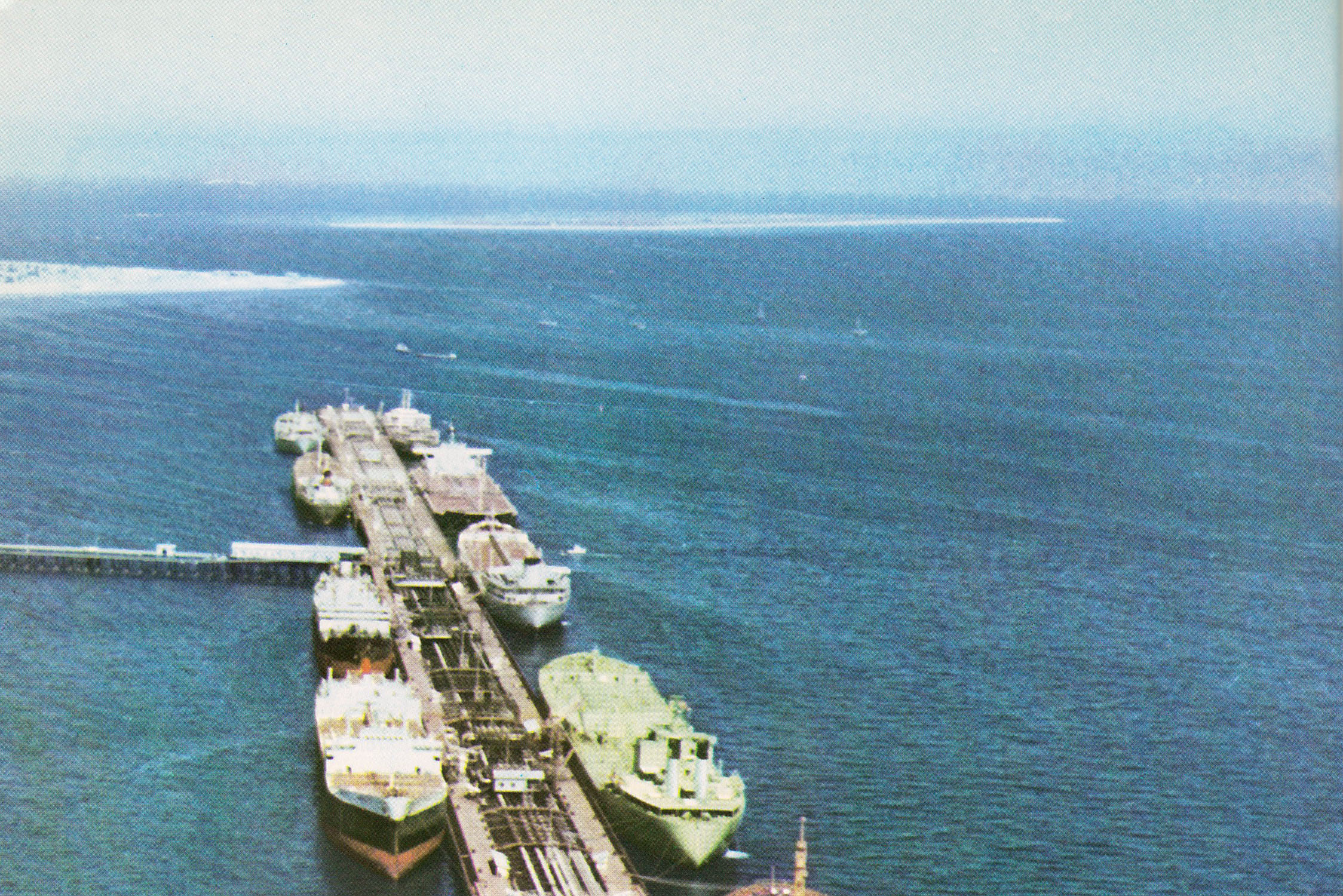
The market’s implicit theory u2014 that falling oil prices increase pressure on Iran to sign a deal u2014 contains a fundamental analytical error that becomes visible the moment you separate Iran’s price constraint from its volume constraint. Iran’s binding constraint in May 2026 is not the per-barrel revenue it earns on the oil it sells, but the physical inability to sell oil at all: the US naval blockade effective April 13 interdicts tanker traffic regardless of price, Kharg Island storage sits at 74% capacity with approximately one month of margin before tank tops force production shutdowns, and Iran has already begun preemptively cutting output by up to 30% of reservoir capacity to avoid the infrastructure damage that forced shutdowns would cause.
n
At $114 Brent with the $2u20133 premium that Iranian crude commands in the current scarcity environment (the first premium since May 2022, a remarkable inversion from the traditional $10u201320 discount), Iran’s theoretical gross revenue on 1.5 million bpd of pre-blockade exports was approximately $175 million per day. At $95 Brent with the same premium, that figure falls to approximately $147 million per day u2014 a delta of $28 million daily, or about $196 million per week. That figure shrinks to noise beside what matters: the blockade costs Iran $150u2013170 million per day according to Bessent’s own estimate, which means the blockade’s damage dwarfs the price move by a factor of five to six. Whether Brent is at $126 or $95, Iran cannot sell its oil through the blockade, and the storage clock ticks at the same rate regardless of what futures traders in London and New York decide about deal probability.
n
n
What the price decline does change u2014 and this is the element that makes the market’s optimism genuinely self-defeating rather than merely premature u2014 is the domestic political economy of the deal inside Iran. When oil was at $126 and climbing, Iranian hardliners faced an uncomfortable question: why accept any deal when revenue per barrel is at record highs? The IRGC’s “resistance economy” narrative, which holds that sanctions and military pressure strengthen rather than weaken the Islamic Republic, becomes empirically harder to sustain when the state is visibly hemorrhaging revenue. At $101 Brent, that narrative regains a degree of plausibility u2014 not because Iran is materially better off (it is not, given the blockade), but because the headline price gives the hardline faction rhetorical ammunition against reformists who argue that the economic cost of continued conflict is unsustainable.
n
Pezeshkian warned that the Iranian economy faces “collapse in 3-4 weeks” u2014 a timeline that was set in mid-April, which means it has approximately one to two weeks remaining before whatever threshold he was referencing becomes operational. But Pezeshkian’s authority over the IRGC is precisely zero under Article 110 of the Iranian constitution, and the authorization ceiling that has blocked every previous deal attempt remains structurally intact regardless of what civilian politicians negotiate in Islamabad or anywhere else.
n
Why Can’t a Deal Restore Oil Flows Immediately?
n
Even under the most optimistic scenario u2014 a signed MOU this week, immediate cessation of hostilities, IRGC compliance with civilian government directives (which has not occurred at any point in this conflict), and US blockade withdrawal u2014 Rystad Energy’s chief oil analyst Paola Rodriguez-Masiu projects “a six-to-eight-week lag between credible access conditions and real flow normalization,” which she describes as “a structural feature of how shipping markets work” rather than a contingent problem that better logistics could solve.
n
The reasons are physical, not political. Hormuz requires mine clearance across approximately 200 square miles u2014 and the US decommissioned its four Avenger-class mine countermeasure ships from Bahrain in September 2025, leaving only two in theater. The 1991 Kuwait benchmark suggests 51 days for comparable clearance operations, and that was with a full MCM fleet deployed. Beyond mines, the double blockade architecture u2014 US controlling Arabian Sea entry from April 13, IRGC controlling Gulf of Oman exit from March 4 u2014 means that vessels require approval from both parties to transit, and only 45 ships have crossed since the April 8 ceasefire (3.6% of the pre-war baseline). Insurance markets, which repriced Gulf transit risk in March, will not reverse their coverage exclusions on a single headline u2014 reinsurance committees meet quarterly, and war-risk premiums that jumped from 0.5% to 7u201310% of hull value will require sustained evidence of safety before reverting.
n
Warren Patterson, ING’s head of commodities strategy, frames the vulnerability precisely: “Roughly 13 million barrels per day of disrupted supply is being largely offset by inventory, which is clearly declining rapidly. This leaves the market more vulnerable with each passing day. Tighter stocks will only leave the oil market trading in an ever more volatile manner.” What Patterson is describing is a market that has one buffer u2014 inventory u2014 and that buffer is depleting on a clock that a deal announcement does not pause, because the physical barrels do not flow until weeks after any agreement is signed.
n
That 1.8 billion barrel cumulative shortfall accounts for the normalization lag, and it means that even a deal signed today would not prevent the inventory drawdown from continuing through June and into July. The market on May 6 priced an outcome u2014 normal flows u2014 that is physically impossible before late June at the earliest, while the inventory clock and the Saudi fiscal clock and the Iranian storage clock all continue ticking at rates set by physics and infrastructure, not by the optimism of futures positioning.
n
The April 7 Precedent: Paper Deals and Pipeline Strikes
n
This is not even the first time in this conflict that markets have priced a deal and been violently corrected by physical reality within hours. On April 7, Trump posted about a ceasefire and Brent dropped approximately $17.57 in a single session u2014 from $109.27 to $91.70 u2014 in what was then characterized as the “peace dividend” trade. The following morning, the IRGC struck the East-West Pipeline pumping station at 1:00 PM local time, and Brent reversed a substantial portion of the decline within 24u201336 hours, because the market belatedly recognized that a presidential social media post is not the same thing as a ratified agreement with enforcement mechanisms.
n
The structural parallel to May 6 is exact: an Axios report about a framework document drove a comparable percentage move (7.83% on May 6 versus approximately 16% on April 7), the move occurred before any party confirmed agreement, and the fundamental obstacle to implementation u2014 the IRGC’s institutional autonomy from civilian negotiators u2014 remained unchanged. The difference is that on April 7, the reversal trigger was kinetic and immediate (a pipeline strike); on May 6, the reversal trigger may be slower but is no less certain, because Iran’s 14-point counter-response already rejects the sequencing that the MOU framework requires.
n
Iran’s response demands that the war end “on all fronts including Lebanon,” that US forces withdraw from Iran’s periphery, that the naval blockade end, that frozen assets be released, that war reparations be paid, and that a new mechanism governing Hormuz be established u2014 all as prerequisites to the nuclear moratorium discussions that Washington has positioned as Phase 1. This is not a negotiating position that is one headline away from capitulation; it is a structural rejection of the framework’s architecture, delivered through official channels and reinforced by IRGC-affiliated media characterizing the entire MOU as a divisive tactic. The market on May 6 looked at this 14-point rejection and decided to price a deal anyway, which is the analytical equivalent of reading a defendant’s not-guilty plea and pricing the sentencing hearing.
n
What Does the OPEC+ June Quota Hike Actually Change?
n
The OPEC+ decision to add 188,000 barrels per day in June u2014 with Saudi Arabia contributing 62,000 bpd, Russia 62,000 bpd, Iraq 26,000 bpd, Kuwait 16,000 bpd, Kazakhstan 10,000 bpd, Algeria 6,000 bpd, and Oman 5,000 bpd u2014 represents 1.45% of the 13 million bpd that the IEA estimates is currently offline globally. Both Al Jazeera and CNBC characterized the hike as “largely symbolic,” which is generous u2014 it is closer to irrelevant, a bureaucratic formality that maintains the fiction of coordinated production management while the actual production constraint (Hormuz closure and Saudi infrastructure damage) renders quotas meaningless.
n
Saudi Arabia’s June quota increase of 62,000 bpd is particularly absurd when set against the reality that the Kingdom is producing 3.15 million bpd below pre-war levels and has no physical capacity to increase output through Hormuz because Hormuz is closed. The Yanbu bypass is already operating near its effective ceiling, Khurais remains offline, and the East-West Pipeline’s pumping station damage constrains throughput below rated capacity. OPEC+ is adjusting a thermostat in a house where the furnace has exploded u2014 the gesture acknowledges the temperature problem without possessing any mechanism to address it.
n
What the quota hike does accomplish is political rather than physical: it signals to Washington that Saudi Arabia is “trying” to add supply, which provides diplomatic cover for the Kingdom’s request that the US accelerate deal negotiations regardless of Iranian conditions. It also establishes a post-war production baseline from which future cuts can be measured, which matters for Saudi Arabia’s long-term OPEC+ strategy but has zero impact on the current supply crisis or the $101 Brent price.
n
Aramco Reports Saturday u2014 Into a Changed Price Environment
n
Saudi Aramco’s Q1 2026 results, due May 10 or 11, will arrive into a market that looks fundamentally different from the one in which those results were generated. Analysts project approximately $29 billion in Q1 profit u2014 a 57% surge driven by higher per-barrel revenue overcoming the 30% volume collapse u2014 but the Q2 forward guidance will now incorporate a Brent price at $101u2013102 rather than the $114u2013126 range that prevailed through most of April. That is a $12u201325 per barrel guidance headwind that will force Aramco’s management to address, for the first time publicly, whether the current fiscal trajectory is sustainable at these prices.
n
| Metric | Q1 Actual (projected) | Q2 Environment (post-May 6) |
|---|---|---|
| Average Brent | ~$109u2013114/bbl | $101u2013105/bbl (current trajectory) |
| Saudi production | 7.25M bpd | 7.25u20137.3M bpd (unchanged) |
| Projected profit | ~$29 billion | TBD u2014 $12u201325/bbl headwind |
| Dividend sustainability | Covered at Q1 prices | Under pressure below $105 |
| Hormuz status | Closed (entire quarter) | Closed (no change) |
n
The earnings call will also be the first occasion on which Aramco’s CEO must publicly discuss the Khurais restoration timeline u2014 300,000 bpd offline since early March with no announced repair schedule u2014 and the effective throughput ceiling at Yanbu, which multiple analysts have pegged at 4u20135.9 million bpd versus the 7 million bpd pipeline rating. These are questions that the Q1 results, generated at higher prices, partially obscure; at $101 Brent, they become existential rather than inconvenient. The StoneX assessment that “the lack of resolution between the United States and Iran introduces a growing risk that stability could break abruptly” applies to Aramco’s forward guidance as directly as it applies to the broader market.
n
n
The Authorization Ceiling That Markets Refuse to Price
n
Every negotiating framework proposed since the April 8 ceasefire has collided with the same structural obstacle, and the May 6 MOU is no exception: Iran’s civilian government lacks the constitutional authority to deliver IRGC compliance with any agreement it signs, because Article 110 reserves military command authority for the Supreme Leader, who has been absent for 67 days, and because the SNSC u2014 the only body empowered to override IRGC operational autonomy u2014 is controlled by Ahmad Vahidi, who holds an INTERPOL red notice for the 1994 AMIA bombing and who personally demanded that the Islamabad talks collapse by inserting Zolghadr into the delegation and refusing to include missile negotiations in the framework.
n
This is not a marginal analytical detail u2014 it is the single most important variable in determining whether any deal can be implemented, and it is the variable that futures markets have consistently refused to price since the conflict began. The IRGC Navy’s declaration of “full authority to manage the Strait” u2014 issued on April 5 and reiterated April 10 while Araghchi was actively negotiating in Islamabad u2014 remains operative. Tangsiri was killed on March 30 and no named successor commands the IRGC naval forces, meaning that operational decisions in the Strait are being made by a headless command structure operating under standing orders that predate and supersede any diplomatic framework.
n
The Ankara quartet architecture u2014 Pakistan, Turkey, Egypt, and now potentially Oman as mediators u2014 represents the international community’s latest attempt to construct enforcement mechanisms that work around the authorization ceiling rather than through it. But no external enforcement architecture can compel an IRGC Navy that answers to a Supreme Leader who isn’t speaking, through a command chain that has no named leader, operating under a constitutional framework that explicitly excludes the president from military authority. The market on May 6 priced a deal as though the authorization ceiling does not exist, which is analytically equivalent to pricing a corporate merger while ignoring that the board hasn’t voted and the CEO is missing.
n
The IRGC’s own media framing reinforces this: Tasnim stated that “with its dominance and control over nearly 2,000 kilometers of Iran’s coastline in the Persian Gulf and the Strait of Hormuz, the IRGC Navy will make this water area a source of livelihood and power for the dear Iranian people and a source of security and prosperity for the region.” That is not the language of an organization preparing to relinquish control of the Strait in exchange for a one-page MOU that its civilian government negotiated without IRGC participation u2014 it is the language of an organization asserting permanent sovereign authority over the waterway, and the market heard it and shrugged, which tells you how disconnected the May 6 price action is from the actual state of the negotiations.
n
The Gulf War 1991 analogy that some analysts have invoked u2014 crude futures dropping one-third on January 17 when the coalition launched strikes u2014 is instructive but in the opposite direction from how it is typically deployed. In 1991, markets had priced a long war and the swift military success collapsed the risk premium because the kinetic outcome was decisive. In May 2026, the market is pricing a swift diplomatic success, but there is no diplomatic equivalent of overwhelming military force u2014 there is only the slow, uncertain, institutionally-constrained process of getting multiple Iranian power centers to agree on a framework that each of them has publicly rejected on different grounds. The 1991 parallel argues for a risk premium, not against one.
n
Frequently Asked Questions
n
How does Iran’s Kharg Island storage constraint interact with the price decline?
n
JPMorgan and Kpler estimate approximately one month of storage margin remaining at Kharg Island before tank tops force production shutdowns u2014 a constraint that is entirely independent of price. Whether Brent is at $126 or $95, Iran cannot physically export through the US blockade, and the storage tanks fill at the same rate. Iran has already begun preemptive production cuts of up to 30% at certain reservoirs to avoid the equipment damage that forced shutdowns cause (pumps that stop under pressure require expensive, months-long workovers to restart). The storage clock is Iran’s binding constraint and it ticks in barrels per day, not dollars per barrel u2014 meaning the price decline has essentially zero impact on Iran’s most urgent physical problem while marginally reducing its revenue on the small volumes still reaching China through sanctions-evasion networks.
n
What happened to the $19.50 per barrel Aramco May OSP war premium?
n
Saudi Aramco set its May Official Selling Price at a $19.50 per barrel premium when Brent was trading near $109 in early April u2014 a premium designed to capture wartime scarcity value for Asian buyers who had no alternative Gulf supply. The June OSP was subsequently reset to +$3.50, a $16 per barrel reduction that implicitly acknowledges the premium was unsustainable even before the May 6 price collapse. The deeper problem is that cargoes priced at the May OSP of +$19.50 were set against a Brent benchmark that is now $8u201317 below where it was when the premium was established, meaning Asian refiners who committed to May-loading cargoes are paying approximately $109 + $19.50 = $128.50 per barrel equivalent for crude that the market now values at $101u2013105. Several Indian and South Korean refiners have reportedly sought to defer or reduce May-loading nominations as a result.
n
Could Saudi Arabia draw down reserves instead of borrowing to fund the deficit?
n
The Kingdom holds SAR 400.9 billion ($106.9 billion) in government reserves as of end-Q1, and the entire $33.5 billion Q1 deficit was funded through debt issuance rather than reserve drawdown u2014 a deliberate strategy to preserve the fiscal buffer. However, at the current $134 billion annualized deficit pace, reserves would cover only approximately 9.5 months if debt markets closed, and each $5 decline in Brent below $108 adds roughly $13 billion annually to the funding requirement at current production levels. The choice to borrow rather than draw reserves also signals that Saudi Arabia’s debt managers expect the crisis to be temporary u2014 if they believed the deficit would persist at current levels, reserve preservation would be irrational because the debt service costs would eventually exceed the reserves themselves. The strategy is a bet on oil prices recovering, which makes the May 6 decline particularly threatening to its logic.
n
What is the historical precedent for markets pricing an oil deal before it materializes?
n
The Iran-Iraq War ceasefire of 1988 provides the closest structural parallel: oil prices began declining in anticipation of Iraqi production returning to market, but actual normalization took years because Iran’s export infrastructure had been severely degraded by eight years of attacks on terminals and tankers. The market’s anticipatory pricing proved directionally correct but temporally premature by approximately 18u201324 months. More recently in this same conflict, the April 7 2026 ceasefire announcement drove Brent down approximately $17.57 in a single session before the East-West Pipeline strike the following morning reversed a substantial portion of the decline. The roundtrip u2014 down $17u201319 on hope, substantially back up within 36 hours on reality u2014 is the most direct analogue to May 6, with the critical difference that the April reversal trigger was kinetic (a pipeline strike) while the May reversal trigger is likely to be slower and more grinding (the progressive realization that Iran’s 14-point counter-response constitutes a structural rejection of the MOU framework’s architecture). The May 8 session illustrated the pattern directly: Brent swung $12 intraday as Trump dismissed CENTCOM strikes on Qeshm and Bandar Abbas as a “love tap” — a $108.80 peak collapsing to $96.80 within hours, then settling near $101.
n
How does the May 6 decline affect the US negotiating position?
n
The US blockade’s coercive power operates through Iran’s revenue denial u2014 Bessent’s $170 million per day estimate u2014 which is denominated in absolute terms (barrels not sold) rather than price terms (dollars per barrel on barrels sold). Lower oil prices slightly reduce the cost Iran incurs from not being able to export (because each unsold barrel is worth less), but the blockade’s physical interdiction is the dominant variable by a factor of five to six. Where the price decline materially affects Washington is through Saudi Arabia: a fiscally distressed Riyadh is a less patient mediator, more likely to pressure the US to accept Iranian preconditions (particularly on the Lebanon front and on Hormuz sovereignty language) in order to accelerate a deal that restores Saudi export revenues. The May 6 decline effectively shifted the balance of pressure from Washington toward both Tehran (reduced urgency on price) and Riyadh (increased desperation), while appearing superficially to demonstrate that US pressure is working u2014 a perception gap that may lead to policy miscalculation if the administration interprets market moves as diplomatic progress.
n”}