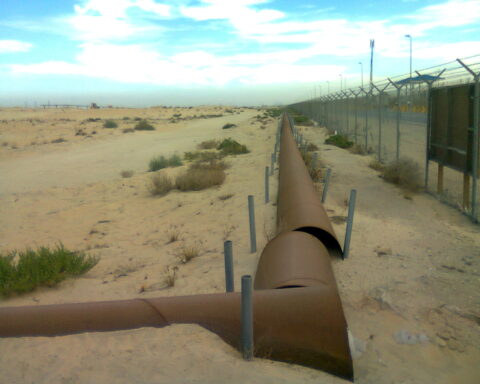
FUJAIRAH — Iran struck the Fujairah Oil Industry Zone for the second consecutive day on May 5, shutting down the 922,000-barrel-per-day ADNOC refinery that sits at the end of the only pipeline route that bypasses the Strait of Hormuz from the UAE side — and completing a campaign that has now closed every alternative to the contested waterway in under thirty days.
The strikes are not isolated escalation. They are the third element of a systematic bypass-denial operation the IRGC has executed since April 8: first the Saudi East-West Pipeline pumping station, which cut Yanbu throughput by roughly 700,000 barrels per day; then Fujairah itself, the terminal that receives crude from Abu Dhabi’s inland fields via the Habshan-Fujairah pipeline; and finally the maritime control zone declared on May 4, whose southern boundary explicitly names Fujairah — extending IRGC authority over both the sea route and the land alternative simultaneously. No major wire service has yet connected these three actions as a unified campaign, though the logic is difficult to miss once you lay the timeline flat.
Table of Contents
- What Iran Hit on May 4-5
- The Three-Part Bypass Denial Campaign
- Why Does Fujairah Matter More Than Any Other UAE Target?
- The Maritime Control Zone That Closed the Last Exit
- How Did Oil Markets Respond?
- Pezeshkian Called It Madness — The Authorization Ceiling Cracks Open
- What Bypass Capacity Remains?
- FAQ
What Iran Hit on May 4-5
The UAE Defence Ministry reported that on May 4 alone, its air defences engaged 12 ballistic missiles, 3 cruise missiles, and 4 unmanned aerial vehicles launched from Iranian territory — the largest single salvo directed at the UAE since the conflict began in late February. The VTTI oil terminal in the Fujairah Oil Industry Zone, co-owned by IFM Global Infrastructure Fund, Vitol Group, and ADNOC, took direct hits that set two storage tanks ablaze, according to Bloomberg. ADNOC shut down its Fujairah refinery — a facility with 922,000 barrels per day of production capacity — within hours of the first impacts.
On May 5, Iran struck again, firing a second wave of drones and missiles at UAE territory that the Times of Israel’s live coverage confirmed was directed at the same industrial zone. Oil-loading operations at the Port of Fujairah were suspended, and the UAE closed its airspace through May 11 — a full week of commercial aviation shutdown that signals how seriously Abu Dhabi is treating the air defence challenge. Three Indian nationals sustained moderate injuries in the initial strike, with the Indian Embassy confirming it was in contact with local authorities, per Khaleej Times. UAE schools shifted to remote learning nationwide through May 8.
The second strike on May 5 — 15 missiles and 4 drones targeting UAE’s eastern seaboard — followed the May 4 attack by less than 24 hours, a tempo that confirmed Iran was operating within the tolerance ceiling the Pentagon had publicly stated. The full account of the consecutive-day attack sequence and the below-threshold doctrine that enabled it documents how 19 total projectiles across two days all fell within the parameters Gen. Caine had enumerated at the podium the same morning.
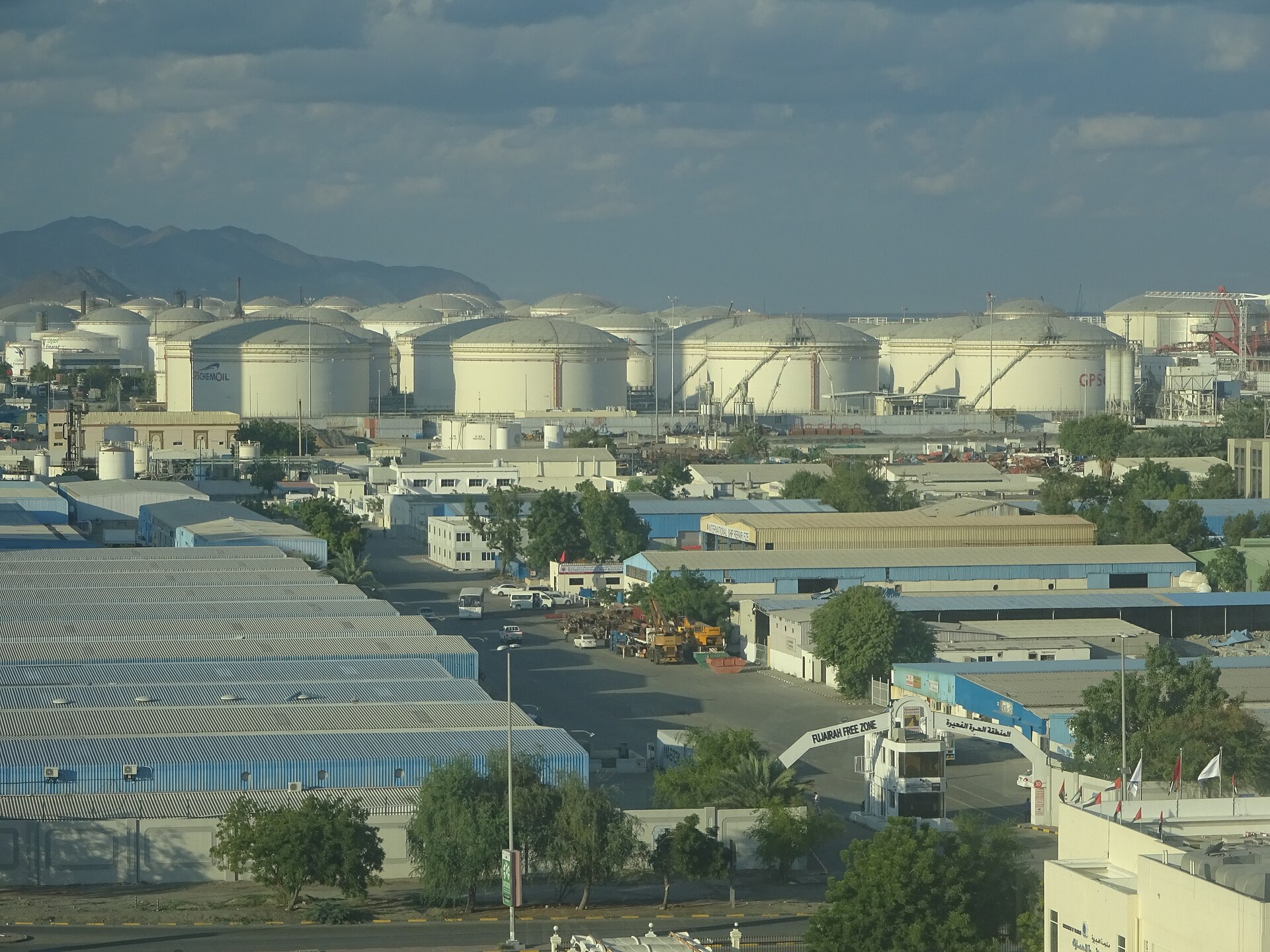
Since the broader conflict began, UAE air defences have engaged a cumulative 549 ballistic missiles, 29 cruise missiles, and 2,260 UAVs, according to the UAE Defence Ministry’s May 5 statement — 2,838 incoming threats across approximately 65 days. The May 4 VTTI terminal hits and storage tank fires confirm the defence is not impermeable, particularly against saturated volleys combining ballistic missiles with slower drones designed to overwhelm tracking systems at different altitude bands. The day before the land strikes, an ADNOC-affiliated tanker was hit by suspected drones 78 nautical miles north of Fujairah at 19:40 UTC on May 3, per the UAE Ministry of Foreign Affairs — a sequencing that now reads as target reconnaissance rather than isolated harassment.
The Middle East briefing 3,000+ readers start their day with.
One email. Every weekday morning. Free.
The Three-Part Bypass Denial Campaign
Lay the three actions on a timeline and the operational logic becomes unavoidable. On April 8, the IRGC struck a pumping station on Saudi Arabia’s East-West Pipeline — the 1,200-kilometre line that carries crude from the Eastern Province to the Red Sea terminal at Yanbu, bypassing Hormuz entirely. IRGC commander Zolfaqari had declared “all restraint removed” on April 7, the day before the ceasefire nominally took effect, and the pumping station strike arrived precisely at the moment when the pipeline was carrying the highest volumes in its operational history. Yanbu’s effective throughput dropped from its theoretical 7 million bpd capacity to between 4 and 5.9 million, according to Kpler tracking data and Engineering News-Record analysis — a reduction of roughly 700,000 barrels per day that persists six weeks later.
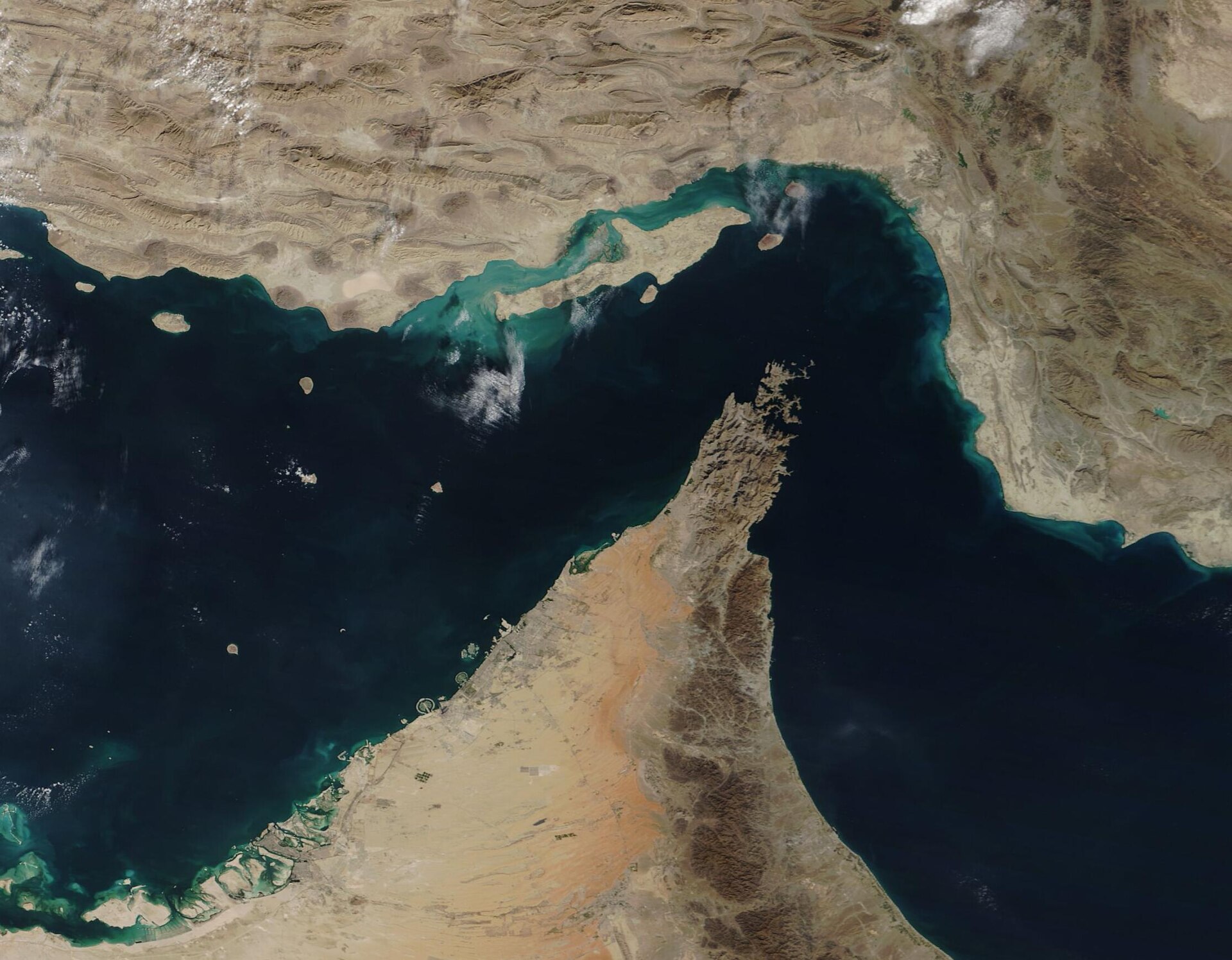
On May 4, the IRGC struck Fujairah, disabling the UAE’s equivalent bypass — the terminus of the 400-kilometre Habshan-Fujairah pipeline (ADCOP), commissioned in June 2012 specifically to move Abu Dhabi crude to a port outside the Strait. With the ADNOC refinery offline and loading operations suspended, Fujairah’s contribution to bypass flows dropped from an estimated 1.5-1.8 million bpd of pipeline capacity to functionally zero for an indeterminate period. Also on May 4, the IRGC declared its “smart control” maritime zone, bounded to the south by a line from Mount Mobarak in Iran to southern Fujairah — explicitly extending its claimed authority to the very port it had just struck by air.
Fujairah’s storage infrastructure — 70 to 78 million barrels of total capacity across all product types, according to Port of Fujairah data compiled by S&P Global — was designed to handle peacetime throughput and bunkering demand, not to function as a wartime alternative to the world’s most important oil chokepoint while absorbing missile strikes.
Why Does Fujairah Matter More Than Any Other UAE Target?
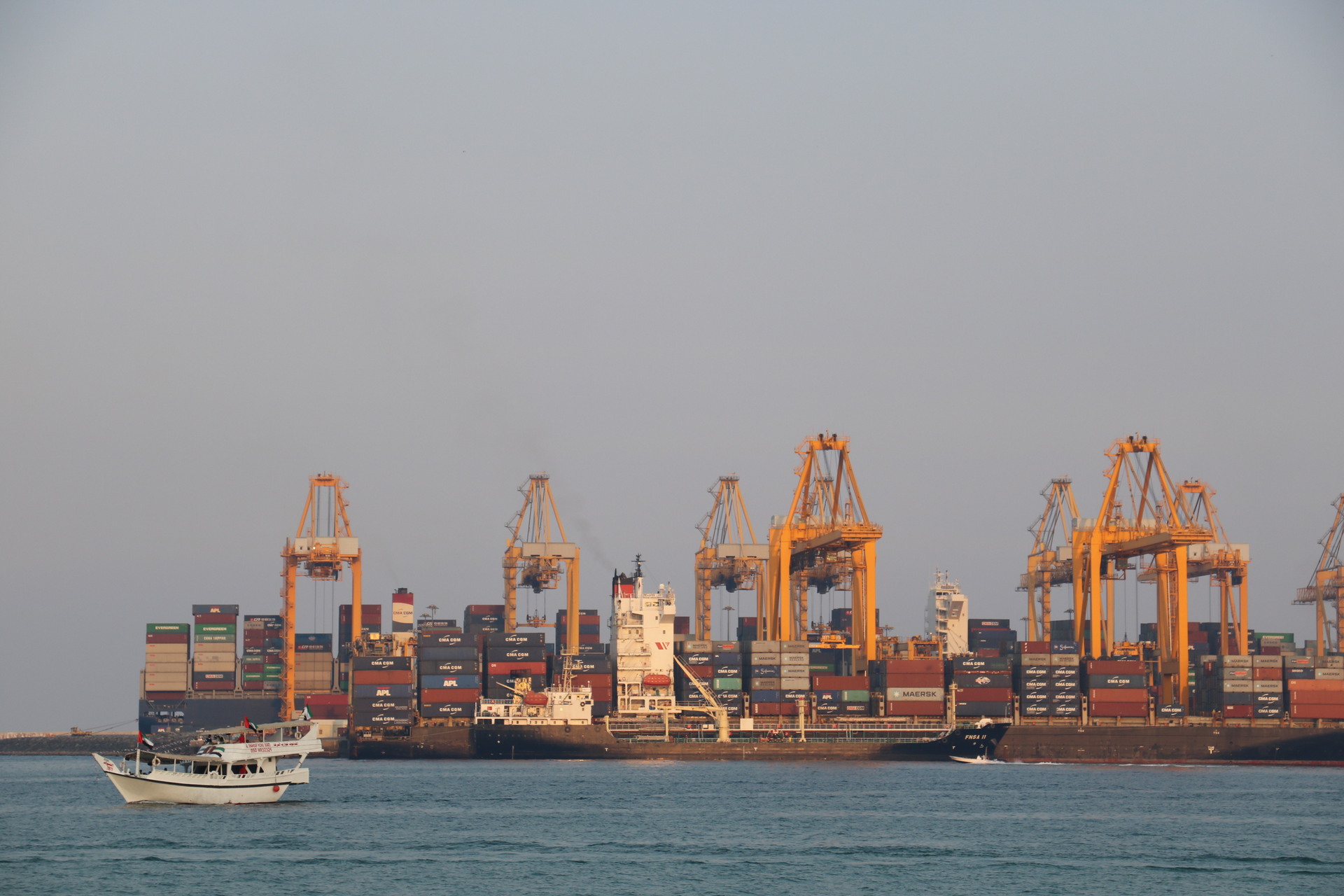
Fujairah is the world’s fourth-largest bunkering hub after Singapore, Rotterdam, and Zhoushan, selling approximately 7.4 million cubic metres of marine fuel in 2025 according to the New Arab. It exported an average of 1.7 million barrels per day of crude and refined products through 2025, per Outlook Business data. But its strategic significance since late February has been something larger than those commercial numbers suggest: it was the physical proof that Hormuz could be bypassed, the infrastructure that allowed traders and governments to argue that the Strait’s closure was manageable rather than catastrophic.
The Habshan-Fujairah pipeline exists because of Iran. The original ADCOP line was conceived during earlier periods of Hormuz tension and commissioned in 2012 as Abu Dhabi’s insurance policy against exactly the scenario now unfolding. ADNOC was building a second bypass pipeline — approximately 500 kilometres from Jebel Dhanna to Fujairah, scheduled to open in 2026, per MEES reporting from October 2024 — that would have doubled the UAE’s bypass capacity. That expansion now sits under direct threat before it has moved a single barrel, and the existing line terminates at a port the IRGC has struck twice in three days.
Kpler data tracked the combined alternative-route export flows — Yanbu plus Fujairah — ramping from 3.9 million barrels per day in February to 6.4 million bpd before the May 4-5 strikes. That ramp was the market’s coping mechanism, the thing standing between the current crisis and an IEA-declared supply emergency that would trigger coordinated strategic reserve releases. With Fujairah loading now paused and Yanbu operating at reduced capacity, the combined bypass ceiling has collapsed back toward the lower end of the IEA’s 3.5-5.5 million bpd estimate — against pre-war Hormuz throughput of 17-21 million barrels per day.
The Maritime Control Zone That Closed the Last Exit
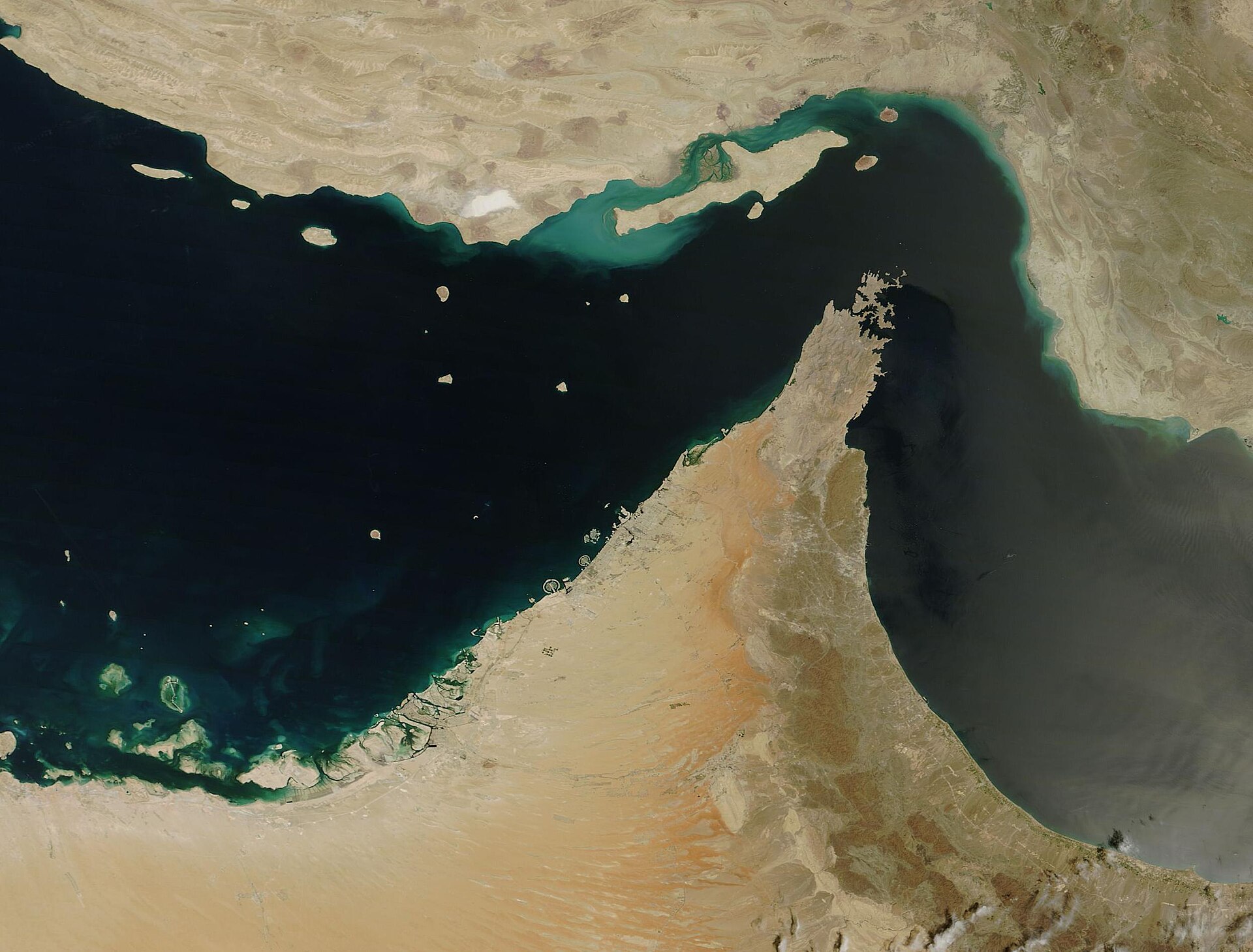
The IRGC’s “smart control” maritime zone declaration on May 4, reported by The Levant Files from the original IRGC statement, drew a boundary line from Mount Mobarak on the Iranian coast to southern Fujairah on the UAE coast — a distance of roughly 60 nautical miles across the Gulf of Oman’s narrowest practical shipping corridor. The declaration extends the IRGC’s existing Hormuz control zone southward to encompass not just the Strait’s traffic separation scheme but the waters around Fujairah itself, which sit technically outside the Strait proper in the Gulf of Oman.
The timing was not coincidental. The zone was declared on the same day Iran struck the VTTI terminal — pairing kinetic destruction of port infrastructure with a legal-administrative claim over the sea approaches that serve it. Vessels departing Fujairah with loaded crude would now need to transit waters the IRGC claims authority over, even though those waters were previously considered to be outside the contested zone. The South Korean-operated HMM Namu, a 38,000-deadweight-ton vessel, was struck by an explosion — likely a sea drone or drifting mine — while at anchor off nearby Umm Al Quwain on May 4, all 24 crew safe per Seatrade Maritime, demonstrating that the maritime threat is not notional.
Iran’s IRGC spokesman Ali Mohammad Naeini had stated on March 10 that Iran “will not allow the export of even a single liter of oil from the region to the hostile side and its partners until further notice.” The Fujairah strikes and maritime zone convert that threat from rhetoric into infrastructure: you cannot export from Fujairah by sea if the port is damaged and the waters are claimed, and you cannot bypass by pipeline if the pipeline’s loading terminal is on fire. The IEA’s Fatih Birol had already called the broader disruption — approximately 14.5 million barrels per day offline globally — “the biggest energy security threat in history.” The Fujairah strikes make that assessment harder to dispute.
How Did Oil Markets Respond?
Brent crude closed at $114.44 per barrel on May 4, up 5.8% on the session, the kind of single-day move that used to require an OPEC production cut announcement or a tanker sinking. It hit an intraday high of $116.55 on May 5 before retreating to approximately $111.45 after US Defence Secretary Pete Hegseth told reporters the ceasefire framework “holds” despite the strikes — a statement that traders treated as a signal Washington would not immediately escalate beyond its Project Freedom naval operation. Brent has now risen more than 50% since late February, according to CNBC tracking, with each successive attack on bypass infrastructure compressing the discount that should theoretically exist between a closed Strait and a functioning alternative.
The market’s problem is structural rather than speculative. If Hormuz is contested, and the East-West Pipeline is operating at reduced capacity, and Fujairah is offline, then the only remaining high-volume exit for Gulf crude is the Saudi Red Sea port at Yanbu — operating without its full pipeline throughput and already handling volumes it was never designed for as a sole outlet. The $114 price reflects a market that has priced in Hormuz disruption but has not yet priced in bypass disruption. When it does — when the Kpler data showing Fujairah at zero begins circulating through trading desks — the next leg higher will not need an intraday trigger.
“The pipe was the hedge, but the port was sized for normal operations.”
Engineering News-Record analysis, 2026
Pezeshkian Called It Madness — The Authorization Ceiling Cracks Open
Iranian President Masoud Pezeshkian called the IRGC-led UAE strikes “completely irresponsible” and “madness” with “irreversible consequences,” telling Iran International that the IRGC had “bypassed the civilian government entirely.” He reportedly requested an urgent meeting with Mojtaba Khamenei — the Supreme Leader’s son who has functioned as the primary accessible authority figure during Khamenei’s extended absence from public life — to press for an immediate halt to attacks on Gulf state territory. The language was stronger than anything Pezeshkian had used since his April 4 accusation that IRGC commanders Vahidi and Abdollahi were sabotaging ceasefire diplomacy.
The civilian government’s fury makes strategic sense when you understand what Fujairah represents to Iranian diplomatic leverage. A closed Hormuz is an Iranian bargaining chip — something that can theoretically be reopened in exchange for sanctions relief or security guarantees. A destroyed Fujairah is not a bargaining chip because Iran cannot offer to un-destroy it. The IRGC has converted reversible coercion into irreversible damage, which weakens Pezeshkian’s negotiating position while strengthening the IRGC’s operational fait accompli. Tasnim News Agency, which is IRGC-aligned, quoted an unnamed source warning that “if the UAE takes unwise action, all of its interests will become Iran’s target” — language directed at Abu Dhabi but equally readable as a warning to Tehran’s own civilian leadership about who controls escalation decisions.
IRNA, the state news agency, characterised the US effort to reopen Hormuz — Operation Project Freedom, launched on May 4 — as part of Trump’s “delirium,” while the IRGC denied planned intent to target Fujairah oil installations specifically, blaming “US military adventurism” for the incident and framing strikes as retaliatory for the convoy launch. The contradictions are telling: the civilian government calls the strikes madness, the state media calls the US provocation delirium, and the IRGC claims it was not targeting what it demonstrably targeted. Three branches of the Iranian state, three incompatible narratives, one set of burning storage tanks.
The campaign did not stop with the May 4-5 strikes. On May 8 — the day the US-Iran MOU deadline expired without agreement — Iran fired two ballistic missiles and three drones at the UAE, resuming strikes against the same eastern seaboard corridor targeted at Fujairah. Pezeshkian’s response was identical to his May 5 statement: he called the attacks “madness” and demanded they stop, with no discernible effect on IRGC operations.

What Bypass Capacity Remains?
The arithmetic is now brutally simple. Pre-war Hormuz throughput was 17-21 million barrels per day, according to the IEA. The combined bypass capacity — Saudi East-West Pipeline plus UAE ADCOP — had a theoretical ceiling of 3.5-5.5 million bpd even before April’s attacks, per IEA estimates cited by Engineering News-Record. The April 8 pumping station strike reduced the Saudi side by approximately 700,000 bpd. The May 4-5 Fujairah strikes have taken the UAE side to zero for an indeterminate period. What remains is a Saudi pipeline operating below capacity, terminating at a Red Sea port that was never designed to be the sole outlet for Gulf crude.
The 2019 precedent is instructive for understanding Fujairah’s vulnerability. On May 12, 2019, four commercial ships — including two Saudi oil tankers, a Norwegian tanker, and an Emirati vessel — were damaged off Fujairah’s coast via explosive charges attributed to Iran or its proxies. That incident, which caused minimal disruption to port operations, was treated at the time as a warning shot. Seven years later, the warning has been replaced by a maritime control zone and a week-long aviation shutdown — and the port’s role in the global oil system has grown vastly more important in the interval. Iran struck Fujairah once before in mid-March 2026 with drone debris damaging oil storage, making May 4-5 the second and third confirmed attacks on the zone in the current conflict.
ADNOC’s planned second bypass pipeline — the roughly 500-kilometre Jebel Dhanna to Fujairah line scheduled for 2026 completion — now faces a question that no infrastructure investor wants to answer: what is the point of building a bypass pipeline that terminates at a port your adversary has demonstrated it can strike at will and has declared a maritime control zone around? The cascading infrastructure failures across the Gulf’s export system are no longer a series of unfortunate events. They are the result of an adversary that identified the backup system, mapped its critical nodes, and struck them in sequence.
The UAE Ministry of Foreign Affairs denounced the attacks and “strongly condemned renewed strikes on civilian sites as a violation of sovereignty and international law.” But sovereignty arguments carry limited weight against an adversary whose entire strategic posture since March has been premised on the idea that sovereignty — over Hormuz, over Gulf shipping lanes, over the airspace above oil terminals — is something to be seized rather than respected. The IRGC has now demonstrated that the bypass was never really a bypass at all. It was a longer route to the same vulnerability, and on May 4, the distance ran out.
FAQ
What is the Habshan-Fujairah pipeline and how much capacity has it lost?
The Abu Dhabi Crude Oil Pipeline (ADCOP) runs approximately 400 kilometres from Abu Dhabi’s inland Habshan fields to the Port of Fujairah, with a design capacity of 1.5-1.8 million barrels per day. The May 4-5 strikes did not rupture the pipeline itself — they destroyed the refinery and suspended port loading operations at the delivery end. The pipe may be intact, but a pipeline without an operational export terminal moves nothing. Resumption timelines depend on how quickly the ADNOC refinery can be brought back online and whether Iran strikes again before it does.
Has Fujairah been attacked before in this conflict?
Yes — Iran struck Fujairah in mid-March 2026 with drone debris that damaged oil storage infrastructure, making the May 4-5 attacks the second and third confirmed strikes on the Fujairah Oil Industry Zone since the war began in late February. The earlier March strike caused limited disruption and was not followed by a sustained loading shutdown, which may have given market participants false confidence that Fujairah could absorb kinetic threats without operational interruption.
What is Operation Project Freedom and how does it relate to the Fujairah strikes?
Project Freedom is a US naval convoy operation launched on May 4, 2026 — the same day Iran struck Fujairah — intended to escort commercial vessels through the Strait of Hormuz under military protection. The IRGC framed its Fujairah strikes as retaliatory, claiming through IRNA that the US operation constituted a ceasefire violation that justified military response against Gulf state infrastructure. The coincidence of timing — Iran attacking the bypass route on the same day America tried to force the primary route — suggests the IRGC intended to demonstrate that neither path is safe regardless of US naval presence.
How long could Fujairah’s port suspension last, and what does it mean for oil prices?
Fujairah handled an average of 1.7 million barrels per day of crude and refined product exports in 2025. If the port suspension extends beyond two to three weeks, Asia-bound cargoes that were routing via Fujairah as a Hormuz alternative will have no viable replacement outlet — Yanbu on the Red Sea is already operating near its ceiling. Each week of suspended Fujairah loading removes roughly 12 million barrels from deliverable supply, a volume large enough to sustain upward pressure on Brent well beyond the immediate shock already visible in the $114-116 range reached on May 4-5.
The parallel institutional move that accompanied the Fujairah campaign—the Persian Gulf Strait Authority, launched May 5 to convert the IRGC’s physical Hormuz control into a formal permit regime—closes the alternative routing Fujairah represented for Asia-bound cargoes avoiding the Larak corridor. The six-month mine-clearance gap that makes Riyadh’s exclusion from the US-Iran MOU table structurally consequential is examined in Thirty Days, Six Months, and No Seat at the Table.