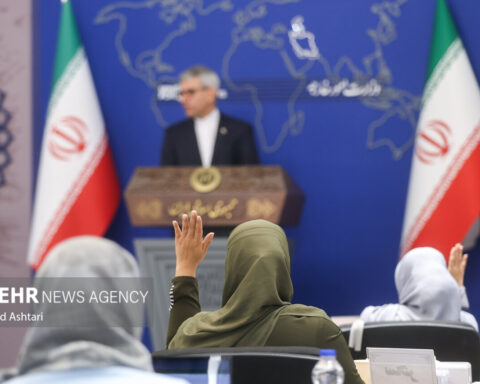
TEHRAN — Iranian Parliament Speaker Mohammad Bagher Ghalibaf branded a US-drafted memorandum of understanding as “Operation Fauxios” on May 7, publicly mocking the same diplomatic framework that Foreign Minister Abbas Araghchi is quietly negotiating through Pakistan. The split is not mixed messaging — it is the structural authorization ceiling that has blocked every diplomatic exit since the war began on February 28, performing itself in public for the first time on Day 68 of the conflict.
The one-page, 14-point MoU reported by Axios on May 6 would declare an end to hostilities and open a 30-day window to negotiate nuclear enrichment limits, Hormuz reopening, and sanctions relief. Washington gave Tehran 48 hours to respond on “several key points,” according to ABC News and CNN. Ghalibaf used those hours to coin a portmanteau — fusing the French faux (fake) with Axios, the outlet that broke the story — and post it to X as a declaration that the deal is dead before Araghchi can say yes.
Table of Contents
- What Did Ghalibaf Actually Say — and Why Does It Matter?
- Who Has Authority to Accept a Deal in Iran?
- What Is in the MoU That Ghalibaf Is Mocking?
- The Parliamentary Bloc Lines Up Behind the IRGC
- Why Araghchi Cannot Deliver a Yes
- Can Pakistan Close the Deal in 48 Hours?
- Background: The Authorization Ceiling from Islamabad to Beijing
What Did Ghalibaf Actually Say — and Why Does It Matter?
Ghalibaf posted to X on May 7 — reported by Business Standard and ANI — framing the Axios-reported MoU not as a diplomatic proposal but as an American information operation: a fake document designed to create the appearance of progress while Washington retreats from its Persian Gulf blockade.
The language matters because of who said it. Ghalibaf is not a backbencher or a media commentator. He commanded the IRGC Aerospace Force from 1997 to 2000, sat face-to-face with Vice President JD Vance at the Islamabad talks in April — the first direct US-Iran contact since 1979 — and is one of the “five men running Iran” in the Foundation for Defense of Democracies framework that explicitly excludes President Masoud Pezeshkian.
His mockery arrived while the 48-hour American response window was still ticking. That timing converts the post from commentary into action: it tells every Iranian institution involved in the decision chain that the IRGC-parliament bloc considers the MoU fraudulent. Any official who endorses it now does so against a public IRGC position.
“Operation Trust Me Bro failed. Now back to routine with Operation Fauxios.” — Mohammad Bagher Ghalibaf, Parliament Speaker, X post, May 7, 2026
The HOS Daily BriefThe Middle East briefing 3,000+ readers start their day with.
One email. Every weekday morning. Free.
The framing aligns precisely with IRGC-affiliated Tasnim News Agency, which on May 6 dismissed the Axios report as “today’s propaganda by American media … about justifying Trump’s retreat from his recent hostile action,” per Iran International. Ghalibaf is not freelancing. He is amplifying an institutional IRGC line through the most powerful civilian platform available to the hardline bloc.
Who Has Authority to Accept a Deal in Iran?
The answer, under Article 110 of the Iranian constitution, is not the president and not the foreign minister. The Supreme Leader holds direct command authority over the IRGC, the regular armed forces, and the Supreme National Security Council. Pezeshkian has zero authority to compel the IRGC to accept, implement, or even discuss terms — a structural fact he publicly acknowledged on April 4 when he named IRGC Commander Ahmad Vahidi and Khatam al-Anbiya chief Mohammad Reza Abdollahi as the officials who wrecked the Islamabad ceasefire.
Vahidi holds the actual veto over any agreement. He has categorically rejected negotiation on the missile program, enrichment concessions, and Axis of Resistance withdrawal, according to an ISW assessment cited by Euronews on April 22. He also carries an INTERPOL red notice for the 1994 AMIA bombing in Buenos Aires — a structural reason he cannot appear at any Western-facing negotiating venue, yet he controls the decisions those venues are meant to produce.
The SNSC, which must ratify any security agreement, cannot act without Mojtaba Khamenei. Euronews reported on April 22 that Mojtaba “owes his appointment to the Revolutionary Guards and has effectively become a rubber stamp,” accessible only to a select group of IRGC commanders. The ISW noted that Ghalibaf “appears to be engaged in a serious intra-regime debate with IRGC Commander Major General Ahmad Vahidi and other senior regime officials opposed to negotiations.” But “debate” understates it. Ghalibaf resigned as head of Iran’s negotiating team on April 24 after being reprimanded for trying to include nuclear energy in the talks, per Iran International. His May 7 “Operation Fauxios” post comes from someone who already left the table — commenting not as a negotiator but as a spoiler with institutional backing.
What Is in the MoU That Ghalibaf Is Mocking?
Axios reported on May 6 that the document is a single page containing 14 points. It would declare an end to the war, open a 30-day negotiation window covering nuclear enrichment, Hormuz transit, and sanctions, and require Iran to remove all highly enriched uranium from its territory — previously a red line for Tehran. The enrichment moratorium is the central sticking point: Iran offered five years, the United States demanded 20, and the landing zone according to three sources cited by Axios is “at least 12,” with one source placing 15 years as the likely outcome.
The HEU removal clause strikes at the core of Iran’s nuclear leverage. As of June 2025 — the last date for which IAEA data exists, since Iran terminated inspector access on February 28, 2026 — Iran held 440.9 kilograms of uranium enriched to 60 percent. From that threshold, an IR-6 cascade could produce weapons-grade material in approximately 25 days. Removing this stockpile would eliminate Iran’s fastest path to a weapon, which is precisely why no IRGC-aligned official has endorsed the clause.
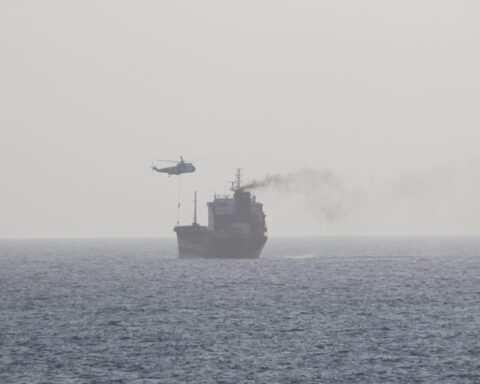
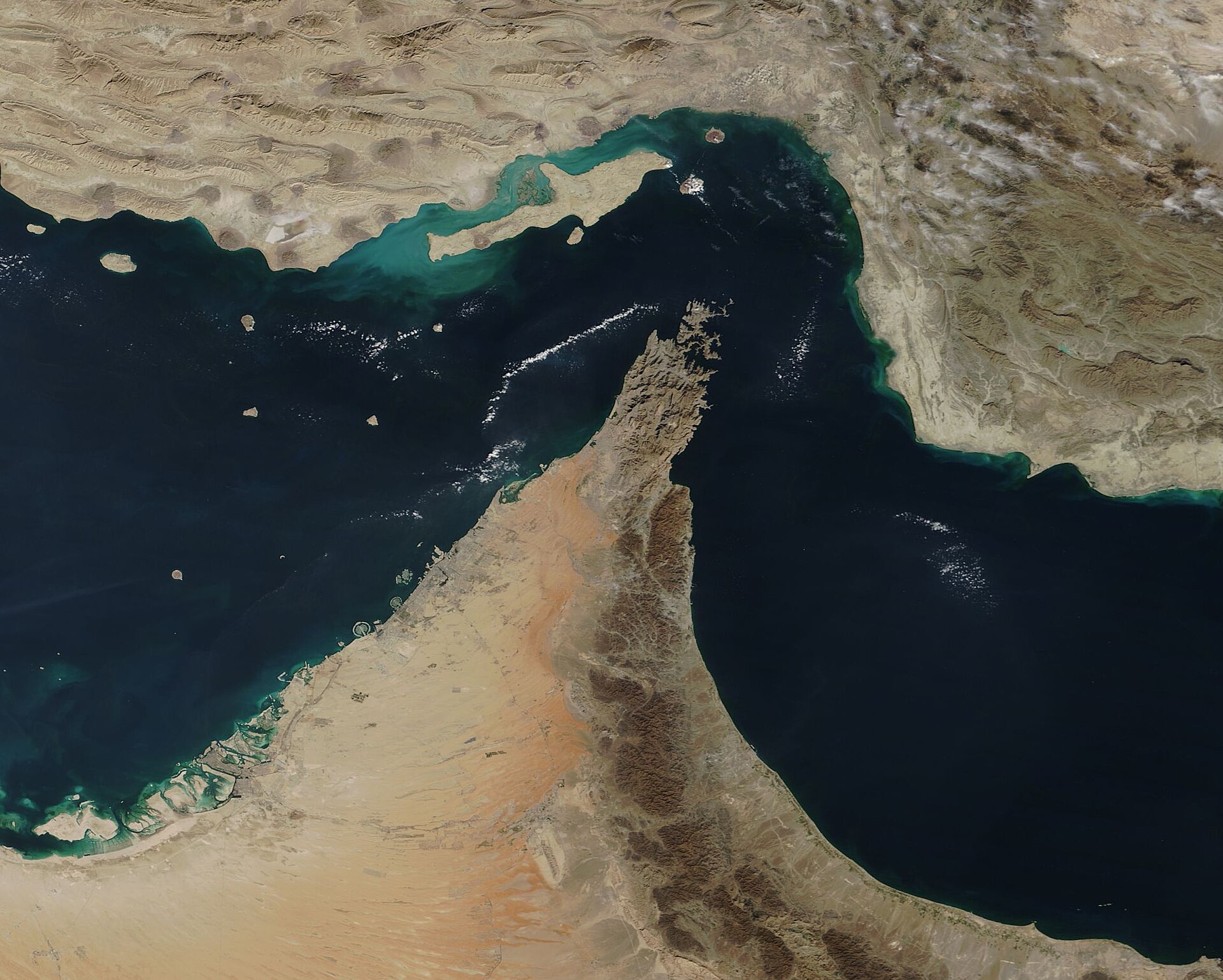
The MoU also addresses the Hormuz question that Washington already conceded as a structural IRGC veto. The 30-day window would need to produce an agreement on transit rights in a strait where the IRGC declared “full authority to manage” passage on April 5 and April 10, where the US PGSA blockade has turned back 52 vessels as of May 5–6, and where a double blockade — US controlling Arabian Sea entry, IRGC controlling Gulf of Oman exit — has reduced transit to 45 vessels since the April 8 ceasefire, or 3.6 percent of the pre-war baseline.
The Parliamentary Bloc Lines Up Behind the IRGC
Ghalibaf did not mock the MoU alone. Ebrahim Rezaei, spokesman for parliament’s national security committee, told Iran International on May 7: “What the Americans did not achieve in face-to-face negotiations, they will not obtain through a failed war.” The statement reframes the entire US military campaign — the blockade, the strikes, the 68 days of hostilities — as a settled question that Iran already won.
Parliamentarian Mehdi Kouchakzadeh added a procedural complaint: Iran’s parliament had received “no official information” about the ongoing negotiations, per Iran International. This is not ignorance. It is a deliberate institutional signal that the Majlis does not recognize Araghchi’s diplomatic track as legitimate. If the parliament has not been informed, any agreement Araghchi signs can be challenged as unauthorized.
The media ecosystem reinforced the parliamentary position. Iran state television, described by a former senior security official as an IRGC mouthpiece according to Iran International, dominated its May 6–7 coverage with war-hawk commentary dismissing the MoU. Tasnim, Fars, and Mehr — the three IRGC-aligned wire services — all ran the “American propaganda” line before Ghalibaf posted. The parliament speaker was not creating the narrative. He was capping it with the highest-ranking civilian endorsement available.
Why Araghchi Cannot Deliver a Yes
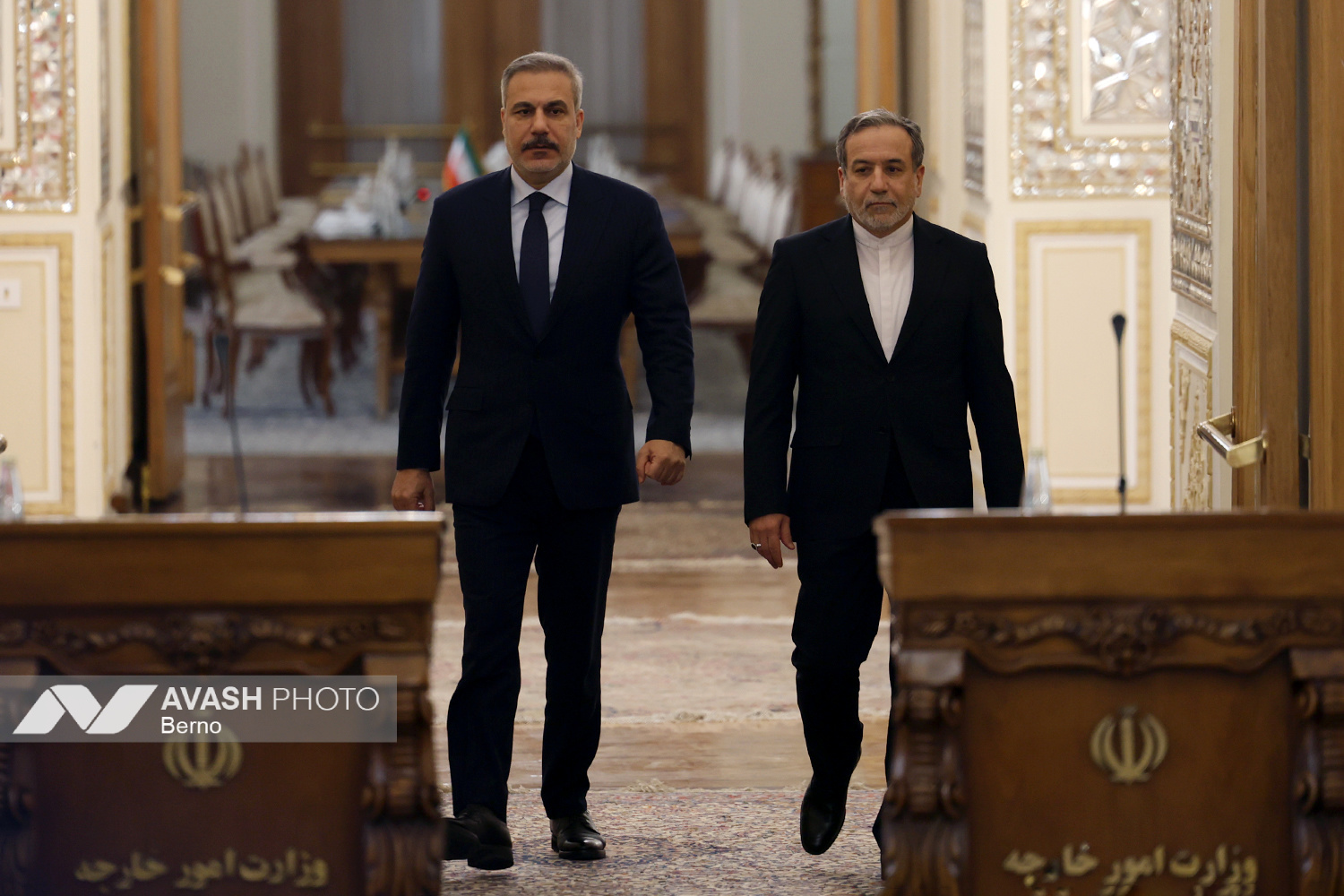
Abbas Araghchi was in Beijing on May 6, telling Al Jazeera that Iran would only accept “a fair and comprehensive agreement” and would reject anything “unfair and incomplete.” The language is calibrated for two audiences: it signals willingness to Washington and Pakistan while protecting Araghchi’s position in Tehran by keeping the terms vague enough to avoid triggering an IRGC response. It did not work. The IRGC response came anyway, through Ghalibaf and Tasnim, before Araghchi landed.
Foreign Ministry spokesman Esmaeil Baghaei confirmed on May 3 that Iran received the US reply through Pakistan, calling it “not easy to review” given “excessive and unreasonable demands,” per CNBC. The phrase “not easy to review” is diplomatic code for a document that creates institutional risk for anyone who endorses it. Baghaei was describing not a policy evaluation but a survival calculation.
Araghchi’s structural problem extends beyond the IRGC. As of late April, both Pezeshkian and Ghalibaf were jointly seeking his removal, accusing him of acting “less as a cabinet minister and more as an aide to Vahidi” without informing the president, according to Iran International on April 30 and The Week India on May 1. The accusation is paradoxical: Araghchi stands accused of being too close to Vahidi by one faction and too willing to negotiate by another. The foreign minister occupies a position where every move creates an enemy — and where the enemies include both the president he serves and the IRGC commander whose approval he needs.
The Hormuz reversal in April established the precedent. When Araghchi announced the strait was “completely open,” the IRGC reversed the declaration within hours. The pattern is now structural: Araghchi can signal, but he cannot commit. And the MoU requires commitment on enrichment, HEU removal, and Hormuz — three issues where Vahidi has publicly drawn red lines that Araghchi has no constitutional authority to cross.
Can Pakistan Close the Deal in 48 Hours?
The Times of Islamabad reported on May 6 that Field Marshal Asim Munir is eyeing visits to both Tehran and Washington to seal the deal. Pakistan has been the sole enforcement mechanism for the ceasefire framework since April, with Munir serving as the relay between parties that refuse to speak directly. But Pakistan’s enforcement architecture has the same structural flaw as the MoU itself: it requires the IRGC’s cooperation, and the IRGC has just publicly declared the document fake.
Munir visited Khatam al-Anbiya headquarters — Abdollahi’s command — on April 16, making Pakistan’s enforcement dependent on appeals to the same IRGC commanders Pezeshkian has publicly accused of sabotage. The 48-hour window that ABC News and CNN reported on May 6–7 runs directly into this wall. Pakistan can deliver a document; it cannot deliver an IRGC endorsement. And Trump threatened Iran with bombing “at a much higher level” if it rejected the deal, per CNBC on May 6 — a threat that strengthens the IRGC’s domestic argument that the MoU is coercive, not diplomatic.
One indicator suggests Iranian civilians are processing the deal as real even if their government is not: Iranian rial and Tether values fell sharply in Tehran markets on reports of a possible agreement, per Iran International on May 6. The currency drop signals that ordinary Iranians — who have lived through 68 days of war and an economy that Pezeshkian warned would “collapse in three to four weeks” as early as April — are pricing in the possibility of sanctions relief. The IRGC bloc is pricing in something else entirely.
As Pezeshkian described the IRGC’s approach to escalation as “madness” and requested an urgent meeting with Mojtaba Khamenei on May 6, per Iran International, the coercive diplomacy architecture that the US blockade was designed to create is producing its intended pressure. But pressure on the president is not pressure on the IRGC. The 48-hour clock counts down on a government that has publicly demonstrated it cannot speak with one voice — and whose loudest voice just called the offer a forgery. What happened when Pezeshkian’s Mojtaba meeting concluded reveals that the ceiling does not sit with Vahidi alone: Pezeshkian entered that room opposing the IRGC’s blockade precondition and left carrying it as presidential policy.
Background: The Authorization Ceiling from Islamabad to Beijing
The authorization ceiling is not new. It has blocked every diplomatic exit since the war began. At the Islamabad talks in April, Ghalibaf sat across from Vance while Vahidi remained absent — the man with the actual veto was not in the room. Araghchi drafted language that three sources told Axios came “inches away” from an MoU, but the Islamabad accord collapsed when the SNSC flagged a “deviation from delegation’s mandate” in a report attributed to IRGC General Zolghadr on April 14.
What changed on May 7 is visibility. Every prior instance of the authorization ceiling operated behind closed doors — in SNSC meetings, in whispered reprimands, in midnight phone calls between Munir and unnamed IRGC commanders. Ghalibaf’s X post makes the mechanism public. The IRGC-parliament bloc is no longer quietly undermining diplomacy. It is broadcasting its veto in real time, in a medium designed for maximum reach, using language (“Operation Fauxios”) crafted for virality.
A Council on Foreign Relations analysis framed the stalemate plainly: “Both President Trump and the Iranian leadership think they are winning, so we have a stalemate over the strait.” But “the Iranian leadership” is not a unitary actor. Araghchi thinks diplomacy can work. Pezeshkian thinks the economy cannot survive without a deal. Ghalibaf thinks the MoU is a fabrication. Vahidi thinks negotiation is capitulation. These are not different shades of the same position. They are four incompatible positions held by officials who each lack the authority to override the others — in a system where the one person who could override all of them has been functionally absent for over 60 days.
Frequently Asked Questions
What does “Operation Fauxios” mean?
Ghalibaf coined the term by combining the French word faux (meaning fake or false) with Axios, the American news outlet that first reported the MoU details on May 6. The portmanteau frames the entire document as an American media fabrication rather than a genuine diplomatic proposal — a rhetorical strategy that allows the IRGC-aligned bloc to dismiss the substance of the deal without having to engage with its specific terms on enrichment, HEU removal, or Hormuz.
Has Iran formally rejected the MoU?
No. As of May 7, Iran’s Foreign Ministry has not issued a formal rejection. The institutional split is precisely the point: the Foreign Ministry is keeping the channel open through Pakistan while the parliament speaker and IRGC-aligned media dismiss the document as fiction. A formal rejection would close the diplomatic track entirely; the current approach lets the IRGC bloc poison domestic support for the deal without triggering the “much higher level” bombing Trump threatened in response to a rejection.
Does Iran’s parliament have formal power to block or ratify the MoU?
Not directly, but practically yes. The Majlis cannot ratify security agreements — that authority belongs to the SNSC and Supreme Leader. But parliament controls the impeachment mechanism over cabinet ministers, including the foreign minister. If Araghchi signs something the Majlis considers a capitulation, the 290-seat chamber can move to remove him. Kouchakzadeh’s complaint about receiving “no official information” is a procedural warning: parliament is positioning itself to claim the deal was concluded without oversight.
What happens if the 48-hour window closes without a response?
The US has positioned the 48-hour window as a decision point, not a deadline with automatic consequences. Trump’s threat of bombing “at a much higher level” provides escalatory rhetoric, but the PGSA blockade — which has turned back 52 vessels and costs Iran an estimated $435 million per day according to FDD — is already the primary coercive instrument. A lapsed window more likely produces a revised timeline through the Pakistan channel than an immediate military escalation, given that Munir is actively planning visits to both Tehran and Washington.
Could Ghalibaf’s public mockery actually help the deal?
Counterintuitively, some analysts argue that public hardline opposition gives Araghchi a stronger bargaining position: he can tell Washington that the deal needs better terms because domestic opposition is fierce. This is the “Nixon goes to China” theory in reverse. But the theory assumes Araghchi has the institutional backing to convert that position into a signed agreement — and every structural indicator, from Vahidi’s categorical vetoes to the SNSC’s ratification requirements to Mojtaba Khamenei’s inaccessibility, suggests he does not. Within days of Ghalibaf’s public mockery, the IRGC Aerospace Force delivered its own institutional verdict: Brigadier General Mousavi’s “missiles locked” declaration, timed to the moment the 48-hour MOU response window closed, transformed the authorization ceiling from a political abstraction into a weapons-readiness statement aimed at Tehran’s own diplomatic apparatus.