RIYADH — Mohammed bin Salman has reportedly offered the United States roughly $100 billion in direct war financing, full normalization with Israel, a Saudi-to-Ashdod oil pipeline, and a defense package approaching half a trillion dollars — all to prevent Washington from agreeing to a full ceasefire with Iran. The offer, first reported by Imtiaz Mahmood citing White House sources and circulating since May 5, has not been independently confirmed as a single bundled package by tier-one outlets. But every component of the deal has been separately corroborated by the Washington Post, the New York Times, Bloomberg, and multiple congressional investigations — and the number itself lands with eerie precision on the ceiling of the Trump administration’s congressional funding request for the war, and on the figure Iran’s foreign minister has publicly stated the operation has already cost.
What the $100 billion figure reveals, whether or not MBS wrote it on a napkin in those terms, is the arithmetic of a regime-change bet that Saudi Arabia’s crown prince has been building since February. The question is not whether MBS is paying for the war. It is whether the war is paying for itself — and whether destroying Iran’s export capacity is worth more to Riyadh than every dollar the Kingdom has already lost.
Table of Contents
- The Package on the Table
- Is Saudi Arabia Actually Making Money on This War?
- Why Does $100 Billion Keep Showing Up?
- The Pipeline That Would Kill Hormuz Forever
- The Kushner Number
- What the February Production Surge Tells Us
- What Is Iran’s Permanent Exit Worth?
- The UAE Problem MBS Cannot Price
- Frequently Asked Questions
The Package on the Table
Strip away the diplomatic wrapping and the alleged Saudi offer has four components, each of which has been reported independently. The Washington Post, drawing on four sources, confirmed on February 28 that MBS privately lobbied Trump in a series of calls to attack Iran before Operation Epic Fury launched that same day. The New York Times reported that MBS framed the campaign as a “historic opportunity” to reshape the Middle East and urged Trump to consider American ground troops on Iranian soil to seize energy infrastructure. Popular Information’s Judd Legum documented the financial architecture connecting Saudi Arabia’s sovereign wealth fund to the Trump adviser who helped push the president toward war. And Bloomberg, reporting on May 1, established that Saudi Arabia is not merely surviving the conflict’s economic damage — it is profiting from it.
The normalization component is the oldest piece. Trump’s May 2025 Gulf visit produced a $600 billion Saudi investment commitment to the United States, and by early May 2026 that figure had ballooned to what officials describe as “nearly $1 trillion.” The $142 billion arms deal announced alongside it was billed by the White House as the largest defense transaction in history, though Brookings analysts have noted that Trump-era Saudi arms deals consistently rely on letters of intent rather than binding contracts. Full normalization with Israel — the Abraham Accords prize that eluded Trump’s first term — remains the political centerpiece, the thing that lets every other number be presented as a down payment on peace rather than a purchase order for war.
The specificity of the package matters less than its internal logic. Each element addresses a different American constituency: $100 billion in war financing covers the Pentagon’s congressional ask, normalization delivers a foreign-policy legacy, the pipeline creates an infrastructure lock-in that outlasts any single administration, and the arms deal feeds the defense-industrial base. MBS is not offering a bribe. He is offering a business plan.
Is Saudi Arabia Actually Making Money on This War?
Yes — according to Goldman Sachs’s May 1 analysis, reported by Bloomberg. At Brent prices around $112 per barrel, the war’s price premium on crude has more than offset Saudi Arabia’s 30 percent production loss. Saudi Arabia, the war’s most visibly damaged oil producer, is running a net fiscal surplus on the conflict — meaning MBS is not paying $100 billion to recover from a catastrophe, but to prevent the peace that would end his windfall.
The Middle East briefing 3,000+ readers start their day with.
One email. Every weekday morning. Free.
The structural fiscal shock absorber in this scenario is the Public Investment Fund, which has responded to wartime pressure by accelerating its domestic capital deployment. PIF’s $92 billion domestic pivot documents how the fund’s wartime capital reallocation — an 80/20 domestic-to-international split — functions as Riyadh’s primary fiscal buffer against the ceasefire paradox.
The raw production numbers are brutal on their face. Saudi output crashed from 10.4 million barrels per day in February to 7.25 million bpd in March — a 3.15 million bpd collapse that the IEA called “the largest disruption on record.” Asia-bound exports fell 38.6 percent according to Kpler tracking data. The East-West Pipeline to Yanbu hit its 7 million bpd capacity ceiling on March 28, but Yanbu’s actual port loading capacity tops out at 4 to 5.9 million bpd, leaving a structural gap of 1.1 to 3 million bpd against pre-war Hormuz throughput. Helima Croft of RBC Capital Markets put the supply picture plainly: “Spare capacity is really only sitting in Saudi Arabia at this stage, with the rest of the producers effectively maxed out.”
But Goldman’s math cuts through the production grief. At $112 Brent, 7.25 million bpd generates roughly the same revenue as 10.4 million bpd at $78 — the pre-war price. The war premium is not a side effect for Riyadh. It is a windfall that disappears the moment a full ceasefire reopens Hormuz, lets Iranian crude back onto the market, and crashes the price back toward the $80-85 range where Saudi Arabia’s fiscal break-even actually sits. The war’s end, not its continuation, is the fiscal disaster MBS is managing against. That calculus shifted further on May 6, when Brent’s 9% single-session collapse on MOU optimism demonstrated the self-defeating mechanism at the heart of deal hope: every dollar the market prices in for a ceasefire widens Riyadh’s fiscal deficit before a single additional barrel clears Hormuz.
The Q1 GDP data, released May 6, quantified one dimension of that mismatch: GDP grew 2.8% while military spending rose 26% — a war-economy paradox in which headline growth masks a fiscal structure that requires elevated Brent to remain solvent.
Why Does $100 Billion Keep Showing Up?
The number $100 billion appears in three separate contexts, and the convergence is either a coincidence or a tell. The alleged MBS offer: $100 billion in direct war financing. The Trump administration’s expected congressional funding request: $80 to $100 billion (Washington Post, April 7). The Iranian foreign minister’s public estimate of what the American operation has already cost: $100 billion.
Al Jazeera’s April 30 analysis put the broader range at $25 billion to $1 trillion, depending on how sunk costs, forward commitments, and economic disruption are counted. The MBS figure is the most contested of the three. Imtiaz Mahmood’s post on X, citing White House sources, is the only public reporting of the $100 billion war-financing offer as a discrete line item in a bundled package. No standalone corroboration from the New York Times, Washington Post, or Drop Site News exists as of this writing. But the individual elements of the package are not in dispute. The WaPo confirmed MBS lobbied for the attack. The NYT confirmed he pushed for ground troops. Bloomberg confirmed the investment commitments. And the congressional funding request is a matter of public record.
Match the $100 billion against Saudi Arabia’s own war damage and the number starts to read like an internal calculation rather than a negotiating position. Goldman Sachs estimates the Kingdom’s war-adjusted deficit at $80 to $90 billion per year, against an official budget deficit of $44 billion. At the higher burn rate, $100 billion covers roughly 13 to 15 months of the gap between what Riyadh admits it is spending and what it is actually spending. Run the math another way: the 3.15 million bpd production loss at roughly $100 Brent translates to about $115 billion in annualized lost gross revenue. The alleged offer is almost exactly one year’s worth of war damage, priced to the dollar. Whether MBS arrived at $100 billion through negotiation or arithmetic, the number is not arbitrary.
| Metric | Figure | Source |
|---|---|---|
| Alleged MBS war financing offer | $100B | Imtiaz Mahmood / White House sources |
| US congressional war funding request | $80-100B | Washington Post, April 7 2026 |
| Iranian FM estimate of US war cost | $100B | Iranian Foreign Ministry, May 2026 |
| Goldman war-adjusted Saudi deficit | $80-90B/year | Goldman Sachs via Bloomberg |
| Annualized Saudi production loss at ~$100 Brent | ~$115B | IEA / Bloomberg March 2026 |
| Saudi official budget deficit | $44B | Saudi Ministry of Finance 2026 budget |
| Saudi external borrowing (pre-war) | $156B | Chatham House, March 2026 |
The Pipeline That Would Kill Hormuz Forever
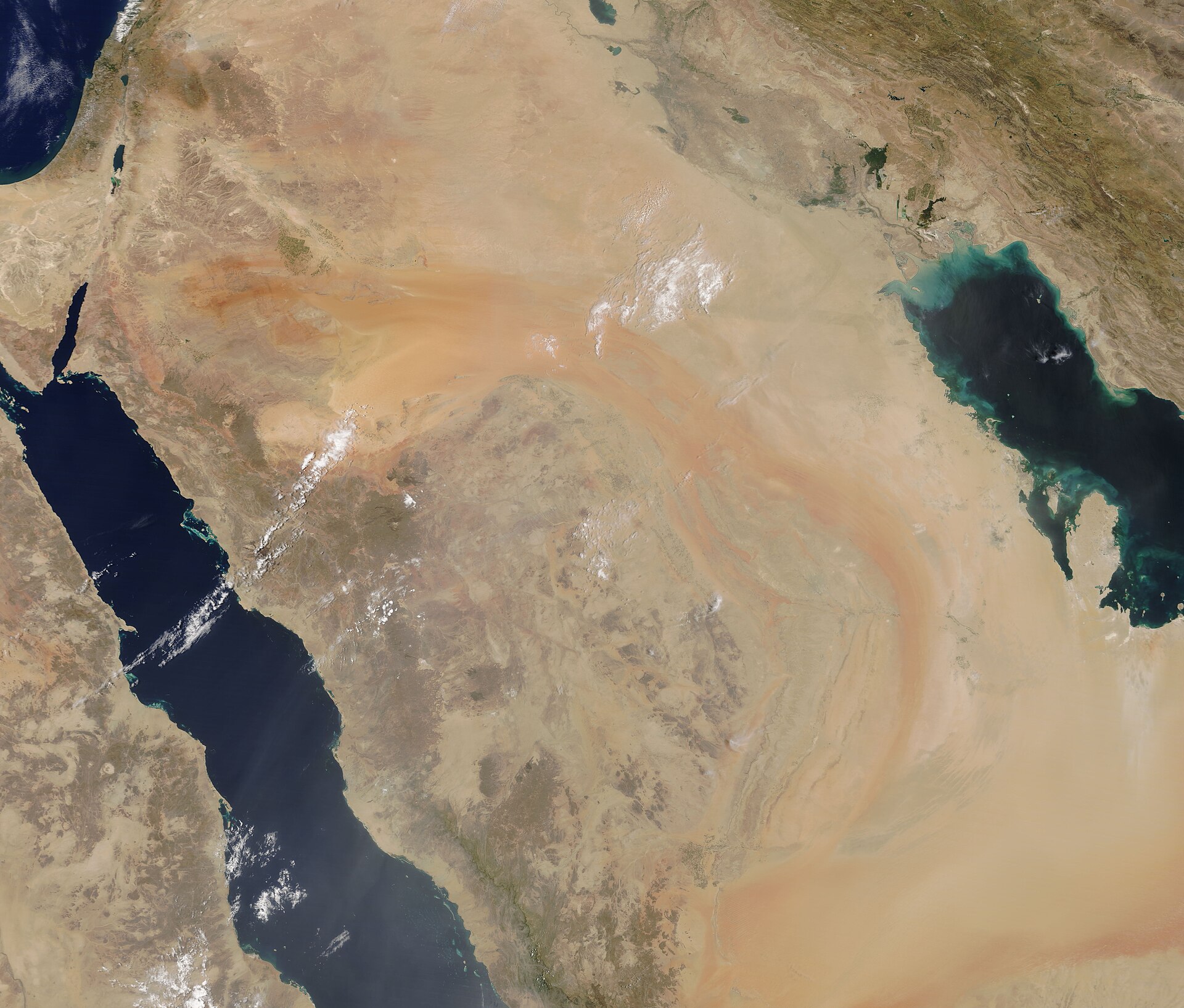
The Yanbu-to-Ashdod pipeline is the most structurally ambitious piece of the alleged package, and the one with the deepest historical irony. The proposed route would run approximately 700 kilometers from Saudi Arabia’s Red Sea terminal at Yanbu, cross Jordanian territory, and connect to the Eilat-Ashkelon Pipeline Company infrastructure in southern Israel — a 254-kilometer line that already runs from the Red Sea to the Mediterranean. The combined system would give Saudi crude a direct path to European and Mediterranean markets that bypasses both the Strait of Hormuz and the Bab el-Mandeb, the two chokepoints that have defined Gulf energy security for half a century.
The EAPC itself was built in 1968 as an Israel-Iran joint venture during the Shah era, designed to move Iranian crude to the Mediterranean without transiting the Suez Canal. It operated quietly for a decade before the 1979 revolution severed the partnership. That a Saudi-Israeli normalization deal would resurrect Shah-era Israeli-Iranian oil infrastructure — repurposing it to permanently exclude the Islamic Republic from the energy transit map — is the kind of symmetry that writes its own editorial. Israeli officials have told Ynetnews that the pipeline could bypass Hormuz entirely. Saudi Arabia’s response has been described as “cool,” which in diplomatic terms means the concept is live but the price has not been agreed.
The strategic value is not the oil flow — EAPC’s historical throughput was roughly 1.2 million bpd, upgradeable to perhaps 2 to 3 million bpd — but the permanence. A pipeline is concrete and steel. It outlasts administrations, survives regime changes, and creates an institutional constituency for the relationship it serves. If Saudi crude flows through Israeli territory, normalization stops being a diplomatic achievement and becomes an infrastructure dependency. Every barrel that moves through the EAPC creates a lobbying interest in Tel Aviv, Amman, and Washington to keep the relationship intact. MBS would be buying not just a pipeline but a permanent political fact.
The Kushner Number
The financial connection between the Saudi sovereign wealth fund and the Trump adviser who helped push for war is not alleged or inferred. It is documented in congressional filings. The Public Investment Fund invested $2 billion in Jared Kushner’s Affinity Partners in 2021, despite PIF’s own screening committee recommending against the investment. The Senate Finance Committee estimated that Kushner will receive approximately $137 million in management fees from PIF by August 2026, roughly $25 million per year. Trump confirmed publicly that Kushner was one of the advisers who convinced him to launch combat operations against Iran.
Judd Legum’s three-part investigation at Popular Information traced the chain in explicit terms: Saudi PIF funds Kushner, Kushner advises Trump, Trump orders the strikes. House Judiciary Democrats sent a formal letter to Kushner on April 16 demanding answers about the relationship between PIF payments and his advocacy for military action. The letter has not received a public response. None of this proves that Kushner’s advice was purchased — the legal standard for corruption is high, and Kushner’s hawkishness on Iran predates the PIF investment — but the financial architecture is not in dispute. The man who helped persuade the president to go to war receives $25 million a year from the country that wanted the war most.
The Kushner connection also explains why the alleged $100 billion offer, even if it never existed as a single document, is structurally plausible. The financial relationship between Riyadh and the Trump inner circle is not a back channel. It is the channel. PIF money flows to Kushner. Saudi investment commitments flow to Trump’s economic legacy. Arms deals flow to the defense contractors who fund congressional campaigns. The architecture is not hidden — it is the architecture.
What the February Production Surge Tells Us
In the 24 days before Operation Epic Fury launched on February 28, Saudi Arabia raced production to 10.882 million barrels per day — a three-year high — and pre-positioned 7.3 million bpd in exports, according to Bloomberg reporting on OPEC data published March 11. This was not normal market behavior. OPEC+ quotas at the time set Saudi Arabia’s production ceiling at 10.2 million bpd. MBS was already producing 680,000 barrels per day above quota before the first missile flew.
The production surge is the single strongest piece of behavioral evidence that Riyadh had advance knowledge of — or at minimum, high confidence in — the timing of the US-Israeli strike. You do not pump above quota into a market already softening on demand fears unless you know something is about to change the supply picture. Bernard Haykel of Princeton, who had previously described MBS as “constrained not detonated” by the war’s economic damage, offered context for the Crown Prince’s positioning: Vision 2030, the $3.2 trillion economic transformation plan that defines MBS’s domestic legitimacy, is genuinely threatened by prolonged conflict. But a pre-positioned production surge is not the behavior of a leader bracing for impact. It is the behavior of a leader front-running a trade.
The March crash to 7.25 million bpd, when it came, was therefore not an unmitigated disaster — it was the back half of a calculated position. Saudi Arabia had already banked February’s elevated exports at pre-war prices. And as Goldman Sachs demonstrated in its May 1 analysis, the post-February price spike more than compensated for the volume loss. The production surge was not a hedge against war. It was the opening move of a two-part trade: pump everything you can at the old price, then collect the war premium on whatever volume survives.
What Is Iran’s Permanent Exit Worth?
Between $82 billion and $110 billion over a decade — almost precisely what MBS has reportedly offered to finance the war. Permanently displacing Iran’s 1.5 million bpd through Kharg Island, with Saudi Arabia as the sole replacement producer at a $15-20 per barrel OSP advantage, generates $8.2 to $10.9 billion in incremental annual revenue. The bet’s price and its return are within the same order of magnitude.
Iran exported approximately 1.5 million barrels per day through Kharg Island before the war — roughly 8 percent of pre-war Hormuz flows and virtually all of Iran’s oil revenue. The IRGC’s military budget is directly funded by that revenue, which is why Kharg is described in US military planning documents and Small Wars Journal analysis as Iran’s “center of gravity.” Remove those barrels from the global market permanently, and Saudi Arabia — with more than 2 million bpd of spare capacity — is the only producer positioned to absorb the entire shortfall.
Price the replacement over a decade. Iranian crude typically sells at a discount to Saudi grades, so Saudi Arabia capturing Iran’s former customers would carry an OSP advantage of $15 to $20 per barrel. At 1.5 million bpd, that translates to $22.5 to $30 million per day in incremental revenue, or $8.2 to $10.9 billion per year — a cumulative ten-year value that brackets the alleged war-financing offer with uncomfortable precision.
This is the math that makes the bet rational even at its stated price. MBS is not gambling $100 billion against uncertainty. He is investing $100 billion to capture a revenue stream worth roughly the same amount over a single decade, while simultaneously eliminating the one competitor capable of crashing the war premium that is currently making Saudi Arabia net-positive on the conflict. The CSIS assessment that regime change in Iran “has not gone well” in recent decades is a valid historical objection. But it is a political objection to a financial proposition, and MBS has been pricing political risk in financial terms since the day he launched Vision 2030.
The UAE Problem MBS Cannot Price
There is one variable in the Saudi calculus that resists the neat arithmetic of barrels and break-evens: Abu Dhabi. The UAE’s exit from OPEC, effective May 1, removes the production constraints that had kept Emirati output aligned with Saudi market management for decades. The moment Hormuz reopens, the UAE is free to pump at maximum capacity — roughly 4.2 million bpd against a current OPEC-constrained output of about 3.2 million bpd — and undercut Saudi pricing to recapture Asian market share. Chatham House assessed in May 2026 that the Saudi-UAE fracture is a direct consequence of the war, not a preexisting condition.
MBS addressed the fracture obliquely on May 5, breaking a six-week silence with MBZ in a call that condemned Iran’s strikes on the UAE. The call was the first public acknowledgment that the two crown princes’ interests had diverged far enough to require a diplomatic intervention. Iran had privately told Saudi and Omani interlocutors that it intended to “crush the Emiratis,” according to WSJ and Middle East Eye reporting — a disclosure delivered to Riyadh, not Abu Dhabi, that was itself a weapon designed to wedge the GCC’s two most powerful members against each other. The next day in Ankara, Riyadh demonstrated what its alternative architecture looks like: a four-way security framework with Turkey, Pakistan and Egypt that gives Saudi Arabia regional depth that does not depend on Emirati alignment.
The UAE problem is the hole in the $100 billion bet. If MBS is investing to permanently remove Iranian barrels from the market, the return depends on Saudi Arabia capturing those barrels rather than watching Abu Dhabi grab them in a post-war price war. A world without Iranian crude but with an unshackled UAE producer is not necessarily a world where Saudi Arabia controls the market. It might be a world where MBS has paid $100 billion to swap one competitor for another — one that shares a land border, holds $1.5 trillion in sovereign wealth, and no longer answers to OPEC.
| Indicator | Pre-War (Feb 2026) | War-Era (March-May 2026) | Source |
|---|---|---|---|
| Daily production | 10.4-10.882M bpd | 7.25M bpd | OPEC / IEA |
| Brent crude price | ~$78/bbl | ~$112/bbl (war premium) | Bloomberg |
| Revenue effect | Baseline | Net positive (Goldman Sachs) | Bloomberg, May 1 2026 |
| Fiscal deficit (official) | $44B projected | Tracking above (Goldman: $80-90B) | Saudi MoF / Goldman Sachs |
| TASI (stock market) | Baseline | -11.58% YoY | AGBI |
| IMF growth forecast | 4.5% | 3.1% (revised down) | IMF April 2026 REO |
| East-West Pipeline | Below capacity | 7M bpd (maxed out March 28) | Bloomberg / Argus Media |
| Yanbu loading ceiling | N/A | 4-5.9M bpd | Argus Media |
Frequently Asked Questions
Has any tier-one outlet confirmed the $100 billion war-financing offer as a single package?
No. The specific bundled offer — $100 billion in war financing plus normalization, pipeline, and arms — was reported by Imtiaz Mahmood on X, citing White House sources, and circulated May 5-6. The Washington Post, New York Times, and Bloomberg have independently confirmed individual components (MBS lobbying for war, investment commitments approaching $1 trillion, the pipeline concept, and the arms deal) but none has reported the $100 billion figure as a discrete offer. The Nation reported in May 2026 on Saudi efforts to sidestep visible war costs, and Congressional Democrats have formally questioned the financial links between PIF and Trump advisers, but the specific $100 billion number remains single-source. Trump’s Middle East trip beginning May 13 — with Saudi Arabia as the first stop — may clarify whether the figure reflects an actual proposal or an aggregation of known commitments.
How does the Saudi offer compare to historical US war-financing arrangements with allies?
The closest precedent is the 1991 Gulf War, where Saudi Arabia, Kuwait, Japan, and Germany collectively reimbursed the United States for approximately $54 billion of the $61 billion total cost — covering nearly 90 percent of the war’s expense. Adjusted for inflation, that $54 billion is roughly $120 billion in 2026 dollars, placing the alleged MBS offer in the same historical range. The difference is structural: in 1991, the reimbursement came after the war to cover costs already incurred. The alleged 2026 offer, if accurate, is prospective — financing extended to prevent a ceasefire and prolong a conflict. That distinction would make it unprecedented in modern US alliance history, closer to a subsidy for continued operations than a cost-sharing agreement.
What happens to Saudi Arabia’s fiscal position if a ceasefire fully reopens Hormuz?
Goldman Sachs’s May 1 analysis implies the answer is painful. The war premium keeping Brent above $110 per barrel is the mechanism making Saudi Arabia net-positive despite its 30 percent production loss. A full Hormuz reopening would return approximately 13 million bpd of idled global supply to the market — the IEA’s Fatih Birol described the current disruption as “the biggest energy security threat in history” — and Brent would likely fall toward the $75-85 range that prevailed pre-war. At that price level, Saudi Arabia’s fiscal break-even of approximately $80-85 per barrel (Bloomberg’s PIF-inclusive estimate) leaves almost no margin. The Kingdom would simultaneously lose its price windfall and face a production recovery period during which Hormuz-dependent Eastern Province facilities return to full capacity. The IMF’s already-downgraded 2026 growth forecast of 3.1 percent, down from 4.5 percent, would face further revision.
Could the Yanbu-Ashdod pipeline actually be built, and on what timeline?
The engineering is straightforward — pipeline construction across relatively flat desert and steppe terrain is well-understood technology, and the Jordanian crossing involves no major topographical barriers. The new-build requirement is roughly 700 kilometers from Yanbu to Eilat; the existing 254-kilometer EAPC infrastructure from Eilat to Ashkelon is already in place. Comparable pipeline projects in the region, such as the 1,200-kilometer East-West Pipeline itself, were completed in approximately three years. The obstacles are political, not technical. Jordan would need to approve a transit agreement that formally normalizes its role in the Saudi-Israeli energy relationship — a step well beyond Amman’s existing cold peace with Tel Aviv. Saudi Arabia’s “cool” public response to the concept suggests that MBS views the pipeline as a normalization bargaining chip rather than a near-term infrastructure commitment. No construction timeline has been proposed by any party.
What is the IRGC’s financial exposure if Iranian oil exports are permanently eliminated?
Iran’s 2026 military budget, funded primarily through oil revenue, stood at approximately $12.4 billion before the war. Kharg Island handles over 90 percent of Iranian crude exports, and the IRGC’s Khatam al-Anbiya Construction Headquarters — commanded by General Abdollahi, whom President Pezeshkian publicly accused of undermining ceasefire negotiations — controls substantial economic assets tied to oil infrastructure. A permanent loss of 1.5 million bpd in exports at current prices would remove approximately $55 to $60 billion in annual gross revenue from the Iranian economy, with downstream effects on the IRGC’s ability to fund proxy operations, domestic patronage networks, and weapons development. The Central Bank of Iran’s own leaked memo, reported in April, projected 180 percent inflation and a 12-year economic recovery timeline from war damage already sustained — figures that assume some eventual return of export capacity. Permanent exclusion from oil markets would extend that timeline indefinitely.