PARIS — Iran has struck two CMA CGM vessels in 17 days — escalating from a projectile hit on the 15,300-TEU Everglade on April 18 to a cruise missile into the 2,824-TEU San Antonio on May 5 that wounded several crew members — and the pattern is deliberate. Tehran is imposing graduated targeting costs on France’s largest shipping line to deter a European carrier group before it reaches the strait France has pledged to reopen.
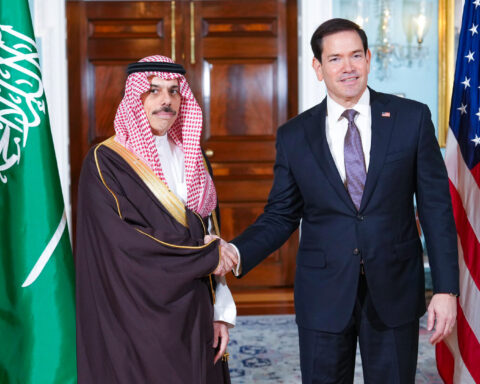
The Charles de Gaulle carrier strike group transited the Suez Canal on May 6, less than 24 hours after the San Antonio was hit. For Saudi Arabia — absent from both the US blockade and the 44-nation France-UK coalition, hosting American bombers at King Fahd Air Base while receiving French Foreign Minister Jean-Noël Barrot in Riyadh on April 30 — the convergence compresses a choice the kingdom has deferred since March. If France arrives at Hormuz already taking Iranian fire, its “non-belligerent escort mission” becomes a combatant operation, and Riyadh’s neutrality between the two competing naval architectures loses the premise it requires.
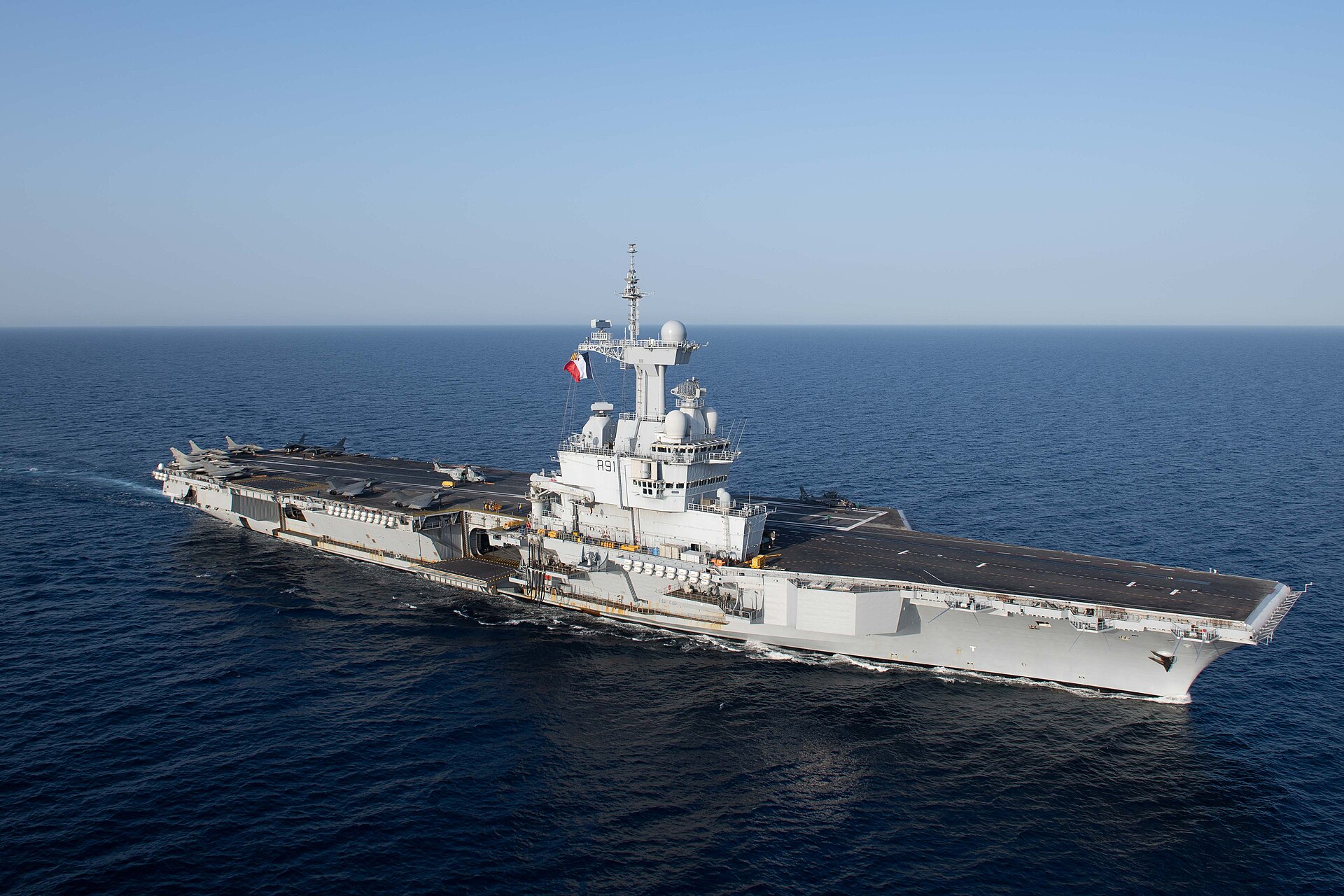
Table of Contents
- From Warning Shots to Cruise Missile
- Is Iran Targeting CMA CGM to Deter the Carrier Group?
- Three Moves in 24 Hours
- What Does the Charles de Gaulle Bring to Hormuz?
- Why Is France Building a Non-Belligerent Coalition?
- Can Saudi Arabia Stay Neutral If France Arrives Under Fire?
- Does the CMA CGM Escalation Close Macron’s Diplomatic Window?
- Frequently Asked Questions
From Warning Shots to Cruise Missile
On April 17, Iran’s Foreign Minister Araghchi declared the Strait of Hormuz “completely open.” Four CMA CGM container ships — the Galapagos, Manaus, Everglade, and Diamond — entered the strait heading outbound within hours. By April 18, the IRGC had reversed the foreign ministry’s declaration, and the Everglade took a projectile hit near Kumzar, Oman. CMA CGM described the incident as “warning shots.” The crew was unharmed. All four vessels reversed course and returned to the Arabian Gulf.
Seventeen days later, on May 5, the San Antonio — a smaller vessel at 2,824 TEU, Maltese-flagged, bound for Mundra, India — was struck by what CBS News attributed to an Iranian cruise missile. Several crew members were injured and evacuated. The United Kingdom Maritime Trade Operations confirmed the attack on May 6. Tehran has not claimed responsibility for either strike.
| Detail | CMA CGM Everglade | CMA CGM San Antonio |
|---|---|---|
| Date | April 18, 2026 | May 5, 2026 |
| Capacity | 15,300 TEU | 2,824 TEU |
| Flag state | — | Malta |
| Weapon | Projectile (“warning shots”) | Cruise missile (CBS attribution) |
| Casualties | None | Several crew injured, evacuated |
| Iran claimed responsibility | No | No |
| Source | CMA CGM; Xinhua; Anadolu Agency | UKMTO; gCaptain; CBS News |
| French action within 24 hours | April 17: Paris 44-nation summit | May 6: Charles de Gaulle Suez transit |
The escalation between the two strikes follows a template Iran has applied throughout the Hormuz crisis: graduated pressure calibrated to stay below the threshold that would trigger retaliation while imposing enough cost to change commercial behavior. Warning shots against the Everglade told CMA CGM the strait was not open. A cruise missile into the San Antonio, with crew casualties, told Paris.
Between the two attacks, France was the most operationally active European power in the Gulf. On April 3, a French warship became the first Western European vessel to transit Hormuz during the war. On April 17, Macron and Starmer hosted the 44-nation planning summit in Paris. The Everglade was hit the following day. On May 5, the San Antonio was struck. On May 6, the Charles de Gaulle entered the Suez. Each CMA CGM attack fell within 24 hours of a French military or diplomatic milestone.
The Middle East briefing 3,000+ readers start their day with.
One email. Every weekday morning. Free.
France signaled its Hormuz intentions earlier than any other European state. On March 9, the French Navy pledged 10 additional warships to the Middle East and committed to providing Hormuz escorts. By March 20, five European nations and Japan had signaled readiness to contribute. The April 17 Paris summit formalized these commitments into a multinational planning framework. The two CMA CGM strikes map onto this buildup.
No other European shipping line has been struck twice. The IRGC’s Hormuz enforcement has been selective from the start — exempting Chinese-contracted LNG carriers, allowing certain Gulf-flagged tankers through the Larak Island corridor, seizing the MSC Francesca and the Epaminondas on April 22 to signal limits to the US blockade. The CMA CGM targeting follows the same grammar of differentiated coercion, directed at a different capital.
Is Iran Targeting CMA CGM to Deter the Carrier Group?
Yes — the evidence is circumstantial but consistent. Every CMA CGM strike landed within 24 hours of a French military milestone. No other European shipping company has been hit twice. CMA CGM is not a neutral commercial target: it is France’s largest shipping line, headquartered in Marseille, with the French state holding approximately 3% through Bpifrance.
The Saadé family controls roughly 73% of CMA CGM, the world’s third-largest container carrier. The Bpifrance stake is financially minor. But in France’s political economy, CMA CGM operates as a national champion — politically protected, economically strategic, treated by successive governments as quasi-sovereign. Striking a CMA CGM vessel sends a message to the Élysée that arrives before it reaches Lloyd’s.
Iran has not claimed either attack. Tehran’s state media have not framed France as a target. French government spokesperson Maud Bregeon insisted on May 6 that “France was in no way the target.” Both governments have reasons to maintain this fiction: France because acknowledging the targeting would create domestic pressure on Macron to retaliate before the carrier group is in position; Iran because deniability keeps the diplomatic channel to Paris open while the kinetic channel delivers its own message.
The targeting logic mirrors what Iran has applied to the US blockade through Gulf tanker seizures. When the IRGC seized the MSC Francesca — 11,660 TEU, Swiss-Italian ownership — on April 22, it was communicating limits to American enforcement through a European-flagged vessel. When it hit the Everglade on April 18 and then the San Antonio on May 5, it was communicating limits to the French carrier deployment through French-operated vessels. The grammar is the same. The addressee changed.
Tasnim News Agency, aligned with the IRGC, published in May that the strait “would not return to pre-war levels of travel” and characterized negotiations as efforts to “sow discord within Iran.” PressTV ran the Macron-Pezeshkian phone call on May 6 without mentioning the San Antonio. Tasnim published the strait warning without mentioning the phone call. Two state-aligned outlets ran two different stories about the same day.
Three Moves in 24 Hours
On May 5, Iran launched the Persian Gulf Strait Authority — a formal institutional claim to regulatory sovereignty over Hormuz transit procedures. The same day, the CMA CGM San Antonio was struck by a cruise missile. On May 6, the Charles de Gaulle carrier strike group transited the Suez Canal heading south toward the Red Sea. The three events fell within a single 24-hour window.
The PGSA is the bureaucratic component of Iran’s Hormuz architecture. The San Antonio strike is the kinetic component. The carrier transit is the French escalation that both were calibrated to precede. Iran did not wait for the Charles de Gaulle to arrive. It established its institutional sovereignty claim and enforced it with a cruise missile against a French-linked vessel before the carrier group cleared the canal.
The IRGC Navy reinforced the sequencing in a statement on May 6: safe transit, it announced, “will be ensured with new procedures in place, as the United States threats end.” The statement thanked “owners and captains of ships for respecting Iranian regulations.” The language is administrative — procedures, regulations, compliance. The operational reality behind it is a cruise missile in a container ship and several crew members receiving medical evacuation.
Iran’s parliament is simultaneously advancing a 12-article Hormuz sovereignty law, sponsored by legislators Ahmadi and Rezayi Kouchi, that would codify IRGC transit control in domestic legislation. The PGSA, the sovereignty bill, and the CMA CGM strikes are three components of a single project: institutionalizing Iranian control of the strait in law, bureaucracy, and operational practice before the Charles de Gaulle arrives to contest it.
What Does the Charles de Gaulle Bring to Hormuz?
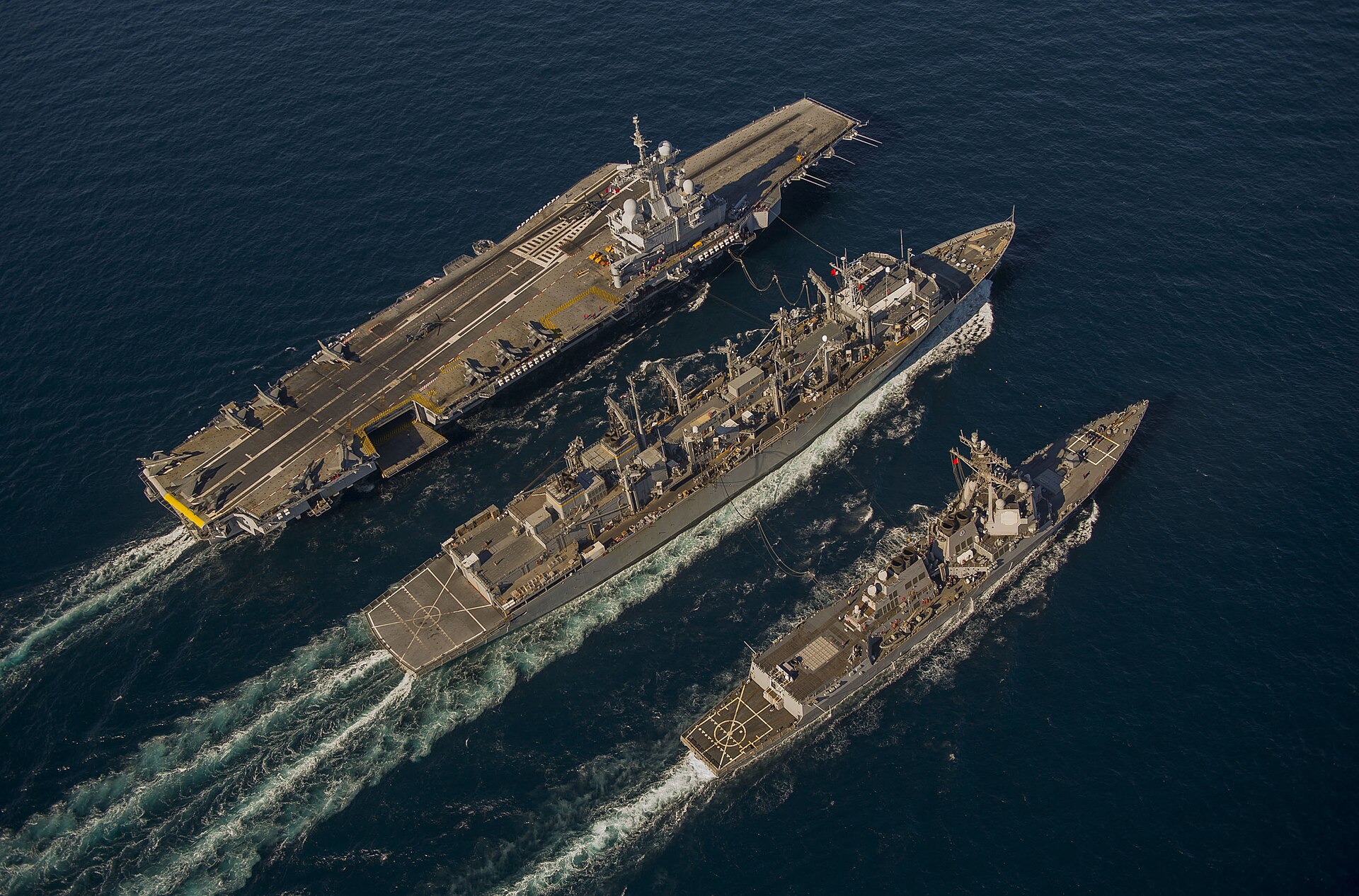
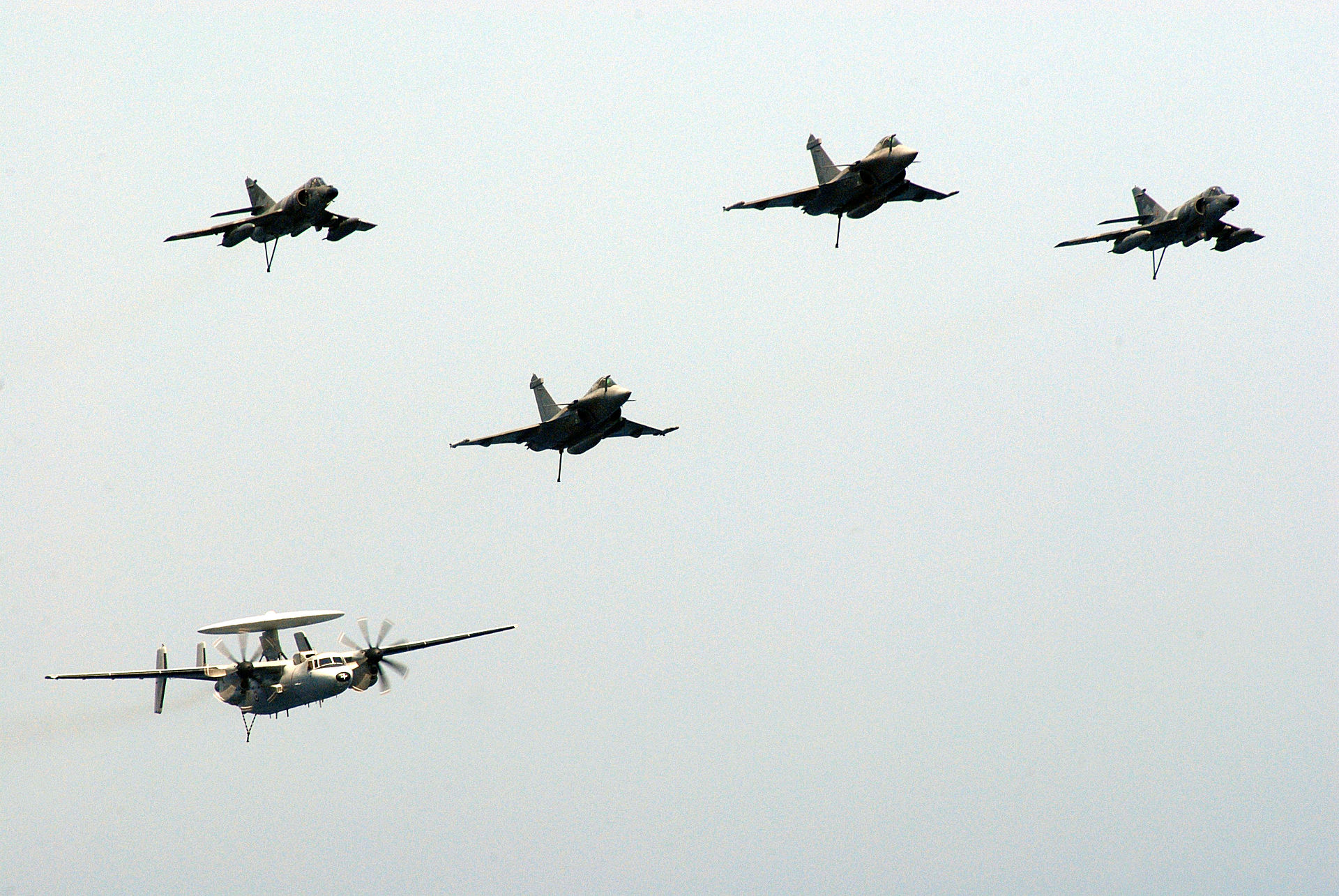
The Charles de Gaulle group brings twenty Rafale fighter jets, two E-2C Hawkeye airborne early warning aircraft, a multinational escort — French air-defense frigate Chevalier Paul, Spain’s Cristóbal Colón, the Dutch Evertsen — and France’s broader regional mobilization of eight frigates and two Mistral-class amphibious assault ships, described by Defense News as an “unprecedented” deployment.
The carrier group is designed for air superiority and surface warfare. The Rafales can conduct air-defense and ground-strike missions across a wide combat radius. The E-2C Hawkeyes provide airborne early warning at extended range. The escort frigates carry area air-defense systems capable of intercepting anti-ship cruise missiles of the type that struck the San Antonio. This is a force built to project power.
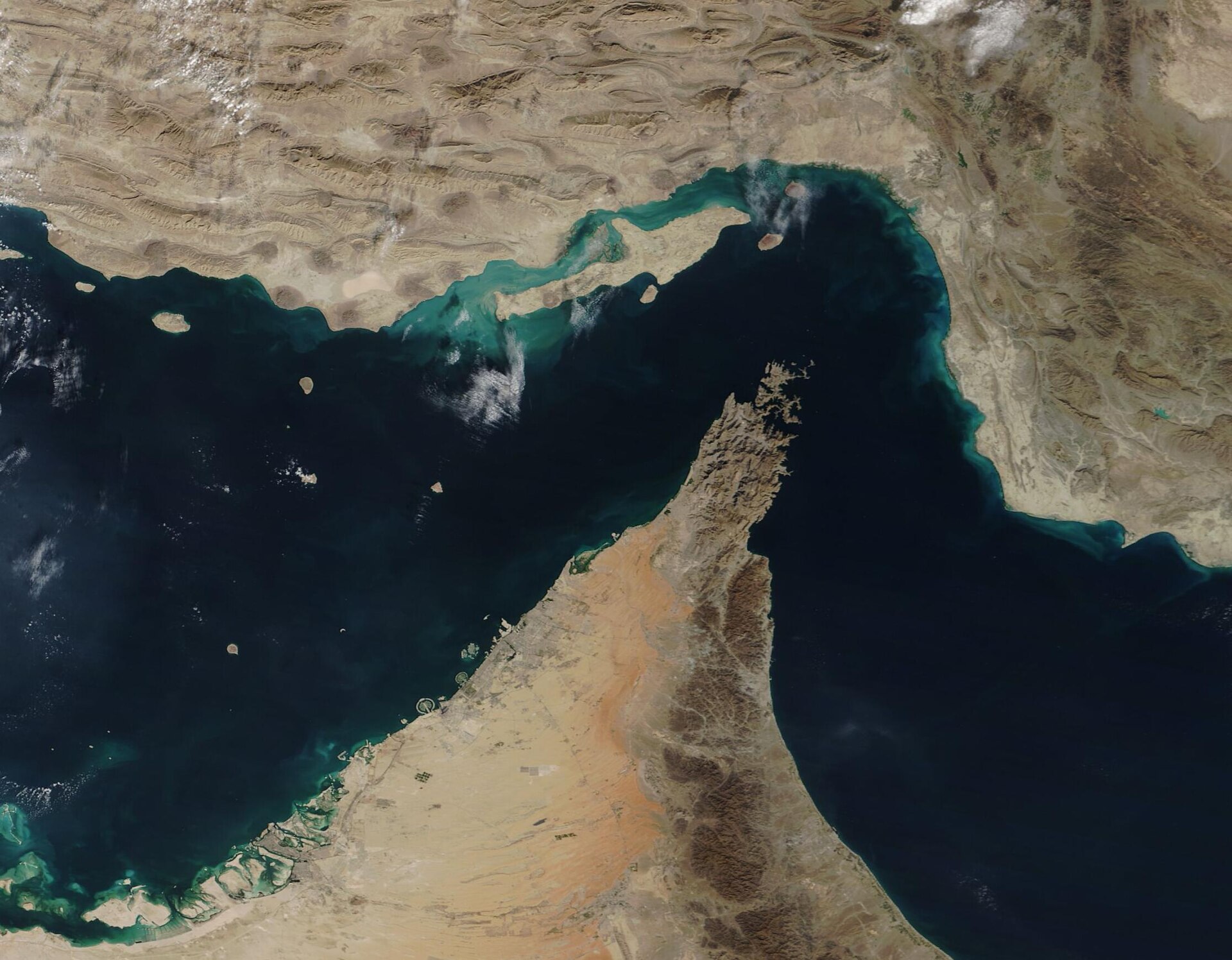
What it does not bring is mine countermeasures. Iran possesses an estimated 5,000 to 6,000 naval mines, and the IRGC has declared the standard shipping lanes in the Strait a “danger zone” since February. The US decommissioned all four Avenger-class mine countermeasures ships from its Bahrain naval base in September 2025. Only two MCM-capable vessels remain in the theater. A clearing operation on the scale of Kuwait in 1991 — roughly 200 square miles — would take approximately 51 days after the shooting stops.
“At present it is relatively inexpensive for Iran to threaten to disrupt traffic in the Strait, while it is costly for any single country to guarantee security through naval escorts. A multinational coalition redistributes this burden by pooling naval assets and sharing operational costs.”
— Chatham House, May 2026
US Navy officials have described the Hormuz operating environment as a “kill box”: shore-launched anti-ship cruise missiles — the Noor, with a range of roughly 170 kilometers, plus the Nasir and Qadir — drone swarms, fast-attack boats, explosive unmanned surface vessels, and mine belts, all concentrated in a waterway 33 kilometers wide at its narrowest point. Iran’s Shahid Soleimani-class corvettes carry six box-launched anti-ship cruise missiles. The Charles de Gaulle can project power over this environment. Whether it can make the strait safe enough for commercial shipping to re-enter — which is the stated mission — depends on a threat reduction that Iran has shown no interest in providing.
Why Is France Building a Non-Belligerent Coalition?
Because the alternative — joining the US blockade — would make France a co-belligerent and sever its diplomatic channel to Tehran. Macron’s insistence that only “non-belligerent” countries may participate is the defining distinction between the France-UK mission and Operation Project Freedom. It is also the condition under which Paris can deploy a carrier group toward Iran’s coastline while simultaneously calling Iran’s president to propose a deal.
The distinction is operational, not rhetorical. Operation Project Freedom — launched by the US on May 4, paused by Trump on May 5 after two merchant vessel exits under live IRGC fire — is a blockade enforcement operation. It has turned back 52 commercial vessels bound for Iranian ports, according to UANI data cited by PBS. Some 166 tankers holding approximately 170 million barrels remain anchored across the region. The US operation is belligerent by design. France’s mission is defined by its non-belligerency.
The France-UK mission carries two published preconditions: the threat to shipping must come down, and the maritime industry must be sufficiently reassured to use the strait. Neither condition is met. The San Antonio cruise missile strike on May 5 worsened both. The mission requires the threat to recede before it deploys. The CMA CGM strikes are sending the threat up.
The France-Germany split makes the coalition’s architecture visible. Bloomberg reported on April 17 that German Chancellor Friedrich Merz insisted the coalition should include the United States. France rejected this: US participation would make the entire force belligerent under international humanitarian law and invalidate the framework the 44-nation planning process was built on. France is assembling a coalition whose coherence depends on the absence of the country running the other one.
Chatham House argued in May that the coalition’s goal “should not be to defeat Iran militarily but to alter its cost-benefit analysis by making any attacks on shipping consistently ineffective and increasingly escalatory.” The San Antonio tested that proposition before the coalition deployed. The cruise missile was not intercepted. No retaliatory strike followed. Iran’s cost-benefit analysis, as of May 7, favors continued targeting.
Macron reinforced the diplomatic dimension on May 6 by calling Pezeshkian while simultaneously proposing to Trump — per France24 — a blockade-for-negotiations exchange. The carrier group entered the Suez the same day. Three tracks — military deployment, US mediation, and Iranian negotiation — compressed into a single 24-hour period.
Can Saudi Arabia Stay Neutral If France Arrives Under Fire?
The neutrality has been sustainable because both coalitions operated at a distance — the US blockade at Iranian ports, the France-UK mission still in planning. The Charles de Gaulle’s Suez transit and the CMA CGM strikes are collapsing that distance. Saudi Arabia cannot maintain equidistance from two naval architectures when one of them is arriving under active Iranian fire.
Riyadh has managed the position through simultaneous engagement with both coalitions and alignment with neither. The kingdom hosted US Air Force bomber assets at King Fahd Air Base in Taif while receiving French Foreign Minister Jean-Noël Barrot in Riyadh on April 30 for talks with Saudi Foreign Minister Prince Faisal bin Farhan. It attended neither the 44-nation Hormuz coalition planning summit nor endorsed Operation Project Freedom. It issued no public statement on either architecture. MEMRI documented a Saudi rhetorical shift from declared neutrality toward describing Iran as an “existential threat,” but the shift has not produced operational alignment with either force.
The posture has a material logic. Saudi Arabia needs the strait open more than it needs any particular coalition to succeed. The kingdom’s East-West Pipeline — the Yanbu bypass routed to the Red Sea coast — has a practical loading ceiling of 5.9 million barrels per day against pre-war Hormuz throughput of 7 to 7.5 million. The structural gap of 1.1 to 1.6 million barrels per day cannot be closed by pipeline alone. Saudi production fell to 7.25 million barrels per day in March, down from 10.4 million in February — a 30% collapse that the International Energy Agency called “the largest disruption on record.”
Both coalitions require Saudi cooperation to function. The France-UK mission would benefit from Saudi airspace for Rafale patrols and Saudi Red Sea ports for logistics and resupply. The US blockade already uses King Fahd Air Base. Riyadh has not publicly denied access to either architecture, nor has it publicly granted it. The quiet support — hosting bombers here, receiving foreign ministers there — has allowed the kingdom to maintain a posture that both sides can read as favorable without either receiving a formal commitment.
UNSC Resolution 2817 confirmed that Gulf littoral states “are not parties to the hostilities.” For Saudi Arabia, the resolution provides juridical cover for neutrality. But juridical status and operational reality diverge when a carrier group belonging to one of your defense partners is transiting toward your maritime lifeline while absorbing fire from the country whose missiles already struck your own oil infrastructure at Khurais and Ras Tanura.
The April 30 Barrot-Faisal meeting in Riyadh produced no public joint statement and no announced deliverables. The operational needs of the approaching carrier deployment suggest a predictable French agenda: overflight clearance for Rafale patrols, Red Sea port access at Jeddah or Yanbu for logistics, and intelligence on IRGC coastal launcher positions opposite the strait. From Riyadh’s side, the question would have been whether the France-UK mission risks provoking IRGC retaliation against Saudi territory during Hajj. Barrot visited less than a week before the Charles de Gaulle entered the Suez. Neither government has disclosed what was discussed.

Does the CMA CGM Escalation Close Macron’s Diplomatic Window?
Not yet, but the window is narrowing on a visible timeline. On May 6 — the same day the carrier group transited Suez — Macron called Pezeshkian and proposed that the US lift its blockade in exchange for meaningful Iranian negotiations on nuclear enrichment, ballistic capability, and regional security. Pezeshkian responded through PressTV that Iran “is ready to seriously pursue diplomatic paths to end the war.” The calls continue. So do the missiles.
“A return to calm in the Strait will help advance negotiations on nuclear issues, ballistic matters, and the regional situation.”
— Emmanuel Macron to Masoud Pezeshkian, May 6, 2026 (The Hill / PressTV)
Macron’s bridging offer attempted to position France between the US blockade and Iranian non-compliance — a mediator deploying a carrier group rather than a third combatant. The structure: Washington lifts the blockade; Tehran negotiates in good faith; Paris provides the escort architecture that makes reopened transit commercially viable. The offer depends on Macron’s ability to sustain the non-belligerent posture. The CMA CGM strikes are testing that ability before the carrier group reaches the operational theater.
The authorization ceiling that prevented ceasefire agreements in Islamabad applies here with equal force. Macron can call Pezeshkian. Pezeshkian can express willingness. But the IRGC Navy — which declared in May that any military vessel approaching the strait would meet a “severe response” — operates under a chain of command that does not answer to the president taking Macron’s calls. The San Antonio was struck by the same arm of the Iranian state that President Pezeshkian has publicly accused of wrecking ceasefire negotiations at Islamabad.
Iran’s diplomatic arm — the foreign ministry, the presidency — signals availability. Iran’s operational arm — the IRGC Navy, the newly created PGSA — strikes French-linked shipping on a cadence synchronized with French military milestones. The two tracks are not contradictory from Tehran’s perspective. Diplomacy establishes the terms on which the strait might reopen. Targeting establishes the cost of attempting to reopen it without Iranian consent.
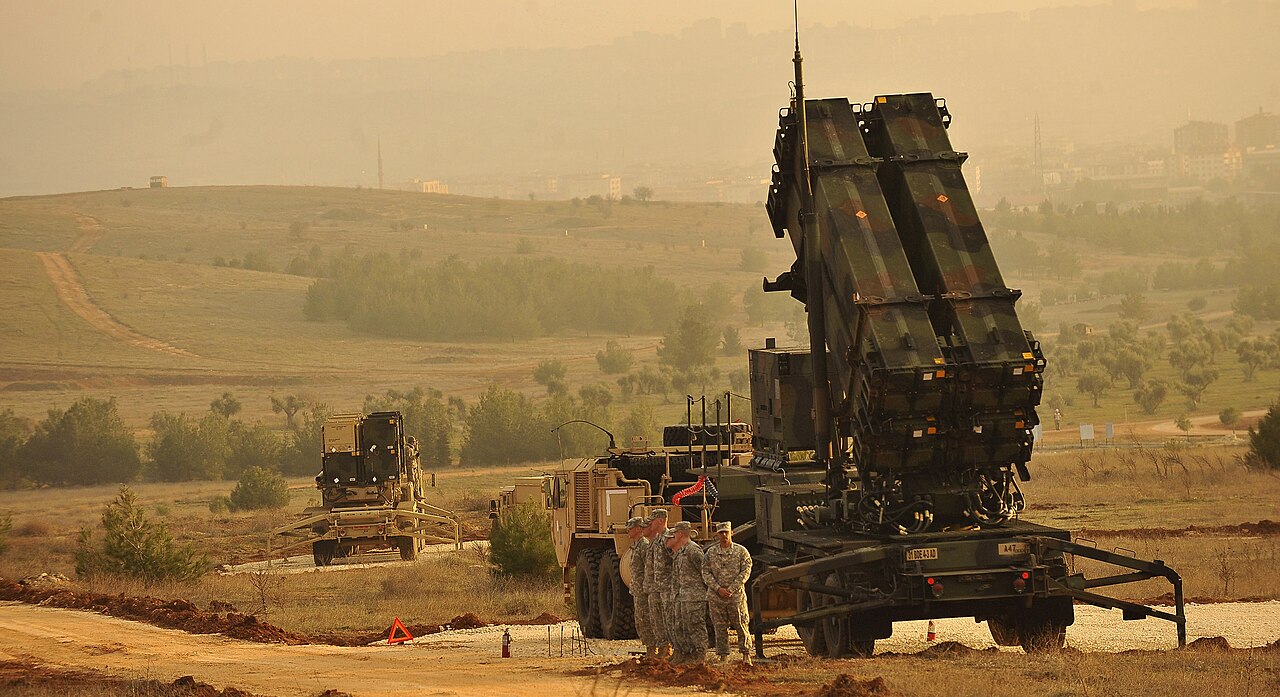
Hajj adds a temporal constraint. The Day of Arafah falls on May 26 — 20 days from the carrier’s Suez transit. Saudi Arabia’s PAC-3 MSE inventory stands at approximately 400 rounds, roughly 14% of pre-war stocks, to defend 1.2 to 1.5 million pilgrims. Indonesia — the country with the largest Hajj quota at 221,000 pilgrims — has its first departure scheduled for the same period. The carrier group’s approach timeline and the pilgrimage calendar are converging on the same three-week window.
Frequently Asked Questions
Has France previously led a maritime security mission in the Gulf?
France launched EMASOH — the European-led Maritime Awareness in the Strait of Hormuz mission, with its military component Operation Agenor — in January 2020, following Iran’s seizure of the UK-flagged tanker Stena Impero in July 2019. Eight European nations participated. The mission focused on surveillance and situational awareness rather than armed escort, operating with a single rotating French warship and a staff of approximately 60 personnel. The current deployment — eight frigates, two Mistral-class amphibious ships, and a nuclear-powered carrier with 20 Rafale jets — is an order of magnitude larger, reflecting the shift from tanker seizures to cruise missile strikes in the threat environment since February 2026.
What is the legal basis for the France-UK Hormuz escort mission?
The mission invokes UNCLOS Articles 37 through 44, which guarantee transit passage through international straits including Hormuz. UNSC Resolution 2817, passed during the 2026 crisis, affirmed that Gulf littoral states are “not parties to the hostilities,” providing a legal foundation for non-belligerent escort operations. Chatham House recommended in May that the coalition adopt structured transit corridors modeled on the International Recommended Transit Corridor used in Gulf of Aden anti-piracy operations. It also cited the Malacca Straits Patrol — a 2004 multilateral arrangement between Indonesia, Malaysia, Singapore, and Thailand — as a more applicable model than convoy escort, noting that the MSP succeeded in lowering Lloyd’s insurance classification for the Malacca Strait from “war risk” to standard within two years of launch.
How does Iran’s CMA CGM targeting compare to its treatment of other shipping companies?
CMA CGM is the only shipping company struck twice during the Hormuz crisis. Iran’s enforcement has been differentiated by flag, cargo, and political alignment throughout: Chinese-contracted LNG carriers have received IRGC-facilitated passage, including the Al Daayen, which transited at 8.8 knots in April under arrangements brokered through CNPC and Sinopec. MSC lost two vessels — the Francesca (11,660 TEU) and the Epaminondas (6,690 TEU) — to seizure on April 22, but as single incidents tied to the US blockade escalation rather than a sustained campaign against the company. The repeated, escalating strikes against CMA CGM specifically — first a projectile with no casualties, then a cruise missile with injuries — are distinct from one-time seizures and consistent with a directed coercive campaign aimed at a specific state.
How many countries have committed naval assets to the France-UK coalition?
The planning framework involves more than 44 countries from every continent, according to GOV.UK and Euronews. The April 17 Paris summit hosted by Macron and Starmer established the multilateral structure, followed by a two-day UK-hosted military planning conference involving more than 30 nations on April 22. Five European nations plus Japan signaled readiness to contribute to Hormuz security by March 20. However, committing to a planning framework and deploying warships are different acts. The Charles de Gaulle group currently sails with French, Spanish, and Dutch escorts. No other contributing nation has publicly confirmed a warship deployment to the Hormuz theater as of May 7.
Has Iran warned France specifically about the carrier deployment?
Not by name. The IRGC Navy stated in May that any military vessel approaching the strait would be considered a ceasefire violation and would meet a “severe response” — a warning applicable to the Charles de Gaulle group by its terms. Iran’s approach has been to avoid singling out France in official statements while striking French-linked commercial vessels operationally. PressTV covered the Macron-Pezeshkian call on May 6 as a diplomatic exchange without mentioning either the San Antonio strike or the carrier transit. Tasnim, the IRGC-aligned outlet, carried neither the phone call nor the carrier story. Each outlet’s editorial selection is visible to Paris.