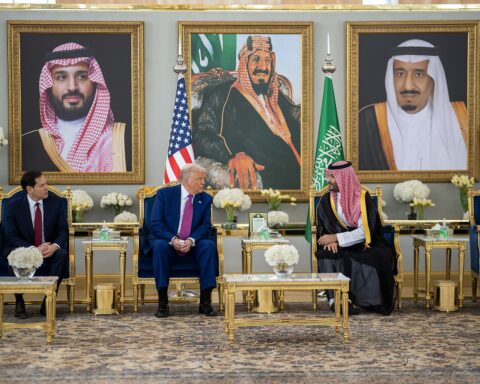
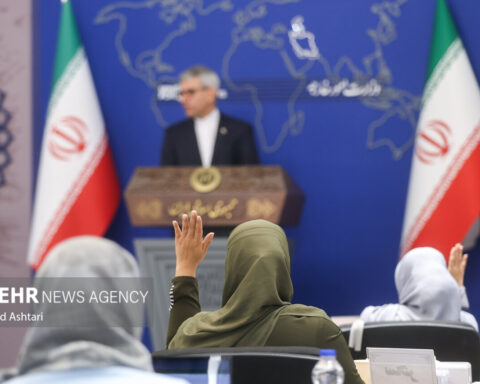
WASHINGTON — On the same morning Marco Rubio’s deadline for Iran’s response to the 14-point MOU expired, the National Council of Resistance of Iran walked into a Washington press room and unrolled satellite imagery of a 2,500-acre site near Ivanaki in Semnan Province, calling it Rangin Kaman, the Rainbow Site, and accusing it of producing tritium for boosted-fission warheads under the cover of a chemicals firm. The claim arrives four days before Donald Trump lands in Riyadh, on a calendar so finely tuned to American diplomacy that Iran’s foreign minister did not bother pretending it was an accident, posting within hours that “Like clockwork, more Very Scary Satellite Images are being circulated as Iran-U.S. indirect nuclear talks are set to resume.”
Whether Rangin Kaman is what NCRI says it is matters less, in the next ninety-six hours, than what the allegation does to a deal already crumbling. A verified tritium track means any agreement that addresses only enrichment leaves a parallel weaponisation path running under Semnan; a fabricated claim that detonates the MOU leaves Saudi Arabia staring at an indefinite war on its eastern flank. There is no version of this disclosure that does not cost Riyadh.
Table of Contents
- What is the Rainbow Site allegation?
- Why does tritium matter more than enrichment?
- The NCRI’s forty-year disclosure pattern
- The timing was the weapon
- A wrench in the MOU gearbox
- Why does the Rainbow Site claim corner Saudi Arabia?
- The Maleki sanctions gap
- The verification problem nobody can solve in four days
- What did Rubio know, and when?
- What happens when Trump lands in Riyadh?
- Frequently asked questions
What is the Rainbow Site allegation?
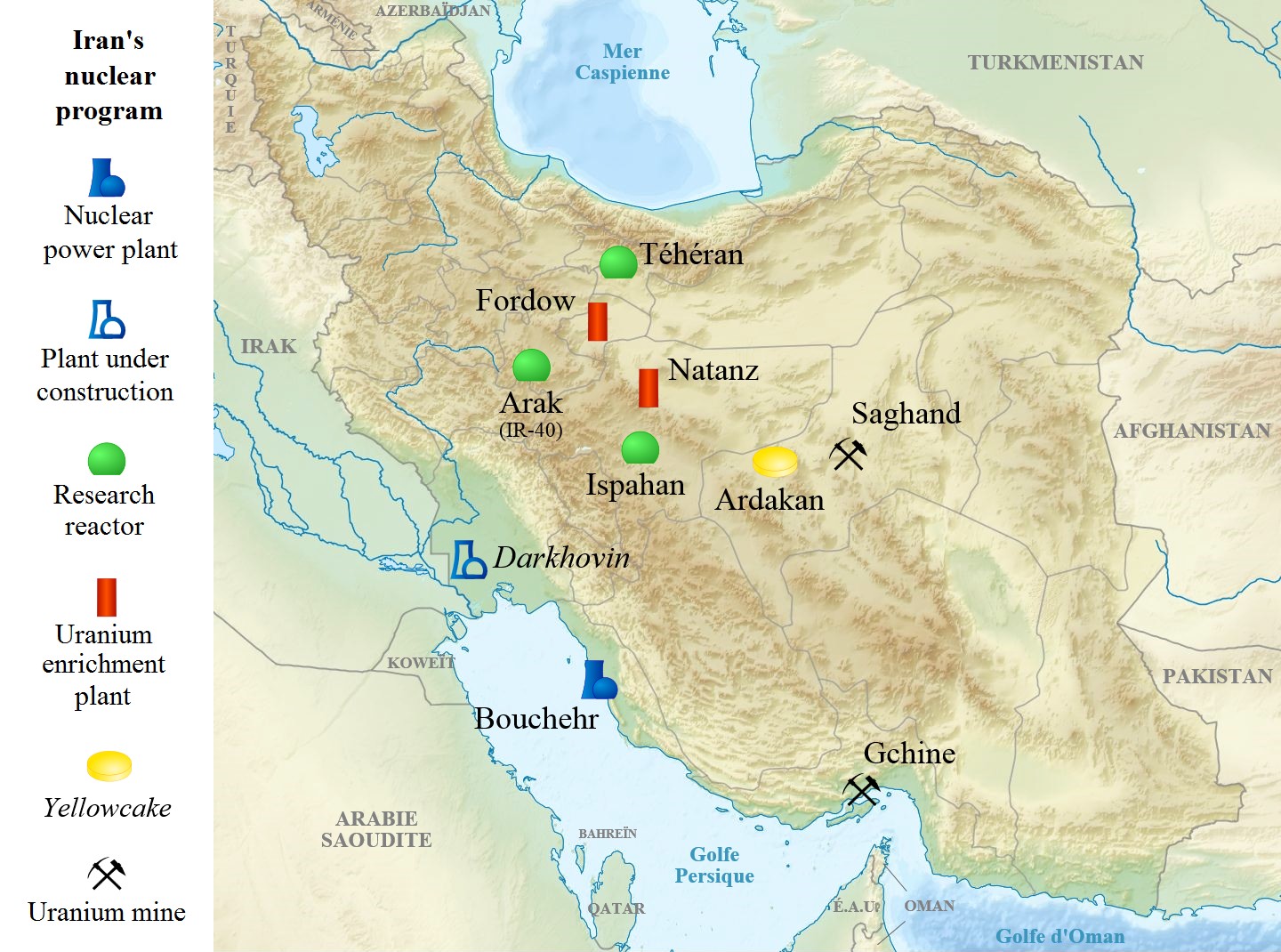
The National Council of Resistance of Iran told reporters in Washington on May 8 that a 2,500-acre compound near the town of Ivanaki in Garmsar district, roughly fifty-five kilometres east of Tehran, has been producing tritium for ten years under the commercial cover of Diba Energy Sina Company, a chemicals and paint manufacturer. Fox News correspondents Gillian Turner and Nick Kalman broke the story the same morning, citing NCRI satellite imagery and naming SPND — the Organisation of Defensive Innovation and Research, the same body that ran post-JCPOA weaponisation work — as the operator. NCRI dated the start of activity at the site to 2009, the year Western governments publicly disclosed the covert Fordow enrichment plant.
The compound sits in a province already heavy with strategic infrastructure. Shahroud Space Center, the IRGC Aerospace Force’s primary solid-fuel launch facility and the location Israel struck in June 2025, is in the same province. NCRI’s spokesperson, Alireza Jafarzadeh, did not hide the political objective. He told Newsweek the disclosure was meant to persuade Trump to demand “the total dismantlement of Iran’s nuclear program in order to create an existential threat to the Islamic Republic,” a sentence that would be unusual coming from an intelligence service and standard coming from an opposition lobby.
The technical claim is that Diba Energy Sina is one of five front companies under PETSAR Group, an entity NCRI says is chaired by IRGC Brigadier General Naser Maleki, sanctioned under UN Security Council Resolution 1747 in 2007 and quietly removed from the UN list on October 18, 2023, when nuclear-related sanctions sunset under Resolution 2231. The same Maleki who once carried a UN designation for ballistic-missile work now allegedly chairs the corporate parent of a tritium production network that the West has no current sanctions instrument against, because the West allowed its own instruments to expire.
Why does tritium matter more than enrichment?
A boosted-fission warhead uses two to three grams of tritium per device, injected as a 50/50 deuterium-tritium gas mix into the fission core at the moment of detonation, where it floods the assembly with fast neutrons and more than doubles the fission yield using the same quantity of fissile material. The fusion reaction itself contributes only about one per cent of the total weapon energy, which is why public discussion fixates on uranium enrichment and tends to skip past the boosting stage entirely. Boosting is what allows a warhead to fit on a missile rather than fall out of an aircraft, which is the difference between a deterrent posture and a usable weapon.
The Middle East briefing 3,000+ readers start their day with.
One email. Every weekday morning. Free.
Tritium decays at 5.5 per cent per year, and unlike highly enriched uranium it cannot simply sit in a vault. A working stockpile has to be replenished continuously, which means a tritium production line is behavioural evidence of an active, ongoing weapons programme rather than a hedge or a research effort. There is no civilian use for tritium at industrial scale; the substance turns up in luminous watch dials and exit signs in milligram quantities, and a 2,500-acre facility is not making exit signs.
If the Rainbow Site allegation is true, the twelve-year enrichment moratorium that diplomats have spent six weeks negotiating closes the HEU sprint path and does nothing else. Iran’s 440.9 kilograms of 60-per-cent uranium, the last figure the IAEA confirmed before its access was terminated on February 28, freezes in place. Roughly 220 kilograms of that stockpile, by Reuters reporting on May 4, the agency cannot now locate. The MOU, as currently drafted, has no language addressing tritium production, weaponisation research, warhead miniaturisation, or the Ghaem100 solid-fuel missile NCRI claims is the intended delivery vehicle. The deal, if signed in its present form, would lock down a capability Iran was not exercising at speed and ignore the one capability that converts existing fissile material into a deliverable bomb.
The NCRI’s forty-year disclosure pattern
NCRI built its reputation on the August 2002 press conference that named Natanz. The trouble with the legend is that the legend is wrong in two specific places. Mark Hibbs, the most authoritative nuclear-trade journalist of the era, reported in December 2002 that United States intelligence had briefed the IAEA on Natanz with precise coordinates a full six months before NCRI’s announcement; the disclosure was the laundering of a US lead, not an exclusive find. Corey Hinderstein, a private-sector nuclear analyst, was the first person to publicly identify Natanz as a gas centrifuge enrichment plant — four months after the NCRI press conference, which had described the site, incorrectly, as a “fuel production plant.”
Fordow followed the same arc in September 2009. NCRI made the disclosure on September 24; the leaders of France, the United Kingdom and the United States announced the existence of the covert enrichment site one day later, on September 25, in Pittsburgh. PBS Frontline’s Tehran Bureau reported in 2009 that Western intelligence agencies routinely used NCRI as a pass-through, allowing them to pressure Tehran without exposing their own sources or revealing the role of Israeli intelligence in the underlying collection. Within seven days of the September 24 disclosure, Iran agreed to allow the IAEA into Fordow.
The pattern that runs through both episodes is that NCRI does not produce intelligence; it announces intelligence on a schedule chosen by other people. The Rainbow Site fits that template precisely. NCRI calls the disclosure the capstone of its Kavir Plan series — a 2025-launched campaign that has so far named Shahroud as the warhead miniaturisation site for the Ghaem100, identified the Simorgh liquid-fuel programme as a parallel delivery track, and asserted that the Kavir Plan replaced the Amad Plan in 2009 as Tehran’s master weaponisation document. The Lavizan-3 episode haunts every one of these claims; Iran demolished the Lavizan-Shian site in 2003-2004 after NCRI exposed it and before the IAEA could inspect, and analysts since have read the demolition itself as a behavioural confession.
The timing was the weapon
Rubio’s deadline fell on May 8. The NCRI press conference was held on May 8. Trump arrives in Riyadh on May 13. There is no reading of those three dates that places the disclosure outside the diplomatic decision window, and Tehran’s foreign minister, Abbas Araghchi, said as much within hours of the cameras going dark.
Like clockwork, more Very Scary Satellite Images are being circulated as Iran-U.S. indirect nuclear talks are set to resume.
Abbas Araghchi, Iranian Foreign Minister, May 2026
The Araghchi line is interesting because it is a confession in a different direction. Iran is not denying the existence of the site; it is denying the timing of the satellite imagery. The distinction matters. A regime confident the underlying claim was fabricated would attack the substance, not the calendar, and Tehran’s pattern across the Natanz, Fordow and Parchin disclosures was always denial first, partial admission later, after the IAEA had assembled enough independent evidence to make denial untenable. The intelligence minister, Khatib, has separately claimed Iran’s services obtained “complete nuclear files” from Israel, which is the kind of statement governments make when they want to suggest they have already neutralised an intelligence vector that has not actually been neutralised.
Trump’s own messaging in the seventy-two hours before the press conference moved in two directions at once. He told Fox News that Iran had “one week to respond” to a peace deal, then told a separate reporter, when pressed, “We don’t have a deadline.” Rubio, in remarks to The Hill the same week, kept the definition of acceptable topics deliberately open-ended. The Rainbow Site disclosure landed inside that ambiguity, and ambiguity is exactly the medium an opposition lobby needs to operate in.
A wrench in the MOU gearbox
The current draft of the 14-point MOU commits Iran to a declaration that it will “never seek a nuclear weapon,” to snap IAEA inspections, to a moratorium on underground enrichment facilities, and to a ban on weaponisation activities. Tehran’s counter-offer, reported by Al Jazeera on May 7 and Axios on May 6, accepts each of those points in principle. The architecture is clean on paper, and the architecture has nothing to say about tritium.
That gap is the operational problem. FDD analysts wrote on May 6 that roughly 200 IR-6 centrifuges, if Iran retains them under the MOU’s caps, could sprint fifty kilograms of material from 60-per-cent enrichment to 90-per-cent weapons-grade in about ten days. The MOU’s twelve-year enrichment moratorium is meant to remove those centrifuges from the picture and freeze the 60-per-cent stockpile in place under safeguards, which closes the sprint window. But a sprint to 90 per cent only matters if the resulting material is being assembled into a deliverable warhead, and a deliverable warhead in the missile classes Iran fields requires boosting.
The MOU as drafted, if Rainbow Site is real, would amount to a deal that closes the front door and leaves the side gate open. Rubio’s negotiators are aware of this; the question is whether the disclosure gives them political cover to insert weaponisation language at the eleventh hour, or whether it forces them to walk away from a draft that has already absorbed Tehran’s concessions on snap inspections and underground sites. The first path looks like a way to widen the deal. The second looks like the collapse the NCRI explicitly told Newsweek it was working towards.
Why does the Rainbow Site claim corner Saudi Arabia?
Saudi Arabia is the only Gulf state with both a fiscal stake in the war ending and a security stake in the deal being airtight. Trump’s Riyadh visit is timed to convert a draft MOU into the political theatre of a working ceasefire, with the Saudis hosting the announcement and absorbing the diplomatic cost of any subsequent failure. Both outcomes from Rangin Kaman damage the Kingdom directly.
If the disclosure is verified — by IAEA inspection or independent satellite-imagery analysis or, more likely, by intelligence corroboration that quietly flows to Western capitals over the next six months — then any MOU signed in May that does not address tritium production becomes, retrospectively, the document that ratified Iran’s path to a deliverable weapon. Riyadh hosted that document. Riyadh’s Vision 2030 financing assumptions price in a settlement; they do not price in being the venue at which the West signed away the boosted-fission veto. The reputational cost of being the host city of a Munich is permanent.
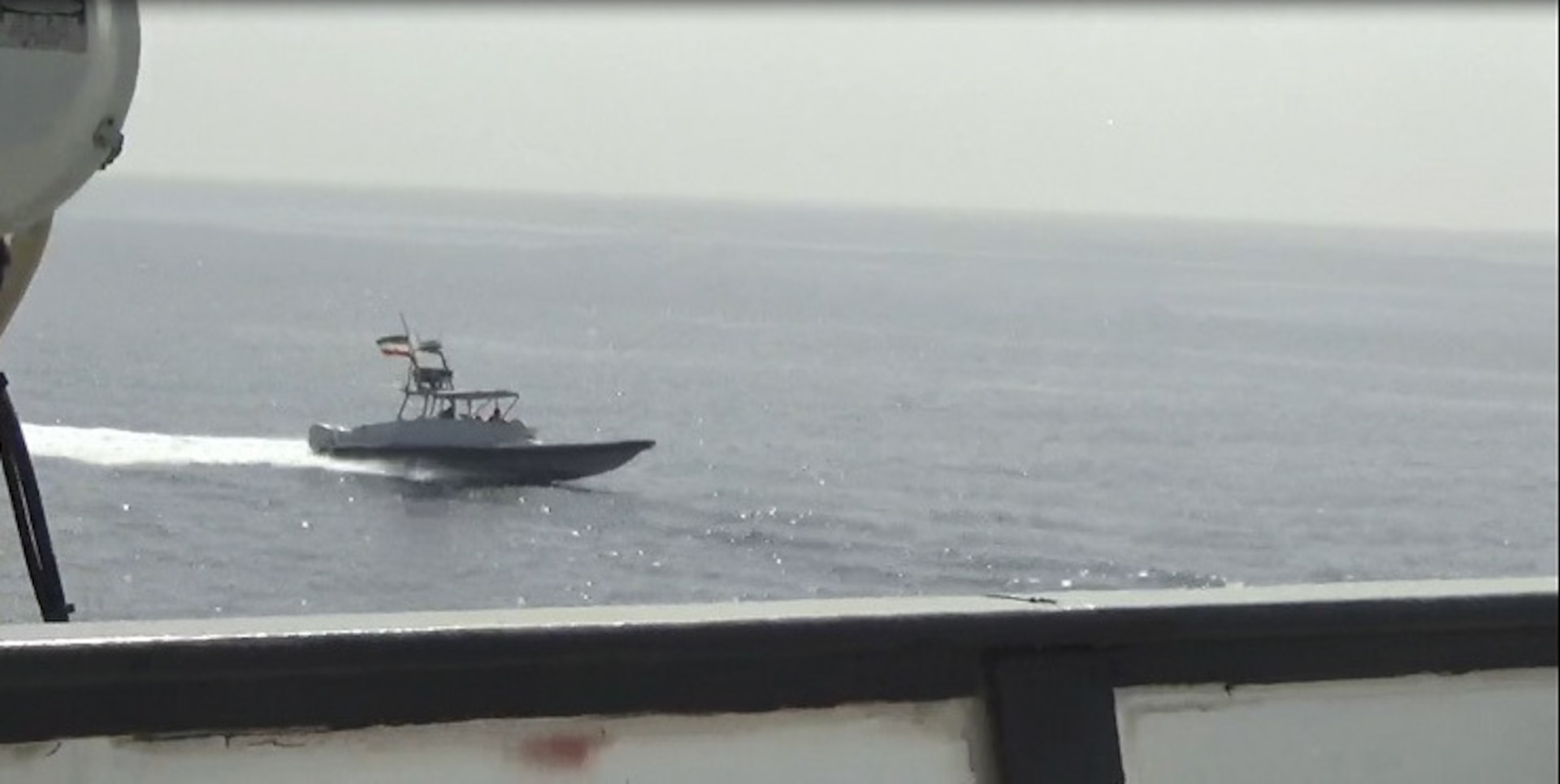
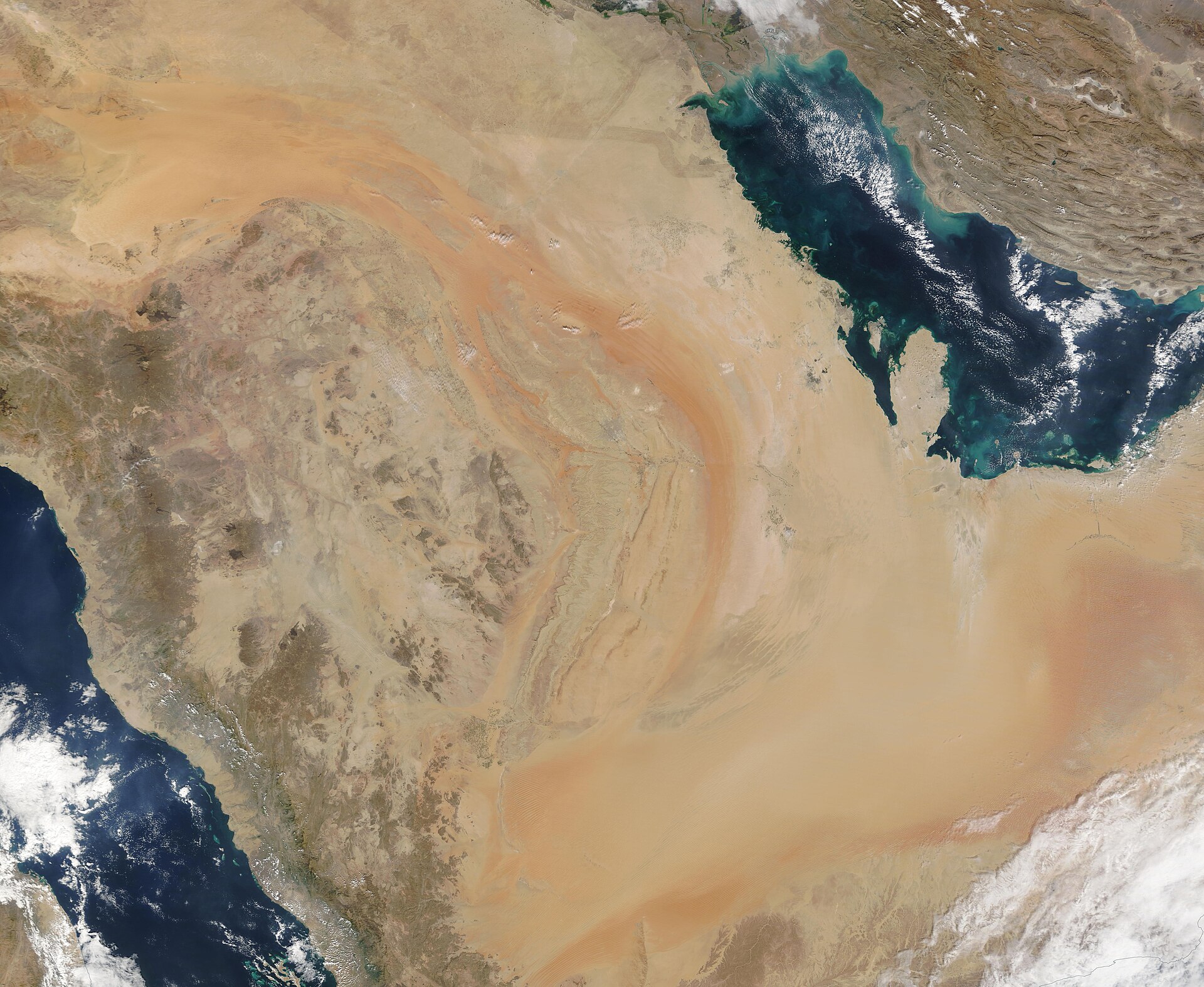
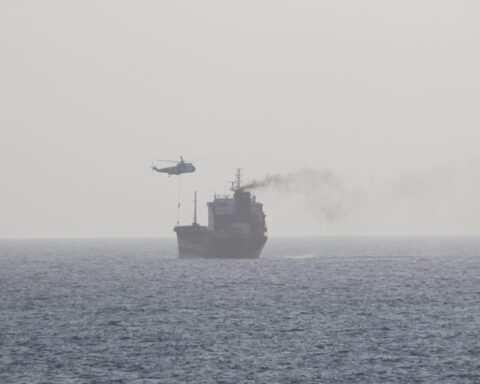
If the disclosure is fabricated and the MOU collapses because of it, the alternative is the war continuing through Hajj, through the summer fiscal cycle, and into a period when Iran’s Hormuz closure threat ratchets daily and Saudi production cannot recover above the Yanbu pipeline ceiling of roughly 5.9 million barrels per day. The three vessels on MOU deadline day behaviour confirmed Iran retains the operational capacity to disrupt regional shipping at will. Saudi Arabia cannot win an indefinite war and cannot afford to legitimise a flawed peace, and the Rainbow Site claim is calibrated to make the choice between those two outcomes feel binary.
The Maleki sanctions gap
Naser Maleki was sanctioned by the UN Security Council in 2007 under Resolution 1747 for his role in Iran’s ballistic-missile programme. He was removed from the UN sanctions list on October 18, 2023, when the nuclear-related provisions of Resolution 2231 sunset under the JCPOA’s terminal clauses. The E3 — France, Germany and the United Kingdom — triggered snap-back at the end of August 2025; the resolution was reimposed on September 27 and 28, 2025; and the snap-back mechanism itself expired on October 18, 2025, leaving the West without an automatic pathway back to Chapter VII designations against the individuals and entities that the JCPOA’s architects had originally targeted.
That sequence is the answer to a question nobody at the State Department wants asked in front of cameras during the Riyadh visit. If PETSAR Group, Diba Energy Sina, and the chain of front companies NCRI named on May 8 are real, the West cannot snap-back them into existing UN designations because the designations no longer exist and the mechanism to recreate them is spent. Any new sanctions architecture would have to be negotiated from scratch, in a Security Council where Russia and China would veto, and the only remaining instruments would be unilateral US Treasury actions and EU lists.
| Date | Event | Effect on the West’s sanctions toolkit |
|---|---|---|
| July 20, 2015 | UNSCR 2231 adopted | Set sunset clauses on UNSCR 1737/1747/1803/1929 designations |
| October 18, 2023 | Sunset of nuclear-related individual designations | Maleki removed from UN list along with multiple PETSAR-linked entities |
| August 28, 2025 | E3 trigger snap-back | 30-day window opens to reimpose pre-JCPOA sanctions |
| September 27-28, 2025 | Snap-back resolutions reimposed | Designations restored on a temporary basis |
| October 18, 2025 | Snap-back mechanism expires | No automatic pathway back to UN-level designations remains |
| February 28, 2026 | IAEA access terminated | No safeguards visibility into Iran’s declared sites |
| May 8, 2026 | Rainbow Site press conference | Allegation lands in a sanctions vacuum |
The MOU draft contains its own sanctions architecture, and the negotiators have spent weeks designing carve-outs that would let the JCPOA-era designations stay lifted in exchange for IAEA access and the enrichment moratorium. Inserting Rainbow Site language now means reopening every one of those carve-outs, because a tritium-production network would need to be designated under whatever new framework replaces the spent UN mechanisms. That is not a four-day negotiation; it is a six-month negotiation Trump does not have time to run before his Riyadh visit converts the deal into a fact.
The verification problem nobody can solve in four days
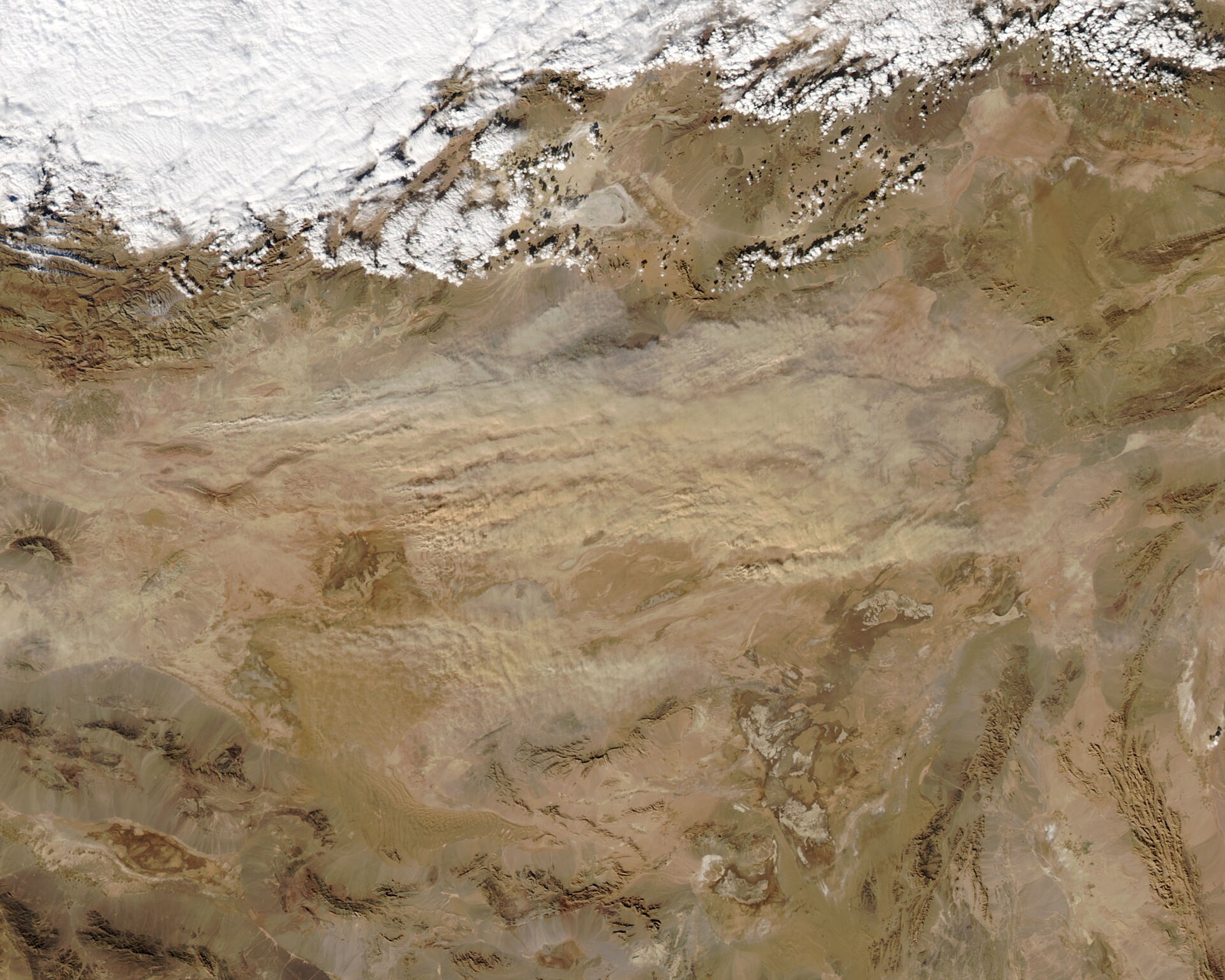
The IAEA cannot inspect Rangin Kaman. Tehran terminated agency access to its declared facilities on February 28, and an undeclared facility under SPND command, at that scale, is several rings further outside the safeguards system than even the declared sites the agency is now locked out of. Commercial satellite imagery can show buildings, vehicle movements, perimeter security and thermal signatures, none of which will distinguish a tritium production line from a chemical or paint-manufacturing operation.
Tritium production at military scale typically requires either lithium-6 target irradiation in a heavy-water research reactor — Arak is the obvious candidate, though it was modified under the JCPOA — or accelerator-driven systems that have detectable power signatures. NCRI’s claim implies the existence of one of those upstream production paths, but the press conference did not name the reactor or accelerator, did not produce isotopic chain-of-custody evidence, and did not explain how a chemical-paint front company with a public business registration has been producing a controlled radioactive substance for ten years without local environmental signatures triggering routine satellite alerts.
US intelligence, in the assessment Reuters reported on May 4 — four days before the NCRI press conference — concluded Iran’s nuclear timeline had not changed since the June 2025 Israeli strikes. That assessment cannot be reconciled with NCRI’s claim that a tritium production line has been operational for a decade unless the intelligence community already knew about Rainbow Site, had assessed it as either dormant or non-strategic, and chose not to flag it because doing so would collapse a deal the administration wants to sign. The alternative is that the intelligence community did not know, in which case the May 4 assessment is wrong and the negotiating position derived from it is built on sand.
What did Rubio know, and when?
Rubio’s public statement to The Hill — “we have to have a diplomatic solution that is very clear on the topics they are willing to negotiate on” — is the language of a Secretary of State trying to keep flexibility on what is and is not in scope. The MOU’s 14 points were drafted around enrichment, weaponisation, missile range and IAEA access, and the question of which “topics” Iran is willing to negotiate is precisely the question NCRI’s disclosure was designed to expand.
If State Department had advance notice of the NCRI press conference, the question becomes why the MOU draft Rubio sent to Tehran on May 1 did not contain explicit tritium and boosted-fission language; the omission becomes a tell. If State had no advance notice, the question becomes how the Secretary of State of the United States, on the day his own deadline expires, learned of an alleged decade-long Iranian weaponisation programme from a Fox News broadcast, which is a different kind of failure.
The most charitable reading is that Rubio’s team viewed the underlying intelligence as plausible but unverifiable, judged the existing MOU language on weaponisation as adequate to capture a tritium track at the back-end of any compliance dispute, and accepted that NCRI would publicise the allegation on a timeline of its own choosing. Under that reading, the press conference is an annoyance the deal absorbs. The less charitable reading, and the one that fits the Iranian authorisation ceiling problem on the other side, is that there is no political coalition in either capital large enough to pass a deal that addresses everything Iran’s parallel programmes touch, and the Rainbow Site disclosure is the moment that contradiction becomes public.
What happens when Trump lands in Riyadh?
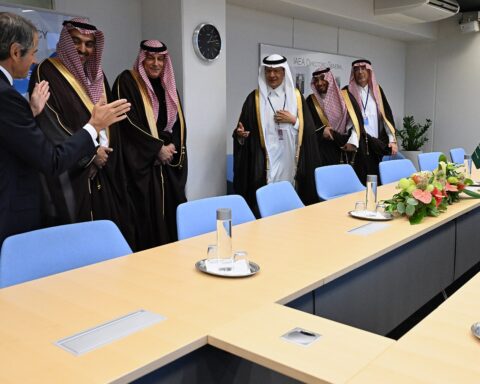
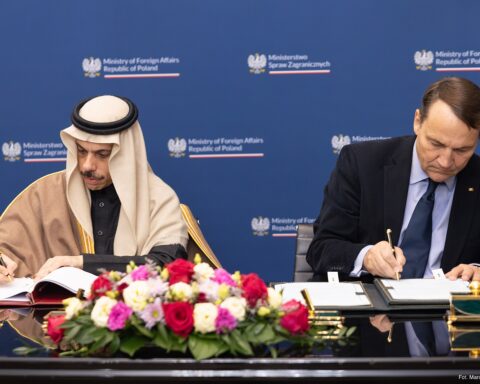
The Kingdom has prepared the visit as a diplomatic showcase: signing ceremonies, defence packages, the bilateral architecture of the Strategic Mutual Defence Agreement, and — if the negotiators could get there — the announcement of an Iran ceasefire framework that converts the MOU draft into operational reality. Crown Prince Mohammed bin Salman cannot host that announcement four days after a credible tritium-production allegation without the ceremony becoming a referendum on whether the Saudi government accepts the West’s redacted version of what is in the deal.
Three things have to happen between May 8 and May 13 for the visit to function as planned. The administration has to make a public determination about Rangin Kaman — verified, fabricated, or under assessment. Iran has to either accept the existing MOU terms or accept new language addressing tritium, neither of which Tehran’s authorisation ceiling currently permits. And the Saudis have to decide whether to host an announcement that papers over the allegation, host an announcement that addresses it, or host a visit that has no announcement at all, which is the diplomatic equivalent of admitting the war continues.
The fourth path, which Riyadh has been working since the Russia’s drone resupply story broke in late April, is to use the visit to lock in a parallel security architecture that does not depend on the MOU holding — a US security guarantee, an enrichment carve-out for Saudi Arabia under the 123 Agreement, and a diplomatic backstop for the Lebanon and Yemen tracks Iran has used as escalation valves. That path treats the Iran deal as a known unknown and the US-Saudi relationship as the asset to be insured, and it is the only path that survives both possible verdicts on Rangin Kaman.
Frequently asked questions
Is the Rainbow Site allegation independently verified?
No. No government has publicly endorsed the claim, and the IAEA has had no site access since February 28. Open-source analysts have flagged the missing link: NCRI did not identify the upstream lithium-6 irradiation source — typically a heavy-water reactor — required to produce tritium at military scale. That gap is the largest hole in the public evidence.
How does tritium-boosted fission differ from a thermonuclear weapon?
In a thermonuclear weapon, a fission primary ignites a fusion secondary that delivers most of the yield. Boosted fission injects tritium into the fission core, with fusion contributing roughly one per cent of yield. Boosting is a 1950s capability enabling missile-deliverable warheads; staged thermonuclear designs require decades more. Iran’s documented interest has been in boosting, not staging.
Could Saudi Arabia obtain its own tritium capacity under the 123 Agreement?
Not legally. The NPT prohibits tritium production for weapons by non-nuclear-weapon states regardless of any bilateral agreement. The current US-Saudi 123 Agreement covers enrichment, fuel-cycle services and reactors; it contains nothing relevant to tritium, and any amendment would require Congressional approval that does not exist. Riyadh’s only legal option is an extended deterrence guarantee from a recognised nuclear-weapons state.
What happened with the Lavizan-3 site that analysts keep mentioning?
Iran demolished Lavizan-Shian near Tehran in 2003-2004 after NCRI identified it — removing buildings, top-soil and equipment before the IAEA could sample the site. The IAEA later detected uranium particles at related locations. Analysts treat the demolition as a behavioural confession. The Rainbow Site disclosure raises immediately whether Iran will follow that playbook again.
Does the MOU’s “weaponisation ban” cover tritium production?
Possibly. The MOU prohibits “weaponisation activities” — an IAEA term covering warhead design, neutron initiators, hydrodynamic testing and delivery-system integration. Negotiators argue the “neutron initiator” category captures tritium. But Iran’s legal team exploited definitional gaps throughout the 2003-2015 centrifuge-research dispute, and without tritium being explicitly named, the protection is litigable from day one.
The next four days will tell. Rangin Kaman is either the disclosure that forces the MOU to expand, the disclosure that kills the MOU, or the disclosure that goes unanswered while the document is signed anyway, and each outcome shapes the next decade of Saudi nuclear policy. The only person who appears to understand all three simultaneously is Mohammed bin Salman, who has spent the past six weeks building a security architecture that does not need any of them to land cleanly.