
{“content”: “
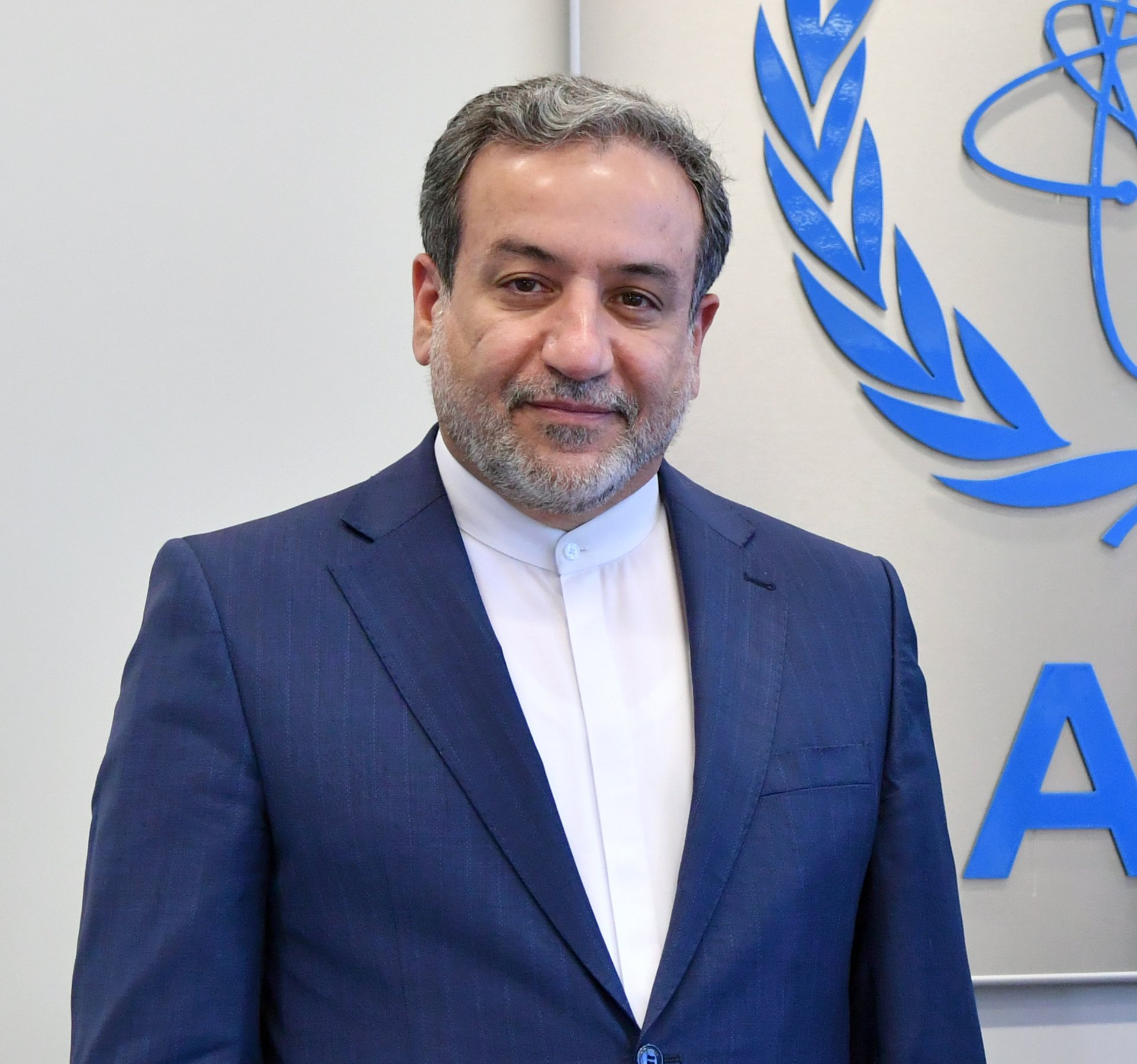
TEHRAN u2014 On the morning of May 9, 2026, Iran spoke with two voices that pointed in opposite directions, and that is the only honest way to describe what is happening. Foreign Ministry spokesman Esmaeil Baghaei posted on X that Donald Trump’s threat of “one big glow” amounted to “a grotesque absurdity,” accompanied by a clip from Stanley Kubrick’s Dr. Strangelove. Hours earlier, Foreign Minister Abbas Araghchi told reporters in Tehran, “Iranians never bow to pressure.” The same day, the Pakistani back-channel carrying Steve Witkoff’s draft Memorandum of Understanding to Tehran remained alive. Both went out simultaneously, both authoritative, both aimed at different rooms. Saudi Arabia’s fiscal year now turns on whether Araghchi can find language that lets the Islamic Revolutionary Guard Corps claim it won without letting Washington claim the same.
n
Table of Contents
n
- n
- Why Is Iran Speaking With Two Voices on Deadline Day?
- What Does the Witkoffu2013Kushner MOU Actually Contain?
- Ghalibaf’s “Operation Fauxios” u2014 A Pre-Authored Veto
- Authorization Ceiling: The 2015 Precedent and Why It Is Worse Now
- The Larijani Gap
- Why Is the PGSA the IRGC’s Insurance Policy?
- Hormuz Clashes During a Nominal Ceasefire
- Riyadh’s Arithmetic: $33.5 Billion and Counting
- The Rainbow Site Complication
- What Could Close This Deal?
- Frequently Asked Questions
The Middle East briefing 3,000+ readers start their day with.
One email. Every weekday morning. Free.
- n
n
n
n
n
n
n
n
n
n
n
n
n
n
n
Why Is Iran Speaking With Two Voices on Deadline Day?
n
Because the Pezeshkian government needs to signal compliance to survive at home, and the IRGC needs to signal defiance to retain command legitimacy. Both messages are simultaneously true and directed at different audiences. The dual track is not breakdown u2014 it is the constitutional architecture of the Islamic Republic operating under maximum stress.
n
This is the easiest answer to give and the hardest one for Western coverage to absorb. Time and the Associated Press, on May 7, called it “mixed messages.” The phrase is too gentle. Mixed messages imply confusion. What Tehran produced on May 9 was a coordinated split u2014 two registers of speech aimed at separate constituencies, neither cancelling the other.
n
Baghaei’s Dr. Strangelove post belonged to the international audience. It cast Trump as the irrational nuclear actor and Iran as the adult in the room. Araghchi’s “Iranians never bow to pressure” line, delivered the same morning, was for the Iranian public and the IRGC’s political officers. The Pakistani channel kept moving documents the same day, addressed to a fourth audience no press conference could reach.
n
n
What Does the Witkoffu2013Kushner MOU Actually Contain?
n
Axios reported on May 6 that US and Iranian negotiators were “closing in” on a one-page, fourteen-point Memorandum of Understanding that would declare an end of hostilities and open a thirty-day window for detailed negotiations on the Strait of Hormuz and Iran’s nuclear programme. The channel runs through Steve Witkoff and Jared Kushner directly, with Pakistan carrying the document into Tehran.
n
The enrichment gap is the document’s most contested clause. Washington proposed a twenty-year moratorium. Iran offered five. The assessed landing zone, per Axios, is twelve to fifteen years, with post-moratorium enrichment capped at 3.67 percent u2014 JCPOA-era language. Tehran also offered to commit, in writing, never to seek a nuclear weapon, to accept snap IAEA inspections, to forgo underground facilities, and to remove all of its existing high-enriched uranium stockpile from the country. That offer was fatally complicated when Trump publicly claimed Iran had already verbally agreed to exactly that surrender — a claim Tehran’s Foreign Ministry denied within 24 hours. The public factual dispute over the HEU verbal commitment is now the canonical illustration of why the authorization ceiling makes any deal structurally unenforceable: even if Araghchi signaled something in the room, neither side can confirm it without destroying the ambiguity the arrangement requires.
n
Witkoff’s stated red line is zero enrichment capability. Araghchi, in remarks first reported by the Arms Control Association in April, dismissed it: “I think he is completely at a distance from the reality of the negotiations.” Enrichment, he added, would continue regardless of any agreement signed. CNN’s reporting on May 6, citing multiple US officials, described this as “the closest the parties had been to an agreement since the war began” u2014 followed immediately by the qualifier that there was “some skepticism about Pakistan’s optimism.”
n
Marco Rubio, in Rome on May 8, told reporters: “We’re expecting a response from them.” By May 9, Tehran had produced four: Baghaei’s Strangelove post, Araghchi’s “never bow” statement, the presidential communications deputy’s ISNA interview, and the back-channel’s continued document movement. Washington is still waiting for the one that counts.
n
Ghalibaf’s “Operation Fauxios” u2014 A Pre-Authored Veto
n
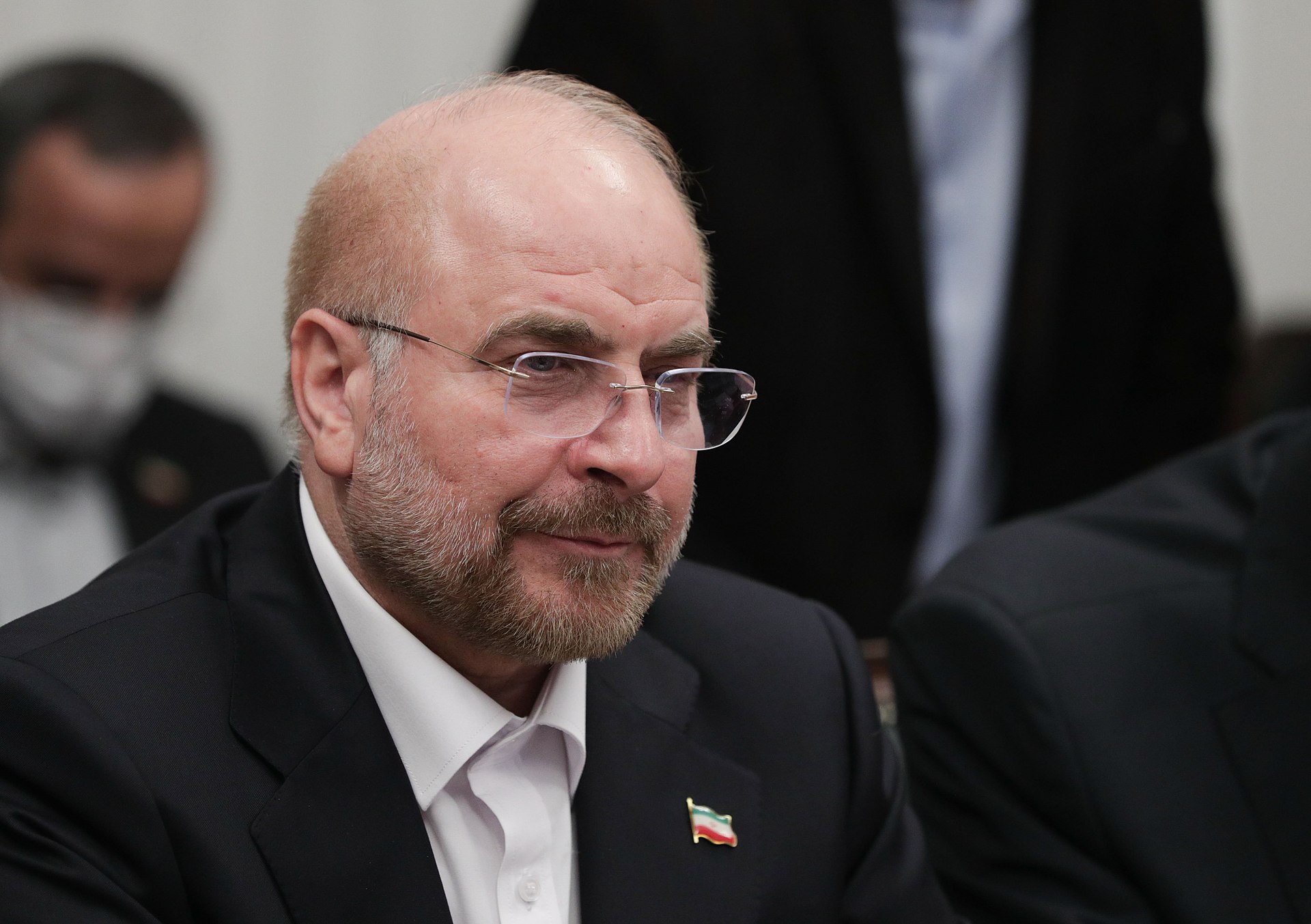
On May 7, Parliament Speaker Mohammad-Bagher Ghalibaf posted on X: “Operation Trust Me Bro failed. Now back to routine with Operation Fauxios.” The neologism u2014 faux plus Axios u2014 was reported by Iran International and Business Standard within hours. Ghalibaf publicly delegitimised the MOU reporting before Iran’s government had formally responded to it.
n
Ghalibaf is not an outsider lobbing rocks. He commanded the IRGC Aerospace Force from 1997 to 2000. The Speaker’s office speaks for Parliament; Parliament functions, in the Islamic Republic’s authorisation architecture, as one of the institutional vetoes available to the IRGC and clerical establishment when the executive moves toward a deal the security apparatus cannot ratify. The “Fauxios” line was institutional self-preservation, not commentary.
n
Read the move in either direction. If a deal is signed, the IRGC can point to Ghalibaf’s post as evidence that hardline Iran extracted maximum concessions under duress and never wanted the agreement in the first place. If the deal collapses, Ghalibaf warned everyone that Axios was always reporting a fiction. The post is a hedge that pays out either way.
n
n
Operation Trust Me Bro failed. Now back to routine with Operation Fauxios.
n
Mohammad-Bagher Ghalibaf, Speaker of the Iranian Parliament, on X, May 7, 2026n
n
The same architecture was visible in 2015. Ali Khamenei authorised Hassan Rouhani’s negotiations under the doctrine he termed “heroic flexibility,” while simultaneously permitting hardliners u2014 IRGC commanders, Friday prayer leaders, Kayhan editorials u2014 to attack the agreement publicly throughout its drafting. It was division of labour, not contradiction. The diplomatic track advanced; domestic legitimacy was preserved; the IRGC’s political officers had a record of objection on file.
n
Authorization Ceiling: The 2015 Precedent and Why It Is Worse Now
n
The 2015 precedent ran through Khamenei. Whatever Rouhani signed, the Supreme Leader’s authorisation ratified or vetoed. The system worked because the apex decision-maker was present, conscious, and willing to absorb domestic criticism in exchange for sanctions relief. None of those conditions hold in May 2026.
n
Khamenei has been absent from public view for sixty-six days as of this writing. His son and presumed channel, Mojtaba Khamenei, has been communicating audio-only. The Foundation for the Defense of Democracies’ April analysis listing the “five men running Iran” did not include the elected president. Iran International, on April 1, reported that the IRGC had taken “de facto control of Iran state functions.” By late April, the same outlet was reporting that the resulting vacuum was actively emboldening the hardline faction most opposed to a deal.
n
Article 110 of Iran’s constitution gives the president zero command authority over the IRGC. Pezeshkian’s April confession u2014 naming Brigadier General Ahmad Vahidi and Khatam al-Anbiya commander Abdollahi as the figures who wrecked the April ceasefire u2014 was an extraordinary admission from a sitting president that he could not control his own military. Vahidi carries an INTERPOL red notice for the 1994 AMIA bombing in Buenos Aires. He sits on the Supreme National Security Council that must ratify any MOU Araghchi signs.
n
The authorisation ceiling sits above Araghchi, and the men who occupy it have public veto rights they have already exercised once. The Pezeshkian government’s chief of staff and communications deputy gave ISNA interviews on May 5 and May 7 insisting that decisions are taken “in joint meetings” with IRGC commanders, and that “claims of resignations and rifts are ‘fake news.’” The same week, Pezeshkian himself complained publicly of “the policy of colonialism and exploitation.” Three speech registers u2014 diplomatic, conciliatory-domestic, anti-Western u2014 running simultaneously, all carrying the presidential seal.
n
n
The Larijani Gap
n
Ali Larijani u2014 five-term Speaker of Parliament, former head of state broadcasting, Khamenei’s longtime nuclear file negotiator u2014 was, until his death, the institutional bridge between the IRGC and the Foreign Ministry. He could carry messages from Vahidi’s office to Araghchi’s desk and back, reconciling the two before either spoke publicly. His absence is the missing piece in any analysis of the May 9 split.
n
The gap is structural, not personal. Iran’s foreign ministry and its security apparatus communicate through different ministries, different commands, and now, since Larijani’s death, different rooms with no formal liaison. Signals propagate up through separate channels. They are not reconciled before they reach the public. The result is exactly what was visible on May 9: Baghaei’s Strangelove post and the Pakistani back-channel’s MOU traffic occurring on the same day, in the same government, with no one available to coordinate the registers.
n
Carnegie Endowment’s May 2026 paper, “Two Wars Later, Iran’s Nuclear Question Is Still on the Table,” noted the absence of a senior Iranian figure capable of carrying authority across the IRGCu2013MFA boundary. The paper did not name Larijani. It did not need to.
n
The functional consequence is that Tehran has no single voice capable of speaking for the system rather than for one of its parts. Khamenei’s silence is not filled by Mojtaba’s audio recordings; the audio carries clerical authority, not operational ratification. Pezeshkian can speak to the cabinet, Vahidi to the IRGC, Ghalibaf to Parliament u2014 none of them to each other with anything approaching institutional authority.
n
The 2015 deal reached the table because Khamenei sent Larijani into rooms Rouhani could not enter. He vouched for the negotiators with the IRGC and for the IRGC with the negotiators. When Kayhan ran an attack editorial, Larijani called and the editorial line softened. When Vahidi raised concerns at the SNSC, Larijani briefed Rouhani’s team before they next met the Americans. The May 9 split-screen u2014 Baghaei mocking Trump while Pakistan moves the document u2014 is what happens when that role is vacant and the deadline arrives anyway.
n
Why Is the PGSA the IRGC’s Insurance Policy?
n
The Persian Gulf Strait Authority, established by Iranian decree on May 5, requires forty-plus-question transit applications from every vessel seeking to cross the Strait of Hormuz. The Office of Foreign Assets Control issued an alert the same week warning that compliance with the PGSA framework could itself violate US sanctions. The structural trap operates on every shipping company: comply with Iran and breach OFAC, refuse Iran and lose access to the Strait.
n
The PGSA is the IRGC’s wartime gain made permanent. Whatever nuclear terms Araghchi signs in the MOU, if Hormuz returns to “Iranian management” u2014 the language of CNN’s May 7 reporting u2014 the IRGC claims operational victory over the strait, regardless of what concessions were made on enrichment. The thirty-day Hormuz negotiation window inside the MOU is precisely the venue where the IRGC’s institutional legitimacy will be tested. The sanctions trap mechanics were designed before the deadline arrived, and they survive it.
n
| Track | Voice / Source | Date | Audience |
|---|---|---|---|
| Diplomatic conciliation | Pakistani back-channel (Witkoffu2013Kushner MOU) | May 5u20139 | Washington, Riyadh, Doha |
| International framing | Baghaei (FM spokesman) u2014 “Strangelove” | May 9 | Western media, IAEA, EU |
| Domestic legitimacy | Araghchi u2014 “never bow to pressure” | May 9 | Iranian public, IRGC officers |
| Hardline veto | Ghalibaf u2014 “Operation Fauxios” | May 7 | IRGC, clerical establishment |
| Institutional unity claim | Pezeshkian chief of staff, ISNA | May 5u20137 | Domestic, anti-fragmentation |
| Operational facts | Tasnim, Fars u2014 “sporadic clashes” | May 8 | Regional military, Hormuz operators |
n
n
Iran International captured the asymmetry on April 23: “Power vacuum in Tehran emboldens hardliners.” The PGSA was decreed twelve days later. The MOU’s thirty-day window opens immediately on signature. Even at maximum diplomatic speed, the IRGC has bought itself a month of operational control of the Strait while the nuclear track grinds through the formal negotiation calendar.
n
Hormuz Clashes During a Nominal Ceasefire
n
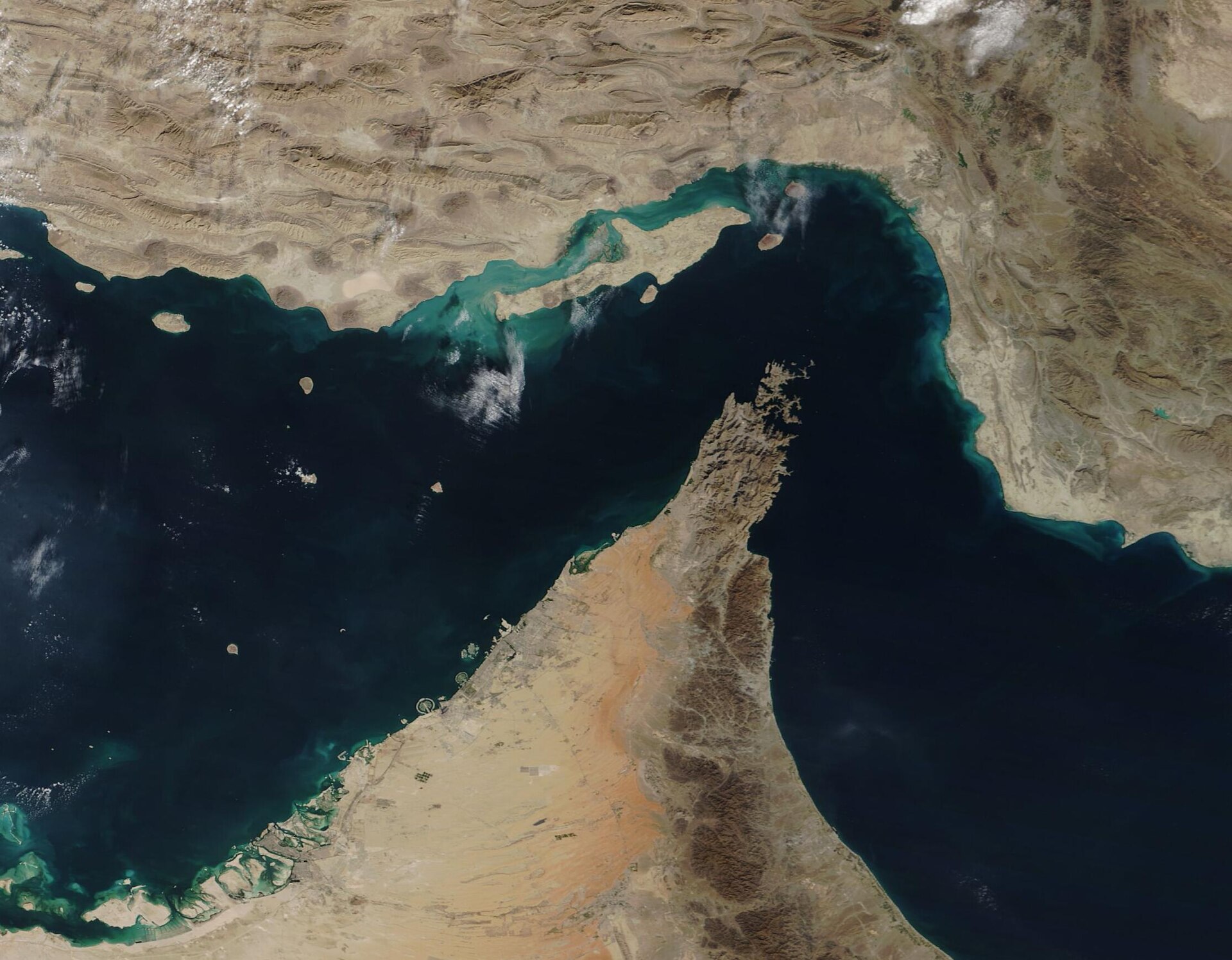
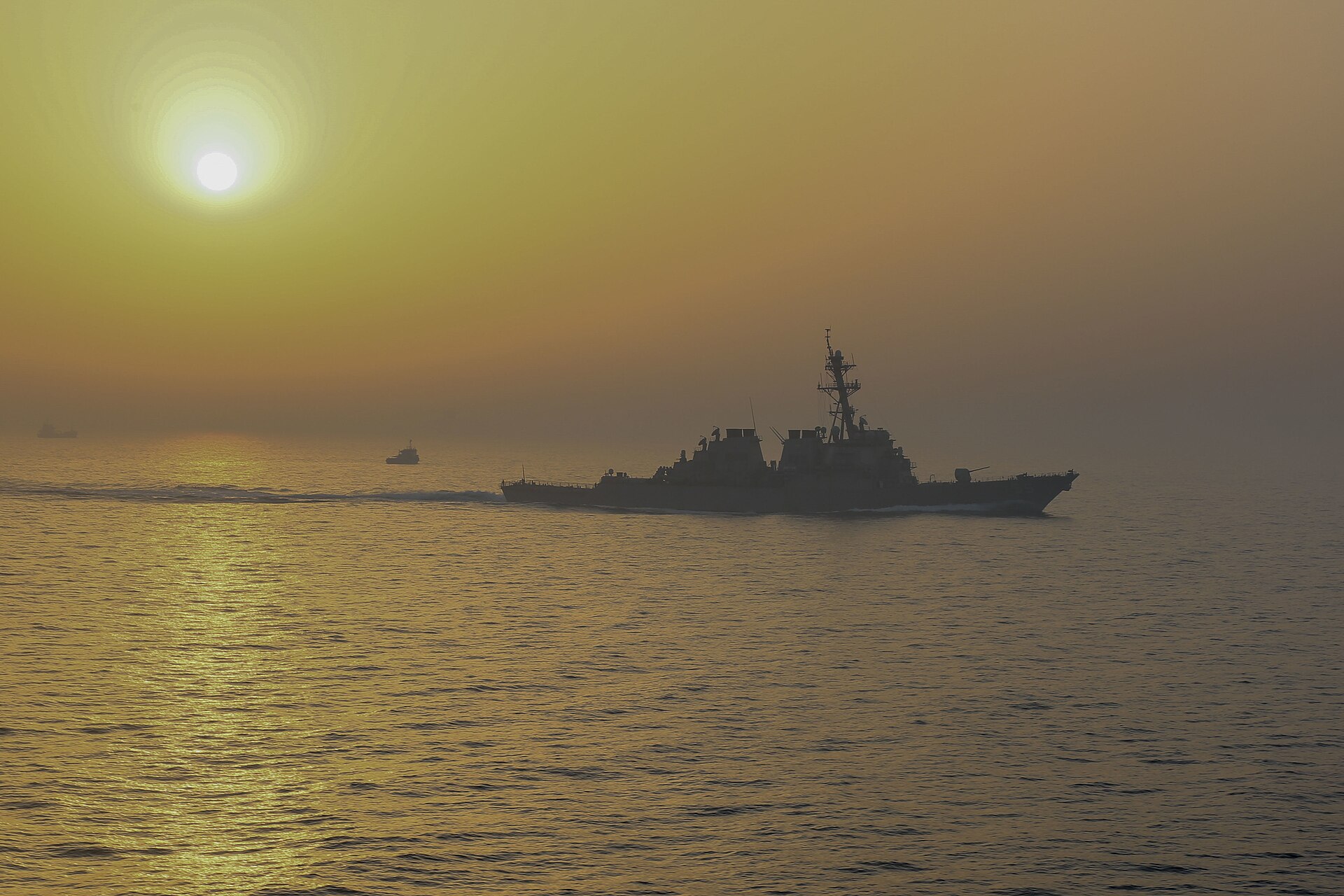
Fars News, on May 8, reported “sporadic clashes” between Iranian and US naval forces in the Strait. Tasnim, also IRGC-aligned, said the situation had “calmed” but cited a military source warning that further engagements were possible “if Americans try to enter the Gulf again and cause trouble for Iranian vessels.” US Central Command had not confirmed the clashes as of early May 9 reporting. The same day, CBS News reported that US forces had sunk seven small Iranian boats on May 8.
n
IRGC-aligned outlets are asserting a narrative of operational presence inside a contested strait during a nominal ceasefire. CENTCOM is silent. The optics that the IRGC prevents u2014 total US naval supremacy, Iran retreating before the Fifth Fleet u2014 are exactly the optics that, if they obtained, would make Ghalibaf’s “Fauxios” line untenable. The clashes, real or claimed, are themselves a form of speech.
n
On May 7, a Chinese-crewed, Marshall Islands-registered tanker was attacked near Hormuz. No casualties were reported. CNN and CNBC noted that Beijing has acted as Iran’s principal Hormuz intermediary and has been pressing Tehran against resuming full war ahead of an anticipated Trumpu2013Xi summit. Striking a Chinese-crewed vessel a day before the deadline crossed a line Iran’s diplomatic apparatus had spent weeks observing.
n
General Dan Caine, Chairman of the Joint Chiefs, told reporters on May 5 that approximately 1,500 vessels and 22,500 crew were trapped in the Gulf. Three vessels answered before any government did, choosing routes and flag changes that priced the deadline more honestly than any press conference.
n
n
Riyadh’s Arithmetic: $33.5 Billion and Counting
n
Saudi Arabia’s first-quarter 2026 fiscal deficit reached SAR 125.7 billion u2014 $33.5 billion u2014 the largest in eight years. Brent crude, on May 9, traded near $101 per barrel on peace optimism. The Kingdom’s fiscal break-even, including PIF capital calls and Vision 2030 expenditure, sits in the $108 to $111 range, depending on the analyst. Aramco’s first-quarter results were due May 10, with consensus forecasting net profit of SAR 108.45 billion, a steep decline against the prior comparable quarter.
n
The arithmetic forces a position on Riyadh that it would not otherwise hold. Saudi pre-visit diplomacy in the days before Trump’s regional tour was structured around one variable: whether Araghchi’s voice or Ghalibaf’s voice would carry the day. The longer Iran’s split-track holds, the longer Brent stays anchored below break-even, and the deeper the Q2 deficit cuts. Argaam’s analyst consensus was published the morning Baghaei posted his Strangelove clip.
n
Saudi survival, in this window, depends on Araghchi finding a phrase the IRGC can interpret as victory and Washington can interpret as compliance. The phrase has not been written. Bloomberg’s reporting on May 6 described “getting close” on a twelve-year landing zone u2014 between Tehran’s five-year offer and Washington’s twenty-year demand, at the midpoint of two domestic political ceilings neither side can publicly cross.
n
Riyadh has lived inside this arithmetic before. The 2015 deal compressed Saudi oil-revenue sensitivity by reducing the Iran-driven risk premium and forcing Aramco to manage volume rather than scarcity; the 2018 US withdrawal restored the premium and the Kingdom adapted. The 2026 calculation is harsher because the deficit floor is higher and the Vision 2030 capital-call schedule has no comparable slack. Every quarter Brent stays in the $95u2013$103 band, the PIF either delays a project or borrows against future barrels. Both options are now on the table and both have been chosen, in different combinations, since February.
n
The Rainbow Site Complication
n
Fox News, on May 9, published satellite imagery it described as showing a 2,500-acre nuclear facility in Iran’s Semnan province, code-named “Rainbow Site,” allegedly used for tritium extraction u2014 a process with no civilian application. The sourcing appears MEK/NCRI-affiliated, a provenance that has produced both verified and disputed disclosures over the past two decades. Araghchi called the report “Israeli-driven propaganda aimed at disrupting the negotiations.” The claim is unverified at this writing and should be treated as such; what is verifiable is its timing on the morning of the deadline, and the way it activates exactly the constituency in Washington u2014 Senate hawks, INSS analysts, the Foundation for Defense of Democracies u2014 most likely to demand additional pre-conditions on the MOU’s nuclear annex.
n
The MEK/NCRI track record is mixed in a way that makes the question impossible to resolve in a news cycle. Natanz was first disclosed by an NCRI press conference in 2002 and proved largely correct. Subsequent disclosures u2014 including a 2009 claim of a Qom enrichment site that turned out to be Fordow, also correct u2014 have been intercut with assertions IAEA inspectors could not validate. Tritium has no civilian power-reactor application but does have legitimate research uses; Iran’s response will hinge on whether it offers a research-laboratory cover or rejects the imagery wholesale. Araghchi’s “propaganda” framing on May 9 chose the second option before any technical review. For a detailed reconstruction of the disclosure’s timeline and why it landed on the MOU’s deadline morning, see the Rainbow Site tritium allegation analysis.
n
What Could Close This Deal?
n
The MOU closes if Araghchi’s team produces text that the IRGC can read as Hormuz sovereignty preserved, and that Witkoff’s team can read as enrichment durably constrained. The first half is what the PGSA and the thirty-day Hormuz window were built to deliver. The second half requires Iran to accept either the twelve-to-fifteen-year landing zone Axios reported, or a structurally equivalent monitoring regime that lets Washington claim verification without conceding the principle of zero enrichment.
n
What would prevent closure is also visible. Khamenei’s continued absence past day seventy u2014 four days from now u2014 without a clear signal through Mojtaba would leave Araghchi without ratification authority. A second Chinese-crewed vessel attacked in Hormuz would force Beijing’s hand and remove Iran’s most patient external mediator. An IRGC maritime ruling that contradicts the MOU’s Hormuz language in the first 72 hours after signature would convert the agreement from framework to fiction.
n
Rubio’s “we’re expecting a response” was delivered in Rome on a Thursday. By the following Friday morning in Tehran, the response was four pieces of speech, two channels of military activity, and one continuing back-channel u2014 none of which constituted a yes, and none of which constituted a no. The deadline did not pass; the deadline became a state in which Iran and the United States now both live, with the Strait of Hormuz priced into every barrel, every cargo, and every Saudi quarterly report.
n
Frequently Asked Questions
n
Does Pezeshkian have any constitutional means to compel IRGC compliance with an MOU?
n
No. Article 110 reserves armed forces command for the Supreme Leader. The president chairs the Supreme National Security Council but does not control its composition; current members include Vahidi and Zolghadr, both IRGC-aligned. Pezeshkian’s most plausible lever is impeachment threats from his own parliamentary bloc against IRGC-linked ministers u2014 a tool he has not deployed since the April ceasefire collapse, and which Ghalibaf as Speaker would slow indefinitely.
n
What happens to the existing 440.9 kg of Iranian highly-enriched uranium under the proposed MOU?
n
Iran’s offer, per Axios on May 6, includes removing all HEU from the country. Removal destinations under previous JCPOA-era discussions included Russia (rejected by Tehran in 2015 over sovereignty concerns) and a third-country IAEA-monitored facility. The MOU does not specify; the thirty-day post-signature window is where this question is meant to be resolved. IAEA inspector access has been suspended since February 28, 2026.
n
Why does Pakistan have the channel rather than Oman or Qatar?
n
Pakistan accepted the role after the April Islamabad I and II talks, and General Munir’s military intelligence apparatus carries direct lines to both Khatam al-Anbiya commander Abdollahi and Saudi GID. Oman lost informal carrier status when the Iranu2013Israel war reduced Sultan Haitham’s bandwidth for nuclear file work. Qatar continues to host parallel hostage-related discussions but has not been offered the MOU file.
n
What is the Persian Gulf Strait Authority’s relationship to UNCLOS?
n
Iran has not ratified the United Nations Convention on the Law of the Sea but signed it in 1982. The PGSA framework u2014 requiring application, fee, and route assignment for transit u2014 directly conflicts with UNCLOS Article 38’s right of transit passage through international straits. The OFAC alert on PGSA does not engage the UNCLOS question; it addresses sanctions exposure separately, leaving carriers to navigate two competing legal regimes.
n
If the MOU is signed, what is the operational status of US Fifth Fleet patrols in the Gulf?
n
The MOU’s reported text declares an end of hostilities but does not address freedom-of-navigation operations. Reading the document against the IRGC’s PGSA decree, US destroyer transits would continue under a “passage in accordance with international law” framing u2014 the same language CENTCOM used during the April 11 destroyer transit. Tasnim’s “if Americans try to enter the Gulf again” warning is the IRGC’s pre-positioned objection to that reading. That split — between diplomatic language and operational reality — is what underpins the deterrence argument: a senior Iranian adviser explicitly framed Hormuz as a capability equivalent to an atomic bomb, a public declaration that hardened the IRGC position at the precise moment both voices were competing to define Iran’s MOU terms. That split did not resolve itself diplomatically. Within 72 hours, IRGC Aerospace Force commander Mousavi converted it into a weapons-readiness declaration: the “missiles locked” statement, timed to the closing of the MOU response window, was the authorization ceiling converting itself from an analytical abstraction into a public foreign policy instrument.