RIYADH — On April 7, Saudi Arabia and its Gulf allies co-sponsored a UN Security Council resolution on the Strait of Hormuz that drew eleven votes in favor, two vetoes from Russia and China, and two abstentions from Colombia and Pakistan — a result Riyadh had every reason to expect and no intention of preventing. The resolution was dead before it reached the chamber, stripped of its original Chapter VII “all necessary means” authorization and reduced to a demand that Iran stop mining international waters, cease levying tolls that violate the UNCLOS transit passage regime, and disclose the locations of ordnance scattered across the world’s most consequential shipping lane. Even in that diluted form, Moscow and Beijing killed it — and in doing so handed Saudi Arabia something more durable than any binding resolution could have delivered: a permanent, on-the-record demonstration that the UN’s collective security system cannot address the Hormuz crisis. Five weeks later, on May 5, Secretary of State Rubio and Bahrain tabled a second draft with Saudi Arabia, the UAE, Kuwait, and Qatar as co-sponsors, the same architecture facing the same expected vetoes, the same strategic product. Riyadh is not trying to win the vote; it is trying to win the veto.
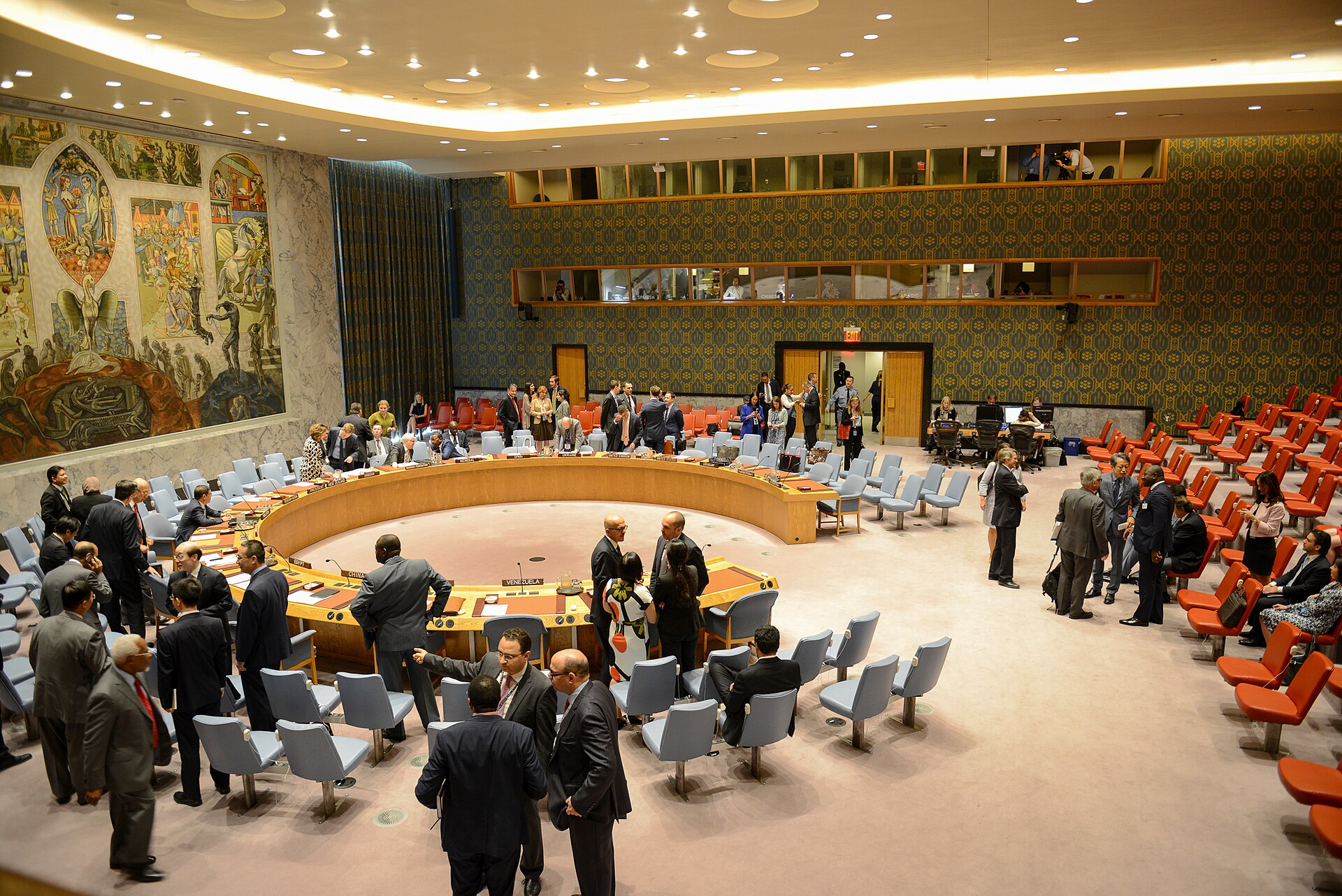
Table of Contents
- The Vote That Was Designed to Fail
- What Does Saudi Arabia Gain from a Resolution It Knows Will Be Vetoed?
- Why Did Russia and China Veto a Resolution They Privately Endorse?
- China’s Veto Protects China’s Toll
- Does the Veto Record Open the Door to Action Outside the UN?
- The Second Draft and the Compounding Record
- Where Is Saudi Arabia Building Its Case Now?
- Frequently Asked Questions
The Vote That Was Designed to Fail
The Bahraini-authored text that reached the Security Council on April 7 had already been through one round of strategic amputation. The original draft, circulated in late March, invoked Chapter VII of the UN Charter — the enforcement chapter, the one that authorizes “all necessary means” and has served as the legal backbone for every major UN military action from Korea to Libya. Bahrain’s diplomats, coordinating closely with Riyadh and Washington, knew that Chapter VII language guaranteed a veto; what they had to calculate was whether removing it would prevent one — and as the Security Council Report’s analysis concluded, the resolution was drafted to be weak enough that vetoing it exposes the vetoing parties as obstructionist even against the mildest possible international response, and strong enough that Russia and China cannot afford to let it pass.
The scaled-back text that survived retained three elements Moscow and Beijing could not accept. It determined that Iran’s actions in and around the Strait of Hormuz “constitute a threat to international peace and security” — language that, once adopted, would have placed Iran in the same formal legal category as Saddam Hussein’s Iraq or Gaddafi’s Libya. It demanded that Iran cease all attacks on commercial shipping, stop the “illegal tolls” imposed through its newly created Persian Gulf Strait Authority, and disclose mine locations to enable safe humanitarian corridor operations. And it built in a compliance clock: the UN Secretary-General was required to report back within thirty days, at which point the Council would reconvene to consider “further measures, as appropriate, including sanctions.”
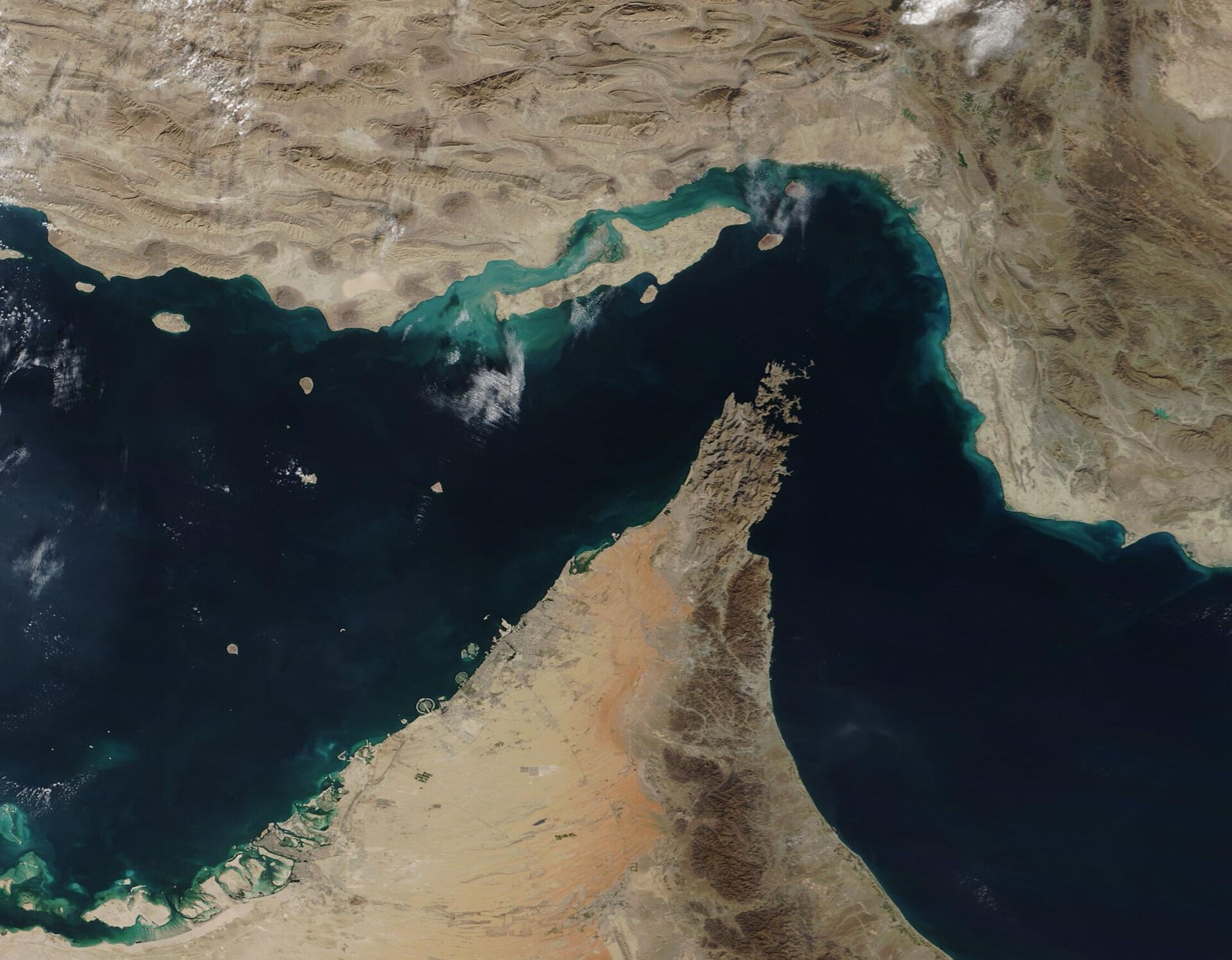
The resolution also made several direct references to UNCLOS, reaffirming the right of member states to defend commercial vessels against actions that undermine navigational rights — a framing that placed Iran’s toll scheme squarely in conflict with Articles 38 and 26, which establish transit passage and prohibit states from levying charges for it. Chatham House’s April 2026 analysis described Iran’s tolling regime as involving “discriminatory bans which violate Article 38 of UNCLOS and the principle of non-discrimination in international straits,” characterizing the charges as “in violation of the transit passage regime.” The UNCLOS references were not incidental to the drafting; they were the mechanism by which a veto becomes a veto not merely of a political demand but of established international law, a distinction that matters in every legal forum where the record will eventually be cited. By April 7, only 191 vessels had crossed the strait during the entire month — 3.6 percent of the pre-war baseline — with 97 percent of those running AIS transponders dark, invisible to commercial tracking systems and operating on bilateral clearances from the IRGC Navy, which had claimed full authority over the strait.
What Does Saudi Arabia Gain from a Resolution It Knows Will Be Vetoed?
Saudi Arabia’s co-sponsorship of a resolution predestined for failure makes sense only when viewed as one component of a simultaneous four-track diplomatic operation that Riyadh has been running since early April — each track independent in execution, each converging on a single strategic objective. That objective is not Hormuz reopening through the Security Council; it is the formal establishment, documented at every institutional level available, that multilateral mechanisms have been tested and have failed, that the parties responsible for that failure are identified by name, and that alternative architectures — bilateral, coalition-based, or legal — are the only remaining instruments for restoring navigation through the world’s most important energy chokepoint.
| Track | Action | Strategic function |
|---|---|---|
| UNSC co-sponsor | Co-sponsored April 7 and May 5 draft resolutions | Forces vetoes onto the permanent record; documents multilateral failure |
| Project Freedom blocker | Denied US base access for Hormuz escort operation (May 5-7) | Preserves Saudi agency; prevents unilateral US action from becoming the default framework |
| Lavrov bilateral | FM Faisal called Russian FM Lavrov, May 8 | Maintains channel with vetoing party; obtains Russian bilateral endorsement of the navigation goal Russia vetoed multilaterally |
| European coalition | FM Faisal in London meeting FM Cooper, May 12 | Builds parallel coalition outside P5 veto constraints for post-UN action architecture |
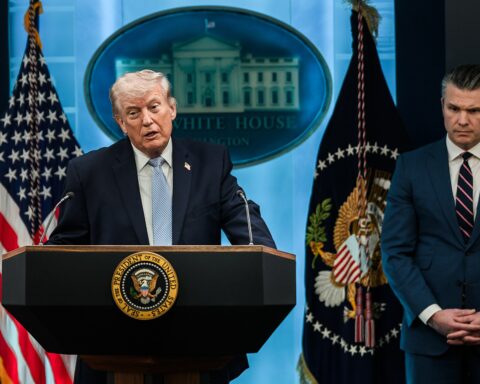
The first track generates the foundational document. By co-sponsoring in April and returning with an expanded coalition in May — Saudi Arabia, the UAE, Kuwait, and Qatar all signed onto the May 5 draft — Riyadh ensures that the formal UN record shows the broadest possible regional consensus behind a demand that two permanent members blocked. The second track is equally revealing: between May 5 and 7, Saudi Arabia used base-access denial to block Project Freedom, a US-proposed Hormuz escort operation, after Trump announced it via social media without prior consultation, and NBC News reported Saudi leadership was “angered” by the public announcement. The refusal demonstrated that Riyadh has no intention of ceding operational control over Hormuz policy to Washington, even while co-sponsoring resolutions alongside it — the same country that vetoed American unilateral action simultaneously co-authored the multilateral alternative.
The Middle East briefing 3,000+ readers start their day with.
One email. Every weekday morning. Free.
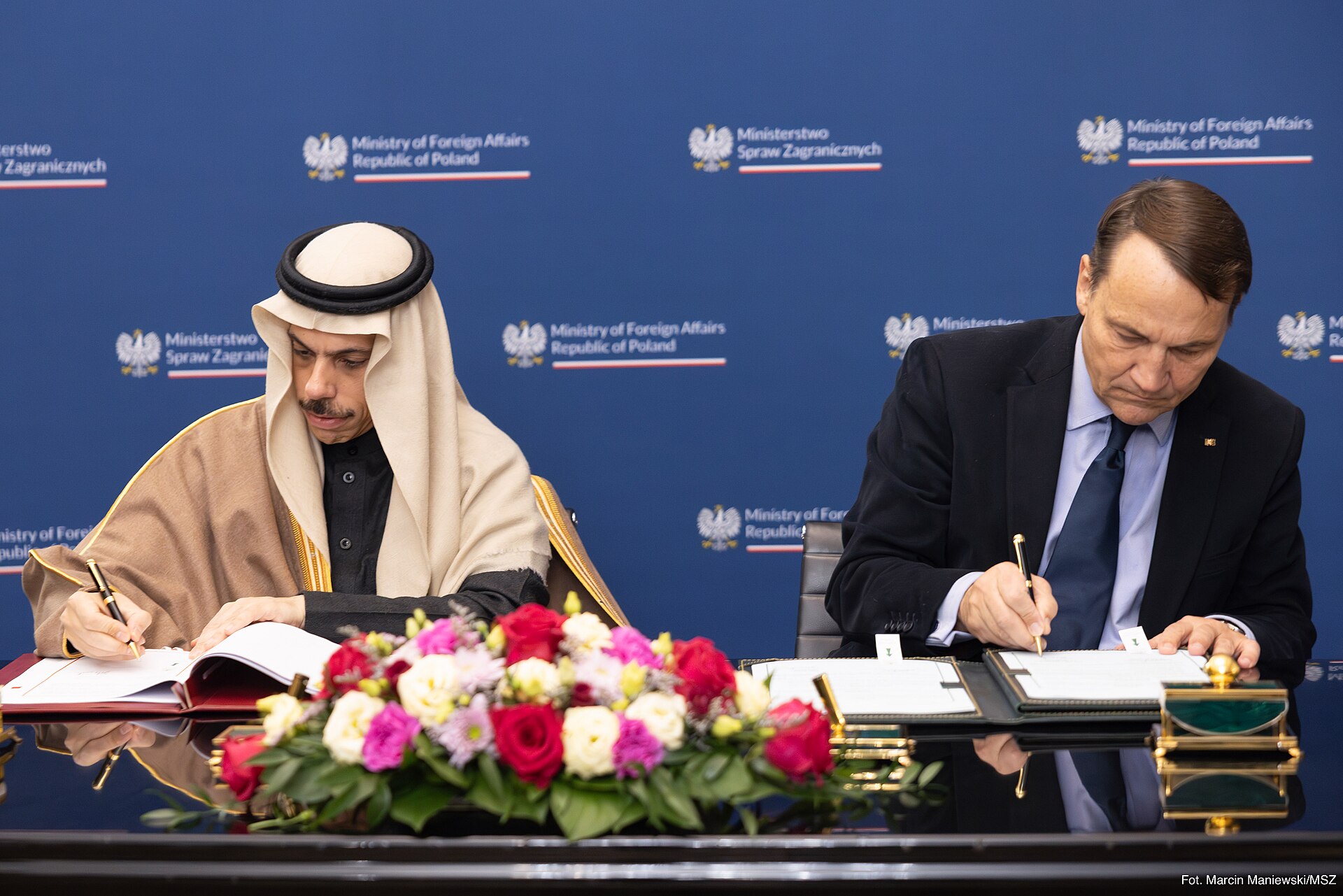
The third track is the most telling. On May 8 — three weeks after Russia vetoed the resolution that would have required Iran to restore navigation — FM Faisal and Russian FM Lavrov spoke by phone and both called for “preventing further escalation around the Strait of Hormuz and restoring the navigation regime as it used to be before late February,” an endorsement of the same goal Russia’s veto had blocked at the multilateral level. Saudi diplomats now possess a bilateral communiqué from a vetoing power endorsing the substance of the vetoed resolution, a contradiction that Riyadh does not need to publicly identify because the record identifies it for anyone who reads the UN proceedings alongside the phone call readout. The fourth track — Faisal’s arrival in London on May 12 for meetings with FM Yvette Cooper on “Saudi-British relations and regional and international developments” — extends the record-building exercise to European capitals, assembling the secondary coalition that would operationalize whatever measures the exhaustion of UN remedies is meant to justify.
Why Did Russia and China Veto a Resolution They Privately Endorse?
The public justifications offered by Russia and China for their April 7 vetoes were, on their own terms, internally coherent — and on Saudi Arabia’s terms, exactly what Riyadh wanted entered into the permanent record. Ambassador Vassily Nebenzya, Russia’s permanent representative, argued that the resolution “presented Iranian actions as the sole source of regional tensions while illegal attacks by the United States and Israel were not mentioned at all,” and that adopting “such a one-sided resolution would undermine any prospect for the resumption of negotiations for the purposes of resolving the crisis.” Ambassador Fu Cong, his Chinese counterpart, echoed the framing, stating that the draft “failed to capture the root causes and the full picture of the conflict in a comprehensive and balanced manner” and that adopting it “when the US was threatening the survival of a civilization would have sent the wrong message.”
Both vetoing parties submitted a joint counter-draft calling for a ceasefire and de-escalation without naming Iran or authorizing any enforcement mechanism — a text designed to die on arrival but to establish the counter-narrative that Russia and China were pursuing peace rather than protecting a belligerent. Fu Cong later told CGTN that “China’s veto of the Hormuz draft resolution helps de-escalate Iran tensions,” a claim that sits uneasily alongside the 191 monthly vessel crossings that represent what de-escalation looks like in practice. Ambassador Mike Waltz, the US permanent representative, delivered the framing Riyadh needed entered into the General Assembly record: Russia and China “deliberately chose to turn a blind eye — and worse, chose to permit — Iran’s attacks on its neighbors, its terror against its own people, and its death grip that it’s attempting to place on the global economy.”
The decision of Russia and China to veto a draft resolution that sought to protect freedom of navigation and maritime security in and around the Strait of Hormuz, was truly unfortunate. They deliberately chose to turn a blind eye — and worse, chose to permit — Iran’s attacks on its neighbors.
— Ambassador Mike Waltz, US Permanent Representative to the UN, April 2026
The deeper contradiction is not in the diplomatic statements but in the behavior that followed them. Russia vetoed the resolution on April 7 and endorsed its core objective on May 8; China vetoed it on April 7 and then, ahead of the Trump-Xi Beijing summit, pressed Iran bilaterally to “pursue a diplomatic resolution” and “called for a prompt resumption of shipping traffic through the Strait of Hormuz” — the same restoration of navigation the vetoed resolution was designed to produce. Beijing, as Brookings noted in May 2026, appeared “intent on maintaining a visible diplomatic role without incurring the reputational or political costs that accompany failed mediation efforts,” a posture that the dual-track behavior — vetoing the multilateral instrument while pursuing the same objective bilaterally — serves with precision. Saudi Arabia’s foreign ministry does not need to advertise these contradictions; the documentary record, once assembled, does that work permanently and in a form available to any future tribunal, coalition, or negotiation.
China’s Veto Protects China’s Toll
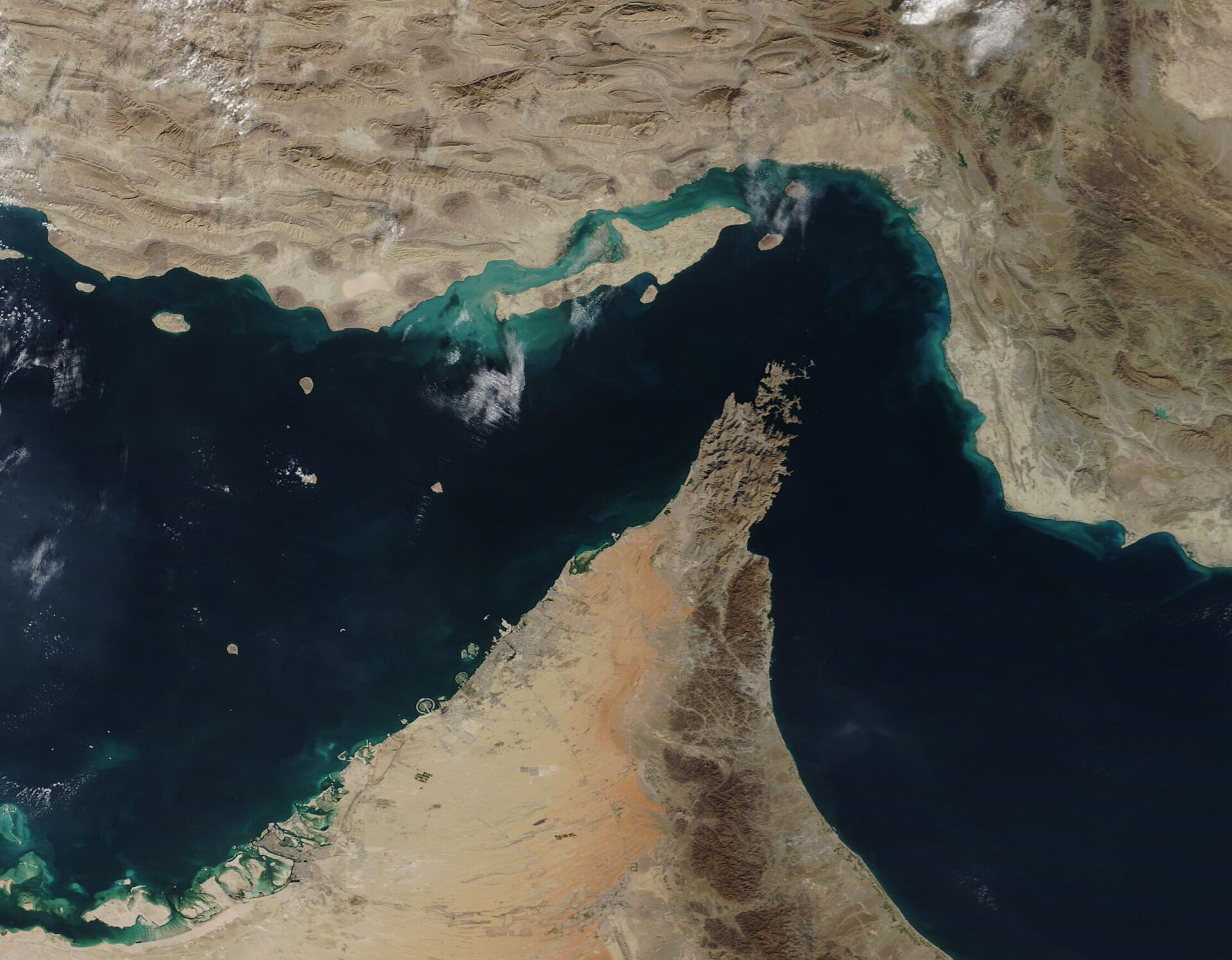
On May 5, the same day Rubio and Bahrain circulated the second UNSC draft, Iran formally launched the Persian Gulf Strait Authority — a toll-collection mechanism charging commercial vessels up to $2 million per transit, payable in Chinese yuan through Kunlun Bank, a financial channel that operates outside the SWIFT network and already sits under US sanctions for facilitating Iranian oil payments. The OFAC advisory issued on May 1 warned that PGSA toll payments “expose both US and non-US persons to sanctions risk under US anti-terrorism statutes,” a warning that applies to the yuan-denominated payment infrastructure itself. The double blockade architecture — in which the US controls the Arabian Sea approach from April 13 and the IRGC controls the Gulf of Oman exit from March 4 — means that any vessel transiting Hormuz needs clearance from both, and the PGSA toll is Iran’s price for the second stamp.
China’s structural interest in the veto becomes visible through the currency denomination. A binding UNSC resolution demanding Iran cease “illegal tolls” would have required dismantling the PGSA or placed China in the position of endorsing a prohibition that sanctions its own financial instrument; by vetoing, Beijing preserved a toll system that channels energy payments through Chinese currency infrastructure and outside Western financial networks. The IEA’s characterization of the Hormuz closure as “the biggest energy security threat in history,” with 13 million barrels per day offline and oil prices above $100 per barrel with spikes past $110, places the yuan-denominated toll system in a different context: it is not merely a revenue mechanism for Iran but a currency-positioning instrument for China, and the veto that protects it serves both parties simultaneously while exposing Beijing’s mediator claims to a form of scrutiny that the UNSC record now makes permanent.
Washington’s response on May 9 — sanctions on eleven entities and three individuals in Iran, China, Belarus, and the UAE for facilitating Iran’s war effort, imposed days before Trump’s Beijing summit with Xi Jinping — served as a unilateral enforcement action of the kind the vetoed resolution was designed to authorize multilaterally. The sanctions targeted the procurement and financial networks that sustain Iran’s mining and toll operations, and their timing — after the second UNSC draft circulation and before the Beijing summit — compressed the UNSC track, the sanctions track, and the summit track into a single diplomatic week in which the veto record provided the justification for each subsequent escalation.
Does the Veto Record Open the Door to Action Outside the UN?
The April 7 veto activated a mechanism that did not exist during the major veto crises of the Cold War or even the Syria deadlock. Under UN General Assembly Resolution 76/262, adopted in April 2022, every Security Council veto automatically triggers a General Assembly debate within ten working days, requiring the vetoing power to explain its position to all 193 member states rather than limiting the conversation to the fifteen-member Council. The Hormuz debate convened on April 16 and represented the first major test of the 76/262 mechanism on a global energy and maritime security crisis — a proceeding in which Russia and China were compelled to repeat their justifications in a forum where small states, energy-importing nations, and maritime powers could register objections for the permanent record.
The General Assembly cannot overturn a veto or authorize enforcement, but it produces a documentary record that the IPI Global Observatory, in its April 2026 analysis, explicitly compared to the Suez crisis of 1956 — when Britain and France vetoed Council resolutions and the GA’s emergency session produced the first UN peacekeeping force under the “Uniting for Peace” procedure. The IPI analysis identified the Hormuz GA debate as a structural parallel, and that same pathway remains available: a General Assembly recommendation on Hormuz would not carry binding legal force but would constitute a second-order legitimation document — a formal recommendation from 193 states that action is warranted when the Security Council has been paralyzed by vetoes.
The most potent precedent, however, is neither Suez nor Korea but Kosovo in 1999. NATO launched military operations against Serbia without Security Council authorization after Russia and China made clear they would veto any resolution permitting intervention, and NATO members justified the decision on the grounds that multilateral remedies had been exhausted — a conclusion documented by the veto record itself. Neither the US State Department nor the Saudi Ministry of Foreign Affairs has publicly invoked the phrase “exhaustion of multilateral remedies” in relation to Hormuz, but the architecture is structurally identical: a resolution drafted to be minimal enough that vetoing it is indefensible, a veto imposed regardless, a General Assembly debate that documents the deadlock for the full membership, and a coalition — the GCC states, the United States, and the United Kingdom — positioned to argue that the failure of multilateral instruments justifies bilateral or coalition alternatives. Those alternatives include secondary sanctions enforcement against PGSA toll-payers, coordinated naval escort operations outside UN authorization, and a potential ICJ referral under UNCLOS Part XV, each of which draws its legitimacy not from a Security Council mandate but from the documented absence of one.
The Second Draft and the Compounding Record
On May 5, Secretary of State Rubio announced that the United States and Bahrain had co-authored a new draft resolution that “requires Iran to cease attacks, mining, and tolling” — language that mirrors the April text but arrives with an expanded coalition of co-sponsors now including Saudi Arabia, the UAE, Kuwait, and Qatar. The expansion from the April draft’s co-sponsor list to encompass every major Gulf energy exporter except Oman — which maintains its mediating position between Tehran and the GCC — is itself a datum in the record, demonstrating that the regional consensus behind the demand has broadened since the first veto rather than narrowing, a trajectory that makes a second veto more politically expensive for Russia and China without making it less likely. The same Gulf states co-sponsoring the UN demand had independently struck Iranian territory weeks earlier — a combination of coercive multilateralism and direct military action whose dual-track logic is analysed in Operation Epic Fury: Saudi Arabia Was Bombing Iran While Calling for Peace.
Each additional veto compounds the documentary record in a way that a single veto cannot. One veto can be framed as a procedural objection, a timing concern, a call for more balanced language — as Russia and China attempted in April with their joint counter-draft and their arguments about “root causes.” A second veto on substantially the same demand, after the vetoing parties have had five weeks to negotiate amendments and have chosen not to, transforms the record from a procedural disagreement into a structural pattern of obstruction that parallels the Syria trajectory. Between 2011 and 2019, Russia and China vetoed sixteen or more Syria-related resolutions, and each successive veto was cited by Western and Gulf states to reinforce the conclusion that the Security Council was “broken” on Syria — an argument that justified the US-led counter-ISIS coalition, Turkish military operations in northern Syria, and multiple non-UN intervention frameworks that collectively bypassed the Council’s authority.
The timing of the second Hormuz draft — circulated the same day Iran launched the PGSA toll mechanism, four days before US sanctions hit Chinese entities facilitating Iran’s war effort, and one week before Trump’s arrival in Beijing — binds the emerging security architecture to the UN record in a single documentary chain. When the second veto arrives, it will be filed alongside the PGSA’s yuan-denominated toll structure and the US sanctions response, producing a narrative in which Russia and China veto the prohibition of tolls while their respective financial and military infrastructure processes the toll payments and sustains the mining operations the tolls are designed to monetize.
Where Is Saudi Arabia Building Its Case Now?
On May 12, FM Faisal bin Farhan arrived in London for meetings with FM Yvette Cooper, the official agenda covering “Saudi-British relations and regional and international developments” — diplomatic language that, in the context of a wartime Hormuz closure and a US president currently in Beijing negotiating directly with Xi Jinping on the strait’s future, signals coalition construction rather than bilateral pleasantries. Faisal’s London visit follows his May 8 call with Lavrov and precedes the expected second UNSC vote, positioning Saudi Arabia as the diplomatic node connecting three separate tracks simultaneously: the P5 bilateral channel through Moscow, the European coalition through London, and the US-GCC UNSC initiative through New York. Chatham House’s May 2026 analysis observed that the Hormuz closure is threatening Saudi Arabia’s Red Sea and Vision 2030 westward reorientation, “which helps explain Saudi Arabia’s reluctance to engage directly in the war” — a reluctance that does not extend to diplomatic engineering of the post-war legal order.
A sustained closure was historically viewed as highly unlikely. The closure is threatening Saudi Arabia’s Red Sea and Vision 2030 westward reorientation, which helps explain Saudi Arabia’s reluctance to engage directly in the war.
— Chatham House, “How the Iran War is Reshaping Saudi Strategy,” May 2026
The convergence of events in the second week of May is not coincidental, and it is not reactive. Trump is in Beijing negotiating directly with Xi on Hormuz, Iran, and the broader conflict, while Saudi Arabia — excluded from that table — is simultaneously constructing the secondary architecture that will govern whatever outcome Beijing produces or fails to produce. The veto record provides the foundation: it establishes that the multilateral system has been tested, that the vetoing parties have documented their own obstruction, and that the coalition demanding action has expanded from Bahrain and the United States to a six-state GCC-Western bloc with European partners in assembly. If Beijing delivers a Hormuz arrangement in the Trump-Xi summit, Riyadh possesses the coalition infrastructure to demand inclusion in its terms; if Beijing fails, Riyadh possesses the legal and political record to justify acting around it.
Saudi Arabia’s decision to block Project Freedom while simultaneously co-sponsoring the UNSC resolution that would justify a future escort operation reveals the precision of the sequencing and the discipline of the strategy. Riyadh refuses to let Washington act unilaterally before the UN record is complete, but it is building — veto by veto, phone call by phone call, bilateral visit by bilateral visit — the record that will authorize coordinated action once the multilateral alternatives have been exhausted on paper, documented in the proceedings of every institution that was given the chance to act and chose not to. The GCC’s collective condemnation of Iran, the expanding co-sponsor list, the European engagement track, and the bilateral extraction of Russian endorsement for the vetoed objective all point in the same direction — not toward a UN solution, but toward a post-UN architecture that the UN record itself will legitimize.
Frequently Asked Questions
Could Saudi Arabia take the Hormuz case to the International Court of Justice?
UNCLOS Part XV provides for compulsory dispute settlement on matters of treaty interpretation, and Iran’s toll scheme — which violates the transit passage provisions of Articles 38 and 26 — falls squarely within the ICJ’s potential jurisdiction for states that have ratified the convention. Saudi Arabia has signed but not ratified UNCLOS, which complicates a direct filing, but Bahrain — which authored the vetoed resolution and has ratified UNCLOS — could serve as the lead complainant with GCC backing. The UNSC veto record would feature as evidence that non-judicial remedies have been attempted and blocked, satisfying the exhaustion-of-remedies requirement that international tribunals typically impose before accepting jurisdiction. An ICJ advisory opinion — which any UN organ can request — represents a parallel path that avoids the state-party ratification issue entirely and would produce a binding interpretation of Iran’s UNCLOS obligations.
What is the “Uniting for Peace” procedure and has it been applied to a maritime crisis before?
General Assembly Resolution 377(V), adopted in November 1950 during the Korean War, allows the GA to convene an emergency special session and recommend collective measures — including the use of armed force — when the Security Council fails to act due to a veto. Its most relevant application was the Suez Crisis in 1956, when Britain and France vetoed Council resolutions on Egyptian nationalization of the canal and the GA’s emergency session recommended the creation of the first UN peacekeeping force, UNEF. The Hormuz crisis would represent the first application to a strait-closure scenario, and the IPI Global Observatory’s explicit Suez analogy in its April 2026 analysis suggests the institutional groundwork for invoking the procedure is being prepared. A Uniting for Peace resolution on Hormuz would not carry binding legal force — the GA lacks the enforcement authority of the Council — but it would produce a recommendation endorsed by a majority of UN member states, a legitimation document with greater political weight than any unilateral or bilateral justification.
What is the Persian Gulf Strait Authority and why are its tolls denominated in yuan?
The PGSA, formally launched on May 5, 2026, is Iran’s administrative mechanism for controlling and monetizing Hormuz transit, charging commercial vessels up to $2 million per crossing — a fee roughly equivalent to the cost of chartering a VLCC for a full pre-war round trip. Tolls are payable exclusively in Chinese yuan through Kunlun Bank, which operates outside the SWIFT network, and the currency denomination serves three interlocking purposes: it insulates toll payments from US secondary sanctions on dollar-denominated transactions, it advances China’s yuan internationalization campaign by forcing energy-importing nations to hold yuan reserves for transit fees, and it binds China’s banking infrastructure to Iran’s maritime control mechanism in a way that makes any future sanctions enforcement against the PGSA simultaneously a sanctions action against Chinese financial channels.
How does UN General Assembly Resolution 76/262 change the diplomatic cost of a Security Council veto?
Before 76/262’s adoption in April 2022, a Security Council veto was a closed event: it occurred in the Council chamber, was entered into the Council’s proceedings, and generated whatever press coverage the moment attracted, but imposed no procedural obligation on the vetoing power beyond the vote itself. The resolution mandates that every veto triggers a formal General Assembly debate within ten working days, requiring the vetoing state to justify its position before all 193 member states rather than fifteen Security Council members, in a forum where the vetoing power holds no procedural advantage and where small states, energy-importing nations, and maritime powers can register objections that become part of the permanent record. The mechanism does not alter the veto’s legal effect, but it multiplies its political cost by forcing a second public defense and producing a transcript available to any future tribunal, negotiation, coalition, or legal proceeding — precisely the kind of institutional record that the “exhaustion of multilateral remedies” doctrine requires. The April 16 Hormuz debate was the first application of 76/262 to a major energy security crisis, and the second veto will trigger a second debate, compounding the documentation.
On May 8, three weeks after vetoing the resolution that would have required Iran to restore navigation through the Strait of Hormuz, Russian Foreign Minister Lavrov called his Saudi counterpart and both men agreed that the navigation regime should be restored to what it was before late February — the precise outcome Russia’s veto had blocked at the multilateral level. That contradiction is not a failure of Saudi diplomacy; it is the product of it. Riyadh does not need Moscow to vote differently — it needs the veto and the phone call filed side by side in the same month’s diplomatic record, each making the other impossible to explain away.
China’s refusal to co-sponsor the UNSC Hormuz resolution is now juxtaposed against Xi’s private bilateral endorsement of Hormuz openness at the May 14 Trump-Xi summit — a contradiction that defines Beijing’s managed-pivot strategy, as analysed in Xi Jinping’s Hormuz Endorsement Was a Managed Chinese Pivot, Not a US Diplomatic Victory.