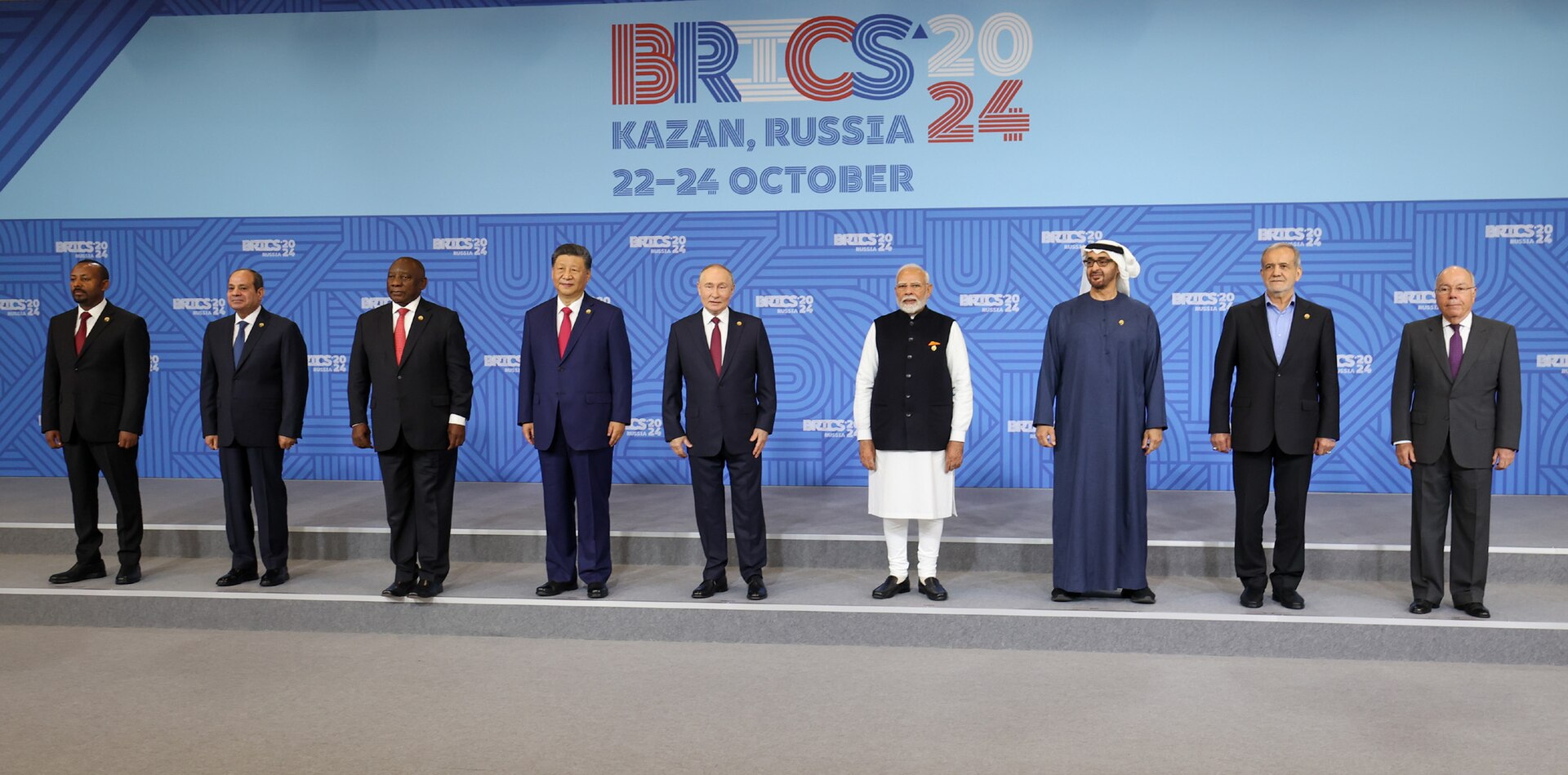

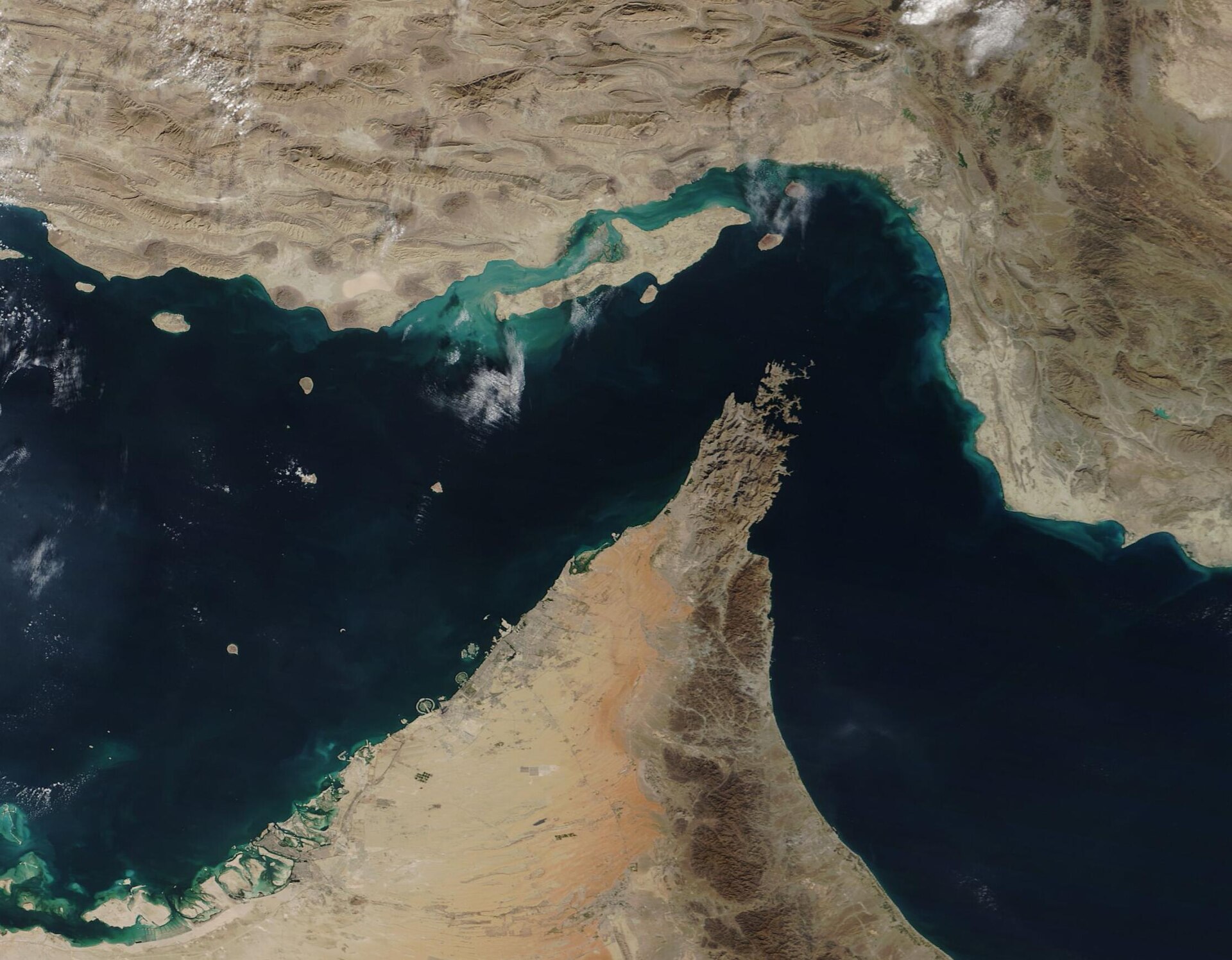
NEW DELHI — Iran’s foreign minister reversed his decision to skip the BRICS Foreign Ministers Meeting in New Delhi, confirming on May 11 that he will arrive on May 13 — placing him in the same building as Saudi FM Prince Faisal bin Farhan and UAE FM Sheikh Abdullah bin Zayed for the first time since the war began on February 28. Both Gulf ministers are expected to attend as BRICS members, though neither government has issued an individual attendance statement. India insists it is hosting, not mediating, and that distinction is the most consequential diplomatic choice New Delhi has made since the conflict started.
The May 14-15 meeting carries no formal conflict-resolution mandate and no published agenda line for the war that has closed the Strait of Hormuz to all but a fraction of pre-war shipping traffic. But the absence of a mandate is what makes the forum useful: any contact between Iranian, Saudi, and Emirati delegations on the margins is deniable, unofficial, and politically survivable for all three governments. The United States is not in the room, Pakistan is not in the room, and Oman is not in the room — making this the first potential Iran-Gulf contact that Washington did not design and cannot control.
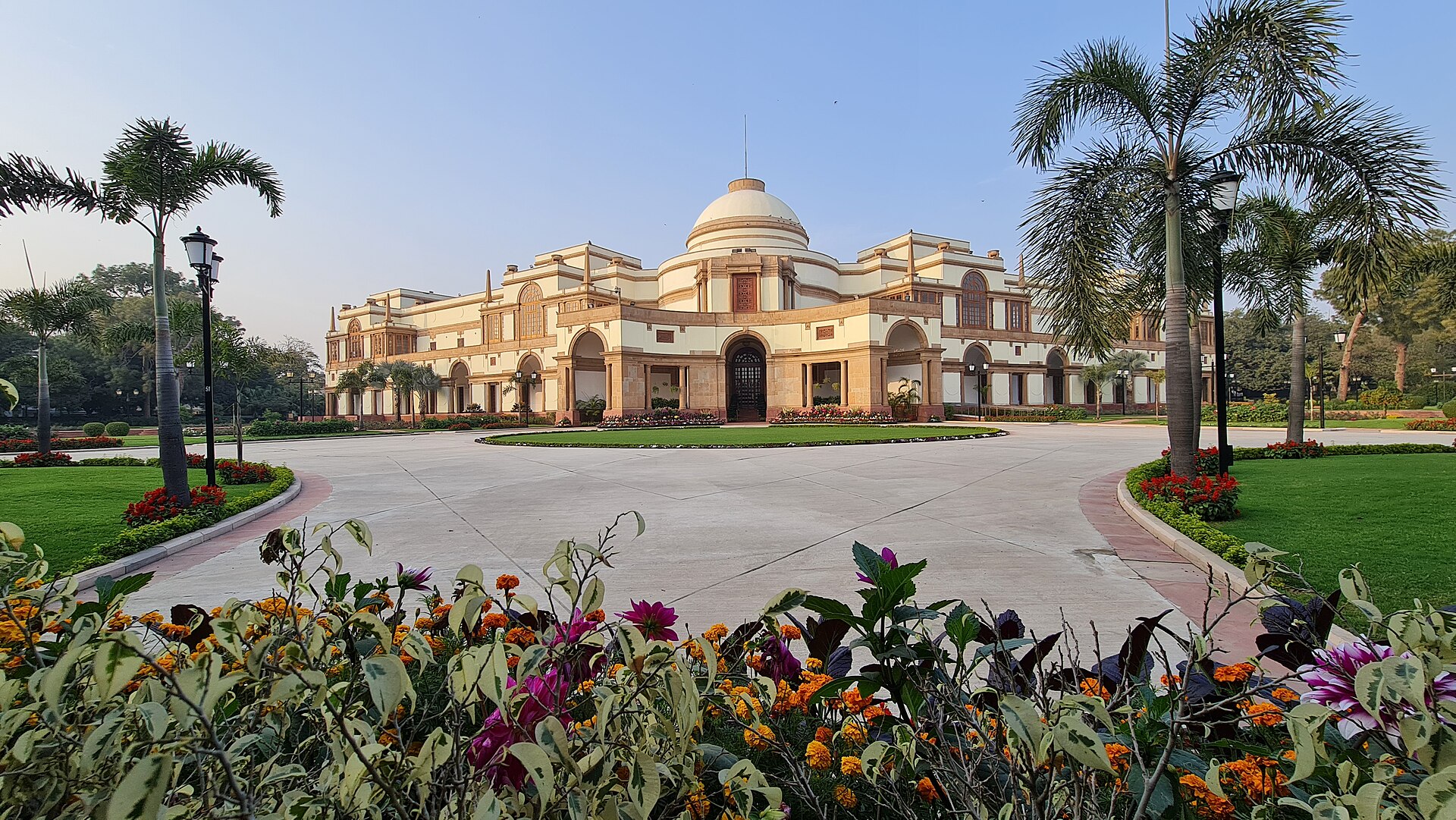
Table of Contents
- Why Did Araghchi Reverse His Decision to Skip New Delhi?
- The Distinction Between Hosting and Mediating
- Who Is Missing from the Room — and Why That Matters?
- What Happened When BRICS Tried This Six Weeks Ago?
- India’s $51 Billion Neutrality Problem
- Saudi Arabia’s BRICS Distance and the Lavrov Call
- Can a Forum Without a Mandate Actually Produce Anything?
- What Does Araghchi’s May 13 Arrival Tell Riyadh and Abu Dhabi?
- India Hosts Araghchi on May 14, Rubio by Month’s End
- Frequently Asked Questions
Why Did Araghchi Reverse His Decision to Skip New Delhi?
As recently as four days ago, Iranian media reported that Deputy FM Kazem Gharibabadi would lead Iran’s BRICS delegation, with Araghchi unlikely to attend. The reversal came on May 11, when ANI and The Print confirmed that Araghchi would arrive in New Delhi on May 13 — a full day before the meeting formally opens. That extra day is not tourism; it is margin-building, and every foreign ministry in the Gulf will read it accordingly.
Tehran has spent months courting India’s BRICS role. President Pezeshkian called Prime Minister Modi twice in ten days — on March 12 and March 21 — explicitly requesting that India use its chairmanship to broker a ceasefire. In the March 21 call, Pezeshkian told Modi that “the nations of BRICS must not stand silent while the sovereignty of a member state is violated,” according to the Iranian presidential office readout confirmed by Iran International. The language was calibrated to cast Iran as a victim of aggression within a framework where India holds the chair, transforming a bilateral plea into an institutional demand.
Araghchi’s reversal also carries a timing signal that cannot be separated from what happened in Muscat the same day. The fourth round of Oman-hosted indirect talks concluded on May 11, with Iran’s FM spokesman Esmaeil Baghaei calling American demands “unreasonable” while both sides agreed to continue, according to Al Jazeera and PBS NewsHour. A stalled US-mediated track makes a non-US venue more attractive, and New Delhi on May 14 is the only available non-US venue where all three Gulf adversaries will be physically present.
The Distinction Between Hosting and Mediating
India’s External Affairs Ministry has been methodical about maintaining this line. When asked to confirm the attendee list for the BRICS meeting, an MEA spokesperson offered only that it would “give update at appropriate time,” per NewKerala — a phrasing designed to neither confirm nor deny the possibility of bilateral contacts on the margins. The deliberate ambiguity is the strategy itself, not a symptom of indecision.
The Middle East briefing 3,000+ readers start their day with.
One email. Every weekday morning. Free.
A detailed analysis from the NUS Institute of South Asian Studies, published in May 2026, captured the posture with precision: “New Delhi appears to have concluded that its interests are better served not by stepping into the spotlight as a mediator, but by operating in the background as a stabilizing force — leveraging its relationships, preserving flexibility and keeping channels open.” India has no history of directly mediating Iran-Arab conflicts. Its Gulf diplomacy has been built on labor-flow protection and economic access rather than conflict resolution, and the Modi government has shown no inclination to change that formula during the most dangerous phase of the war.
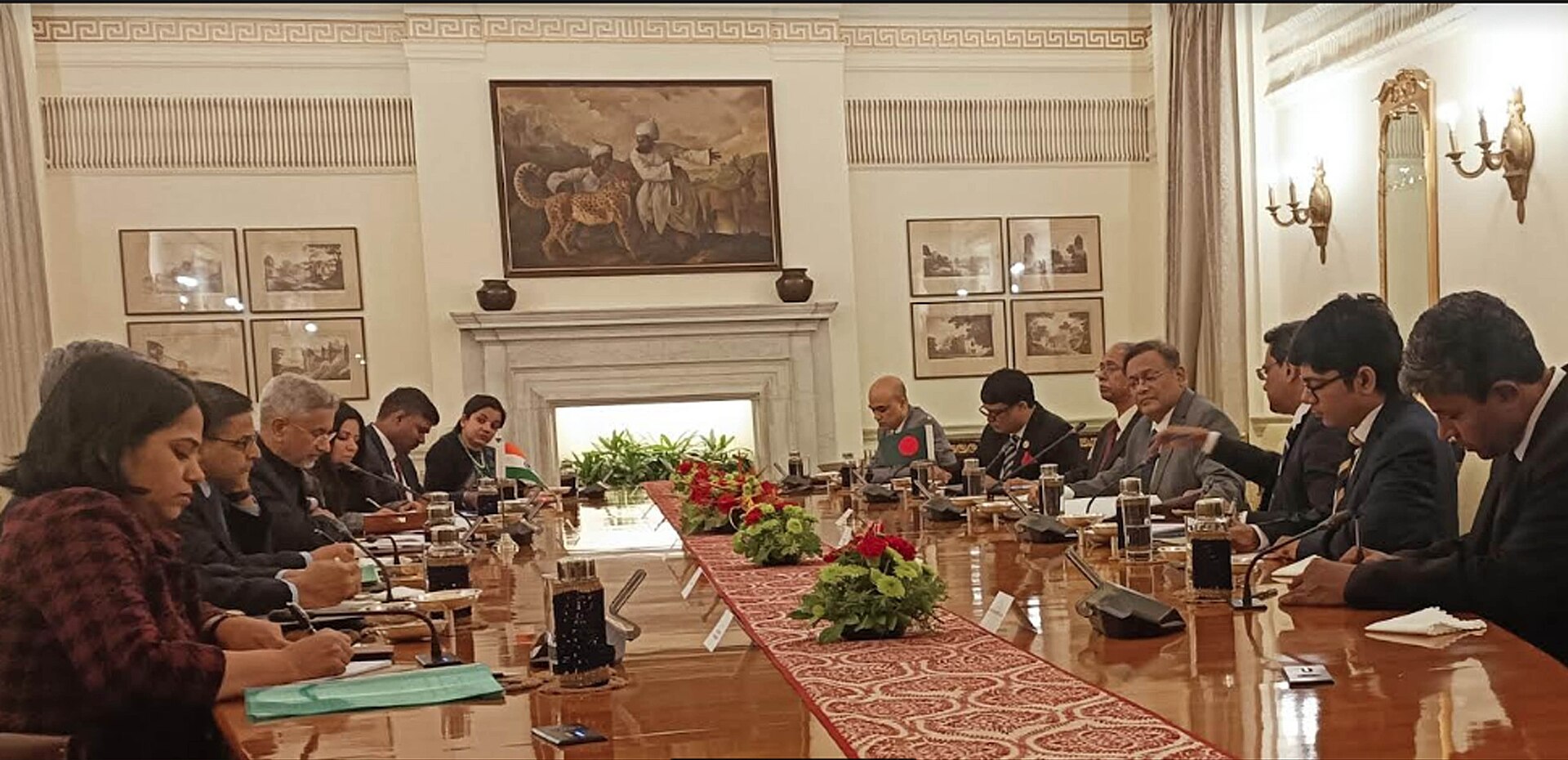
The distinction between hosting and mediating matters because it distributes risk differently. A mediator owns the outcome: if talks collapse, the mediator’s credibility takes damage, as Pakistan learned in Islamabad and as Qatar discovered when it inherited the Iran file. A host owns only the venue, and India can provide the physical space where Araghchi and Prince Faisal sit in the same hall, exchange words in a corridor, or have a pull-aside conversation that neither government acknowledges — and if nothing happens, India’s BRICS chairmanship continues undamaged.
Who Is Missing from the Room — and Why That Matters?
The most important feature of the New Delhi meeting is not who is present but who is absent. The United States has no seat at BRICS, and Secretary of State Rubio will not be in the same hemisphere as the conversation. Pakistan, which hosted the Islamabad talks and has served as Iran’s interlocutor since the war’s early weeks, is not a BRICS member. Oman, which has run four rounds of indirect talks in Muscat, is outside the group as well.
China’s absence is subtler and more consequential than any of these. Wang Yi, who brokered the original March 2023 Iran-Saudi normalization in Beijing, is likely to skip New Delhi because President Trump is in Beijing on the same dates, according to The Print. Beijing is expected to send a deputy foreign minister — a downgrade that removes the architect of the last successful Iran-Saudi diplomatic framework from the room at the moment his personal relationships with both Araghchi and Prince Faisal could matter most. As Trump lands in Beijing, the diplomat who built the 2023 normalization agreement finds himself pulled in the opposite direction. Beijing confirmed on May 12 that Wang Yi will send China’s Ambassador to India Xu Feihong in his place — the BRICS summit’s only proven Iran-Saudi broker downgraded to a deputy at the moment both delegations are in the same building.
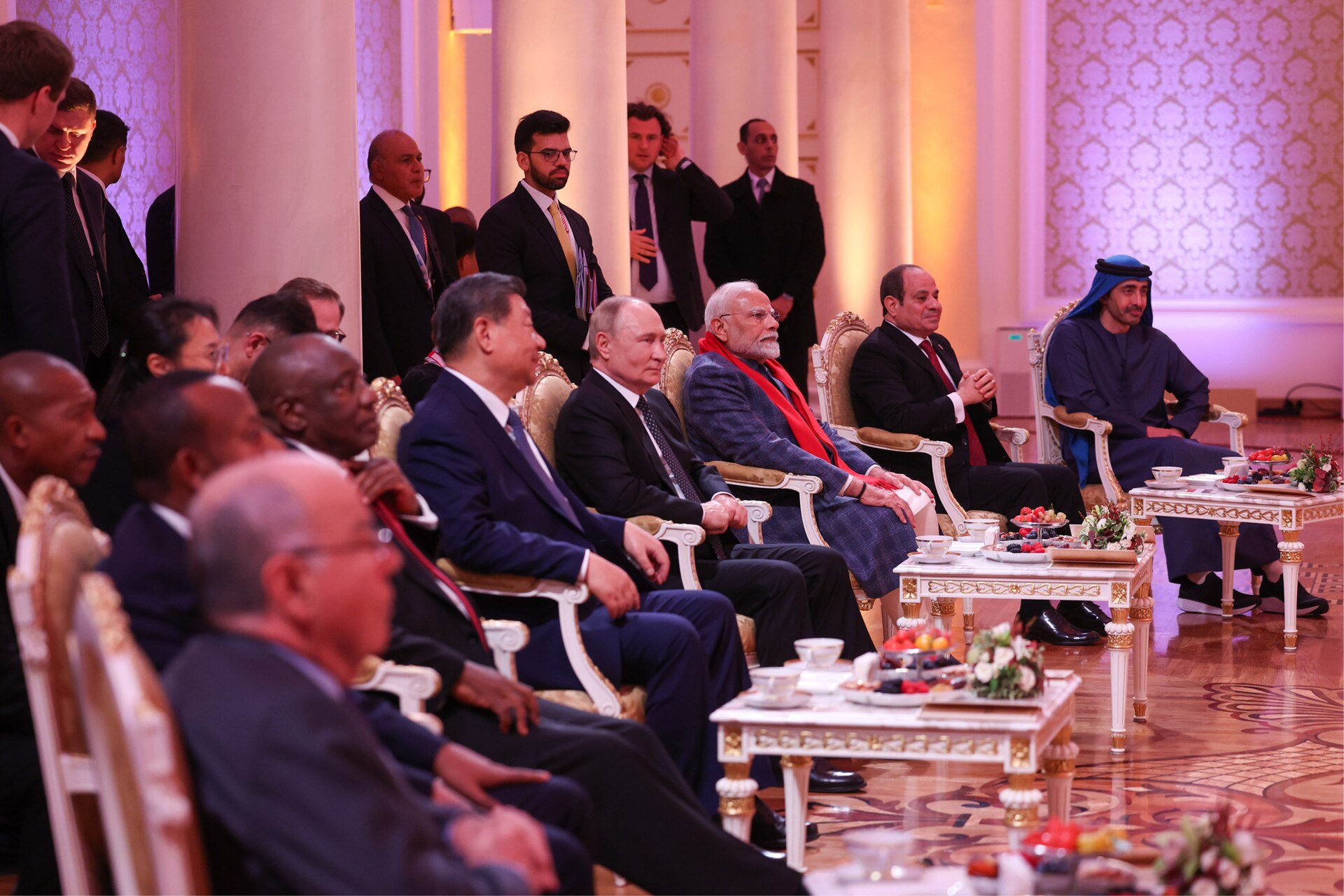
Russia, by contrast, is leaning in hard. Foreign Minister Lavrov confirmed his attendance to TASS on April 29, and on May 8 he called Saudi FM Prince Faisal in what the Russian MFA readout described as a discussion about the “advisability of returning to efforts to normalize relations between Iran and Arab monarchies.” That language positions Moscow as an enabler of the kind of margin conversations that New Delhi is making possible, and Lavrov’s physical presence gives Russia a role that China’s deputy cannot fill: the weight of a principal-level foreign minister who maintains bilateral access to both Tehran and Riyadh and has no structural reason to avoid either.
What Happened When BRICS Tried This Six Weeks Ago?
The May 14-15 meeting is not India’s first attempt to use BRICS as a frame for the conflict. On April 23-24, India hosted a BRICS Deputy Foreign Ministers and Special Envoys meeting specifically focused on the Middle East and North Africa, and it ended without a joint statement — the first concrete failure of BRICS consensus on the war.
The breakdown ran along two fault lines. The first was Iran’s insistence that any joint statement recognize that the United States and Israel “initiated the conflict on February 28” — language that UAE delegates found unacceptable, according to The Wire’s diplomatic correspondent Suhasini Haidar, who reported that UAE and Iranian representatives sparred directly. The second fault line was India itself: opposition leader Jairam Ramesh charged on April 27 that India’s “insistence on diluting language on Israel and Palestine” was a separate reason the statement collapsed, per ANI. India was not a neutral convener at the deputy-minister level — it was an active participant in shaping language, and that participation fractured the room along a second axis entirely.
The April failure explains why the May meeting carries different expectations. India issued a “Chair’s Statement” rather than a joint communiqué in April, a downgrade that preserved the forum while acknowledging the impossibility of consensus. The lesson New Delhi appears to have drawn is that seeking written outcomes from a group containing three warring parties is structurally futile, and the May meeting accordingly carries no visible ambition for a war-related joint statement. When the formal output is predetermined to be irrelevant to the conflict, the informal margins become the entire point — and that reallocation of diplomatic energy from text to proximity is what makes the ministerial-level gathering more useful than its deputy-level predecessor.
India’s $51 Billion Neutrality Problem
India’s posture of deliberate non-mediation would be simpler to maintain if the war were not dismantling the economic infrastructure on which 9 million Indian workers in the Gulf depend. Annual GCC remittances to India reached $51.4 billion in FY2025, representing 38 percent of India’s total $135.4 billion in inbound remittances, according to RBI data reported by CNBC in March 2026. That flow requires physical stability in Saudi Arabia, the UAE, Bahrain, Kuwait, Qatar, and Oman — exactly the states whose territory, airspace, and shipping lanes have been under varying degrees of Iranian threat since February 28.
The energy exposure is equally direct. India imports approximately 40 percent of its crude oil through the Strait of Hormuz and roughly 90 percent of its LPG, according to India-Briefing and MUFG Research. Every $10-per-barrel increase in oil prices cuts India’s GDP growth by 0.1 to 0.2 percentage points and raises inflation by approximately 0.2 percentage points, per MUFG’s March 2026 assessment. With Brent at $105.49 and WTI at $100.04 as of May 11, India is already absorbing a war premium that External Affairs Minister Jaishankar identified as a national priority in a suo motu statement to the Rajya Sabha on March 9, when he placed energy security among India’s highest concerns and called for open shipping lanes without assigning blame to either side.
Then there is the question of Iranian crude. Under the now-expired OFAC General License U, India imported approximately 4 million barrels of Iranian oil between March 20 and April 19, 2026, with an estimated 4 to 6 million barrels still in transit at the license’s expiry, according to Bloomberg and The National. Indian Oil Corporation’s 2-million-barrel purchase alone was valued at roughly $200 million. The GL U was not renewed on April 19, and Tehran views India’s oil dependency as structural access to New Delhi — a reason why Pezeshkian called Modi twice and why Araghchi is flying to New Delhi rather than sending his deputy.
Saudi Arabia’s BRICS Distance and the Lavrov Call
Saudi Arabia occupies a uniquely ambiguous position within BRICS. The kingdom is listed as the group’s eleventh member on India’s official brics2026.gov.in website, but Riyadh has never issued a formal public acceptance statement and has maintained what multiple diplomatic sources describe as “slight distance” from full accession. That distance is strategic: it allows Saudi Arabia to participate in BRICS meetings without being bound by consensus positions, particularly on matters where the group’s membership now includes the country striking Saudi oil infrastructure.
Prince Faisal’s attendance in New Delhi comes six days after his May 8 phone call with Lavrov. The Russian MFA readout’s specific reference to “returning to efforts to normalize relations between Iran and Arab monarchies” was not accidental phrasing — it echoed the language of the 2023 Beijing Agreement and signaled that Moscow views the BRICS meeting as an opening to reactivate a normalization track the war has frozen. Prince Faisal received that framing and will arrive in New Delhi having been primed by Russia to view the meeting through that lens.
Saudi Arabia’s BRICS ambiguity also intersects with the bilateral security architecture MBS is building around Washington. Riyadh is simultaneously pursuing a US defense framework and maintaining its seat in a multilateral forum where its attacker holds an equal one. The kingdom has already reoriented its primary export corridor toward the Red Sea, reducing its direct Hormuz exposure and altering its immediate economic calculus around the strait’s closure. That duality — US-facing on defense, BRICS-facing on diplomacy — is sustainable only as long as the forum asks nothing specific of Saudi Arabia on the war, and India, by declining to seek a conflict-related joint statement, is ensuring that it asks nothing specific of anyone.
Can a Forum Without a Mandate Actually Produce Anything?
BRICS has no secretariat, no standing mediation body, and no enforcement mechanism. It cannot impose a ceasefire, sanction a violator, or deploy observers. Bloomberg’s March 25 headline was blunt — “Iran War Shows BRICS Limits as India Pushed to Choose Sides” — and Foreign Policy’s assessment on March 16 was equally direct in declaring that “BRICS Meets Reality in the Middle East War.”
But the absence of institutional power is not the absence of utility. Multilateral summits have produced bilateral breakthroughs before precisely because they provide diplomatic cover — a reason for two hostile foreign ministers to be in the same city that has nothing to do with each other. Araghchi does not need to request a bilateral meeting with Prince Faisal; he can encounter him at the margins of a working dinner, in the corridor of the conference venue, or during a reception that neither government framed as an Iran-Saudi event. The encounter can be denied, minimized, or described as a courtesy, depending on what results from it.
The Muscat track’s current state amplifies this logic. With the fourth Oman round ending on May 11 in mutual frustration, Tehran has a structural incentive to demonstrate that alternatives to the US-mediated framework exist. Even an inconclusive margin conversation with Prince Faisal in New Delhi sends a signal to Washington: Iran has other rooms to enter. Whether Riyadh wants to serve as the backdrop for that signal is a different question, and one that Araghchi’s direct call to the Saudi FM on April 13 — the day the US blockade took effect — suggests he has already begun probing.
What Does Araghchi’s May 13 Arrival Tell Riyadh and Abu Dhabi?
Araghchi’s confirmed arrival on May 13 — twenty-four hours before the BRICS meeting opens — is behavioral intelligence that every Gulf delegation will parse. Foreign ministers who arrive ahead of the formal program do so because they want bilateral meetings that are not structured by the summit agenda and not visible to the full membership.
The pattern is consistent with Araghchi’s diplomatic approach since the war began. He called Saudi FM Prince Faisal on April 13 as the US blockade took effect, demonstrating willingness to reach out to Riyadh during moments of maximum pressure, and he has pursued parallel tracks simultaneously — engaging the US-mediated Muscat process while maintaining direct lines to Gulf capitals. The structural problem with Araghchi’s bilateral efforts, as analysis of the authorization ceiling has documented, is not his willingness to negotiate but the gap between what he can discuss and what the IRGC’s Supreme National Security Council apparatus, controlled by Secretary Vahidi and overseen by an absent Khamenei, will permit him to implement.
For the UAE, Araghchi’s presence carries a different charge altogether. This is the first face-to-face encounter between Iranian and Emirati representatives since the war started, according to The Print. The April 23-24 deputy-level meeting demonstrated that UAE-Iran tensions run hot enough to block even anodyne joint language, and Sheikh Abdullah bin Zayed will be sharing a venue with the foreign minister of a government whose IRGC maritime regime in the Strait continues to constrain Emirati shipping and threaten Emirati commerce. The physical proximity is a diplomatic fact; what either side does with it remains a matter of political will that India’s agenda does not compel and India’s chair does not require.
India Hosts Araghchi on May 14, Rubio by Month’s End
The most revealing feature of India’s May diplomatic calendar is not any single event but the sequence. Araghchi arrives May 13, the BRICS meeting runs May 14-15, and US Secretary of State Rubio is expected in New Delhi before the month ends, according to The Print’s May 11 reporting. India will host the foreign minister of the country under US naval blockade and the secretary of state enforcing that blockade within the span of roughly two weeks, in the same city, under the same government’s hospitality.
Asia Times captured this posture in April with a line that applies even more forcefully to the May calendar: “India’s foreign policy in the Gulf is a textbook case of strategic autonomy under duress. New Delhi is tied into a dense web of relationships that pull it in different directions at once.” India co-sponsored a UN resolution condemning Iran’s retaliatory strikes on GCC states, which bought credibility with Gulf capitals, but remains the only founding BRICS member that has not formally condemned the February 28 US-Israeli strikes on Iran — an asymmetry that Tehran has noticed and that Iranian state media has cited as evidence that India can still be brought closer.
The dual-hosting pattern constrains what India can allow to happen on the BRICS margins. If Araghchi uses New Delhi on May 14 to announce a diplomatic opening with Saudi Arabia or the UAE, India’s ability to host Rubio two weeks later without friction diminishes sharply, because Washington would read any Iranian-Gulf rapprochement in New Delhi as occurring on India’s watch regardless of India’s insistence that it merely provided the venue. That risk is why the MEA’s studied vagueness about the attendee list is not bureaucratic caution but a posture designed to survive contact with both diplomatic tracks simultaneously.
The Chabahar port adds a physical dimension to the balancing act that no other BRICS chair faces. India’s development of Chabahar as a trade and energy corridor to Central Asia runs directly through Iran and has acquired heightened strategic value since the Hormuz closure made overland alternatives to seaborne Gulf energy more attractive. A rupture with Tehran endangers Chabahar and the Central Asian access it provides; excessive proximity to Tehran endangers the Gulf economic relationships that sustain the remittance flows and labor arrangements that underpin the livelihoods of millions of Indians abroad. India’s BRICS hosting is not generosity — it is the management of structural dependencies that cannot be severed in either direction, performed on a stage where the audience includes every party to the war and the superpower enforcing the blockade against one of them.
Frequently Asked Questions
Is India officially part of any Iran-Gulf ceasefire mediation track?
No. India has not joined the Muscat, Islamabad, or Doha negotiation tracks in any formal capacity. However, India’s BRICS chairmanship runs through December 2026, giving it at least three more potential hosting moments — including the BRICS Leaders Summit tentatively scheduled for October — if the May 14-15 margins produce any back-channel momentum worth sustaining. The Chabahar port development agreement, renewed in 2024, also gives New Delhi a direct infrastructure stake in Iran’s post-war stability that no other BRICS chair has held.
What is Saudi Arabia’s formal BRICS membership status?
Saudi Arabia was invited to join BRICS at the August 2023 Johannesburg summit alongside Iran, the UAE, Egypt, Ethiopia, and Argentina, the last of which declined under President Milei. Riyadh has participated in BRICS meetings and appears on brics2026.gov.in as the eleventh member, but has never issued a formal public acceptance statement. This deliberate ambiguity allows Saudi Arabia to attend without being bound by collective positions — a form of observer-with-benefits status that mirrors the distance Riyadh has maintained from other multilateral frameworks it cannot steer.
Has BRICS ever produced a conflict-resolution outcome?
BRICS has no institutional mechanism for conflict resolution, no standing mediation body, and no enforcement tools. Past summit declarations have addressed conflicts in Syria, Libya, and Palestine, but only in communique language that imposed no obligations on any member. The closest analogue is the African Union’s use of BRICS-adjacent discussions on Ethiopian and Sudanese conflicts, but those involved non-BRICS parties. The Iran-Gulf war is the first conflict between full BRICS members, a structural stress test the institution was never designed to absorb.
What happened to the 2023 Beijing Agreement that normalized Iran-Saudi relations?
The agreement brokered by Wang Yi in March 2023 restored diplomatic relations and committed both governments to non-interference and economic cooperation. It survived until the war rendered its terms inoperative on February 28, 2026. Wang Yi’s likely absence from New Delhi — pulled to Beijing by Trump’s concurrent state visit on the same May 14-15 dates — removes the original broker from the room where rebuilding might begin. The irony is structural: the American president whose administration’s strikes destroyed the framework is occupying Beijing’s diplomatic bandwidth on the exact dates when its architect could otherwise sit between Araghchi and Prince Faisal.
How does the stalled Muscat track affect what happens in New Delhi?
The fourth Muscat round ended hours before Araghchi confirmed his New Delhi attendance on May 11, with Iran’s spokesman calling US demands “unreasonable” while both sides agreed to continue. The Oman track carries structural limitations that New Delhi does not: it is US-mediated, which means any agreement reached there must survive the IRGC’s authorization ceiling — the gap between what Araghchi can discuss and what Vahidi’s SNSC apparatus will permit. New Delhi offers something Muscat cannot provide — a room where the Gulf states themselves, rather than American intermediaries, are the potential interlocutors. Whether Prince Faisal or Sheikh Abdullah want to be those interlocutors, without Washington’s backing and without a framework governing what they would discuss, is the open question that the next four days will settle. The same day the BRICS session opened, the IRGC sank an Indian-flagged ship off Oman — a direct strike on a vessel from the host nation that undercut any Indian claim to neutral facilitation.