RIYADH — For seventy-two hours between May 5 and May 8, Saudi Arabia did something it has not done since the Iraq War wound down in August 2003: it actively halted an ongoing US military operation being run from Saudi soil, forcing Donald Trump to publicly suspend his own Hormuz escort mission within thirty-six hours of its announcement. The veto did not collapse because Washington persuaded Mohammed bin Salman of anything; it collapsed because Iranian missiles, drones and small boats engaged three US destroyers on May 7, and a second Trump-MBS call later that evening produced terms that neither government will describe, and which arrive in Riyadh this week wrapped inside a $600 billion investment commitment and a $142 billion arms package that are themselves the cover story for whatever was agreed in private.
Table of Contents
- What broke Project Freedom in thirty-six hours
- Why did MBS veto a US operation Riyadh would normally bless
- The shooting that ended the standoff
- The second call that nobody will describe
- What did Tehran learn from the seventy-two hours
- The four parallel diplomatic tracks Riyadh ran during the veto
- How is the May 2026 veto different from the 2003 base withdrawal
- The $600 billion cover story for the Riyadh visit
- The Parsi warning and the vassal problem
- Frequently asked questions
What broke Project Freedom in thirty-six hours
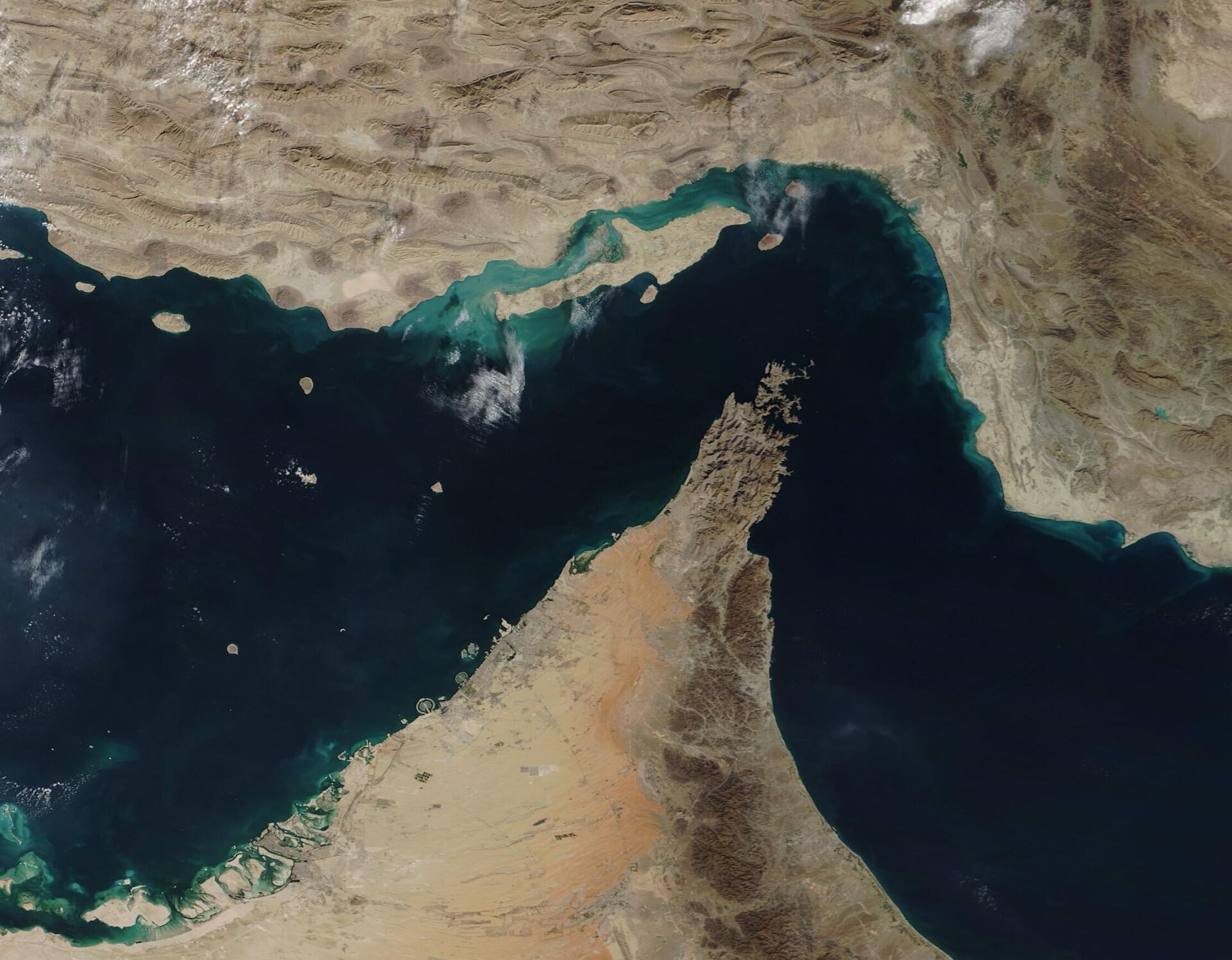
Trump announced Operation Project Freedom on May 4 with a Truth Social post that arrived in Gulf capitals without prior notice; NBC News and Middle East Eye reported within seventy-two hours that MBS was “furious,” that no Saudi official had been consulted, and that the package — 15,000 personnel, more than a hundred aircraft, guided-missile destroyers and unmanned platforms — had been built around basing assumptions Washington had not bothered to confirm. The mission targeted hundreds of sequenced ship transits through the strait that handles a third of seaborne crude. In the first forty-eight hours, two transits were achieved.
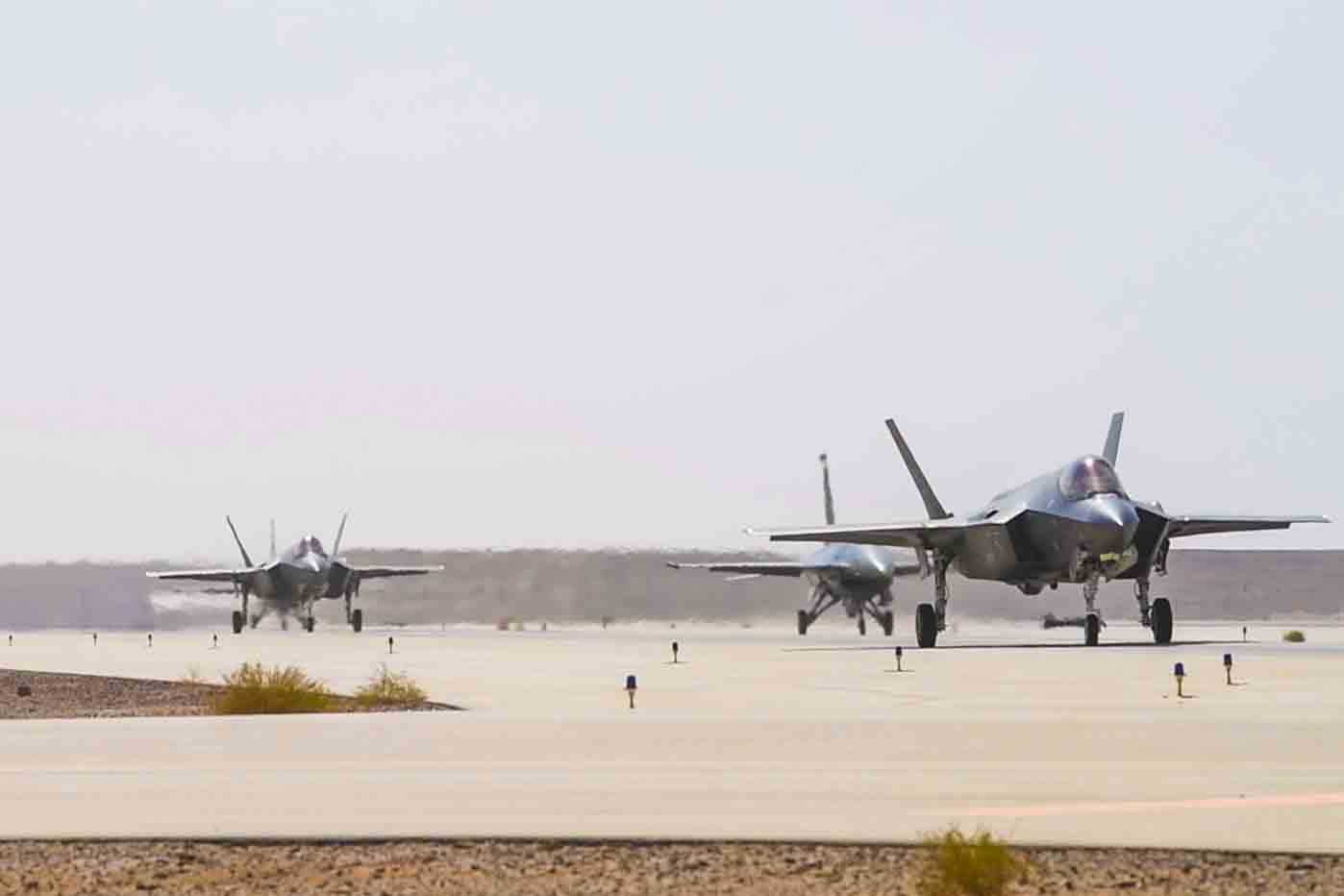
By midday May 5, Riyadh had quietly denied the use of Prince Sultan Air Base — the facility that makes US air operations over the Gulf physically possible, the one rebuilt in 2019 after a sixteen-year US absence, the one that absorbed 10,000 personnel and a million gallons of fuel a day at its Iraqi Freedom peak — and closed Saudi airspace to the operation’s aircraft. Kuwait revoked overflight and base rights on a parallel timeline. CENTCOM’s daily transit count collapsed; the operation ground to a halt in fewer than thirty-six hours, and Admiral Bradley Cooper, who had launched the mission with the line that “our support for this defensive mission is essential to regional security and the global economy as we also maintain the naval blockade,” went silent on the schedule.
An anonymous US official explained the geometry to NBC bluntly: “Because of geography, you need cooperation from regional partners to utilize their airspace along their borders. In some cases, there is no other way around.” The first Trump-MBS call, two officials told NBC, “did not resolve the crisis.” Trump publicly halted Project Freedom that afternoon. The largest naval mobilization the United States had announced in the Gulf since the ceasefire collapsed was now a fleet without a flight plan.
Why did MBS veto a US operation Riyadh would normally bless?
The official Saudi rationale, conveyed through NBC’s reporting on May 8, was that the Kingdom suspended access because it “felt Operation Project Freedom was not well thought-out and could result in escalation with Iran” — and that “Saudis feared Trump’s Project Freedom would spur Iran to attack.”
That language is unusually direct for a regime that prefers gestures to statements. It is also doing a great deal of work, because the same regime has spent the previous fifteen months hosting a US naval blockade, accepting Sky Sabre batteries, allowing the King Fahd Causeway to function as a Fifth Fleet logistics spine, and condemning Iranian strikes on GCC infrastructure.
The Middle East briefing 3,000+ readers start their day with.
One email. Every weekday morning. Free.
The veto carries no warmth toward Tehran. Riyadh publicly refused to host a specific operation that, in its own reading, was designed in Washington without reference to who would be living under the consequences in Khobar, Jubail and Dammam. Iran’s foreign minister had declared Hormuz “completely open” during the very window in which Saudi diplomats were arguing to Washington that Project Freedom was both unnecessary and provocative — the Iranian framing and the Saudi framing converged on the same operational claim. MBS was, in effect, telling Trump that the United States had decided to escort a problem Iran had just verbally solved.
The harder reading is this: the veto established, in front of every Gulf capital and every analyst desk from RANE to Quincy, that Riyadh can stop a US operation when it chooses to. RANE/Stratfor titled its analysis “U.S., Saudi Arabia: Riyadh Effectively Vetoed the U.S.’ Project Freedom” — a sentence that was not available in English-language strategic analysis at any point between 2003 and last week. The veto was a demonstration whose deliverable was the demonstration itself, and Gulf chanceries from Doha to Muscat now possess a precedent they did not have a week earlier.
The shooting that ended the standoff
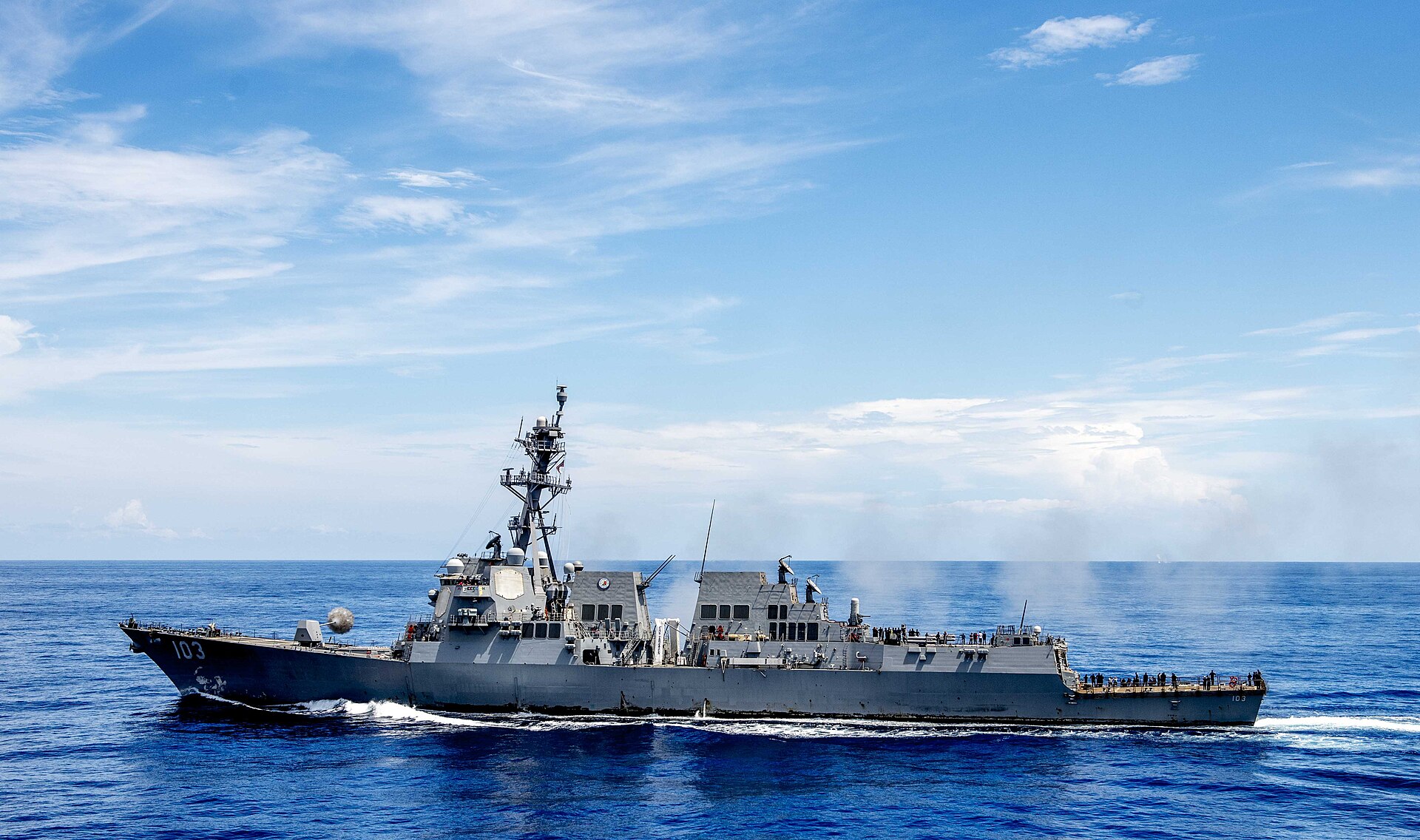
The Saudi position held for slightly more than two full days. It dissolved on the evening of May 7, when IRGC forces launched a coordinated engagement against three Arleigh Burke-class destroyers — USS Truxtun (DDG-103), USS Rafael Peralta (DDG-115) and USS Mason (DDG-87) — combining anti-ship missiles, drones and small-boat swarms in a near-simultaneous strike package. CENTCOM and Stars and Stripes confirmed that all threats were intercepted; gCaptain reported no US assets were struck. The escort screen that Project Freedom had been designed to provide was, for the first time, demonstrably necessary in a way that could be photographed.
Washington struck back within twelve hours, hitting Bandar Abbas and Qeshm Island — missile and drone launch sites, command-and-control nodes, and ISR positions that CENTCOM identified as the launch architecture for the May 7 engagement. Trump told Fox News the strikes were “just a love tap” and added that the “ceasefire still in effect” — a phrasing that performed two functions at once, signalling escalation control to domestic audiences and supplying Riyadh with the diplomatic cover it needed to lift restrictions without appearing to capitulate.
Saudi Arabia and Kuwait restored basing access on May 7 and 8 after a second Trump-MBS call. The Wall Street Journal reported the lifting on the record; Riyadh denied the WSJ account on the record while Saudi officials briefed the same outlet on background confirming the substance — the dual-denial pattern that became the operational signature of the entire seventy-two hours. A Saudi government source had earlier told AFP that the original veto “isn’t true” and that the US “still has regular access to Saudi bases and airspace,” a denial issued precisely while basing was, in fact, denied. Both governments confirmed the lifting through preferred channels and denied it through public ones.
The second call that nobody will describe
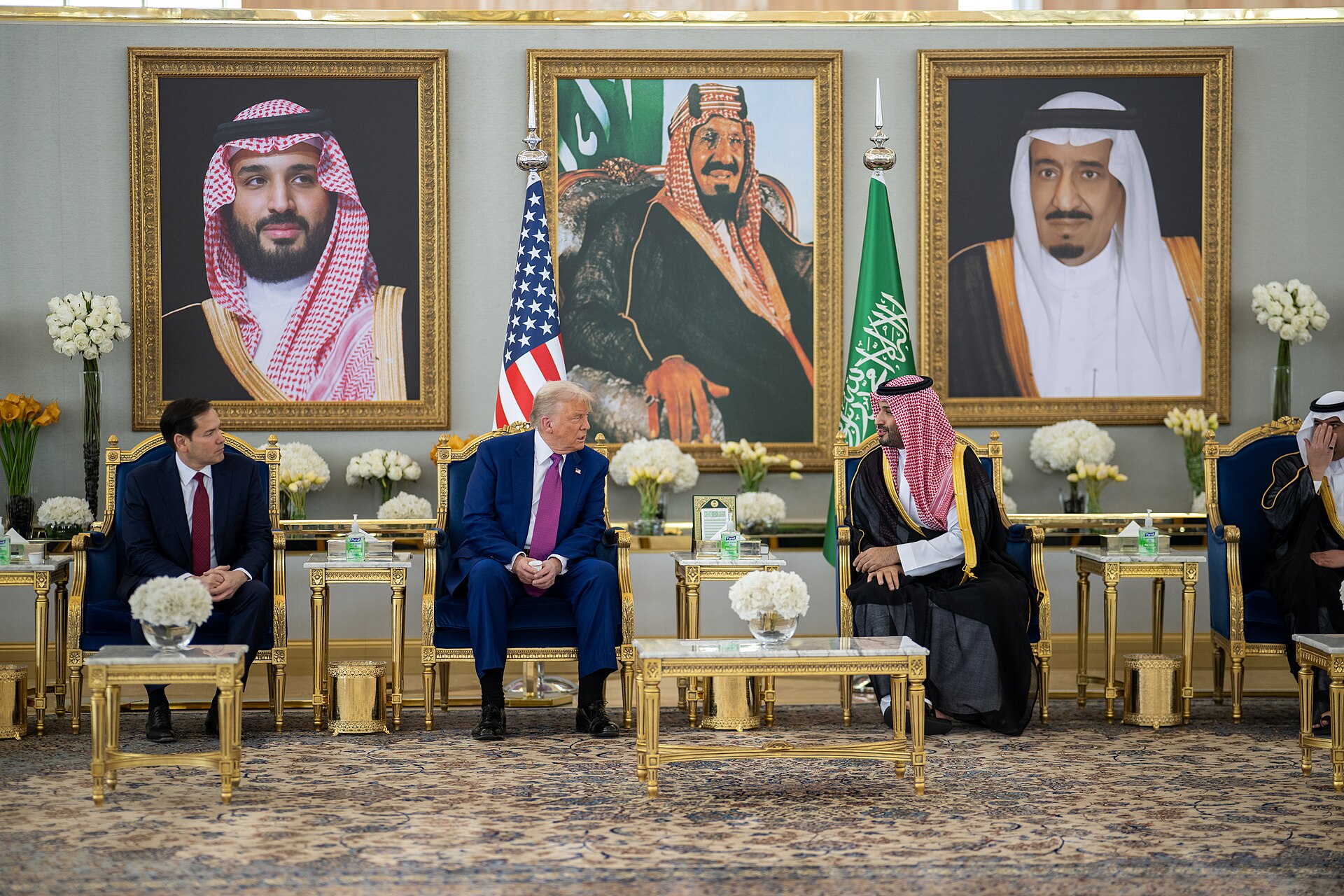
The terms of the second Trump-MBS call have not been disclosed by either side, and that silence is the most interesting fact in the entire sequence. The first call failed because Trump arrived offering the threat-environment argument — Hormuz must be escorted, US shipping must be protected, the blockade must hold — and MBS countered with the territorial argument that those goals could not be pursued from his soil on terms set in Washington. The Iranian engagement of May 7 did not change MBS’s territorial argument. It changed the political cost of repeating it.
What was conceded in the second call, on the available evidence, is some combination of three things: a forward consultative mechanism that gives Riyadh a veto over future use of Saudi facilities for escort and strike packages; written or verbal guarantees on the scope and duration of Project Freedom’s revived form; and a tightened linkage between the Hormuz mission and the bilateral defense package Trump is bringing to Riyadh this week. None of those concessions are visible in the $600 billion investment line or the $142 billion arms framework that the White House Fact Sheet will foreground. All three would change the meaning of those numbers.
The Lavrov-Faisal call on May 8 — the same day the veto reversed — is the strongest tell. Russian and Saudi foreign ministers jointly called for restoring Hormuz navigation “to the level that existed before the end of February,” a phrase that imports a Russian-Saudi reference point into a US-led operation and signals that Riyadh wrote part of the Riyadh visit’s script before Trump’s plane left Washington. The IRGC issued a parallel institutional statement: “With US threats neutralized and new protocols in place, safe, stable passage through SOH will be ensured.” That sentence was permitted to stand because Tehran read it the same way Moscow and Riyadh did — as confirmation that a managed transit regime, not a militarized one, was the actual outcome of the seventy-two hours.
What did Tehran learn from the seventy-two hours?
IRGC Aerospace Commander Major General Seyed Majid Mousavi spoke on May 9 and 10, after the reversal, in language Tehran does not deploy casually: “Missiles and drones of the IRGC aerospace forces are aimed at US facilities in the region and enemy aggressor ships; we are only waiting for the launch order.”
Mousavi was not threatening a strike that had not happened. He was claiming retroactive credit for the only strike that had happened in the previous week — the May 7 engagement that broke the Saudi veto — and signalling, with deliberate clarity, that the IRGC now possesses a precise map of where MBS’s red line sits.
The IRGC’s map of Saudi behaviour reads clearly. Saudi Arabia will refuse a US operation it considers escalatory when no Americans have been fired upon, and Saudi Arabia will revisit that refusal within seventy-two hours when Americans are fired upon. The threshold is a single combined-arms engagement at sea against US naval assets — below that threshold MBS holds the veto, and above it the veto reverses on a timeline Tehran can now plan against. That is an extraordinarily useful piece of information for an adversary that has spent forty months trying to find the seam between Riyadh’s territorial sovereignty and Washington’s force posture.
Mousavi’s timing — issuing the threat after the reversal, not before — is the part that should keep Saudi planners awake. He was not deterring future US deployments. He was advertising that Tehran now knows which deployments Riyadh will host and which it will refuse, and that the trigger Iran would have to pull to move MBS from one column to the other is calibrated, rehearsed, and survivable. The IRGC absorbed strikes on Bandar Abbas and Qeshm and called the outcome a deterrence success. Tehran is treating the exchange as a discovered protocol rather than a defeat.
The four parallel diplomatic tracks Riyadh ran during the veto
Saudi foreign minister Prince Faisal bin Farhan was in Ankara on May 6 — while basing was suspended — co-chairing the third Saudi-Turkish Joint Coordination Council with Hakan Fidan. Al-Monitor headlined the meeting “Ankara, Riyadh step up coordination amid Iran war.” Lavrov took Faisal’s call on May 8. Egyptian foreign minister Badr Abdelatty was the fourth track. Two calls to Washington, one to Moscow, one to Ankara, one to Cairo — four parallel channels run inside a seventy-two-hour window is the diplomatic signature of a regime bargaining, not panicking. The FM diplomatic sprint that followed — Doha on May 9 and London on May 11 — extended the same architecture, bringing the UK and France’s forty-nation Hormuz coalition into operational coordination on terms Riyadh shaped without appearing to lead.
The Ankara visit fits the IISS-described Egypt-Pakistan-Saudi-Turkey quadrilateral that emerged in May 2026 as the informal architecture Riyadh is anchoring outside US-led structures. The veto and the visit are the same gesture in two registers: Saudi Arabia is constraining its primary security patron while simultaneously assembling the alternative. The security bloc MBS is building around Washington is not a hedge against US withdrawal — it is a bid for parity inside the alliance.
| Track | Counterpart | Output |
|---|---|---|
| Washington | Trump (two calls) | Veto held, then lifted on undisclosed terms |
| Moscow | Lavrov | Joint Hormuz framing referencing “pre-February” baseline |
| Ankara | Fidan | Third Saudi-Turkish Joint Coordination Council |
| Cairo | Abdelatty | Pre-visit coordination, Quad architecture signal |
“Because of geography, you need cooperation from regional partners to utilize their airspace along their borders. In some cases, there is no other way around.”
— Senior US official, briefing NBC News, May 7, 2026
How is the May 2026 veto different from the 2003 base withdrawal?
In 2003, Washington withdrew from Prince Sultan Air Base after major combat concluded — a planned handoff to Al Udeid, not a veto of anything in motion. In May 2026, Saudi Arabia denied basing for a specific already-announced operation and reversed within seventy-two hours. The closest analogue is Turkey’s 2003 refusal on Iraq — issued before that operation, not during it.
The 2003 comparison is being made constantly and incorrectly. When the United States vacated Prince Sultan Air Base on August 27, 2003, the action was a managed post-operation withdrawal after the major combat phase of Operation Iraqi Freedom had concluded; Riyadh did not interdict an ongoing mission, and Washington framed the move as a quiet hand-off to Al Udeid in Qatar that had been planned for months. Throughout the 1990s, Saudi Arabia restricted PSAB use to defensive aircraft and routed offensive strike packages through Kuwait or carrier groups — a constraint, but a constraint negotiated inside an active operational framework.
May 2026 is qualitatively different. Saudi Arabia did not ask Washington to relocate Project Freedom. It denied basing and airspace for a specific operation that had already been announced and was already in motion, and it did so in a window where the alternative basing options — Al Udeid, Bahrain, the carrier groups east of the strait — were either logistically inadequate or geographically wrong for the mission’s escort architecture. The veto was an active interdiction, not a managed withdrawal. The closest historical analogue is Turkey’s 2003 refusal to host the northern push into Iraq — and that refusal was issued before, not during, the operation it constrained.
The twenty-three-year gap between 2003 and 2026 is the headline, but the substantive change is the operational tempo of the constraint. Saudi Arabia moved from announcement to denial to lift in seventy-two hours and ran four diplomatic tracks while doing it. That is not the cadence of a junior partner. It is the cadence of a regional power that has decided its territorial sovereignty is the bargaining instrument it controls most precisely, and that has worked out exactly how long it can hold a veto before the cost-curve turns against it.
The $600 billion cover story for the Riyadh visit
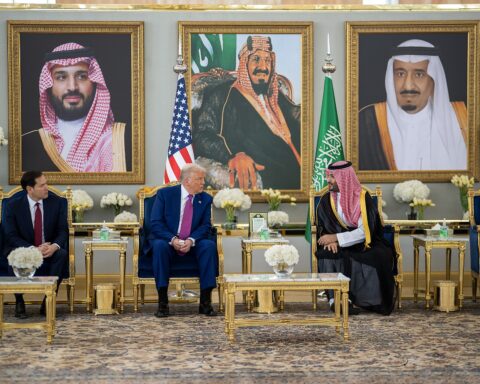
Trump arrives in Riyadh on May 13 carrying the largest defense sales agreement in the history of the bilateral relationship — $142 billion covering air force modernization, missile defense, maritime security and AI integration, layered on top of a $600 billion Saudi investment commitment in the US economy. The White House Fact Sheet, Newsweek and the Times of Israel are running the package as the visit’s marquee deliverable — and that is the cover story.
The real deliverable is what was agreed on the second Trump-MBS call on the evening of May 7. The visit’s choreography — the press lines, the joint photos, the arms-deal signing ceremony — exists to give domestic and regional audiences a frame for what would otherwise look like a US president flying to Riyadh to ratify a partner’s veto of a US operation. The investment number functions as the narrative anaesthetic and the arms package functions as the receipt, both of them sized to crowd out any honest accounting of how the underlying mission was constrained. The Hormuz consultative mechanism, the scope limits on Project Freedom’s revived form, and the bilateral defense linkages that emerged from the second call are the substance, and they will be communicated through the absences and ambiguities in the joint statement rather than its headlines.
Riyadh ran four parallel diplomatic tracks between May 5 and May 12 that locked in framing language Washington will now have to either ratify or repudiate publicly. MBS is not receiving Trump’s agenda; he is receiving a US president whose mission package was constrained on the way to the tarmac. The $600 billion is the price of the constraint, paid by Saudi Arabia, in the currency Washington most needs and least scrutinises.
“Missiles and drones of the IRGC aerospace forces are aimed at US facilities in the region and enemy aggressor ships; we are only waiting for the launch order.”
— Maj. Gen. Seyed Majid Mousavi, IRGC Aerospace Force commander, May 9, 2026
The Parsi warning and the vassal problem
Trita Parsi at the Quincy Institute issued the analytical line that the rest of the field will be working through for the next several weeks: “If [Saudi Arabia] moves toward deeper dependence on the US to balance Iran, they will become spineless vassals.” The line lands harder now than it would have a week ago, because the seventy-two-hour veto sequence demonstrates exactly the trap Parsi describes — Riyadh can refuse a US operation it considers reckless, but the refusal collapses the moment Iran demonstrates the kind of capability the operation was designed to deter, which means every Saudi veto is a temporary instrument with an Iranian-controlled expiration date.
The trap runs deeper still. The more Riyadh accepts in the $142 billion package — PAC-3 upgrades, THAAD integration, maritime ISR, AI-enabled command-and-control — the more its future vetoes will be constrained by the operational logic of systems Washington supplies, services and updates. Each new platform is a wire connecting MBS’s territorial sovereignty to a US sustainment chain. The veto held for seventy-two hours in May 2026 because the Saudi calculation was that the costs of saying no were lower than the costs of saying yes. The arms package is designed, deliberately or not, to invert that calculation by the time the next operation is announced. That the PAC-3 element of the package arrives against a backdrop of roughly 400 rounds remaining and no resupply until mid-2027 — a gap Hegseth told Congress on May 12 was overstated, while Riyadh’s own intercept logs said otherwise — is the munitions-gap context that the veto sequence did not make explicit; that analysis is here.
The defence against the vassal outcome is the Quad — Egypt, Pakistan, Saudi Arabia, Turkey — and the Russian and Chinese parallel channels that Faisal has been working all spring, with Lavrov’s May 8 call the most visible single data point. Beijing has been moving its own Hormuz table for months, and Saudi Arabia has not yet been seated at it. The veto sequence is the strongest single piece of evidence Riyadh has produced this year that it intends to keep the question of who manages the strait — and who manages the operations launched into it from Saudi soil — formally open. The seventy-two hours bought MBS a position, and the Riyadh visit will test whether he can hold it against an arms package designed to make holding it more expensive every year it survives.
Frequently asked questions
How long did Saudi Arabia’s veto of Project Freedom actually last?
The active denial of Prince Sultan Air Base and Saudi airspace ran approximately seventy-two hours — from the morning of May 5 to the evening of May 7-8 — with Kuwait moving on a parallel timeline. The operation itself ground to a halt in fewer than thirty-six hours from announcement. The seventy-two-hour figure is the political duration; thirty-six hours is the operational duration.
Why did the WSJ report and the Saudi denial of the WSJ report both happen?
The dual-denial pattern is a deliberate Saudi communications technique for delivering opposite messages to separate audiences simultaneously. On-the-record AFP denials protect domestic and pan-Arab audiences from the optics of capitulating to Washington; background briefings to US outlets confirm the substance to Beltway readers. Both audiences receive their preferred narrative without either government defending a single public position.
What is the IISS Egypt-Pakistan-Saudi-Turkey quadrilateral and why does it matter here?
The Quad is an informal coordination format documented by the IISS in May 2026, anchored by Riyadh and running parallel to GCC and US-led structures. Faisal’s Ankara visit on May 6 — while basing was suspended — is the clearest evidence Riyadh treats it as an active diplomatic backstop requiring neither US consent nor deference to Israeli sensitivities.
Did Iran actually win the May 7 engagement if all threats were intercepted?
Kinetically, the US won cleanly — no assets struck, all threats neutralised. Strategically, Iran came out ahead: the IRGC established that a coordinated combined-arms engagement was sufficient to reverse a Saudi basing veto within hours. Iran traded ordnance it could afford to lose for a precise calibration of where Riyadh’s red line sits. The CENTCOM intercept count is the wrong scoreboard.
What should observers watch in the joint statement after the Riyadh visit?
Ignore the headline numbers — both sides will repeat $600 billion and $142 billion. Watch for any reference to a “consultative mechanism” or “scope-of-mission framework” for operations from Saudi territory. Also watch for the Hormuz transit-baseline language Lavrov and Faisal introduced May 8: its presence in the joint statement partially decodes the second Trump-MBS call; its absence means the concession ran deeper.