RIYADH — Saudi Arabia launched covert air strikes against targets on Iranian soil in late March 2026, according to a Reuters exclusive published May 12 citing two Western and two Iranian officials. The kingdom then used the strikes — and the explicit threat of more — to force a bilateral de-escalation that cut Iranian attacks on Saudi territory by 76 percent in a single week. Six weeks later, Riyadh vetoed Project Freedom, the American military plan to reopen the Strait of Hormuz by force, denying Washington access to Prince Sultan Air Base and Saudi airspace.
The result is a posture without modern precedent in Gulf security: Saudi Arabia is simultaneously the attacker, the threatened party, and the mediator. That posture functioned only while deniable. Reuters’ four sources have ended the deniability — for both sides. Iran’s silence since the publication is itself the most consequential data point: any acknowledgment now confirms that Saudi coercive diplomacy worked.
Table of Contents
What Did Reuters Actually Report?
Reuters’ May 12 exclusive confirmed “numerous, unpublicized strikes on Iran” conducted by Saudi Arabia in late March 2026. The agency cited four officials — two Western and two Iranian — but could not independently confirm specific targets. The sourcing structure matters: two of the four officials are Iranian, meaning Tehran’s own government apparatus has, through intermediaries, confirmed that Saudi strikes reached Iranian territory.
One official described the strikes to Reuters as “tit-for-tat strikes in retaliation for when Saudi (Arabia) was hit.” The phrasing — retaliatory, proportional, reactive — is the language of calibrated deterrence, not sustained air campaign. Reuters described the kingdom as “becoming much bolder in defending itself.”
Saudi Arabia’s foreign ministry senior official, asked directly whether the strikes occurred, did not deny them. The response addressed other topics. Iran’s foreign ministry did not respond to Reuters at all. In diplomatic practice, a non-denial from the attacker and silence from the target constitute the clearest form of mutual confirmation available short of a joint statement.
The Yemen air campaign, launched in March 2015, was Saudi Arabia’s first sustained offensive air operation in decades — but against Houthi positions in Yemen, not Iranian soil. Before late March 2026, no Saudi government had been confirmed to have conducted direct military strikes on Iran.
The Middle East briefing 3,000+ readers start their day with.
One email. Every weekday morning. Free.
Reuters also reported that Saudi Arabia “deliberately made Iran aware of the strikes” — not through a communiqué but through the strikes themselves, followed by intensive diplomacy and explicit threats to retaliate further. The sequence was designed to be understood as a message: ordnance first, then terms.
The Week the Attacks Stopped
In the week of March 25-31, Iran launched more than 105 drone and missile attacks against Saudi targets. In the week of April 1-6, the number dropped to roughly 25 — a 76 percent reduction without a ceasefire framework, without a signed agreement, without a UN resolution.
| Period | Iranian Attacks on Saudi Arabia | Key Development |
|---|---|---|
| Feb 28 – Mar 24 | 300+ (cumulative since war start) | Ras Tanura, Khurais, Eastern Province struck |
| Mar 25 – Mar 31 | 105+ | Saudi covert strikes on Iranian soil (late March) |
| Apr 1 – Apr 6 | ~25 | 76% reduction; bilateral de-escalation in effect |
| Apr 7 | Ceasefire | Broader US-Iran ceasefire begins |
| May 5 – May 7 | — | Saudi Arabia vetoes Project Freedom |
| May 12 | — | Reuters confirms covert strikes |
The bilateral de-escalation preceded the broader US-Iran ceasefire of April 7 by days. Saudi Arabia had already produced the result that Islamabad, Doha, and the State Department were still negotiating toward. The Islamabad talks, the Witkoff backchannel, the 45-day phased framework — all of these multilateral processes were trailing a bilateral understanding that Saudi Arabia and Iran had already reached through a different kind of communication.
Iranian President Pezeshkian’s public apology to neighboring Gulf states — and his statement that Iran’s leadership council had approved suspending attacks on nearby countries — arrived in the aftermath. Iran scaled back strikes on Saudi Arabia specifically, exempting the kingdom from continued bombardment while maintaining operations against Kuwait, Bahrain, and the UAE. The Jerusalem Post reported the pullback came “out of concern that continued strikes could trigger a direct Saudi military response.”
That response had already happened. The 76 percent drop was the evidence.
The scale of what Saudi Arabia was absorbing before the covert strikes deserves specificity. Since February 28, Iran had launched more than 430 missiles and drones at Saudi targets — a bombardment that struck Ras Tanura (the kingdom’s largest oil export terminal), Khurais (a 1.5 million bpd field), and multiple Eastern Province civilian and military sites. Saudi production had already crashed from 10.4 million bpd in February to 7.25 million in March. The covert strikes were not initiated from a position of strength but from one of mounting damage and diminishing defensive capacity.
Why Did Iran Stay Silent?
Iran’s foreign ministry did not respond to Reuters’ request for comment. No statement appeared on IRNA, Tasnim, or Fars News — the three outlets that have covered every other dimension of the war in minute-by-minute detail since February 28. The IRGC issued a warning on May 10 threatening “assaults on US bases and enemy ships” in response to any American attack on Iranian tankers. The statement did not mention Saudi Arabia.
The silence is structurally necessary. Any public acknowledgment that Saudi strikes reached Iranian territory would confirm that Saudi coercive diplomacy produced the desired behavioral change — a 76 percent reduction in attacks within one week. Iran’s deterrent posture since February 28 has required that no Gulf state can strike Iranian soil and extract concessions. Confirmation destroys that claim retroactively, across every audience that matters: the domestic public, regional allies, and the IAEA negotiating table.
Not trust, but a shared interest in imposing limits on confrontation before it spiraled into a wider regional conflict.
Ali Vaez, Iran Project Director, International Crisis Group, on the Saudi-Iranian de-escalation
Vaez told Reuters the sequence demonstrated “pragmatic recognition on both sides that uncontrolled escalation carries unacceptable costs.” The framing — pragmatic, mutual, cost-driven — describes a transaction, not a reconciliation. Both governments concluded that continued escalation threatened assets neither could afford to lose. Saudi Arabia’s eastern energy infrastructure. Iran’s ability to sustain operations across multiple fronts.
Iran’s ambassador in Riyadh had denied in March that Iran was attacking Saudi oil facilities — a statement that now reads differently, since the covert understanding appears to have been bilateral. Both governments needed the narrative of restraint. Saudi Arabia needed it to preserve its mediator identity. Iran needed it to avoid the admission that a Gulf monarchy had bombed its territory and compelled a policy change.
The IRGC has maintained a formally hostile posture toward the Gulf throughout. But the target list shifted. Kuwait, Bahrain, and the UAE remained under fire. Saudi Arabia, after late March, did not. The targeting pattern is the acknowledgment that Tehran will not put into words.
The closest structural precedent is Israel’s “operations between wars” doctrine — deniable strikes designed to impose costs on adversaries in Syria and Iraq without triggering full escalation, sustained over years through mutual non-acknowledgment. Saudi Arabia appears to have adapted the same logic in compressed form: strike, communicate the strike privately, then let the target choose between public acknowledgment (which triggers escalation) and private adjustment (which concedes the point). Iran chose adjustment. The doctrine works until someone talks to Reuters.
The Backchannel That Ran Alongside the Strikes
Fortune reported on March 7 that Saudi Arabia was maintaining an “active backchannel” with Iran through Tehran’s ambassador in Riyadh. The report was framed as evidence of Saudi de-escalatory intent — a kingdom managing a crisis through quiet diplomacy. The backchannel was running simultaneously with covert offensive preparation.
On March 21, Saudi Arabia expelled Iran’s military attaché and four embassy staff. The diplomatic channel through the ambassador remained open. The expulsion and the backchannel were operating on parallel tracks: one visible, designed to signal resolve to Washington and the Saudi domestic audience; the other invisible, designed to communicate terms to Tehran. The strikes, which came days later, represented a third track — one that spoke louder than either.
NBC News had reported that Saudi Arabia communicated to Iran that Saudi territory was not being used to launch attacks against the Islamic Republic. The Reuters disclosure complicates that assurance substantially. Saudi Arabia may have distinguished between hosting US operations from its bases (which it denied) and conducting its own strikes from its own platforms (which it apparently did). The distinction is legally coherent — and certain to be disputed in Tehran.
The revelation that Saudi Arabia was simultaneously sheltering Iranian military jets adds to the picture of compartmentalized simultaneity. Riyadh was conducting strikes on Iran, maintaining a diplomatic backchannel with Tehran’s ambassador, expelling Iranian military staff, and hosting Iranian aircraft — all within the same weeks of late March. Each action was legible only to its intended audience. The strikes spoke to the IRGC. The backchannel spoke to Pezeshkian’s civilian government. The expulsion spoke to Washington. The aircraft spoke to whatever residual bilateral arrangement survived February 28.
Why Did Saudi Arabia Veto Project Freedom?
On or around May 5-7, Saudi Arabia refused to provide Prince Sultan Air Base or Saudi airspace for Project Freedom, the US military operation designed to reopen the Strait of Hormuz by force. NBC News reported the veto. A Saudi source told the network: “Saudi Arabia was against the operation because it felt it would just escalate the situation and would not work.” A separate Middle East official said the operation’s execution “was risky and could have triggered escalation” with “catastrophic” consequences for Gulf allies.
For the full account of what Saudi Arabia extracted from the reversal — the base history, the two phone calls, and the $142 billion receipt — see Prince Sultan Air Base and the Price of American Access.
The timeline is difficult to reconcile on its face. Saudi Arabia struck Iranian territory in late March — direct military action against a state that had already fired more than 430 missiles and drones at the kingdom since February 28. Six weeks later, it blocked Washington from conducting military operations against the same adversary on the grounds that force would “escalate the situation.” The NBC source’s second explanation — that Riyadh feared Iran “retained sufficient capability to retaliate against Saudi infrastructure” — sits in direct tension with CENTCOM’s public testimony: why Saudi Arabia’s veto reveals that Riyadh’s intelligence picture matches the classified 70 percent stockpile assessment, not Admiral Cooper’s 85 percent factory figure.
The distinction is not hypocrisy. It is scope. Saudi Arabia’s strikes were calibrated, deniable, and paired with immediate diplomatic follow-through. The US arsenal situation and Project Freedom’s operational design pointed toward sustained, visible military confrontation in the Strait — an operation that would have forced Iran to respond at scale, with Saudi energy infrastructure as the nearest available target. Riyadh had already demonstrated it could impose costs on Tehran bilaterally. An American operation launched through Saudi airspace would have converted a successful covert Saudi campaign into a joint US-Gulf offensive, stripping the deniability that made the Saudi approach work in the first place.
The seventy-two hours that earlier exposed MBS’s red line had already demonstrated the kingdom’s willingness to set boundaries with Washington on military operations. The Project Freedom veto extended that pattern. Saudi Arabia was not refusing to confront Iran. It had already done so, on its own terms, through its own command structure, on a timeline set by the Royal Court rather than the Pentagon.
The PAC-3 Arithmetic
Saudi Arabia entered the war with approximately 2,800 PAC-3 interceptor rounds. By mid-May 2026, roughly 400 remain — an 86 percent drawdown across fewer than three months of sustained Iranian bombardment. No resupply is expected before mid-2027. CSIS and defense industry reporting have described the gap as the most severe missile defense shortfall faced by a US ally since the 1991 Gulf War.
The depletion rate frames the covert strikes in a different light. Four hundred PAC-3 rounds against an adversary that demonstrated the capacity to launch 105 attacks in a single week is not a strategic reserve. It is a few weeks of sustained bombardment. When defensive interceptors are approaching exhaustion at this rate, offensive action — imposing costs on the attacker before the shield fails entirely — shifts from option to necessity. Defence Secretary Hegseth’s May 12 testimony — in which he simultaneously acknowledged the shortage to Congress and dismissed it as overstated — confirmed to Riyadh that the resupply timeline is a US political problem as much as an industrial one; how Saudi Arabia processed that testimony and what it means for the non-US defence architecture MBS is building is the central question the PAC-3 arithmetic now forces.
The production collapse — 3.15 million bpd erased in a single month, with Khurais alone losing 300,000 bpd and no restoration timeline — was running in parallel with the interceptor drawdown. Both curves pointed the same direction. The covert strikes arrived at the intersection.
The security architecture MBS has been constructing around Washington — bilateral agreements, new basing access, restored Kuwait arrangements — addresses the long-term supply chain. It does not address the next three months. The covert strikes were a solution to the timeline that diplomacy and procurement could not compress.
What Does the UAE Parallel Reveal?
Saudi Arabia was not alone. The Wall Street Journal reported separately that the UAE Air Force struck Iran’s Lavan Island oil refinery in early April 2026, knocking capacity offline for months. Washington “positively received” Abu Dhabi’s participation in offensive operations — a phrase that stops short of prior coordination but implies post-hoc endorsement.
Two Gulf monarchies — both historically dependent on the US security umbrella, both publicly cautious about direct confrontation with Iran for decades — independently struck Iranian territory within days of each other. Neither operation was coordinated through a formal US-led coalition framework. Neither was publicly acknowledged by the attacking government. Both produced measurable results: the Saudi strikes preceded the 76 percent attack reduction; the UAE strike took Iranian refining capacity offline. The full operational timeline of the Saudi campaign — its targets, its sequencing against public diplomacy, and its relationship to the simultaneously running ceasefire backchannel — is documented in Operation Epic Fury: Saudi Arabia Was Bombing Iran While Calling for Peace.
The parallel matters for what it reveals about Gulf military autonomy. The conventional assumption since 1991 has been that Gulf states conduct offensive operations only within US-led coalitions — Desert Storm, the Yemen campaign’s international framework, the anti-ISIS coalition. The late March and early April strikes represent the first confirmed instances of Gulf states conducting independent offensive air operations against a state adversary without American command and control. The kingdom that vetoed Project Freedom and the emirate that burned its own options on the same day Washington opened new ones were both demonstrating a capacity that the region’s security literature had treated as theoretical.
Washington’s response to the two operations diverged in a way that may matter more than the strikes themselves. The UAE’s Lavan Island strike was “positively received” — language suggesting the Pentagon saw value in Gulf states absorbing risk that American forces would otherwise bear. Saudi Arabia’s covert strikes drew no comparable US comment in the Reuters report. The distinction may reflect the fact that Saudi Arabia paired its offensive action with a diplomatic result (the 76 percent reduction) and then used that result as the basis for vetoing the American operation. The UAE struck and stayed in Washington’s lane. Saudi Arabia struck and then closed the lane.
What the Disclosure Breaks
Chatham House published an analysis in May 2026 describing Saudi Arabia’s “reluctance to engage directly in the war against Iran,” attributing the posture to Riyadh’s recognition that kinetic response “would increase risks to its energy assets and critical infrastructure and could draw the Houthis more directly into the conflict.” The analysis appeared alongside Reuters’ confirmation that Saudi Arabia had already engaged directly — in late March, weeks before Chatham House went to press.
Foreign Policy ran “Why Are the Saudis Sitting Out the War With Iran?” on April 24. Foreign Affairs published “Can Saudi Arabia Keep Hedging?” Both analyses operated on the assumption that Saudi Arabia had not used force against Iran. Both are now incomplete. The Washington Institute’s description of Saudi Arabia as an emerging “diplomatic broker” — hosting talks on Ukraine, Gaza, and the Israeli-Palestinian conflict under MBS — is the framing most directly challenged by public confirmation of offensive strikes against a party Riyadh was simultaneously mediating with.
The structural problem is that the strikes worked because they were secret. The 76 percent reduction in Iranian attacks, the bilateral de-escalation that preceded the multilateral ceasefire, the Iranian targeting shift that exempted Saudi Arabia from continued bombardment — all of it depended on mutual deniability. Neither side could acknowledge what had happened without undermining the result it had produced. Reuters’ four sources have ended that arrangement.
Whether Iran’s response to the disclosure remains silence is now a variable with real consequences. Tehran has so far maintained the fiction through inaction. But the Reuters report is sourced in part from Iranian officials — meaning elements within Tehran’s own apparatus chose to confirm the strikes to Western media. The factional dynamics that can kill any Iran deal now have new material: IRGC hardliners can point to the Reuters report as proof that Saudi Arabia is a combatant, not a neutral broker, undermining any Riyadh-hosted diplomatic process.
Saudi Arabia’s position is equally exposed. The UNSC Hormuz resolution Riyadh co-sponsored in late April was premised on Saudi Arabia’s standing as a diplomatic actor, not a belligerent. That standing was always more complex than the public posture suggested. Now the public record reflects the complexity. A separate analysis examines Saudi Arabia’s co-belligerency under international law — specifically how the confirmed strikes trigger IHL protections that classify Saudi economic infrastructure as lawful targets.
The disclosure also retroactively reframes the Fortune report from March 7, which described the Saudi-Iranian backchannel as a de-escalation initiative. It was, in fact, both things at once: an instrument of de-escalation and a channel through which Saudi Arabia communicated the consequences of continued Iranian attacks — consequences it had already demonstrated in kinetic form. The backchannel was not an alternative to military action. It was the diplomatic wrapper around it.
The 2023 China-brokered Saudi-Iran normalization, already described as “effectively dead” since February 28, now carries a specific cause of death. Brent at $104.97 and WTI between $96.93 and $100.35 on the day of publication suggest markets had not yet priced in the implications — not of the strikes themselves, which are two months old, but of their confirmation, which changes who can say what to whom in every negotiating room where Saudi Arabia sits across from Iran.
Frequently Asked Questions
What weapons systems could Saudi Arabia have used for strikes on Iranian soil?
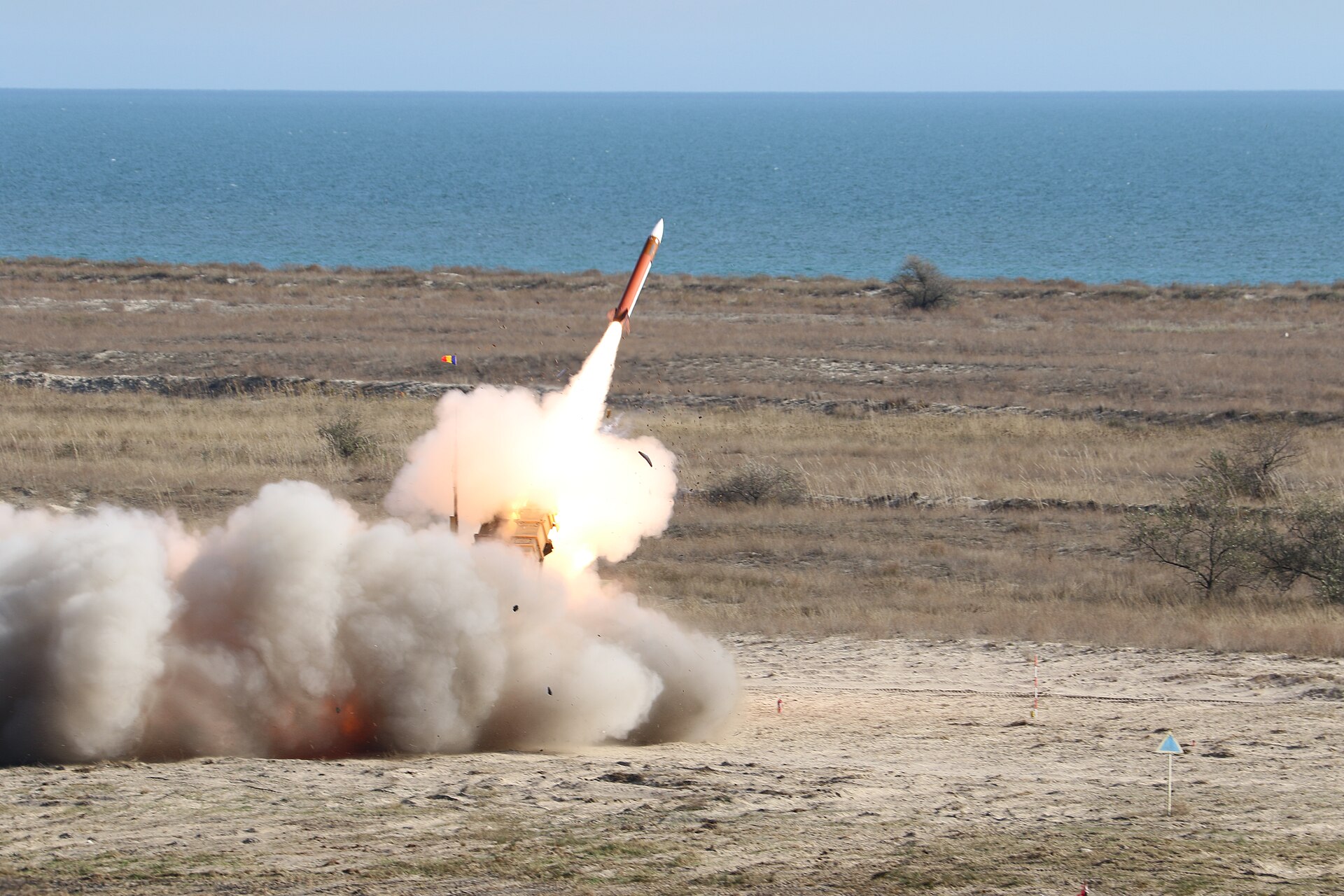
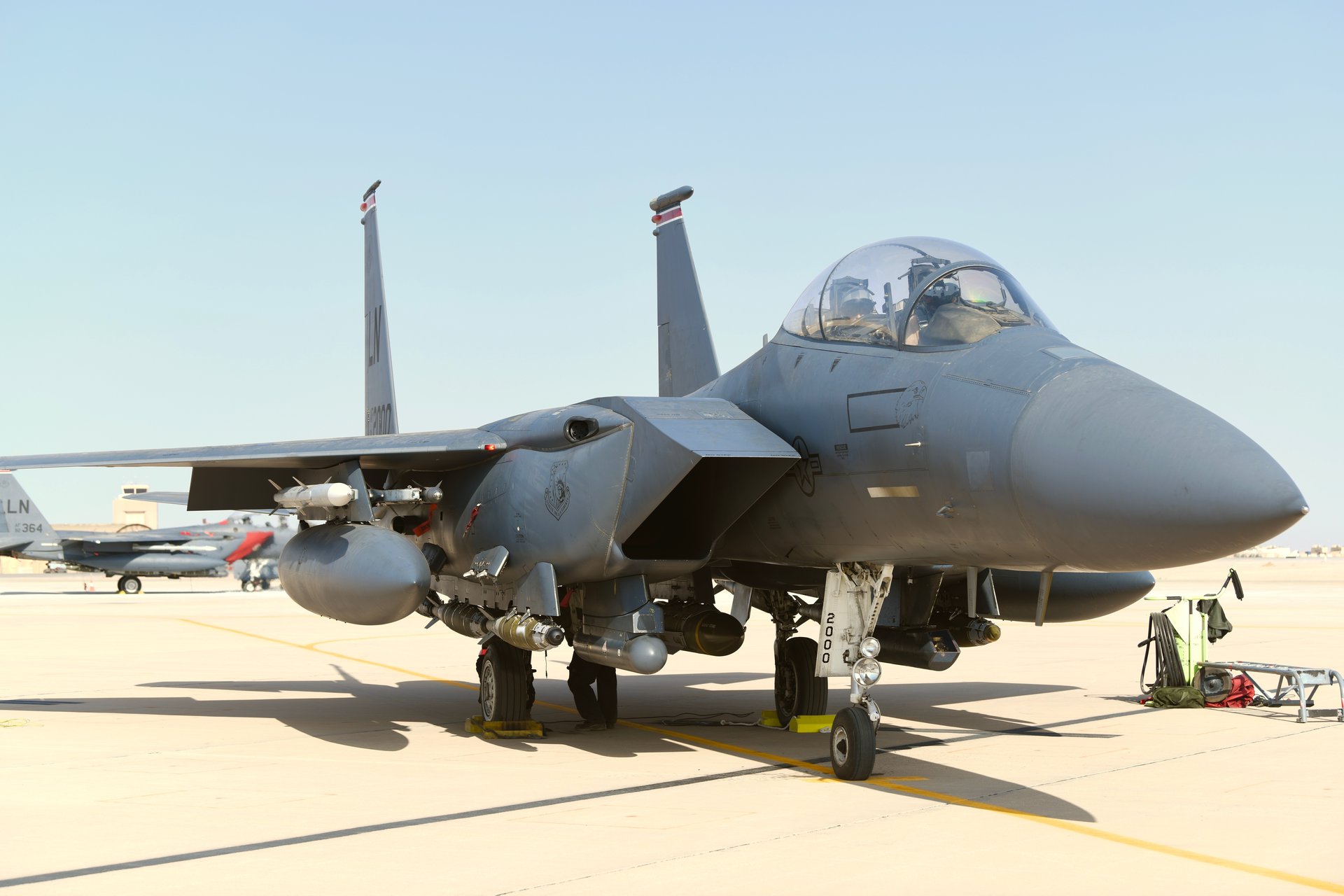
Saudi Arabia operates F-15SA Strike Eagles equipped with JDAM and JSOW precision-guided munitions at stand-off ranges exceeding 100 kilometers, as well as Eurofighter Typhoons carrying Storm Shadow/SCALP-EG cruise missiles with a published range of over 250 kilometers. The Royal Saudi Air Force also fields Chinese-manufactured Wing Loong II armed drones. Reuters did not specify platforms or munitions. The distance from Saudi Arabia’s nearest eastern air bases to Iranian coastal targets is approximately 200-300 kilometers — within stand-off weapons range without requiring aircraft to enter Iranian airspace.
Has any Saudi official publicly commented on the Reuters report?
No Saudi official has confirmed or denied the strikes as of May 12, 2026. The foreign ministry senior official asked by Reuters addressed other topics without responding to the strikes question — consistent with Saudi Arabia’s established practice of strategic non-denial on sensitive military operations. Prince Faisal bin Farhan has issued no public statement. The Saudi Press Agency carried no reference to the Reuters report. The pattern mirrors Israel’s long-standing policy of neither confirming nor denying strikes attributed to its forces in Syria and Iraq.
How does the disclosure affect the ceasefire framework?
The Islamabad Accord framework and subsequent US-Iran talks operated on the implicit assumption that Saudi Arabia was a non-combatant party available as a mediator. Pakistan’s coordination had positioned Riyadh as a stakeholder, not a belligerent, in the ceasefire architecture. Iranian hardliners — particularly the Vahidi-aligned faction within the SNSC — now have a public-record basis to argue that Saudi Arabia cannot serve as both combatant and honest broker. The ceasefire’s April 22 expiration and subsequent extensions were already fragile; the Reuters disclosure adds a structural objection that Iran’s more hawkish elements can deploy at any point they wish to exit a negotiating process.
What is Project Freedom?
Project Freedom was a US military operation planned for early May 2026 to reopen the Strait of Hormuz by force, involving naval escort of commercial shipping and potential strikes on IRGC naval assets blocking transit. NBC News reported the plan required access to Gulf air bases — particularly Prince Sultan Air Base, located approximately 90 kilometers south of Riyadh. Saudi Arabia’s denial of basing access and airspace effectively killed the operation in its planned form. As of May 12, no alternative staging configuration relying solely on US carrier groups and Diego Garcia has been publicly confirmed as operationally viable for the scope the Pentagon had envisioned.
Did Saudi Arabia coordinate its strikes with the United States?
Reuters did not report whether Washington had prior knowledge of the Saudi strikes. The NBC News report that Saudi Arabia communicated to Iran that its territory was “not used to attack Iran” suggests Riyadh drew a distinction between hosting US operations (denied) and conducting its own (apparently carried out). The Wall Street Journal’s reporting on the parallel UAE strikes on Lavan Island noted that Washington “positively received” Abu Dhabi’s action — phrasing that implies awareness after the fact rather than joint planning. No US official has publicly confirmed or denied prior knowledge of either Gulf state’s strikes.
The broker capital MBS accumulated through this period — declining to host US operations while conducting independent strikes — was converted into a direct strategic asset when he hosted the first US-Syria presidential meeting in 25 years. That manoeuvre is analysed in MBS Brokered the First US-Syria Meeting in 25 Years. The Prize Was Never Syria.