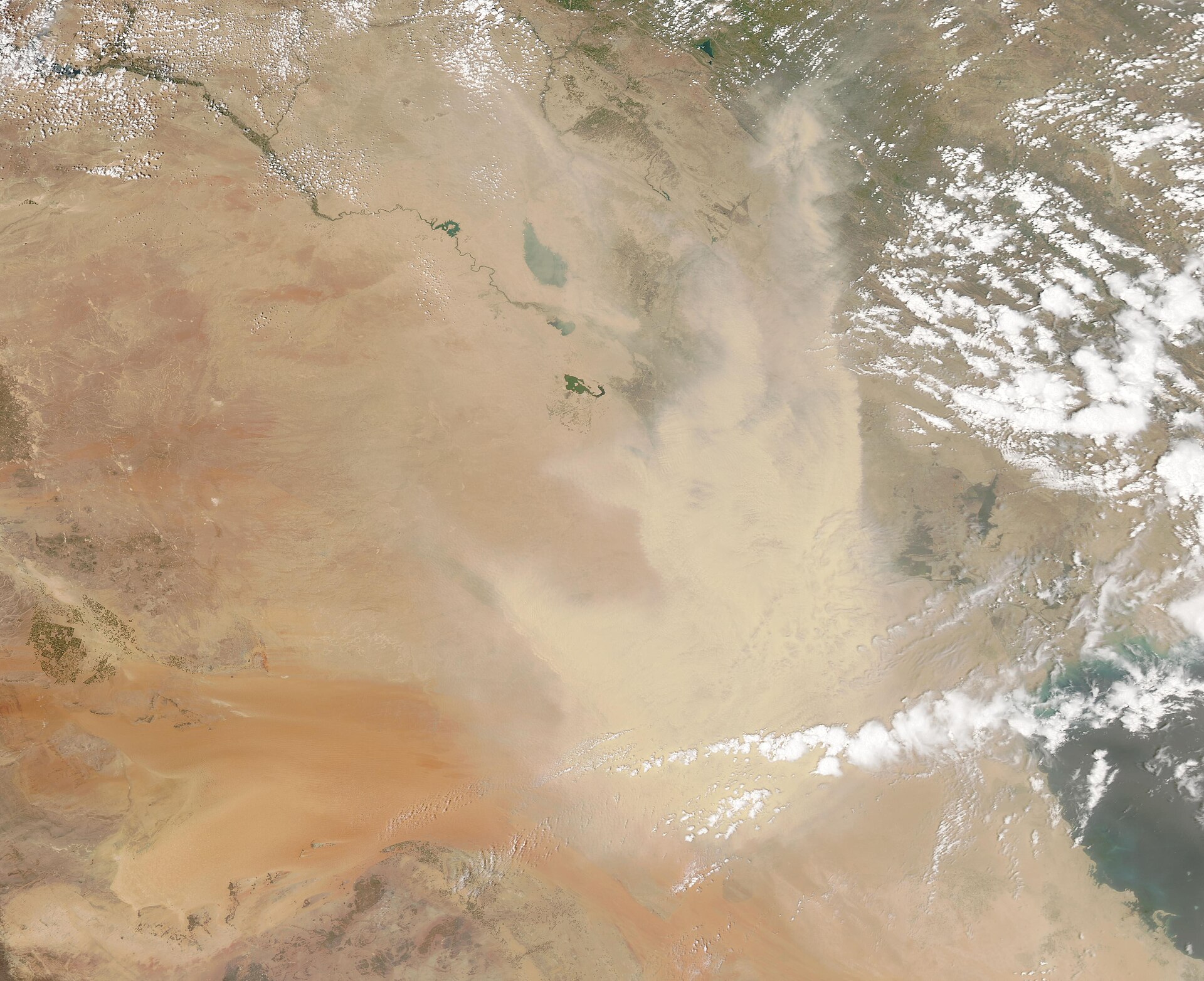

BAGHDAD — Three drones crossed from Iraqi airspace into Saudi Arabia on May 17. The same week, the Popular Mobilization Forces deployed across 52,279 square kilometers of western Anbar in an operation called “Imposing Sovereignty,” reaching the Arar border crossing and the dry lakebed where Israel had built a covert airstrip the United States had known about since June 2025. The three nodes share one corridor, one set of attribution problems, and a single 72-hour window before Trump’s May 19 National Security Council meeting on Iran strike options.
Maj. Gen. Turki Al-Maliki, the Saudi Ministry of Defense spokesman, said the Kingdom “reserves the full right to respond at the appropriate time and place.” He did not name Iraq. The omission is the story. Riyadh has spent eleven weeks absorbing roughly half of nearly 1,000 documented drone strikes from a neighbor it cannot publicly designate as the launch state without unraveling the same airspace architecture Washington needs functional for any strike against Iran. Baghdad’s prime minister cannot disarm the militias firing them because his government’s standing army includes the militias firing them.
Table of Contents
- The Corridor
- “Imposing Sovereignty” Was a Border Operation, Not a Counter-Israeli Operation
- The Attribution Trap: Why Riyadh Will Not Name Iraq
- What Did Washington Know About the Bases?
- Does the May 19 NSC Meeting Run Through Anbar?
- Baghdad’s Impossible Position
- Saudi Arabia Has Already Struck Inside Iraq
- Frequently Asked Questions
The Corridor
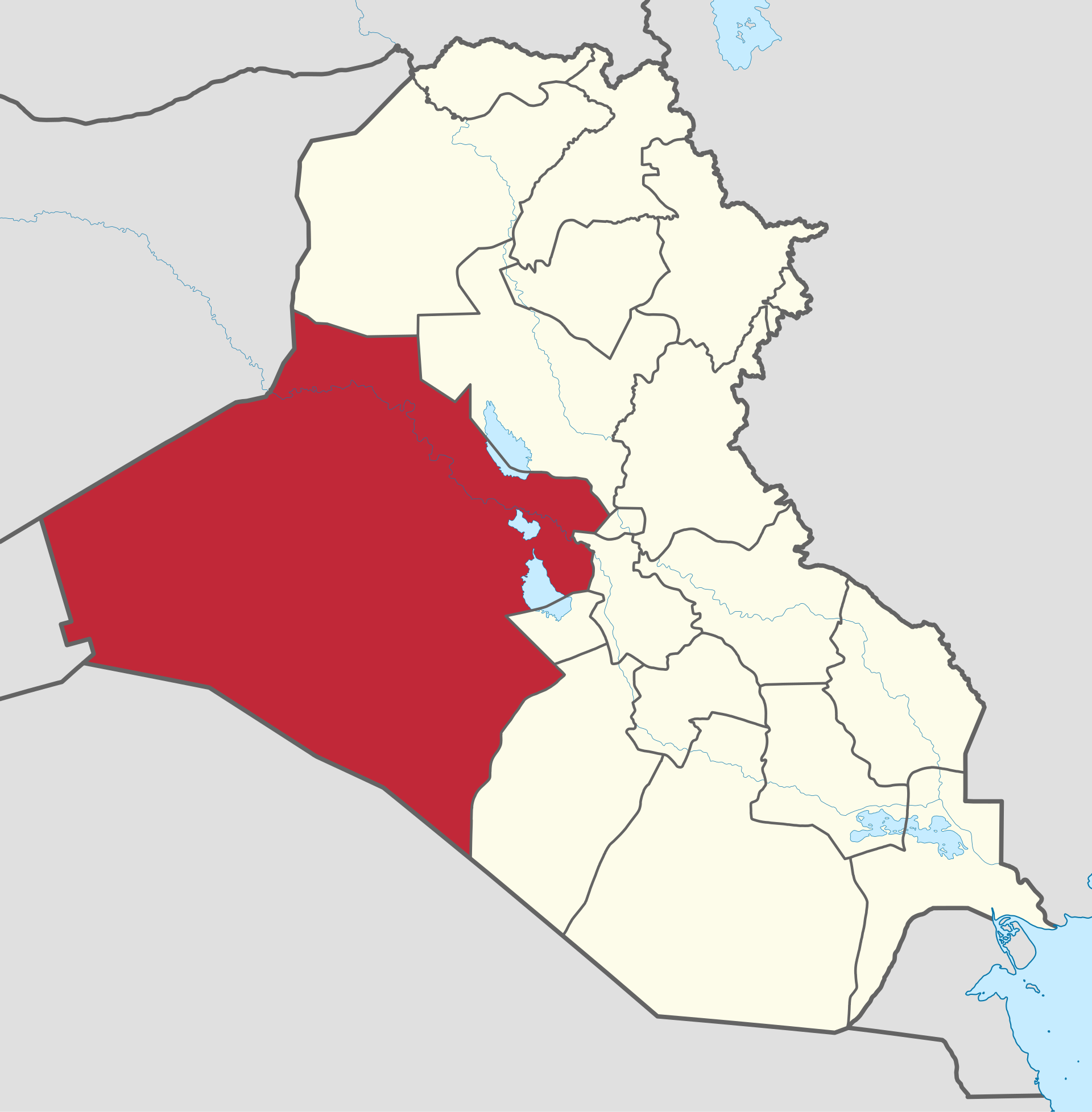
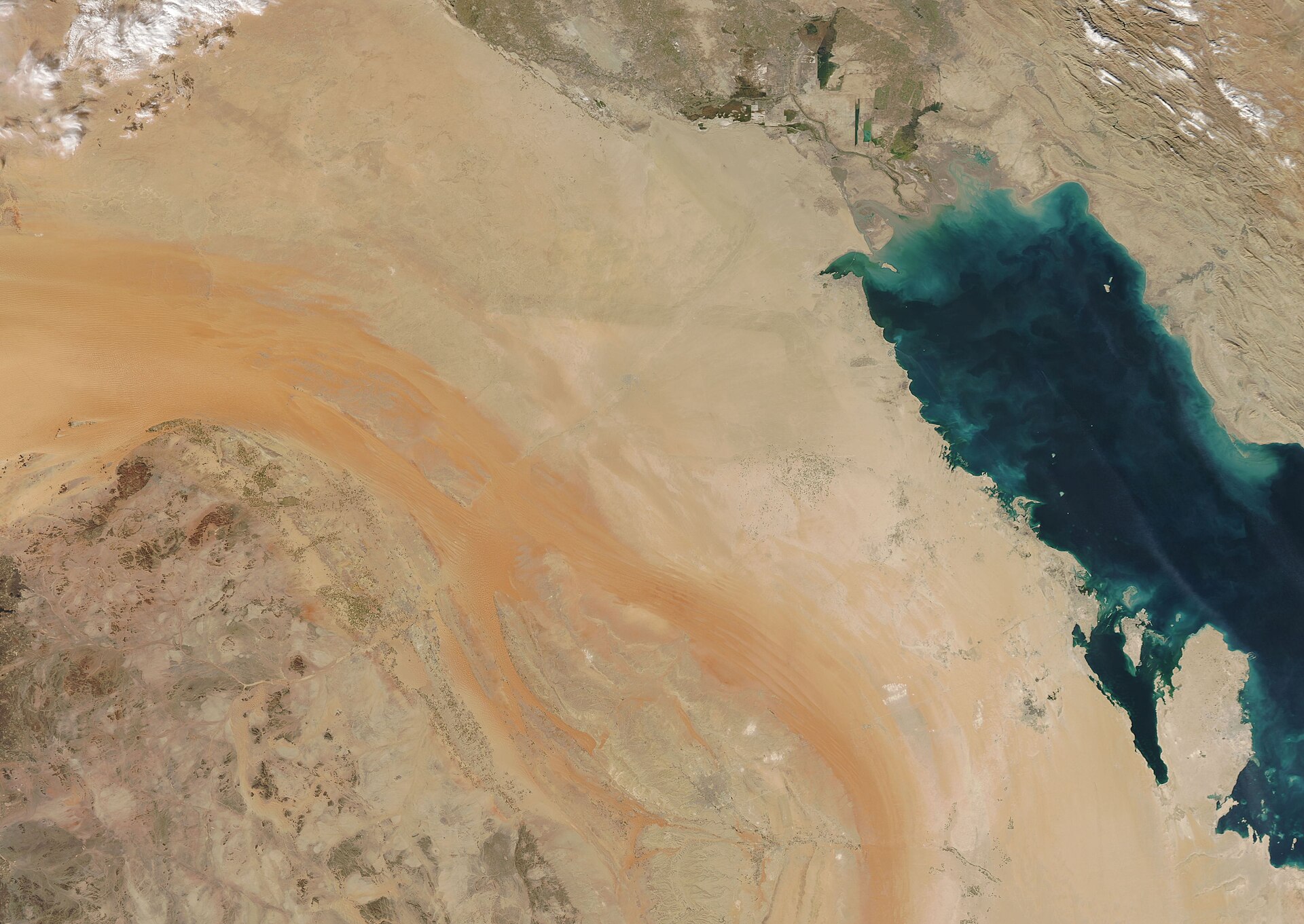
The drone arc runs from central Anbar to Saudi oil infrastructure at Ras Tanura, Jubail, and Shaybah — between 500 and 700 kilometers depending on launch point. The Wall Street Journal documented 454 attacks along that line since February 28, the dominant routing inside a wider campaign in which Saudi air defenses intercepted 894 projectiles over Eastern Province in the first 44 days of the war. Up to 500 of nearly 1,000 total drone strikes on the Kingdom since February 28, 2026 originated from Iraqi territory.
The geography forms a flattened triangle. At its northern apex is al-Nukhayb, the dusty subdistrict town where Israel carved a 1.6-kilometer airstrip into a dry lakebed at approximately 31.66777°N, 42.44849°E — 180 kilometers southwest of Najaf, and within drone range of Saudi territory. At the southwestern apex is the Arar border crossing, the only formal land link between Iraq and the Kingdom in the western desert. At the eastern apex are the loading terminals on the Gulf coast. The PMF’s “Imposing Sovereignty” sweep covers all three.
Ain al-Asad sits inside this triangle. The United States formally handed the airbase — the largest American facility in western Iraq throughout two decades of post-2003 operations — to Iraqi control on January 17, 2026, the last installation to transfer under the 2024 bilateral security agreement that required US forces to relocate to Kurdistan. Prime Minister Mohammed Shia al-Sudani has stated that all remaining coalition troops will depart by September 2026. Harir Air Base in Erbil is now the only declared US military presence in the country, and Baghdad’s writ does not run there.
The corridor’s operational logic was confirmed by two US strikes in March. On March 23-24, an American airstrike at Habbaniyah in Anbar killed Saad al-Baiji, the PMF’s Anbar operations commander. A second strike at Habbaniyah on March 25 killed seven fighters at a PMF military medical clinic. The strikes located the PMF’s western Iraq command infrastructure in the same geography that has now been formally folded into “Imposing Sovereignty” — and the PMF’s response was to declare that geography Iraqi sovereign space.
The Middle East briefing 3,000+ readers start their day with.
One email. Every weekday morning. Free.
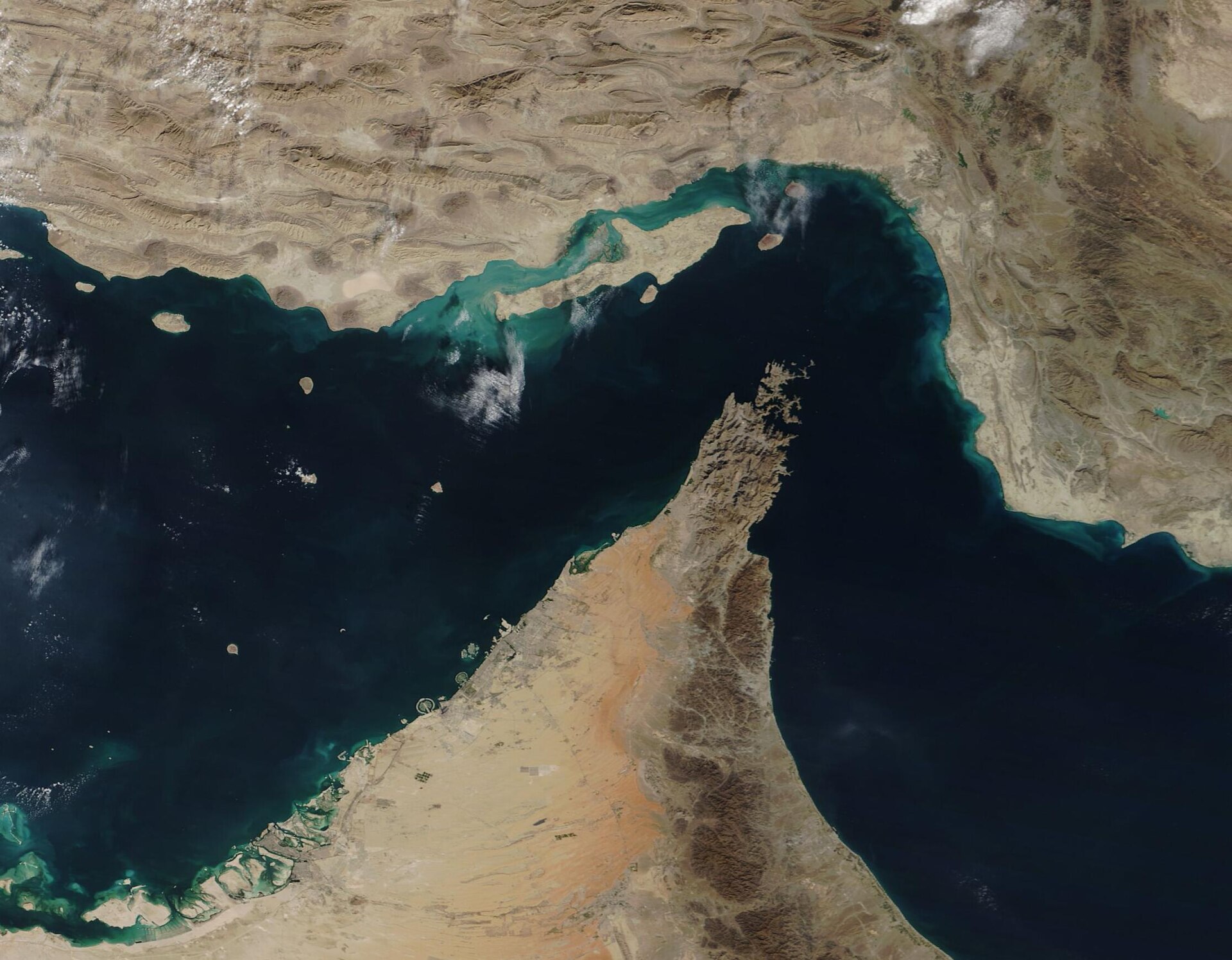
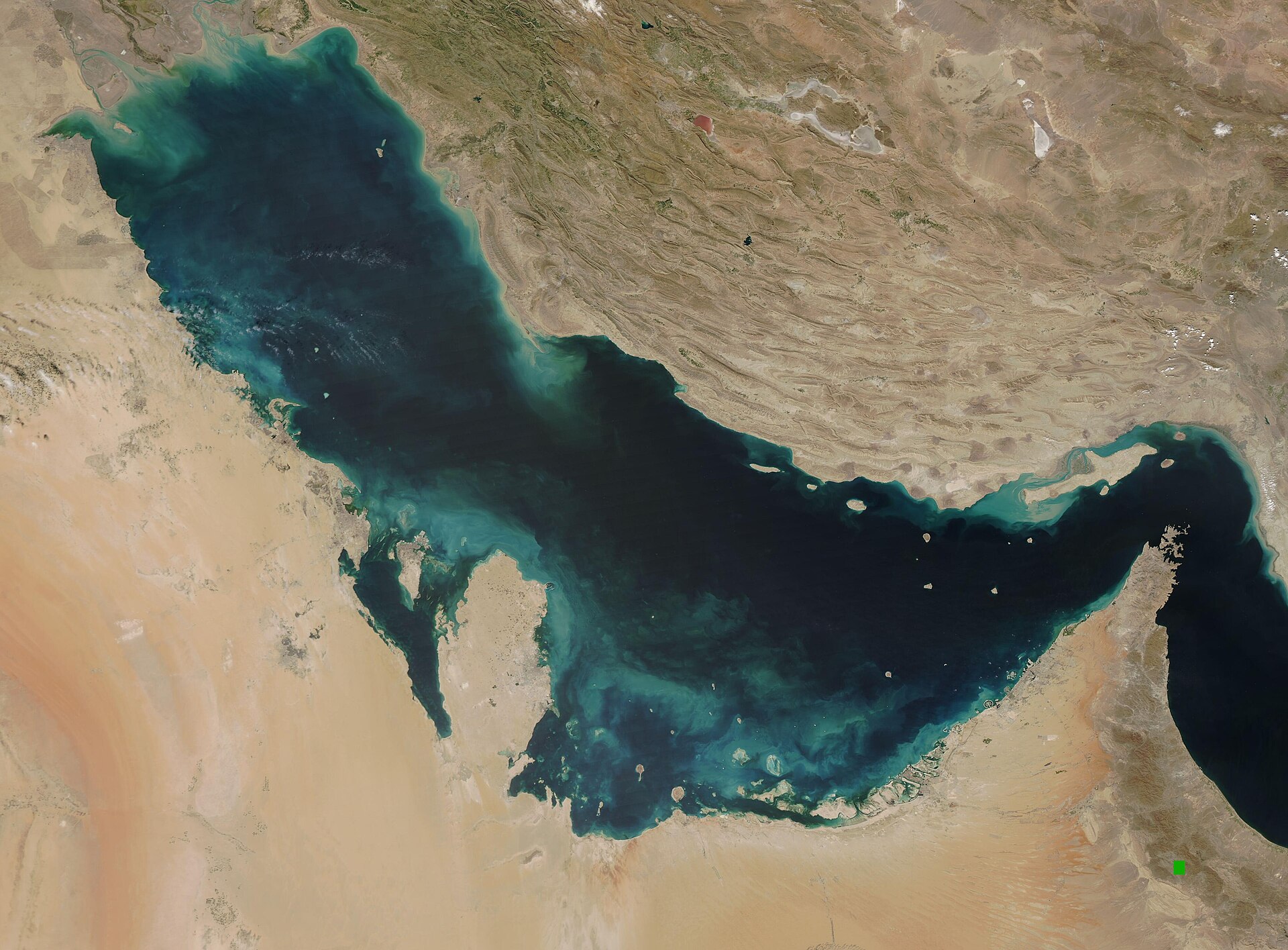
22,500 mariners remain trapped on more than 1,550 commercial vessels in and around the Strait of Hormuz as the Anbar drone corridor continues to function. The two geographies are not adjacent in the operational sense, but they are connected in the deterrence sense: every Saudi crude cargo that cannot route through Hormuz becomes a launch pricing event, and every Anbar-launched drone targets the alternative Yanbu and Eastern Province infrastructure that the war has left as the Kingdom’s only remaining export geography. The corridor is the second front because the first front is closed.
“Imposing Sovereignty” Was a Border Operation, Not a Counter-Israeli Operation
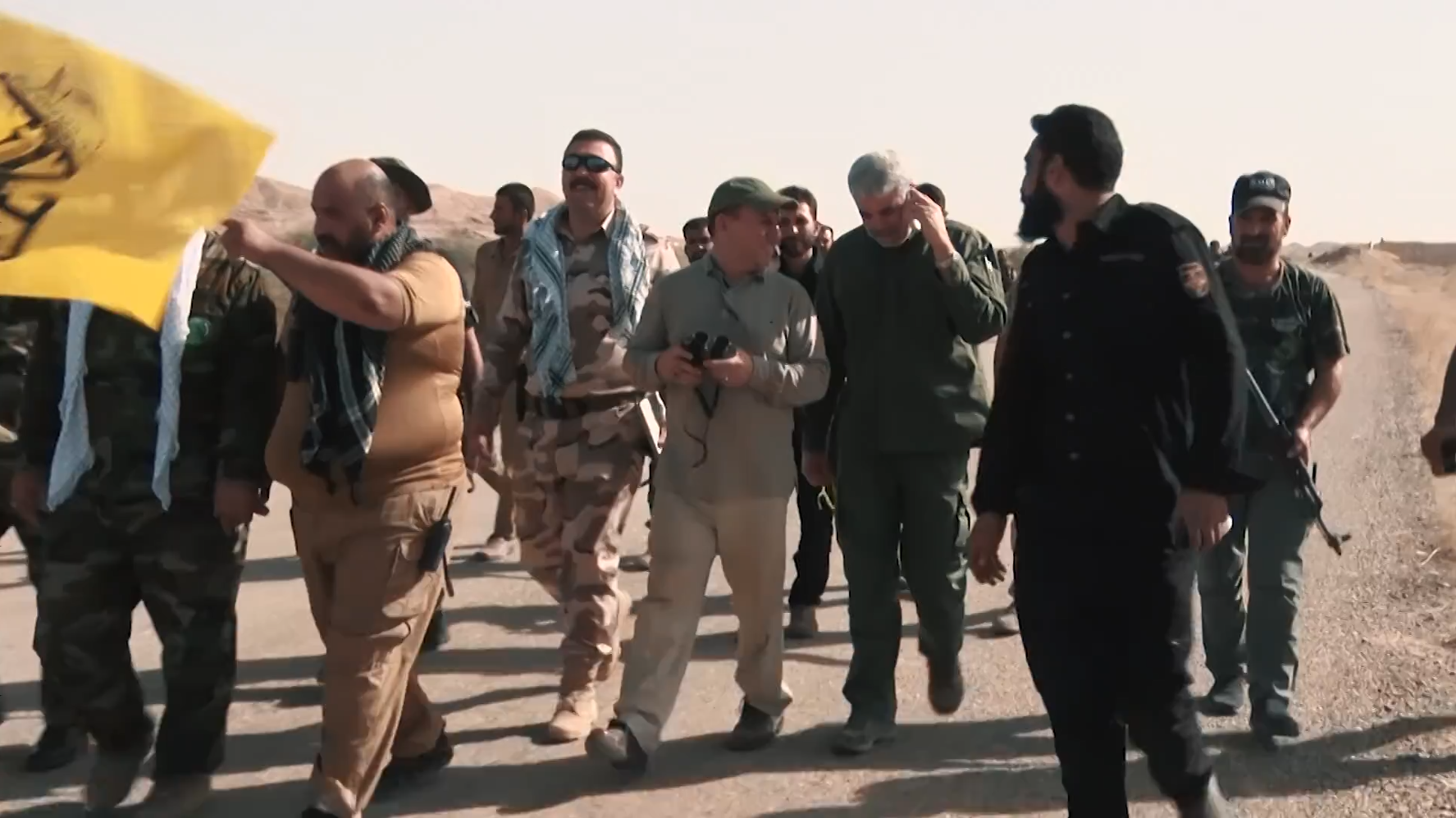
The PMF launched “Imposing Sovereignty” on May 12 across four operational axes between Karbala and al-Nukhayb. Middle Euphrates operations commander Ali al-Hamdani told reporters the sweep would “cover more than 120 kilometers” of desert. The PMF’s official statement put the cumulative area at 52,279 square kilometers. The Badr Organization’s 2nd Brigade was named as the lead formation. The stated trigger was the Wall Street Journal’s May 9 disclosure of the Israeli airstrip near al-Nukhayb.
Sajjad al-Asadi, the operation’s chief of staff, said PMF and Iraqi Army desert operations had launched following reports of what he called a “Zionist-American” airdrop in the area. Badr Organization MP Shaker Abu Turab al-Tamimi said on May 11 that an “American-Israeli” base remained active inside Iraq. The framing matters. PMF rhetoric treated the United States as a co-equal violator of Iraqi sovereignty alongside Israel — the same United States that holds the airspace deconfliction protocols any May 19 strike option would depend on.
The operation’s coverage area extends to the Arar border crossing. PMF formations have placed themselves astride the only formal Iraq-Saudi land corridor, in the same desert from which roughly half of the war’s drones against Saudi Arabia have launched. The Wall Street Journal disclosure did not produce this geography — it produced the rationale to occupy it. The PMF’s structural problem before May 9 was that its presence on the Saudi border had no public justification beyond the campaign against the Kingdom itself. After May 9, it had one — and a permanent one, because the Israeli intrusion is not a problem that can be politically closed.
The Ministry of Defense announces the interception and destruction of three drones after entering the Kingdom’s airspace from Iraqi airspace. The Kingdom reserves the full right to respond to this breach at the appropriate time and place.
Maj. Gen. Turki Al-Maliki, Saudi MoD Spokesman, May 17, 2026
The four-axis structure of “Imposing Sovereignty” mirrors the launch geography the WSJ mapped six weeks earlier. The Badr 2nd Brigade is the same Badr Organization whose political wing has spent the war demanding the United States be expelled from Iraqi territory. The operation’s nominal counter-Israeli objective is its weakest claim: an airstrip carved into a dry lakebed does not require the entire western desert to neutralize. What it needs is the rationale to stay there, and “Imposing Sovereignty” has provided it.
What the PMF operation actually covers
| Asset | Significance |
|---|---|
| Al-Nukhayb airstrip (31.66777°N, 42.44849°E) | 1.6 km Israeli runway in dry lakebed; ~180 km from Najaf |
| Arar border crossing | Only formal Iraq-Saudi land link in western desert |
| Habbaniyah area | PMF Anbar command node struck by US on March 23-25 |
| 52,279 sq km sweep | PMF-stated coverage area for four axes |
| 120 km stated length | Hamdani’s public figure for the desert axis |
| Badr Organization 2nd Brigade | Named lead formation; political wing demands US expulsion |
The Attribution Trap: Why Riyadh Will Not Name Iraq
Al-Maliki’s statement named Iraqi airspace as the vector but did not name an Iraqi actor. The omission is the diplomatic posture. The PMF is not an external militia. It is a state-recognized, state-budgeted institution that reports formally to the prime minister and whose senior officers draw salaries from the Iraqi treasury. Article 9 of the Iraqi constitution lists Iraq’s armed forces; the PMF is one of them. To name the PMF as the launch authority is to name Iraq.
That is the language Riyadh has not used since February 28. Saudi Arabia’s silence on Iraq attribution has been the loudest statement of the war. The Kingdom escalated diplomatically once — on April 12, when it summoned Iraqi Ambassador Safia Taleb al-Suhail and crossed into UN Charter Article 51 self-defense language for the first time in bilateral dealings with Baghdad. It has not crossed that threshold publicly since. The reason is that Article 51 is not a press release. It is a legal predicate for a state response against a state, and the state in question is one Saudi Arabia needs functional through the May 19 NSC cycle and through any operational follow-on.
UAE, Qatar, and Kuwait all condemned the May 17 attacks on Saudi Arabia. Qatar’s foreign ministry called the drone strikes “a violation of the Kingdom’s sovereignty, and a threat to its security and safety and to the security of the region.” The Kuwaiti foreign ministry went further, calling them a violation of “regional security agreements and United Nations resolutions protecting Gulf infrastructure.” None of the three named Iraq either. The collective silence is not a coincidence. The Gulf Cooperation Council’s posture is that the launch state cannot be designated until the Kingdom is prepared to absorb the consequences of doing so.
What the consequences look like is visible in the response to lesser provocations. Kuwait summoned Iran’s ambassador over the Bubiyan infiltration and stopped there. Riyadh’s instinct in 2026 is the same: escalate diplomatically, escalate covertly, do not escalate the attribution. The Saudi posture is the inverse of its pre-war Yemen rhetoric, in which Houthi attacks were named on the morning of impact. In this war, the launch states are unnamed by design — and Al-Maliki’s statement on May 17 named only the airspace, not the state it belongs to.
What Did Washington Know About the Bases?
The New York Times reported on May 17-18 that Israeli forces operated at least two covert bases in western Iraq’s desert for more than a year, used intermittently during Operation Rising Lion. The United States had known since June 2025 at the latest and took no steps to restrict the Israeli activity or inform the Iraqi government. The al-Nukhayb site reported by the Wall Street Journal on May 9 was the smaller and more recent of the two. A second, older facility had been operational since late 2024.
The cost of the silence has names. Awad al-Shammari, a Bedouin shepherd, was killed by an Israeli helicopter on March 3 after stumbling onto one of the bases. When the Iraqi army sent a reconnaissance unit toward the site, an exchange of fire killed one soldier and wounded two more. These are the facts that the Iraqi public has now absorbed: a NATO ally’s air force fired on Iraqi territory, killed an Iraqi civilian and an Iraqi soldier, and was concealed by the United States from the government the United States is officially partnered with through the SOFA framework.
i24NEWS characterized the WSJ scoop as a “deliberate strategic reveal.” The phrasing implies intent and timing: ten days before the May 19 NSC meeting on Iran strike options, with the Israeli ground footprint inside Iraq becoming the kind of established fact that no Iranian-aligned parliamentarian could ignore. The PMF’s “Imposing Sovereignty” launched 72 hours later. The sequence reads as predictable rather than accidental — if the disclosure was intended to harden the political environment for further US-Israeli operational coordination, it has done the opposite. It has produced an Iraqi paramilitary deployment that now sits between any US-Israeli operation and the Iranian border.
Mustafa al-Kadhimi, the former Iraqi prime minister, wrote on May 11: “If the reports about a secret military base in the Najaf desert are true, then we are faced with a grave breach that undermines Iraq’s sovereignty.” Kadhimi led the government that signed the strategic framework agreement with the United States in 2020. He is now the polite end of the political spectrum on this issue. The unpolite end is in Karbala and Najaf, where IRGC-aligned clerics have demanded Sudani name the Americans who knew.
Does the May 19 NSC Meeting Run Through Anbar?
The NSC convenes Tuesday to consider military action against Iran. The 14-hour diplomatic sequence on May 18 — Trump’s annihilation threat followed by the sanctions waiver that arrived the same day — will be the opening frame for any discussion of whether Iran is negotiating in good faith. Options on the table include restarting “Project Freedom” — the US naval escort mission in Hormuz — and resuming airstrikes against the estimated 25 percent of identified Iranian targets that survived Operation Rising Lion. Israel has separately pushed a special forces mission to secure Iran’s enriched uranium stockpile. The corridor problem touches every option.
Any US strike against targets in western Iran traverses Iraqi airspace. Ain al-Asad is no longer a US base; Harir in Erbil is the only declared American military presence in the country, and Erbil sits well outside the western-axis corridor any strike package against Khorramabad, Hamadan, or Kermanshah would need. Tanker tracks for any sustained western-axis operation route through central Anbar — the same airspace beneath which the PMF has just declared its sovereignty operation. Iraqi airspace has not been technically denied to US assets, but the political cost of using it has just risen.
The Israeli special-forces option compounds the problem rather than solves it. The two bases the WSJ and NYT confirmed are exactly the kind of staging facility a uranium-seizure mission would need. They are now the subject of a PMF operation explicitly tasked with their neutralization. Tel Aviv’s most plausible insertion geography has been declared an operational target by an Iranian proxy force sitting on Saudi Arabia’s border, and Washington’s role in concealing the bases from Baghdad is on the public record before any decision has been made.
Saudi Arabia has already grounded American air power once. The mechanism was simple: deny basing access. The corridor problem is the second mechanism. Even if Riyadh reverses its veto on US assets operating from Saudi soil, the airspace north of those bases now runs through a desert occupied by a force whose political wing has spent the war demanding US expulsion. The NSC can vote Tuesday. The aircraft will still have to cross Anbar. The decision calculus the Situation Room applied when it convened May 19 — and why Iran’s modified proposal arrived with the nuclear file entirely absent — is examined in Iran’s 14-Point Proposal Left Out the Nuclear File. The NSC Met Anyway.
Saudi Arabia conducted covert airstrikes on Iranian-backed Iraqi militias near the Iraq-Saudi border during the early weeks of the war, according to a Reuters investigation published May 13-14. Kuwait conducted similar strikes at least twice, one of which killed fighters and destroyed a Kata’ib Hezbollah facility. The strikes were not announced, not confirmed, and not denied. They were the pattern Al-Maliki was describing on May 17.
The language is not a diplomatic formula. It is a description of operations already underway. The pattern is covert, cross-border, and bilateral — Riyadh against PMF formations in Iraq, Kuwait against PMF formations near its own border. The Reuters disclosure folds the May 17 incident into a sequence rather than treating it as a triggering event. “The appropriate time” has been five separate weeks of 2026. “The appropriate place” has been the same Anbar corridor the PMF now claims to be defending.
Baghdad’s Impossible Position
Prime Minister Sudani has described the PMF as “a fundamental component of the national security system.” He has also said publicly that Iraq cannot disarm armed factions until the US-led coalition has fully withdrawn. Both statements are constitutional and political truths — and both are the structural trap. The PMF reports to Sudani by law and to the IRGC by operational practice. He has formal authority and zero operational reach.
The Soufan Center described Iraq as “unable to avoid the U.S.-Iran crossfire.” Foreign Policy’s April 7 framing was sharper: weak sovereignty leaves the country vulnerable to spillover. Both formulations understate the case. Iraq is not a passive theater for a regional war. It is the only state in the war that has been bombed by the United States (PMF strikes), used as covert staging by Israel (two bases), bombarded by Iran and its proxies (cross-border missile fire), and is now hosting an indigenous paramilitary operation on the Saudi border — all simultaneously, and all under the same prime minister.
FPRI documented over 500 attacks “conducted against targets inside Iraq or launched from Iraqi territory” since late February 2026. Sudani’s government has not condemned the launches. It has not condemned the US strikes either. The silence runs in both directions because the alternative is breaking with one of the two patrons whose continued tolerance keeps his coalition intact. Saudi Arabia’s second drone front is Iraq, and Baghdad has been unable to acknowledge the first front either.
He commands the army that includes the militias firing the drones that prompt the strikes that target his own commanders on his own territory. The September 2026 coalition withdrawal deadline is his sole remaining lever, and he cannot move it forward without removing the protection it provides against a deeper Iranian-aligned takeover of state security. The Badr Organization’s 2nd Brigade is now positioned at the Saudi border with the prime minister’s formal, constitutional authority over it and none of his operational authority over it.
Sudani’s coalition partners include the State of Law bloc led by former prime minister Nouri al-Maliki, the Sadiqoun bloc affiliated with Asa’ib Ahl al-Haq, and the Badr bloc whose military wing led “Imposing Sovereignty.” His parliamentary majority requires the same political formations whose paramilitary wings have spent the war firing drones at Saudi Arabia. He cannot dismantle the architecture that fires the drones without dismantling the coalition that keeps him in office.
Saudi Arabia Has Already Struck Inside Iraq
The Reuters investigation — five separate weeks of covert Saudi and Kuwaiti strikes, none claimed, none denied — sits in the diplomatic category that Al-Maliki’s statement was built to describe. Riyadh is not threatening a future response — it is describing an existing posture in language calibrated to give Baghdad space to claim the strikes did not happen. Sudani cannot acknowledge Saudi airstrikes on Iraqi territory without confronting a force he cannot defeat. Saudi Arabia cannot acknowledge the airstrikes without invoking Article 51 against a government it needs through the May 19 cycle. Iran has restored 91% of its Hormuz missile sites during the ceasefire, and Riyadh’s Eastern Province remains the primary target geography regardless of which corridor the drones come from. Saudi Arabia’s primary near-term defensive offset is the 8,000-troop Pakistani deployment to King Abdulaziz Air Base, including 16 JF-17 Block III fighters and a Chinese HQ-9 air-defense battery, which became the first confirmed activation of the SMDA mutual defense pact on May 18.
The May 17 intercepts changed the bilateral arithmetic in one specific way. The three drones crossed 48 hours before the NSC meeting, with the PMF deployed at the Arar border crossing, the Israeli bases confirmed and disclosed, and Baghdad’s political environment too inflamed for Sudani to absorb further escalation without losing parliamentary support. The window for covert Saudi response narrowed. The window for overt Saudi response did not open.
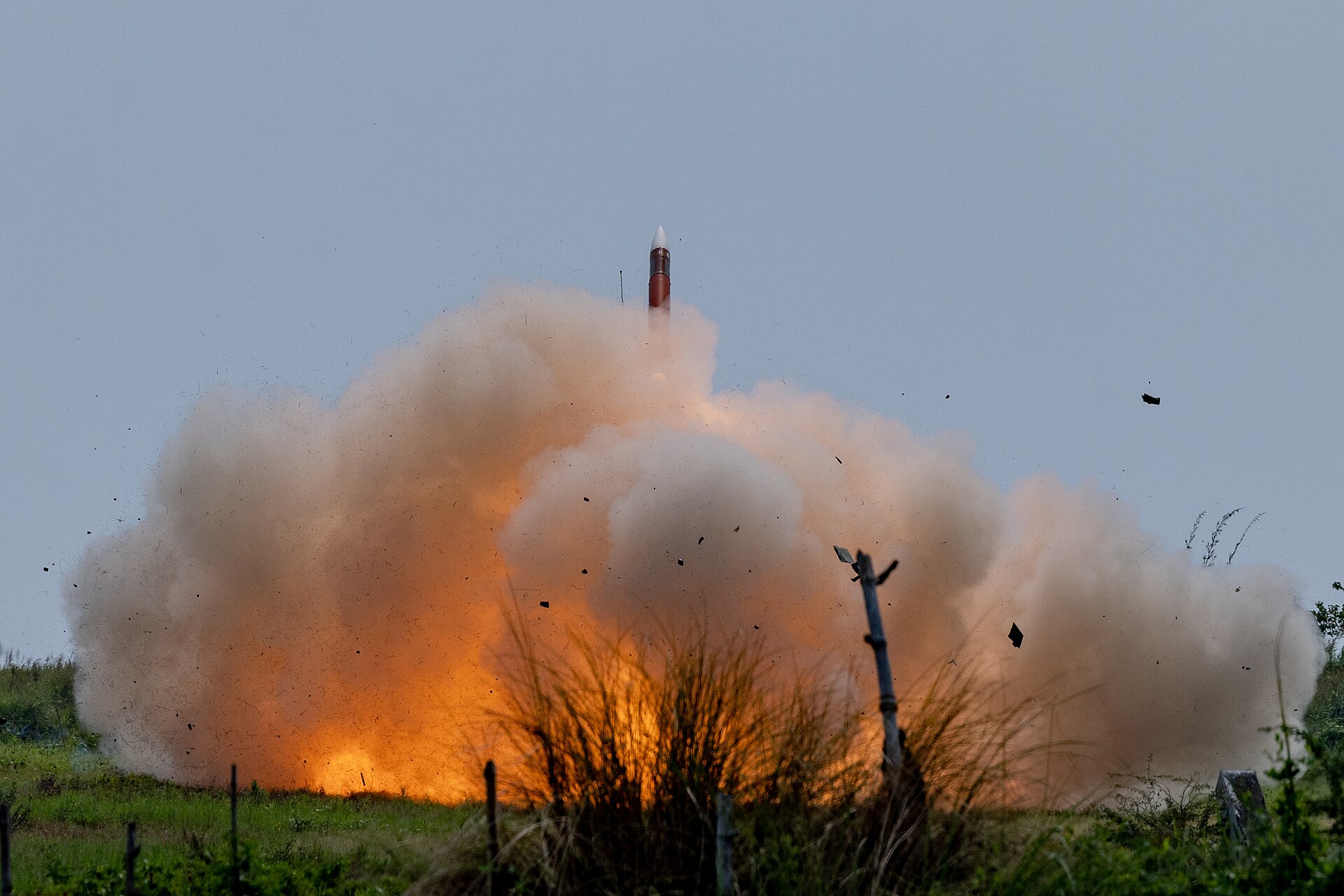
Al-Maliki’s statement reads as restraint. What the Reuters investigation shows is that the restraint is not strategic patience — it is operational concealment of action already taken. The covert strikes have continued for at least five weeks without tipping into public acknowledgment. Three drones crossed on May 17. The PMF is at the Arar crossing. The NSC votes Tuesday.
Frequently Asked Questions
What happens to the SOFA framework if Iraqi airspace becomes a war zone again?
The 2024 US-Iraq bilateral security agreement contains no contingency for renewed combat operations from Iraqi territory after January 17, 2026. Sudani’s September 2026 withdrawal deadline assumes the coalition’s combat role has ended. Any US strike package routed through Anbar reopens that question and creates parliamentary cover in Baghdad for accelerating the withdrawal to a date earlier than September. Iraqi defense officials have circulated draft language inside the cabinet for a June reassessment of the airspace deconfliction protocols.
Why has the PMF not been formally sanctioned by the United States?
Individual PMF commanders and brigades have been sanctioned under Executive Order 13224 since 2019. The umbrella organization has not been designated because doing so would force the Treasury Department to designate a constitutionally recognized component of an allied state’s armed forces — a precedent the State Department has consistently refused to set since the Mahdi era. The Biden and second Trump administrations both reviewed and rejected umbrella designation in 2023 and 2025 respectively.
What is the relationship between the Arar crossing and the Bayji-Haditha logistics route?
Arar is the only formal Iraq-Saudi land crossing in the western desert. It reopened to commercial traffic in 2017 after a 27-year closure following the 1990 Iraqi invasion of Kuwait. The Bayji-Haditha logistics route runs north-south along the Euphrates and feeds into the western-axis corridor that “Imposing Sovereignty” now covers. PMF formations along that route have been involved in cross-border smuggling since 2018 and provide the supply tail for the drone launch sites the WSJ has mapped.
Has the Iraqi parliament voted on the Israeli base disclosure?
The Council of Representatives held an emergency session on May 13 in which the State of Law Coalition introduced a motion demanding Sudani publicly identify the US officials who concealed the Israeli base presence from Baghdad. The motion passed a procedural vote 167-94 but was tabled for further investigation rather than referred for binding action. A second motion calling for accelerating the September 2026 coalition withdrawal to July 2026 remains in committee.
What is the Khatam al-Anbiya HQ’s role in PMF operational direction?
The IRGC’s Khatam al-Anbiya Construction Headquarters is the financial and logistics conduit for IRGC operations in Iraq through its Iraqi subsidiary networks. Mohammad Reza Zolghadr, the SNSC-designated official who has been a key node in the Iran war ceasefire architecture, holds an advisory role at Khatam. PMF Anbar operations were funded through Khatam-linked Iraqi shell companies until the March 23-24 US strike at Habbaniyah killed Saad al-Baiji, which prompted an audit of the funding network that has not yet been completed.