
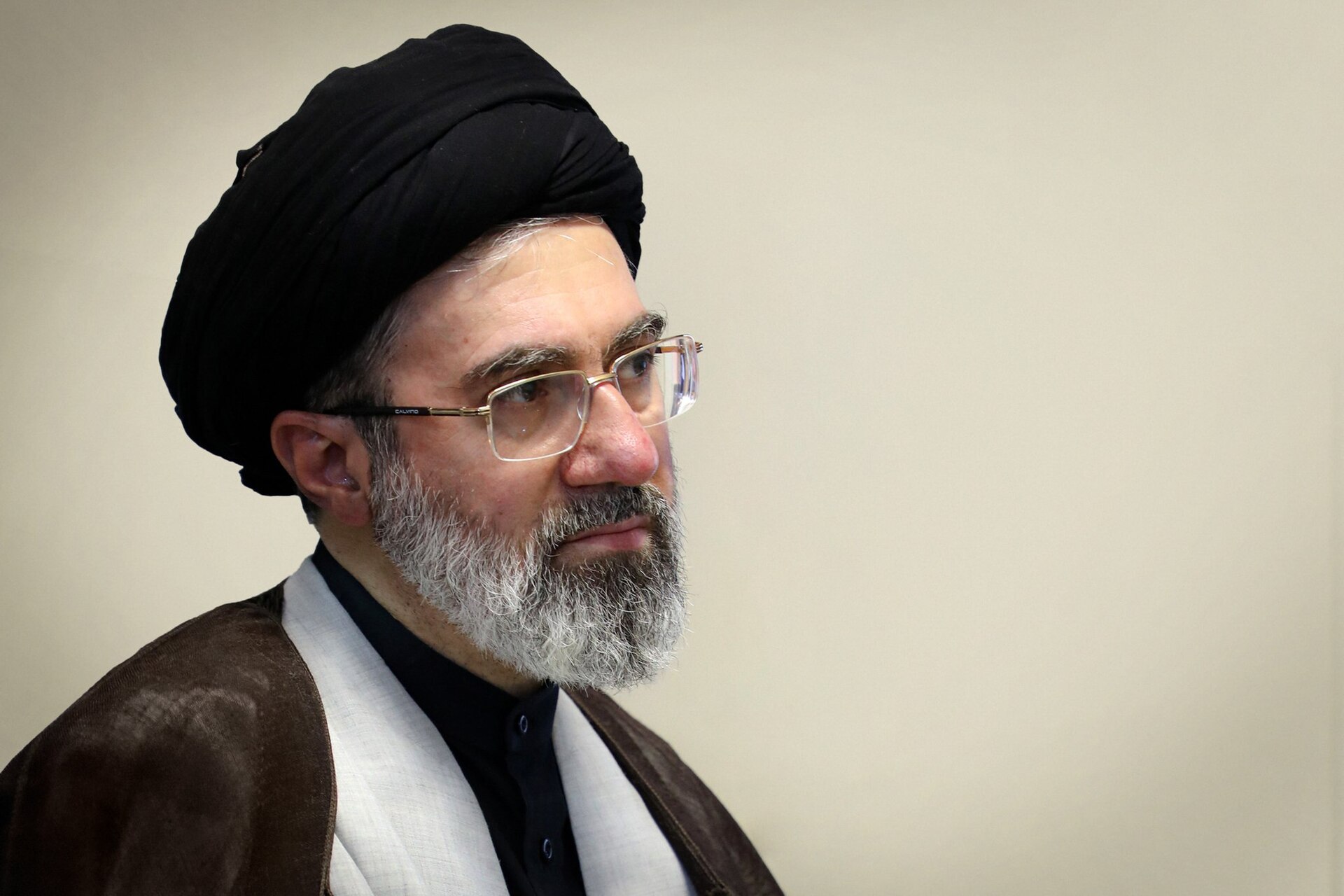
RIYADH — Mojtaba Khamenei, Iran’s Supreme Leader since March 9, released a 14-page written statement on the Day of Arafah declaring that Gulf states hosting US military bases serve as “shields for American” aggression. The formulation — categorical, unnamed, permanent — amounts to a co-belligerency accusation against every GCC state with US forces on its soil. No Gulf capital has acknowledged the document or rebutted its framing.
The statement, issued May 26 during Hajj, is Mojtaba’s first major public pronouncement in 79 days of office. It landed the same day CENTCOM struck Iranian positions near Bandar Abbas, the same day Iran’s negotiating delegation departed Doha without signing the nuclear MOU, and while Saudi Arabia’s Ministry of Foreign Affairs was entering its eighth consecutive day of silence.
“The nations and lands of the region will no longer serve as shields for American bases.” The sentence covers Saudi Arabia, Qatar, Bahrain, the UAE, and Kuwait simultaneously without naming any of them. Nasser Arasteh, deputy head of the Supreme Leader’s military advisory body, issued the operational translation hours later: “The United States will have no place in the Persian Gulf, and this will be realised either with war or without war.”
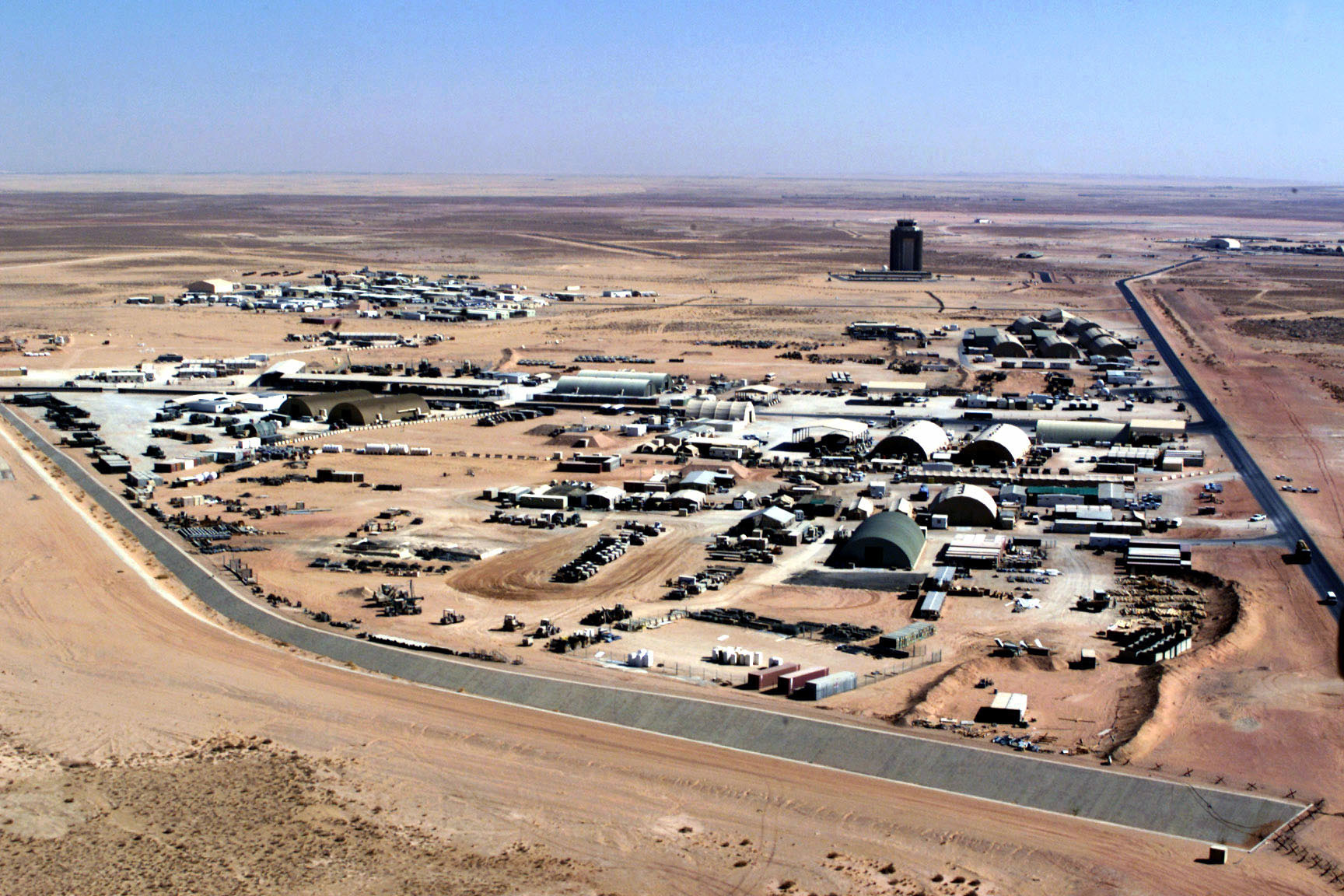
Table of Contents
- The Written Format as Doctrine
- What Does the Basing Language Actually Say?
- From Vulnerability to Co-Belligerency
- The Arasteh Corollary
- Why Did Mojtaba Inherit His Father’s 15-Year Clock?
- PSAB and the $142 Billion Dependency
- How Does Iran’s Own Media Frame the Document?
- What Happens When a Doctrine Goes Unanswered?
- Frequently Asked Questions
The Written Format as Doctrine
Ali Khamenei delivered Hajj messages as speeches for thirty-six years. They were occasions for rhetorical performance — broadcast, translated, compressed into wire-service summaries that stripped context and tone. Mojtaba has changed the medium. Every communication since March 9 has been written. He has not appeared in public. CBS reported in late May that “even senior Iranian officials don’t know where he is.”
The 14-page Hajj message extends the pattern and establishes its purpose. A speech can be softened in translation, recontextualised by delivery, walked back through intermediaries who claim the speaker was misunderstood. Fourteen pages of written text are a permanent artifact — citable in diplomatic communications, invocable in legal proceedings, referenceable at the UN Security Council. The prose is measured in a way extemporaneous remarks cannot be.
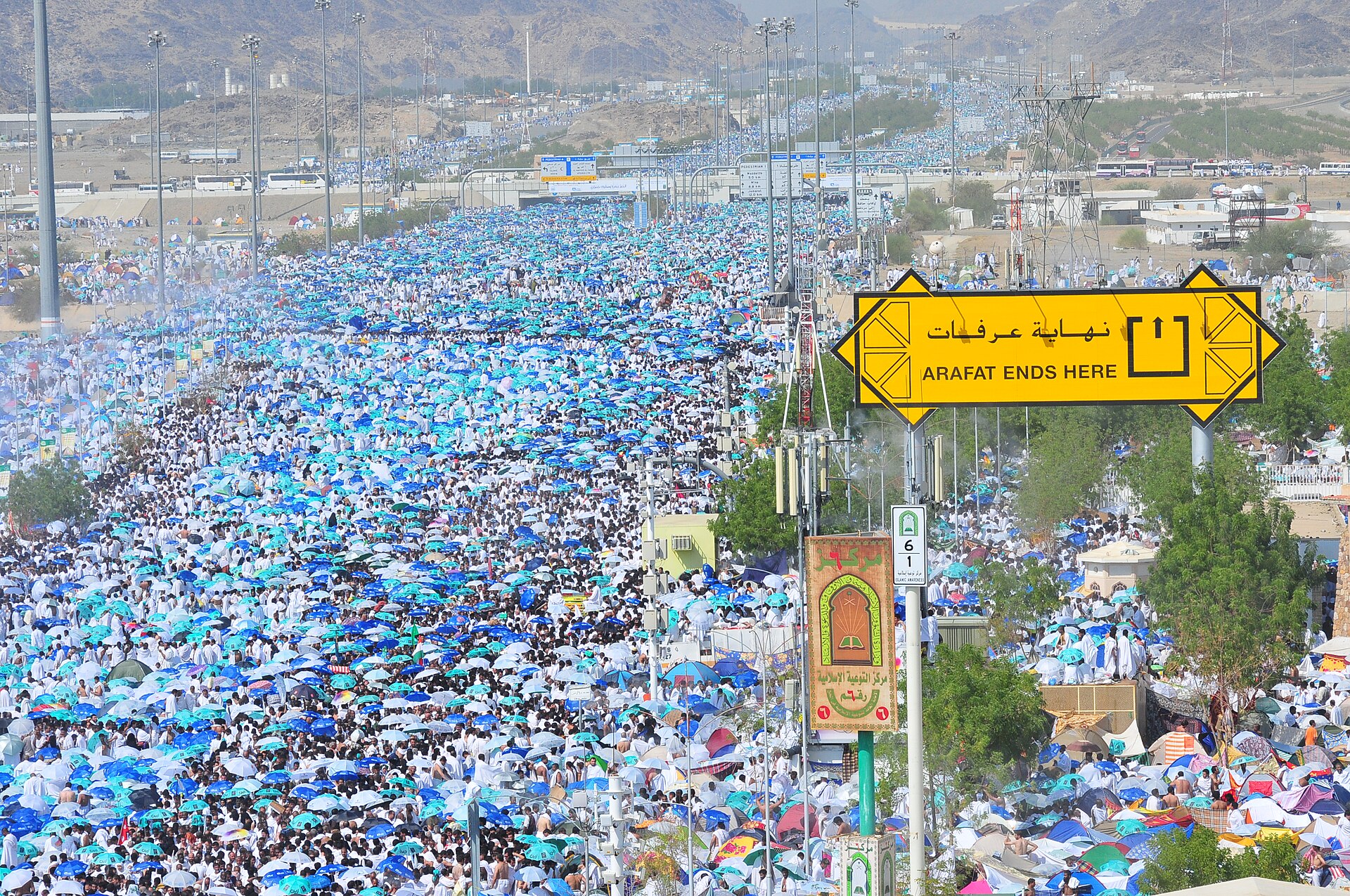
Timing is part of the format. Arafah Day — when over two million pilgrims stand on the plain of Arafat — is the holiest day of the Islamic calendar and the moment when Muslim attention globally is most concentrated. Mojtaba chose that audience for a document accusing Muslim governments of facilitating aggression against a Muslim country. He released it while those governments’ citizens were performing the rites of Hajj, under Saudi custodianship, in Mecca.
The Middle East briefing 3,000+ readers start their day with.
One email. Every weekday morning. Free.
The combination — written, permanent, released on the holiest day, by a leader who has never been seen — produces a document that functions less as a political speech than as a standing order. It will remain in Taghrib News’s archive, in Iran’s diplomatic record, and in the institutional memory of the Supreme Leader’s office long after the news cycle turns.
What Does the Basing Language Actually Say?
The central passage of Mojtaba Khamenei’s 14-page Hajj message reads: “The hands of time will not turn backwards, and the nations and lands of the region will no longer serve as shields for American bases.” The construction is categorical and passive — it presents Gulf basing as a historical condition already ending, not a demand being imposed on host states.
“Will no longer serve” — not “must stop serving,” not “we will ensure they stop serving.” PressTV’s editorial line is consistent with this reading, casting the basing language as describing “irreversible historical trajectory” rather than issuing an ultimatum.
A second formulation reinforces the architecture: “The US, in addition to no longer having any safe haven in the region for aggression and the establishment of military bases, is moving further and further away from its former position with each passing day.”
The word “aggression” carries the legal weight. If US bases in the Gulf are instruments of aggression, states providing territory for those bases are facilitating it. Under international humanitarian law — the ICJ’s 1986 Nicaragua ruling, the International Law Commission’s Articles on State Responsibility (Article 16) — a state that knowingly provides its territory for military operations against a third state bears legal responsibility for those operations. Mojtaba does not use the term “co-belligerency.” The legal framework does not require him to.
India.com’s coverage made the implication explicit, reporting that Iran “is sending a clear message to neighboring nations — such as Saudi Arabia, the UAE, and Qatar — that if they permit the American military bases located within their territories to be used against Iran, Iran will show them no mercy.” The phrasing appears to be editorial gloss, not verbatim from the document. It names what the document implies without stating — Saudi Arabia, the UAE, and Qatar listed as direct addressees of a text that was architected to avoid naming them.
From Vulnerability to Co-Belligerency
Ali Khamenei’s doctrine on US Gulf presence was consistent across 36 years: American forces are unwelcome, vulnerable, and destined to leave. The target was always the US military itself, not the legitimacy of host governments. “The Persian Gulf is the home of the nations of the region, not of American soldiers” — a representative formulation from his tenure — assigned US forces the status of intruders without assigning host states the status of accomplices.
Mojtaba’s Hajj message moves the target. “Nations and lands of the region will no longer serve as shields for American bases” reassigns agency from the US military to the governments that provide it territory. The states are not victims of American deployment. They are shields — active participants in what the document labels aggression.
The escalation has a documented two-step sequence.
| Date | Occasion | Addressee | Formulation |
|---|---|---|---|
| April 30 | Persian Gulf Day | United States | US’s only place is “at the bottom of its waters” |
| May 26 | Day of Arafah (Hajj) | Gulf host states | “Nations and lands… will no longer serve as shields for American bases” |
Naval presence is illegitimate (April 30). Land basing constitutes complicity in aggression (May 26). Each statement written. Each timed to a symbolic date. Each delivered by a Supreme Leader who has never appeared in public and who communicates exclusively through courier. The two documents read together form a complete doctrinal position: the US has no right to be in the Gulf, and the states that house its forces share responsibility for what those forces do.
The Arasteh Corollary
“In the future, the United States will have no place in the Persian Gulf, and this will be realised either with war or without war.”
— Nasser Arasteh, deputy head of the Supreme Leader’s military advisory body, May 26, 2026
Arasteh is not IRGC, not Foreign Ministry, not a parliamentarian seeking headlines. That position — within the direct chain of command from Mojtaba’s office — means that when his deputy says US expulsion “will be realised,” he is translating doctrine into planning language.
The “or without war” clause does the operational work. It signals that Iran’s strategy for US expulsion encompasses both military pressure and the slower process of political erosion — making the cost of hosting US forces exceed the cost of expelling them for each individual Gulf state. CENTCOM strikes on Iranian positions May 25–26 were launched from facilities on Saudi and Qatari soil. Saudi Arabia was not consulted before those strikes. The strikes demonstrated what “with war” already looks like for host nations: US military operations conducted from your territory, against your preferences, drawing you into a conflict you did not choose.
Arasteh’s statement was issued in amplification of the Hajj message, on the same day, through the same institutional ecosystem. The Supreme Leader’s office released the doctrine. The Supreme Leader’s military advisory body released the implementation framework. The timing was not a coincidence. It was a distribution strategy — doctrine and operations, paired and simultaneous, aimed at the same audience from two registers.
Why Did Mojtaba Inherit His Father’s 15-Year Clock?
In September 2015, days after the JCPOA was finalised, Ali Khamenei made a statement his own office later designated the “most important and memorable sentence” of the year: “I tell you first that Israel will not see the next 25 years; second, during this period, Iran will maintain the spirit of championship, seriousness, and jihad, and you will be worried every moment.” Mojtaba adopts the countdown. With ten of those twenty-five years elapsed, he validates the prediction and extends the remaining window to fifteen years — running to approximately 2041.
“Israel has drawn near the final stages of their cursed demise,” the Hajj message reads. Mojtaba calls Hamas’s October 7 attack “the storm of Aqsa” that “brought Israel’s breath to its final count.”
The inheritance is doubly coded. Ali Khamenei’s original was a direct response to the JCPOA — a nuclear deal Israel claimed guaranteed its security for a generation. Khamenei refused the frame and set a counter-clock. Mojtaba re-utters it during a new nuclear negotiation, 106 days and five rounds into an unsigned MOU, while Iran’s own Supreme National Security Council disputes the terms the White House claims have been agreed. The fifteen-year residual, read as a nuclear acquisition horizon, extends comfortably beyond the 12-to-15-year moratorium being discussed between Tehran and Washington.
An unnamed analyst cited by Open The Magazine described the statement as “remarkable for how extremely eliminationist it is toward Israel, even by the regime’s standards.” The Jerusalem Post focused its coverage on connecting the 15-year framing to Ali Khamenei’s 2015 original. Iran International treated it as Mojtaba’s “explicit citation of his father’s 2015 prediction.”
The clock serves a structural function beyond provocation. It positions Mojtaba as executor of his father’s doctrine, not its author. The 25-year prediction belongs to Ali Khamenei. Mojtaba confirms it remains on schedule. This transfers the authority of a 36-year Supreme Leadership — the longest in the Islamic Republic’s history — to a successor who has never been seen in public.
The closing slogan of the document — “Death to America and Death to Israel will be the common slogan of the Islamic Ummah and the oppressed of the world, especially the youth” — is the final line of a written statement designed to be archived. A successor who inherited the mandate along with the office has put it there.
PSAB and the $142 Billion Dependency
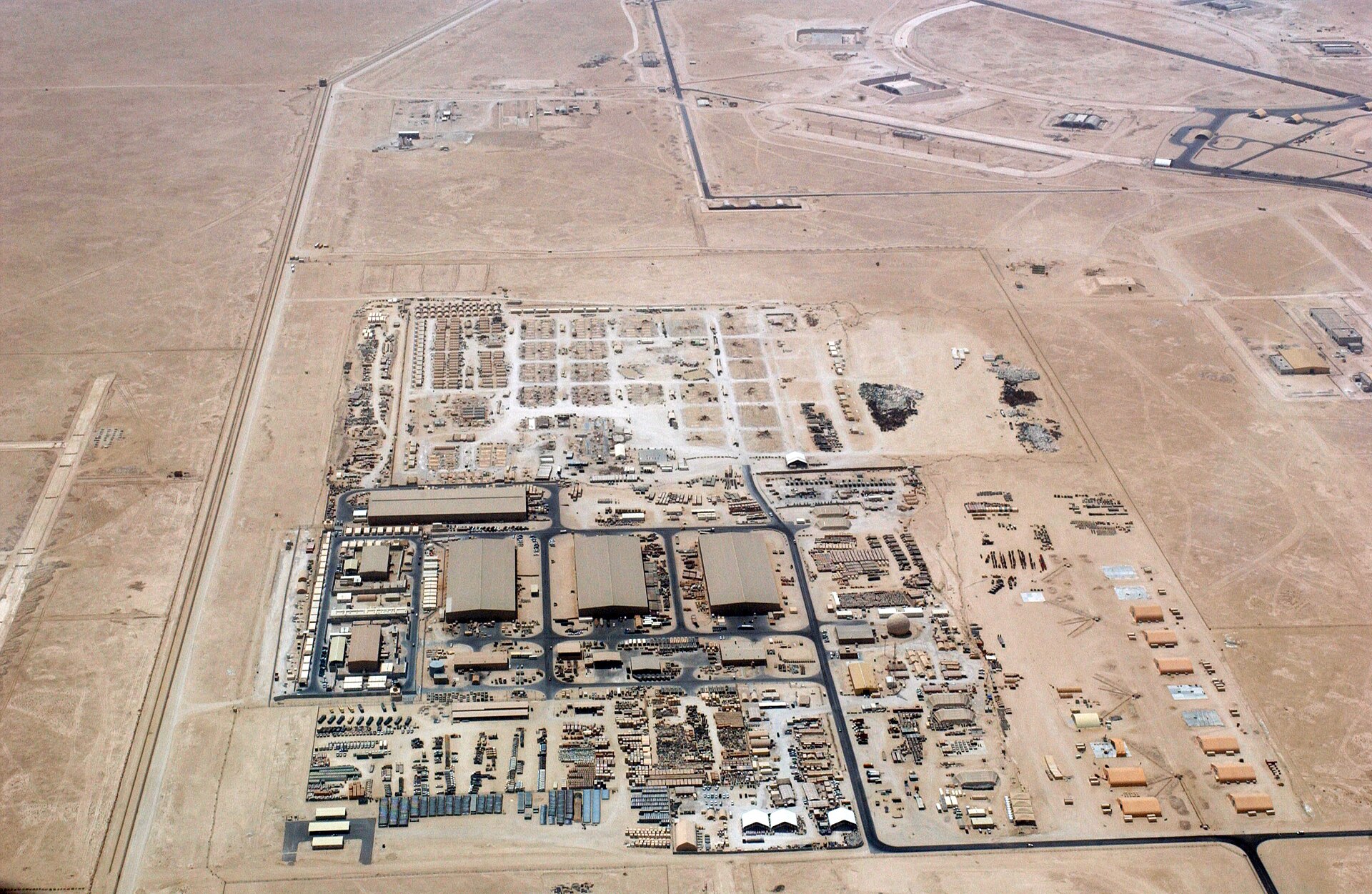
Prince Sultan Air Base sits 80 kilometres southeast of Riyadh. It hosts approximately 2,500 to 2,700 US service members under the 378th Air Expeditionary Wing, reactivated December 17, 2019. February 2026 satellite imagery identified 13 KC-135 Stratotankers, 6 E-3G Sentry AWACS aircraft, 4 E-11A BACN communications relay aircraft, and multiple C-130 transports.
| Period | Status | Personnel (est.) | Primary Unit | Trigger |
|---|---|---|---|---|
| 1990–2003 | Active | ~5,000 (peak) | 363rd Air Expeditionary Wing | Gulf War / Operation Southern Watch |
| 2003–2019 | Saudi control (dormant) | — | — | Post-Iraq War political pressure; Saudi-requested withdrawal |
| 2019–present | Reactivated | 2,500–2,700 | 378th Air Expeditionary Wing | Iran-linked Gulf tanker attacks (Oct 2019) |
The base has been expelled before. On August 26, 2003, the US formally transferred control of PSAB to Saudi officials after Donald Rumsfeld announced withdrawal. The ceremony inactivated the 363rd Air Expeditionary Wing. The Combined Air Operations Center relocated to Al Udeid, Qatar. For sixteen years, PSAB sat dormant. The US returned in October 2019 with 2,000 additional troops alongside approximately 700 already present, deploying B-1Bs, F-22s, and Patriot batteries after Iran-linked attacks on tankers in the Gulf of Oman.
There is no formal Status of Forces Agreement between the United States and Saudi Arabia. The legal architecture rests on bilateral defence cooperation agreements that do not grant unilateral US operational authority over Saudi airspace or territory. Sovereign expulsion is legally possible under existing arrangements. The 2003 precedent demonstrated it is operationally executable within four months.
The $142 billion defence agreement signed May 13, 2025 entrenched the dependency that makes a second expulsion prohibitively expensive. Five domains: air and space forces; air and missile defence — including PAC-3 MSE expansion, THAAD upgrades, and 1,000 advanced air-to-air missiles; maritime and coastal security; land and border forces; information and communications. F-35 sales were approved in a separate November 2025 agreement after Saudi Arabia received Major Non-NATO Ally designation.
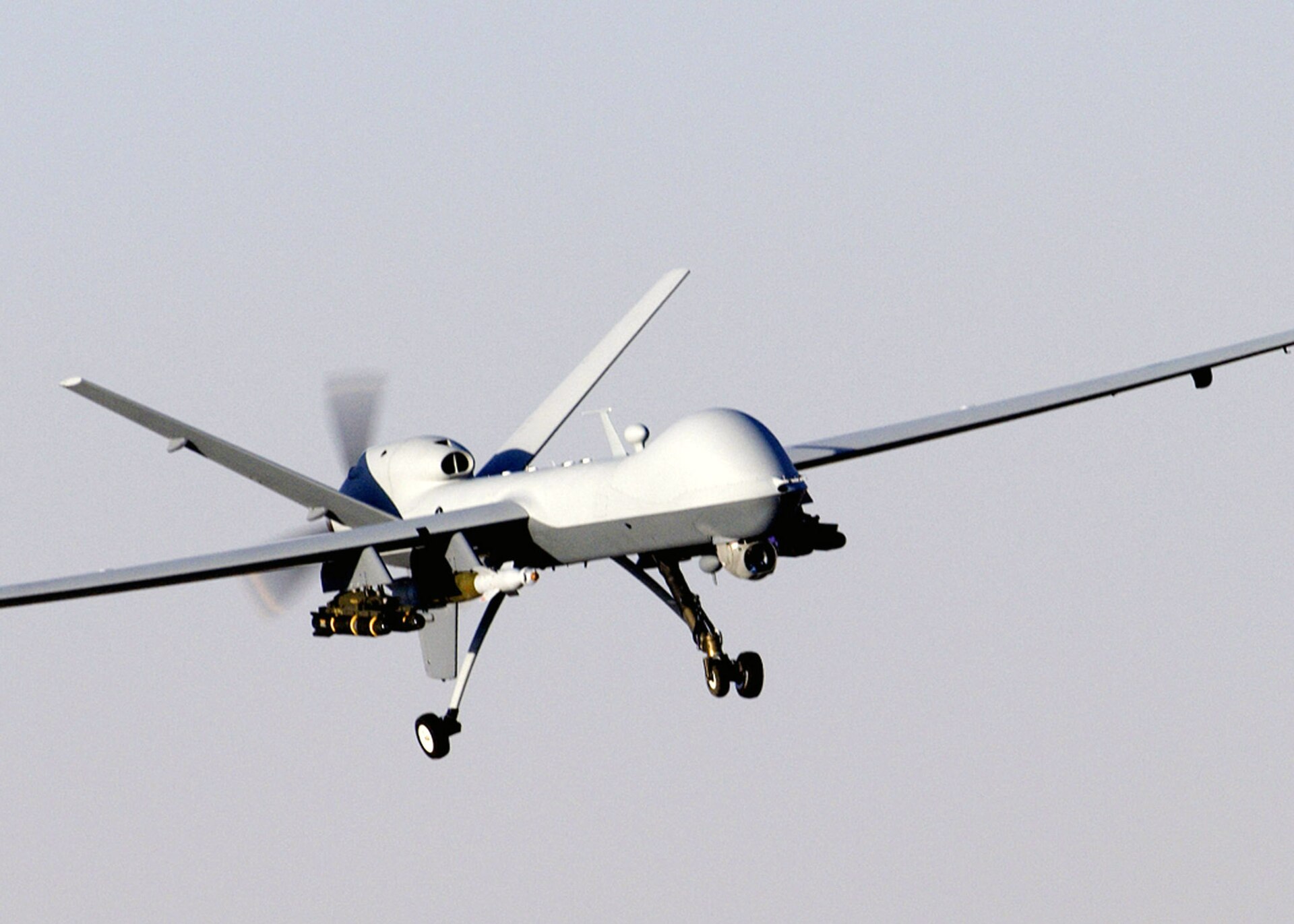
Saudi Arabia’s 34 PAC-3 M903 launchers — the backbone of the Kingdom’s layered air defence — require US contractor sustainment, spare parts supply chains, and integration with US radar and command-and-control networks. The IRGC has fired over 2,750 projectiles at UAE alone during the current conflict — 83% of all Iranian fire directed at GCC states. Saudi PAC-3 batteries have an estimated 80 to 150 interceptor rounds remaining. Expelling US forces would not merely remove a deterrent from Saudi soil. It would degrade the air defence systems Saudi Arabia paid $142 billion to operate, on Day 89 of a war in which the country whose Supreme Leader just wrote that Riyadh is complicit has the fourth-largest ballistic missile arsenal on earth. The ISR architecture that was supposed to make PSAB defensible is degraded beyond its own stated floor: the US Air Force’s MQ-9 fleet stands 54 aircraft below its congressional minimum after Operation Epic Fury destroyed 24 Reapers and closed the production line that built them.
How Does Iran’s Own Media Frame the Document?
Iran’s state media presents the Hajj message as a programmatic invitation to a new regional order, not a threat. PressTV titled its lead article “Hajj message: Leader invites Muslim nations to shape new regional order, says US era is over” — reframing what Bloomberg and Euronews reported as a basing threat into a positive-sum proposition for the Muslim world.
A second PressTV article — “‘Regional nations will no longer serve as US shields’: Snippets from Leader’s 2026 Hajj message” — extracted the basing language as one data point among many, embedding the co-belligerency accusation in a wider programme rather than isolating it as a standalone threat directed at named governments.
Taghrib News Agency published what it described as the full text under the “Third Imposed War” formulation. The register is deliberate: placing the current conflict alongside the 1980–88 Iran-Iraq War — an externally imposed aggression Iran survived and, in its telling, won — frames Day 89 as the middle of a story with a predetermined ending. The document’s reference to Ali Khamenei’s death as “heartbreaking martyrdom” and the public response as “divine rebirth” extends the war register to the succession itself. Islam Times and PureWilayah outlets titled their coverage “The Future Belongs to the Islamic Ummah,” treating the basing language as one element of a broader vision.
The architecture across all Iranian outlets is consistent: celebratory (the war demonstrated resilience), programmatic (Muslim nations are invited into a new order), and descriptive (American expulsion from the Gulf is presented as observable process, not demand). The co-belligerency accusation is laundered through the passive construction — “will no longer serve” — and surrounded by language that makes it difficult for Gulf states to extract and condemn in isolation.
Western coverage split along predictable lines. Bloomberg led with the paradox of a Supreme Leader declaring a new order while his negotiators were in Doha seeking a deal. The Jerusalem Post focused on the 15-year Israel timeline. The Washington Times led with the “Death to America” closing slogan. Euronews provided the most complete Western wire account, covering both the document language and the Arasteh amplification. None centred the structural problem: an unnamed universal framing designed so that no single government is obligated to respond, and any government that does respond accepts the terms of the conversation.
What Happens When a Doctrine Goes Unanswered?
Saudi Arabia’s Ministry of Foreign Affairs has been silent for over eight days. No GCC capital — Riyadh, Abu Dhabi, Manama, Doha, or Kuwait City — has responded to the Hajj message. The co-belligerency accusation exists in the permanent public record, formally unanswered, while Taghrib News Agency has published the document in full and Bloomberg, Euronews, and Iran International have covered its contents.
The prior week’s silence covered a different category of problem: exclusion from nuclear negotiations, CENTCOM strikes launched from Saudi soil without consultation, the MOU’s unsigned status at 106 days. Those are diplomatic slights and operational oversights — manageable through back-channel complaint. The Hajj message is structurally different. It is a written doctrine from a head of state that formally accuses Saudi Arabia — without naming it — of participating in aggression against his country. The document exists. It has been published. The accusation is permanent.
Responding would require Saudi Arabia to either accept the co-belligerency framing or publicly defend the US military presence on its soil. Neither is domestically viable. The September 2025 mutual defence pact with Pakistan was framed as a bilateral security arrangement precisely to avoid the appearance of dependency on American basing. Acknowledging Mojtaba’s document would reopen the question the pact was designed to close.
MBS called Iranian President Pezeshkian on Eid al-Adha, May 27. Bilateral warmth. Foreign Ministry spokesman Baghaei described Saudi-Iran communication as “purely bilateral.” The Hajj document — addressed to “the nations and lands of the region” — is the opposite of bilateral. It is a standing accusation delivered to every Gulf capital simultaneously, designed so that no single government bears the obligation to reply and none can reply without accepting the terms of the accusation.
“The Muslim Ummah and the nations of the region possess many shared capacities and common interests that will shape the new order and the future architecture of the region and the world.”
— Mojtaba Khamenei, Hajj/Eid al-Adha written message, May 26, 2026
The sentence reads as an invitation. In context — fourteen pages that accuse Gulf governments of shielding aggression, set a 15-year countdown on Israel’s existence, and close with “Death to America” — it is an ultimatum in the language of solidarity. Saudi Arabia waits for the nuclear deal, for CENTCOM to stop striking from its soil, for MOFA to find something to say. Mojtaba’s document does not wait. It creates a record — written, dated, archived — and leaves Gulf capitals to decide whether a record they cannot answer is the same as a record they accept.
Frequently Asked Questions
Has a Supreme Leader previously issued a written basing doctrine targeting Gulf host states?
No. Ali Khamenei produced extensive rhetoric about US naval vulnerability during his 36-year tenure, but his statements consistently framed Gulf states as passive settings for American intrusion rather than active accomplices. His formulations treated hosting as a condition imposed on Gulf states, not a sovereign choice those states made. Mojtaba’s “shields” formulation is the first Supreme Leader-level text that assigns agency and culpability to the host nations. The written format creates a citable artifact that transcribed speeches do not — a distinction that matters in diplomatic and legal contexts where precision of attribution determines whether a statement can be invoked.
What is the legal threshold for co-belligerency under international humanitarian law?
No Gulf state has been formally designated a co-belligerent in the current conflict by any international body, and Iran has not pursued that designation through the ICJ or UN General Assembly. The threshold — established by the ICJ’s 1986 Nicaragua ruling and ILC Article 16 — requires material support (territorial basing, overflight rights, logistical assistance) to a party engaged in armed conflict, with knowledge that the support facilitates hostilities. The Hajj document’s “shields for aggression” language maps onto that standard without invoking its legal terminology, preserving political flexibility while establishing a factual predicate that could be activated later.
Could Saudi Arabia legally expel US forces from PSAB a second time?
Legally, the absence of a formal SOFA means no treaty obligation prevents Saudi Arabia from requesting withdrawal. The 2003 precedent demonstrated a four-month timeline from Rumsfeld’s announcement to formal handover. The operational constraints in 2026 are more severe: the Kingdom’s PAC-3 MSE interceptors, THAAD batteries, and Aegis-integrated radar network all require US contractor presence for maintenance and software updates. The 2003 expulsion occurred during a period of relative Gulf stability and before Saudi Arabia had integrated its entire air defence architecture around American systems and sustainment chains. No equivalent security margin exists on Day 89 of a war in which 80 to 150 PAC-3 interceptor rounds separate Saudi Arabia from an undefended airspace.
Why has the document received less Western media attention than the Doha negotiations?
The Doha departure and the $24 billion frozen-assets deadlock offered a conventional diplomatic narrative — deal or no deal — that Western newsrooms are structured to cover through established source networks at the State Department and in Tehran. The Hajj message is a doctrine document whose significance lies in its architecture rather than a single quotable line. Bloomberg covered it but led with the paradox of simultaneous negotiation and confrontation. The Washington Times led with the “Death to America” slogan. None of the major Western outlets centred the structural function — the unnamed universality that makes the document impossible to answer without accepting its framing — because that analysis requires regional context that wire-service coverage does not prioritise.
How does the Hajj message relate to the ongoing US-Iran nuclear talks?
The document was released on Day 89 of the war, 106 days into an unsigned MOU, and hours after Iran’s delegation left Doha. The dual-track timing — diplomatic negotiation and doctrinal escalation running simultaneously — mirrors the pattern that has characterised Iran’s approach across five rounds of talks. The 15-year Israel clock, inherited from Ali Khamenei’s 2015 JCPOA response, explicitly links the Hajj message to the nuclear context: the moratorium under discussion would cap enrichment for 12–15 years, while the inherited countdown extends to approximately 2041. Saudi Arabia sits outside both tracks — excluded from the nuclear negotiations and unable to respond to the doctrine document that accuses it of complicity in the conflict those negotiations are meant to resolve.
The Araghchi-Vahidi split runs parallel to the Khamenei doctrinal track this article analyses. Mojtaba Khamenei issues doctrine on host-state co-belligerency; Vahidi commands the IRGC assets that would execute it; Araghchi negotiates at a table that binds neither. The full institutional architecture is examined in Iran’s dual-track negotiating structure — why the Araghchi-Vahidi split is a constitutional design feature, not a factional dispute.