
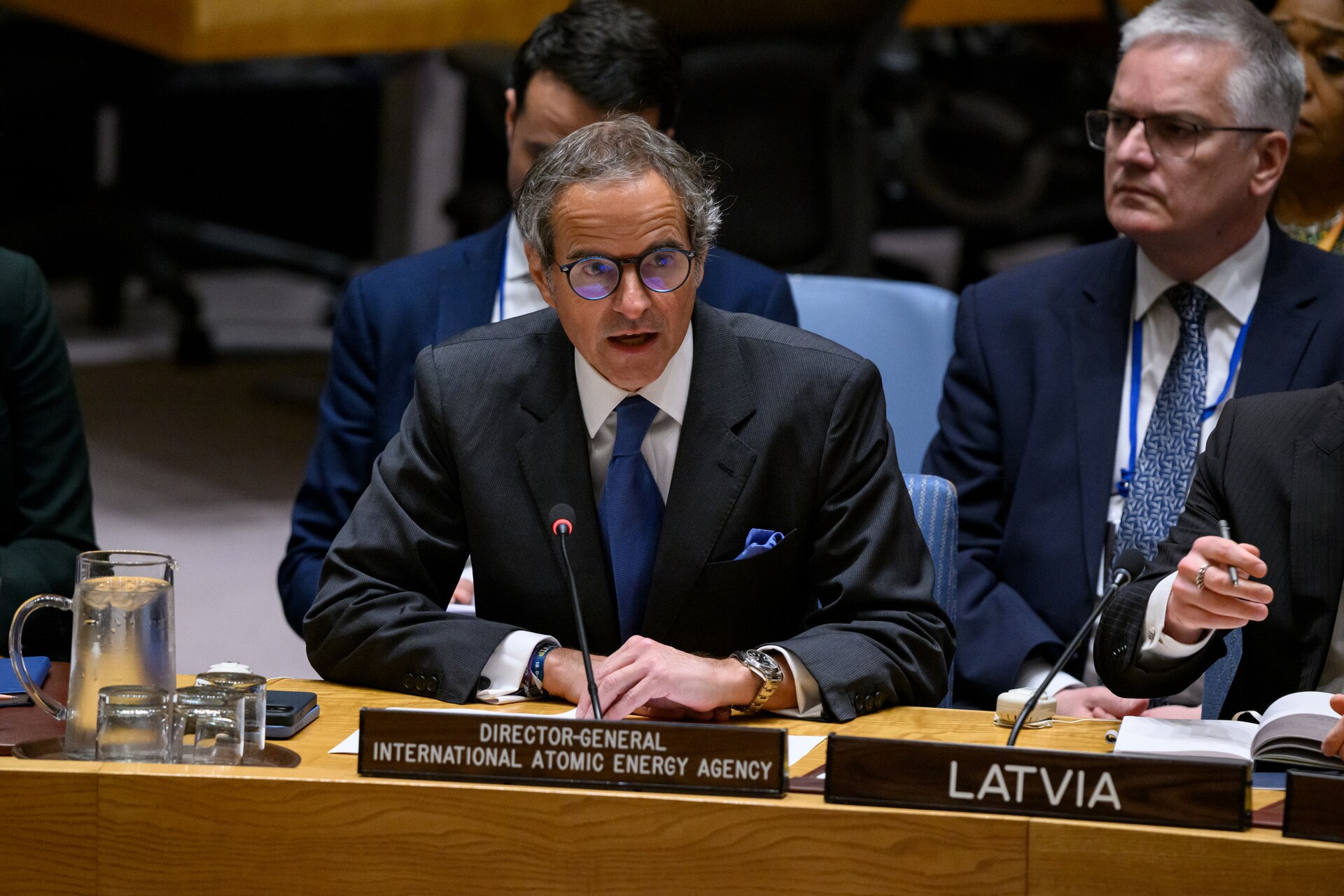
UNITED NATIONS — Pakistan Deputy Prime Minister and Foreign Minister Ishaq Dar addressed the United Nations Security Council on May 26, 2026, calling for restraint and de-escalation in the Iran-US conflict during a high-level open debate chaired by Chinese Foreign Minister Wang Yi, who holds the rotating Council presidency for May. The United States denied diplomatic visas to both Iran Foreign Minister Abbas Araghchi and Russian Deputy Foreign Minister Alexander Alimov, blocking them from attending — a move Russia’s UN Ambassador Vassily Nebenzia called “a breach of the United Nations Headquarters Agreement.”
Saudi Arabia, the country most directly exposed to the war’s consequences through Hormuz closure, exclusion from the emerging US-Iran nuclear framework, and mounting Abraham Accords pressure, was not among the speakers. It holds no permanent Security Council seat and is not a current elected member. Its Ministry of Foreign Affairs has been publicly silent since May 20. The session produced no resolution and no presidential statement.
Table of Contents
The Diplomats Washington Kept Out
Two of the session’s highest-profile expected participants never made it to New York.
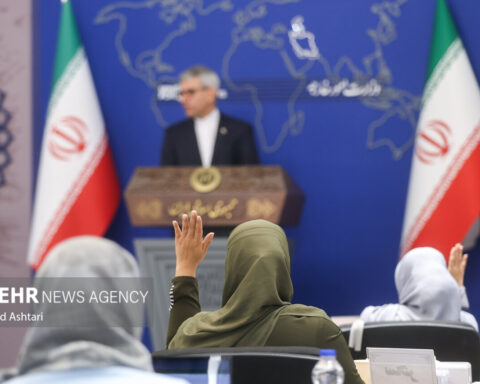
Iran Foreign Minister Abbas Araghchi had planned to address the Council in person. Iran MFA spokesman Esmail Baghaei confirmed that Washington failed to finalize the diplomatic visa in time, forcing Araghchi to cancel, according to Dawn and the Eastern Herald. Russia’s Deputy Foreign Minister Alexander Alimov was similarly denied entry.
The denials tested the 1947 UN Headquarters Agreement, the legal instrument requiring the United States — as host country of UN headquarters — to grant entry to foreign government representatives for official UN business. Russia’s Security Council Ambassador Vassily Nebenzia told reporters the move was “a breach of the United Nations Headquarters Agreement” and “an egregious instance of disrespect for the Chinese presidency,” according to PassBlue.
Baghaei framed the denial as a procedural breach, not a diplomatic boycott. Iran wanted to attend. Araghchi had met Wang Yi in Beijing as recently as May 7, when China’s MFA described Beijing as Iran’s “trusted strategic partner” and called for “an immediate and full ceasefire.” The visa denial prevented him from making that case at the institution Wang Yi told reporters would be essential to any deal’s legitimacy.
The Middle East briefing 3,000+ readers start their day with.
One email. Every weekday morning. Free.
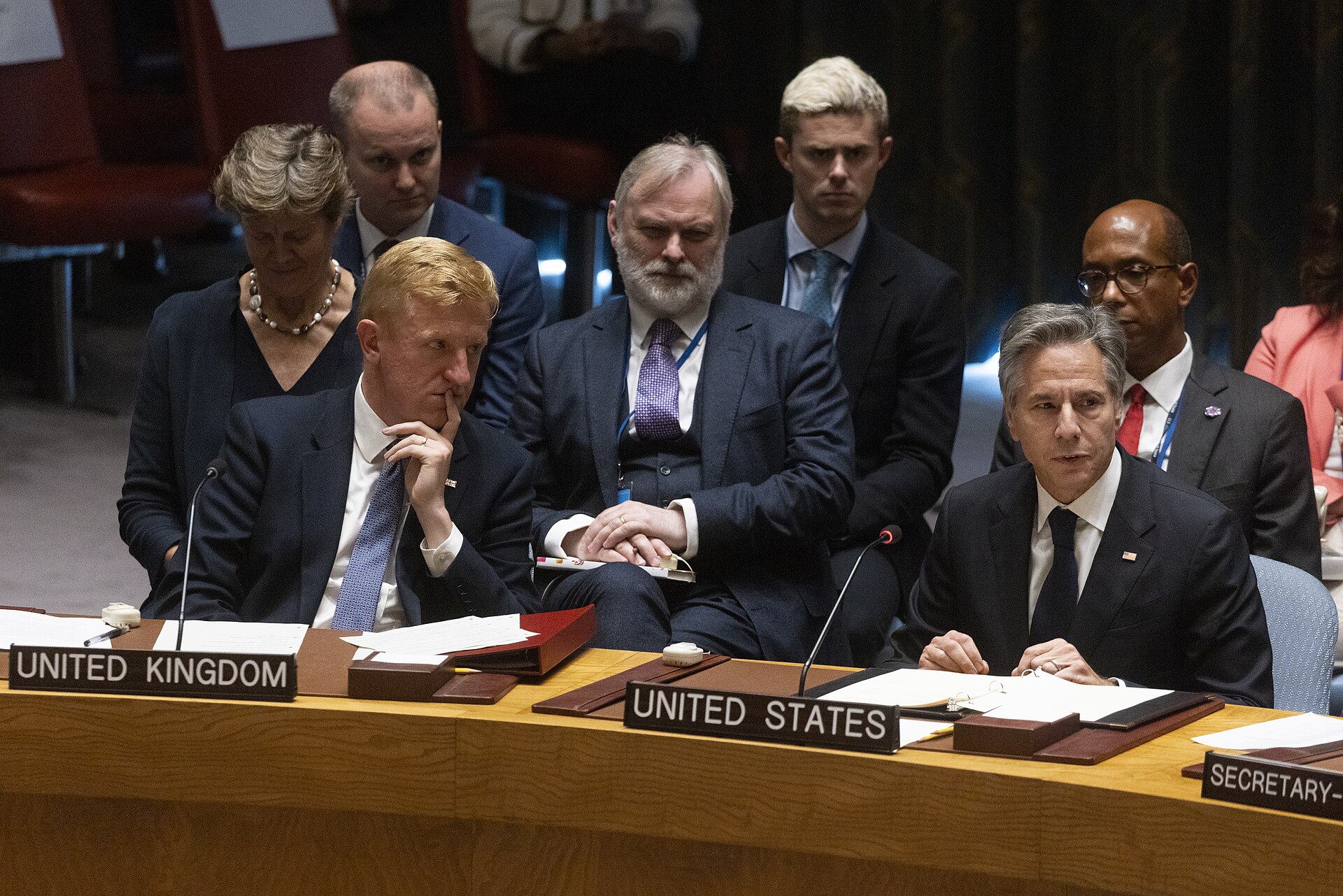
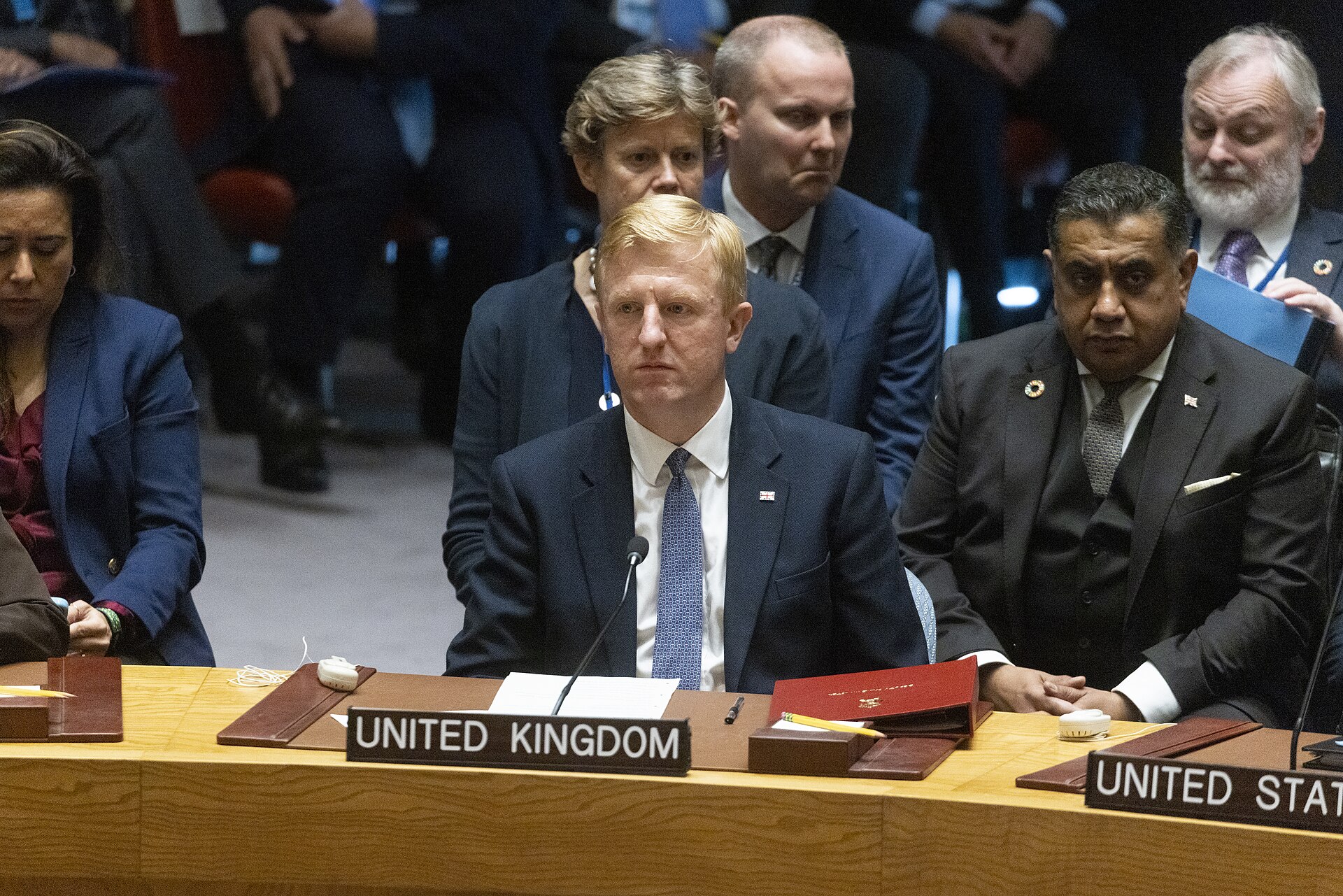
The United States sent Assistant Secretary Michael George DeSombre of the Bureau of East Asian and Pacific Affairs — a mid-level representative set against Wang Yi’s foreign-ministerial presence at the podium.
What Did Pakistan Tell the Security Council?
Dar’s address drew from a script co-authored weeks earlier. On April 1, 2026, he and Wang Yi had jointly launched the China-Pakistan five-point West Asia initiative in Beijing, calling for immediate ceasefire, start of peace talks, safety of non-military targets, freedom of navigation, and primacy of the UN Charter. The UNSC address, 55 days later, delivered that framework to the Council floor.
“As a friendly neighbour of Iran and brotherly countries of the Gulf, and a country with longstanding ties of amity with the United States, Pakistan consistently stood for restraint, de-escalation and a return to diplomacy,” Dar told the Council, according to Dawn.
He warned of the costs of continued fighting. “Another prolonged conflict would serve no one,” he said, according to Pakistan Today. “It would endanger regional peace, disrupt global energy flows, deepen humanitarian suffering and strain an already fragile international order.”
“When powerful states act outside the law, smaller states are left to wonder whether the Charter protects all nations equally.”
— Ishaq Dar, Pakistan Deputy Prime Minister and Foreign Minister, UN Security Council, May 26 2026
The sharpest passage targeted the Security Council itself — or more precisely, the structural asymmetry that governs it. “The crisis of the international system is not caused by the absence of principles but by their selective application,” Dar said, according to DNA News Agency. “Selectivity is very dangerous and breeds mistrust, fuels grievances, encourages unilateralism and weakens the very multilateral system.”
Dar thanked China, Saudi Arabia, Egypt, Turkey, and Qatar for supporting Pakistan’s mediation — placing Riyadh among supporters despite its institutional absence from the room. Pakistan’s Defence Minister Khawaja Asif had stated publicly days earlier what Saudi Arabia would not: that Trump’s Abraham Accords demands were “not acceptable to us.”
Pakistan’s mediation portfolio extends beyond the rhetorical. Army Chief General Asim Munir flew to Tehran in April carrying a mutual defence pact signed with Saudi Arabia in September 2025 — the first such agreement in Pakistan’s history. Dar’s UNSC speech was the diplomatic continuation of that military channel.
Beijing’s Three Roles in One Room
Wang Yi occupied at least three distinct positions on May 26, each bearing directly on Saudi Arabia’s interests.
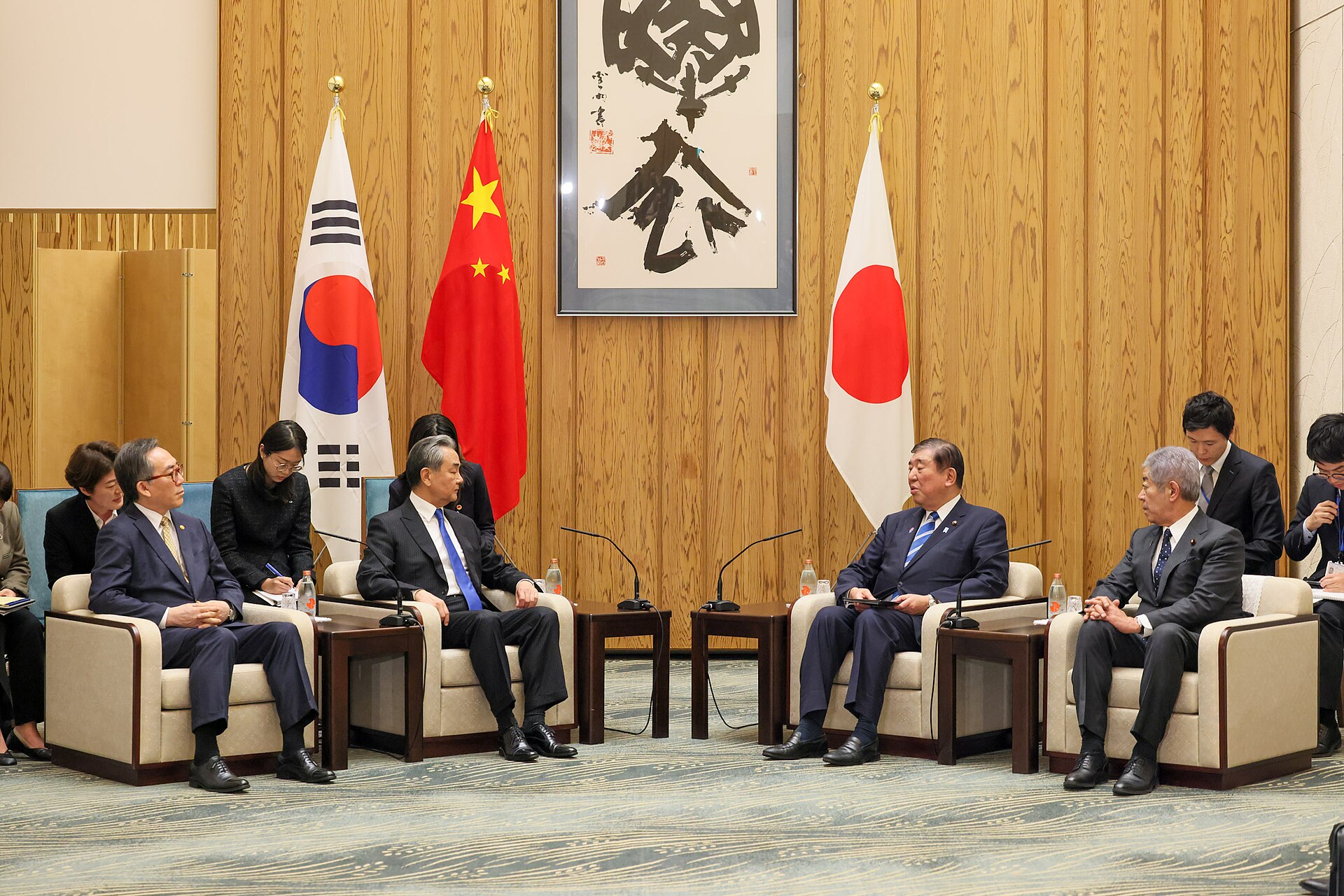
First: chair. China assumed the rotating UNSC presidency on May 1, 2026, with Wang Yi setting three declared priorities for the month — revitalizing the UN Charter, resolving the Middle East crisis, and supporting African development, according to CGTN. He personally presided over the May 26 session, titled “Upholding the Purposes and Principles of the UN Charter and Strengthening the UN-Centered International System.”
His opening remarks were aimed at Washington without naming it. “The purposes of the UN Charter have been disregarded, the basic norms of international relations have been undermined, and world peace and security are in great jeopardy,” Wang said, according to the South China Morning Post.
Second: deal architect. Wang personally mediated the March 6–10, 2023 trilateral negotiations in Beijing between Iran’s Ali Shamkhani and Saudi Arabia’s Musaad bin Mohammed Al-Aiban, producing the Beijing Agreement that restored Saudi-Iran diplomatic ties. That agreement has been functionally suspended since the Iran-US war began. The man who built it was now chairing the session adjudicating its wreckage.
Third: customer. China is Saudi Arabia’s single largest crude oil buyer, with bilateral trade reaching $107 billion in 2024, according to OEC World data. Saudi Arabia supplied approximately 14% of China’s crude imports in 2025, second only to Russia at 17.4%, according to Statista. Bloomberg reported in April 2026 that Saudi oil exports to China are set to halve during the Hormuz disruption — a disruption from which Saudi Arabia has paradoxically profited through elevated Brent prices and Red Sea corridor diversion.
Wang told reporters after the session: “We believe that once an agreement is reached, it will be submitted to the UN Security Council for endorsement for it to have legitimacy and authority,” according to Reuters and Anadolu Agency. He expressed hope that “the parties concerned can stay committed to pursuing a ceasefire and continue to meet each other halfway, so that peace can return to the Middle East as early as possible,” according to US News and the Korea Times.
The 2015 JCPOA was endorsed by UN Security Council Resolution 2231 — six days after the deal was signed in Vienna. China voted in favour. If the 2026 framework follows the same path, any UNSC endorsement vote would occur with China holding a permanent veto.
Where Was Saudi Arabia?
Saudi Arabia holds no permanent seat on the UN Security Council. It is not among the ten elected non-permanent members for 2026. It was not listed among the invited non-member speakers at the May 26 debate — a group that included Pakistan, Cambodia, Costa Rica, Bahrain, Turkmenistan, the Czech Republic, Colombia, and Azerbaijan, according to the China UNSC presidency briefing.
Bahrain was the only GCC-adjacent invited non-member confirmed present. Saudi Arabia’s regional stakes — Hormuz transit, nuclear exclusion from five rounds of US-Iran talks, fiscal exposure to oil price swings, and Abraham Accords pressure — exceed Bahrain’s by orders of magnitude. Bahrain spoke. Saudi Arabia did not.
That silence predates the UNSC session and encompasses CENTCOM strikes on Iranian targets conducted on Arafah Day without Saudi consultation, Iran’s Doha delegation departing without signing, and the Eid al-Adha holiday period.
The absence extends a pattern. Saudi Arabia has been excluded from all five rounds of US-Iran negotiations, from the Track 2 nuclear discussions, and from the two-stage MOU sequencing that will determine whether the Persian Gulf Security Architecture — operational since May 18 — is suspended or dissolved. Dar thanked Saudi Arabia by name for supporting mediation. Riyadh’s contribution to the session was its mention in someone else’s speech.
Two Tracks, One Day
Pakistan ran a coordinated two-front diplomatic operation across May 25–26.
On May 25, Prime Minister Shehbaz Sharif and Army Chief General Asim Munir were in Beijing meeting Chinese President Xi Jinping. Xi praised Pakistan’s “constructive role in mediating peace in the Middle East” and called China-Pakistan ties “unbreakable,” according to Al Jazeera and The Defense Post. The meeting took place one day before Wang Yi chaired the UNSC session and Dar delivered Pakistan’s address in New York.
The sequencing was not incidental. Wang Yi had spoken with Dar by phone on May 13, according to Chinese MFA records — pre-coordinating the diplomatic approach that Dar would deliver to the Security Council 13 days later. The five-point initiative Dar cited at the podium had been jointly drafted by the two foreign ministers in Beijing on April 1.
Munir’s presence in Beijing alongside Shehbaz added a military dimension. The same general who had visited Tehran carrying a Saudi mutual defence pact was now in the Chinese capital on the eve of the UNSC debate.
| Date | Pakistan Track | China Track | Location |
|---|---|---|---|
| April 1 | Dar co-launches five-point initiative | Wang Yi co-launches five-point initiative | Beijing |
| May 1 | — | China assumes UNSC presidency | New York |
| May 7 | — | Wang Yi meets Araghchi bilaterally | Beijing |
| May 13 | Dar phone call with Wang Yi | Wang Yi phone call with Dar | — |
| May 25 | PM Shehbaz + Munir meet Xi Jinping | Xi hosts Pakistan leadership | Beijing |
| May 26 | Dar addresses UNSC | Wang Yi chairs UNSC session | New York |
No Resolution, No Statement
The May 26 session was a high-level open debate, not a formal action meeting. It produced no resolution, no presidential statement, and no binding outcome. Dozens of foreign ministers and senior diplomats spoke across an all-day session. The format is by design consultative — open debates generate statements of position, not votes.
Wang Yi’s post-session claim functions as an institutional marker. As detailed above, the 2015 JCPOA followed exactly that path through Resolution 2231. If the 2026 framework reaches signature, Beijing is positioning itself as gatekeeper at the ratification stage, armed with a permanent veto.
Xinhua, the Chinese state news agency, reported on May 27 that Wang Yi spoke of China’s contributions to multilateralism amid “headwinds against multilateralism.” CGTN described Pakistan’s diplomatic position as reflecting “the common denominator for all parties.”
The United States, which blocked two foreign-ministerial-level participants from attending, treated the session as procedurally secondary. For Beijing, which used it to reassert the UN’s role in endorsing any future deal, the session was a claim on the architecture that comes after negotiation — the part Saudi Arabia will also be excluded from, unless it holds a Council seat when the vote arrives.
Background
The Iran-US war is in approximately its 89th day as of May 26. The conflict has produced five rounds of negotiations over 106 days with no signed agreement. Iran’s Doha delegation — led by Parliament Speaker Ghalibaf, Foreign Minister Araghchi, and Economy Minister Hemmati — departed Qatar on the same day as the UNSC session without signing, citing a $24 billion frozen-assets sequencing deadlock.
The Persian Gulf Security Architecture has been operational since May 18, collecting approximately $2 million per transit. Ten Qatari LNG tankers remain blocked. Brent crude briefly broke below $100 on May 25 for the first time on Iran deal optimism before recovering.
Saudi Arabia faces a Q1 2026 fiscal deficit of $33.5 billion — 194% of its full-year target — at an average Brent price above $100. Bloomberg Economics estimates the kingdom’s true fiscal breakeven, including PIF spending, at $108–111 per barrel. Hajj was underway during the UNSC session, with Arafah Day falling on May 26 and Eid al-Adha beginning May 27.
Frequently Asked Questions
Has Saudi Arabia ever held a seat on the UN Security Council?
Saudi Arabia was elected to a non-permanent seat in October 2013 but took the unprecedented step of rejecting it — the only country in UN history to decline a Security Council seat after winning election. Riyadh cited the Council’s failure to act on Syria and the Palestinian issue. The seat went to Jordan instead. Saudi Arabia has not held a Council seat since and would need to win election in the UN General Assembly to obtain one.
What is the 1947 UN Headquarters Agreement and has it been tested before?
The agreement, signed between the United Nations and the United States on June 26, 1947, requires Washington to grant transit privileges and entry to foreign government representatives for official UN business, regardless of US bilateral relations with their governments. It has been tested repeatedly — most prominently in 1988 when the US attempted to close the PLO’s UN observer mission, prompting an advisory opinion request to the International Court of Justice, and in 2014 when Washington initially denied a visa to Iran’s proposed UN ambassador Hamid Aboutalebi over his alleged involvement in the 1979 embassy seizure. Russia has formally raised the May 26 denials as a breach, though the agreement contains no enforcement mechanism beyond diplomatic protest and ICJ advisory proceedings.
What is China’s stated position on the Iran-US conflict?
China’s MFA, following a May 7 bilateral between Wang Yi and Araghchi in Beijing, stated that “China calls for an immediate and full ceasefire, opposes renewed conflict, stresses the priority of talks on the Iran situation.” Beijing described itself as Iran’s “trusted strategic partner.” Wang Yi separately told reporters at the UNSC that he hoped parties would “meet each other halfway.” China has not offered to mediate between the US and Iran directly but has positioned the Security Council — where it holds a permanent veto — as the necessary ratification body for any deal.
Did any Gulf state speak at the session?
Bahrain was the only GCC-adjacent state listed among invited non-member speakers, according to the China UNSC presidency briefing. The UAE, Kuwait, Oman, and Qatar were not listed as speakers. Bahrain’s participation is consistent with its alignment posture — Manama hosts the US Fifth Fleet and signed the Abraham Accords in 2020 — but Bahrain does not carry the diplomatic weight to represent Gulf positions on Hormuz transit governance, oil pricing, or nuclear framework terms. No GCC state holds a permanent or current elected seat on the Security Council.
What does the five-point initiative omit?
The China-Pakistan five-point West Asia initiative — ceasefire, peace talks, non-military target protection, freedom of navigation, UN Charter primacy — does not address nuclear enrichment caps, the operational status of the Persian Gulf Security Architecture, Saudi Arabia’s exclusion from the US-Iran negotiating table, the Lebanon clause that remains a structural veto in deal negotiations, or the Abraham Accords normalization demands. These are the five issues most directly affecting Riyadh, and none appears in the framework Pakistan delivered to the Security Council on its behalf. On Eid al-Adha, Trump publicly declared he does not care about the US midterms — removing the one diplomatic deadline Iran’s negotiators counted on, and leaving no external clock to force a resolution. Trump’s statement, and what the extended deadlock costs Saudi Arabia, is analysed here.