TEHRAN — Iran’s Supreme Leader Mojtaba Khamenei is hidden at an undisclosed location, reachable only through “a labyrinth of couriers,” and even senior Iranian officials do not know where he is, according to US officials with direct knowledge cited by CBS News on May 24-25. The MOU that Washington, Islamabad, and Tehran have spent 44 days negotiating requires his personal constitutional confirmation before it carries legal force — and no one involved in the talks can say when, or whether, a courier will complete the round trip to deliver the final text.
Hours after CBS published the intelligence assessment, Iran’s Foreign Ministry spokesperson declared the deal in its “final stage” with “positions becoming closer,” according to CGTN. But Article 176 of Iran’s constitution is unambiguous: decisions of the Supreme National Security Council “shall be effective after the confirmation by the Leader.” Khamenei has not appeared on video, issued a recorded statement, or been seen in public since the Assembly of Experts named him Supreme Leader on March 9, and a US official told CBS that “every piece of information he receives is dated and there’s a lot of latency to his responses.” The gap between “final stage” and a signed document is not a wording problem — it is a courier route to an unknown destination.
Table of Contents
The Courier Chain
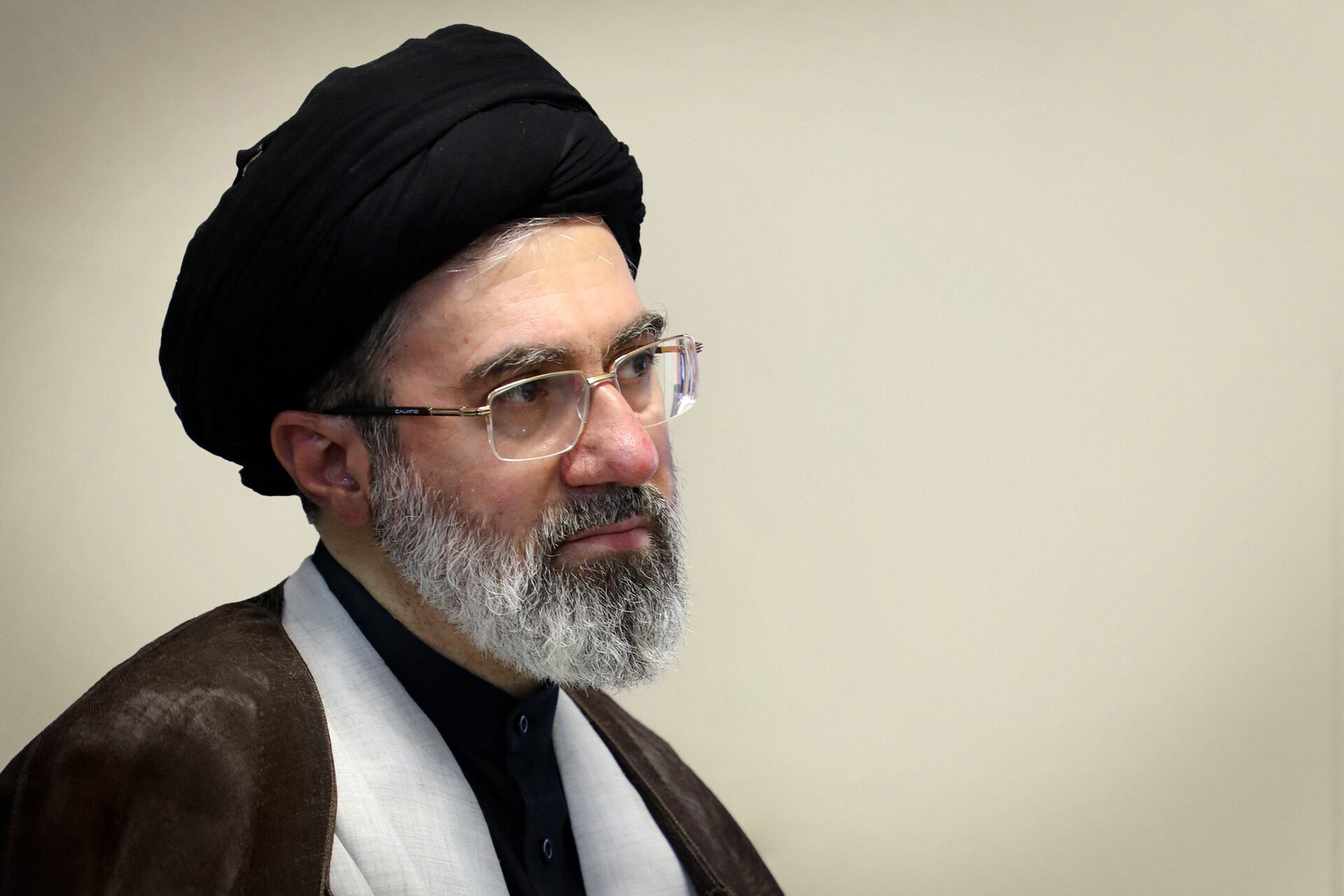
Mojtaba Khamenei has been operating from an unknown location since his appointment on March 9, 2026 — eleven days after US-Israeli strikes killed his father, Ali Khamenei, on February 28 and injured Mojtaba himself. His first and only public communication since taking office was a written message read aloud by a state television anchor while a still photograph was displayed on screen, with no video or audio of the new Supreme Leader released in the 77 days since, according to Iran International. The isolation is not a rumor or an inference; it is a security posture built around the specific fact that his father was killed by precision strikes on Day 1 of Operation Epic Fury. The written format that isolation has forced carries its own doctrinal weight: on Arafah Day, Mojtaba’s first formal doctrine statement as Supreme Leader accused Gulf states hosting US bases of co-belligerency — 14 pages of permanent written text designed to function as a standing order rather than a speech.
US officials described the communication system to CBS News as “a labyrinth of couriers” — a physical network engineered to prevent anyone outside a small circle from identifying Khamenei’s location. “Every piece of information he receives is dated and there’s a lot of latency to his responses,” one official said. A second US official, cited by Axios on May 24, put the operational problem plainly: “Even if we get this language in a good place, it is going to take days for it to filter through their system and get an approval.”
“Even if we get this language in a good place, it is going to take days for it to filter through their system and get an approval.”
— US official, cited by Axios, May 24
The HOS Daily BriefThe Middle East briefing 3,000+ readers start their day with.
One email. Every weekday morning. Free.
The system was built for survival, not governance. The Assembly of Experts convened under what Iran International described as “repeated contacts and psychological and political pressure” from the IRGC, naming Mojtaba on March 9 while he was still recovering from injuries sustained in the same strikes that killed his father. He has governed entirely through intermediaries since, issuing no statements in his own voice, holding no known meetings, and maintaining no verified public communication channel of any kind.
A senior Iranian source confirmed to Reuters, as cited by Axios, that any MOU reached in negotiations would be “immediately submitted to Supreme Leader Mojtaba Khamenei for final approval before it could take effect.” The word “immediately” carries an unintended weight: submitted immediately to a man whose communication channel is a physical courier network with multi-day latency, routed through intermediaries to a location that US intelligence has not been able to pinpoint.
Why Can’t Iran’s President Just Sign?
President Masoud Pezeshkian answered this directly on May 24. “No decision in the Islamic Republic of Iran will be made outside the framework of the Supreme National Security Council and without the coordination and permission of the Leader,” he told reporters, as carried by PressTV, Voice of Emirates, and Tribune India. It was a statement of constitutional fact rather than political positioning — and it closed off any remaining speculation about whether the civilian government could finalize the MOU independently.
“No decision in the Islamic Republic of Iran will be made outside the framework of the Supreme National Security Council and without the coordination and permission of the Leader.”
— President Masoud Pezeshkian, May 24, PressTV
Article 176 of Iran’s 1989 constitution provides the legal mechanism. The Supreme National Security Council — chaired by the president, with members including the head of the judiciary, the chief of the armed forces general staff, and two representatives appointed by the Supreme Leader — can deliberate, draft, and internally approve decisions, but those decisions “shall be effective after the confirmation by the Leader.” There is no delegation clause, no proxy procedure, no wartime exception. Iran’s own SNSC has invoked precisely this constitutional weight to contest the White House’s claim that Iran gave written assurances on HEU disposal, demonstrating that the council treats its confirmation requirement as a substantive check, not a formality.
Article 110 reinforces the point. It grants the Supreme Leader final authority over military policy, judicial appointments, and the “general policies of the Islamic Republic” — a category that encompasses any sovereign commitment involving enrichment levels, sanctions relief, or Hormuz navigation rights. The negotiating chain runs from Foreign Minister Araghchi through the SNSC to Pezeshkian, and then terminates at Khamenei’s courier network. Every optimistic update from the Foreign Ministry describes progress within a process whose final step depends on physical delivery to an undisclosed location.
How Long Did the Last Deal Take?
The JCPOA offers the only direct precedent for Supreme Leader approval of a nuclear-adjacent agreement — and even under conditions far more favorable to speed, the timeline was measured in days and months, not hours. Iran’s parliament approved the JCPOA on October 13, 2015, and Ali Khamenei issued his conditional endorsement via letter to President Rouhani eight days later, on October 21, attaching eight specific written conditions. His subsequent order to implement was a separate step in December 2015. The full approval chain from the Lausanne framework in April 2015 to Implementation Day — when Iran actually began complying — took roughly nine months.
Ali Khamenei had every advantage that Mojtaba lacks. He was publicly visible, gave speeches, held audiences, issued statements through khamenei.ir, and maintained direct, real-time communication with the SNSC and the negotiating team. His conditional endorsement letter was a detailed, point-by-point document that demonstrated close personal engagement with the negotiated text — the product of a leader with full access to his advisors and the complete documentary record. Eight days was the timeline of deliberate review, not a structural bottleneck.
Mojtaba Khamenei has none of those conditions. He has no public communication channel, no verified way of receiving detailed briefings in real time, and no demonstrated capacity to produce the kind of conditional, multi-point response that the JCPOA endorsement required. Three separate framework documents are currently in circulation — Axios’s 14-point MOU, Al-Arabiya’s 8-point version, and Pakistan’s Munir letter of intent — and Iran has already denied US characterizations of what was agreed regarding HEU. If a visible, accessible Supreme Leader with a functioning apparatus needed eight days, an invisible one operating through couriers will need substantially longer, assuming the documents reach him in a form he can meaningfully review.
The IRGC’s Parallel Command
Khamenei’s isolation has produced a second problem that no party to the negotiations has publicly addressed: who actually commands Iran’s military and strategic posture while the Supreme Leader communicates through couriers? The IRGC has been operating as de facto command authority since March 2026, according to Iran International and Modern Diplomacy. Commander Vahidi stated that all “critical and sensitive leadership positions” must be “selected and managed directly by the IRGC until further notice” — a wartime directive that exists nowhere in Iran’s constitutional text.
Iran’s constitution explicitly bars formal transfer of political power to the military, making the IRGC’s operational authority extraconstitutional — tolerated under wartime necessity but legally ungrounded. This creates a split that goes beyond academic interest. Even if Khamenei confirms the MOU via courier, there is a live question of whether IRGC field commanders — who control the PGSA toll system at Hormuz, who operate the missile forces, who manage the Houthi coordination channel — would treat a courier-delivered confirmation from an unseen leader as operationally binding.
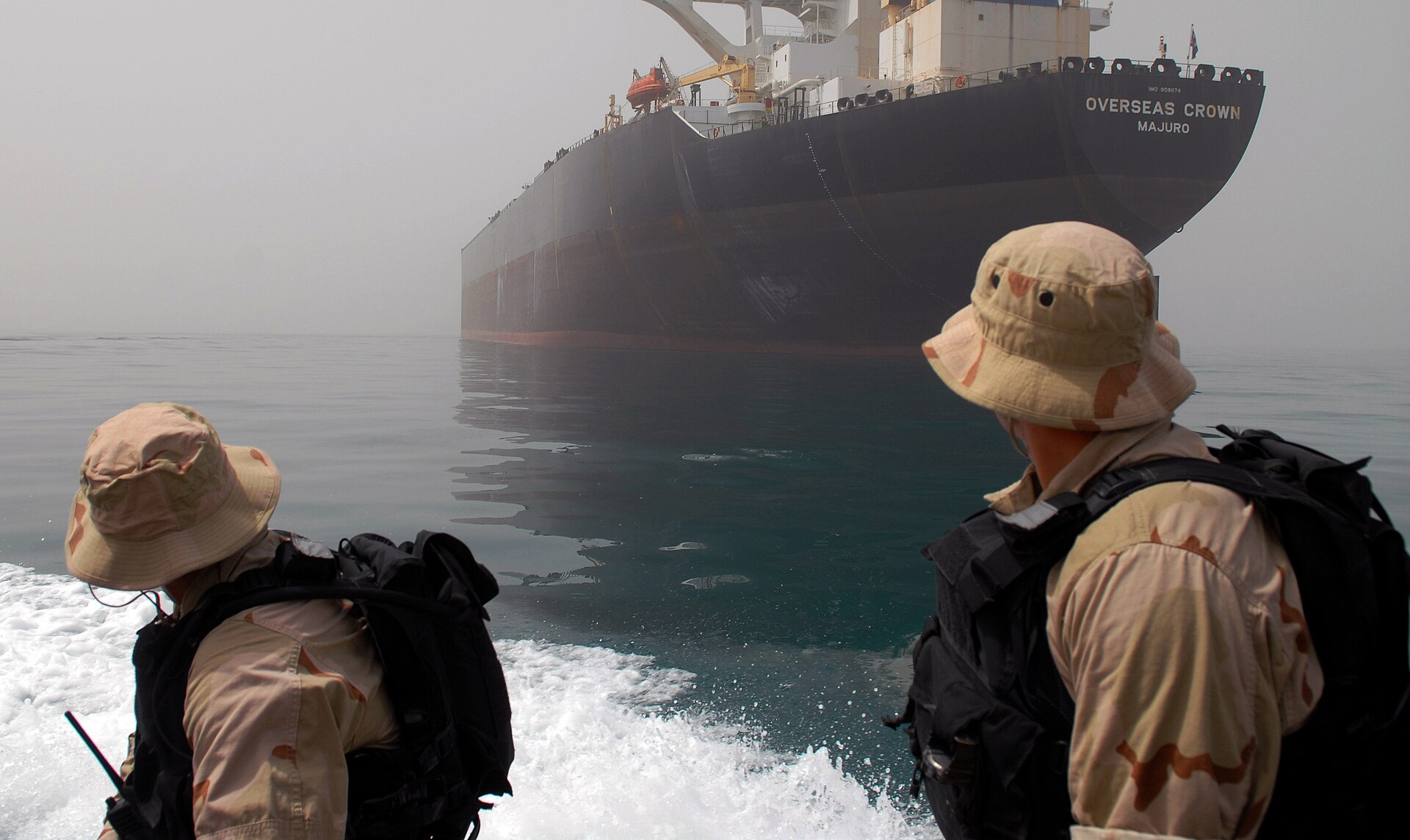
The IRGC has direct institutional reasons to resist any deal that constrains its current position. The PGSA, operational since May 18, collects revenue from every vessel transiting Hormuz — 33 ships passed through in the most recent 24-hour period, with 240 queued for permits according to the Washington Post on May 24. Dismantling that toll system is a core component of any ceasefire framework, and the IRGC built it, staffs it, and collects from it. Araghchi negotiates through Rome and Muscat, but the IRGC controls the waterway that makes the deal necessary. A courier-delivered approval from Khamenei asks the IRGC to stand down on the authority of a document that arrived through a chain no one outside a small circle can verify.
Hajj Compresses the Window
The timing makes the structural problem worse. Arafah — the most sacred day of Hajj, when roughly two million pilgrims gather on the plain east of Mecca — falls on May 26, creating a 96-hour no-escalation buffer through Eid al-Adha on May 27. Any document that has not completed its courier circuit to Khamenei and back before Arafah will not be actionable until after Eid at the earliest, and the multi-day courier latency that US officials described to CBS and Axios makes pre-Arafah completion a practical impossibility.
Secretary Rubio acknowledged the compression from New Delhi on May 24, telling the New York Times that a nuclear deal could not be achieved “in 72 hours on the back of a napkin.” The 72-hour figure was not arbitrary — it described roughly the gap between his statement and the start of Arafah. Combined with the Axios-sourced official’s assessment that approval would take “days” to filter through the Iranian system, the arithmetic rules out any scenario in which the MOU is constitutionally confirmed before the Hajj window closes. Trump has said he “won’t rush” on Iran, but every day of delay entrenches the PGSA toll system further and pushes closer to the Aramco CEO’s mid-June normalization cliff — the date after which tanker fleet displacement and Asian refinery cycles make Hormuz recovery materially harder.
The post-Eid outlook is itself uncertain. Islamabad has been discussed as a possible venue for Round 6, according to Shafaqna Pakistan, but nothing is confirmed, and the competing MOU drafts would need to be reconciled before a consolidated text could be sent to Khamenei’s courier network. The “final stage” language from Iran’s Foreign Ministry describes a negotiating position, not a document ready for the constitutional confirmation that Article 176 requires.
Saudi Arabia and the Approval Circuit
For Saudi Arabia, Khamenei’s isolation adds a layer of unpredictability to a situation already defined by exclusion. The Kingdom has been absent from all five rounds of US-Iran talks, holds no bilateral channel with Iran outside the Oman-mediated Hormuz governance track, and has issued no Foreign Ministry statement since the MOU negotiations entered their current phase. Saudi silence during Hajj is customary — politicizing the pilgrimage is a red line Riyadh has never crossed — but it also means the Kingdom has no institutional mechanism to assess whether the courier chain to Khamenei is functional, stalled, or broken.
The fiscal arithmetic does not pause for couriers. Saudi Arabia’s Q1 2026 deficit reached $33.5 billion, running at 194% of the full-year target, and Goldman Sachs projects an $80-90 billion gap for the full year if current conditions hold. Every day the PGSA toll system operates, Saudi oil exports that would normally pass through Hormuz to Asian buyers remain suppressed, and the mine-clearance clause in the Phase 1 ceasefire framework requires Saudi Arabia to accept foreign demining operations in adjacent waters — a concession that only matters if the deal is signed, which depends on a courier reaching a man no government can locate.
MBS made a round of calls to Trump, Macron, and other leaders on May 23, lobbying for the deal’s completion, according to the Financial Times. The calls were an indirect admission of the underlying condition: Saudi Arabia’s Crown Prince was asking foreign capitals to expedite an agreement whose timeline is controlled by a courier network that none of the governments he called — including Iran’s own civilian leadership — can monitor or accelerate. The broader consequence of that exclusion extends beyond the signing window: while Khamenei’s couriers determine the MOU’s fate, Saudi Arabia’s five-day Eid government holiday means Riyadh cannot even issue a formal diplomatic response until June 1 — eight days in which Tehran’s two-track strategy runs unopposed.
Background
US-Israeli strikes under Operation Epic Fury began on February 28, 2026, killing Supreme Leader Ali Khamenei and injuring his son Mojtaba on the first day. The IAEA has had no access to Iranian nuclear facilities since that date, a blackout that has persisted for 86 days. Mojtaba Khamenei was named Supreme Leader on March 9 by the Assembly of Experts under documented IRGC pressure and has governed exclusively through intermediaries without a single verified public appearance.
The current MOU negotiations began in Islamabad on April 11, collapsed after 21 hours, and resumed through the Munir back-channel and Omani mediation in May, with five rounds of direct talks concluding in Rome on May 23. Iran’s PGSA toll system became operational on May 18, with the IRGC collecting fees from vessels transiting the Strait of Hormuz while exempting Russia, China, India, Iraq, and Pakistan — payments accepted in yuan and cryptocurrency. Brent crude closed at $103.94 on May 22, with the EIA forecasting $79 per barrel by 2027 — a price predicated on Hormuz reopening within a timeframe that Khamenei’s courier chain now places beyond anyone’s control.
Frequently Asked Questions
Has any Iranian leader governed while this physically isolated?
Ayatollah Khomeini spent 14 years in exile before the revolution — in Najaf (1965-1978) and Paris (1978-1979) — but he used recorded audio cassettes, public statements, and direct meetings with emissaries throughout that period. Ali Khamenei maintained continuous public visibility during his 36-year tenure through televised speeches, website communications, and official audiences. Mojtaba Khamenei’s total absence from public communication — no video, no audio, no verified photographs since March 9 — is without precedent in the Islamic Republic’s 47-year history.
Could the Guardian Council bypass the Supreme Leader’s approval?
The Guardian Council’s constitutional mandate under Articles 91-99 covers legislative review — checking laws against Islamic jurisprudence and the constitution. It has no authority over SNSC decisions, which fall exclusively under the Leader’s domain per Article 176. The Guardian Council could theoretically block implementation of a signed agreement on constitutional grounds, adding yet another veto point, but it cannot substitute for or waive the Leader’s confirmation.
What happens if Khamenei cannot respond at all?
Article 111 of the constitution provides for a Leadership Council — composed of the president, the head of the judiciary, and a senior cleric from the Guardian Council — to temporarily assume the Leader’s duties if he is unable to perform them. Invoking this clause would require a public acknowledgment that Khamenei is incapacitated, which the courier system is specifically designed to prevent. The IRGC’s extraconstitutional command claim further complicates formal succession, as the military has already asserted parallel authority without any constitutional basis.
How does courier latency affect IAEA verification?
The IAEA has had zero access to Iranian nuclear facilities since February 28. Any MOU provision requiring inspections — such as the 12-15 year enrichment moratorium in the Axios framework — would need Supreme Leader authorization for IAEA re-entry, routed through the same courier network that currently delays MOU confirmation. Verification cannot begin until that authorization arrives, creating a cascading delay in which the inspection timeline starts only after the already-delayed signing timeline concludes.
Does Pakistan’s mediation reach Khamenei directly?
Pakistan’s Foreign Minister Munir has made at least two trips to Tehran in May, but his access extends to the civilian government and the SNSC — not to Khamenei’s courier network. Munir cannot receive direct feedback from the decision-maker whose approval he is attempting to facilitate. Pakistan’s September 2025 Strategic and Military Defence Agreement with Saudi Arabia introduces a separate structural tension, as Islamabad is treaty-bound to defend a country whose interests are not represented in the negotiations it is mediating. On the same day, Ghalibaf’s presence in Doha alongside Araghchi and the central bank governor illustrated a parallel ratification bottleneck: the Doha delegation was finalising financial preconditions — $12 billion in frozen assets — that would themselves require SNSC endorsement before any deal could be signed, adding a financial layer to the constitutional one. Zolghadr used the same Arafah window to issue Iran’s hardest public signal since the war began — a declaration of no retreat on enrichment, Hormuz, and military posture, analysed in Iran’s constitutional ratification bottleneck.
The Mojtaba Khamenei constitutional bottleneck is one layer of a broader structural architecture. Below it, Vahidi’s institutional veto over any diplomatic commitment means that even a deal Araghchi signs and Khamenei endorses cannot bind the IRGC command structure that controls the assets the deal is meant to constrain.